
The best moisture meter in NZ overall is the Klein Tools ET140, thanks to its no-mark pinless sensor that switches between drywall, masonry, hardwood and softwood at the press of a button.
A moisture meter is one of the cheapest ways to catch a problem before it becomes an expensive one, whether that means checking timber before it goes into a build, tracking down a damp patch on an internal wall, or making sure a load of firewood is actually dry enough to burn cleanly.
New Zealand’s damp climate makes this kind of check worth doing year-round, not just after a leak. This guide compares six moisture meters available in New Zealand, covering pinless scanners, pin-type testers and a dedicated firewood meter, with honest pros and cons for each.
Anyone drying out a woodpile before winter might also want to compare log splitters and chainsaws for prepping that wood in the first place.
A persistently damp room, meanwhile, is often better solved with one of the best humidifiers or heaters running alongside regular moisture checks.
Quick comparison
| Product | Best For | Type | Depth / Range | Batteries |
|---|---|---|---|---|
| Klein Tools ET140 | Best Overall | Pinless | 19mm / 0-100% | 9V |
| NDI 7-in-1 | Best 2-in-1 | Pin + Pinless | 19mm / material dependent | 2x AAA |
| Pinless Wood Moisture Meter | Best Budget | Pinless | 20mm / 0-55% softwood | 3x AAA |
| General Tools MM8 | Best for Tradies | Pinless | 19mm / 0-53% softwood | 9V |
| NDI Pin-Type Meter | Best for Accuracy | Pin-type | 5-50% wood | 2x AAA |
| Reddragon MT36 | Best for Firewood | Pin-type | Direct % reading | Lithium polymer |
The best moisture meters in NZ
1. Klein Tools ET140 – Best Overall
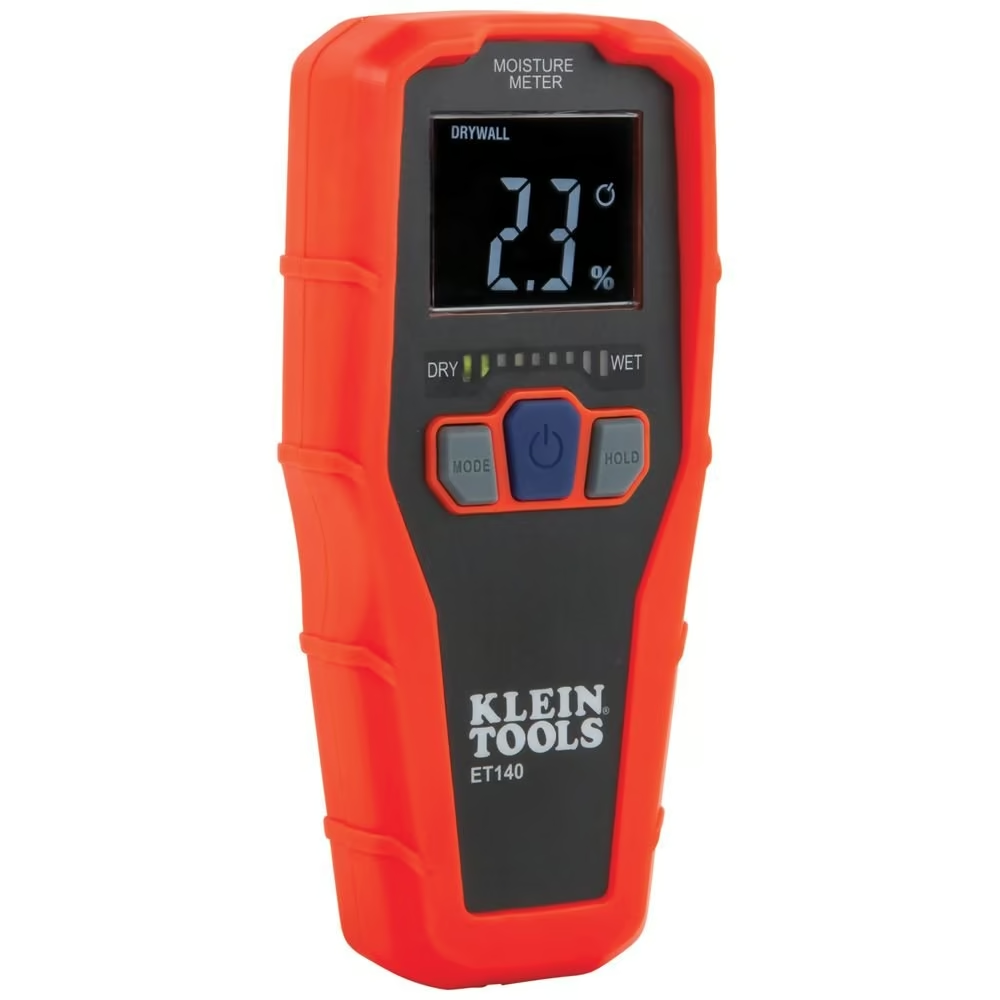
The Klein Tools ET140 is the best all-round moisture meter in NZ, thanks to its no-mark pinless sensor and dead-simple mode button for drywall, masonry, hardwood and softwood.
It has a compact handheld body measuring roughly 241 x 64 x 25mm and weighing 243g, moulded from ABS plastic sized to sit comfortably in one hand with the sensor pad on the back.
The housing uses Klein’s signature black and yellow colourway, with a reverse-contrast display (light text on a dark background) and a 9-segment LED bar graph running down one side next to a single mode button.
Testers note the ABS casing feels dense rather than hollow, and it is rated to survive a 2-metre drop onto a hard floor.
In use, pressing the mode button cycles through drywall, masonry, hardwood and softwood settings, then holding the sensor pad flat against the surface gives a reading in under two seconds. The HOLD button freezes the number for note-taking, and auto power-off plus a low-battery icon help the 9V cell last between jobs.
It reads relative moisture up to 19mm (3/4 inch) below the surface, with roughly ±4% accuracy across a 0-35% hardwood, 0-55% softwood and 0-100% drywall/masonry range.
It is pinless only, so it gives a relative reading rather than an exact percentage, and dense or metal-backed materials can throw the number off. Buyers who want a precise numeric reading should look at the pin-type picks further down this list.
Key specs: EMF pinless sensor, 19mm depth, 9-LED bar graph, 9V battery, model ET140.
Pros
- No pinholes or marks left on drywall, timber or masonry
- One-button switching between four material modes
- Rated to survive a 2m drop
- Hold, low-battery and auto power-off functions
Cons
- Pinless only – gives a relative reading, not an exact percentage
- Metal fixings or very dense materials can skew the reading
2. NDI 7-in-1 Moisture Meter – Best 2-in-1 (Pin + Pinless)
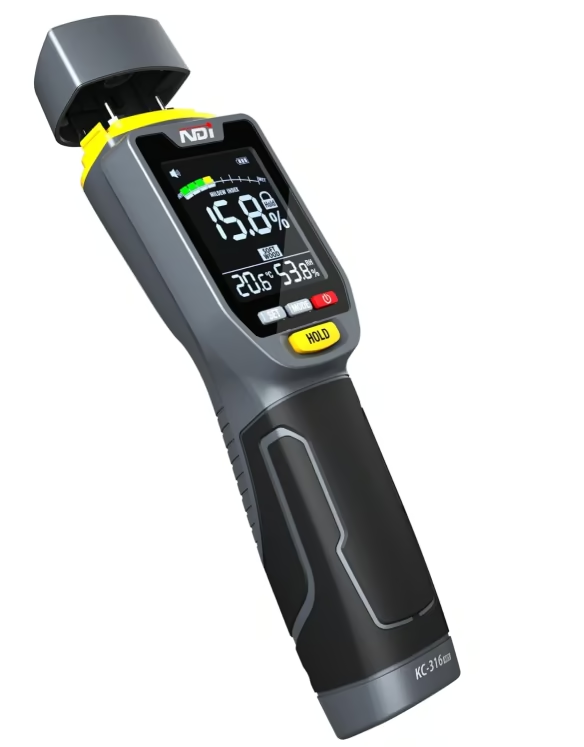
The NDI 7-in-1 is the best two-in-one pick for Kiwi homes that need both a fast pinless scan and an exact pin-type number from the same tool.
It has a slightly longer body than a typical pinless meter to fit the extra pin bay, with an ergonomic handle shaped for a single-hand grip.
It uses NDI’s typical grey and orange housing with a backlit LCD, plus a mildew index bar printed alongside the main moisture reading.
A retractable pin cover doubles as the angle sensor housing, so only part of the unit touches the surface during a pinless scan, which helps protect paintwork and flooring from scuff marks.
A single mode button toggles between drywall, cement board, softwood and hardwood settings, and switching between the pin and pinless heads takes only a few seconds without needing to recalibrate. The mildew index bar gives a quick visual read on whether conditions favour mould growth.
Like other combo meters of this type, it reads up to 19mm deep in pinless mode and gives a direct numeric readout in pin mode for a precise spot check.
Running two sensing technologies in one body pushes the price above single-mode meters, and the extra buttons take a session or two to learn. It also runs on 2x AAA batteries rather than a single 9V cell, so it is worth packing spares.
Key specs: dual pin/pinless design, mildew index indicator, angle sensor, 2x AAA batteries.
Pros
- Combines a quick pinless scan and an exact pin-type reading in one tool
- Mildew index bar flags mould-risk conditions at a glance
- Angle sensor protects surfaces during pinless scans
Cons
- Costs more than a single-mode pin or pinless meter
- More buttons and modes to learn than a simpler unit
3. Pinless Wood Moisture Meter – Best Budget Pick
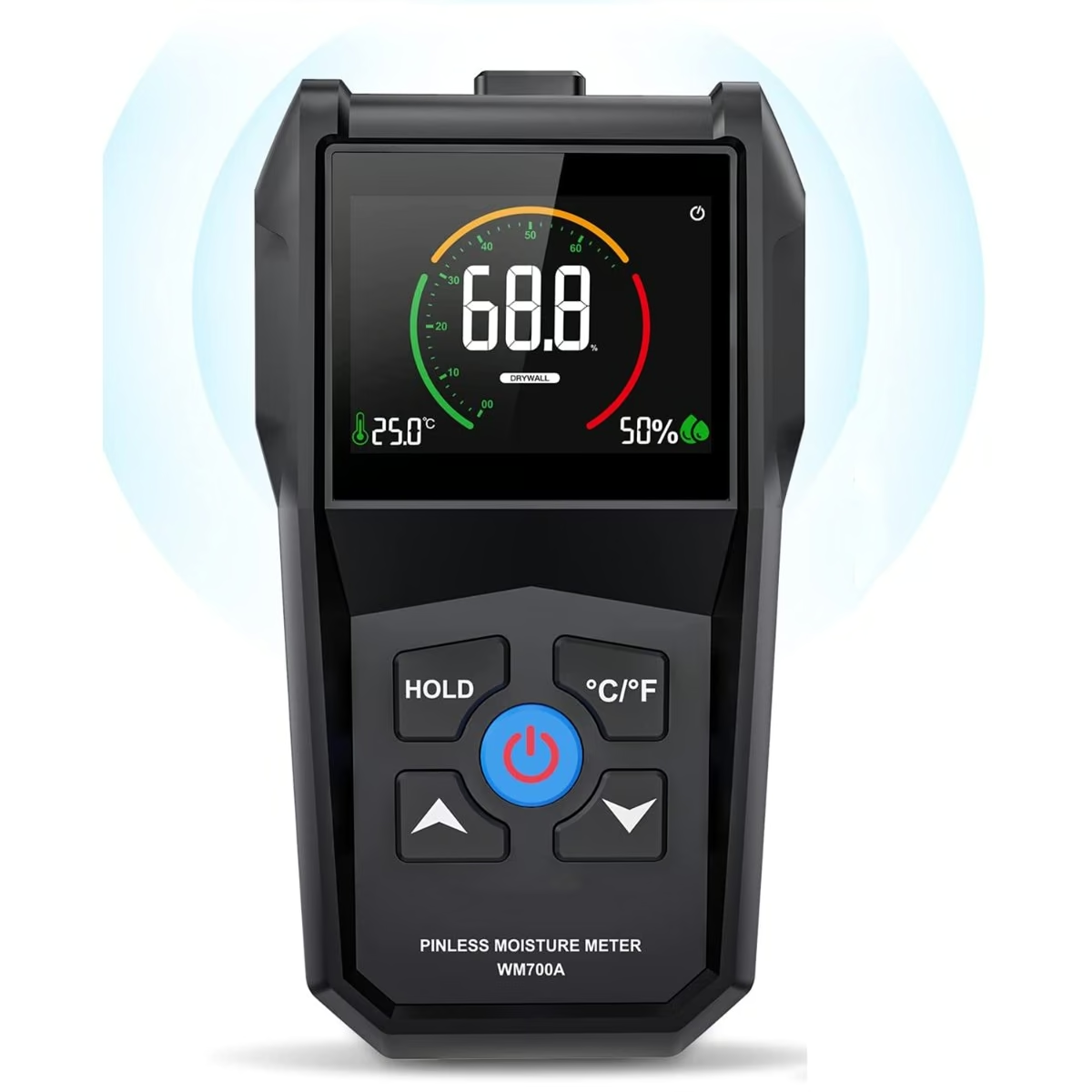
This pinless meter is the best budget option in this list, covering drywall, masonry, softwood and hardwood for a fraction of the cost of the bigger brands.
It has a compact, roughly palm-sized body with a flat sensor pad on the underside.
Its standout feature is a colour VA reverse-display screen that stays readable from an angle, a look normally reserved for pricier meters, alongside a moulded anti-slip section on the grip.
The plastic housing runs on 3x AAA batteries and feels a step below Klein Tools or General Tools in fit and finish, which is where the savings come from.
A single button switches between the four material modes, and the screen shows ambient temperature and humidity alongside the moisture reading, with a °C/°F toggle. Auto shutdown kicks in after 10 minutes idle to save the batteries.
It reads via electromagnetic wave sensing up to 20mm deep on objects at least 40x40mm in size, with a claimed ±4% precision across a 0-55% softwood and 0-35% hardwood range. An audible alarm trips above 70% in drywall/masonry mode or 20% in the wood modes.
It is a no-name budget unit, so the plastic sensor pad shows scuffs sooner than a metal-backed pad, and it lacks the drop-rating or brand backing of the pricier picks here.
Key specs: 4 material modes, VA reverse colour display, 3x AAA batteries, ±4% precision.
Pros
- Colour reverse-display screen usually only seen on pricier meters
- Shows ambient temperature and humidity alongside the moisture reading
- Noticeably cheaper than the branded pinless options on this list
Cons
- Build quality and fit and finish trail the established brands
- No drop-rating or long-run brand track record
4. General Tools MM8 – Best for Tradies
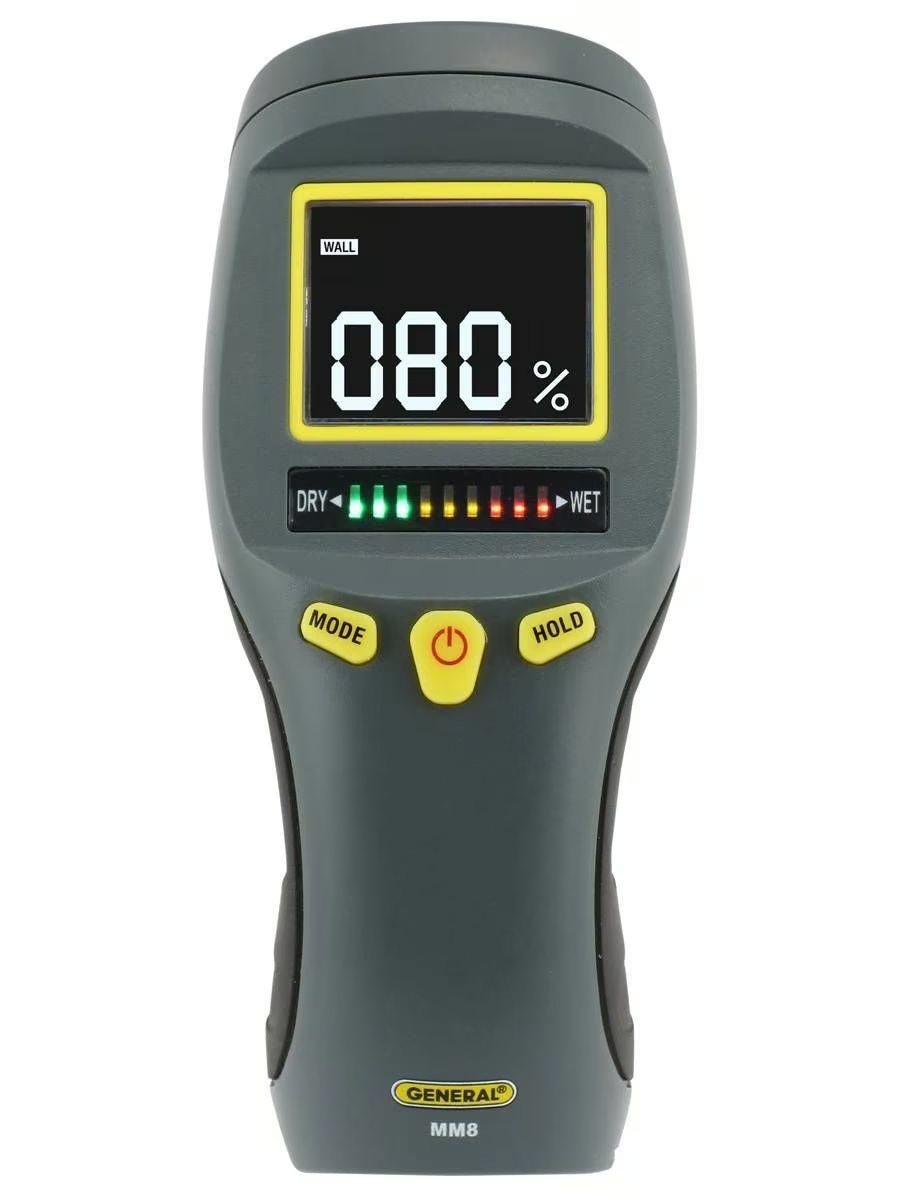
The General Tools MM8 is the best pick for tradies, pairing a bright tricolor LED bar graph with the brand’s long-running reputation in moisture testing.
It measures roughly 170 x 75 x 30mm and weighs 152g without its battery, sized to slip into a tool pouch.
It uses a white-on-black 2-inch LCD with three 0.5-inch digits, backed by a tricolour bar graph (green, yellow, red) that gives an instant visual read before checking the exact number.
General Tools has sold this exact pinless design for years, and testers note the moulded casing holds up to repeated jobsite knocks better than some newer budget imports.
A mode dial sets drywall, masonry, softwood or hardwood, HOLD freezes a reading for note-taking, and the meter powers down automatically after two minutes of inactivity to save the 9V battery.
It senses to 19mm (3/4 inch) deep with 1% resolution, reading 0-53% for softwood and 0-35% for hardwood, and sounds an alarm above 17% in wood or 70% in drywall/masonry.
General Tools has discontinued this exact model, so stock is limited to existing inventory rather than fresh production runs. Buyers wanting the newest tech from the brand should compare it against General Tools’ current MMH800 range.
Key specs: model MM8, tricolor LED bar graph, 9V battery, 1-year limited warranty.
Pros
- Tricolour LED bar graph gives an instant visual read
- Solid, jobsite-tested build from an established brand
- 1% resolution and a 1-year warranty
Cons
- Discontinued by the manufacturer, so stock is limited to existing inventory
- Runs on a 9V battery rather than more common AAAs
5. NDI Pin-Type Wood Moisture Meter – Best for Accurate Pin Readings
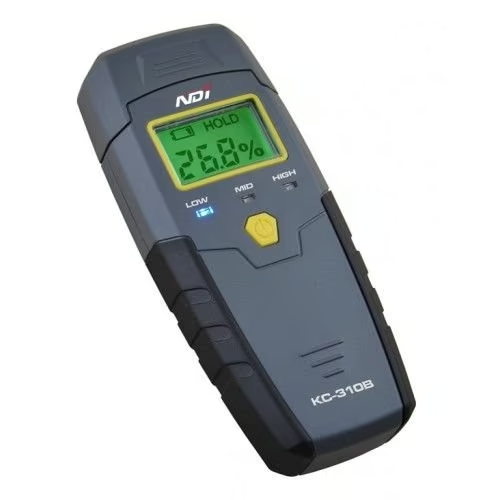
This NDI pin-type meter is the best choice for an exact percentage reading, using two probes pressed into the material rather than a pinless scan.
It has a compact body sized for one-hand use, with a retractable pin cover protecting the probes in storage.
It uses a backlit LCD display with a three-colour (green/yellow/red) alarm system that flags a reading at a glance before checking the exact number, and NDI’s pin-type range in this family includes an automatic calibration routine so the meter is ready to use without a manual calibration step.
To use it, press the two pins into the timber or building material, read the number, then use HOLD to lock the display. Auto power-off and a low-battery icon manage runtime between jobs.
NDI’s equivalent pin-type models in this range read roughly 5-50% in wood and 1.5-33% in building materials at around ±2% accuracy, with the alarm tripping outside the safe range for each material.
Pin-type testing leaves two small puncture marks, so it is not the right choice for finished floors or furniture, and the probes need a firm push to get a reliable contact reading on very dry timber.
Key specs: 2x AAA batteries, tricolor alarm system, automatic calibration, invasive pin-type sensing.
Pros
- Gives an exact percentage rather than a relative pinless reading
- Automatic calibration and a three-colour alarm system
- Compact and easy to use one-handed
Cons
- Leaves small puncture marks, unsuitable for finished surfaces
- Needs a firm push on very dry or hard timber for a reliable contact
6. Reddragon MT36 Firewood Moisture Meter – Best for Firewood
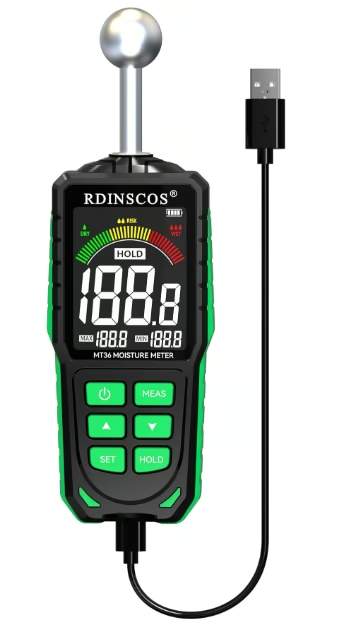
The Reddragon MT36 is the best pick here for checking firewood, giving a straightforward pin reading on logs before they go anywhere near the fire.
It is a compact black handheld unit weighing 281g and measuring roughly 10 x 4 x 3cm, small enough to keep by the woodpile.
It has a black-ball colourway with two exposed metal probes at the top and a small digital display on the face.
It runs on a built-in lithium polymer battery rather than swappable AAAs, and Shenzhen Reddragon Instruments’ wider MT-series shares the same wood-group calibration system, with labelled groups for different softwood and hardwood species printed on the casing.
To use it, push the pins into a split log or piece of timber, read the percentage on the display, and use the hold button to lock a reading. A three-colour alarm flags whether the wood reads dry, borderline or wet.
As a pin-type meter it gives a direct percentage reading rather than a relative pinless scan, which matters for firewood since well-seasoned wood generally needs to sit under roughly 20-25% moisture before it burns cleanly, while green wood well above 30% smokes heavily and builds up creosote.
The built-in rechargeable battery means it cannot run on spare AAAs in a pinch like most of the other picks here, and the exposed pins need a firm push into rough bark to get a clean contact reading.
Key specs: model MT36, built-in lithium polymer battery, invasive 2-pin design, 281g.
Pros
- Purpose-built for checking firewood before it is stacked or burned
- Compact and light enough to keep by the woodpile
- Three-colour alarm gives an instant dry/borderline/wet read
Cons
- Built-in battery cannot be swapped for spare AAAs on the go
- Exposed pins need a firm push into rough or bark-covered wood
How to choose the best moisture meter
Pin-type meters push two small probes into the material and measure electrical resistance, giving an exact percentage reading. They are the right choice for firewood, rough sawn timber, or anywhere a couple of tiny puncture marks do not matter.
Pinless meters use electromagnetic or radio-frequency waves to scan through the surface without marking it. They suit finished floors, painted walls, furniture and anywhere appearance matters, though the reading is relative rather than an exact percentage.
Depth matters too. Most of the pinless meters here read up to 19-20mm below the surface, which covers standard plasterboard and most flooring, but will not pick up moisture trapped deeper inside a wall cavity.
For everyday jobs around a Kiwi home, a mid-range pinless meter like the Klein Tools ET140 covers drywall, masonry and timber without leaving a mark. Builders, flooring installers and firewood sellers who need an exact number should lean toward a pin-type meter instead, or a combo unit like the NDI 7-in-1 that offers both in one tool.
For the rest of the workshop, the guides to ladders, table saws and cordless drills are worth a look.
Both belong to the same category of tool you buy once and are grateful for later, generators for the outages and meters for the leak you cannot see yet.
Verdict
Overall, the Klein Tools ET140 is the best all-round moisture meter for most NZ homes, covering drywall, masonry, hardwood and softwood without leaving a mark. Shoppers who want one tool that does both a quick scan and an exact pin reading should look at the NDI 7-in-1, while anyone drying firewood for winter is better served by the dedicated Reddragon MT36.
Budget buyers checking walls and floors occasionally will get solid value from the budget pinless meter, and tradies wanting a proven jobsite tool should compare the General Tools MM8 against the NDI pin-type meter for exact percentage readings.
Frequently Asked Questions
What’s the difference between a pin-type and pinless moisture meter?
Pin-type meters push two probes into the material and measure electrical resistance for an exact percentage reading, which marks the surface. Pinless meters scan through the surface using electromagnetic waves without marking it, giving a relative reading. Pin-type suits firewood and rough timber; pinless suits finished floors, walls and furniture.
What is a good moisture meter reading for wood?
Most woodworking applications look for 5-12% moisture content, though the safe target depends on use. Framing lumber can run up to 19% under building standards, while firewood should sit under roughly 20-25% moisture before burning. Readings climbing well above 20% usually mean the wood needs more time to dry.
How accurate are moisture meters?
Accuracy depends heavily on quality and type. Budget consumer meters are typically accurate to around plus or minus 4%, while professional-grade units can get closer to 0.5-2%. Metal fixings, very rough surfaces, and testing at the wrong depth setting are the most common causes of an inaccurate reading in real homes.
What moisture level is safe for firewood to burn?
Well-seasoned firewood ready to burn cleanly should read under about 20-25% moisture on a pin-type meter. Wood above 30% is considered green and will smoke heavily, burn poorly and build up creosote in the flue. A moisture meter is the quickest way to check a load before stacking it inside.
How do you check for damp in a NZ house?
Look for musty smells, peeling paint, mould that keeps returning, and fogged-up windows overnight, then confirm with a moisture meter on suspect walls, floors or skirting. A cheap first check is taping a clear plastic sheet to a wall or floor for 24-48 hours and looking for condensation underneath.
Should I buy a pin-type or pinless moisture meter first?
For most first-time buyers checking walls, floors and general dampness around the house, a pinless meter is the easier starting point since it does not mark surfaces. Add a pin-type meter later, or choose a combo unit, once firewood, rough timber or more precise readings come into the picture.
