
The best all-round pick for most Kiwi households right now is a 500W-plus lithium power station, since New Zealand’s live generator stock is currently dominated by battery-based power stations rather than traditional petrol units. This guide covers seven genuine, currently-listed picks from a NZ retailer: one true petrol generator and six lithium power stations across a range of capacities, so you can compare a fuel-powered option against the quieter, fuel-free alternative side by side.
A quick note on availability: stock on generators and power stations moves quickly, and items can show as temporarily out of stock between restocks. Every pick below is a genuine, currently-listed product with real specifications taken from its own listing – click through on any pick to see today’s live price and stock status.
Each entry lists what the unit actually offers – power output, battery capacity or fuel tank size, and connections – plus an honest look at where it falls short, rather than generic marketing copy.
Quick comparison
| Rank | Pick | Best for |
|---|---|---|
| 1 | Solar Generator Power Station 675Wh | Best overall |
| 2 | 2.2kW Gasoline Generator | Best fuel-powered option |
| 3 | Portable Power Station 649Wh | Premium single-outlet pick |
| 4 | Power Station 370Wh | Best mid-capacity all-rounder |
| 5 | Power Station 360Wh | Best value mid-capacity |
| 6 | Solar Generator Power Station 249.6Wh (LiFePO4) | Best for battery longevity |
| 7 | Portable Generator Power Station 192Wh | Best compact / budget pick |
The Best Generators & Power Stations in NZ
1. Solar Generator Power Station 675Wh – Best overall
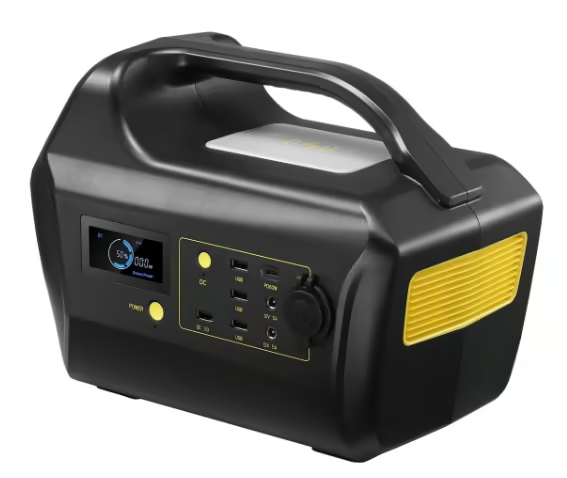
This 675Wh lithium power station is the strongest all-rounder in the current lineup, with two separate 240V pure sine wave AC outlets rated at 500W each (1000W max combined), so it can run two mains-powered devices at once rather than forcing you to choose.
Charging is flexible: a home wall socket, a 12V car socket, or a solar panel (sold separately) all work, and it also carries a PD 60W USB-C port plus four QC 3.0 fast-charge ports for phones, tablets and cameras.
Multi-safety protection covers short-circuit, over-current, over-power, low-voltage and over-temperature scenarios, and it carries CE, SAA and UN38.3 certification for the lithium cell.
Pros
- Two separate 500W AC outlets rather than just one
- 675Wh is a genuinely useful capacity for a weekend away or a short outage
- CE/SAA/UN38.3 certified lithium battery with multiple safety cutoffs
Cons
- No solar panel included – it’s a separate purchase if you want off-grid recharging
- Standard lithium-ion cell rather than the longer-lasting LiFePO4 chemistry used in one other pick on this list
Key specs: 675Wh capacity, 2 x 500W (1000W max combined) pure sine wave AC outlets, PD 60W USB-C, 4 x QC 3.0, solar/wall/car recharge.
2. 2.2kW Gasoline Generator – Best fuel-powered option
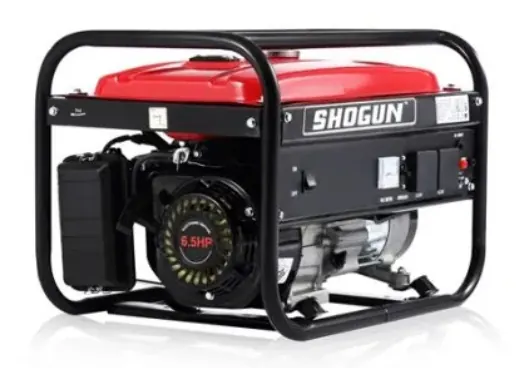
This is the one genuine petrol generator currently listed, and it’s a straightforward 4-stroke unit putting out 2.2kW max (1.8kW continuous) from a 196cc engine, with a 13-litre tank rated for around 8 hours of continuous running.
It carries an automatic voltage regulator (AVR) to keep output steady for sensitive electronics, plus overload, low-oil and over-temperature shutoffs, and starts on a recoil pull rather than an electric button.
At 95dB(A) measured at 7 metres it’s a genuine petrol generator, not a quiet inverter unit, so it suits a garage, worksite or camping trip more than a quiet suburban backyard.
Pros
- Real 8-hour runtime from a 13L tank
- AVR keeps voltage steady for sensitive gear
- Overload, low-oil and over-temperature protection built in
Cons
- 95dB(A) at 7m is loud – not ideal for noise-sensitive areas or overnight use near neighbours
- Recoil start only, no electric start
- At 35.7kg it needs two people or a trolley to move easily
Key specs: 2.2kW max / 1.8kW continuous, 196cc 4-stroke engine, 13L tank, ~8hr runtime, AVR regulated, 95dB(A) at 7m.
3. Portable Power Station 649Wh – Premium single-outlet pick
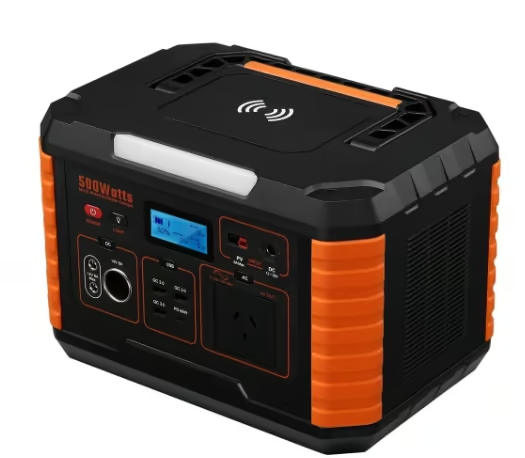
This 649Wh power station sits just under the 675Wh pick above in capacity but costs more, and it only has a single 500W (1000W max) AC outlet rather than two – worth knowing before choosing between the two.
It does add a 10W wireless charging pad alongside its PD 60W USB-C and three QC 3.0 ports, and recharges the same three ways: wall socket, 12V car socket, or solar panel (sold separately).
Like the rest of the range it carries CE, SAA and UN38.3 certification and the same short-circuit, over-current, over-power, low-voltage and over-temperature protections.
Pros
- Adds a 10W wireless charging pad the other picks don’t have
- Same certified safety protections as the rest of the range
- Slightly more compact single-AC-outlet design
Cons
- Costs more than the 675Wh pick above despite slightly less capacity and only one AC outlet instead of two
- No solar panel included
Key specs: 649Wh capacity, 1 x 500W (1000W max) pure sine wave AC outlet, PD 60W, 3 x QC 3.0, 10W wireless charging, solar/wall/car recharge.
4. Power Station 370Wh – Best mid-capacity all-rounder
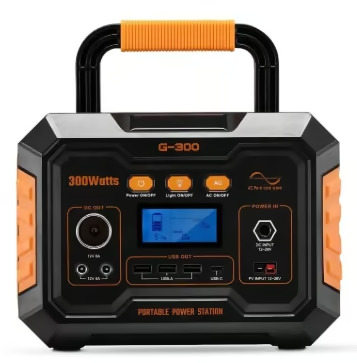
This 370Wh unit is a genuine middle-ground pick, with a single 300W (600W max) pure sine wave AC outlet plus a PD 60W USB-C port and three QC 3.0 ports, alongside two 14.8V/4A and one 12-24V/4A DC output for car-powered gear.
A 100,000mAh (370Wh) lithium-ion cell recharges via wall socket, 12V car socket or solar panel, and a built-in two-mode LED flashlight covers basic camping or emergency lighting.
It’s a sensible size for charging phones, laptops, a small fan or lighting through a short outage, without the bulk or price of the larger 649-675Wh units.
Pros
- 300W/600W AC output covers laptops, small appliances and lighting
- PD 60W plus 3 x QC 3.0 fast-charge ports
- Wireless charging pad included
Cons
- 300W rated output won’t run larger appliances the bigger picks can
- Standard lithium-ion cell, not LiFePO4
Key specs: 370Wh capacity, 300W (600W max) pure sine wave AC, PD 60W, 3 x QC 3.0, wireless charging, solar/wall/car recharge.
5. Power Station 360Wh – Best value mid-capacity
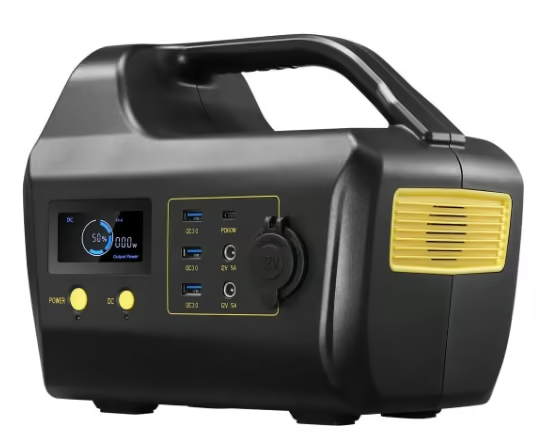
This is a near-identical sibling to the 370Wh pick above – same 300W (600W max) AC outlet, same PD 60W and 3 x QC 3.0 port layout – but with slightly less capacity (360Wh vs 370Wh) and a lower price.
The DC output configuration differs slightly (2 x 12V/5A plus 1 x 12V/10A, 120W max) but in practical terms it covers the same car-powered devices as the other mid-capacity pick.
If the 370Wh model above is out of stock or priced higher on the day you’re buying, this is a genuine like-for-like substitute rather than a downgrade.
Pros
- Same 300W/600W AC output and port layout as the pricier 370Wh model
- Slightly cheaper than its near-twin
- Same safety certifications (CE, SAA, UN38.3)
Cons
- 10Wh less capacity than its near-identical sibling
- No meaningful feature advantage over the 370Wh pick – it’s essentially a pricing alternative
Key specs: 360Wh capacity, 300W (600W max) pure sine wave AC, PD 60W, 3 x QC 3.0, solar/wall/car recharge.
6. Solar Generator Power Station 249.6Wh – Best for battery longevity
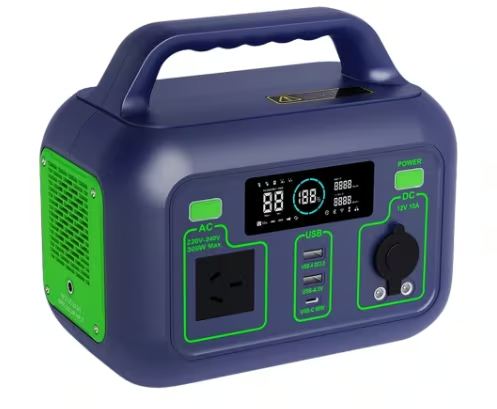
This is the only pick on this list using LiFePO4 (lithium iron phosphate) battery chemistry instead of standard lithium-ion, which typically means a substantially longer cycle life before the battery noticeably degrades – a real advantage if you’ll be charging and draining it often rather than leaving it in storage.
Capacity is smaller at 249.6Wh with a 300W rated / 600W max AC outlet, but it adds a bidirectional PD 3.0 USB-C port (up to 60W) that can both charge devices and receive charge, plus a 4-mode LED flashlight.
It recharges via wall socket, 12V car socket or solar panel, with the same short-circuit, over-current, over-power, low-voltage and over-temperature protections as the rest of the range.
Pros
- LiFePO4 chemistry generally lasts far more charge cycles than standard lithium-ion
- Bidirectional PD 3.0 USB-C port up to 60W
- 4-mode LED flashlight built in
Cons
- Smallest AC-rated capacity relative to price of the picks on this list
- Same price as the larger 370Wh standard lithium-ion pick, so you’re trading capacity for battery longevity
Key specs: 249.6Wh (LiFePO4), 300W (600W max) pure sine wave AC, bidirectional PD 3.0 USB-C 60W, solar/wall/car recharge.
7. Portable Generator Power Station 192Wh – Best compact / budget pick
At 192Wh this is the smallest and cheapest unit in the lineup, built around a 60,000mAh cell with a single 200W (400W max) AC outlet – enough for phones, small lamps and low-draw electronics rather than power tools or larger appliances.
It stands out for its bidirectional Type-C PD 65W port, which can both charge the power station quickly and pass charge back out to a laptop or other USB-C device, alongside two USB-A ports and two 12V/10A DC outputs.
A four-mode LED flashlight and the same CE/SAA/UN38.3 safety certifications round it out, making it a sensible entry point if you don’t need a full mains-appliance power station.
Pros
- Cheapest and most compact option on this list
- Bidirectional Type-C PD 65W port is a genuinely fast way to recharge it
- Four-mode LED flashlight built in
Cons
- 200W/400W AC output is only suitable for small electronics, not appliances or power tools
- Smallest capacity on this list at 192Wh
Key specs: 192Wh capacity, 200W (400W max) pure sine wave AC, bidirectional Type-C PD 65W, 2 x USB-A, 2 x 12V/10A DC, solar/wall/car recharge.
How to choose the best generator or power station for you
Choosing between a petrol generator and a battery power station – and then the right size within either category – comes down to your power needs, how often you’ll use it, and how much noise and fuel storage you’re willing to deal with.
Work out your actual power needs first
List the devices you actually want to run and add up their wattage, which is usually printed on the appliance or its power supply. Remember that appliances with electric motors (fridges, pumps, power tools) draw a much higher “starting” or surge wattage than their steady running wattage, so check both figures rather than just the running number.
Petrol generator or battery power station?
Petrol/petrol-engine generators – can run for as long as you have fuel, and typically put out more continuous power for the price, but they’re loud, need ventilation (never run one indoors), and need fuel stored and rotated.
Battery power stations – silent, safe to run indoors, and rechargeable from a wall socket, car or solar panel, but their total energy (Wh) is fixed until you recharge them, and their AC wattage output is usually lower than an equivalent-priced petrol unit.
Standby generators – permanently installed and wired through a transfer switch to start automatically during an outage, covering an entire home. They’re the most expensive and convenient option but need professional installation.
Fuel type, if you’re going the petrol/diesel route
Petrol – the most common and easiest to find, but it degrades in storage over several months if left untouched.
Diesel – better fuel efficiency and shelf life, though diesel generators typically cost more upfront.
Dual-fuel/tri-fuel – can run on petrol plus LPG or natural gas for flexibility, usually at a higher purchase price.
Runtime, portability and noise
For petrol units, check both the tank size and the runtime at a realistic load (not just at minimum draw), since the two figures together tell you how often you’ll be refuelling. For power stations, check the Wh capacity against the wattage of what you actually plan to run – a 1000W appliance will drain a 370Wh power station in well under half an hour.
If you’ll be moving it around, check the weight and whether it has wheels or a carry handle – a full-size petrol generator can weigh 30kg or more. Noise is measured in decibels (dB); petrol units generally run 90dB or higher at close range, while power stations are silent since there’s no engine.
Safety and certification
For petrol generators, look for AVR (automatic voltage regulation) to protect sensitive electronics, plus low-oil and overload shutoffs, and never run one in an enclosed space due to carbon monoxide risk. For power stations, check for CE, SAA and UN38.3 certification on the lithium battery, plus short-circuit, over-current and over-temperature protection – all genuine safety basics rather than optional extras.
For a standby generator wired into your home’s wiring, a transfer switch is required and should always be installed by a registered electrician, both for safety and to comply with New Zealand electrical regulations.
Anyone weighing up a fuel-free setup further might also want to compare portable solar panels for recharging a power station off-grid. If you’re tackling other outdoor power equipment at the same time, our guides to log splitters, line trimmers and water blasters cover the rest of the shed.
Verdict
For most people who want genuine mains power without committing to a fuel-based unit, the 675Wh power station is the strongest all-round pick thanks to its dual AC outlets. If you specifically need a fuel-powered generator with real continuous runtime, the 2.2kW gasoline generator is currently the only genuine petrol option in stock, and it’s a solid, AVR-regulated unit for the price.
Budget-conscious buyers or anyone who just needs to keep phones and small electronics charged through an outage should look at the 192Wh compact pick, while anyone planning to charge and drain their power station often – rather than leaving it in storage for emergencies – should weigh up the LiFePO4 249.6Wh model for its longer battery lifespan.
Frequently Asked Questions
Can I run a generator indoors?
No. Petrol and diesel generators produce carbon monoxide and should only ever be run outdoors in a well-ventilated area, away from windows and doors. Battery power stations produce no fumes and are safe to use indoors.
How long will a battery power station run my appliances?
It depends entirely on the power station’s Wh (watt-hour) capacity versus the wattage of what you’re running – for example, a 370Wh power station running a 100W device will last roughly 3 to 4 hours, but the same power station running a 1000W appliance will drain in well under half an hour. Always check the appliance’s wattage against the power station’s capacity before assuming it will last a full outage.
Do I need a transfer switch for a generator?
Only if you want to wire a generator into your home’s existing circuits to power fixed appliances or lighting automatically. A transfer switch must be installed by a registered electrician; for simply plugging in individual appliances via extension leads, a transfer switch isn’t required.
What size generator do I need for a power outage?
Add up the running wattage of the essentials you want to keep powered (fridge, some lighting, phone charging, maybe a modem), and remember appliances with motors need extra surge wattage to start. Most households find a 2 to 3kW petrol generator or a 500Wh-plus power station covers the basics during a short outage.
What’s the difference between lithium-ion and LiFePO4 power stations?
Both are lithium battery chemistries, but LiFePO4 (lithium iron phosphate) generally handles far more charge and discharge cycles before it noticeably degrades, making it a better choice if you’ll recharge the unit often. Standard lithium-ion is usually cheaper for the same capacity but has a shorter practical lifespan under frequent use.
Can I charge a power station with a solar panel?
Most portable power stations accept solar panel input, but the panel itself is almost always sold separately – check the power station’s solar input voltage and wattage rating to make sure a panel you’re considering is actually compatible before buying.
