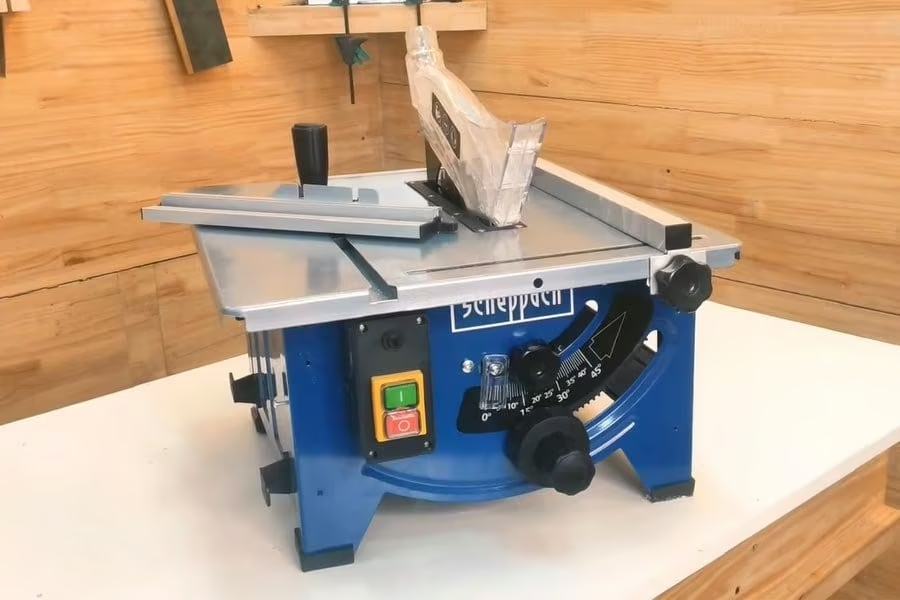
The best table saw for most NZ hobbyists and model-makers is a compact 100W benchtop saw with a sliding rail, because it makes small, accurate cuts in timber strips, acrylic and soft metals without needing a dedicated workshop. Full-size job-site and cabinet table saws are hard to order online for NZ delivery at the time of writing, so this guide focuses on the mini saws you can get delivered.
A table saw turns straight, repeatable rip cuts into a simple job, whether you’re building furniture, framing a deck or just breaking down sheet stock for a project.
We’ve compared 5 table saws available in New Zealand, all compact hobby and craft-scale benchtop models, so you can match cutting capacity, speed control and build to the work you actually do. If you need to rip full sheets of ply or framing timber, a circular saw with a guide rail is the more practical choice for now.
Comparison Table
| Product | Best For | Key Specs |
|---|---|---|
| AVEQUZL Mini 100W Table Saw with Sliding Rail | Best for Model-Making & Small Crafts | Motor: 100W | Speed: up to 6000rpm, 7-speed | Angle: 0-90° | Size: approx. 23 x 22 x 18cm |
| Cryfokt 100W Mini Table Saw, 7 Speed | Best Lightweight Benchtop Pick | Motor: 100W | Speed: up to 6000rpm, 7-speed | Angle: 0-90° | Weight: approx. 2.45kg |
| YUKERMARB 100W Portable Mini Table Saw with Sliding Rail | Best Aluminium-Body Mini Saw | Motor: 100W | Speed: up to 6000rpm, 7-speed | Angle: 0-90° | Size: approx. 23 x 22 x 18cm |
| HOOMFIT Multi-Functional Mini Table Saw, 2.7kg Foldable | Best Ultra-Portable / Lightweight | Motor: 100W, 220V | Speed: 6000rpm | Weight: 2.7kg | Dimensions: 180x160x110mm |
| JUNWU Mini Table Saw, Portable 100W Tabletop Saw | Best Budget Pick | Motor: 100W | Speed: 6000rpm, 7-speed | Blade: 63mm | Angle: 0-90° |
1. AVEQUZL Mini 100W Table Saw with Sliding Rail
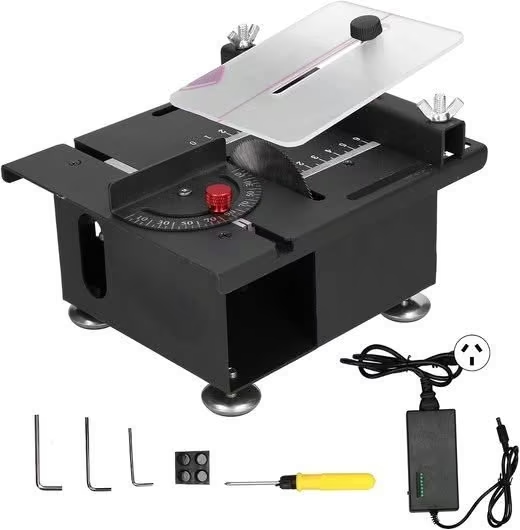
The AVEQUZL mini table saw is a 100W benchtop cutter for model-makers and hobbyists who need clean, repeatable cuts in small stock. The motor reaches up to 6000 rpm, and a seven-step speed control lets you slow it down for acrylic and thin aluminium or run it flat out for hardwood strips.
A sliding rail carries the work past the blade, and the cutting angle adjusts from 0 to 90 degrees for straight and angled cuts. It is supplied with an AU plug and a small footprint of roughly 23 x 22 x 18 cm, so it lives happily on a shelf between projects.
The listing is clear about its limits: it is not for carbide, high-density board, stone or steel. It is a new listing with no customer reviews yet, so treat it as a craft tool and check the fence and blade alignment when it arrives.
Pros
- Sliding rail helps keep small cuts straight and repeatable
- Seven speed settings to suit wood, acrylic and soft metals
- 0-90 degree cutting angle
- Compact enough to store on a shelf
Cons
- Craft-scale only, not for structural timber or sheet goods
- No customer reviews yet
- Not suitable for carbide, stone, steel or high-density board
Key specs: Motor: 100W | Speed: up to 6000rpm, 7-speed | Angle: 0-90° | Size: approx. 23 x 22 x 18cm
2. Cryfokt 100W Mini Table Saw, 7 Speed
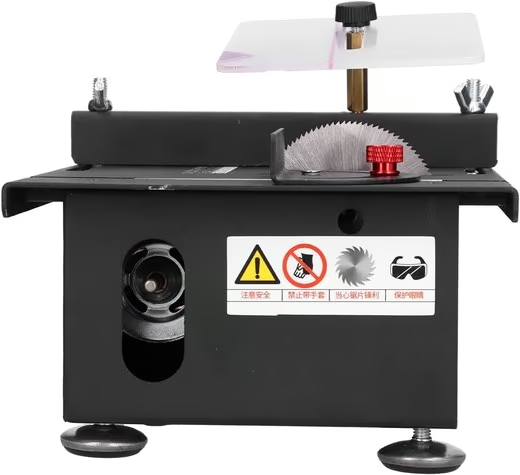
Cryfokt’s mini table saw uses the same compact 100W sliding-rail format as several saws on this list, with a 6000 rpm motor, seven speed settings and a 0 to 90 degree cutting angle. It comes with an adjustable-speed power supply and an AU plug.
At about 2.45 kg it is easy to lift onto a bench and put away again, and the aluminium-alloy handle and slide rail give the fence a more solid feel than all-plastic hobby saws. It is suited to hardwood strips, aluminium bar and acrylic for models, dioramas and small repairs.
Like the rest of the mini saws here, it is not rated for cemented carbide, stone or steel, and it has very little review history so far. Buy it as a precise small-parts cutter rather than a workshop saw.
Pros
- Light at about 2.45 kg
- Seven speed settings for different materials
- Aluminium-alloy slide rail and handle
- 0-90 degree angle range
Cons
- Craft-scale cutting capacity only
- Very little review history so far
- Not for carbide, stone or steel
Key specs: Motor: 100W | Speed: up to 6000rpm, 7-speed | Angle: 0-90° | Weight: approx. 2.45kg
3. YUKERMARB 100W Portable Mini Table Saw with Sliding Rail
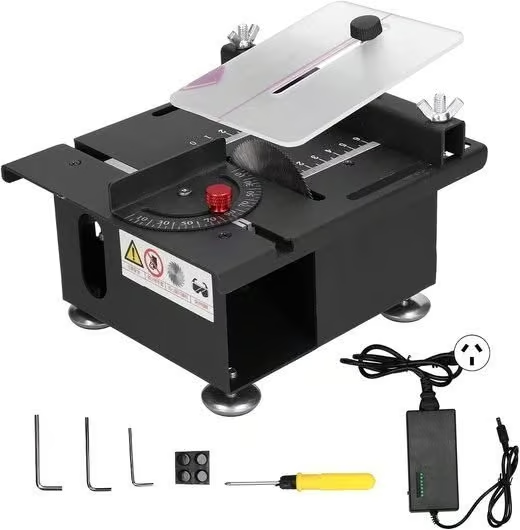
The YUKERMARB mini table saw is another 100W sliding-rail benchtop saw, aimed at hobbyists who cut small wooden parts, aluminium bar, plastic and acrylic. Its seven-speed control and 6000 rpm top speed let you match the blade speed to the material.
The body is made from aluminium alloy, and the slide rail with 0 to 90 degree angle adjustment is there for accurate straight and angled cuts on small pieces. It measures about 23 x 22 x 18 cm and comes with an AU plug.
It shares the same limits as similar mini saws: no carbide, high-density press board, hard stone or steel, and it is not a replacement for a full-size benchtop saw. Review history is thin, so check it over carefully on arrival.
Pros
- Aluminium-alloy construction
- Sliding rail for more accurate small cuts
- Seven-speed adjustable motor
- 0-90 degree angle range
Cons
- Craft-scale capacity only, not for dimensional timber
- Small brand with little review history
- Not rated for hard materials such as steel or stone
Key specs: Motor: 100W | Speed: up to 6000rpm, 7-speed | Angle: 0-90° | Size: approx. 23 x 22 x 18cm
4. HOOMFIT Multi-Functional Mini Table Saw, 2.7kg Foldable
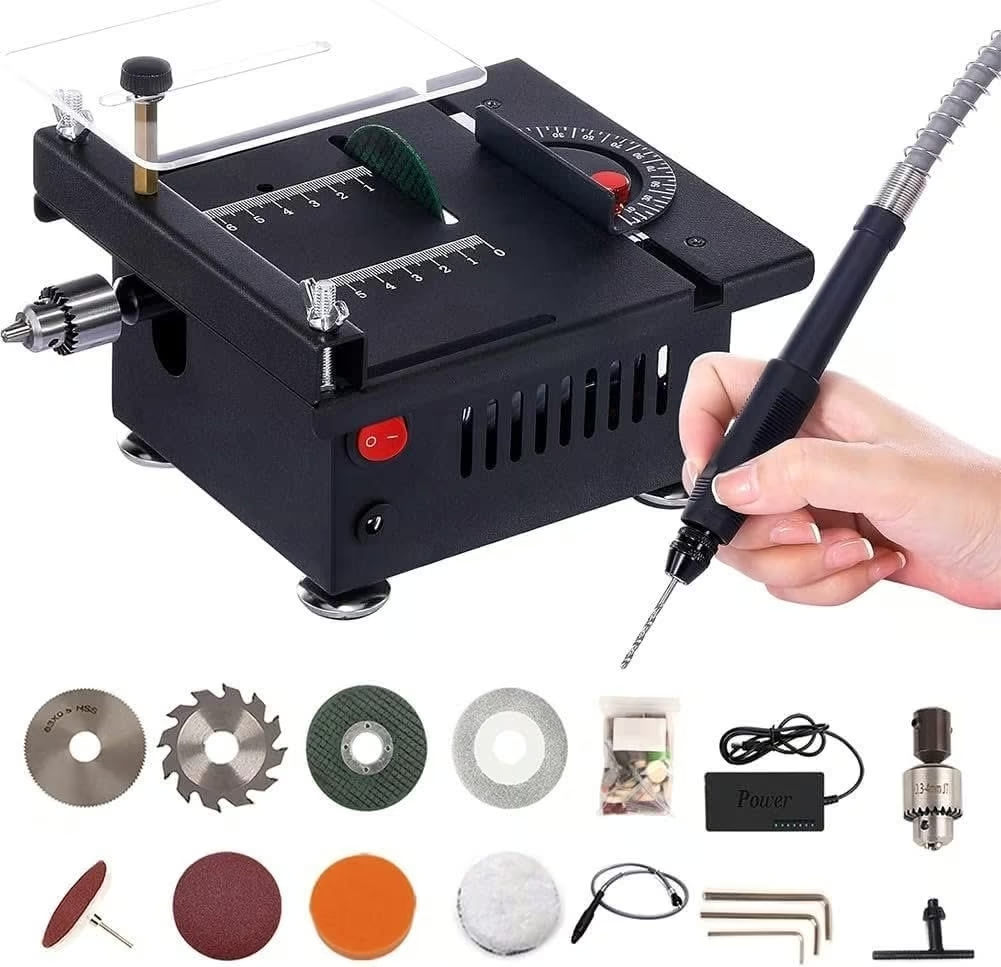
HOOMFIT’s mini desktop saw leans into portability, weighing just 2.7kg and folding down to a footprint of 180 x 160 x 110mm, making it one of the more genuinely grab-and-go options on this list. A 100W copper motor drives the blade to 6000rpm across seven speed settings, and it ships with four different blade materials to suit different jobs.
Cutting depth adjusts up to 16mm and the angle controller covers 0 to 90 degrees, letting it handle wood sticks, thin plywood, acrylic, PCB boards and soft metals like copper cladding and aluminium tube. The compact size makes it easy to store between projects or carry to a different work location, which is the saw’s main selling point over larger benchtop hobby saws.
Its small scale is also its limitation, since it is built for craft and modelling work rather than any structural cutting, and construction typical of saws at this price point will not match the durability of a proper corded benchtop saw. It is best considered a lightweight, portable alternative rather than a step up in capability.
Pros
- Very light and compact at 2.7kg, easy to transport and store
- Includes 4 different blade materials for varied cutting needs
- Seven-speed adjustable 100W motor
- Foldable design for minimal storage footprint
Cons
- Craft/hobby scale only, not for structural timber
- Lightweight construction typical of this price bracket
- Limited independent review history
Key specs: Motor: 100W, 220V | Speed: 6000rpm | Weight: 2.7kg | Dimensions: 180x160x110mm
5. JUNWU Mini Table Saw, Portable 100W Tabletop Saw
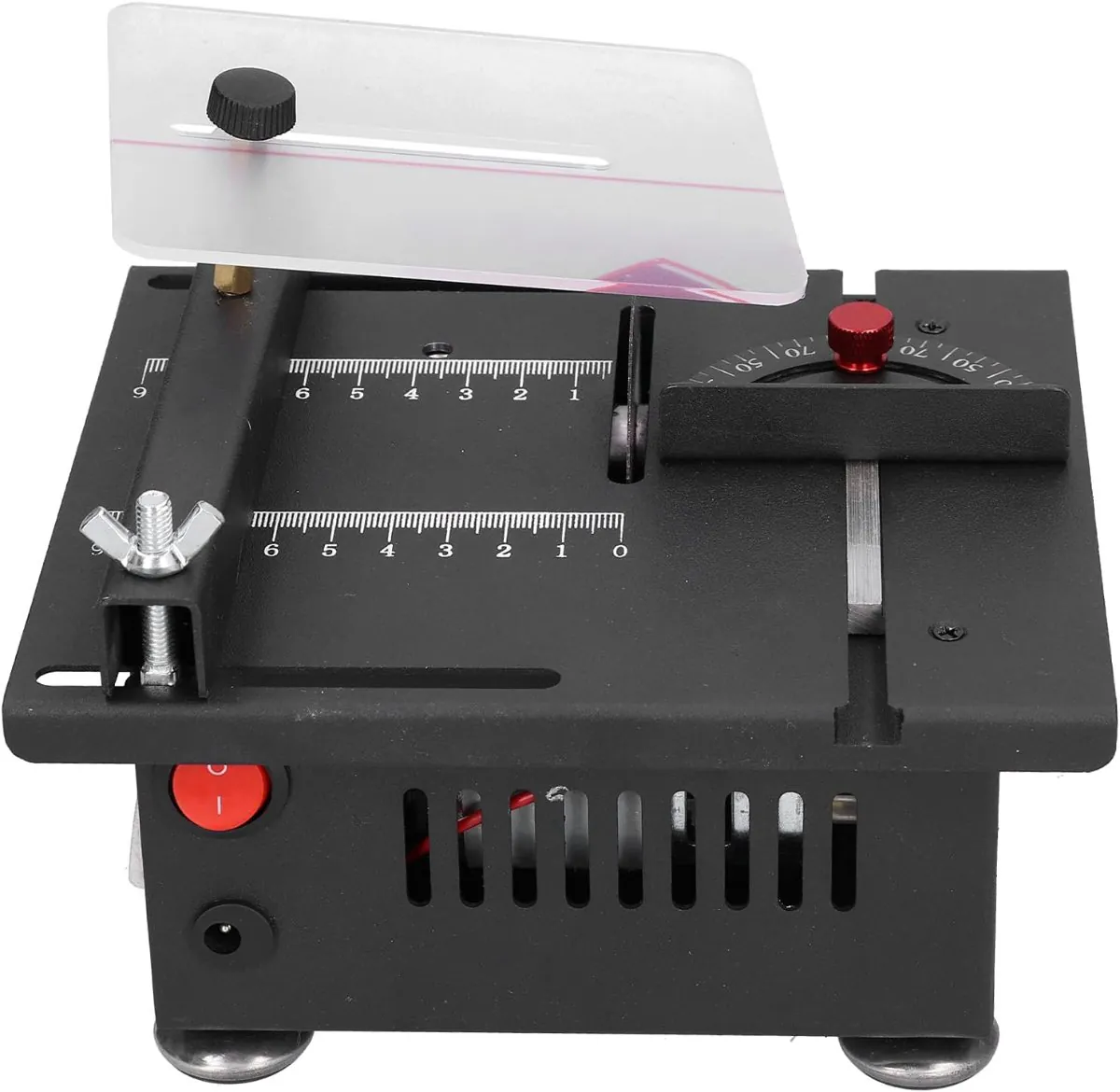
The JUNWU mini table saw is the most affordable genuine table saw on this list, giving budget-conscious hobbyists an entry point into powered table saw cutting without a large outlay. Its 100W motor reaches 6000rpm across seven adjustable speed settings, and the aluminium alloy handle and slide rail design add a bit more rigidity than the cheapest alternatives.
A 63mm blade and 0 to 90 degree cutting range make it capable of straight and angled cuts in hardwood, aluminium bar and acrylic, and the package includes a non-slip mat, spare hardware and a baffle bar to get started straight away. For small DIY projects, model-making and craft work it covers the basics without complication.
Being the cheapest option here, it is also the most limited in build quality and cutting capacity, and the listing explicitly warns it should not be used on cemented carbide, high-density press plate or high-hardness stone and steel. It suits first-time buyers testing whether a mini table saw fits their workflow, rather than anyone needing a durable, high-volume tool.
Pros
- Lowest price point of any genuinely qualifying table saw on this list
- Slide rail design adds cutting accuracy for the price
- Seven-speed adjustable motor
- Comes with mounting hardware and accessories included
Cons
- Entry-level build quality reflects the budget price
- Not rated for hard materials such as steel or stone
- Small brand with very few reviews at time of writing
Key specs: Motor: 100W | Speed: 6000rpm, 7-speed | Blade: 63mm | Angle: 0-90°
How to Choose a Table Saw
Benchtop, jobsite or cabinet
Benchtop and mini saws sit on an existing workbench and suit smaller or occasional projects. Jobsite saws add a folding stand for portability. Cabinet saws are heavier, belt-driven machines built to stay in one place in a workshop for serious or daily use.
Blade size and tooth count
Blade diameter sets maximum cutting depth, smaller portable and hobby saws typically run 150-210mm blades, while full-size saws run 250-315mm blades. Lower tooth counts rip faster with a rougher edge, higher tooth counts give a smoother finish for crosscuts and joinery.
Rip capacity and cutting depth
Check how wide a cut the saw can make to the right of the blade if you’ll be breaking down full sheets of ply or MDF. Craft and hobby saws are built for thin stock and small parts rather than dimensional timber, so match the saw’s cutting depth to your actual materials.
Safety features
A riving knife or splitter behind the blade helps prevent kickback, and a blade guard that stays closed until the material makes contact is worth having. Always use the supplied push stick for narrow rip cuts to keep hands clear of the blade.
For the rest of the workshop, the guides to circular saws, moisture meters and cordless drills are worth a look.
Verdict
For most hobbyists, the AVEQUZL mini table saw is a sensible starting point, with a sliding rail, seven speed settings and a 0-90 degree cutting angle in a shelf-sized body. The Cryfokt is the lighter option to lift on and off the bench, while the YUKERMARB adds an aluminium-alloy body. The HOOMFIT folds down small for the most portable setup, and buyers on a tight budget who mainly cut small, thin materials will get good value from the JUNWU. Match the saw’s genuine cutting capacity, not just its price, to the materials you’ll actually be cutting.
Frequently Asked Questions
What’s the difference between a benchtop, jobsite and cabinet table saw?
Benchtop table saws are lightweight, direct-drive units designed to sit on a workbench or small stand and suit smaller projects and occasional use. Jobsite saws add a folding stand and are built for portability between work locations while still offering reasonable rip capacity. Cabinet saws are heavier, belt-driven machines that stay in one place in a workshop and offer the greatest power, stability and cutting accuracy for serious or daily use.
Is a cordless table saw powerful enough for real woodworking?
Modern high-voltage cordless platforms, such as brushless systems designed specifically for table saws, can now match or come close to corded performance for most ripping and crosscutting tasks. Battery life will still be shorter than an all-day corded session, especially with dense hardwoods, so a spare battery is worthwhile for extended use. For occasional DIY and job-site work where mains power is not always available, cordless is a genuinely practical option rather than a compromise.
What blade size and tooth count should I look for?
Blade diameter determines maximum cutting depth, with smaller portable and hobby saws typically running blades from around 150 to 210mm and full-size benchtop or cabinet saws running 250 to 315mm blades. Tooth count is a trade-off between speed and finish, lower tooth counts rip faster but leave a rougher edge, while higher tooth counts give a smoother finish suited to crosscuts and fine joinery. Many saws come with a general-purpose blade that handles both reasonably well for typical DIY use.
Do I need a separate stand for a table saw?
Benchtop and mini table saws are designed to sit on an existing workbench, so a stand is optional rather than required. Jobsite table saws are usually sold with, or designed to accept, a folding stand that raises the saw to a comfortable working height and makes it easier to move between locations. A stable, level surface matters regardless of saw type, since vibration or an uneven base affects both cut accuracy and safety.
What safety features matter most on a table saw?
A riving knife or splitter behind the blade helps stop the workpiece pinching and kicking back towards the operator, one of the most common causes of table saw injury. A blade guard that stays in place until the material makes contact, along with a reliable switch and non-slip footing, are also worth checking before buying. Push sticks, included with most saws, should always be used for narrow rip cuts to keep hands well clear of the blade.
Can a table saw handle materials other than wood?
Many table saws, particularly multi-material models with tungsten carbide or specialty blades, can cut plastics, aluminium and other soft metals in addition to timber, though fitting the correct blade for the material is essential. Using a wood blade on metal, or vice versa, produces poor cuts and can damage the blade or motor. Always check the manufacturer’s blade and material recommendations before cutting anything other than the wood the saw was primarily designed for.
