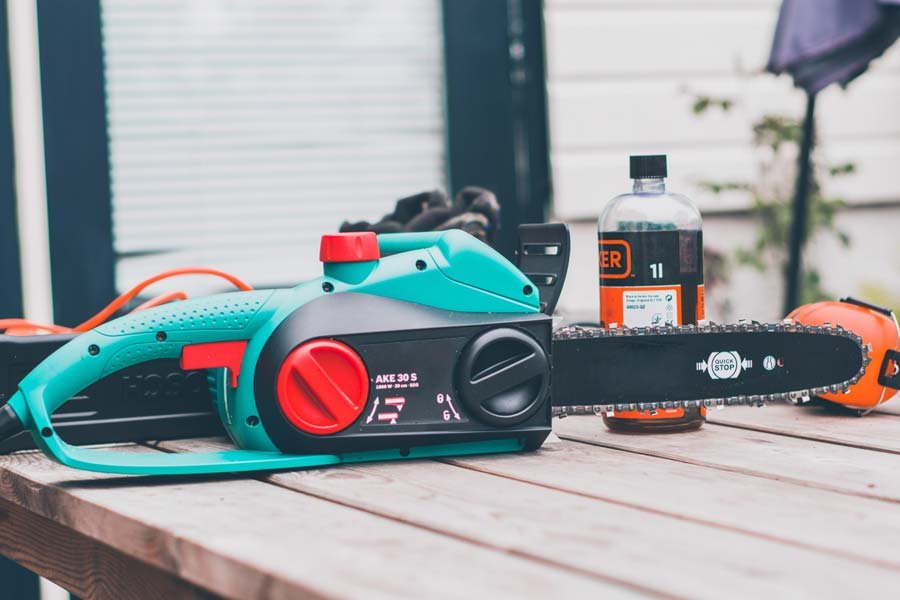
The best chainsaw in NZ overall is the Bosch AdvancedChain 36V-35-40, because its 35cm Oregon bar, 14 m/s chain speed and 31cm cutting capacity handle firewood and storm cleanup that smaller cordless saws cannot. Every pick below is built around a different job rather than one universal best saw.
One thing to be upfront about. Every saw in this guide is corded or battery powered, because no petrol chainsaw currently meets the delivery terms used to select these picks. Anyone who needs a petrol saw for all-day farm work or large-diameter felling is better served by a local dealer such as Husqvarna or Stihl, who can also handle servicing and parts.
These saws sit alongside the rest of the garden kit. For splitting what gets cut, see the log splitters guide, and for turning branches into mulch there is the wood chipper guide. Lighter tidy-up jobs are covered by the hedge trimmers and line trimmers guides.
| Pick | Best for | Bar | Key hardware |
|---|---|---|---|
| Bosch AdvancedChain 36V-35-40 | Overall | 35cm | 14 m/s, 36V, skin only |
| Baumr-AG 2000W Electric | Budget | 16 inch | 14.5 m/s, corded 2000W |
| Stanley FatMax V20 Kit | Cordless kit | 30cm | 7.7 m/s, 18V, battery included |
| Black+Decker 2200W Corded | Larger jobs | 450mm | 12.5 m/s, corded 2200W |
| Husqvarna Aspire 18V | Premium brand | 25cm | 14.5 m/s, 18V, skin only |
| Bosch PKE18V-30-28 | Mid-range cordless | 30cm | 9 m/s, 18V, skin only |
| Bosch EasyChain 18V-15-7 | Pruning | 15cm | 6.95 m/s, 18V, battery included |
| Stanley FatMax V20 Tool Only | Existing V20 owners | 30cm | 7.7 m/s, 18V, skin only |
The Best Chainsaws in NZ
1. Bosch AdvancedChain 36V-35-40 – Best Overall
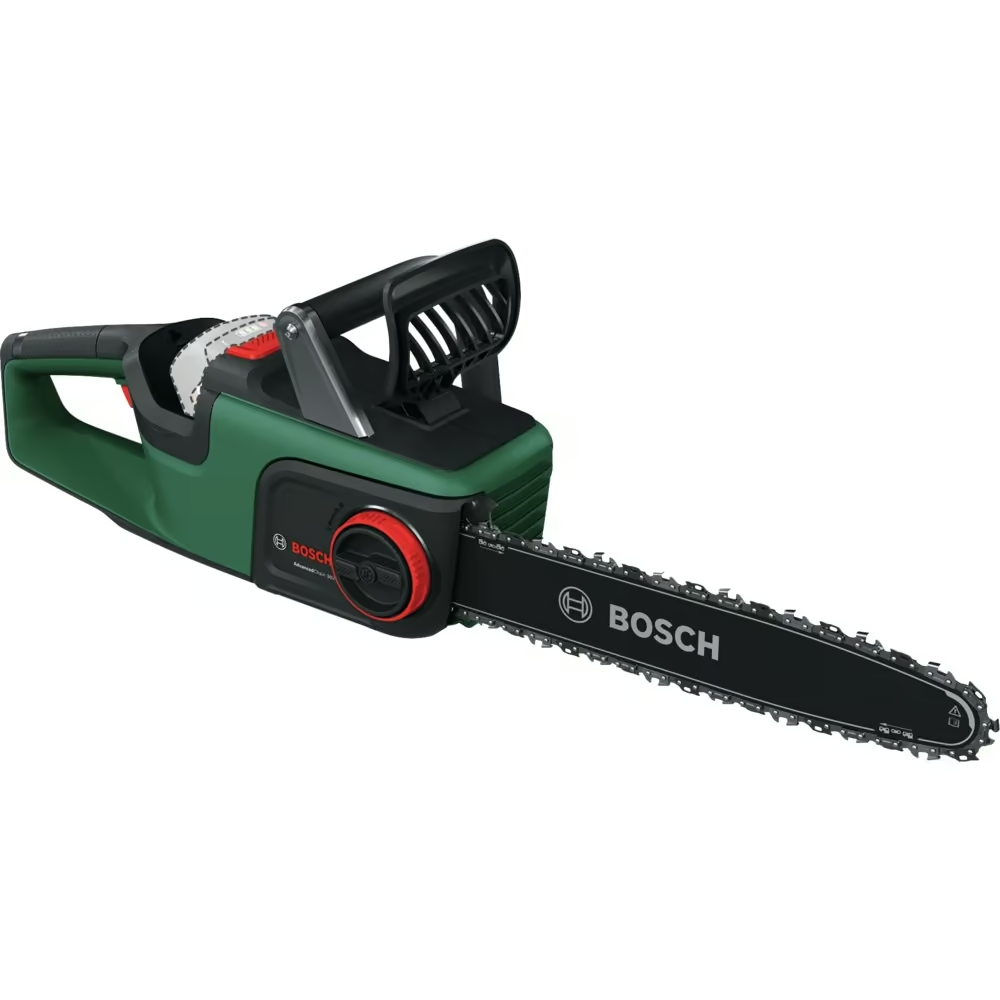
Bosch pairs a 35cm Oregon bar and 52-link chain with a brushless 36V motor, and the body weighs 3.5kg on its own or 4.2kg once the chain, bar and battery are fitted. Assembly is tool-free through the SDS system, with a pre-tensioning wheel on the bar and a collar that finishes the tensioning. A metal spike bumper gives the saw something to bite into.
Chain speed is 14 m/s and Bosch rates the maximum cutting diameter at 31cm, which covers most firewood rounds and windfall work on a lifestyle property. OptiCut speed control monitors the cut and detects a likely stall, then drops motor speed and lifts torque to keep the chain moving through hardwood and knots. Bosch quotes more than 60 cuts per charge on a 2.0Ah pack, so a larger 4.0Ah battery makes sense for longer sessions.
The saw ships without a battery or charger, and it runs on Bosch’s 36V Power for All system rather than the far more widely shared 18V alliance, so 18V packs cannot be carried across. Bosch does confirm a QuickStop braking system engaged by hand guard movement, with an indicator showing brake status, plus automatic chain lubrication and an oil level window. It suits people cutting larger timber who are willing to buy into the 36V platform.
Pros
- 35cm Oregon bar with a 31cm maximum cutting diameter
- 14 m/s chain speed, the fastest saw in this guide
- QuickStop kickback brake engaged by hand guard movement, with a brake status indicator
- Tool-free SDS chain tensioning and automatic chain lubrication with an oil level window
Cons
- Battery and charger are not included
- Uses the Bosch 36V Power for All system, so 18V alliance batteries do not fit
- 4.2kg in use once the battery is fitted
Key specs: 35cm Oregon bar, 52 drive links, 31cm cutting diameter | 36V brushless, Bosch 36V Power for All | 14 m/s chain speed | 3.5kg body only, 4.2kg with chain, bar and battery | Battery and charger not included
2. Baumr-AG 2000W Electric Chainsaw – Best Budget
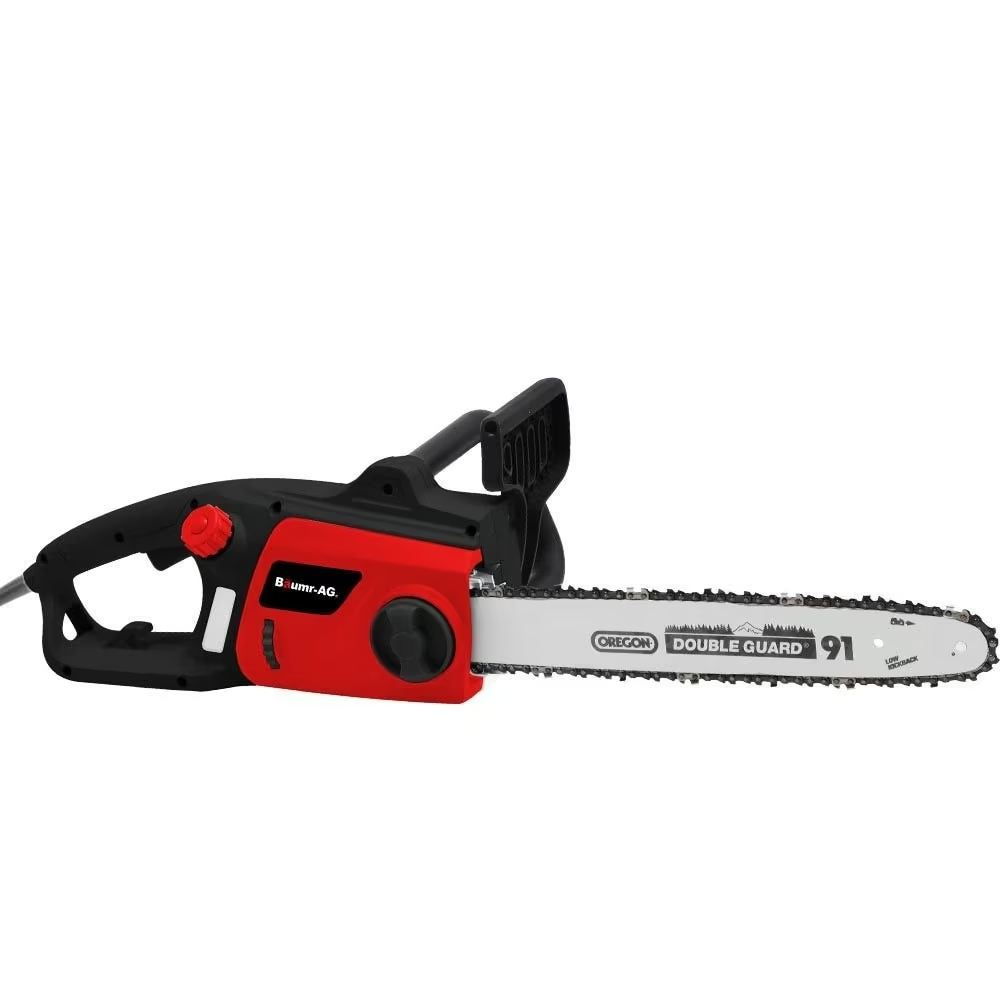
The Baumr-AG SC5 is a corded electric saw built around a 2000W motor running on mains power, with a listed weight of 5kg. The 16 inch bar and chain are genuine Oregon, and the product photography shows an Oregon Double Guard 91 low kickback bar. A tool-free chain tension wheel sits on the side of the body, so the chain can be retensioned without hunting for a scrench.
Baumr-AG quotes 8000rpm no load and a chain speed of 14.5 metres per second, driving a 3/8 inch pitch chain at 0.050 inch gauge with 56 drive links. An automatic chain lubrication system feeds oil continuously and a transparent tank window makes the oil level easy to check mid job. Because it is corded, run time is unlimited but the saw has to stay within reach of a power point and an outdoor extension lead.
The listed safety hardware is a front hand guard and a torsion spring chain brake, and the fitted chain is an Oregon low kickback type. At 5kg it is on the heavy side for extended overhead work, and the cord rules it out for paddock or bush work away from mains power. It suits a lifestyle block or large section owner cutting firewood and storm debris near the house.
Pros
- Genuine Oregon 16 inch bar and low kickback chain, not a generic cutting set
- Tool-free chain tensioning wheel plus a transparent oil tank window
- Automatic chain lubrication and a front hand guard with a torsion spring chain brake
- Corded 2000W motor gives unlimited run time with no battery to charge
Cons
- At 5kg it is heavier than most 16 inch cordless saws, which tells on long sessions
- Corded operation restricts the saw to areas served by mains power and an extension lead
- Sold through Australian channels, so there is no local New Zealand dealer support
Key specs: 16 inch Oregon bar and chain, 3/8 inch pitch, 56 drive links | 2000W corded electric | 14.5 m/s chain speed, 8000rpm no load | 5kg | Mains powered, no battery
3. Stanley FatMax V20 18V Chainsaw Kit – Best Cordless Kit
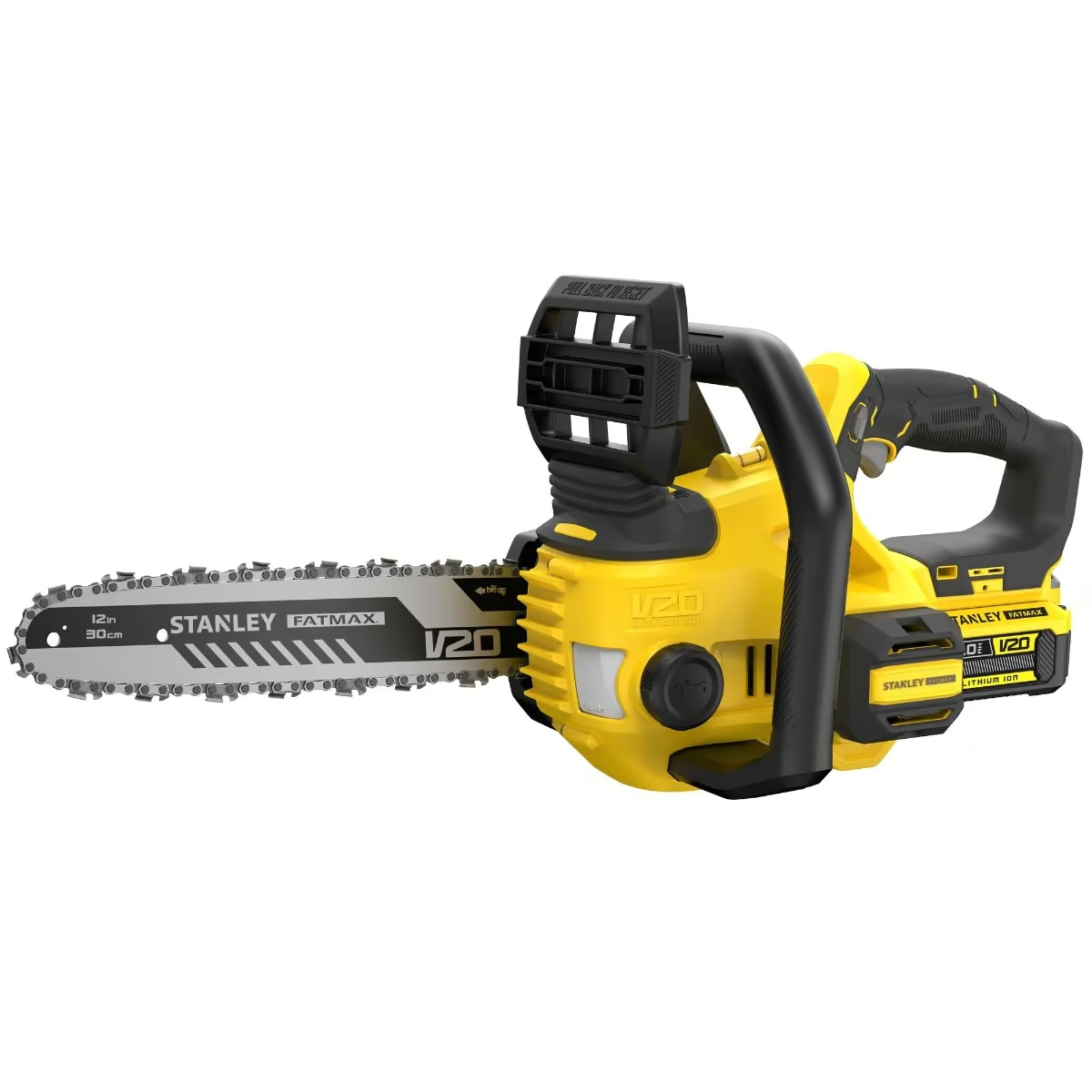
This is the 18V V20 chainsaw supplied as a complete kit, built around a 30cm guide bar with a 25cm maximum cutting length. The front hand guard doubles as the chain brake lever, and Stanley pairs a bar adjust locking knob with a separate chain tensioning knob so the chain can be retensioned without tools. A scabbard and bar wrench are packed alongside the bar and chain.
Maximum no-load chain speed is 7.7 m/s, and Stanley intends the saw for limbs and logs up to 26cm in diameter. A 115ml auto-oiling reservoir with an external oil level indicator handles chain lubrication, so the only routine task is topping up the bar oil and keeping the chain sharp. Because the kit ships with a 4.0Ah V20 battery and a 2A charger, it can be put to work the same day with no other purchase.
The 25cm cutting length is the real limit, which keeps this saw in the pruning, storm cleanup and firewood rounds category rather than felling. One battery and a slow 2A charger also means waiting between packs on a long afternoon, so a second pack is worth budgeting for. It suits a homeowner buying into the V20 platform for the first time and wanting the battery and charger in the same box.
Pros
- Complete kit with a 4.0Ah V20 battery and 2A charger included
- Chain brake built into the front hand guard, which Stanley states stops the chain in under a second
- Tool-free chain tensioning with a dedicated bar lock and tensioning knob
- Auto-oiling with a 115ml reservoir and an external oil level indicator
Cons
- Maximum cutting length of 25cm rules out larger trunks
- Only one battery and a slow 2A charger, so sustained work needs a spare pack
- Heavier than the 2.6kg marketing figure suggests, at 3.14kg before the battery goes on
Key specs: 30cm bar, 25cm max cutting length | 18V Stanley FatMax V20 | 7.7 m/s max chain speed | 3.14kg without battery | 4.0Ah battery and 2A charger included
4. Black+Decker 2200W Corded Chainsaw – Best Corded for Larger Jobs
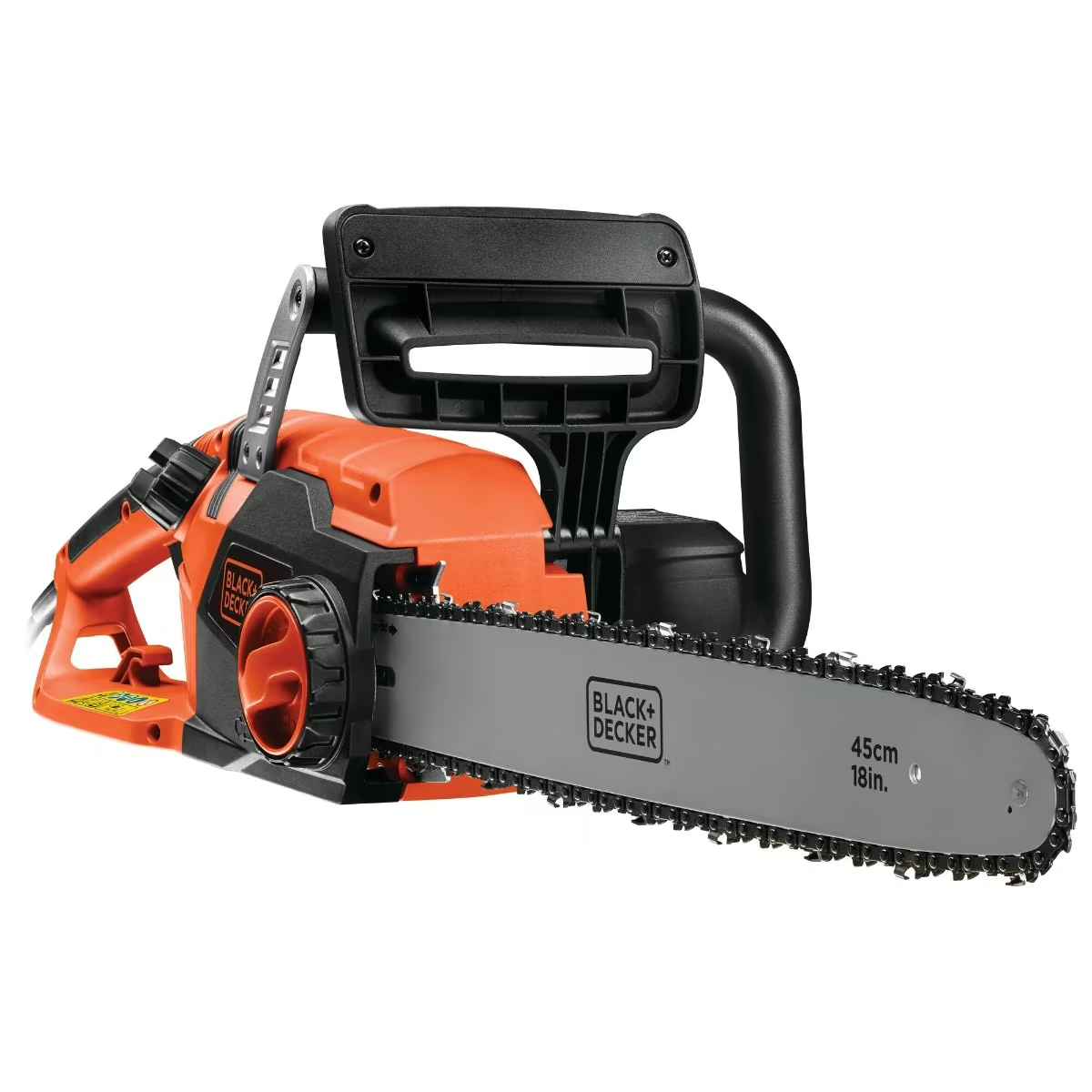
This is a mains-powered saw running a 2200W motor, driving a 450mm bar with a 436mm maximum cutting length. It is a genuinely heavy tool at 5.66kg, with a full wrap-over front handle bar, a secondary handle and an anti-vibration system paired with a rubber overmould rear handle. Chain fitting and tensioning are tool-free, and the 150ml oil tank has a viewing window.
Chain speed is 12.5 m/s with no load, and the saw comes fitted with a low kickback chain. An integrated auto oil system lubricates the chain during use, and Black+Decker states the chain brake system automatically cuts power within 0.15 seconds if the saw kicks back. Being corded, output does not fade partway through a job, which is the practical argument for it when sectioning a fallen tree.
The trade-offs are mobility and mass. It needs an outdoor-rated extension lead and an RCD, and the cord limits how far from the house it can realistically go, while 5.66kg is noticeably more to hold up than a compact cordless saw. It suits a buyer with larger timber to cut close to a power point who wants bar length and sustained output rather than portability.
Pros
- 450mm bar with a 436mm maximum cutting length for larger logs
- Chain brake system that Black+Decker states cuts power within 0.15 seconds on kickback
- Low kickback chain fitted as standard, plus a secondary handle and anti-vibration system
- Auto oil system with a 150ml tank and viewing window, and tool-free chain tensioning
Cons
- At 5.66kg it is the heaviest saw in this guide and tiring to hold for long periods
- Corded operation ties it to an extension lead and limits working range
- No battery option, so it cannot follow the work away from mains power
Key specs: 450mm bar, 436mm max cutting length | 2200W corded, 230V | 12.5 m/s chain speed | 5.66kg | Mains powered, no battery
5. Husqvarna Aspire Chainsaw 18V – Best Premium Brand Cordless
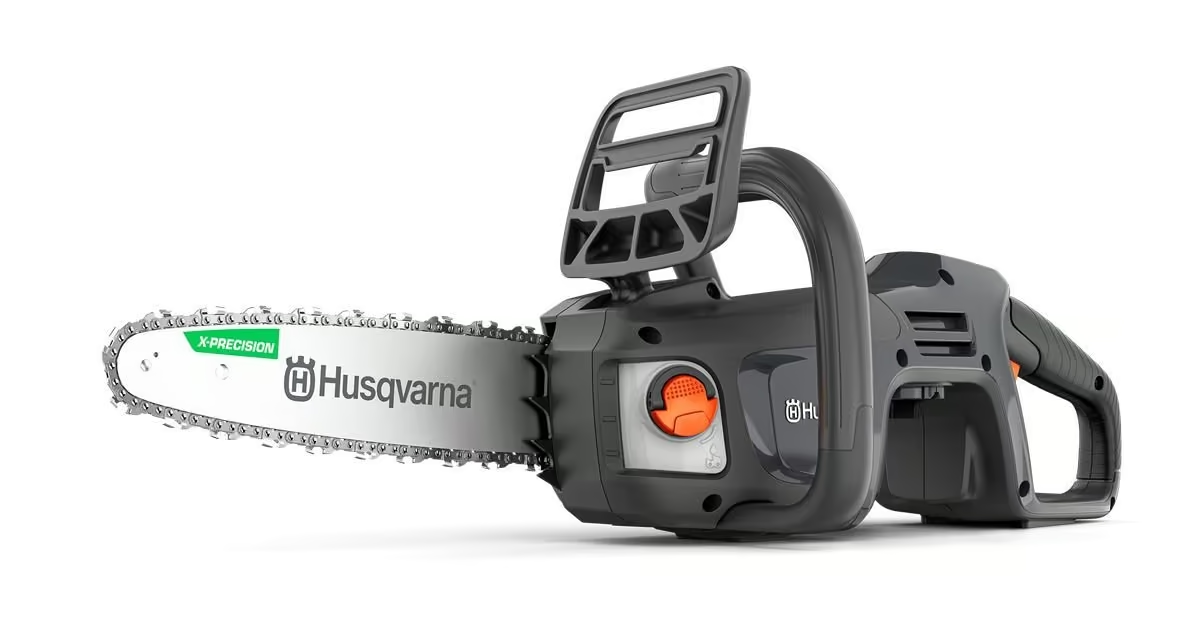
The Aspire runs a 25cm bar with a sprocket nose and a 1/4 inch mini chain, and Husqvarna lists the bare tool at 2.2kg excluding battery and cutting equipment, which makes it the lightest saw here on paper. Chain tensioning and bar assembly are done without tools. A digital interface handles start and stop, and shows battery status alongside chain brake activation.
Chain speed is quoted at 14.5 m/s at maximum power from a 0.43kW output shaft, which suits limbing, firewood rounds and storm cleanup rather than felling. Sound pressure at the operator’s ear is 89 dB(A), which keeps it viable for suburban section work. The saw shuts down automatically after 180 seconds of idle time, which preserves charge and lowers the risk of an unintended start.
This listing is the skin only, so a battery and charger are needed before it will run. The payoff is the platform, because Husqvarna states the 18V Power for All Alliance battery covers more than 10 brands and over 100 devices, including Bosch home and garden tools. It suits an owner who already holds an 18V Power for All pack, or one deliberately building a shared cross-brand garden kit.
Pros
- Genuine cross-brand battery, with Husqvarna stating the 18V Power for All Alliance pack covers 10-plus brands
- Chain brake fitted, with activation status shown on the digital interface
- Light at 2.2kg excluding battery and cutting equipment
- Tool-free chain tensioning and bar assembly
Cons
- Skin only, so a battery and charger must be bought separately
- A 0.43kW output and 25cm bar restrict it to limbing and small rounds
- Husqvarna does not state automatic chain lubrication for this model
Key specs: 25cm bar | 18V Power for All Alliance | 14.5 m/s at max power | 2.2kg excluding battery and cutting equipment | Battery and charger not included
6. Bosch PKE18V-30-28 – Best Mid-Range Cordless
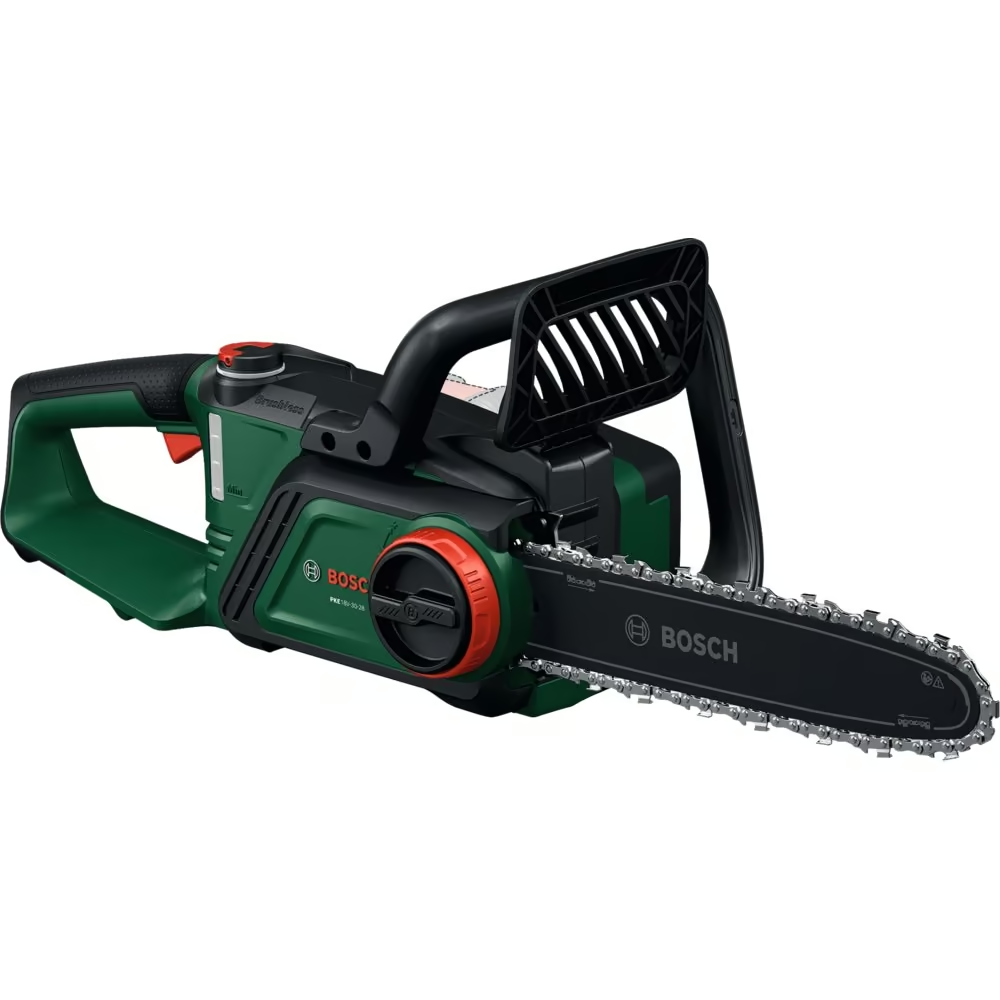
This one sits between Bosch’s compact pruner and its 36V saw, with a 30cm bar carrying 45 drive links and a high-torque brushless 18V motor behind it. The body weighs 3.3kg, rising to 4.5kg once the chain, bar and battery are fitted. Chain tensioning and replacement are handled by the same tool-free concentric SDS system Bosch uses across the range, and a metal spike bumper steadies the saw against the wood.
Chain speed is 9 m/s, noticeably slower than the 14 m/s of the 36V AdvancedChain, so progress through hardwood is steadier rather than quick. OptiCut technology watches the cut and detects potential stalls, automatically reducing motor speed and increasing torque to keep going through knots. Bosch quotes up to 70 cuts per charge on a 4.0Ah battery, and a 160ml oil tank feeds an automatic oiling system.
It is sold as a bare tool with no battery or charger, so the value depends on already owning 18V Power for All Alliance packs. On safety, Bosch states the saw uses a combined electrical and mechanical braking system for enhanced control of kickback. It suits property owners who want a real 30cm bar for firewood and storm cleanup without moving to a second battery platform.
Pros
- 30cm bar running on the widely shared 18V Power for All Alliance battery
- Automatic oiling with a 160ml tank and an easy-fill cap
- Electrical and mechanical dual braking system for kickback control
- Tool-free concentric SDS chain tensioning and a metal spike bumper
Cons
- Battery and charger are not included
- 9 m/s chain speed is well below the 36V model
- 4.5kg in use once the chain, bar and battery are fitted
Key specs: 30cm bar, 45 drive links | 18V brushless, 18V Power for All Alliance | 9 m/s chain speed | 3.3kg body only, 4.5kg with chain, bar and battery | Battery and charger not included
7. Bosch EasyChain 18V-15-7 – Best for Pruning
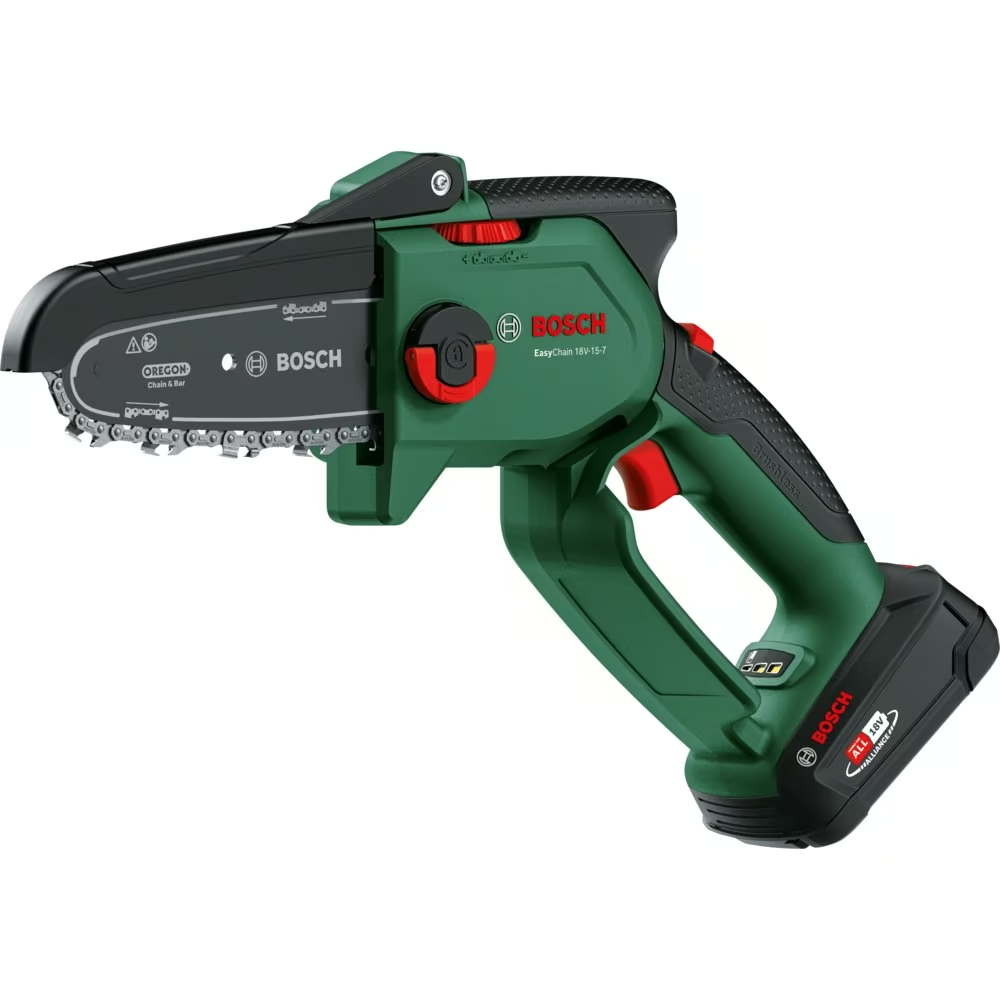
The EasyChain runs a 15cm Oregon bar off a brushless 18V motor, and it is genuinely light at 1.3kg for the body and 1.7kg once the chain, bar and battery are on. Bosch uses an ultra-compact gearing system to keep the tool short at 370mm overall, which is what lets it reach into tight branch unions. The grip is shaped for either left or right handed use.
Chain speed is 6.95 m/s and the rated maximum cutting diameter is 13cm, so this is a pruning and limbing tool rather than a felling saw. Bosch quotes 160 cuts of 50mm diameter wood from a single 2.5Ah charge, which is a realistic afternoon of hedge and orchard tidying. The SDS system tensions and swaps the chain without tools, and a chain tension aid plus 50ml of chainsaw oil are supplied in the box.
Two omissions matter. Bosch lists automatic oiling as not fitted, so the chain has to be oiled by hand before and during use, and Bosch does not list a chain brake for this model, which is common on compact pruners but worth knowing. This version arrives with a 2.5Ah battery and charger on the 18V Power for All Alliance, making it an easy first cordless garden tool for light pruning only.
Pros
- Very light at 1.3kg body only and 1.7kg with chain, bar and battery
- Tool-free SDS chain tensioning and replacement
- Brushless motor on the widely shared 18V Power for All Alliance battery
- Supplied with a 2.5Ah battery and charger, so no extra purchase is needed
Cons
- No automatic chain oiling, so the chain must be oiled by hand
- Bosch does not list a chain brake for this model, so it is best kept to light pruning
- A 13cm maximum cutting diameter limits it to pruning work
Key specs: 15cm Oregon bar, 13cm cutting diameter | 18V brushless, 18V Power for All Alliance | 6.95 m/s chain speed | 1.3kg body only, 1.7kg with chain, bar and battery | 2.5Ah battery and charger included
8. Stanley FatMax V20 18V Chainsaw, Tool Only – Best Value for V20 Owners
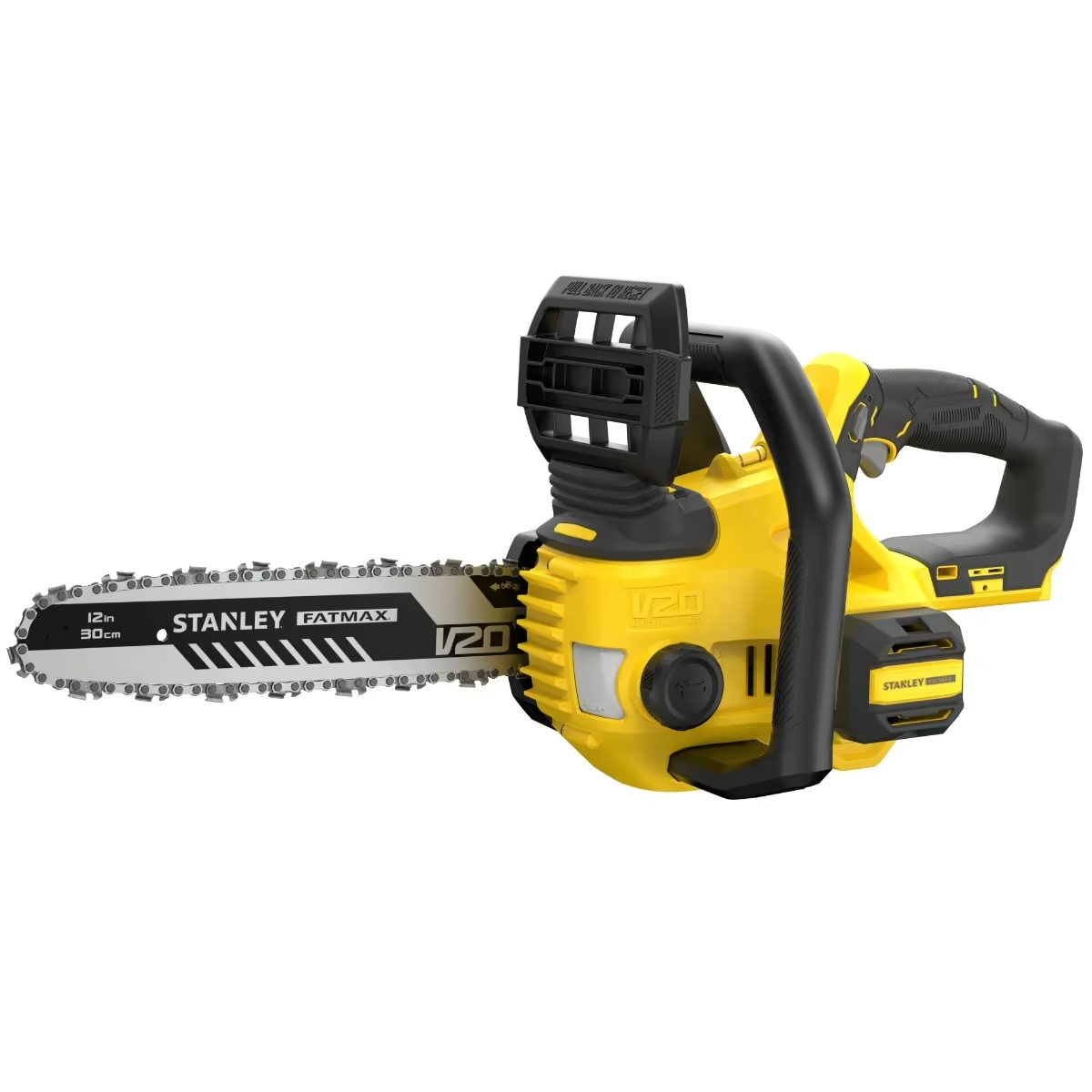
Mechanically this is the same saw as the Stanley kit above, sold as a bare unit. The box holds the chainsaw, a 30cm bar and chain, a scabbard and a wrench, with no battery and no charger. The combined chain brake and front hand guard, the bubble level and the integrated hanging hook all carry over, and the weight is 3.14kg without a battery pack.
Performance figures are identical to the kit at 7.7 m/s maximum no-load chain speed, a 25cm maximum cutting length and a 115ml auto-oiling reservoir. The difference is battery choice, because Stanley lists four compatible V20 packs, so an owner already running V20 gear can fit the largest pack they own rather than being tied to the 4.0Ah unit in the kit. The same packs move between this saw, the trimmers, blowers and drills.
The obvious catch is that it is unusable on its own, and a first-time buyer would need to add both a pack and a charger, which usually costs more than the gap to the full kit. Anyone who already owns V20 batteries avoids paying twice for hardware sitting in the shed. It suits an existing V20 owner adding a light pruning and firewood saw to a system they have already committed to.
Pros
- Runs on V20 packs already owned, with four compatible batteries listed by Stanley
- Same 30cm bar, 7.7 m/s chain speed and chain brake as the full kit
- Auto-oiling and tool-free chain tensioning keep maintenance to bar oil and sharpening
- Ships with a scabbard and wrench, so no extra accessories are needed
Cons
- No battery or charger supplied, so it is not a standalone purchase
- Restricted to a 25cm maximum cutting length, the same as the kit
- Heavier than the 2.6kg marketing figure suggests, at 3.14kg without a battery
Key specs: 30cm bar, 25cm max cutting length | 18V Stanley FatMax V20 | 7.7 m/s max chain speed | 3.14kg without battery | Tool only, no battery or charger
How to choose the best chainsaw in NZ
Start with the bar length, because it sets what the saw can safely cut. A useful rule is to pick a bar a little longer than the widest timber being cut, so a 25cm to 30cm bar suits branches and small firewood while a 40cm or 45cm bar handles bigger rounds. Going longer than needed makes the saw heavier and harder to control, which matters more than raw reach.
Then decide between corded and cordless. A corded saw gives constant power for as long as the extension lead reaches, which suits a woodpile near the house. A cordless saw goes anywhere and starts instantly, but runtime is limited by the battery, and on most brands the battery and charger are the biggest part of the cost.
That leads to the skin versus kit question. A skin, or tool only listing, has no battery or charger and only makes sense if the right batteries are already in the shed. Buying into a battery platform for the first time is almost always cheaper as a kit, even though the sticker price looks higher.
Battery platforms are not interchangeable, so check which one a saw uses before committing. The Bosch EasyChain, the Bosch PKE and the Husqvarna Aspire all run on the 18V Power for All Alliance, which Husqvarna says spans more than 10 brands. The Bosch AdvancedChain uses Bosch 36V instead, and the Stanley saws use Stanley FatMax V20, so packs do not cross between those systems.
Check the safety features rather than assuming them. A chain brake, a front hand guard and automatic chain lubrication are the ones that matter most, and not every compact saw has all three. Tool-free chain tensioning also makes it far more likely the chain gets kept at the correct tension.
Finally, think about consumables before buying. A chainsaw needs bar and chain oil, and the chain needs regular sharpening or replacing, so it is worth checking that spare chains for that bar length are easy to buy in New Zealand.
Chainsaw safety basics
A chainsaw is the most dangerous tool most households will ever own, and protective gear is not optional. The standard kit is a helmet with a face shield, hearing protection, cut-resistant chaps or trousers, sturdy gloves and solid boots. Leg protection matters most, because a large share of chainsaw injuries are to the legs. None of the saws in this guide are supplied with protective gear, so it needs to be budgeted separately.
Technique matters as much as gear. Keep both hands on the saw, stand to the side of the cutting line rather than directly behind the bar, and avoid cutting with the tip of the bar, which is what causes kickback. Cutting above shoulder height, working from a ladder, or felling standing trees are all jobs worth leaving to someone trained and insured.
The verdict
The Bosch AdvancedChain 36V-35-40 is the saw to buy for most properties, because it has the bar length, the chain speed and the confirmed QuickStop brake to handle real firewood work rather than just tidying. Anyone spending as little as possible should take the corded Baumr-AG 2000W, which brings a genuine Oregon bar and chain for the money.
For a first cordless saw with everything in the box, the Stanley FatMax V20 Kit is the straightforward answer, and existing V20 owners should buy the tool-only version instead. If the job is purely pruning, the Bosch EasyChain is small and light enough to work one handed, provided its manual oiling and lack of a listed chain brake are understood before buying.
Frequently Asked Questions
Is an electric or petrol chainsaw better for home use in NZ?
For most households an electric or battery chainsaw is the better fit. They start at the push of a button, run far quieter, produce no exhaust fumes and need almost no servicing beyond chain care. Petrol still wins for all-day cutting, large-diameter timber and work far from power, which is why it remains the standard on farms and for professional arborists.
What size chainsaw bar do I need?
Choose a bar slightly longer than the widest timber being cut. A 15cm to 25cm bar suits pruning and light branch work, 30cm to 35cm covers general garden tidy-up and small firewood, and 45cm is for larger rounds. A longer bar is heavier and harder to control, so bigger is not automatically better.
What safety gear do I need to use a chainsaw?
At minimum, cut-resistant chaps or trousers, a helmet with face shield, hearing protection, gloves and sturdy boots. Leg protection is the priority because a large share of chainsaw injuries happen to the legs. None of the saws in this guide are sold with protective gear, so it needs to be budgeted separately.
Which of these chainsaws have a chain brake?
A chain brake stops the chain or cuts power when the saw kicks back, and it is the most important safety feature on a chainsaw. The Bosch AdvancedChain, the Bosch PKE18V-30-28, both Stanley FatMax V20 models, the Black+Decker corded saw, the Baumr-AG and the Husqvarna Aspire all have one listed by their manufacturer. Bosch does not list a chain brake for the compact EasyChain pruning saw, which is common on small pruners but worth knowing before buying.
Should I buy a chainsaw skin or a full kit?
A skin, sometimes listed as tool only, comes without a battery or charger and is the cheaper option only if compatible batteries are already owned. Anyone starting fresh should buy the kit, because a battery and charger bought separately usually costs more than the difference. Check the voltage and battery platform matches any existing tools before choosing a skin.
How often does a chainsaw chain need sharpening?
A chain dulls noticeably after a few hours of cutting, and much faster if it touches soil, grit or nails. The clearest sign is when the saw starts producing fine dust rather than coarse chips, or needs to be pushed into the cut rather than pulling itself in. Sharpening with a file is straightforward once learned, and replacement chains are inexpensive.
