
The best cheap smartphone in NZ overall is the Samsung Galaxy A17 5G, a 6.7in Super AMOLED handset pairing a 5000mAh battery with the longest software support in this price bracket. On a budget phone, years of security updates matter more than headline specs, because they decide how long it stays safe to use.
Our rankings are never sold.
The best cheap smartphone in NZ overall is the Samsung Galaxy A17 5G, thanks to its bright AMOLED screen and six years of software updates. But the best budget phone for you depends on what you value most, whether that is battery life, a sharp screen, 5G or the lowest possible price.
This guide compares the 10 best cheap smartphones you can buy in New Zealand in 2026, all widely available from local retailers, with honest pros and cons for each. If you are willing to spend a little more, it is worth reading our full smartphone buying guide and our rundown of mid-range smartphones too, but every phone below is chosen to deliver the most for a modest budget.
Quick Comparison
| Phone | Best for | Screen | Battery | 5G | |
|---|---|---|---|---|---|
| 1. Samsung Galaxy A17 5G | Best overall | 6.7in AMOLED 90Hz | 5000mAh 25W | Yes | Check on Amazon |
| 2. Samsung Galaxy A26 5G | Durability & camera | 6.7in AMOLED 120Hz | 5000mAh 25W | Yes | Check on Amazon |
| 3. Motorola Moto G06 | Big screen, basics | 6.88in 120Hz HD+ | 5200mAh 10W | No | Check on Amazon |
| 4. Motorola Moto G57 | Rugged budget 5G | 6.72in 120Hz FHD+ | 5200mAh 30W | Yes | Check on Amazon |
| 5. Motorola Moto G15 | Sharp screen on 4G | 6.72in 60Hz FHD+ | 5200mAh 18W | No | Check on Amazon |
| 6. Oppo A5 | Two-day battery | 6.67in 90Hz HD+ | 6000mAh 45W | No | Check on Amazon |
| 7. Oppo A6x 5G | Cheap 5G all-rounder | 6.75in 120Hz HD+ | ~6500mAh | Yes | Check on Amazon |
| 8. Oppo A17 | Ultra-cheap first phone | 6.56in 60Hz HD+ | 5000mAh | No | Check on Amazon |
| 9. Xiaomi Redmi 15C | Simple big-screen phone | 6.9in 120Hz HD+ | 6000mAh 33W | No | Check on Amazon |
| 10. Xiaomi Redmi 15 5G | Battery champion | 6.9in 144Hz FHD+ | 7000mAh 33W | Yes | Check on Amazon |
1. Samsung Galaxy A17 5G – Best Overall
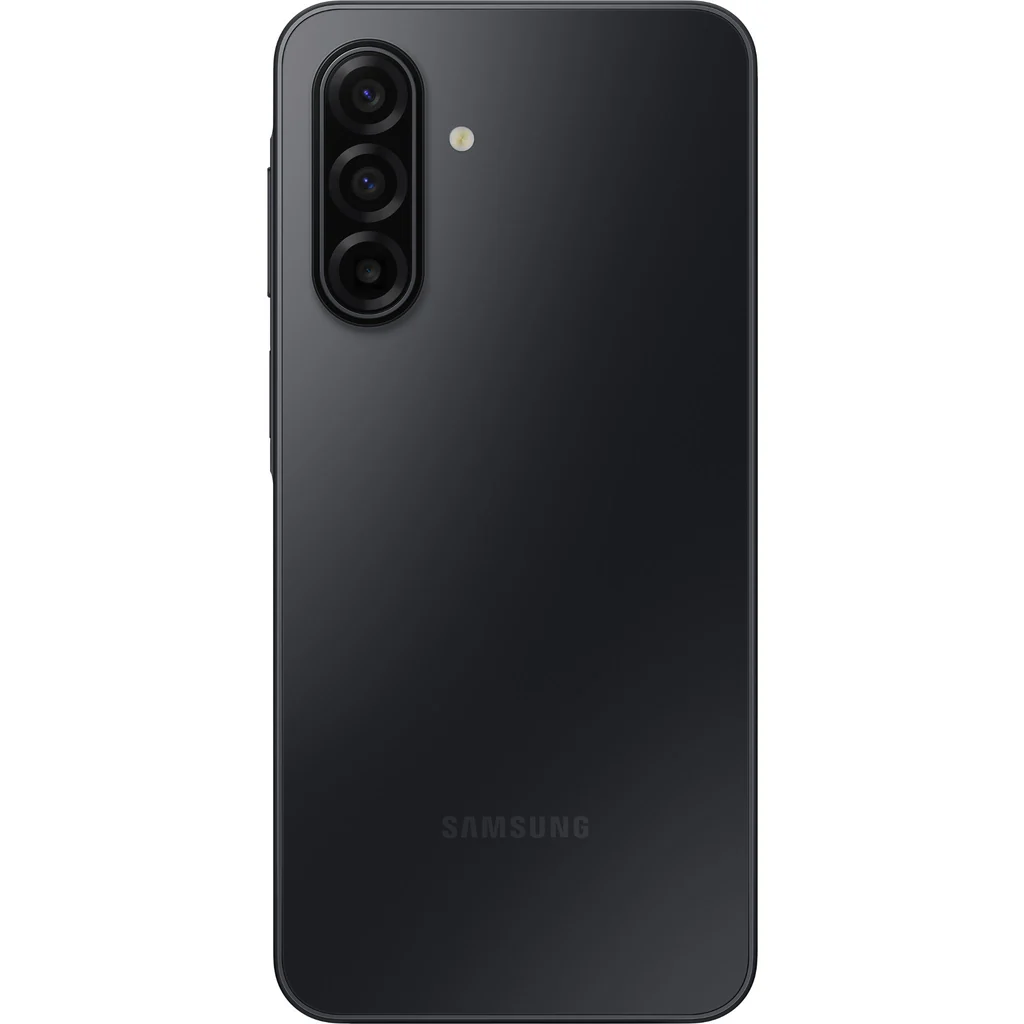
The best cheap smartphone in NZ overall is the Samsung Galaxy A17 5G, thanks to its bright 6.7in Super AMOLED screen and class-leading software support for the price.
Samsung positions the A17 5G as the safe default, and the research backs that up. It pairs a 6.7in Super AMOLED panel (90Hz, 1080p) with the Exynos 1330 and a 5000mAh battery, and it ships on Android 15 with up to six major OS upgrades, unusually long support at this end of the market, so the phone stays current for years rather than months. The 50MP main camera adds optical stabilisation, and reviewers at GSMArena singled out selfie quality and steady all-day battery life. It is IP54 splash-resistant and weighs 192g. Owners on 4GB configurations report occasional lag, and GSMArena notes the screen is not especially bright and there are no stereo speakers, so heavy multitaskers should look at the A26 below. For most Kiwis who mainly call, message and stream, it is the most sensible budget buy.
Pros
- Long six-year OS update promise
- Bright AMOLED with an OIS main camera
- Solid all-day battery life
Cons
- Entry 4GB model can lag
- No stereo speakers
- Only IP54 splash resistance
Key specs: 6.7in Super AMOLED 90Hz; Exynos 1330; 4/6/8GB RAM; 128GB (microSD); 5000mAh 25W; 50MP OIS + 5MP + 2MP; 13MP front; Android 15; IP54; 5G; 192g. Model SM-A176B.
2. Samsung Galaxy A26 5G – Best Step-Up for Durability & Camera
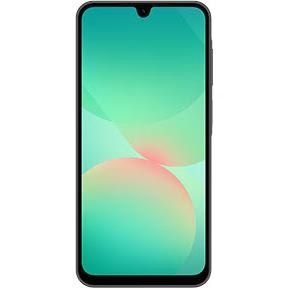
The Galaxy A26 5G is the best step-up pick, adding IP67 water resistance, a smoother 120Hz screen and 4K video to the familiar Samsung experience.
If the A17 feels too basic, the A26 5G is the natural upgrade without leaving the budget tier. It keeps the 6.7in Super AMOLED but pushes it to 120Hz, and the faster Exynos 1380 handles everyday multitasking more comfortably. The headline improvement is durability: an IP67 rating means it survives dust and a brief dunk, rare at this price. The 50MP main camera again has OIS, the ultrawide jumps to 8MP, and video records up to 4K. GSMArena praised the clean, durable design and excellent selfies, while flagging underwhelming battery life, slow charging and, like the A17, no stereo speakers. It retains a microSD slot and weighs 200g. This is the pick for someone who wants a Samsung that feels a notch more premium and can shrug off rain and spills.
Pros
- IP67 water and dust resistance
- 120Hz AMOLED screen
- 4K video and strong selfies
Cons
- Battery life only average
- Slow charging
- No stereo speakers
Key specs: 6.7in Super AMOLED 120Hz; Exynos 1380; 6/8GB RAM; 128GB (microSD); 5000mAh 25W; 50MP OIS + 8MP UW + 2MP; 13MP front; Android 15 / One UI 7; IP67; 5G; 200g. Model SM-A266B.
3. Motorola Moto G06 – Best Big Screen for Basics
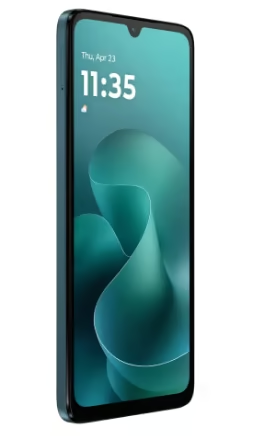
The Moto G06 is the best choice for a huge screen on the tightest budget, with a 6.88in 120Hz display and a headphone jack most rivals have dropped.
Motorola’s entry Moto G06 is built around size and simplicity. Its 6.88in display is one of the largest here and runs at 120Hz, though it is only HD+ resolution, so text and video look softer than the sharper Samsung and Xiaomi panels. The MediaTek Helio G81 Ultra and 4GB RAM are enough for messaging, maps and video but not much more, and charging is slow at just 10W despite the 5200mAh battery. It keeps a 3.5mm headphone jack, a dedicated microSD slot and stereo speakers, and adds IP64 dust and splash resistance. GSMArena owners find it acceptable for basics and cheap, but note it is stuck on Android 15 with no upgrade to 16, and performance is modest. It is a sensible, no-frills phone for a first-time user, an older relative or a backup handset.
Pros
- Very large 120Hz screen
- Keeps headphone jack and microSD
- IP64 dust and splash resistance
Cons
- HD+ resolution only
- Slow 10W charging
- Limited software support
Key specs: 6.88in IPS 120Hz HD+; Helio G81 Ultra; 4GB RAM; 64GB (microSD); 5200mAh 10W; 50MP main; 8MP front; Android 15; IP64; 4G only; 194g.
4. Motorola Moto G57 – Best Rugged Budget 5G
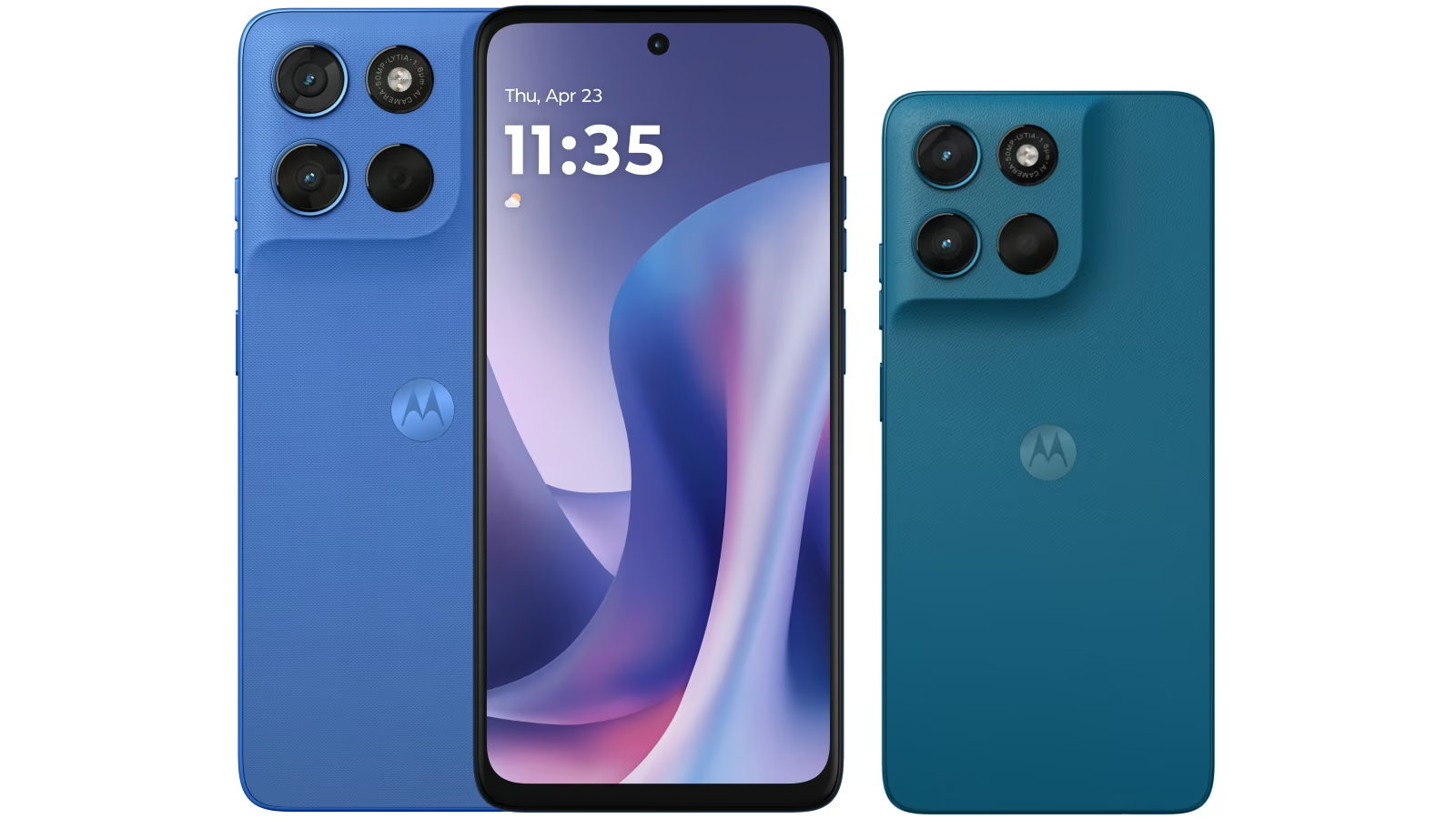
The Moto G57 is the best rugged budget 5G phone, combining a Snapdragon chip, military-grade durability and 30W charging in an affordable package.
The G57 is the performance and durability pick of the Motorola trio and the one to choose if you want 5G. It runs the Snapdragon 6s Gen 4, a genuine step up from the MediaTek chips in the G06 and G15, and pairs a sharp 6.72in 120Hz FHD+ screen with 30W TurboPower charging and a 5200mAh battery rated for around 47 hours. It is IP64 and MIL-STD-810H tested with Gorilla Glass 7i, so it handles knocks and drops better than most budget phones. Stereo speakers with Dolby Atmos and a 3.5mm jack round it out. The clear weakness, per EFTM’s launch coverage, is software: it ships on Android 16 but reportedly gets no OS version upgrades and under three years of security patches, so it will age faster than the Samsungs. Note the configuration varies by region, global listings show 8GB/128GB while Australian retail is often 4GB/128GB, so check the exact variant before buying.
Pros
- Fastest chip here (Snapdragon 6s Gen 4)
- Rugged MIL-STD-810H build
- 30W charging and 5G
Cons
- Weak software update policy
- RAM varies by region
- No microSD slot
Key specs: 6.72in IPS 120Hz FHD+; Snapdragon 6s Gen 4; 8GB/128GB (global) or 4GB/128GB (AU); 5200mAh 30W; 50MP + 8MP UW; 8MP front; Android 16; IP64 + MIL-STD-810H; 5G.
5. Motorola Moto G15 – Best Sharp Screen on 4G
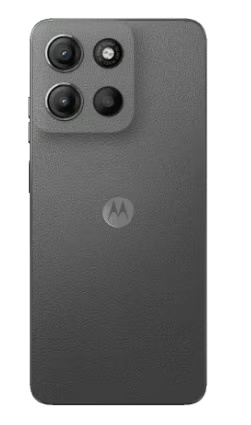
The Moto G15 is the best value FHD+ 4G all-rounder, with a sharper screen than the G06 and faster charging, for buyers who do not need 5G.
The G15 slots below the G57 as the sensible 4G all-rounder. Its 6.72in FHD+ screen is noticeably sharper than the G06’s HD+ panel, though it is capped at 60Hz, which reviewers flag as its main compromise, one GSMArena owner said 90Hz would have made it a very good phone. It uses the Helio G81 chip with 4GB RAM, charges at a reasonable 18W (faster than the G06) from its 5200mAh battery, and offers the widest colour choice of the group. It keeps stereo speakers, a headphone jack, FM radio and microSD, and carries an IP54 rating. At 190g it is a touch more manageable than the larger Motorolas. Owners describe it as quietly capable and easy to recommend for the money. Choose it over the G06 if screen sharpness and charging speed matter, and over the G57 if you want to save money and do not need 5G.
Pros
- Sharp FHD+ screen
- 18W charging
- Lots of colours and a headphone jack
Cons
- 60Hz refresh only
- 4G only
- Modest chip
Key specs: 6.72in IPS 60Hz FHD+; Helio G81; 4GB RAM; 128GB (microSD); 5200mAh 18W; 50MP + 5MP UW; 8MP front; Android 15; IP54; 4G only; 190g.
6. Oppo A5 – Best Two-Day Battery
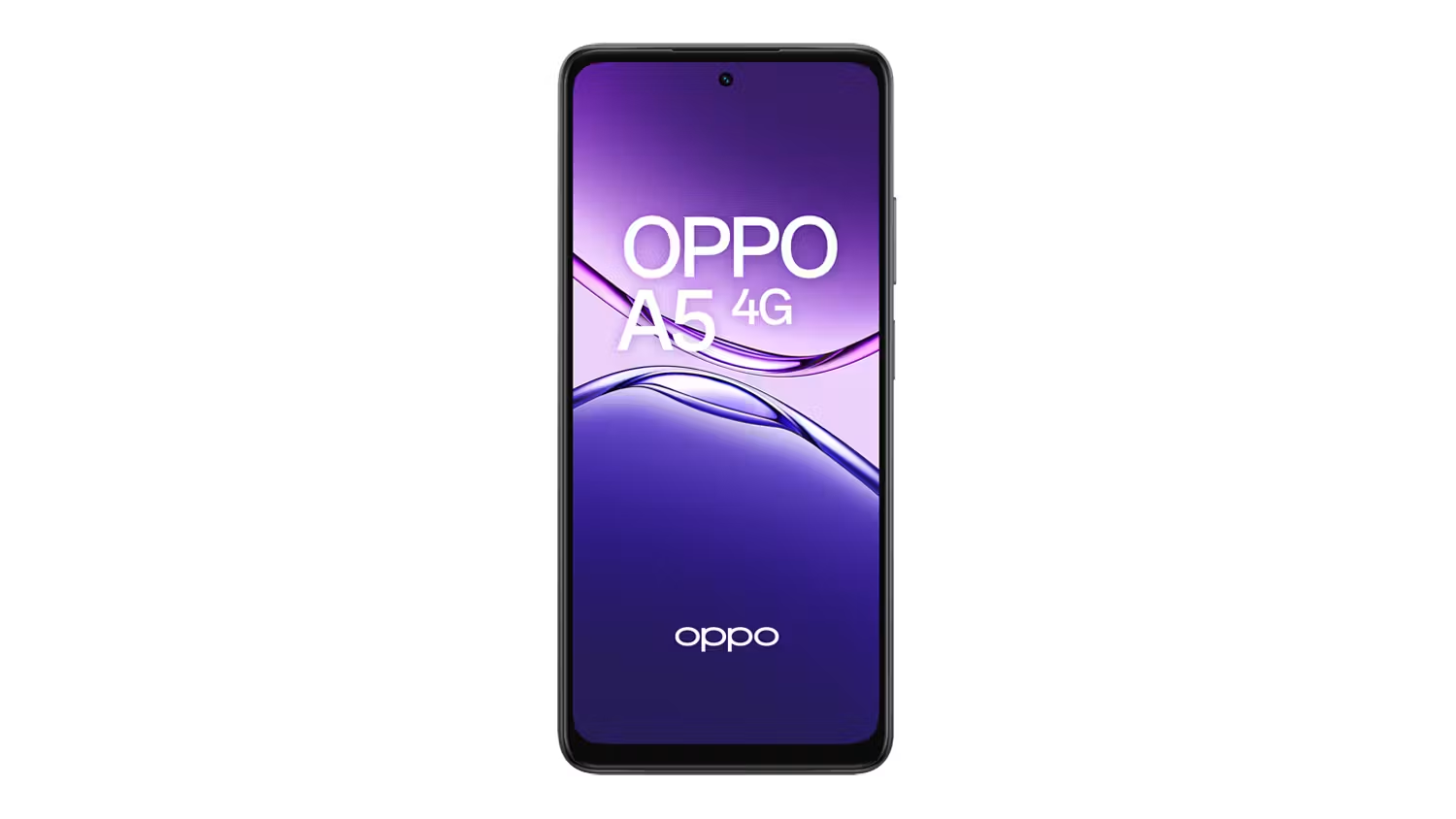
The Oppo A5 is the best pick for battery life and toughness, with a 6000mAh cell, fast 45W charging and a rugged, MIL-STD-rated build.
The A5 (the 4G model; a separate A5 5G also exists) is for people who are hard on phones or hate charging. Its 6000mAh battery routinely stretches to two days in reviews, and unlike most budget rivals it charges quickly at 45W SUPERVOOC. The Snapdragon 6s Gen 1 handles daily tasks, and Oppo markets MIL-STD-810H durability. The trade-off is the screen: reviewers at Tech Advisor and GadgetGuy were blunt that the 6.67in HD+ 90Hz LCD has bland colours and weak viewing angles, and there is no ultrawide camera or stabilisation. ColorOS 15 on Android 15 is the software. If you value endurance and a phone that survives site work or the school run over a pretty display, the A5 is a strong, distinctive choice; screen-quality-focused buyers should look at the Samsungs or the Xiaomi Redmi 15 5G instead.
Pros
- Two-day 6000mAh battery
- Fast 45W charging
- Tough, rugged build
Cons
- Dull HD+ screen
- Basic cameras
- No ultrawide lens
Key specs: 6.67in IPS 90Hz HD+; Snapdragon 6s Gen 1; 6/8GB RAM; 128/256GB (microSD); 6000mAh 45W; 50MP + 2MP; 5MP front; Android 15 / ColorOS 15; 4G; model CPH2727.
7. Oppo A6x 5G – Best Cheap 5G All-Rounder
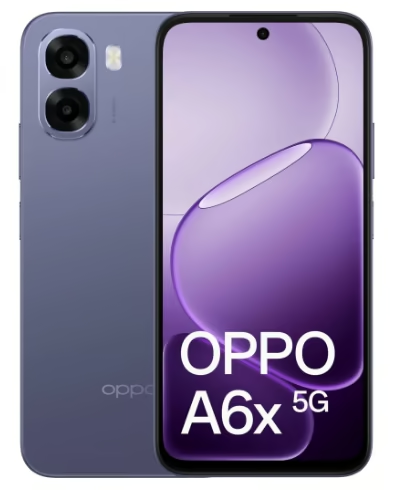
The Oppo A6x 5G is the best cheap 5G all-rounder, pairing genuine 5G with a bright 120Hz screen and a huge 6500mAh battery.
The A6x 5G is one of the newest phones here (released January 2026) and makes a strong case as the future-proofing pick. It brings 5G via the MediaTek Dimensity 6300, a large 6.75in 120Hz screen that reviewers say hits a bright 1125 nits for easy outdoor viewing, and a very large 6500mAh battery that light users can push toward two days. It is IP64 rated and stocked in Australia in a 128GB Black Purple finish. As a brand-new phone it has few owner reviews yet, so judgements lean on early hands-on coverage from TechGenyz, which praised the bright display and battery while noting the 720p resolution on a big panel and plastic build are the obvious cost-cutting points, and performance suits daily tasks and light gaming rather than demanding use. For a buyer who wants 5G and long battery life without spending mid-range money, it is a compelling option.
Pros
- Genuine 5G connectivity
- Bright 120Hz screen
- Very large 6500mAh battery
Cons
- HD+ resolution
- Plastic build
- Few long-term reviews so far
Key specs: 6.75in IPS 120Hz HD+; Dimensity 6300; up to 8GB RAM; 128/256GB (microSD); ~6500mAh, 45W; 50MP + aux; 5MP front; Android 15 / ColorOS 15; IP64; 5G; 212g; model CPH2783.
8. Oppo A17 – Best Ultra-Cheap First Phone
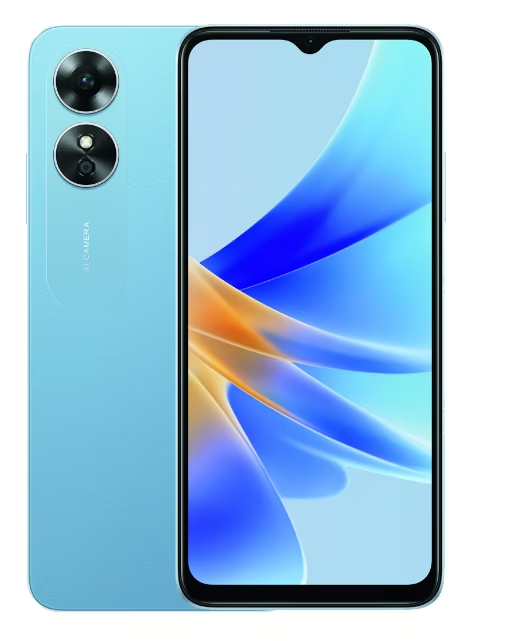
The Oppo A17 is the best rock-bottom pick for a first or backup phone, provided you accept that it is an older, slower handset.
Included honestly as the entry-level option, the A17 is a 2022 model still sold cheaply in NZ, so expectations should be set accordingly. It looks better than its price suggests thanks to a faux-leather back, and its 5000mAh battery lasts nearly two days. But the hardware is dated: a 6.56in 60Hz HD+ screen, an entry MediaTek Helio G35, Android 12 with little prospect of further updates, and old microUSB charging rather than USB-C, which means slow top-ups. There is no NFC, so no tap-to-pay. Recent GSMArena owners are harsh about real-world lag and occasional crashes, and Reviews.org found apps slow to open and the camera weak in poor light. It works for calls, messaging, maps, banking and social media on the tightest budget or as a spare, but anyone who can stretch slightly should choose the Oppo A5 or a Xiaomi Redmi instead.
Pros
- Very cheap
- Smart faux-leather design
- Nearly two-day battery
Cons
- Dated Android 12 and microUSB
- Slow Helio G35
- No NFC / tap-to-pay
Key specs: 6.56in IPS 60Hz HD+; Helio G35; 3/4/6GB RAM; 64/128GB (microSD); 5000mAh microUSB; 50MP; 5MP front; Android 12 / ColorOS 12.1; IPX4; 4G; 189g; model CPH2477.
9. Xiaomi Redmi 15C – Best Simple Big-Screen Phone

The Redmi 15C is the best simple big-screen phone for seniors, kids or anyone who just wants a large, long-lasting handset for the essentials.
The Redmi 15C (4G) leans on the same strengths as the cheapest Motorolas but with an even bigger screen. Its 6.9in 120Hz display is large and easy to read, the 6000mAh battery comfortably lasts two days, and a slim 7.99mm body keeps it manageable despite the size. The MediaTek Helio G81-Ultra and 4GB RAM are geared at basics, calls, messaging, video and browsing, rather than gaming or heavy apps, and the HD+ resolution keeps things soft on such a large panel. It has IP64 protection, a microSD slot, a headphone jack and a side fingerprint reader. GSMArena owners call it brilliant value for the money, while noting the back is plastic rather than glass. As Xiaomi ships it without a charger in the box, factor in a compatible 33W adapter. It is an easy recommendation as a straightforward big-screen phone for less demanding users.
Pros
- Large 6.9in 120Hz screen
- Two-day 6000mAh battery
- microSD and headphone jack
Cons
- HD+ resolution
- Entry-level chip
- No charger included
Key specs: 6.9in IPS 120Hz HD+; Helio G81-Ultra; 4GB RAM; 128GB (microSD); 6000mAh 33W; 50MP + aux; 8MP front; Android 15 / HyperOS 2; IP64; 4G; 205g.
10. Xiaomi Redmi 15 5G – Best Battery Champion
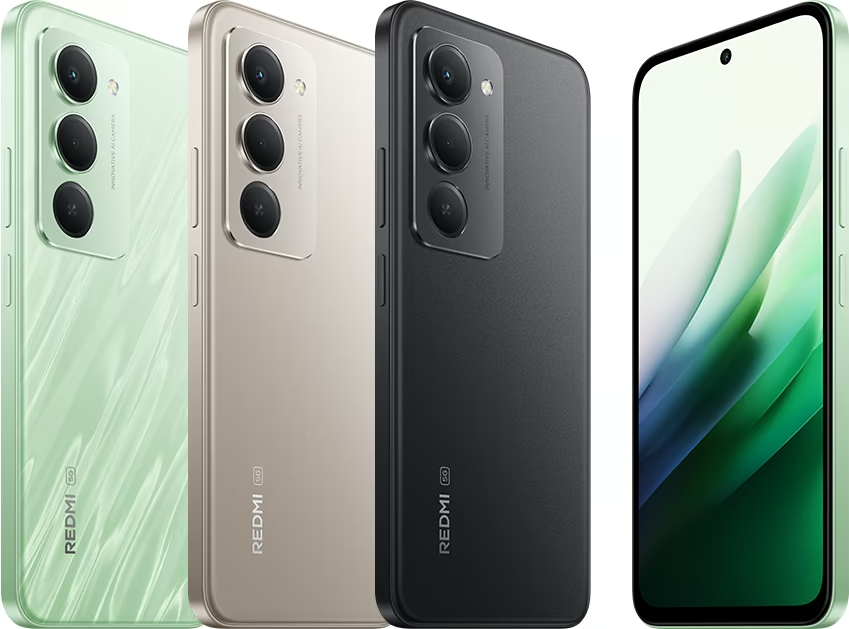
The Redmi 15 5G is the best battery-life champion and the sharpest-screen 5G value here, with a 7000mAh cell and a 144Hz FHD+ display.
The Redmi 15 5G is the most future-proof phone on the list. It combines 5G, the Snapdragon 6s Gen 3 (the strongest everyday performer of the Xiaomi and Oppo picks in GSMArena’s benchmarks), a sharp 6.9in FHD+ screen running up to 144Hz, and a class-leading 7000mAh silicon-carbon battery. It charges at 33W, adds 18W reverse wired charging to top up other devices, and includes an IR blaster, Dolby Atmos audio and a side fingerprint reader, though it drops the headphone jack. GSMArena notes an upgrade path to Android 16 and HyperOS 3. Owner feedback is mixed: one called it speedy with a huge screen and good software, while another reported dreadful lag and found HyperOS unfriendly, so software polish is the wildcard. For buyers who want the longest battery life, a fast smooth screen and real 5G without paying mid-range prices, it is the standout value pick to close the list.
Pros
- Huge 7000mAh battery
- 144Hz FHD+ screen
- 5G and the strongest chip of the group
Cons
- Mixed reports on HyperOS smoothness
- No headphone jack
- No charger included
Key specs: 6.9in IPS 144Hz FHD+; Snapdragon 6s Gen 3; 4GB RAM; 128GB (microSD); 7000mAh 33W + 18W reverse; 50MP + aux; 8MP front; Android 15 / HyperOS 2 (to 16); IP64; 5G; 217g; model 25057RN09E.
Accessories Worth Adding
Most budget phones now ship without a charger, so a compatible USB-C fast charger is the first thing worth adding, matched to your phone’s supported speed (for example 33W for the Redmi models or 30W for the Moto G57). A protective case and a tempered-glass screen protector are cheap insurance, and a microSD card expands storage on the models that support one. If two-day battery life still is not enough, a good power bank keeps you topped up on the go, and a set of wireless earbuds pairs neatly with any of these phones.
How We Chose
BestReview did not physically test every phone in this guide. Instead we compared manufacturer specifications, independent lab and hands-on reviews (including GSMArena, TechRadar, EFTM, Tech Advisor and GadgetGuy), and verified New Zealand and Australian availability and genuine owner feedback from retailers such as PB Tech, JB Hi-Fi, Noel Leeming and Harvey Norman. We prioritised screen quality, real-world battery life, everyday performance, length of software support, durability and overall value for NZ shoppers. Because prices change constantly, and Amazon ships free to New Zealand on many eligible orders, we link out to check the current price rather than listing figures that quickly go stale.
The Verdict
For most New Zealanders, the Samsung Galaxy A17 5G is the cheap phone to buy, balancing screen quality, battery, camera and years of updates better than anything else at the price. Choose the Galaxy A26 5G if you want more durability and a smoother screen, the Xiaomi Redmi 15 5G if battery life and 5G value matter most, or the Oppo A5 or Motorola G06 if you want the longest endurance or the lowest possible price. Whichever you pick, use the button to check the current price, as budget-phone pricing and stock change often.
Check any budget handset against your carrier before buying, since Spark runs bands that plenty of imported models miss, something our guide to unlocked mobile phones goes through network by network.
Frequently Asked Questions
What is the best cheap smartphone in NZ in 2026?
The Samsung Galaxy A17 5G is the best all-round cheap smartphone in NZ, thanks to its bright AMOLED screen, solid battery and unusually long six-year software support. For the longest battery life, the Xiaomi Redmi 15 5G and its 7000mAh cell are the standout alternative.
Do cheap phones from Amazon work on NZ networks?
Most budget phones sold in Australia and New Zealand support the 4G and 5G bands used by Spark, One NZ and 2degrees. Buy the Australian or NZ model rather than a US or Asian variant, and confirm the phone lists the local bands before ordering to avoid connectivity gaps.
Is it worth paying more for a 5G budget phone?
5G helps a phone stay current for several years, but it is not essential for calls, messaging and streaming on 4G. Among these picks the Moto G57, Oppo A6x 5G, both Samsungs and the Xiaomi Redmi 15 5G offer 5G, while the cheapest models are 4G only.
How much should I spend on a cheap smartphone in NZ?
A capable budget phone in New Zealand sits well below mid-range pricing. Spending a little more usually buys a sharper screen, faster charging, 5G or longer software support, so match your budget to the one or two features that matter most to how you use your phone.
Which cheap phone has the best battery life?
The Xiaomi Redmi 15 5G leads with a 7000mAh battery, followed by the Oppo A6x 5G at around 6500mAh, then the Oppo A5 and Xiaomi Redmi 15C at 6000mAh. All comfortably last a full day, and several stretch to two days for lighter users.
Do these phones come with a charger in the box?
Often not. Samsung and Xiaomi typically ship budget phones without a charger, so you may need to buy a compatible USB-C adapter. Match the charger to the phone’s supported speed, for example 33W for the Redmi models, to charge at full pace rather than a trickle.
