
The best true wireless earbuds in NZ overall are the Sony WF-1000XM5, thanks to dual feedback microphones and Sony’s most refined noise-cancelling tuning to date. Fit and seal decide how good any pair actually sounds, so work through the included ear tips before judging them.
True wireless earbuds have come a long way from the early AirPod-style basics – today’s picks span serious active noise cancellation, all-day battery life, sweatproof workout designs and genuine multi-device switching. This guide reviews eight current, in-stock true wireless earbuds verified to ship to New Zealand, from an ultra-budget pair to an audiophile-grade multipoint set.
Whichever pair you choose, fit and seal matter as much as the spec sheet, so try the included ear tip sizes before committing to a workout or a long flight.
Quick comparison
| Earbuds | Best for | ANC | Battery (earbuds / total) |
|---|---|---|---|
| Sony WF-1000XM5 | Premium ANC | Yes | 8h / ~24h |
| JLab Go Air Pop | Ultra-budget | No | 9h+ / 35h+ |
| Soundcore Sport X20 | Workouts & running | Yes (adaptive) | 12h / 48h |
| Soundcore Liberty 4 NC | Battery life | Yes | 10h / 50h |
| Soundcore Liberty 5 Pro | Calls & remote work | Yes | Not published |
| Sony WF-C510 | Compact & lightweight | No | 11h / 22h |
| Nothing Ear (3) | Bass-heavy sound | Yes | Not published |
| Technics AZ80 | Multipoint & audiophile | Yes | Not published |
1. Sony WF-1000XM5 – Best Premium ANC
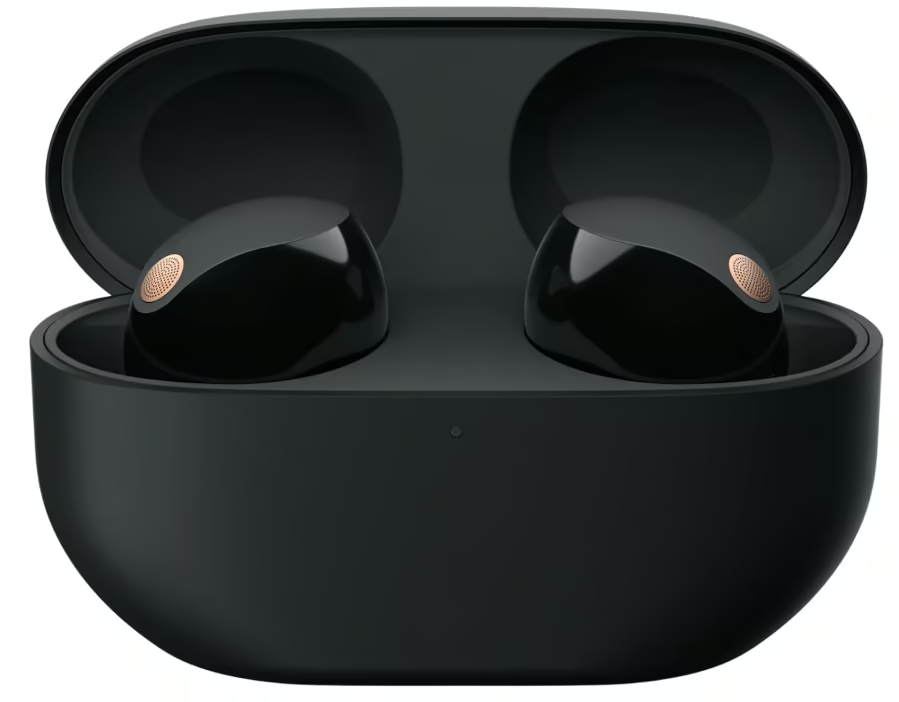
Best for buyers who want Sony’s flagship noise cancellation and sound signature above all else, the Sony WF-1000XM5 is the premium ANC pick in this guide, built around dual feedback microphones and Sony’s most refined tuning yet.
The earbuds run a 48-ohm driver, charge over USB-C or wirelessly via the case, and deliver about 8 hours of playback per charge with roughly 24 hours total including the case. Sony’s own spec sheet lists an IPX4 splash rating, though the Amazon listing itself doesn’t restate it.
Reviewers repeatedly call these “the best buds I have ever owned,” praising deep bass, a crisp sound signature and a noticeably less bulky in-ear fit than rival flagships like Bose. It sits at 3.8 stars from 5,715 Amazon reviews – a large sample, though a vocal minority report inconsistent battery life (some seeing closer to 6 hours) and a case that gives no low-charge warning, which pulls the average down from what the sound quality alone would suggest.
Pros
- Class-leading active noise cancellation and Sony’s most refined sound tuning
- Less bulky in-ear fit than rival flagships
- Wireless charging case included
Cons
- Some owners report inconsistent battery life below the rated 8 hours
- Case gives no low-charge warning per one reviewer
- IP rating not restated on the Amazon listing itself
Key specs:ANC yes; 8h earbuds / ~24h total with case; 48-ohm driver; USB-C + wireless charging; IPX4 (per Sony spec).
2. JLab Go Air Pop – Best Ultra-Budget Pick
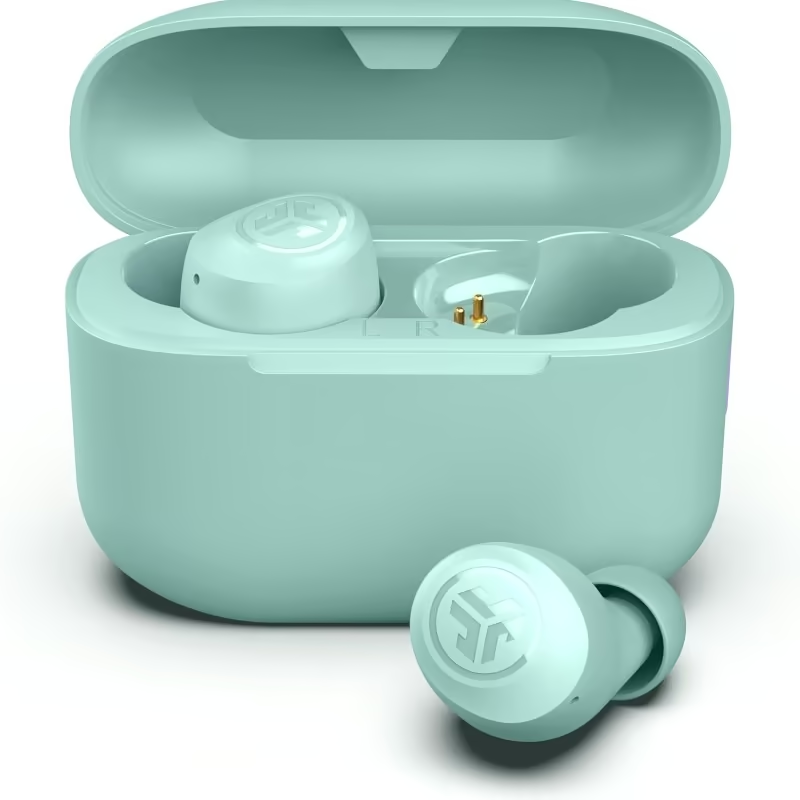
Best for shoppers who want the cheapest genuinely good pair here, the JLab Go Air Pop is the ultra-budget pick in this guide, small enough to disappear in a pocket and priced well under every other entry.
A 16-ohm driver runs on Bluetooth 5.3, rated IPX4 for sweat and light rain, and the case auto-pairs the buds the moment it’s opened. JLab’s companion app adds custom EQ presets, and battery runs about 9+ hours per charge with 26+ hours more from the case, for over 35 hours total.
It holds a strong 4.4 stars from 21,406 Amazon reviews and carries the Amazon’s Choice badge, an enormous sample for a budget accessory. The honest trade-offs: there’s no ANC or true multipoint switching between two source devices, mic quality is basic at this price, and the free-delivery banner on this listing is conditional on a minimum order value rather than unconditional, so it’s worth bundling with something small to clear the threshold.
Pros
- Extremely cheap for genuinely good everyday sound
- Auto-pairs the instant the case opens
- Huge 21,406-review track record, Amazon’s Choice
Cons
- No active noise cancellation
- No true multipoint switching between two source devices
- Free NZ delivery on this listing requires a minimum order value
Key specs:No ANC; 9h+ earbuds / 35h+ total; IPX4; Bluetooth 5.3; 16-ohm driver; USB charging case; custom EQ app.
3. Soundcore Sport X20 – Best for Workouts & Running
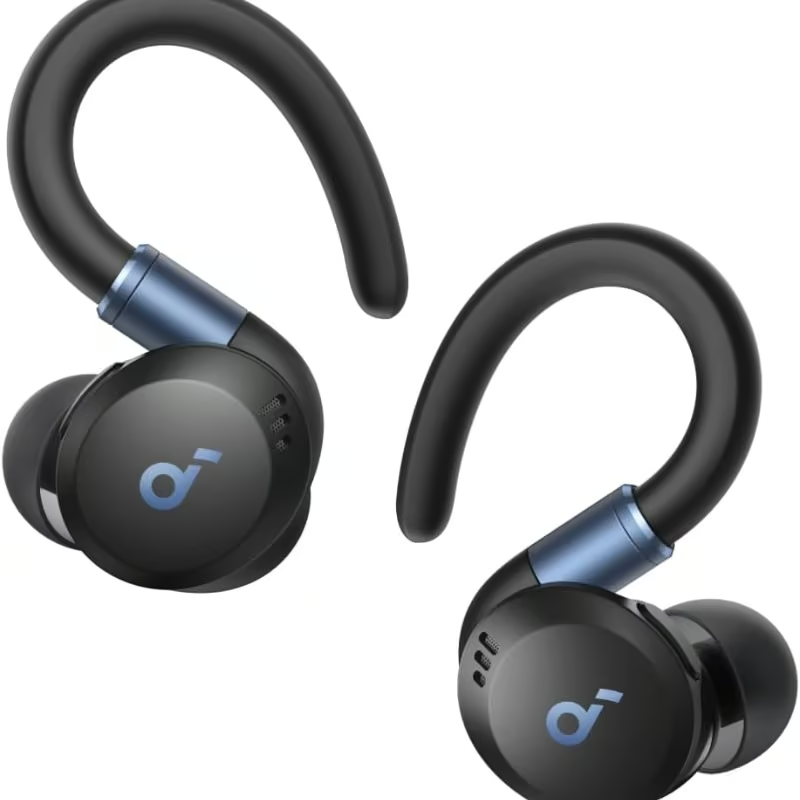
Best for the gym and running, the Soundcore Sport X20 by Anker is the workout pick in this guide, built around rotatable, extendable ear hooks that keep the buds locked in through burpees and sprints alike.
An 11mm driver with Anker’s BassUp tuning pairs with adaptive, manually adjustable ANC, and the earbuds are rated IP68, a genuinely high dust and sweat/water rating for this price point. The USB-C case brings total battery to about 48 hours, with roughly 12 hours per charge in the earbuds themselves.
It’s rated 4.4 stars from 14,620 Amazon reviews with over 400 bought in the past month. The honest trade-offs: the rotating ear-hook design is bulkier than a plain in-ear bud, ANC here is manually adjusted rather than fully automatic, and Amazon’s listing doesn’t state a Bluetooth version or multipoint support.
Pros
- IP68 rating, genuinely high sweat and dust resistance for the price
- Adjustable rotating ear hooks for a secure workout fit
- Long 48-hour total battery with the case
Cons
- Bulkier ear-hook design than plain in-ear buds
- ANC is manually adjusted, not fully automatic
- Bluetooth version and multipoint support not stated on the listing
Key specs:ANC yes (adaptive, manual); IP68; 12h earbuds / 48h total; 11mm driver with BassUp; USB-C case; rotatable ear hooks.
4. Soundcore Liberty 4 NC – Best Battery Life
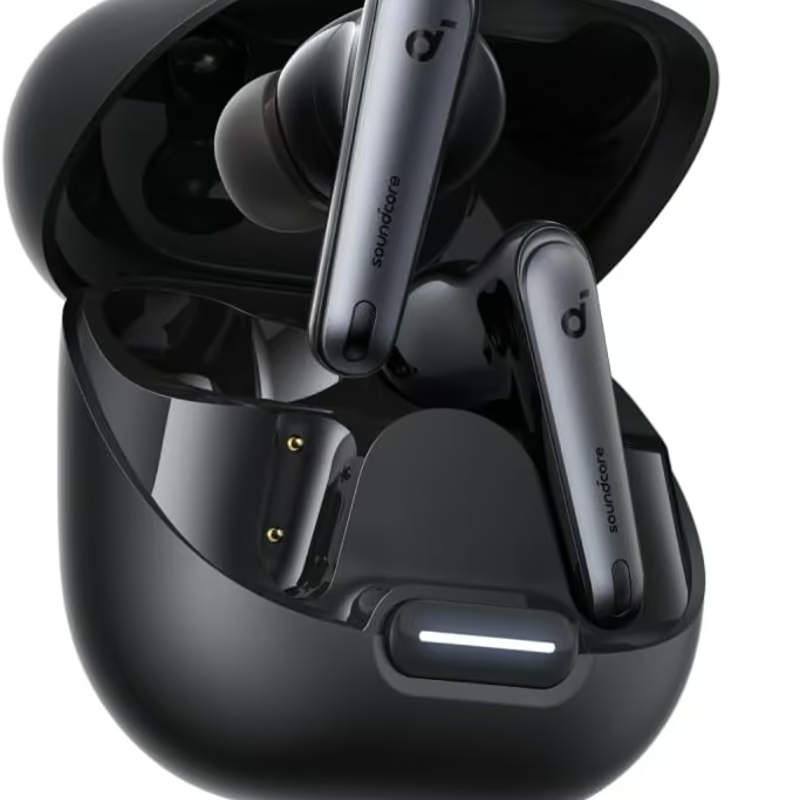
Best for long-haul travel, the Soundcore Liberty 4 NC by Anker is the battery-life pick in this guide, rated for a genuinely class-leading 50 hours total between the earbuds and case.
Adaptive ANC 2.0 claims up to 98.5% noise reduction, and an 11mm custom driver supports Hi-Res LDAC audio over Bluetooth 5.3. Soundcore’s app adds HearID personalization and EQ adjustment, and a single charge runs about 10 hours before the case tops it back up.
It has built up a huge 26,881-review base at 4.2 stars and carries the Amazon’s Choice badge. The honest trade-offs: no IP rating is disclosed on this listing, so workout suitability is unclear, and the listing’s “placement” field oddly lists “Over Ear” for what is an in-ear design, likely a data-entry quirk worth confirming rather than relying on for fit expectations.
Pros
- Genuinely class-leading 50-hour total battery life
- Huge, largely positive 26,881-review track record
- Hi-Res LDAC audio and personalized EQ via the app
Cons
- No IP rating disclosed on this listing
- A listing field describes it as “Over Ear,” inconsistent with its actual in-ear design
- No multipoint support stated
Key specs:ANC yes (Adaptive 2.0); 10h earbuds / 50h total; Bluetooth 5.3, LDAC; 11mm custom driver; HearID app EQ.
5. Soundcore Liberty 5 Pro – Best for Calls & Remote Work
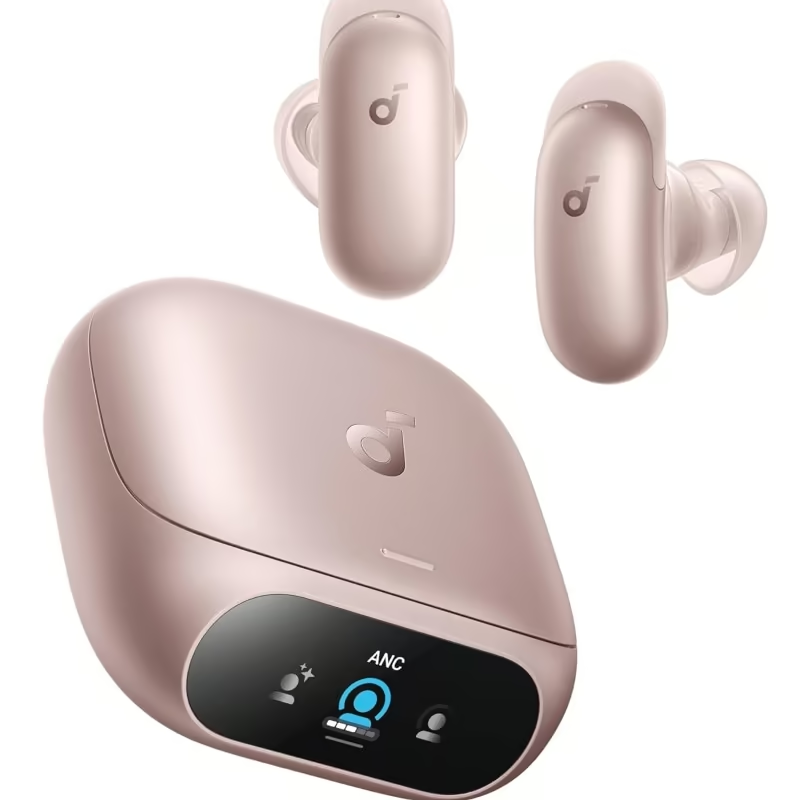
Best for remote workers and call-heavy professionals, the Soundcore Liberty 5 Pro by Anker is the calls pick in this guide, built around a dedicated Thus AI chip and 10 call-quality sensors specifically for voice clarity.
It’s Guinness World Records-certified for the highest speech-quality score (G-MOS) measured for true wireless earbuds, a distinctive and independently verifiable claim rather than marketing language alone. A 17-ohm driver and voice-command controls round out the feature set, and ANC is rated as a significant step up from Soundcore’s prior flagship.
It holds a strong 4.5 stars from 649 Amazon reviews, and one verified reviewer called the sound and ANC “exceeds expectations,” specifically praising performance on a 12-hour flight. The honest trade-offs: battery life and IP rating aren’t disclosed on this specific listing, and at least one reviewer reported noticeably fast battery drain during extended softphone calls.
Pros
- Guinness World Records-certified for speech quality (G-MOS) among true wireless earbuds
- Strong 4.5-star rating with praised ANC performance on long flights
- Dedicated call-quality chip and 10 voice sensors
Cons
- Battery life and IP rating not disclosed on this listing
- One reviewer reported fast battery drain during long work calls
- Smaller review sample (649) than some rivals here
Key specs:ANC yes (Thus AI chip); 10 call sensors; 17-ohm driver; voice-command controls; G-MOS Guinness World Record for speech quality.
6. Sony WF-C510 – Best Compact & Lightweight
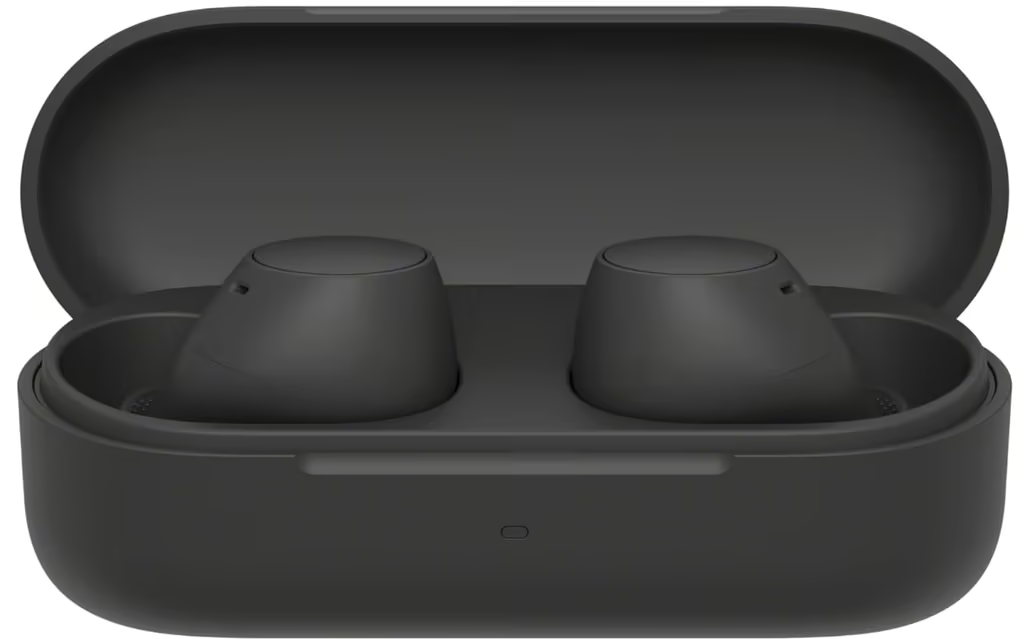
Best for anyone who wants the smallest, lightest all-day earbud, the Sony WF-C510 is the compact pick in this guide, and the only budget-tier pair here with genuine two-device multipoint switching.
A 32-ohm driver runs Sony’s DSEE upscaling to sharpen compressed audio, rated IPX4 and charging over USB-C, with about 11 hours of playback per charge and 22 hours total with the case. There’s no active noise cancellation, but an Ambient Sound Mode lets outside noise through on demand.
It carries the Amazon’s Choice badge at 4.4 stars from 158 Amazon reviews. The honest trade-offs: there’s no ANC, the review sample is smaller than the other Sony and Soundcore picks here, and IPX4 covers sweat and splashes rather than genuine swim-proofing.
Pros
- Genuinely tiny, light, all-day-comfort design
- Real two-device multipoint switching at a budget price
- DSEE audio upscaling, unusual at this price point
Cons
- No active noise cancellation
- Smaller review sample (158 ratings) than rival picks here
- IPX4 covers sweat and splashes, not swimming
Key specs:No ANC; multipoint (2 devices); 11h earbuds / 22h total; IPX4; 32-ohm driver; USB-C case; DSEE upscaling.
7. Nothing Ear (3) – Best Bass-Heavy Sound
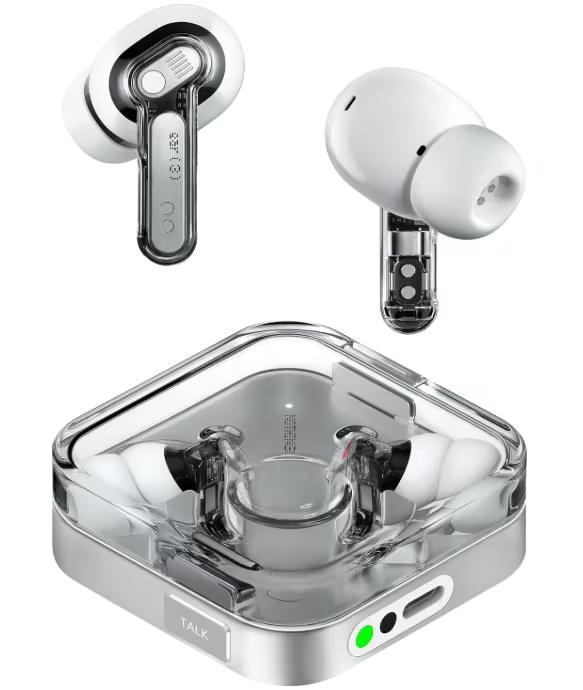
Best for bass-focused listeners, the Nothing Ear (3) is the bass-heavy pick in this guide, built around a 12mm ceramic-diaphragm driver with Dynamic Bass Boost tuning and Nothing’s distinctive transparent design.
Smart Hybrid ANC is rated up to 45dB of reduction, Bluetooth 5.4 carries Hi-Res Audio, and a tap-and-hold Super Mic feature is designed to sharpen call clarity on demand. The Nothing X companion app adds EQ control, Ultra Bass toggling and even ChatGPT voice integration.
It’s rated 4.3 stars from 944 Amazon reviews. The honest trade-offs: this specific listing doesn’t disclose battery life or an IP rating, and it ships via a third-party Amazon seller (FGH Online Store) rather than directly from Amazon or Nothing, worth a quick check of seller feedback before buying.
Pros
- Distinctive 12mm ceramic-diaphragm driver tuned for bass
- Tap-to-activate Super Mic for clearer calls on demand
- Hi-Res Audio and a genuinely novel transparent design
Cons
- Battery life and IP rating not disclosed on this listing
- Ships via a third-party seller, not directly from Amazon or Nothing
- Smaller review sample than the Soundcore picks here
Key specs:ANC yes (Smart Hybrid, up to 45dB); Bluetooth 5.4, Hi-Res Audio; 12mm ceramic driver; Dual Connect; Nothing X app.
8. Technics AZ80 – Best Multipoint & Audiophile Sound
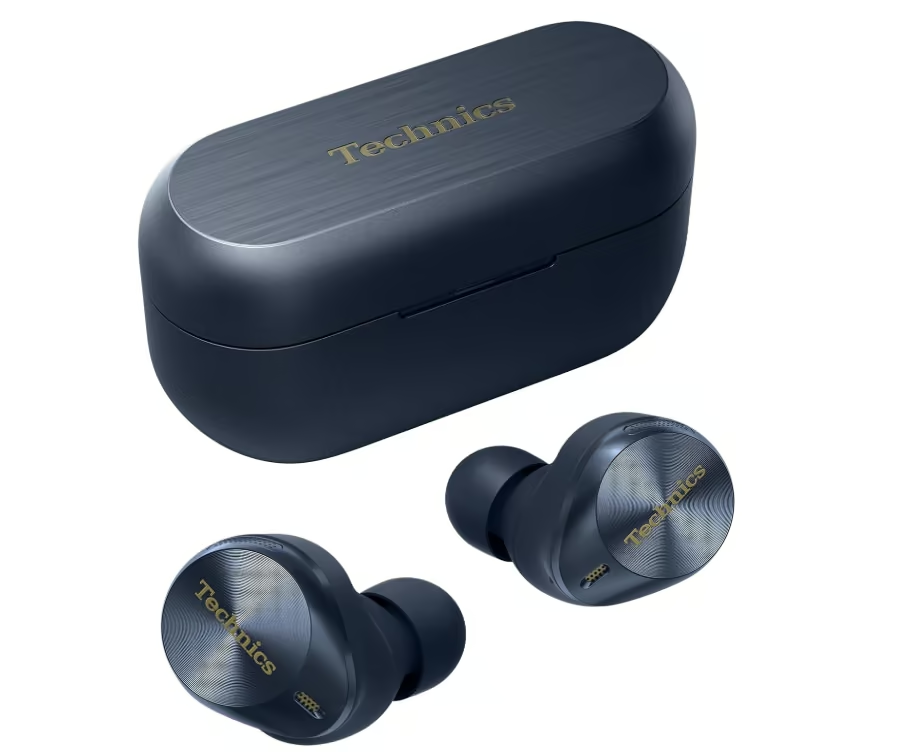
Best for anyone juggling a laptop, phone and tablet, the Technics AZ80 is the multipoint pick in this guide, one of the few true wireless earbuds here that connects to three devices at once rather than the usual two.
A 32-ohm, 10mm free-edge dynamic driver carries LDAC Hi-Res Audio, eight MEMS microphones with JustMyVoice call technology sharpen voice pickup, and the case supports Qi wireless charging. Technics rates the ANC as industry-leading, backed by the brand’s decades of hi-fi engineering.
It holds 4.2 stars from 1,028 Amazon reviews. The honest trade-offs: it’s the second-priciest pick in this guide, and this specific listing doesn’t disclose battery life or an IP/water-resistance rating, so it’s worth checking directly with Technics before relying on it for workout use.
Pros
- Rare 3-device multipoint, genuinely useful across laptop, phone and tablet
- Reference-quality Hi-Res tuning from an established hi-fi brand
- Qi wireless charging case included
Cons
- Premium price, close to flagship territory
- Battery life and IP rating not disclosed on this listing
- Workout/water suitability unclear without an IP rating
Key specs:ANC yes; 3-device multipoint; LDAC Hi-Res Audio; 10mm driver; 8 MEMS mics, JustMyVoice; Qi wireless charging.
How to Choose the Best True Wireless Earbuds for You
A few things matter more than the spec sheet alone: fit and seal, Bluetooth version and multipoint, call quality, battery life, water resistance, noise cancellation, and handy extras like in-ear detection. Here’s what to actually weigh up.
Fit & Seal
A good silicone tip seal matters more for sound quality and passive noise blocking than almost any spec. Most earbuds here ship with 3-4 tip sizes; try each one and push for a snug seal rather than assuming the default fits. Workout-focused designs like the Soundcore Sport X20’s rotatable ear hooks trade a slightly bulkier fit for security during exercise, while compact picks like the Sony WF-C510 prioritise all-day comfort over a locked-in sports fit.
Bluetooth Version & Multipoint
Multipoint lets a single pair of earbuds stay connected to two or more devices at once, so a call on your phone doesn’t need you to disconnect from a laptop first. The Sony WF-C510 offers genuine two-device multipoint at a budget price, and the Technics AZ80 goes further with three-device support, useful if you regularly juggle a phone, laptop and tablet.
Calls & Microphones
If you’re on calls often, look past the earbud count of microphones and toward how a brand specifically engineers for voice; the Soundcore Liberty 5 Pro’s Guinness World Records-certified speech-quality score and the Nothing Ear (3)’s tap-to-activate Super Mic are both built around this rather than treating calls as an afterthought.
Battery Life
Expect 6-12 hours per charge in the earbuds themselves and 20-50 hours total once the case is factored in. The Soundcore Liberty 4 NC leads this guide at a rated 50 hours total, while flagship ANC models like the Sony WF-1000XM5 trade some battery life for sound quality and noise cancellation processing.
Water & Sweat Resistance (IP Rating)
An IP rating matters most if you sweat in your earbuds or use them in the rain. The Soundcore Sport X20’s IP68 rating is the strongest in this guide, well ahead of the IPX4 splash resistance common on non-sport picks. Several premium listings here don’t disclose an IP rating at all, so check directly with the manufacturer before relying on any pair for a sweaty workout.
Active Noise Cancellation (ANC)
ANC reduces background hum and drone rather than blocking sudden sharp sounds, so it suits flights, open offices and commutes more than conversations. Six of the eight picks here include ANC; the two that don’t (the JLab Go Air Pop and Sony WF-C510) are both built around a low price or a genuinely compact fit instead.
In-Ear Detection & Extras
In-ear detection automatically pauses your audio when a bud is removed and resumes when it’s put back in, a small convenience that most modern earbuds now include. Companion apps add further value on top, from Soundcore’s HearID personalization to Nothing’s ChatGPT voice integration, so it’s worth checking what each brand’s app actually unlocks beyond the box.
For the rest of your living room setup, the guides to portable projectors, 32-inch smart TVs and Bluetooth speakers are worth a look.
Flagship buds are largely paying for noise cancelling and case battery, so if neither matters much to you, affordable wireless earbuds sound closer than the price gap suggests. Earbuds keep music personal, which stops being the point at a barbecue, and outdoor speakers are built to survive being left out in the weather.
Verdict
For most buyers, the JLab Go Air Pop is the easiest recommendation if budget is the priority, since it delivers genuinely good everyday sound for a fraction of the other prices here. Choose the Sony WF-1000XM5 if class-leading ANC and sound quality matter most, or the Soundcore Liberty 4 NC if all-day (and all-night) battery life is the priority. Gym-goers should look at the IP68-rated Soundcore Sport X20, and remote workers who live on calls at the Soundcore Liberty 5 Pro. The Sony WF-C510 is the pick for the smallest, lightest everyday pair with real multipoint, the Nothing Ear (3) suits bass-focused listeners who want a distinctive design, and the Technics AZ80 is the one to reach for if you regularly switch between three devices and want audiophile-grade sound. Whichever pair you choose, try the included ear tips for a proper seal before judging the sound quality.
FAQs
What is the best true wireless earbuds for most people in NZ?
It depends on your priority. For value, the JLab Go Air Pop delivers genuinely good sound for a fraction of the price of the others here; for the best all-round sound and noise cancellation, the Sony WF-1000XM5 is the flagship pick; and for all-day battery life, the Soundcore Liberty 4 NC leads this guide at 50 hours total.
What does multipoint Bluetooth actually do?
Multipoint keeps your earbuds connected to two or more devices simultaneously, so audio can switch between, say, a laptop call and a phone notification without manually disconnecting and reconnecting. The Sony WF-C510 supports two devices and the Technics AZ80 supports three.
Do true wireless earbuds work well for calls?
Most do a reasonable job, but call quality varies more than people expect. The Soundcore Liberty 5 Pro is specifically engineered around voice clarity and is Guinness World Records-certified for speech quality, making it the strongest pick here if calls are a priority.
Is active noise cancellation (ANC) worth it?
Yes, if you fly often, work in an open office, or commute somewhere noisy, since ANC reduces steady background hum far more effectively than passive silicone tips alone. It’s less useful for blocking sudden sharp sounds like a dog bark or a door slam.
What IP rating do I need for earbuds I’ll wear at the gym?
Look for at least IPX4 for light sweat resistance, though IP68 like the Soundcore Sport X20 offers genuinely stronger protection against sweat and dust for serious workouts. Always check the specific rating rather than assuming “sports” branding means high water resistance.
How long should true wireless earbuds’ battery last?
Most true wireless earbuds run 6-12 hours per charge in the buds themselves, with the case adding several more full recharges for 20-50 hours total. The Soundcore Liberty 4 NC leads this guide at a rated 50 hours total between earbuds and case.
Are expensive true wireless earbuds actually better than budget ones?
Often for ANC quality, call clarity and multipoint features, yes, but budget picks like the JLab Go Air Pop prove a genuinely enjoyable everyday listening experience doesn’t require a premium price. Spend more if you specifically need flagship ANC, multi-device switching, or audiophile-grade codecs like LDAC.
