
The best phone for most seniors in New Zealand is a simple 4G flip or big-button phone with an SOS key, loud and clear audio, and easy-to-press keys. Just as important, it has to support 4G VoLTE, because NZ switched off its 2G and 3G networks between January and March 2026, so older handsets can no longer make calls, including 111 emergency calls. This guide compares 10 senior-friendly phones, from the fuss-free Nokia 105 to the rugged CAT S22 Flip, and explains which one suits calls only, texting, hearing aids or the outdoors.
Quick comparison: 10 best senior phones in NZ
| Phone | Best for | Standout feature |
|---|---|---|
| Artfone 4G Foldable | Best overall easy flip | Dual colour display, dock, rear SOS |
| Nokia 105 4G 2nd Edition | Simplest calls and texts | Removable battery, IP54 |
| Nokia 215 4G | Bigger screen basic phone | 2.8 inch display, camera |
| Nokia 3210 4G | Stylish pick, sold in NZ | Y2K Gold, retro design |
| Snap QWERTY Flip | Seniors who text a lot | Full QWERTY keyboard |
| Opel TouchFlip 4G | Hearing aid users, WhatsApp | M4/T4 rating, touchscreen |
| CAT S22 Flip | Durability and outdoors | IP68, MIL-SPEC, Android |
| VOCA V340 | Big buttons and auto alerts | Low-battery SMS alert |
| 4G LTE Big-Button Phone | Loud speaker, long battery | 1800 mAh, wireless dock |
| Maxcom MM828 | European-made simple flip | Dual SIM, photo contacts |
1. Artfone 4G Foldable Senior Phone
Best for: the best overall easy flip phone. The Artfone 4G foldable is the pick many NZ families reach for first, because it combines a dual colour display, a proper charging dock and a rear SOS button in one simple flip.
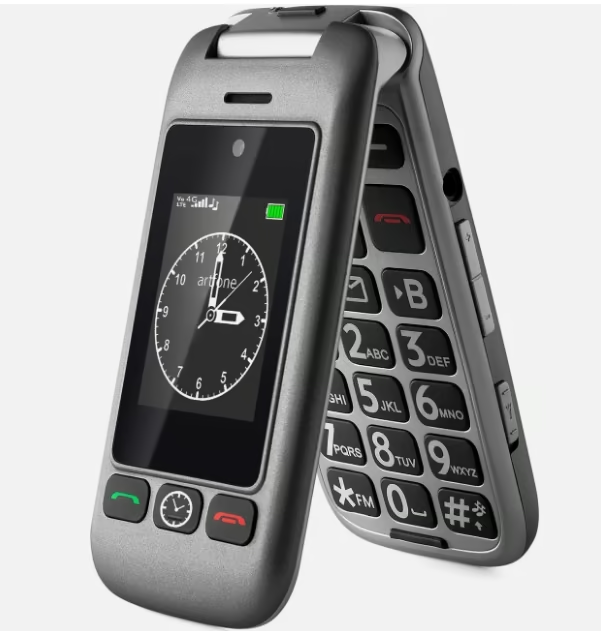
It is a compact clamshell that slips into a pocket or handbag. The outer colour screen shows the time, date and caller without opening the phone, while the inner display carries large fonts and icons. Owners report the hinge feels reassuringly firm, and Artfone rates it for around 120,000 flips. The backlit keypad has widely spaced, tactile keys, and a talking-numbers function reads each digit aloud as it is pressed, which reviewers note helps users with low vision dial without mistakes. Flip-to-answer means no fiddly button to accept a call, and a side torch button, FM radio, Bluetooth and an MP3 player round out the everyday features.
The SOS button on the back can store up to five emergency contacts and dials them in turn until someone answers. The bundled desktop dock removes the need to line up a small USB-C plug, which matters for arthritic hands.
Pros:
- Dual colour display shows calls without opening the phone
- Charging dock and talking numbers help less dexterous users
- Rear SOS button dials up to five contacts
Cons:
- The 0.3MP camera is basic and low resolution
- Best for calls, texts and safety rather than photos
Key specs: Artfone 4G foldable senior phone; dual colour display; USB-C; charging dock; FM radio; Bluetooth; MP3; torch.
2. Nokia 105 4G 2nd Edition (2024)
Best for: the simplest, most affordable calls-and-texts backup. For a senior who only wants to make calls and send the odd text, the Nokia 105 4G 2nd Edition is the most fuss-free option here.
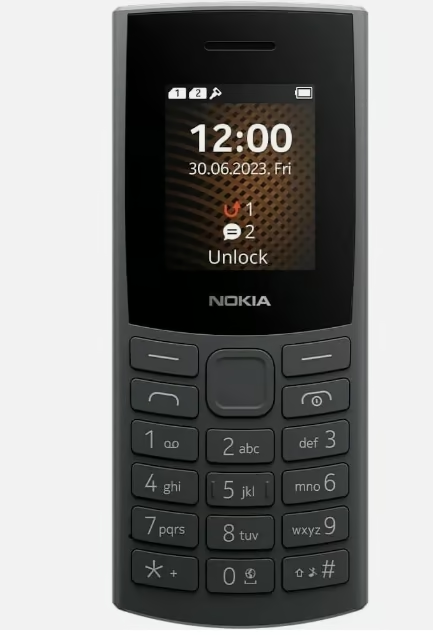
It is a small candybar phone (about 121 x 50 x 14 mm and 93 g) with a 1.77 inch colour screen and a classic Nokia keypad most older users will recognise instantly. An IP54 rating means it shrugs off dust and light splashes, and HMD backs it with the drop-tolerant reputation Nokia basics are known for. There is no camera and no app store to get lost in, just a clear menu, big physical number keys and wireless FM radio. USB-C charging replaces the old micro-USB, and Bluetooth 5.0 lets it pair with a hearing device or speaker.
The removable 1450 mAh battery is a genuine strength. Nokia quotes multi-day standby, and a spare battery can be swapped in with no tools. Memory is expandable via microSD up to 32 GB for music.
Pros:
- Removable, swappable 1450 mAh battery with multi-day standby
- IP54 dust and splash resistance
- Very simple menu with no apps to cause confusion
Cons:
- Small 1.77 inch screen
- No camera and no messaging apps
Key specs: Nokia 105 4G 2nd Edition (2024); 1.77 inch display; 1450 mAh removable battery; USB-C; Bluetooth 5.0; IP54; dual SIM.
3. Nokia 215 4G (2024)
Best for: a bigger screen basic phone with a camera. The Nokia 215 4G is the step up for seniors who want the same simple Nokia layout but a larger 2.8 inch screen and a camera.
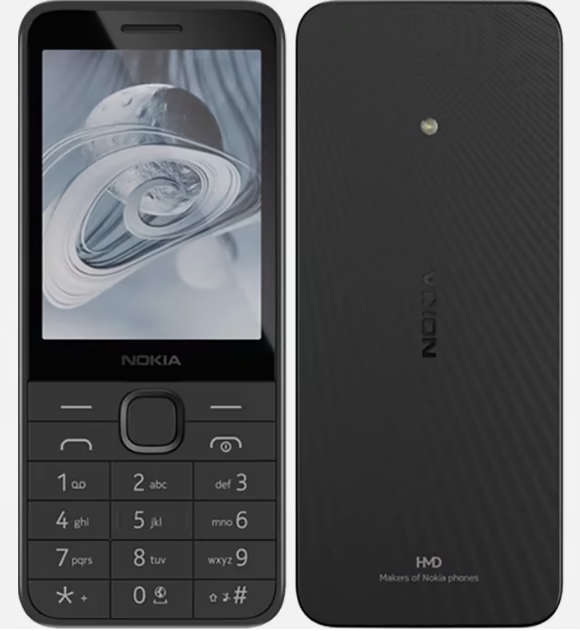
The 2.8 inch QVGA display is noticeably easier to read than the 105, and the phone keeps the familiar Nokia number pad. It runs Nokia’s simple Series 30+ interface, so there are no confusing apps, just calls, texts, FM radio, a basic camera and a few games. USB-C charging and a 3.5 mm headphone jack are included, and Bluetooth 5.0 supports wireless listening. A 1450 mAh battery delivers up to around 9.8 hours of talk time on 4G, and microSD expansion to 32 GB adds storage for photos and music.
Seniors comparing basic phones with everyday affordable everyday smartphones often land on the 215 as a middle ground: more screen than the 105, far simpler than a touchscreen.
Pros:
- Larger 2.8 inch screen that is easy to read
- Camera, 3.5 mm jack and Bluetooth 5.0
- Up to around 9.8 hours of 4G talk time
Cons:
- Low-resolution rear camera and no front camera for video calls
- Light plastic build
Key specs: Nokia 215 4G (2024); 2.8 inch display; 1450 mAh battery; USB-C; 3.5 mm jack; Bluetooth 5.0; dual SIM; microSD to 32 GB.
4. Nokia 3210 4G (Y2K Gold)
Best for: the stylish retro pick you can buy in NZ. The reborn Nokia 3210 4G is the most eye-catching option.
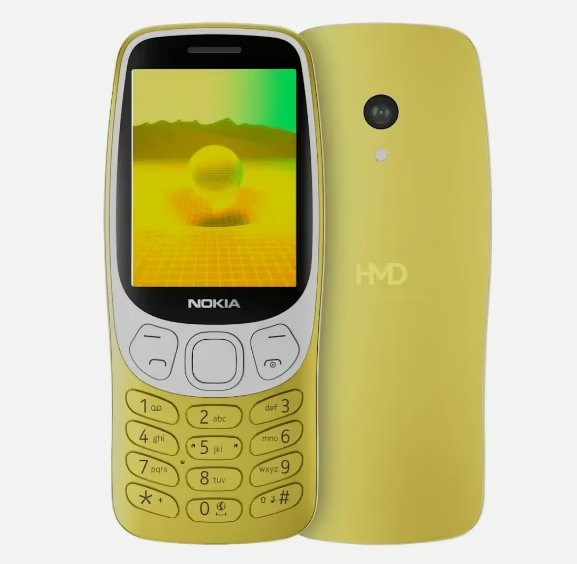
The Y2K Gold finish updates the iconic 3210 with a 2.4 inch colour screen while keeping the chunky, confidence-inspiring keypad and the solid, pocketable feel long associated with Nokia handsets. The interface is deliberately simple, with large menu icons, FM radio and even a modern take on Snake. USB-C charging and Bluetooth 5.0 are on board, and a 2MP camera with LED flash handles quick snaps. The removable 1450 mAh battery keeps standby measured in days, and local availability through New Zealand sellers means support and warranty are easy to sort.
Pros:
- Distinctive retro design in Y2K Gold
- Removable 1450 mAh battery and USB-C charging
- Sold and supported by NZ retailers
Cons:
- No WhatsApp or messaging apps
- Basic 2MP camera
Key specs: Nokia 3210 4G, Y2K Gold; 2.4 inch display; 1450 mAh removable battery; USB-C; Bluetooth 5.0; 2MP camera; dual SIM.
5. Snap QWERTY Flip Phone
Best for: seniors who text a lot. The Snap flip phone stands out for one reason: a full physical QWERTY keyboard, which makes texting far easier for anyone who dislikes on-screen typing.
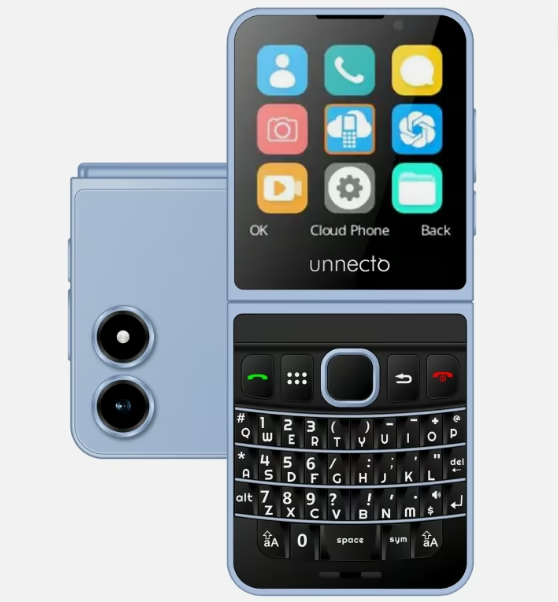
It is a modern clamshell with a textured shell for grip and a 2.51 inch display, offered in colours including pink, blue and orange. The QWERTY keys let users tap out messages with real tactile feedback, and the lightweight Cloud Phone OS keeps the menus simple rather than smartphone-complicated. Bluetooth 5.0 and USB-C charging are included, plus a 2MP camera. Dual SIM and 4G LTE support mean it keeps working on modern networks, and microSD expansion to 32 GB covers extra storage.
Pros:
- Full physical QWERTY keyboard for easy texting
- Textured grip and simple Cloud Phone OS
- Dual SIM, USB-C and microSD support
Cons:
- Small 1000 mAh battery needs charging more often
- Sold mainly as a US-market phone, so NZ buyers should confirm band support
Key specs: Snap (Unnecto Snap); 2.51 inch display; QWERTY keyboard; Cloud Phone OS; 1000 mAh; Bluetooth 5.0; USB-C; dual SIM; 2MP camera.
6. Opel Mobile TouchFlip 4G
Best for: hearing aid users and WhatsApp. The Opel Mobile TouchFlip is the standout for hearing aid wearers, thanks to an M4/T4 rating, the highest hearing-aid-compatibility grade, and it is genuinely sold and supported in New Zealand.
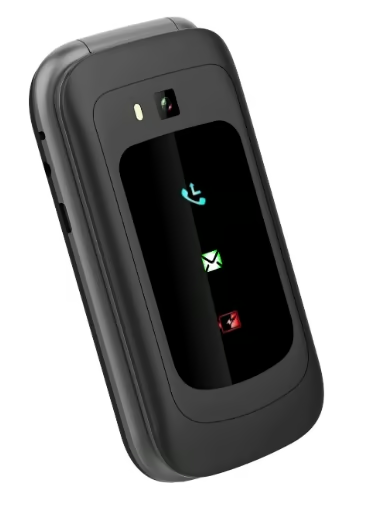
It is an unusual hybrid: a flip phone with a touchscreen behind the lid and big tactile buttons below, so seniors can choose to tap or type. Because it supports WhatsApp, families can stay in touch through the same app they already use, while the big-button keypad keeps calling and texting simple. An SOS emergency function calls preset contacts and sends alert messages, and Bluetooth is built in. The M4/T4 hearing-aid rating means clearer calls with far less interference for hearing-aid users, and 4G VoLTE keeps it working now that NZ’s 3G network has closed.
If audio clarity is the priority, it is also worth pairing a phone like this with a set of wireless earbuds that connect over Bluetooth for hands-free calls around the house.
Pros:
- M4/T4 hearing aid compatibility, the highest grade
- Supports WhatsApp for family messaging
- Sold and supported in New Zealand
Cons:
- Touchscreen adds a small learning curve
- Better for a confident user than an absolute beginner
Key specs: Opel Mobile TouchFlip (OMTF22B); 4G VoLTE; M4/T4 hearing aid compatible; touchscreen plus keypad; SOS function; Bluetooth.
7. CAT S22 Flip
Best for: durability and the outdoors. The CAT S22 Flip is the toughest phone here, built for seniors who are active, work outdoors or simply worry about drops.
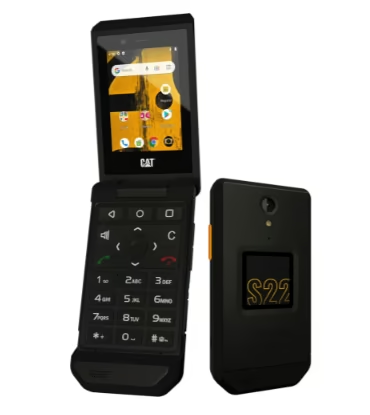
The rugged clamshell carries an IP68 rating and MIL-SPEC 810H certification, and the 2.8 inch touchscreen is protected by Gorilla Glass 5 that works with wet fingers or gloves. Caterpillar rates it to survive submersion to about 1.5 m for 35 minutes and drops onto steel from around 1.8 m. Unlike the basic phones here it runs Android 11 (Go edition), so it can use apps and touch input while still opening like a familiar flip, and a 1.44 inch external screen shows caller ID without opening it. A removable 2000 mAh battery gives up to around 11 hours of talk time, and 16 GB of expandable storage plus a 5MP camera add smartphone-style flexibility.
Pros:
- IP68 and MIL-SPEC 810H rugged build
- Runs Android apps while keeping a flip form
- Removable 2000 mAh battery
Cons:
- Android and a touchscreen are more complex than a button phone
- Heavier at about 230 g
Key specs: CAT S22 Flip (Q2805); Android 11 Go; 2.8 inch touchscreen; IP68; MIL-SPEC 810H; 2000 mAh removable battery; 5MP camera.
8. VOCA V340 Big Button Flip Phone
Best for: big buttons with automatic safety alerts. The VOCA V340 is built around senior safety, pairing very large keys with a rear SOS button and an automatic low-battery alert.
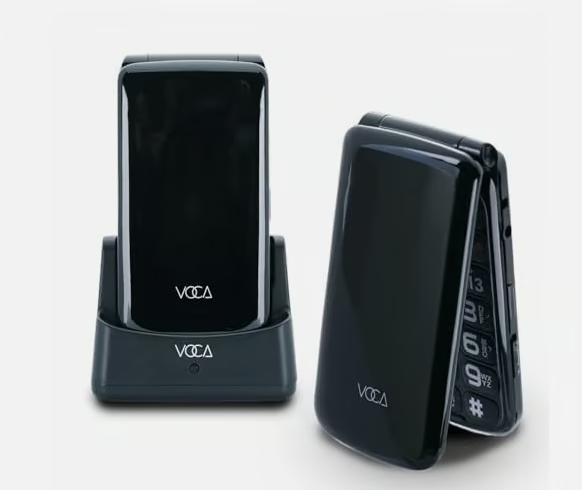
At about 90 g and 18 mm thick it is light and easy to hold, with big buttons, big fonts and a loud speaker aimed at users with limited dexterity or hearing. Three dedicated speed-dial keys (M1, M2 and M3) let a senior reach family with a single long press, and predictive text speeds up messaging. A charging dock is included so there is no cable to align. Holding the rear SOS button for more than three seconds dials up to five contacts and sends them an SMS, and owners highlight a useful safeguard: when the battery drops to 15 percent, the phone automatically texts emergency contacts. FM radio and a basic camera are included.
Pros:
- Very large keys and loud speaker
- Rear SOS plus automatic low-battery SMS alert
- Three speed-dial keys and a charging dock
Cons:
- Basic camera and screen
- Loud speaker can sound harsh at maximum volume
Key specs: VOCA V340; 4G LTE; big-button flip; rear SOS button; M1/M2/M3 speed dial; predictive text; charging dock; FM radio.
9. 4G LTE Senior Big-Button Phone
Best for: the loudest speaker and longest battery on a budget. This big-button phone focuses on three things seniors ask for most: an ultra-loud speaker, a large 1800 mAh battery and a simple wireless charging dock.
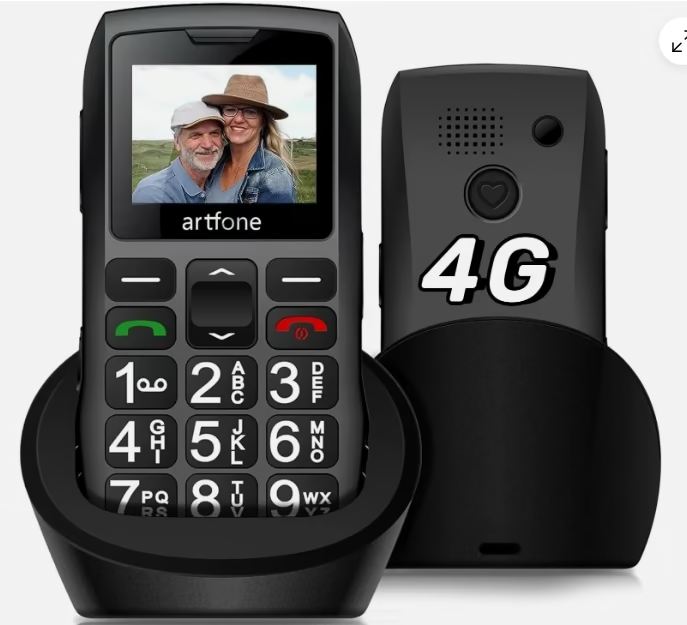
It is a straight bar phone rather than a flip, with widely spaced, high-contrast keys and a single SIM slot, wrapped in an anti-drop shell. The layout keeps calling and texting to a few clear steps, an SOS button dials preset emergency contacts, and a torch button helps in the dark. A drop-in charging cradle removes the need to plug in a cable. The 1800 mAh battery is among the largest here, which owners of similar models report translates to several days of standby, and the extra-loud speaker suits users with hearing loss.
Pros:
- Large 1800 mAh battery for long standby
- Ultra-loud speaker for users with hearing loss
- Wireless charging cradle and anti-drop shell
Cons:
- Unbranded listing, so specs and long-term support are harder to verify
- NZ buyers should confirm 4G VoLTE band support and the return policy first
Key specs: 4G LTE senior big-button phone; 1800 mAh battery; wireless charging dock; single SIM; SOS button; torch; anti-drop design.
10. Maxcom MM828
Best for: a European-made simple flip with dual SIM. The Maxcom MM828 Comfort is a straightforward 4G flip from an established European maker, aimed squarely at older users who want reliability over features.
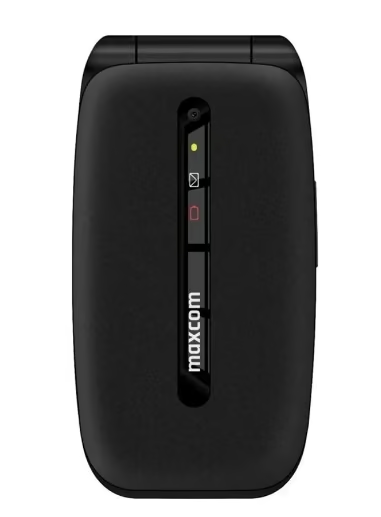
The 2.4 inch screen is easy to read and the large, comfortable keys are spaced for less confident fingers; it is available in blue and black. A simple menu, large fonts and a hands-free mode keep it approachable, and up to eight favourite contacts can be saved with a photo for quick recognition. USB-C charging and FM radio are included, plus a music player and voice recorder. A dedicated SOS button calls up to five stored numbers in sequence until someone answers, and dual SIM support is handy for seniors who travel or want separate work and personal numbers.
Pros:
- Established European maker with a simple, readable layout
- Dual SIM and up to eight photo contacts
- SOS button and USB-C charging
Cons:
- Small 1000 mAh battery, so shorter standby than the Nokia basics
- Tiny 0.08MP camera, not for photos
Key specs: Maxcom Comfort MM828 4G; 2.4 inch display; dual SIM; USB-C; SOS button; FM radio; up to 8 photo contacts.
How we chose these phones
Every phone in this guide was selected by researching and comparing manufacturer and New Zealand or Australian retailer specifications, then cross-checking them against verified owner reviews. The team did not physically test these models, so this is a research-based buying guide rather than a hands-on review. Priorities were 4G VoLTE support, which is now essential after the NZ 3G shutdown, hearing-aid compatibility, a working SOS button, button size and screen readability, battery life, and everyday ease of use for older hands and eyes. Rankings reflect how well each phone balances those factors for different needs, not a single best choice for everyone. For readers weighing a simple phone against a touchscreen, our guide to the latest full-featured smartphones covers the alternative, and easy-reading options like large-screen eReaders can suit seniors who mainly want to read.
For a different budget or use case, the guide to rugged phones covers the rest of the range.
The verdict
For most NZ seniors, an easy flip phone like the Artfone 4G Foldable or the hearing-aid-friendly Opel TouchFlip covers calls, texts and safety without confusion. Choose a Nokia 105 or 215 for the simplest calls-and-texts experience, the Nokia 3210 for style with local support, the Snap for heavy texting, the CAT S22 Flip for durability, and the VOCA V340 or Maxcom MM828 for big buttons with SOS. Whichever you pick, confirm it supports 4G VoLTE on Spark, One NZ or 2degrees before buying.
Big-button handsets are often older 3G stock that no longer works here, so check the model against current spark mobile phones before ordering one online.
Frequently Asked Questions
Are 3G phones being phased out in New Zealand?
Yes. New Zealand’s mobile providers switched off their 2G and 3G networks between January and March 2026. Any phone that relies on 3G can no longer make calls, texts or 111 emergency calls, so a phone for a senior must support 4G VoLTE on Spark, One NZ or 2degrees.
What is the easiest phone for an elderly person to use?
The easiest phones are simple 4G flip or big-button models with large physical keys, a bright high-contrast screen, loud clear audio and a menu limited to calls, texts and FM radio. Extras like a charging dock, talking numbers and a dedicated SOS button make daily use easier for older hands and eyes.
What should you look for in a phone for seniors?
Look for 4G VoLTE support, large tactile buttons, a readable screen with big fonts, a loud speaker and hearing-aid compatibility rated M3 or M4. An SOS button that dials emergency contacts, a long-life or removable battery, and a charging dock instead of a fiddly cable all add real everyday value.
What does hearing aid compatible M4/T4 mean?
Hearing-aid compatibility is graded on M and T scales, where M covers microphone use and T covers the telecoil setting. Ratings run from 1 to 4, and an M4/T4 phone is the highest grade, meaning it produces the least interference and the clearest sound for hearing-aid wearers during calls.
Do senior phones have an SOS button and how does it work?
Most senior phones include an SOS button, usually on the back. Pressing and holding it for a few seconds dials up to five saved emergency contacts one after another until someone answers, and many models also send those contacts an alert text, sometimes with the phone’s location, at the same time.
Do I need a special SIM or plan for a senior’s phone in NZ?
No special plan is needed. Any standard NZ SIM from Spark, One NZ, 2degrees or a smaller provider works, as long as the phone supports 4G VoLTE. A low-cost prepay or small monthly plan usually suits seniors who mainly call and text, and dual-SIM models let you keep an existing number.
Can flip phones use WhatsApp?
Some can. Most basic flip and button phones do not run WhatsApp, but a few 4G models built for seniors, such as the Opel Mobile TouchFlip, include it so families can message on the app they already use. If WhatsApp matters, check the listing confirms it before buying, as most simple phones lack it.
