
The best GPS tracker in NZ overall is the SALIND 4G GPS Tracker for Vehicles, because its strong magnets and 20,000mAh battery let it sit hidden on a car for weeks or months while reporting live location to an app. That said, the right tracker depends on what you are following. This guide compares nine real-time GPS trackers available in New Zealand, covering cars, motorcycles, pets, children and older relatives, so Kiwi shoppers can match the device to the job.
Every tracker here uses satellites plus a cellular connection to report live position and fire geofence alerts anywhere with coverage, rather than relying on Bluetooth pings from nearby phones. Some come with a bring-your-own prepaid SIM and no ongoing app fee, while others run on a fixed monthly or annual subscription that already includes the SIM and data, so check which model each pick uses before buying. Each pick was weighed on setup, accuracy, battery, waterproofing and running cost. If you also want turn-by-turn directions, see the separate roundup of in-car GPS navigation systems.
The Best GPS trackers in NZ, reviewed
1. SALIND 4G GPS Tracker for Vehicles – Best for Car and Vehicle Tracking
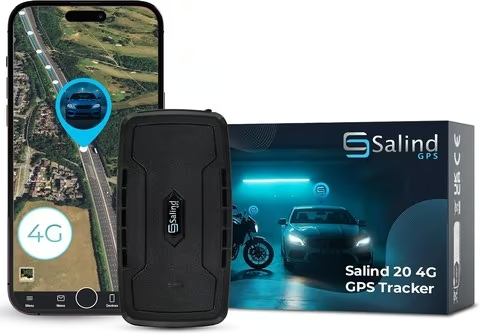
The SALIND GPS 20 is a heavy-duty magnetic tracker built around battery life. Super-strong built-in magnets hold it to a car chassis, caravan, boat, trailer or digger without tools, and the splash-proof housing measures about 12 x 6.4 x 4.8cm and weighs 460g, so it is bigger than a mini puck but still easy to tuck out of sight.
Inside is a 20,000mAh battery. SALIND quotes up to 25 days when tracking every day, around 90 days at roughly an hour of active tracking a day, and up to 180 days on standby. Live position, geofences and alerts for strong vibration, speeding and low battery come through the free iOS and Android app or the web portal, and access can be shared with the whole family.
The trade-off is running cost. An M2M SIM comes already fitted, but the tracker only works with a SALIND subscription, chosen on terms from monthly up to two years. That covers the SIM, lifelong device replacement and 24/7 support. With 1,475 reviews at 4.3 stars, it has one of the largest review bases in this guide.
Pros
- Up to 180 days on standby from a 20,000mAh battery
- Strong magnets for tool-free fitting
- Vibration, speed, geofence and low-battery alerts
- Large review base at 4.3 stars from 1,475 ratings
Cons
- Subscription required to use it
- Bigger and heavier (460g) than mini trackers
- Splash-proof rather than fully waterproof
Key specs: 4G, magnetic mount, 20,000mAh battery (up to 180 days standby), pre-installed M2M SIM, subscription-based, 12 x 6.4 x 4.8cm, 460g, 2-year warranty.
2. PAJ 4G GPS Tracker for Kids & Seniors – Best for Family Safety
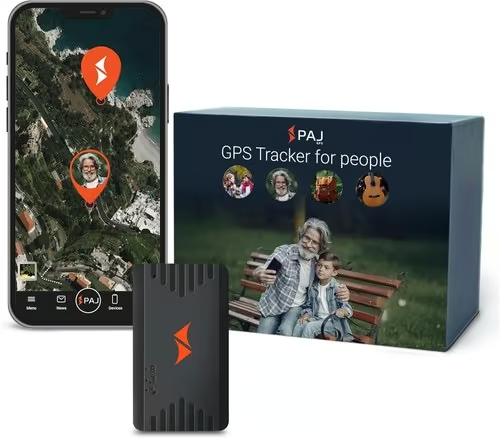
PAJ’s 4G people tracker is a small 41g unit, about 5.3cm square, that slips into a pocket, school bag or handbag. It is aimed at parents of school-age children and at families keeping an eye on an older relative who may wander.
It reports real-time position over 4G with no distance limit and keeps 365 days of location history. The key alarm is a safe zone: draw an area in the free app and you get a notification the moment the tracker leaves it, and a low-battery alert reminds you to charge it. The app runs on iOS and Android and can be shared with the whole family.
Battery life is about five days, so it needs a regular charging routine, and the listing does not describe an SOS button or two-way calling, so treat it as a locator rather than a personal alarm. A SIM is included, but a PAJ subscription is required, with plans from monthly to two-yearly. It has 610 reviews at 4.0 stars.
Pros
- Tiny and light at 41g
- Safe-zone alerts and 365 days of location history
- Family-shareable app on iOS and Android
- SIM included, nothing extra to source
Cons
- Battery lasts around five days
- No SOS button or voice calling described
- Ongoing subscription required
Key specs: 4G people tracker, 41g, 5.3 x 1.7 x 5.3cm, 1500mAh battery (about 5 days), safe-zone geofence, 365-day history, SIM included, subscription-based, 2-year warranty.
3. Tracki Pro 4G LTE Magnetic GPS Tracker – Best Waterproof Vehicle Tracker
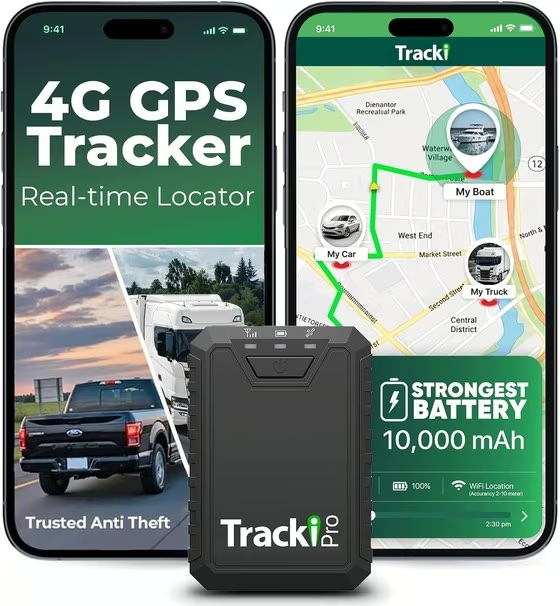
The Tracki Pro is a waterproof, dust-resistant magnetic tracker about the size of a computer mouse (89.9 x 63 x 37.1mm). Tracki fits it with an industrial-strength magnet so it stays on a ute chassis, truck or boat trailer over rough, unsealed roads.
A 10,000mAh battery gives up to 210 days, around seven months, in battery-saving mode, and much less when reporting live. Position comes from 4G LTE, GPS and Wi-Fi, and the iOS, Android and web apps send movement, speeding, geofence and SOS alerts.
With 4,005 reviews at 4.4 stars, it has the largest review base in this guide. A subscription is required to use it, and the seven-month battery figure only applies in the most conservative battery-saving setting, so expect to charge it far more often if you track in real time.
Pros
- Fully waterproof and dust-resistant
- Up to 210 days in battery-saving mode
- 4G LTE, GPS and Wi-Fi positioning
- Largest review base here at 4.4 stars
Cons
- Subscription required
- Real-time tracking cuts battery life sharply
- Larger than mini trackers
Key specs: 4G LTE, GPS and Wi-Fi, magnetic mount, waterproof, 10,000mAh battery (up to 210 days saving mode), 89.9 x 63 x 37.1mm, subscription-based.
4. PAJ 4G Magnetic GPS Tracker for Vehicle – Best Long Battery Life
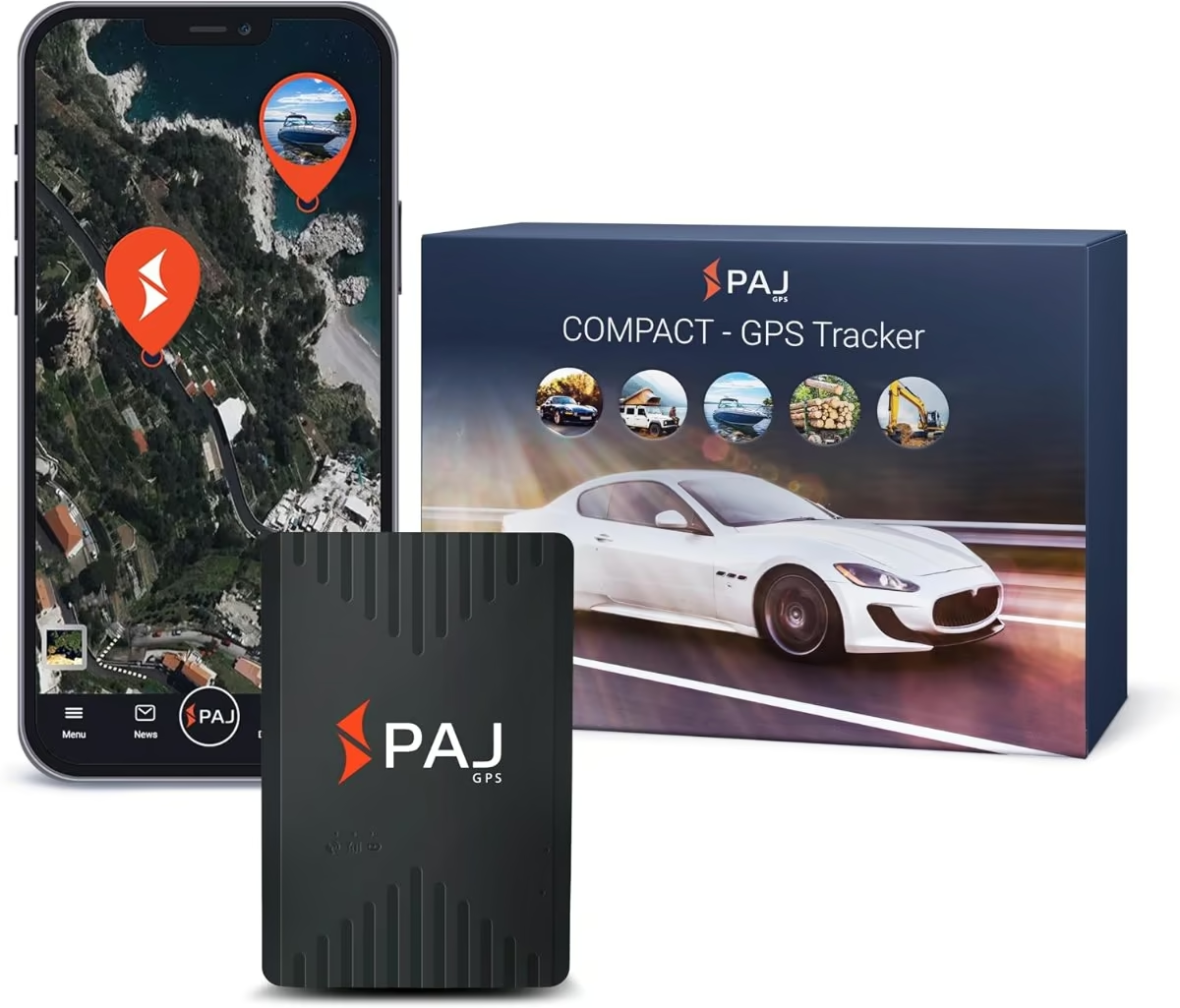
This PAJ tracker attaches to a vehicle or piece of equipment with a built-in magnet and reports live position over 4G through the PAJ Finder Portal app, with a pre-installed SIM already fitted rather than one you source yourself.
It carries a 5000mAh battery rated by the listing for around 20 days of active tracking or up to 40 days on standby, and it sends alerts for movement, vibration, geofence exit and entry, low battery and device removal.
PAJ is a genuine German GPS-tracker brand with other verified models on its own site, but this specific listing’s battery capacity and dimensions did not match any current model on paj-gps.com, so treat those particular figures as sourced from the retailer listing rather than independently cross-checked. No independent owner reviews could be verified for this exact configuration.
Pros
- Pre-installed SIM, nothing extra to source before setup
- Movement, geofence and low-battery alerts
- From an established GPS-tracker brand name
Cons
- Runs on a paid ongoing subscription rather than your own SIM
- This listing’s exact spec sheet could not be cross-checked against the brand’s current model range
Key specs: 4G LTE, magnetic mount, 5000mAh battery, pre-installed SIM, subscription-based.
5. SinoTrack ST-915L 4G GPS Tracker – Best No-Subscription Tracker
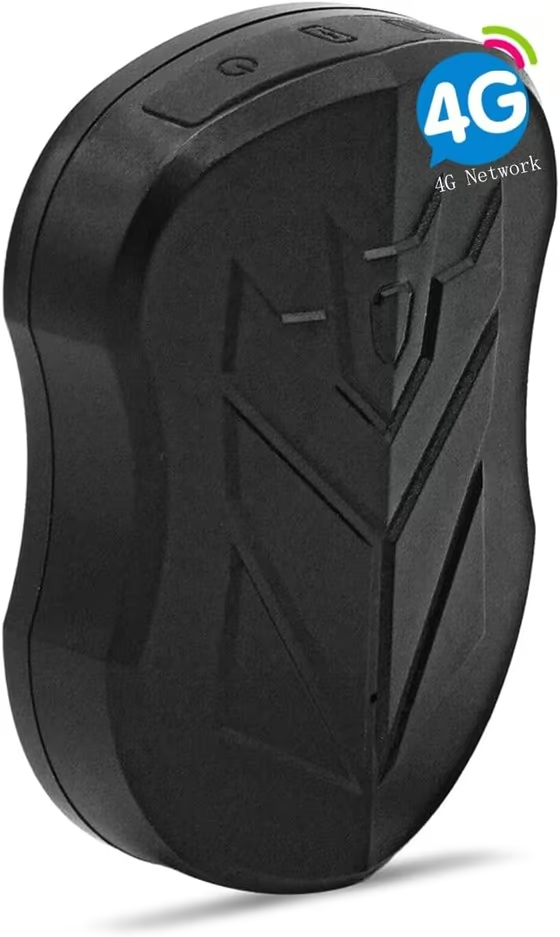
The SinoTrack ST-915L is a battery-powered magnetic tracker with a heavy-duty waterproof, dustproof and shockproof case, so it can go on a car, motorcycle, taxi, truck or bus without any wiring.
A 7,800mAh battery is rated for around 30 days. It runs on 2G and 4G networks with GPS, positions to about 5 metres, and supports shock alerts, geofencing, over-speed alerts, route history playback and SMS alarms. Tracking runs through SinoTrack’s own web platform and the SinoTrack Pro app, which the brand says are free for the life of the device.
This is the pick for buyers who want to avoid a subscription. There is no SIM in the box, so you supply a local 4G SIM with a small data plan, and setup involves a little more configuration than the plug-and-play subscription trackers. It has 210 reviews at 4.2 stars.
Pros
- No subscription: your own SIM and a free lifetime platform
- Waterproof magnetic case, no wiring needed
- Around 30 days of battery
- Shock, geofence and over-speed alerts
Cons
- SIM not included
- More hands-on setup than subscription trackers
- No 3G fallback (2G and 4G only)
Key specs: 2G/4G with GPS, magnetic, waterproof, 7,800mAh battery (about 30 days), geofence/over-speed/shock alerts, SinoTrack Pro app, SIM not included, 10 x 8 x 2.5cm, 300g.
6. SALIND OBD GPS Tracker for Car – Best Plug-In OBD Tracker
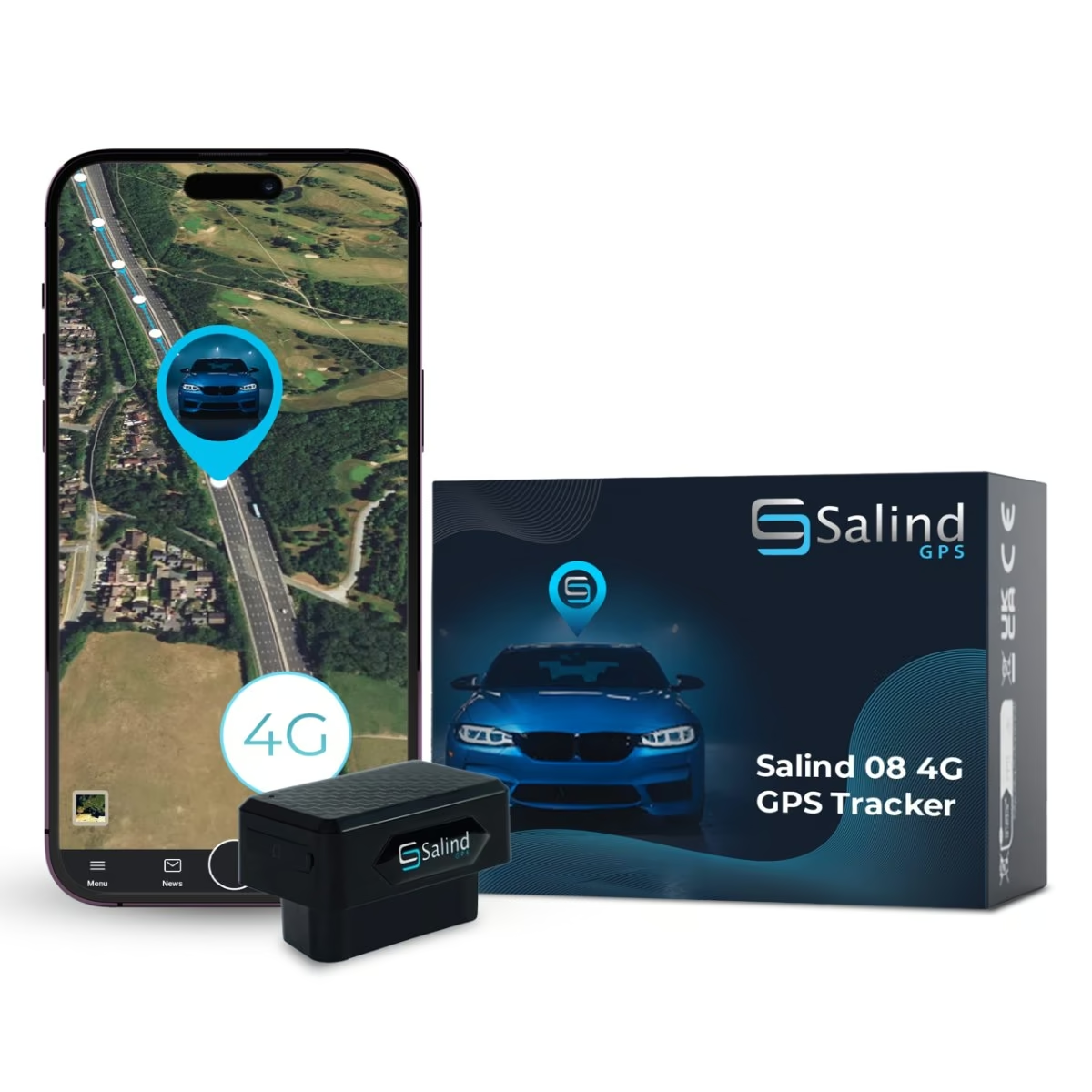
Rather than a magnet or wiring job, the SALIND tracker plugs straight into the car’s OBD-II port (9 to 35V), drawing permanent power so it never needs charging. It comes as a complete set with a pre-installed SIM already active on a subscription plan.
Once plugged in, it reports real-time location and speed through SALIND’s app, with geofence alerts on top. It is built for fleets, rideshare drivers and parents monitoring teen drivers as much as everyday car owners.
Specs and the product image were confirmed directly from SALIND’s own site; no independent owner review data was available there.
Pros
- Plugs into the OBD port and never needs charging
- Subscription already includes the SIM, nothing extra to buy
- Well suited to fleets, teen drivers and rideshare work
Cons
- Needs an accessible OBD-II port, so it is not as hidden as a magnetic tracker
- Ongoing subscription required rather than a bring-your-own SIM
Key specs: OBD-II plug-in (9-35V), pre-installed SIM, subscription-based, real-time app.
7. Tractive GPS Dog Tracker – Best for Pets

Tractive is the market-leading pet GPS tracker brand, and this 2025 edition clips onto a dog’s collar to give live location plus bark monitoring, working in over 175 countries via cellular coverage rather than relying on nearby phones.
Escape alerts fire the moment a dog leaves a set virtual fence, and the same device tracks activity and sleep patterns over time. Battery runs up to 14 days with Power Saving Zones turned on, less with continuous live tracking.
Confirmed directly on Tractive’s own site, which cites a 4.7 out of 5 rating from over 3,400 Trustpilot reviews.
Pros
- From the market-leading pet GPS tracker brand
- Escape alerts plus activity, sleep and bark monitoring
- Strong 4.7/5 rating from over 3,400 Trustpilot reviews
Cons
- Requires an ongoing subscription to cover the SIM and data
- Battery life drops well under 14 days with frequent live tracking
Key specs: cellular GPS, bark/activity/sleep monitoring, up to 14-day battery, subscription-based.
8. Tracki GPS Tracker for Vehicles – Best Value Hardware Price
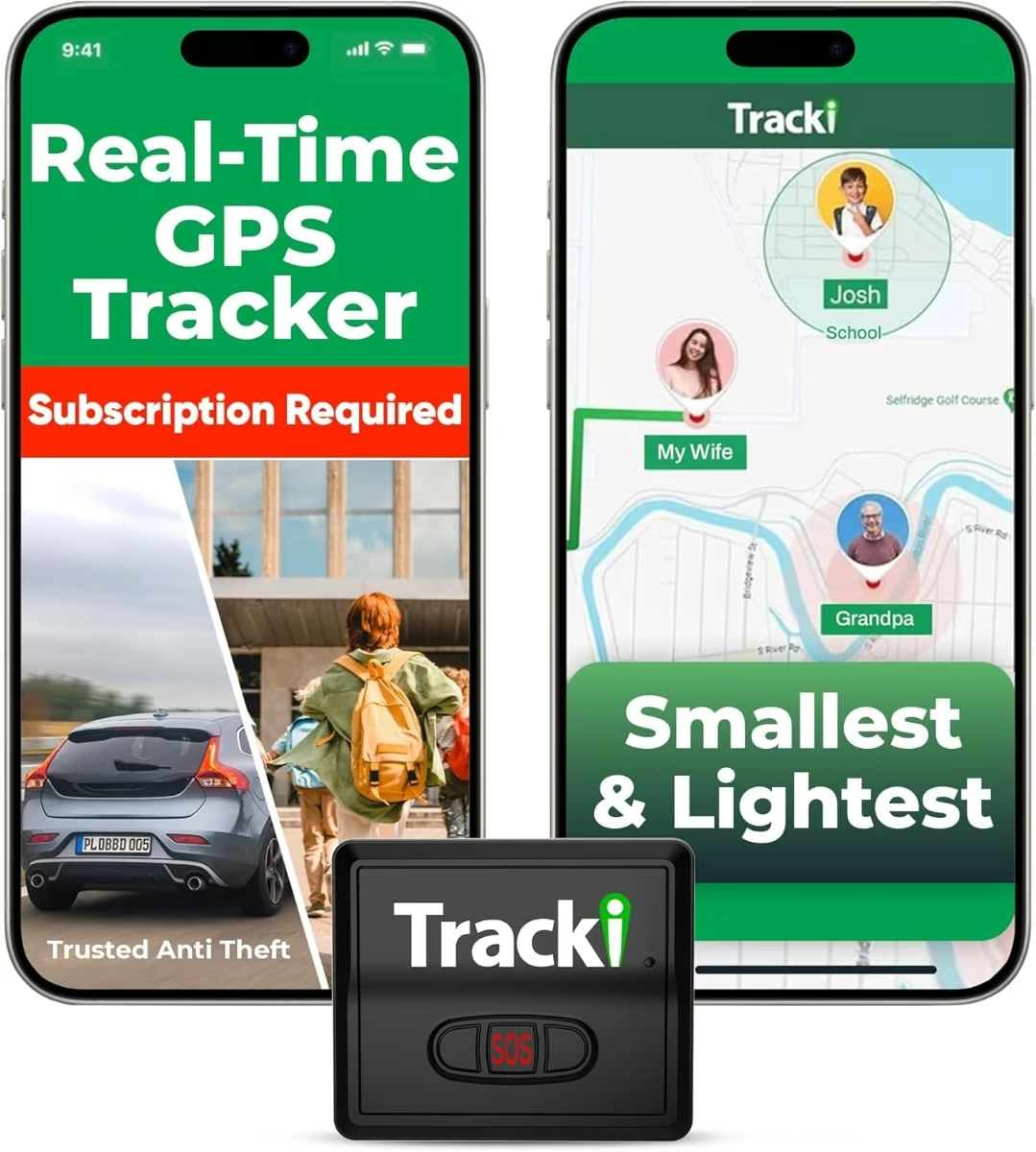
Tracki is an established US GPS-tracker brand, and this magnetic model combines 4G LTE with Bluetooth for coverage in car parks and buildings where cellular alone can struggle. It is compact enough to hide under a vehicle with no wiring or tools.
The listing rates battery life at up to 5 days in real-time mode or up to 60 days in a battery-saving mode, useful for parked vehicles, caravans and long-term asset monitoring, and it works across cars, utes, boats and trailers.
This specific listing’s exact dimensions and battery figures did not match any current model on Tracki’s own site, so treat those numbers as sourced from the retailer listing rather than independently cross-checked. No independent owner reviews were found for this exact configuration.
Pros
- Small, magnetic and easy to hide under a vehicle
- Combines 4G LTE with Bluetooth for indoor and car-park coverage
- From an established GPS-tracker brand name
Cons
- Runs on a paid subscription rather than your own SIM
- This listing’s exact spec sheet could not be cross-checked against the brand’s current model range
Key specs: 4G LTE plus Bluetooth, magnetic mount, subscription-based.
9. OBD2 Car GPS Tracker – Best All-Inclusive with SIM Included
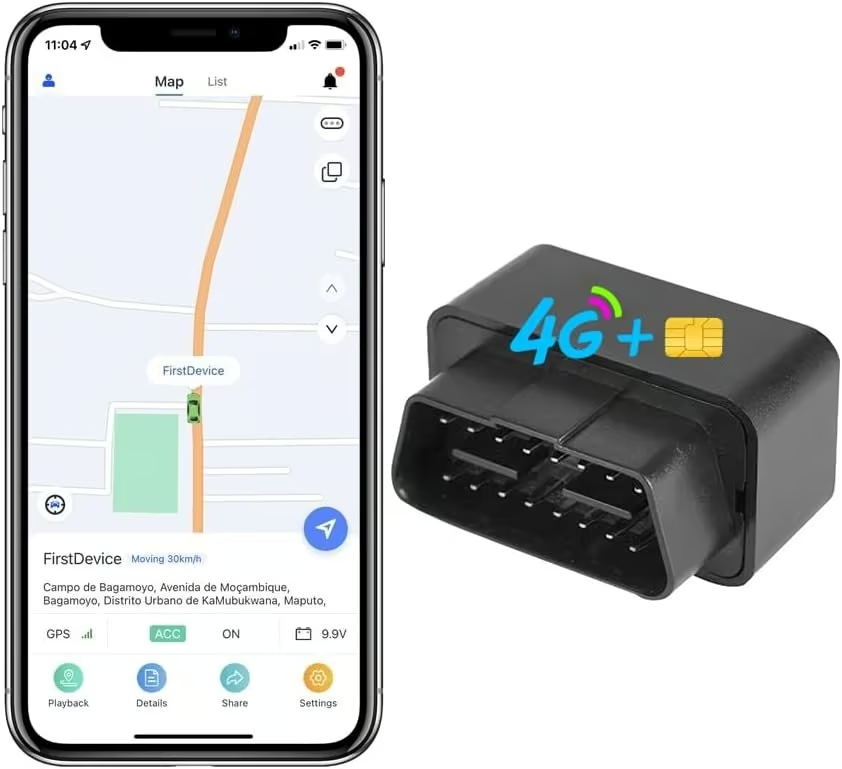
This OBD2 plug-in tracker’s main selling point is bundled running cost: the purchase price includes a full year of SIM usage on Australian and New Zealand networks, with no contract, activation fee or cancellation fee during that period.
It plugs directly into the car’s OBD port for permanent power, so there is no charging, and it reports real-time location, vibration and overspeed alerts through a free app. After the first year, renewal runs on a quarterly or annual plan.
No independent brand website, retailer listing or review could be found anywhere outside this Amazon listing itself, so treat the brand as effectively unverified beyond the retailer’s own product page.
Pros
- First year of SIM usage included in the purchase price
- Plug-and-play OBD install, no wiring or charging
- No activation or contract fees during year one
Cons
- No independent owner reviews or brand presence found outside this listing
- Ongoing renewal cost applies once the included first year ends
Key specs: OBD2 plug-in, 4G, 1-year SIM included, then quarterly or annual renewal.
How to choose a GPS tracker in NZ
Decide GPS or Bluetooth first. If you need live, real-time location of a car, pet or person anywhere, buy a cellular GPS tracker. If you only need to find everyday items that stay near people, a Bluetooth finder like the AirTag or Boomcard is cheaper and lasts far longer per charge.
Check the SIM and running cost. Real-time trackers need a nano SIM with a small data plan. Many are sold as no monthly fee, which usually means no app subscription rather than no cost, since you still supply a prepaid SIM. Bluetooth finders need no SIM at all.
Match accuracy to the job. Full GPS units locate to roughly 5 to 10 metres in open sky. GSM and GPRS trackers are cheaper but coarser. Bluetooth finders are only as current as the last phone that walked past.
Weigh battery and waterproofing. Live tracking drains batteries in days, so look for long standby and easy charging. For pets and outdoor gear, choose a waterproof rating such as IP67 or IPX7. A spare power bank keeps rechargeable trackers topped up on the road.
Know the NZ rules. You may track a vehicle you own and your own children or belongings. Tracking another adult without consent can breach privacy law, so tell any adult who regularly drives a tracked car that a device is fitted.
For the rest of the car, the guides to tyre inflators and dash cams are worth a look.
The verdict
For most Kiwis the SALIND 4G GPS Tracker for Vehicles is the best all-round GPS tracker in NZ, pairing a strong magnet with a battery that can last months between charges. Buyers who want to avoid a subscription should look at the SinoTrack ST-915L, which runs on your own SIM, while the SALIND OBD tracker suits drivers who would rather plug in and never charge. Pet owners should look at the Tractive GPS Dog Tracker, parents and carers keeping an eye on a child or older relative should consider the PAJ 4G people tracker, and the waterproof Tracki Pro suits trailers, boats and caravans. Shoppers happy to pay a fixed subscription for an all-inclusive setup have several PAJ, Tracki and OBD2 options to compare in this guide.
FAQs
Do GPS trackers need a SIM card?
Yes. Most real-time GPS trackers, including 4G car, pet and personal units, need a nano SIM with a small data plan to send location to the app. Bluetooth finders like the Apple AirTag and Boompods Boomcard are the exception, using nearby phones instead of a SIM.
Do GPS trackers have a monthly fee in NZ?
Not always. Many trackers advertised as no monthly fee simply have no app subscription, but you still buy a prepaid SIM with a small data allowance. Bluetooth item finders such as the AirTag have no fees and no SIM at all, only the upfront device cost.
Are GPS trackers legal in New Zealand?
Yes. You may track a vehicle you own and your own children or belongings. Tracking another adult without their consent can breach privacy law, so it is best to tell any adult who regularly drives a tracked car that a device has been fitted.
How accurate are GPS trackers?
A good GPS tracker locates to roughly 5 to 10 metres in open sky. Accuracy drops indoors, in tunnels and among tall buildings, where devices fall back to cell-tower or WiFi positioning that can be noticeably less precise than a clear satellite fix.
How long does a GPS tracker battery last?
Battery life depends heavily on the model and how often it reports location. Magnetic vehicle trackers in standby mode can run for weeks between charges, while trackers pinging every few minutes in real-time mode may need charging every few days. Subscription-based trackers often report battery status in the app, so you get a low-battery alert before it dies.
Do I need a subscription for a GPS tracker in NZ?
It depends on the model. Some trackers use your own prepaid nano SIM, so there is no ongoing app fee beyond the small cost of mobile data. Others come with a pre-installed SIM and require a fixed monthly or annual subscription that covers the SIM, data and cloud tracking platform. Check which model a specific tracker uses before buying, since running costs differ a lot between the two.
What is the best GPS tracker for a car with no subscription?
A strong-magnet 4G vehicle tracker with a free app and your own prepaid data SIM avoids locked-in subscriptions while still giving real-time location, trip history and geofence alerts. Just budget for the small SIM data cost each month to keep it connected.
