
The best dash cam in NZ overall is the 70mai 4K A810S, a true 4K front-and-rear system with Sony’s STARVIS 2 sensor, GPS and a super capacitor instead of a battery – a genuine advantage in a car that sits in the sun, since capacitors handle heat far better than lithium batteries.
This guide covers seven dash cams available in New Zealand, from a trusted Garmin ultracompact model through to true 4K front-and-rear systems built for rideshare drivers, all confirmed to ship to New Zealand with real prices and genuine specs taken from each product’s own listing.
Each entry lists what the camera actually records – resolution, front/rear coverage, night vision sensor – so you can match capability to what you actually need, whether that’s simple commuting footage or court-ready evidence for a rideshare job.
Quick comparison
| Rank | Dash cam | Best for |
|---|---|---|
| 1 | 70mai Dash Cam 4K A810S | Best overall |
| 2 | Garmin Dash Cam Mini 3 | Best trusted brand / ultracompact |
| 3 | Vantrue N2X 2.7K Dash Cam | Best for rideshare drivers |
| 4 | REDTIGER F7NP 4K Dash Cam | Best front & rear value |
| 5 | Pelsee P1 Pro 4K Dash Cam | Best big screen |
| 6 | DDPAI N1 Dual Dash Cam | Best budget dual-channel |
| 7 | 70mai Dash Cam M310 Plus 4K | Best budget single-channel |
The Best Dash Cams in New Zealand
1. 70mai Dash Cam 4K A810S – Best overall
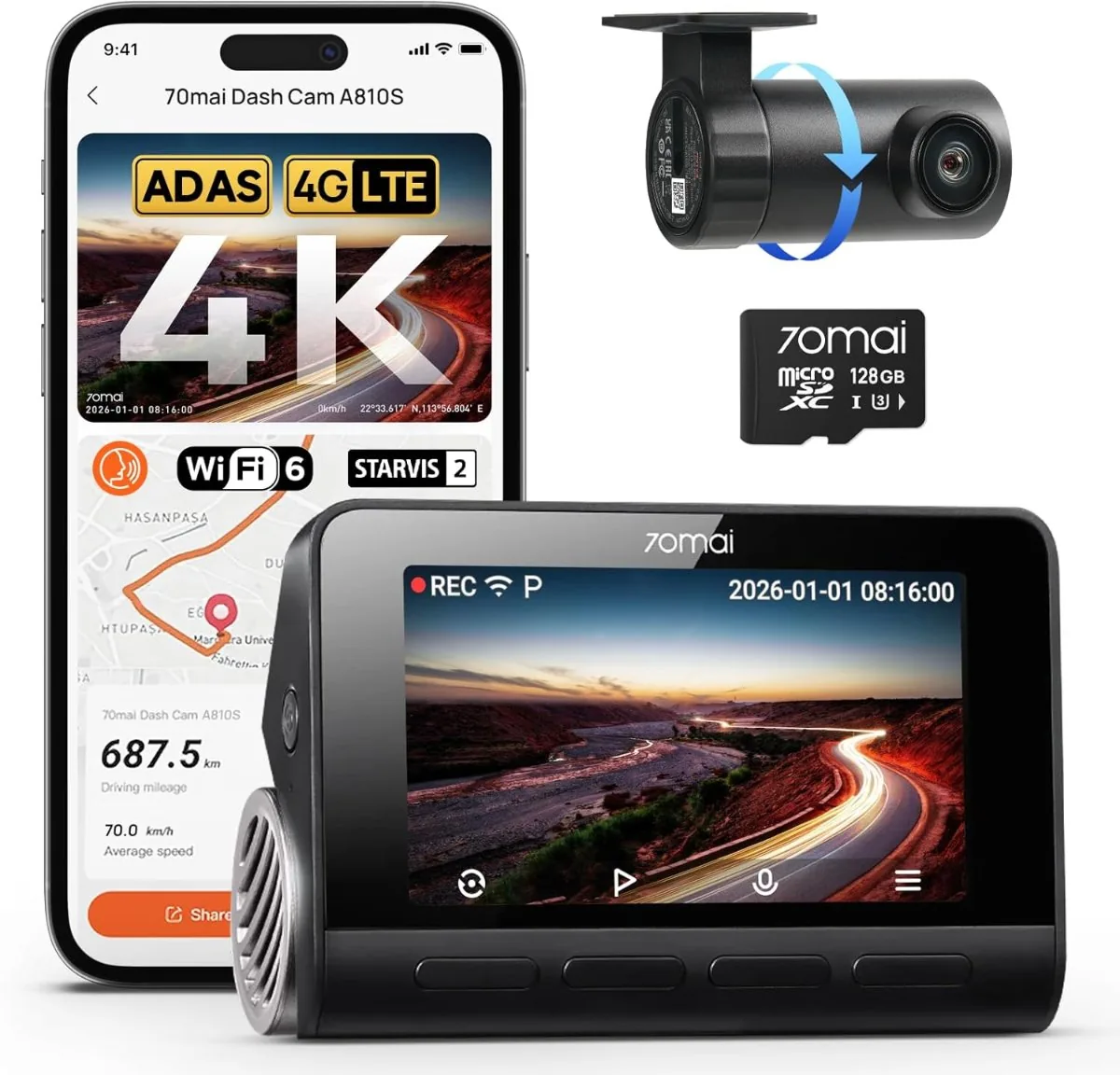
This 70mai system records true 4K UHD on both front and rear cameras using Sony’s industry-leading STARVIS 2 IMX678 sensor and an F1.7 large aperture, capturing licence plates and road signs clearly enough to provide solid evidence if you ever need it.
It uses a super capacitor instead of a lithium battery, which handles the heat of a parked car in direct sun far better and lasts longer under repeated heat cycles than battery-based dash cams.
Built-in Wi-Fi 6 and GPS are included, with an optional 4G add-on for remote viewing, plus AI motion detection and 24-hour parking monitoring for when the car is left unattended.
Pros
- True 4K UHD on both front and rear cameras
- Super capacitor handles heat better than a lithium battery
- GPS, Wi-Fi 6 and optional 4G remote viewing
Cons
- Highest price on this list
- 4G remote viewing requires an optional add-on and its own data plan
Key specs: True 4K front + rear, STARVIS 2 IMX678 sensor, super capacitor, Wi-Fi 6, GPS, optional 4G, 24H parking monitor.
2. Garmin Dash Cam Mini 3 – Best trusted brand / ultracompact
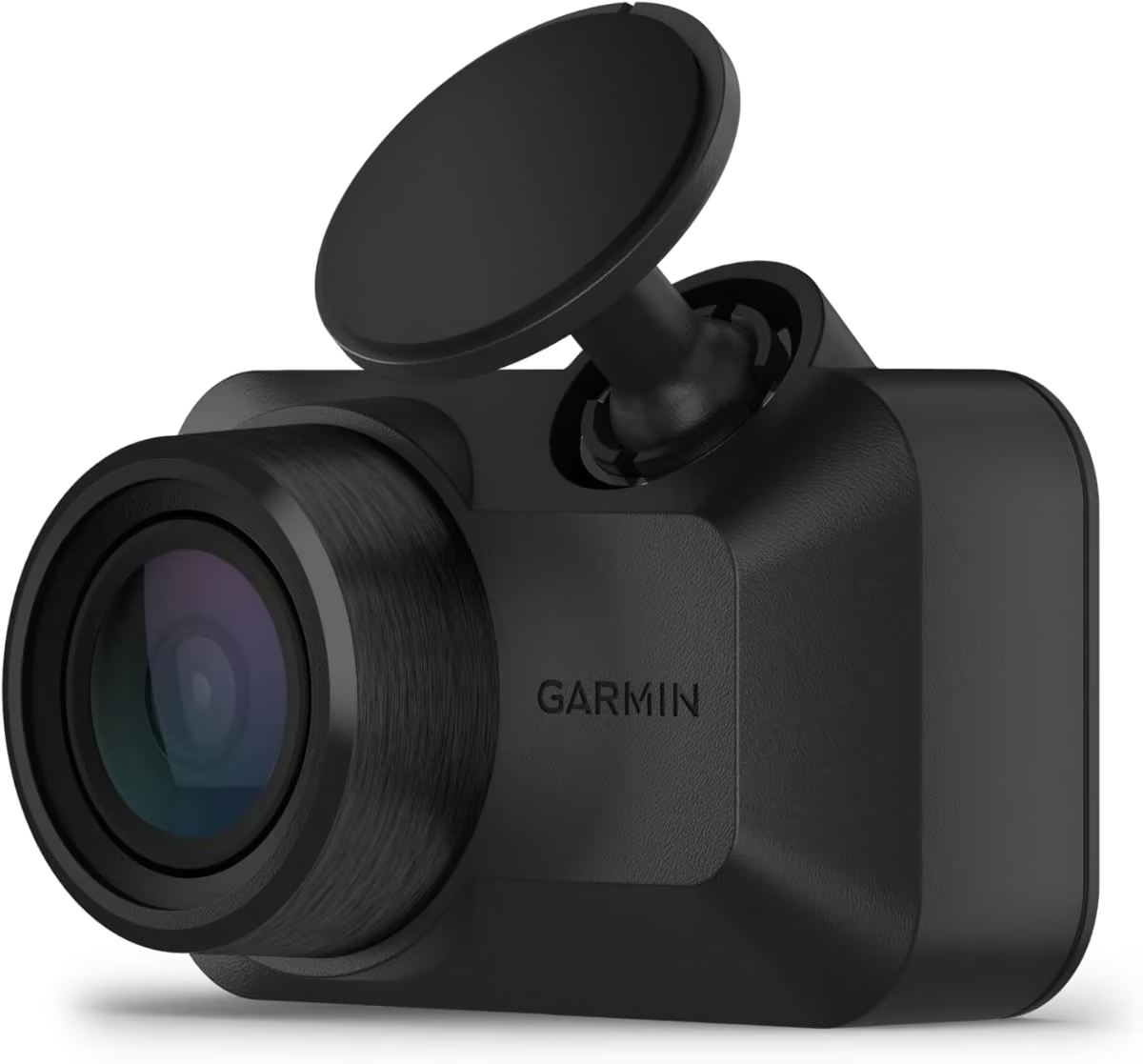
Garmin is one of the most established names in car electronics, and the Mini 3 lives up to that reputation with a genuinely tiny, key-fob-sized design that sits almost unnoticed on the windscreen.
It records 1080p HD with a 140-degree field of view and Garmin’s own Clarity polarizer lens built in to reduce windshield glare, which is a real point of difference from cheaper dash cams that need a separate polarizing filter.
It automatically detects and saves footage of incidents by date and time, and its small size means it’s easy to move between vehicles if needed.
Pros
- Trusted, established Garmin brand
- Genuinely ultracompact – barely noticeable on the windscreen
- Built-in Clarity polarizer reduces glare without a separate filter
Cons
- 1080p resolution is lower than the 4K picks on this list
- Front-only recording, no rear camera option
Key specs: 1080p HD, 140° field of view, built-in Clarity polarizer, automatic incident recording, ultracompact size.
3. Vantrue N2X 2.7K Dash Cam – Best for rideshare drivers
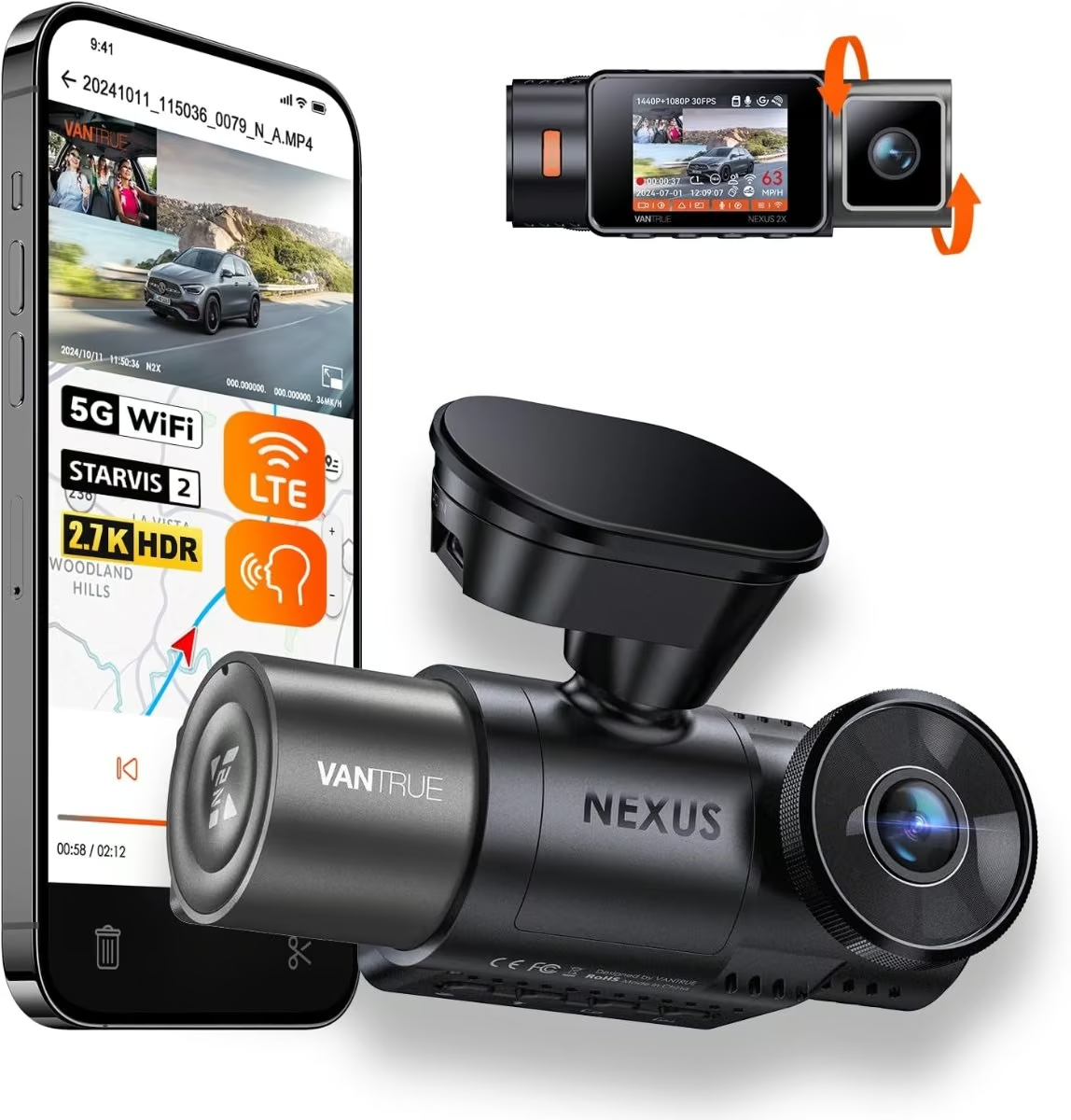
This Vantrue model is built specifically with rideshare, Uber, Lyft and taxi drivers in mind, recording the road ahead in 1944p (up to 1440p at 60fps) and the vehicle’s interior in 1080p simultaneously.
The interior camera and its audio recording can be disabled for privacy when not needed, giving drivers control over when passenger footage is actually captured.
Sony’s STARVIS 2 sensor plus HDR and infrared night vision keep both the road and cabin view usable after dark, with 24-hour parking mode covering the vehicle while unattended.
Pros
- Purpose-built for rideshare and taxi driving with dual front + interior recording
- Interior camera and audio can be disabled for privacy
- STARVIS 2 sensor with HDR and IR night vision on both cameras
Cons
- Interior-facing camera is a specific feature that not everyone will need
- 1944p front resolution is strong but not full 4K
Key specs: 1944p front + 1080p interior, STARVIS 2 sensor, disable-able interior camera/audio, GPS, 24H parking mode.
4. REDTIGER F7NP 4K Dash Cam – Best front & rear value
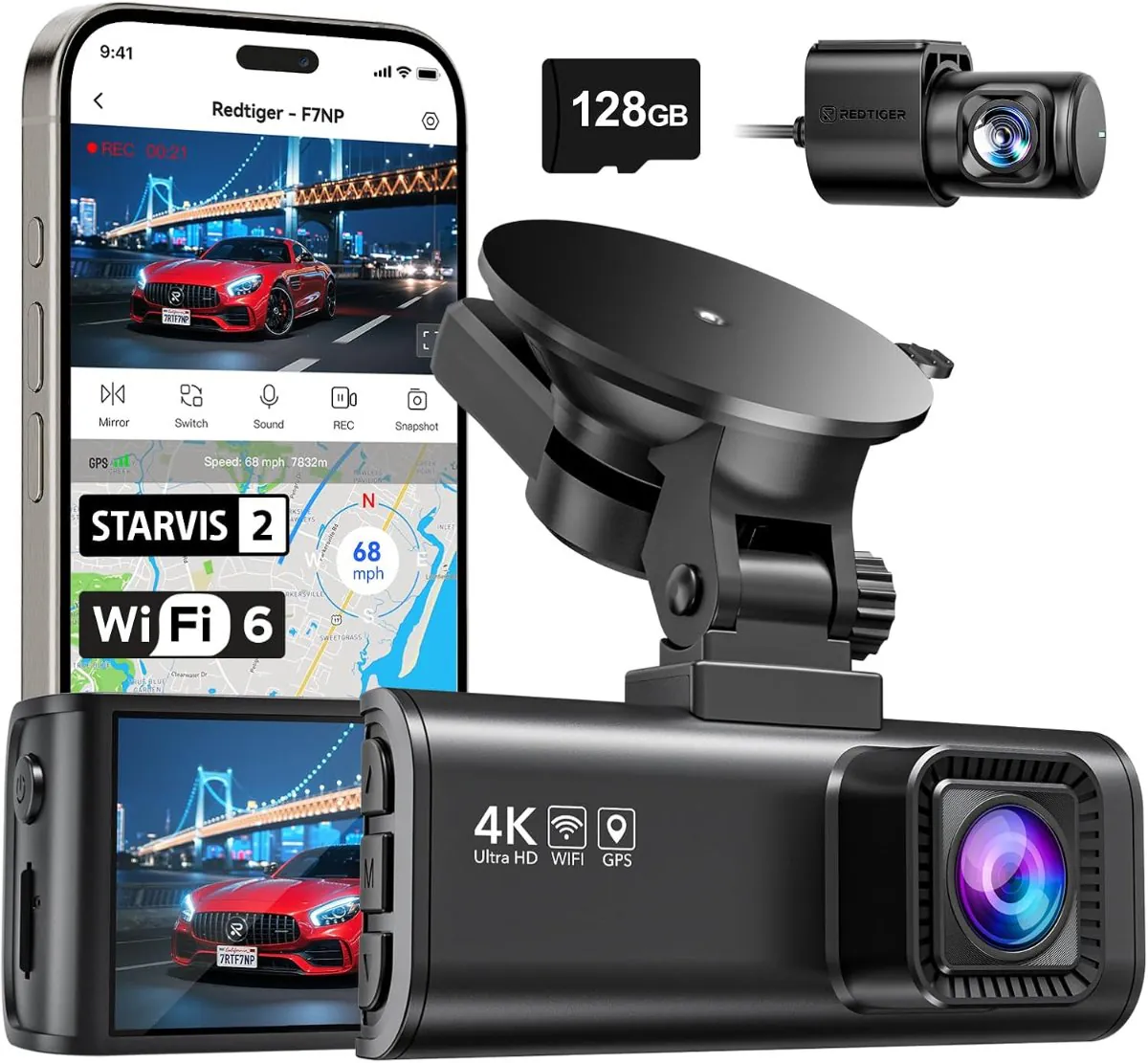
This REDTIGER system records true 4K on the front camera and 1080P on the rear, using the same STARVIS 2 sensor and a large F1.5 aperture found on more expensive picks on this list, at a noticeably lower price.
A microSD card is included in the box, saving the extra cost of buying storage separately – worth checking the included capacity against how much footage you actually want to retain.
Note that continuous 24-hour parking mode requires a separate hardwire kit (sold separately), so factor that in if always-on parking monitoring matters to you.
Pros
- True 4K front camera at a lower price than the other 4K picks
- SD card included in the box
- Large F1.5 aperture and STARVIS 2 sensor for night footage
Cons
- 24H parking mode needs a separate hardwire kit, not included
- Rear camera is 1080P rather than matching the front’s 4K
Key specs: 4K front + 1080P rear, STARVIS 2 sensor, F1.5 aperture, SD card included, hardwire kit needed for 24H parking mode.
5. Pelsee P1 Pro 4K Dash Cam – Best big screen
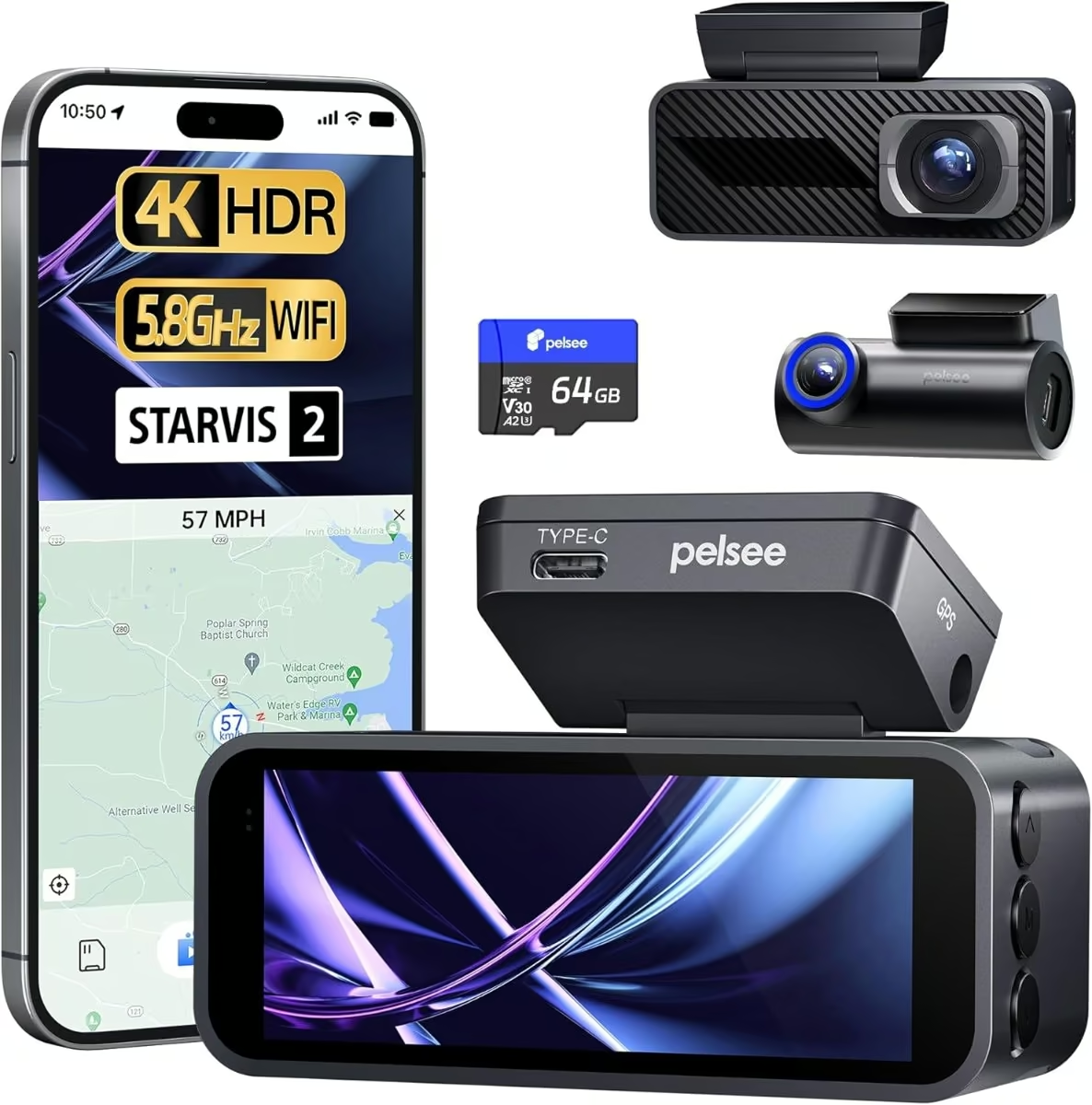
This Pelsee model pairs a 4K HDR front camera with a 1080P WDR rear camera, syncing both at 25fps, and stands out from the other picks on this list with a large 3.39-inch screen for reviewing footage directly on the device.
It uses the same Sony STARVIS 2 sensor as several other picks here, with the manufacturer stating 4x greater low-light sensitivity than conventional dash cam night vision.
GPS, Wi-Fi and voice control are all included, along with a 64GB SD card and 24-hour parking mode, making it a well-equipped package for the price.
Pros
- Large 3.39-inch screen, bigger than most dash cams on this list
- 4K HDR front + 1080P WDR rear recording
- 64GB SD card included
Cons
- Larger screen adds some bulk to the unit on the windscreen
- Sits in the middle of this list’s price range rather than being the cheapest
Key specs: 4K HDR front + 1080P WDR rear, STARVIS 2 sensor, 3.39″ screen, 64GB SD card included, GPS, Wi-Fi, voice control.
6. DDPAI N1 Dual Dash Cam – Best budget dual-channel
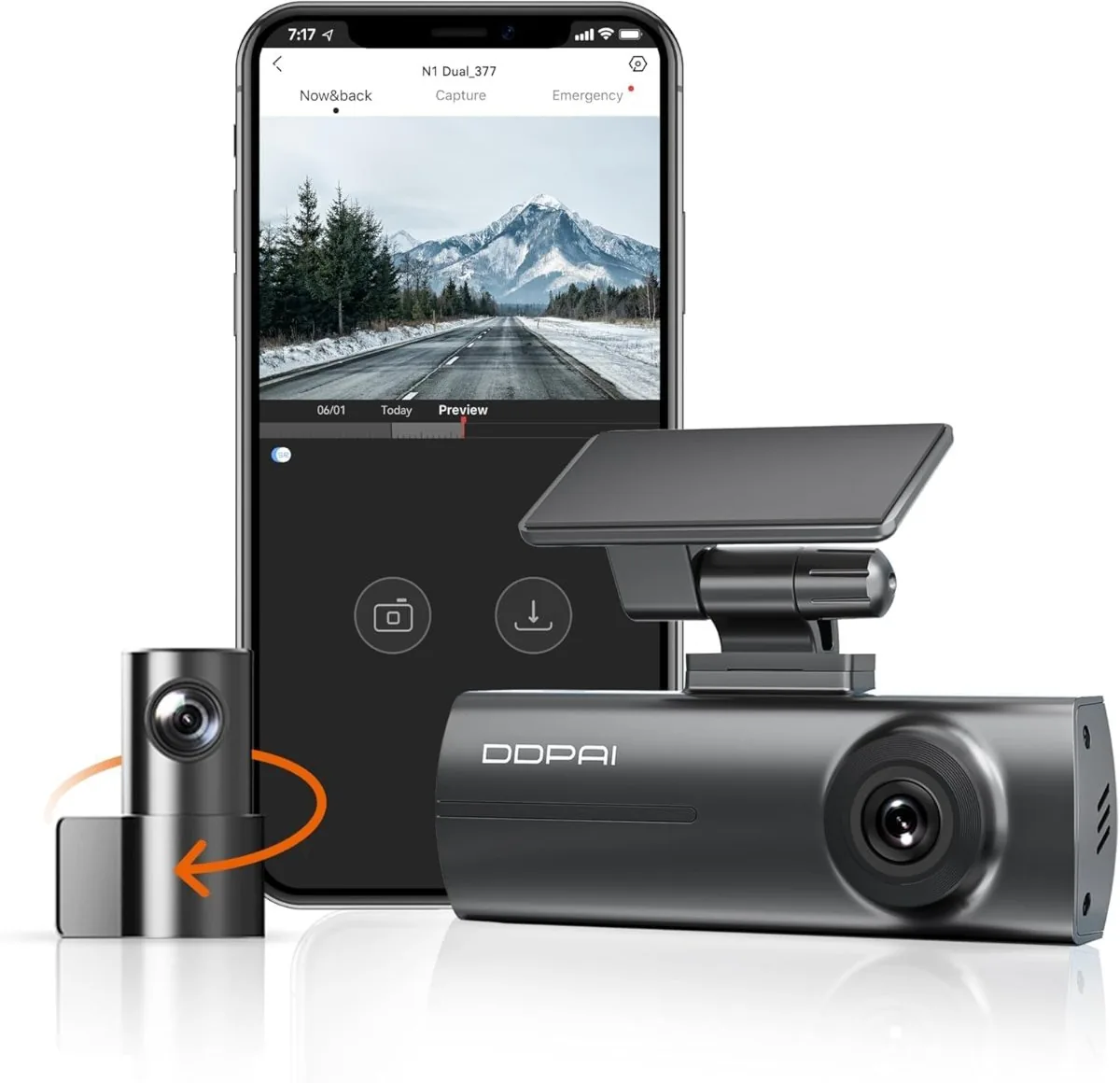
This DDPAI model records the front road at 1296P and the rear or interior at 1080P simultaneously, including audio, at a noticeably lower price than the other dual-camera picks on this list.
A 5-piece all-glass lens with an F1.8 aperture and DDPAI’s NightVIS technology aim to keep footage usable after dark, with WDR helping balance bright and shadowed areas of the frame.
It’s built for both dashcam evidence and casual use, positioned by the manufacturer as equally suited to documenting a road trip as to capturing family moments inside the car.
Pros
- Genuine dual-channel (front + rear/interior) recording at a budget price
- 5-piece all-glass lens with a wide F1.8 aperture
- Smart app control for footage management
Cons
- 1296P/1080P resolution is lower than the 4K picks on this list
- Fewer advanced features (no GPS mentioned) compared to pricier dual-camera picks
Key specs: 1296P front + 1080P rear/interior with audio, F1.8 aperture, NightVIS, WDR, smart app control, supports 256GB card.
7. 70mai Dash Cam M310 Plus 4K – Best budget single-channel
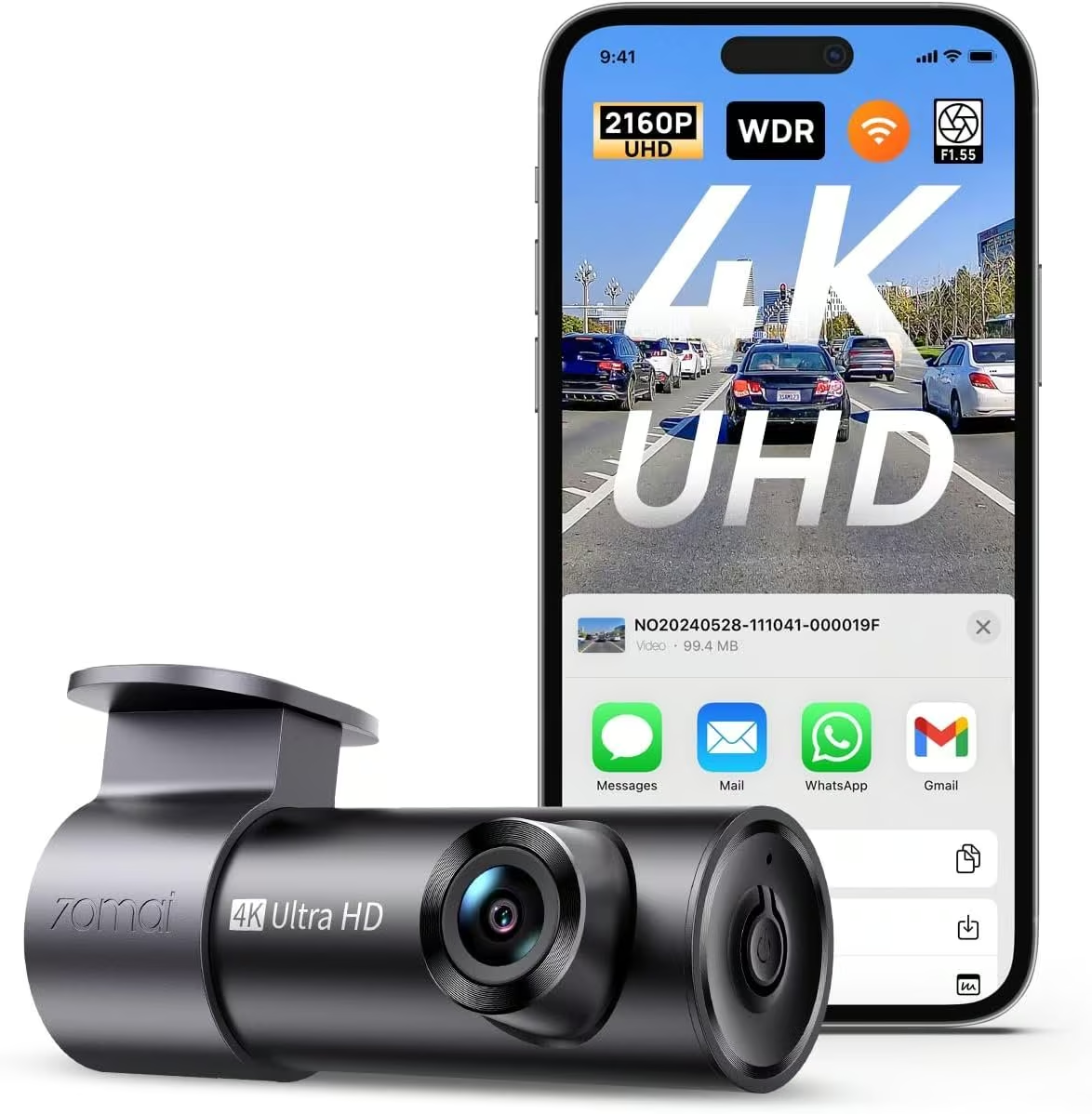
This is 70mai’s mini, screen-free dash cam, with an ultra-compact body (92.6 x 43.1 x 46.5mm) that mounts almost invisibly and supports 360-degree manual rotation for front or rear windscreen use.
It records true 4K (3840x2160P) despite its small size and low price, a genuinely strong resolution-to-price ratio compared to some larger, pricier single-channel dash cams.
Smart voice control and app-based video flip/mirror mode round it out, so it works correctly even if mounted upside down.
Pros
- True 4K recording at the lowest price on this list
- Ultra-compact, screen-free design mounts almost invisibly
- 360° manual rotation for flexible mounting
Cons
- Single-channel only – no rear or interior camera option
- No built-in screen means reviewing footage requires the companion app
Key specs: True 4K (3840x2160P), 140° wide-angle, screen-free ultra-compact design, 360° rotation, voice control, app-based flip/mirror mode.
How to choose the best dash cam for you
A few genuine features matter more than brand name alone when picking a dash cam – resolution, field of view, night vision, and whether you actually need a rear or interior camera.
Video resolution
Look for at least 1080p, which provides clear footage even in low light. 4K, offered by most picks on this list, gives noticeably sharper detail – useful for reading number plates or road signs clearly if footage is ever needed as evidence.
Field of view and cameras
A field of view of 140 degrees or more captures a wider stretch of road, including the sides. Beyond a single front camera, a rear camera adds coverage for rear-end incidents, while an interior camera (like the Vantrue pick above) is specifically useful for rideshare and taxi drivers documenting the cabin.
Night vision and sensor quality
Wide dynamic range (WDR) and a larger aperture both genuinely improve footage in low light and against glare from oncoming headlights. Several picks on this list use Sony’s STARVIS 2 sensor, a widely-used, well-regarded image sensor specifically for low-light dash cam performance.
GPS and parking mode
A GPS-enabled dash cam timestamps footage with location and speed, which can matter for insurance claims. Parking mode keeps recording (or triggers on motion) while the car is left unattended – check whether it needs a separate hardwire kit, as some picks on this list do, or works with just the standard power cable.
Storage and power source
Most dash cams use a microSD card with loop recording, automatically overwriting the oldest footage once the card fills up – a larger capacity card means more retained footage before that happens. Also worth noting: dash cams that use a super capacitor instead of a lithium battery (like the top pick on this list) handle the heat of a parked car in direct sun better and last longer under repeated heat cycles.
Anyone setting up their car with the rest of their tech might also want to check our guides to security cameras, GPS navigation and car vacuum cleaners.
If you spend real time on the road, the guides to tyre inflators and car GPS trackers cover the rest of the kit.
Dash cams are optimised for continuous loop recording rather than image quality, so anyone wanting usable holiday photos should look at cheap digital cameras instead.
Verdict
For most people who want the best all-round dash cam, the 70mai 4K A810S is the easiest recommendation – true 4K front and rear recording with a super capacitor that copes with NZ’s summer heat better than a battery-based unit. Anyone who wants a trusted, established brand and the smallest possible footprint should look at the Garmin Mini 3 instead.
Rideshare and taxi drivers specifically should consider the Vantrue N2X for its interior-facing camera, while anyone on a tighter budget who still wants dual-camera coverage should look at the DDPAI N1 or the true-4K-for-less REDTIGER F7NP. For the simplest, cheapest way into a genuine 4K dash cam, the 70mai M310 Plus is hard to beat.
Frequently Asked Questions
Are dash cams legal in New Zealand?
Yes, dash cams are legal to use in New Zealand, provided the mount doesn’t obstruct the driver’s view of the road. Footage can be used as evidence in insurance claims or, in some cases, provided to police after an incident.
Do dash cams record all the time?
Most dash cams use loop recording, continuously recording over the oldest footage once the memory card fills up, so they’re effectively always recording while the car is running. Many models also offer a separate parking mode that records or triggers on motion while the car is parked and turned off.
Do I need a rear dash cam as well as a front one?
A front-only dash cam covers the most common type of incident, but a rear camera adds evidence for rear-end collisions and reversing incidents, and an interior camera is specifically useful for rideshare or taxi drivers who need to document the cabin.
What size memory card does a dash cam need?
This depends on the resolution and how much footage you want to retain before it loops – a 4K dash cam fills a card faster than a 1080p one. Most dash cams support at least 128GB, and higher-end models on this list support up to 512GB for extended retention.
Why do some dash cams use a capacitor instead of a battery?
A super capacitor handles the extreme heat of a car parked in direct sun far better than a lithium battery, which can degrade faster or become a safety risk under repeated heat cycles. Capacitor-based dash cams are considered a genuine advantage for hot climates and cars regularly parked outdoors.
Does a dash cam affect my insurance?
Some NZ insurers may offer a discount for having a dash cam fitted, and footage can help support a claim by providing clear evidence of what happened. Check with your specific insurer, as policies on dash cam discounts and footage requirements vary.
