
A camera phone is a smartphone chosen mainly for the quality of its camera system, rather than its screen, battery or price. That is the difference from a standard phone, where the camera is one feature among many, and it is why camera phones have larger sensors, optical zoom and image stabilisation.
Camera phones come in a few main types. Telephoto flagships add a dedicated zoom lens, such as a 5x optical camera, for real zoom without losing quality. Computational photography phones rely on software to produce natural-looking images in difficult light. Large-sensor mid-rangers use a bigger main sensor, such as a 1/1.4 inch sensor, to improve low-light photos, and budget camera phones use a high-megapixel sensor with stabilisation for everyday shots.
The most useful number is optical zoom: a 5x native telephoto lens, as on the Xiaomi 17T models, keeps detail at distance where a digital crop would lose it. Beyond zoom, the choice comes down to sensor size for low light, optical image stabilisation for video, the display and battery, and whether the phone is an AU or international version that suits your carrier.
This guide compares six camera phones available in New Zealand across telephoto flagship, computational photography, large-sensor mid-range and budget designs.
Best camera phones comparison
| Product | Best for | Camera highlight | Processor or memory | Rating |
|---|---|---|---|---|
| Xiaomi 17T Pro | Best Overall Camera Phone | Leica 5x telephoto | Dimensity 9500 | 4.6/5 |
| Xiaomi 17T | Best Compact Leica Camera Phone | Leica 5x telephoto | TSMC 4nm | 4.4/5 |
| Google Pixel 10 Pro | Best Pixel for Photo Quality | Pro camera system | 16GB RAM, 128GB | 4.4/5 |
| Xiaomi Redmi Note 15 Pro+ 5G | Best Budget Camera Phone | 200MP main camera | Snapdragon 7s Gen 4 | 4.4/5 |
| Xiaomi Redmi Note 15 Pro 5G | Best for Value Without the Plus | 200MP main camera | Dimensity 7400-Ultra | 4.4/5 |
| Xiaomi Redmi Note 15 5G | Best Cheapest Camera Phone | 108MP with OIS | Snapdragon 6 Gen | 4.5/5 |
1. Xiaomi 17T Pro – Best Overall Camera Phone
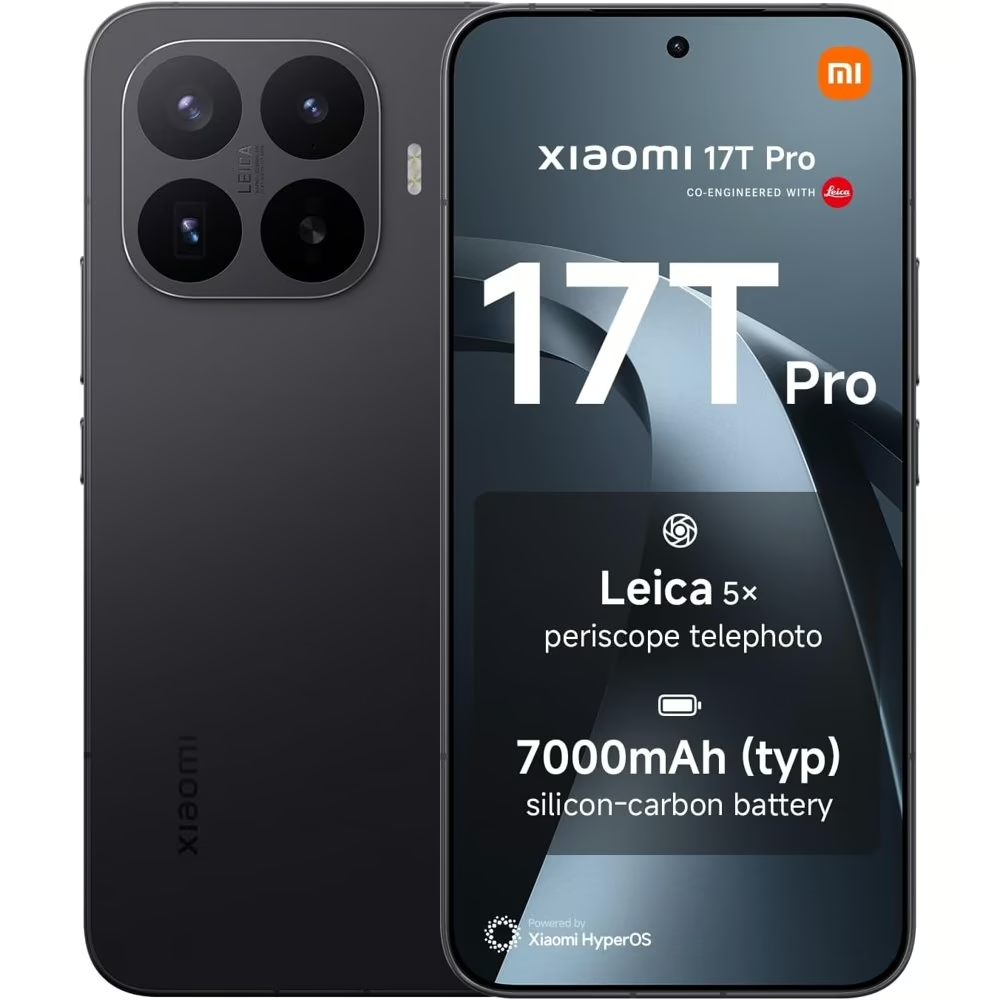
The Xiaomi 17T Pro is the strongest camera phone in this guide for anyone who wants real zoom. Its Leica telephoto camera has 5x native optical zoom, combined with ISZ technology for lossless optical-grade 10x zoom and up to 120x AI ultra zoom, which lets you shoot subjects from a distance with far more detail than a digital crop.
It is built around the MediaTek Dimensity 9500 processor, with a 6.83 inch display that reaches 144Hz and up to 3,500 nits of peak brightness, so framing a shot in bright sunlight is easy.
The 7,000mAh silicon-carbon battery is large for a flagship, with 100W wired charging that fills it in about 48 minutes and 50W wireless charging. It is an AU version, and it is rated 4.6 stars.
Pros
- Leica 5x native telephoto with lossless 10x zoom
- Large 6.83 inch 144Hz display up to 3,500 nits
- 7,000mAh battery with 100W and 50W wireless charging
- Dimensity 9500 processor
- Free delivery to New Zealand
Cons
- Sits at the top end of this guide, above the customs-value level at which NZ import charges apply
- Large and heavy phone with a small review base so far
Key specs: Leica 5x telephoto camera, 10x lossless optical-grade zoom, up to 120x AI zoom. MediaTek Dimensity 9500. 6.83 inch 144Hz display, 3,500 nits. 7,000mAh battery, 100W wired and 50W wireless charging. AU version.
2. Xiaomi 17T – Best Compact Leica Camera Phone
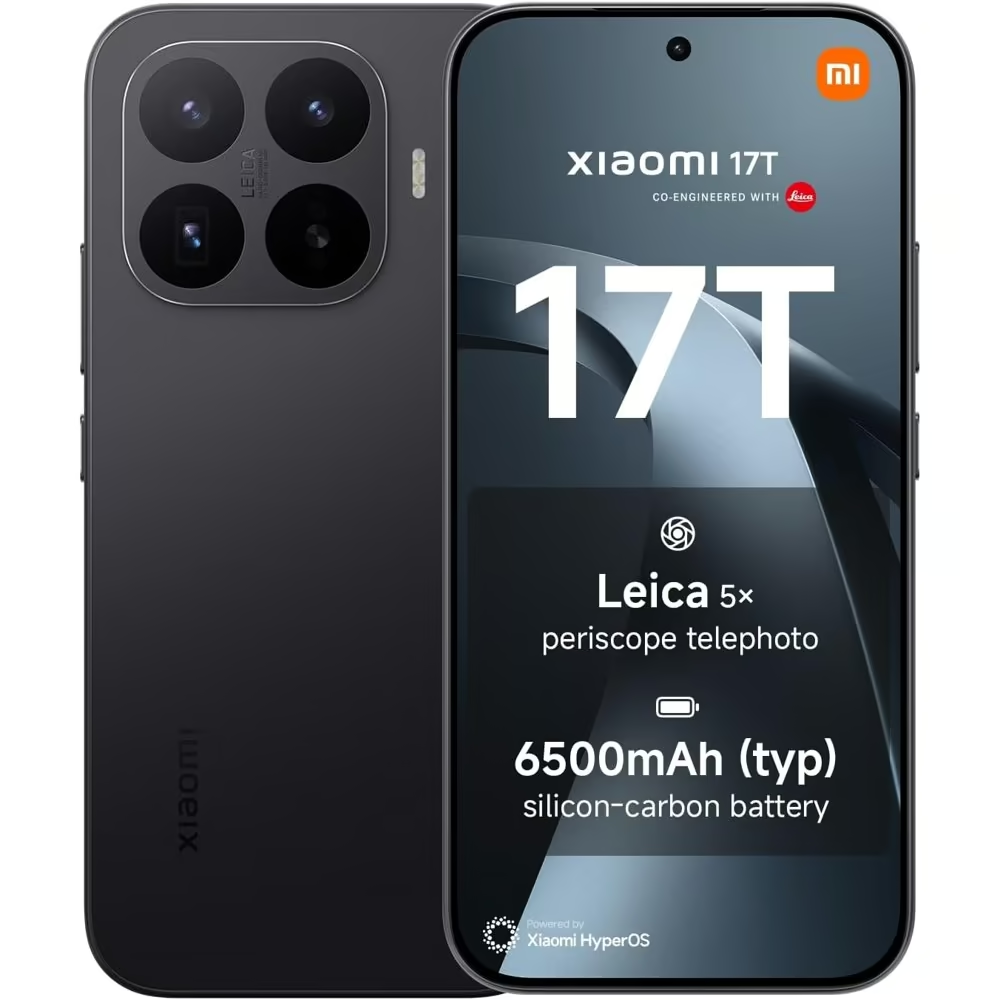
The Xiaomi 17T keeps the same headline camera feature as the Pro, a Leica 5x telephoto with 10x lossless optical-grade zoom and up to 120x AI zoom, in a smaller and lighter phone. That makes it the better choice for people who want a camera phone that is still easy to use one-handed.
It has a 6.59 inch display with an ergonomic micro-curve frame, weighs 200g, and the screen reaches 120Hz with 3,500 nits of peak brightness. The TSMC 4nm chip has an 8-core GPU for smooth multitasking.
A 6,500mAh silicon-carbon battery gives all-day usage, with 67W charging that fills it in about 58 minutes. It is an AU version and is rated 4.4 stars.
Pros
- Leica 5x telephoto with 10x lossless zoom
- Compact 6.59 inch body at 200g
- 6,500mAh battery with 67W charging
- Bright 120Hz display up to 3,500 nits
- Free delivery to New Zealand
Cons
- No wireless charging listed, unlike the 17T Pro
- Small review base so far
- Sits close to the customs-value level at which NZ import charges apply
Key specs: Leica 5x telephoto camera, 10x lossless optical-grade zoom, up to 120x AI zoom. 6.59 inch 120Hz display, 3,500 nits. 200g. 6,500mAh battery, 67W charging. TSMC 4nm processor. AU version.
3. Google Pixel 10 Pro – Best Pixel for Photo Quality

The Google Pixel 10 Pro is the pick here for people who prioritise Google’s computational photography, which is the reason many people search for which phone has the best camera. The listing describes a pro camera system with 50MP and 42MP sensors, a 6.3 inch LTPO OLED display, and Gorilla Glass Victus 2 cover glass.
The screen reaches 3,300 nits and 120Hz, and the phone has 16GB of RAM with 128GB of storage. It is sold as an international version with a two-year warranty, with a single physical SIM plus eSIM.
The listing gives fewer camera specifications than the Xiaomi models, so treat it as the picture-quality choice rather than the spec-sheet choice. It is rated 4.4 stars.
Pros
- Pro camera system with 50MP and 42MP sensors
- 6.3 inch LTPO OLED, 120Hz, up to 3,300 nits
- Gorilla Glass Victus 2 cover glass
- 16GB of RAM
- Free delivery to New Zealand
Cons
- Sits at the top end of this guide, above the customs-value level at which NZ import charges apply
- Sold as an international version, so confirm it suits your carrier before buying
- The listing gives few camera specifications
Key specs: Google Pixel 10 Pro. International version. 6.3 inch LTPO OLED, 120Hz, 3,300 nits. Gorilla Glass Victus 2. 16GB RAM, 128GB storage. 50MP and 42MP cameras. 4,870mAh battery. Single SIM plus eSIM. Two-year warranty.
4. Xiaomi Redmi Note 15 Pro+ 5G – Best Budget Camera Phone
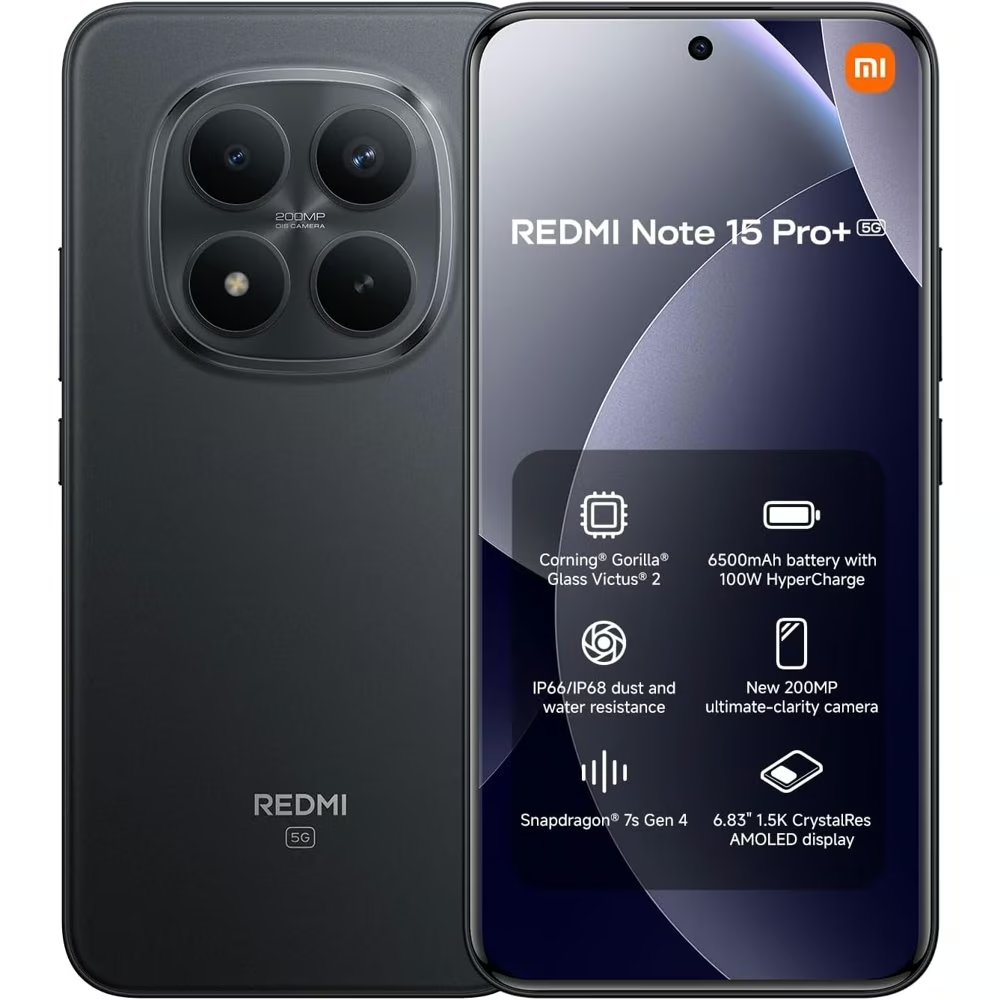
The Redmi Note 15 Pro+ is the best-value way into a serious camera phone, and it has the biggest review base of the Xiaomi range here with more than 400 ratings. Its 200MP camera uses a 1/1.4 inch large sensor with an AI engine, which is the part that matters for low light, because a bigger sensor collects more light.
The 6.83 inch 1.5K AMOLED display reaches 3,200 nits, and the Snapdragon 7s Gen 4 processor is paired with IceLoop cooling to keep performance stable. The 6,500mAh silicon-carbon battery supports 100W charging and 22.5W reverse charging.
It also has IP69K dust and water resistance, which is among the highest protection ratings for a phone at this level. It is an AU version and is rated 4.4 stars.
Pros
- 200MP camera with a 1/1.4 inch large sensor
- Bright 6.83 inch 1.5K AMOLED display
- 6,500mAh battery with 100W charging
- IP69K dust and water resistance
- Free delivery to New Zealand
Cons
- No optical telephoto lens listed, unlike the 17T models
- Megapixel count matters less than sensor size and processing
Key specs: 200MP camera, 1/1.4 inch sensor. 6.83 inch 1.5K AMOLED, 3,200 nits. Snapdragon 7s Gen 4. 6,500mAh battery, 100W charging, 22.5W reverse charging. IP69K. 256GB. AU version.
5. Xiaomi Redmi Note 15 Pro 5G – Best for Value Without the Plus
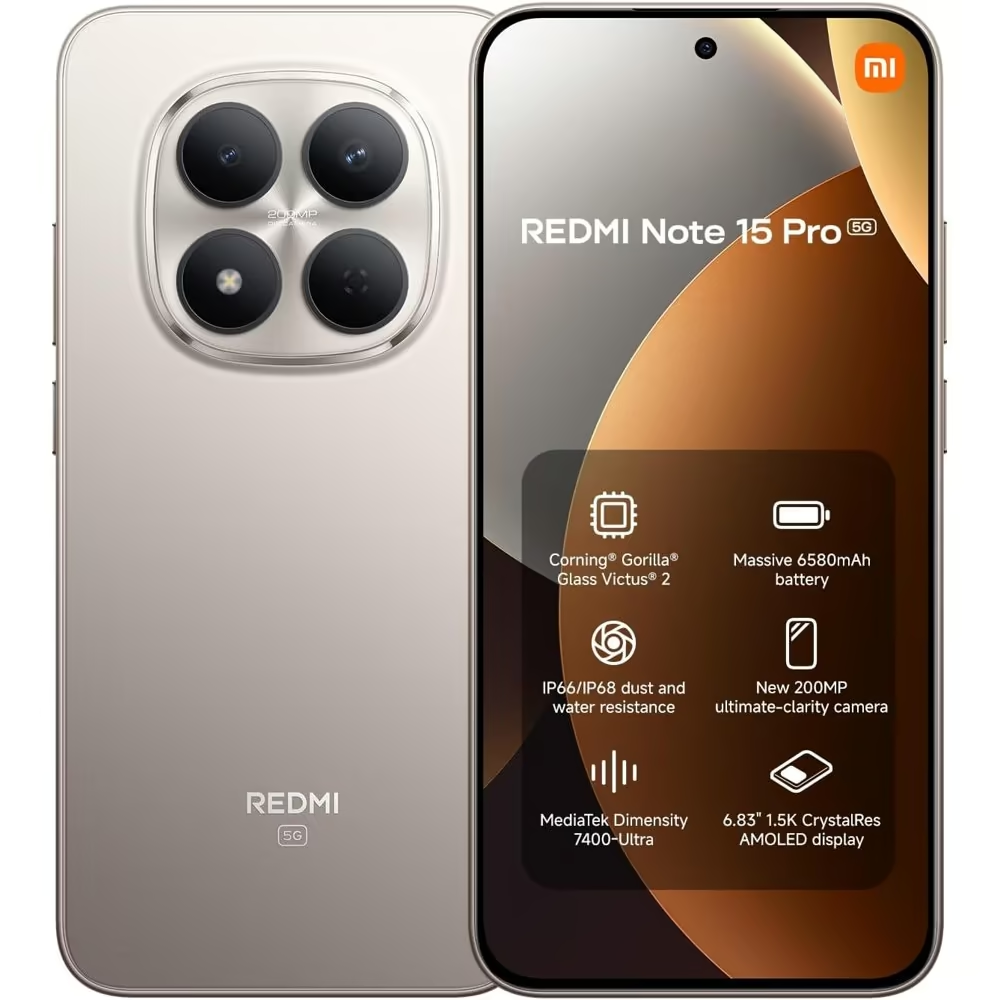
The Redmi Note 15 Pro shares the 200MP, 1/1.4 inch camera of the Pro+ and drops the faster charging, which makes it the sensible choice when camera quality is the priority and charging speed is not. It is the most reviewed phone in this guide, with more than 700 ratings.
It uses the MediaTek Dimensity 7400-Ultra processor with vapor chamber cooling for stable performance, and the same 6.83 inch 1.5K AMOLED display at up to 3,200 nits. The battery is a 6,500mAh silicon-carbon cell with 45W charging.
IP69K protection is included, and it is an AU version. It is rated 4.4 stars.
Pros
- Same 200MP, 1/1.4 inch camera as the Pro+
- More than 700 ratings
- Large 6,500mAh battery with 45W charging
- IP69K dust and water resistance
- Free delivery to New Zealand
Cons
- Slower 45W charging than the Pro+
- No optical telephoto lens listed
Key specs: 200MP camera, 1/1.4 inch sensor. 6.83 inch 1.5K AMOLED, 3,200 nits. MediaTek Dimensity 7400-Ultra with vapor chamber cooling. 6,500mAh battery, 45W charging. IP69K. 256GB. AU version.
6. Xiaomi Redmi Note 15 5G – Best Cheapest Camera Phone

The Redmi Note 15 is the cheapest phone in this guide and the highest-rated Redmi, at 4.5 stars from more than 430 reviews. Its camera is a 108MP system with optical image stabilisation, which helps keep photos sharp in dim light and video steadier when you are walking and filming.
It has a thin, lightweight body with curved front and back for a comfortable grip, and a 6.77 inch FHD+ AMOLED display that reaches 3,200 nits for reading in direct sunlight. It has IP65 dust and water resistance.
It is the choice for a first camera phone or a gift, where the aim is good everyday photos without paying for a larger sensor or telephoto lens.
Pros
- 108MP camera with optical image stabilisation
- Bright 6.77 inch AMOLED display
- Thin and light body
- Highest rating of the Redmi range here, 4.5 stars
- Free delivery to New Zealand
Cons
- Smaller sensor and fewer camera features than the Pro models
- IP65 protection is lower than the IP69K Pro models
Key specs: 108MP camera with OIS. 6.77 inch FHD+ AMOLED, 3,200 nits. IP65 dust and water resistance. Snapdragon 6 series. 256GB. AU version.
How to choose a camera phone in NZ
Start with what you shoot. If you want zoom for wildlife, sport or kids at a distance, the Leica 5x telephoto on the Xiaomi 17T Pro and 17T is the feature to pay for. If you mostly shoot people, food and night scenes, a large sensor like the 1/1.4 inch one on the Redmi Note 15 Pro+ and Pro is more useful than extra megapixels, and the Pixel 10 Pro suits people who want Google’s processing without tweaking settings.
Then check video and the basics. Optical image stabilisation, as on the Redmi Note 15, steadies handheld footage, and a bright display helps you frame shots in sunlight. Battery life and charging speed matter for a long day of shooting. Finally, confirm the version: the Xiaomi phones here are AU versions and the Pixel is an international version, so check your carrier’s compatibility for the exact model.
For more phone options, see our guides to the best smartphones, mid-range smartphones and cheap smartphones, the best rugged phones, and the best power banks for long days out. If you want a dedicated camera instead, see our cheap digital cameras.
Verdict
The Xiaomi 17T Pro is the best camera phone for most people in New Zealand who want real zoom, with a Leica 5x telephoto, a large 144Hz display and a 7,000mAh battery. The Xiaomi 17T gives you the same zoom in a smaller body, and the Pixel 10 Pro is the choice for Google’s photo processing.
On a budget, the Redmi Note 15 Pro+ is the best value, with a 200MP large-sensor camera and fast charging, the Redmi Note 15 Pro keeps the same camera with slower charging, and the Redmi Note 15 is the cheapest way to get a stabilised 108MP camera. Whichever you choose, check current stock and pricing before buying, since both change regularly.
FAQs
Which phone has the best camera?
The Xiaomi 17T Pro is the best camera phone in this guide for zoom, with a Leica 5x native telephoto and 10x lossless optical-grade zoom. If you prefer Google’s computational photography, the Pixel 10 Pro is the alternative, and the Redmi Note 15 Pro+ is the best-value pick.
What is the best budget camera phone?
The Redmi Note 15 Pro+ is the best budget camera phone here, thanks to a 200MP camera with a 1/1.4 inch large sensor. If you want to spend less, the Redmi Note 15 has a 108MP camera with optical image stabilisation and the highest rating of the Redmi range.
Do more megapixels mean a better camera?
Not on their own. Sensor size, lens quality, image stabilisation and software processing matter as much as megapixels. A 200MP phone with a large 1/1.4 inch sensor will usually handle low light better than one with a small sensor, but a telephoto lens, as on the Xiaomi 17T models, is what gives real optical zoom.
What is the best phone for low light photography?
Look for a large sensor, optical image stabilisation and good night processing. The Redmi Note 15 Pro+ and Note 15 Pro have a 1/1.4 inch sensor, which collects more light than a small one, and the Redmi Note 15 has optical image stabilisation to keep long exposures sharp.
What is the best phone for vlogging and video?
For handheld video, optical image stabilisation and a bright, sharp screen to frame yourself matter most. The Xiaomi 17T and 17T Pro add a Leica telephoto for more shooting flexibility, and the Redmi Note models are strong value picks for everyday content.
Will these phones work on NZ networks?
The Xiaomi phones here are AU versions, while the Pixel 10 Pro is sold as an international version with eSIM. Network bands vary by model, so check your carrier’s compatibility page for the exact model before buying.
