
The best smoke alarm in NZ overall is the PSA Lifesaver LIF6800, a 240V mains-powered photoelectric alarm that interlinks so every unit in the house sounds together. Photoelectric is the type Fire and Emergency New Zealand recommends for homes, and interlinking is what buys a sleeping household the extra seconds that matter.
For most New Zealand homes the safest choice is a photoelectric smoke alarm with either a hardwired 240V supply or a sealed long-life battery, installed in every bedroom, hallway and living area. That is the type Fire and Emergency New Zealand recommends and the type the law requires in rental properties. This guide ranks eight options sold in NZ and Australia, from mains-powered PSA units for a whole-house install to a 10-year Quell alarm you fit yourself in minutes, plus a carbon monoxide alarm and a smart Wi-Fi option.
Prices change often, so we do not list them here. Each pick has a button that takes you to the current price.
Quick comparison
| # | Smoke alarm | Best for | Power | Sensor | Interconnect | Standard |
|---|---|---|---|---|---|---|
| 1 | PSA Lifesaver LIF6800 | Whole-home mains protection | 240V + 9V backup | Photoelectric | Up to 24 units | AS3786:2014 |
| 2 | ZYTA Smoke Alarms (2 Pack) | Value multipack | 5-year 9V replaceable | Photoelectric | No | EN14604 |
| 3 | Quell Q501 (Twin Pack) | Easy DIY bedrooms and living | 9V replaceable | Photoelectric | No | AS3786 |
| 4 | Carbon Monoxide Detector | Standalone CO alarm | AA replaceable | Electrochemical (CO) | No | EN50291 |
| 5 | Quell Q10YHL | Hallways, set and forget | 10-year sealed lithium | Photoelectric | No | AS3786:2014 |
| 6 | Emerald SafeLink | Phone alerts | Mains adaptor (gateway) | N/A (gateway) | Links Emerald RF alarms | N/A |
| 7 | Interlinked Smoke + CO Combo (3 Pack) | All-in-one interlinked | AA included | Photoelectric + CO | Yes, wireless | Check listing |
| 8 | PSA HomeGuard HG140AC | Renovations and large homes | 240V + 9V backup | Photoelectric | Up to 48 units | AS3786:2014 |
1. PSA Lifesaver LIF6800 Smoke Alarm
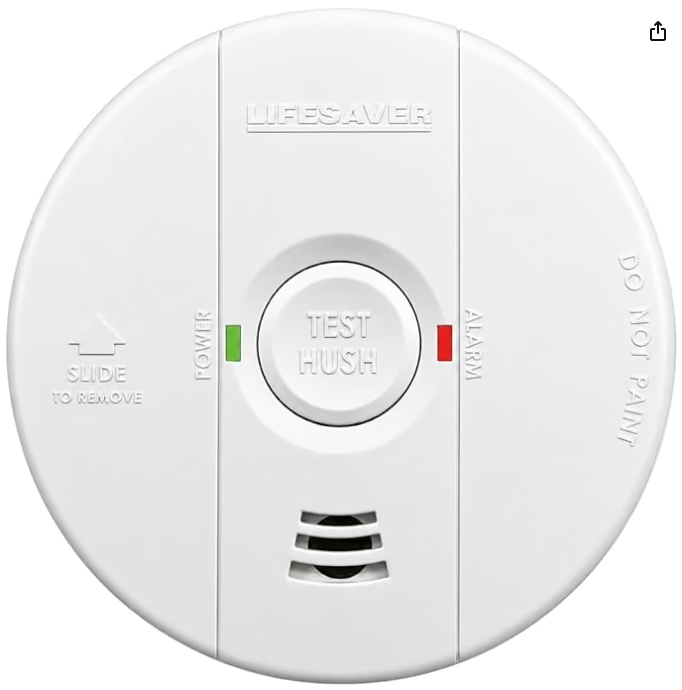
Best for: whole-home mains-powered protection. If you want alarms that are wired into the house and interlinked so they all sound together, the PSA Lifesaver LIF6800 is the pick that owners and installers keep coming back to.
This is a 240V mains-powered photoelectric alarm with a 9V battery backup, so it keeps working through a power cut. It is a surface-mount unit for ceilings or walls, at 130mm across and 45mm deep, so it sits reasonably flat once fitted. PSA redesigned the sensing chamber in the 2023 model with what it calls an Advance Sensor, adding an anti-static chamber and a reduced insect mesh. Owners in humid parts of Australia report far fewer 3am nuisance alarms after switching, which matters just as much in muggy Auckland and Northland summers.
In use it can run on its own or interconnect with up to 24 alarms across a house, either hardwired or wireless using PSA’s separate wireless base. The sounder is a loud 85dBA at 3 metres, and the hush button quietens a nuisance alarm for about 9 minutes while dense smoke still overrides it. It is certified to AS3786:2014 with ActivFire listing and carries a 10-year warranty.
The trade-off is installation. Because it is 240V, an electrician has to wire it in, so it is not a five-minute DIY job. The backup battery is a replaceable 9V rather than a sealed 10-year cell, so you still get the occasional low-battery chirp to deal with. If home safety is your focus this winter, it also pairs well with a look at your portable heaters, a leading cause of house fires.
Pros:
- Mains-powered with battery backup
- Interconnects up to 24 units
- Humidity and dust resistant Advance Sensor
- AS3786:2014 certified with 10-year warranty
Cons:
- Needs an electrician to install
- 9V backup battery needs replacing over time
Key specs: Model LIF6800; 240VAC with 9V backup; photoelectric; 85dBA at 3m; interconnect up to 24; 130mm x 45mm; AS3786:2014; 10-year warranty.
2. ZYTA Smoke Alarms for Home (2 Pack)
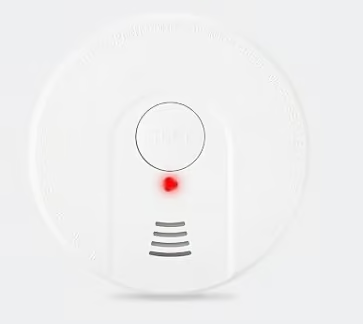
Best for: a low-cost photoelectric multipack. When you need to cover several rooms at once without wiring anything in, a battery multipack like the ZYTA 1902 two-pack is the easy starting point.
Each unit is a compact photoelectric alarm powered by a replaceable 9V battery that the maker rates for about 5 years of life. Reviewers note the basics are all present: a single test and mute button, an LED status light, and an 85 decibel sounder that is loud enough to wake a household. Owners describe setup as genuinely simple, with a mounting bracket that twists onto a ceiling plate, so a non-electrician can fit both alarms in a few minutes.
Based on owner reviews, the low-battery warning behaves as you would expect, with a chirp and a flashing red LED when the 9V cell runs down. The components are rated to work across a wide temperature range, roughly -10C to 55C, which suits an unheated hallway or a sleepout.
The honest trade-off for New Zealand buyers is certification. The ZYTA is listed against the European standard EN14604 rather than AS3786, which is the standard named in NZ and Australian guidance. It will still detect smoke, but if you are fitting alarms in a rental where compliance is checked, or you simply want the locally recognised mark, an AS3786 alarm is the safer choice. The battery is also a replaceable 9V rather than a sealed long-life cell.
Pros:
- Affordable two-pack
- Photoelectric sensor
- Simple DIY fitting with test and mute button
- Wide operating temperature range
Cons:
- Certified to EN14604, not AS3786
- Replaceable 9V battery rather than sealed 10-year
- A lesser-known brand
Key specs: Model 1902; photoelectric; 5-year replaceable 9V battery; 85dB; LED indicator; EN14604; sold as a 2 pack.
3. Quell Q501 (Twin Pack)
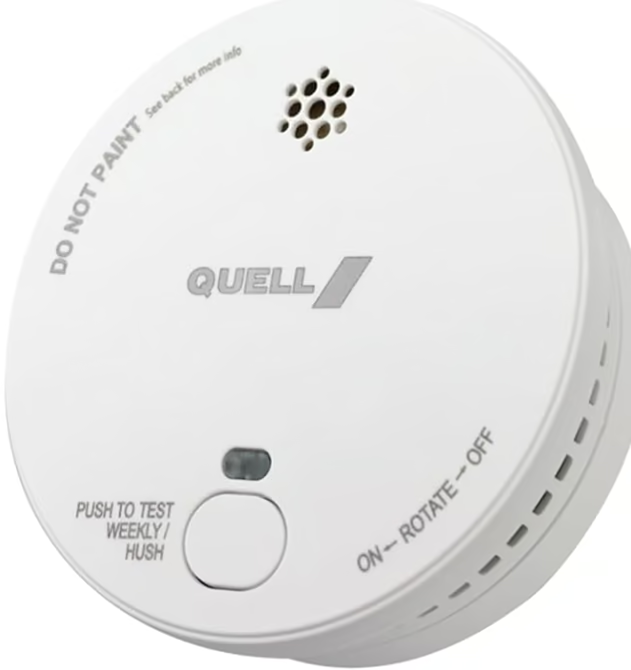
Best for: easy DIY cover in bedrooms and living areas. Quell is a familiar name on New Zealand and Australian hardware shelves, and the Q501 twin pack is its straightforward battery alarm for people who just want to fit and forget for a year at a time.
It is a slim, low-profile photoelectric alarm, about 102mm across and 36mm deep, so it does not dominate a ceiling. The sensor is Quell’s Type A photoelectric design, tuned to catch the visible, smouldering smoke that comes off foam furniture and overheated wiring, which is the kind of fire that most often turns deadly at night. Installation is a twist-and-click bracket, and the twin pack lets you do a bedroom and a hallway in one go.
Owners report the hush button is the feature they use most, silencing a cooking-related nuisance alarm for a short period without needing to pull it down. The alarm also gives an end-of-life warning, chirping twice every 30 seconds when its service life is up, and a loud 85 decibel sounder at 3 metres.
The main trade-off is the power source. The Q501 runs on a replaceable 9V battery that Quell says should be changed every year, so it needs more upkeep than a sealed 10-year unit. It is also not interconnectable, so in a larger home you would pair it with wireless-linking models rather than relying on it alone. The warranty is 5 years, shorter than the brand’s long-life range, though the alarm has a 10-year service life.
Pros:
- Trusted NZ and AU brand
- AS3786 compliant
- Slim design with hush and end-of-life warning
- DIY twin pack
Cons:
- 9V battery needs annual replacement
- Not interconnectable
- 5-year warranty
Key specs: Model Q501; photoelectric; 9V replaceable; 85+dB at 3m; 102mm x 36mm; AS3786; 5-year warranty, 10-year service life; twin pack.
4. Carbon Monoxide Detector (Digital Display)
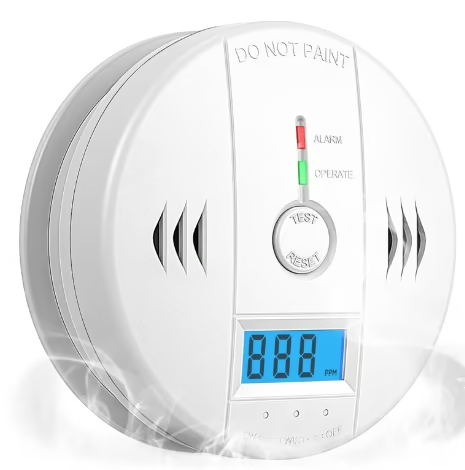
Best for: a standalone carbon monoxide alarm. A smoke alarm will not detect carbon monoxide, so if you burn gas, wood or have an attached garage, a dedicated CO alarm like this digital-display unit fills a gap that smoke alarms cannot.
This is a battery-operated CO alarm that runs on replaceable AA cells, with a digital LCD that shows the carbon monoxide concentration in parts per million along with battery status. Reviewers note that the live readout is more useful than a simple beep, because it lets you see a low-level build-up before it becomes dangerous. It has a test button and an 85 decibel sounder, and it is listed against the European CO standard EN50291.
Based on owner reviews, it works well on a wall or shelf near fuel-burning appliances such as a gas hob, a wood burner or a caravan heater. Fire and Emergency New Zealand notes that working smoke alarms are the priority for most homes, and suggests a carbon monoxide alarm as sensible extra protection where there are combustion appliances rather than a legal must-have. It is worth pairing with safe use of electric blankets and heaters over winter.
The trade-off is that this is a single-purpose device. It does not detect smoke or fire, so it is an addition to your smoke alarms rather than a replacement, and you should not mount it in place of one. The AA batteries are not always included, and like the ZYTA it uses a European standard rather than AS3786, though CO alarms are less tightly regulated in NZ than smoke alarms.
Pros:
- Digital PPM display
- Loud 85dB alert with test button
- Covers a hazard smoke alarms miss
- Portable for caravans and baches
Cons:
- Detects carbon monoxide only, not smoke
- AA batteries often not included
- EN50291 rather than an AS mark
Key specs: Electrochemical CO sensor; AA replaceable batteries; digital LCD display; 85dB; test button; EN50291.
5. Quell Q10YHL Smoke Alarm
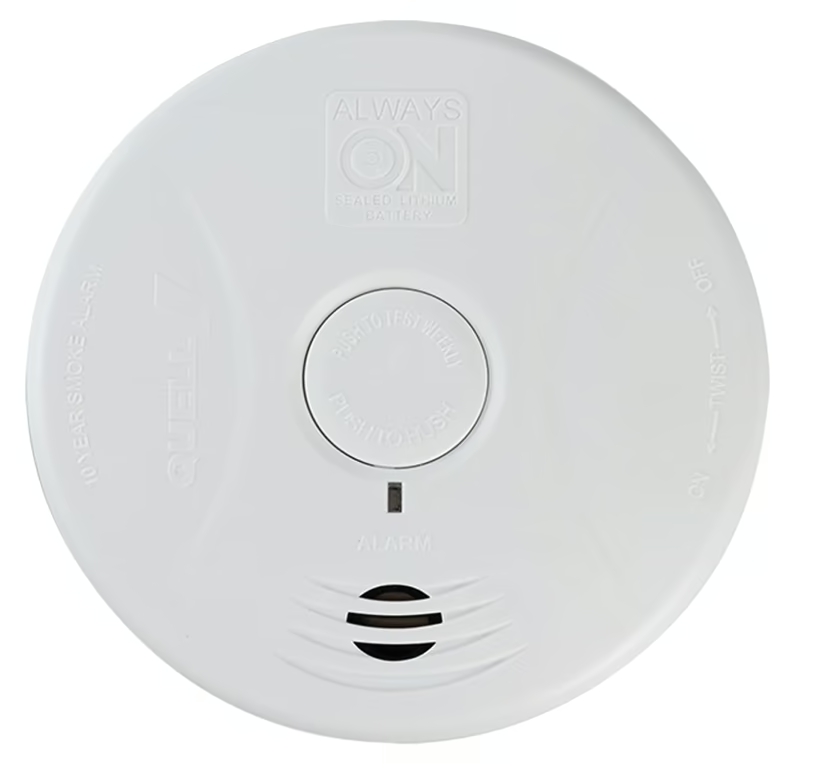
Best for: hallways, and anyone who wants to set and forget. The Quell Q10YHL is the alarm to fit when you never want to think about a battery again, with a sealed 10-year lithium cell and a built-in escape light aimed squarely at windowless hallways.
It is a photoelectric alarm with a 10-year sealed lithium battery that lasts the full life of the unit, so there is no annual battery swap and no midnight low-battery chirp for a decade. The stand-out feature is the escape light: because hallways rarely have windows, a light on the alarm switches on with the siren to help you see your way out in smoke or darkness. The sounder is a loud 85+ decibels at 3 metres in the ISO 8201 three-beep pattern.
Owners report installation is as easy as any battery Quell, using the same twist-and-click bracket, and they like that the sealed design means it cannot be left without a battery by mistake, a common failure with 9V units. It gives an end-of-life chirp twice every 30 seconds when the 10 years are up, and has a hush button for cooking smoke. It is ActivFire listed and complies with AS3786:2014.
The trade-off is that this particular model is not interconnected, so in a bigger house you would choose Quell’s wireless-linking version instead if you want every alarm to sound at once. And because the battery is sealed, at the end of its life you replace the whole alarm rather than just a cell, which is by design but worth knowing. For blackouts and night evacuations it is worth keeping headlamps handy as well.
Pros:
- 10-year sealed lithium battery
- Escape light for hallways
- No battery changes
- Hush and end-of-life warning; AS3786:2014
Cons:
- This model does not interconnect
- Whole unit is replaced at end of life
Key specs: Model Q10YHL; photoelectric; 10-year sealed lithium; escape light; 85+dB at 3m; AS3786:2014; 10-year warranty.
6. Emerald SafeLink Wi-Fi Gateway
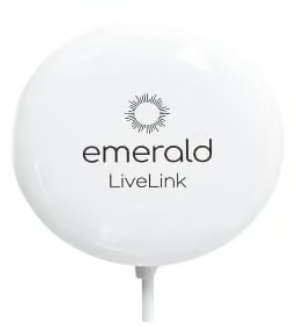
Best for: getting alerts on your phone when you are out. If your worry is a fire starting while the house is empty, the Emerald SafeLink turns a set of compatible alarms into a system you can watch from your phone.
The SafeLink is not a smoke alarm itself. It is a small Wi-Fi gateway that sits centrally in the home and links Emerald’s RF smoke alarms to the Emerald app. Once paired, it shows the real-time status of each alarm, so you can see which room a triggered alarm is in, silence a nuisance alarm from your phone, and run routine tests without a broomstick. Reviewers note it also tracks temperature and humidity and lets you add emergency contacts who get notified when an alarm sounds.
Based on owner reviews, the appeal is remote peace of mind: you get a push notification even when you are at work or away, which a standalone alarm cannot offer. Setup follows in-app pairing instructions, and the gateway runs on a plug-in adaptor over 2.4GHz Wi-Fi, talking to the alarms on a 433MHz radio link. For fuller home cover it sits naturally alongside outdoor security cameras.
The clear trade-off is that the SafeLink only works with Emerald’s own RF-enabled smoke alarms, which you buy separately, so it is an add-on for that ecosystem rather than a standalone safety device. If you do not already own or plan to buy Emerald alarms, one of the standalone units above will protect you for less outlay and less setup. It also depends on your home Wi-Fi being up to receive alerts.
Pros:
- Phone alerts when you are away
- Locate and silence alarms remotely
- App test and event history
- Temperature and humidity sensing
Cons:
- Not an alarm on its own
- Only works with Emerald RF alarms
- Relies on Wi-Fi
Key specs: Wi-Fi gateway for Emerald RF smoke alarms; 2.4GHz Wi-Fi and 433MHz RF; plug-in adaptor; Emerald app with alerts and testing.
7. Interlinked Smoke and Carbon Monoxide Combo (3 Pack)
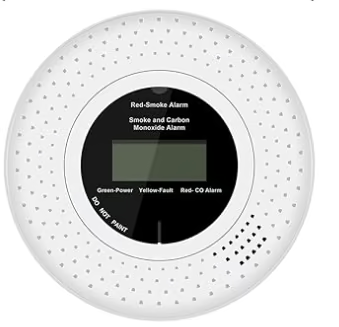
Best for: an all-in-one interlinked combo. For a home where you want smoke and carbon monoxide cover in one device, and you want every unit to sound together, this pre-linked three-pack combines both sensors and wireless interconnection out of the box.
Each unit pairs a photoelectric smoke sensor with an electrochemical carbon monoxide sensor, so a single alarm covers two hazards. Reviewers note the LCD display is the useful part, showing the live CO level and battery status rather than leaving you to guess. Because the three alarms come pre-linked, when one detects smoke or CO, all three sound, which is exactly the behaviour Fire and Emergency New Zealand recommends for giving everyone time to get out. The units are battery powered with AA cells included, and each has a combined test and silence button.
Based on owner reviews, the wireless interlink is the reason people choose a set like this over three separate alarms: you get whole-home warning without running any wiring, which suits a two-storey house or a home with a long floor plan.
The trade-offs are worth weighing. This is an unbranded or lesser-known combo, so the certification marks vary by listing and should be checked before you rely on it for a rental. Combination smoke and CO units also tend to have a shorter service life than a sealed 10-year smoke-only alarm, and AA batteries need replacing rather than being sealed in. Confirm the exact model and its standard on the retailer listing before buying.
Pros:
- Smoke and CO in one unit
- Pre-linked so all alarms sound together
- LCD shows CO level; no wiring
- Three-pack covers a whole home
Cons:
- Brand and certification vary by listing
- AA batteries need replacing
- Combo units often have a shorter life
Key specs: Photoelectric smoke plus electrochemical CO; wireless interconnect; LCD display; AA batteries included; test and silence button; 3 pack.
8. PSA HomeGuard HG140AC Smoke Alarm
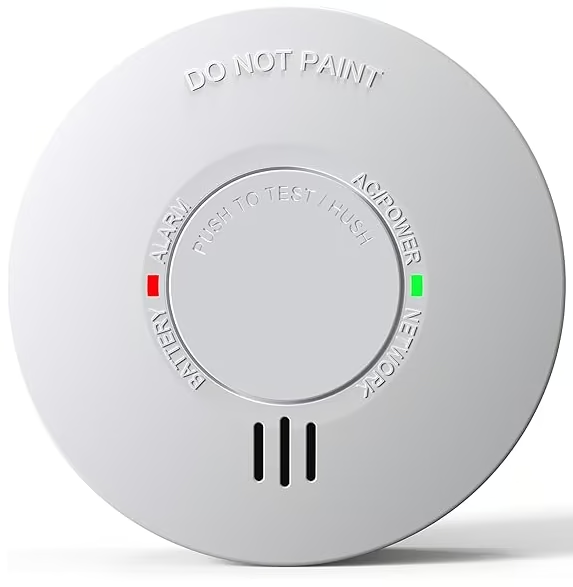
Best for: renovations and larger homes needing many linked alarms. When you are rewiring, retrofitting or covering a big multi-level house, the PSA HomeGuard HG140AC is built for the job, with the widest interconnect count here and a base designed to hide the marks left by an old alarm.
It is a 240V mains-powered photoelectric alarm with a 9V battery backup, and its headline feature is scale: it interconnects up to 48 units over a maximum run of 150 metres, far more than the LIF6800, so it suits large or multi-storey homes where you want every alarm linked. PSA also widened the base to 140mm, which the maker positions for retrofit work because it covers the paint marks and screw holes left when you replace an older alarm. That is a small detail that saves a lot of touch-up painting.
Owners and installers report the large single test and hush button is easy to reach on a pole, and an ultra-small insect screen over the sensor helps cut the dust and bug false alarms that plague ceiling units. The sounder is 85dB at 3 metres to the ISO8201 pattern, with red and green LEDs for status. It is approved to AS3786:2014 and backed by a 10-year warranty.
The trade-offs mirror the LIF6800: it is a hardwired 240V unit, so an electrician installs it, and the 140mm base, while handy for retrofits, is physically larger on the ceiling than a slim battery alarm. The backup is a replaceable 9V rather than a sealed lithium cell.
Pros:
- Interconnects up to 48 units
- Extra-wide base ideal for retrofits
- Mains power with battery backup
- Insect screen cuts false alarms; AS3786:2014 with 10-year warranty
Cons:
- Needs an electrician
- Larger footprint
- 9V backup battery to maintain
Key specs: Model HG140AC; 240VAC with 9V backup; photoelectric; interconnect up to 48 (150m max); 85dB at 3m; 140mm x 38mm; AS3786:2014; 10-year warranty.
How we chose
We researched and compared each model using the manufacturers’ own specifications and datasheets (PSA Products, Quell and Emerald), New Zealand and Australian retailer listings, and verified owner reviews, then checked each against the safety guidance from Fire and Emergency New Zealand and the smoke alarm rules under New Zealand’s Residential Tenancies regulations. We prioritised photoelectric sensors, recognised certification such as AS3786:2014, long battery life or mains power, and honest trade-offs for real NZ homes. Where a product is a lesser-known brand or uses a European standard rather than AS3786, we have said so plainly. We do not list prices, and our rankings are never paid for.
Where to put your smoke alarms
Fire and Emergency New Zealand recommends a photoelectric smoke alarm in every bedroom, every hallway and every living area, plus at least one on each level of a multi-storey home. Keep them out of the kitchen itself, where cooking smoke causes false alarms, and use a heat alarm there instead if the kitchen is closed off by doors. For rentals, the alarms must be photoelectric with a battery life of at least 8 years or be hardwired, and there must be one within 3 metres of each bedroom door. Interconnected alarms, where one triggers all of them, give everyone the most time to escape.
If you are securing the whole property, the guides to smart doorbells and security cameras cover the other entry points.
The verdict
For a whole-home install where you want alarms wired in and linked together, the PSA Lifesaver LIF6800 is our top pick, with the PSA HomeGuard HG140AC the better choice if you are renovating or need to link a large number of units. If you would rather fit alarms yourself, the Quell Q10YHL is the easiest set-and-forget option thanks to its sealed 10-year battery and hallway escape light, while the Quell Q501 twin pack covers bedrooms and living areas on a budget. Add a carbon monoxide alarm if you burn gas or wood, and consider the Emerald SafeLink if remote phone alerts matter to you. Whatever you choose, make it photoelectric, and put one in every bedroom and hallway.
Frequently Asked Questions
What type of smoke alarm is required in NZ?
New Zealand requires photoelectric smoke alarms, not ionisation. For rental properties the alarms must be photoelectric with a battery life of at least 8 years, or be hardwired. Fire and Emergency NZ recommends photoelectric alarms in every bedroom, hallway and living area of any home.
Where should smoke alarms be placed in a house?
Install a smoke alarm in every bedroom, in hallways within 3 metres of each bedroom door, in living areas, and on every level of a multi-storey home. Avoid the kitchen, where cooking smoke triggers false alarms, and fit a heat alarm there instead.
How often should you replace a smoke alarm?
Replace smoke alarms every 10 years, even hardwired ones, because the sensor degrades over time. Many alarms now give an end-of-life warning chirp when their service life is up. Test every alarm monthly, and replace the whole unit, not just the battery, at 10 years.
Is a photoelectric or ionisation smoke alarm better?
Photoelectric alarms are the better single choice for homes. They respond faster to slow, smouldering fires, the most common and deadly type at night, and cause fewer cooking-related false alarms. Ionisation alarms are cheaper but are not recommended or compliant for NZ rentals.
Do I need a carbon monoxide alarm in NZ?
Carbon monoxide alarms are not legally required in most NZ homes, and Fire and Emergency NZ says working smoke alarms are the priority. A CO alarm is sensible extra protection if you have gas appliances, a wood burner or an attached garage, because smoke alarms do not detect carbon monoxide.
Are landlords required to provide smoke alarms in NZ?
Yes. NZ landlords must provide working photoelectric smoke alarms with a battery life of at least 8 years, or hardwired alarms, in the right places, and must replace them at end of life. Tenants must not tamper with them. Non-compliance can bring fines of up to 7,200 dollars.
