
The best blood pressure monitor for most New Zealanders is a clinically validated upper-arm model, and the Omron Smart Elite+ HEM-7600T is our top pick thanks to its tubeless cuff and easy app tracking. This guide compares eight monitors sold in NZ, from trusted names like Omron and Garmin to budget picks, so you can match a monitor to your arm size, eyesight, budget and how much data you want to keep.
Home monitoring works best when the device is accurate and simple to use every day, sitting alongside other everyday health buys like bathroom scales. We have grouped the picks by what each does best, covered upper-arm and wrist options, and flagged the trade-offs so nothing is oversold. Prices change often, so tap through to check the current price rather than trusting a number on a page.
Quick comparison
| # | Monitor | Best for | Type & cuff |
|---|---|---|---|
| 1 | Omron Smart Elite+ HEM-7600T | Best overall (tubeless) | Upper arm, 22-42cm |
| 2 | Omron HEM-6232T | Best wrist monitor | Wrist, one size |
| 3 | Garmin Index BPM | Best for data and multi-user | Upper arm, 22-42cm |
| 4 | Omron HEM-7144T1 | Best value Omron | Upper arm, 22-42cm |
| 5 | MedeScan Talking BP Monitor | Best talking monitor | Upper arm, up to 42cm |
| 6 | Upper Arm Blood Pressure Monitor | Best budget everyday pick | Upper arm, 22-52cm |
| 7 | RA8 Automatic Arm Monitor | Best validated budget arm | Upper arm, 22-42cm |
| 8 | Upper Arm BP Monitor (rechargeable) | Best for large arms | Upper arm, up to ~48cm |
The 8 best blood pressure monitors in NZ
1. Omron Smart Elite+ HEM-7600T
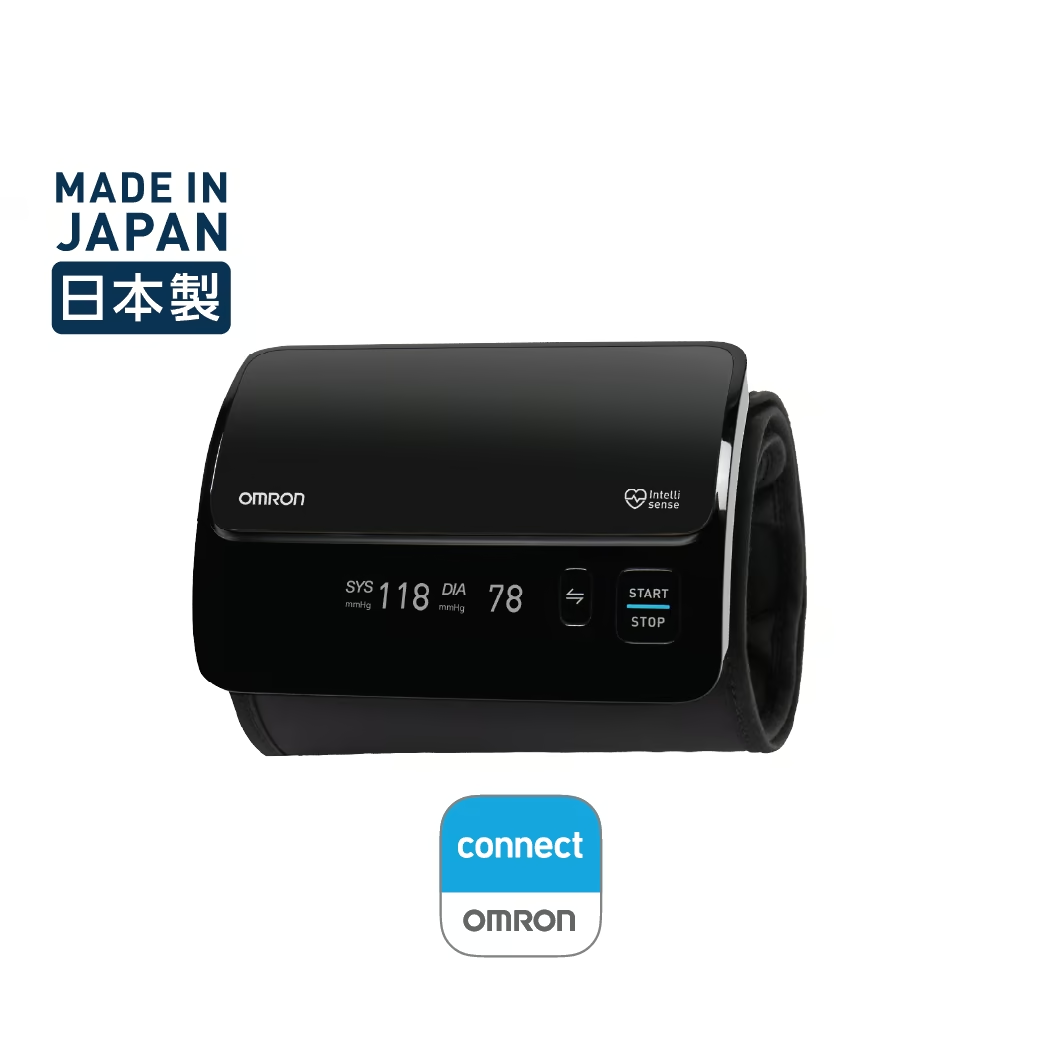
Best for: the best all-round upper-arm monitor, thanks to a tubeless cuff and clean app tracking.
The Omron Smart Elite+ HEM-7600T is the monitor we would point most people to first. Its headline feature is a tubeless IntelliWrap cuff, where the tubing is built into the cuff itself, so there is no separate hose to kink or store. Omron says the 360-degree cuff helps you get a consistent reading even if the cuff is slightly rotated on the arm, which is one of the most common reasons home readings drift.
Owners describe the one-touch operation and bright OLED display as the easy part of the daily routine, and the cuff fits arm circumferences from 22 to 42cm, covering most adults. Readings sync over Bluetooth to the free Omron Connect app, where you can see trends, add notes and export a report to share with a GP. The monitor also flags body movement and an irregular heartbeat during the reading.
The trade-off is price at the top of this category, and the tubeless cuff is a specific replacement part rather than a cheap universal hose. It also leans on the app for full history rather than splitting memory neatly between two users on the device. For a household that wants a fuss-free, well-supported upper-arm monitor with a 3+3 year warranty, it is hard to beat.
Pros: Tubeless IntelliWrap cuff is easy to wrap and store; Bluetooth sync to Omron Connect for trends and GP reports; Wide 22-42cm cuff and clear OLED display; 3+3 year warranty and a trusted clinical brand.
Cons: Sits at the premium end for a home monitor; Replacement tubeless cuff is a specific part, not a generic hose.
Key specs: Model HEM-7600T; upper arm; cuff 22-42cm; Bluetooth (Omron Connect); 100-reading memory; body movement and irregular heartbeat detection; 3+3 year warranty.
2. Omron HEM-6232T
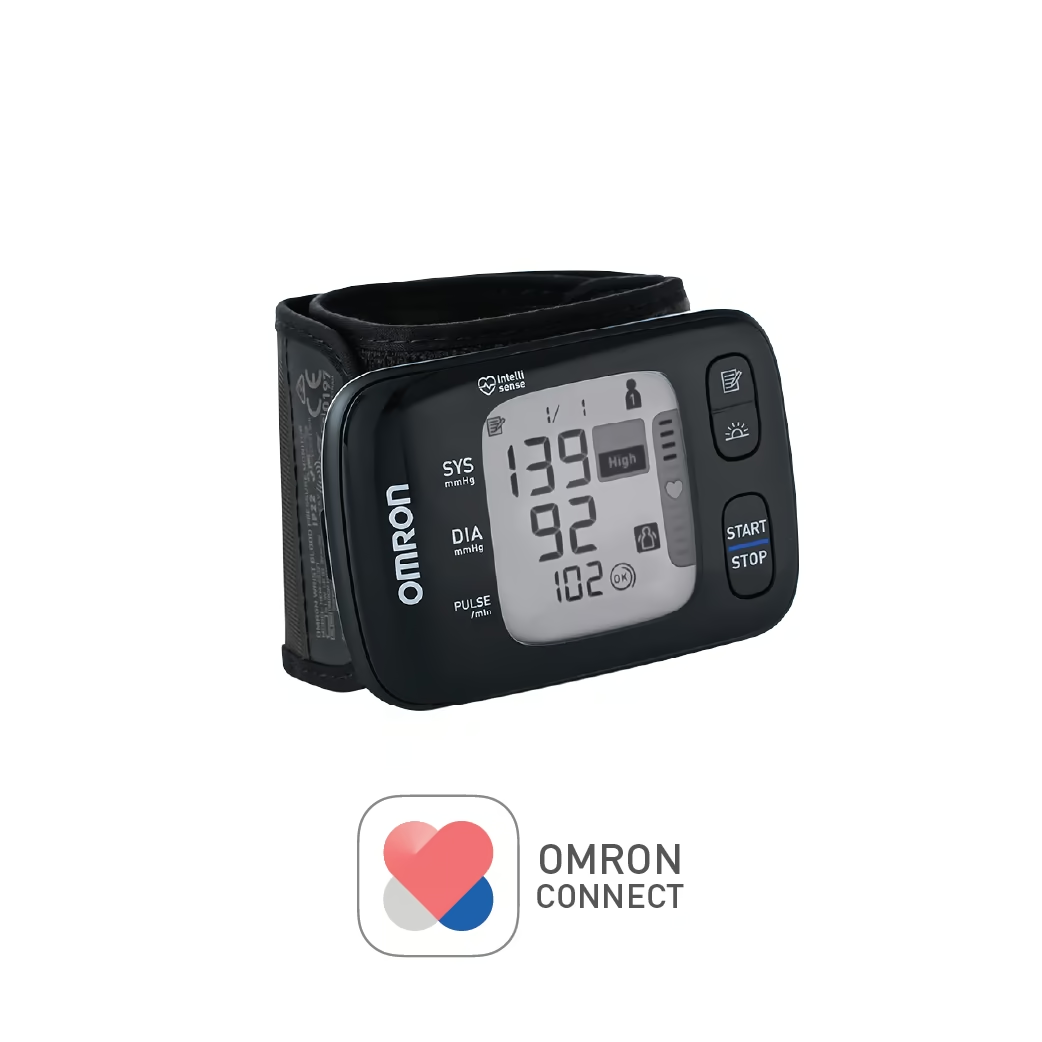
Best for: anyone who wants a genuinely portable wrist monitor without giving up Omron accuracy features.
If an upper-arm cuff is awkward for you, whether for travel, a larger arm or comfort, the Omron HEM-6232T is the wrist monitor we would trust most. Wrist devices have a reputation for being fiddly, and the honest answer is that position matters far more at the wrist than the upper arm. Omron tackles this with a built-in positioning sensor: a heart symbol lights blue only when your wrist is held at the correct height relative to your heart.
The unit is compact with ultra-quiet inflation, so it is easy to slip into a bag and use at your desk. Reviewers highlight the morning average and hypertension indicators, which are handy if your GP has asked you to track morning readings. It stores 100 readings for two users on the device and syncs to Omron Connect over Bluetooth, and it runs on two AAA batteries.
The trade-off is inherent to the format: even the best wrist monitor is more sensitive to arm and body position than an upper-arm cuff, so it is not the first choice if a standard cuff fits you comfortably. Used as intended, with the positioning guide, owners report readings that track closely with their upper-arm device. A five-year warranty adds peace of mind.
Pros: Positioning sensor guides correct wrist height; Compact, quiet and easy to travel with; 100 readings for two users plus app sync; Five-year warranty.
Cons: Wrist readings are more position-sensitive than upper arm; Not the pick if a standard upper-arm cuff fits you well.
Key specs: Model HEM-6232T; wrist; Bluetooth (Omron Connect); 2 users, 100 readings; positioning sensor; irregular heartbeat and body movement detection; 2x AAA batteries; five-year warranty.
3. Garmin Index BPM
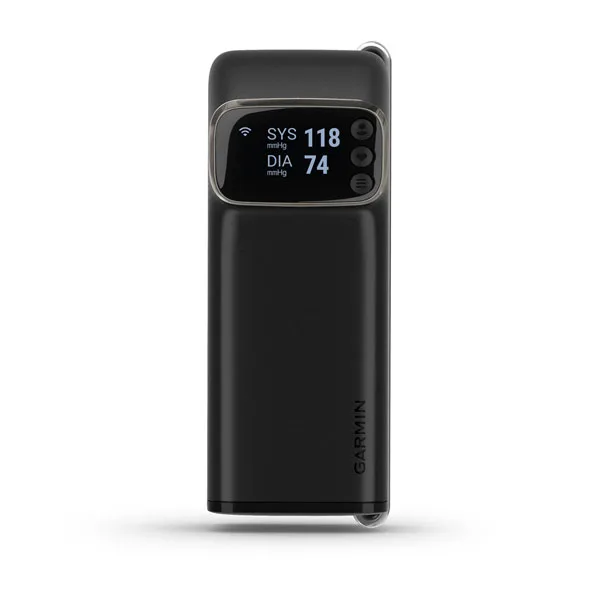
Best for: data-focused households and Garmin users who want readings in the same app as their fitness stats.
The Garmin Index BPM is the pick for people who like their health data in one place, right alongside stats from fitness trackers that monitor heart rate. It is an upper-arm monitor with a built-in display, so you can read your numbers on the device itself, but its real strength is syncing over Wi-Fi straight to Garmin Connect, no phone required at the moment of measurement.
It is an FDA-cleared Class II medical device with a stated accuracy of plus or minus 3 mmHg, and the cuff fits 22 to 42cm arms. Garmin quotes battery life of up to nine months from four AAA cells, and the device supports up to 16 user profiles, far more than most rivals, so a whole family or flat can share one unit and keep readings separate.
The trade-offs are cost and ecosystem: it is priced as a premium device, and much of its appeal depends on using Garmin Connect. The initial Wi-Fi setup is a couple of extra steps compared with a plug-and-go monitor. If you are not in the Garmin world, a straightforward Omron may suit you better, but for quantified-self users this is the most satisfying monitor here.
Pros: Wi-Fi sync to Garmin Connect with no phone needed; FDA-cleared medical device with clear accuracy spec; Up to 16 user profiles and long battery life; Built-in display shows readings instantly.
Cons: Premium price; Best value only if you use the Garmin ecosystem.
Key specs: Upper arm; cuff 22-42cm; Wi-Fi sync to Garmin Connect; built-in display; FDA-cleared Class II; up to 16 users; up to 9-month battery (4x AAA); model 010-02464-03.
4. Omron HEM-7144T1
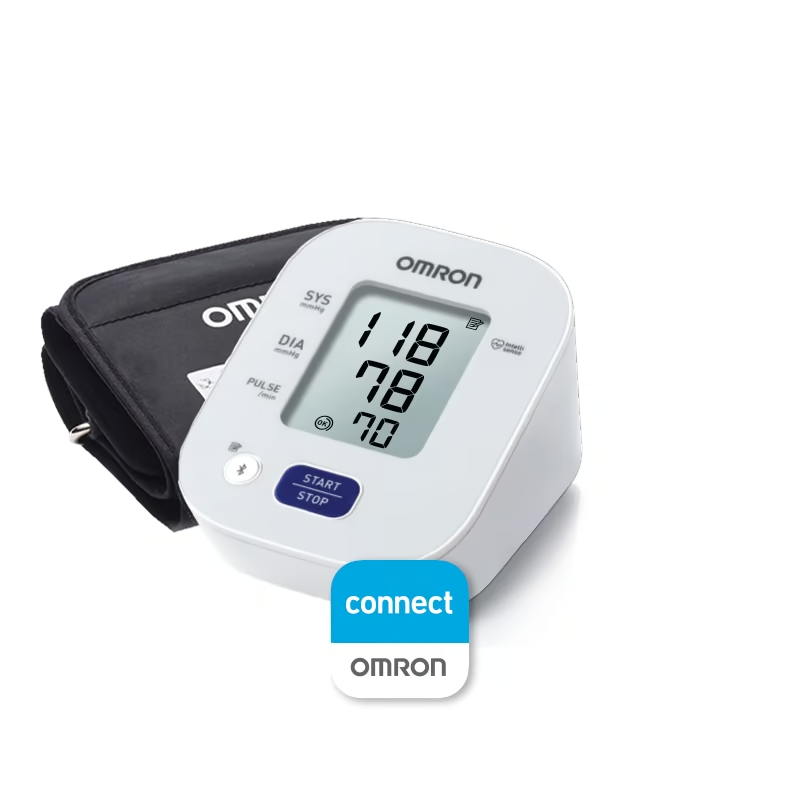
Best for: first-time users and anyone who wants Omron reliability at a sensible price.
The Omron HEM-7144T1 is the entry point into Omron’s upper-arm range and a smart choice for someone buying their first monitor. It keeps the features that actually affect a reading, IntelliSense inflation that adjusts pressure automatically for comfort, a cuff-wrap guide that confirms an OK wrap, body-movement detection and irregular-heartbeat detection, while trimming the extras that push the price up.
One-touch operation means there is a single button to learn, which owners with older parents in mind mention often. The cuff covers a wide 22 to 42cm range, and despite being the standard model it still includes Bluetooth, so readings can sync to Omron Connect if you want a digital history. It runs on four AA batteries.
The trade-offs are storage and display: on-device memory holds 30 readings rather than the 100 on pricier Omrons, and there is no split two-user memory or OLED screen. If you measure daily and rely on the app for history, 30 on-device readings is rarely a problem. For a validated, no-drama monitor from a brand GPs recognise, with a 3+3 year warranty, this is the value pick of the range.
Pros: Trusted Omron accuracy features at a lower price; Simple one-touch use, good for first-timers; Wide 22-42cm cuff and Bluetooth app sync; 3+3 year warranty.
Cons: Only 30 on-device readings; Single-user memory and a basic display.
Key specs: Model HEM-7144T1; upper arm; cuff 22-42cm; IntelliSense; Bluetooth (Omron Connect); 30-reading memory; body movement and irregular heartbeat detection; 4x AA batteries; 3+3 year warranty.
5. MedeScan Talking Blood Pressure Monitor
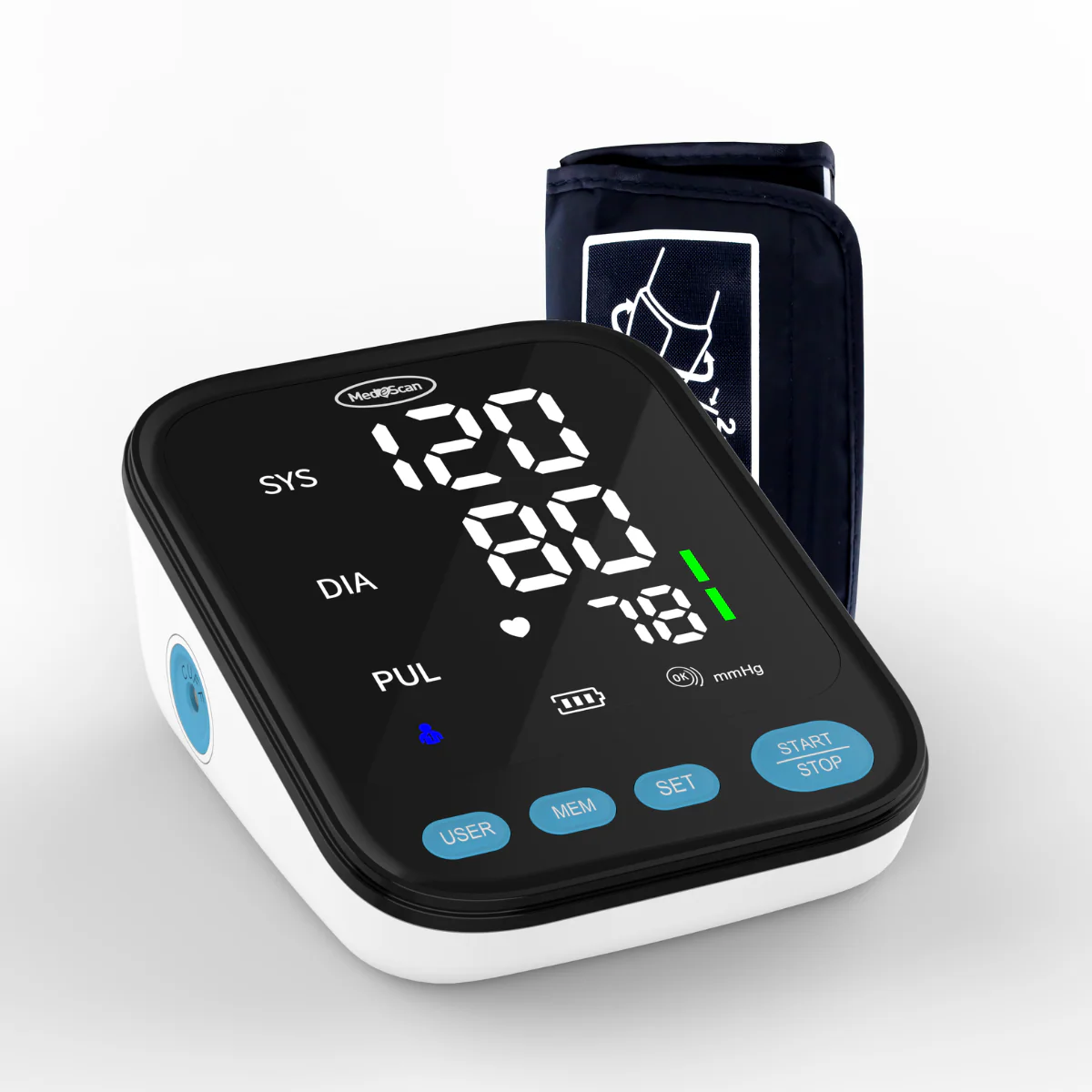
Best for: users with low vision, and older adults who want the result read aloud.
The MedeScan Talking Blood Pressure Monitor is built around accessibility. Its talking function reads your systolic, diastolic and pulse results aloud after each measurement, which is a real help for anyone with low vision or who finds small screens hard to read. It pairs that with a large colour backlit LCD and a colour-coded system, green for a good reading, yellow for medium and red for high, so the status is obvious at a glance.
It is an upper-arm monitor with a 42cm cuff, automatic inflation and deflation, and irregular-heartbeat alerts. Memory holds up to 120 readings across three users, more on-device history than several pricier units, and owner reviews on the brand’s own store are strongly positive about how simple it is to operate. It ships with batteries and adds a USB-C port so you can run it from a power cord, though MedeScan notes the cord is not included.
The trade-offs are that it is an Australian brand rather than a locally supported clinical name, so warranty and service run through the brand, and the talking voice is not a New Zealand accent. There is also no larger cuff option for very big arms. For its intended job, making daily monitoring easy for seniors and vision-impaired users, it is the clear pick.
Pros: Clear spoken results and colour-coded readings; Large backlit colour display; 120 readings across three users; USB-C powering option.
Cons: Australian brand support rather than a local clinical name; No larger-cuff option and no NZ-accent voice.
Key specs: Upper arm; cuff up to 42cm; talking function; colour backlit LCD; 120 readings for 3 users; irregular heartbeat detection; auto inflate/deflate; 4x AAA plus USB-C port (cord not included).
6. Upper Arm Blood Pressure Monitor
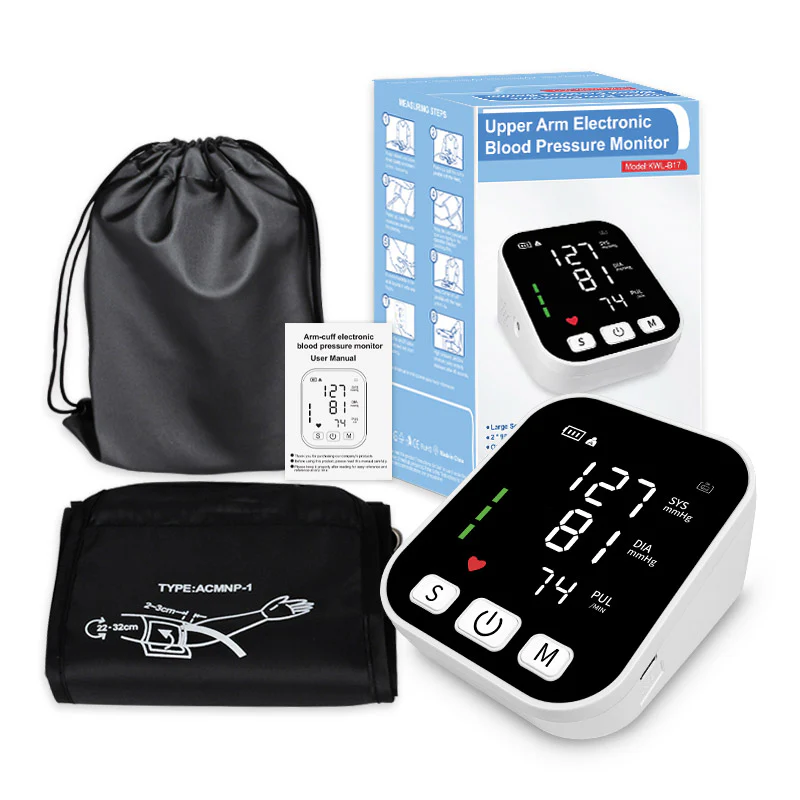
Best for: a low-cost everyday monitor with voice guidance and a very wide cuff.
This budget upper-arm monitor covers the basics well for households that want a straightforward device without a brand-name premium. It uses one-click operation, a large backlit display and a full voice broadcast that guides you through the measurement and reads the result, which makes it approachable for older users. A tricolour indicator shows whether your reading sits in the normal, low or high band.
Its stand-out practical feature is the cuff, which fits arm circumferences from 22 to 52cm, wider than most branded monitors and a genuine help for larger arms. It stores 198 readings split across two users (99 each), so two people can track separately, and it measures across the usual 0 to 280 mmHg range. For a device at this price, the on-device history and dual-user support are generous.
The honest trade-off is trust: this is an unbranded monitor without a published clinical-validation listing or an app, so you are relying on the retailer rather than a recognised medical brand. Owner feedback is positive on ease of use, but if your GP is making treatment decisions from your numbers, a clinically validated model is the safer call. As a low-cost, easy, wide-cuff option for general awareness, it earns its spot.
Pros: Very wide 22-52cm cuff suits larger arms; Voice guidance and tricolour indicator; 198 readings across two users; Low cost and simple to operate.
Cons: Unbranded with no published clinical-validation listing; No app or Bluetooth.
Key specs: Model KWL-B04; upper arm; cuff 22-52cm; large LED display; full voice broadcast; tricolour indicator; 2 users, 198 readings; range 0-280 mmHg.
7. RA8 Automatic Arm Blood Pressure Monitor
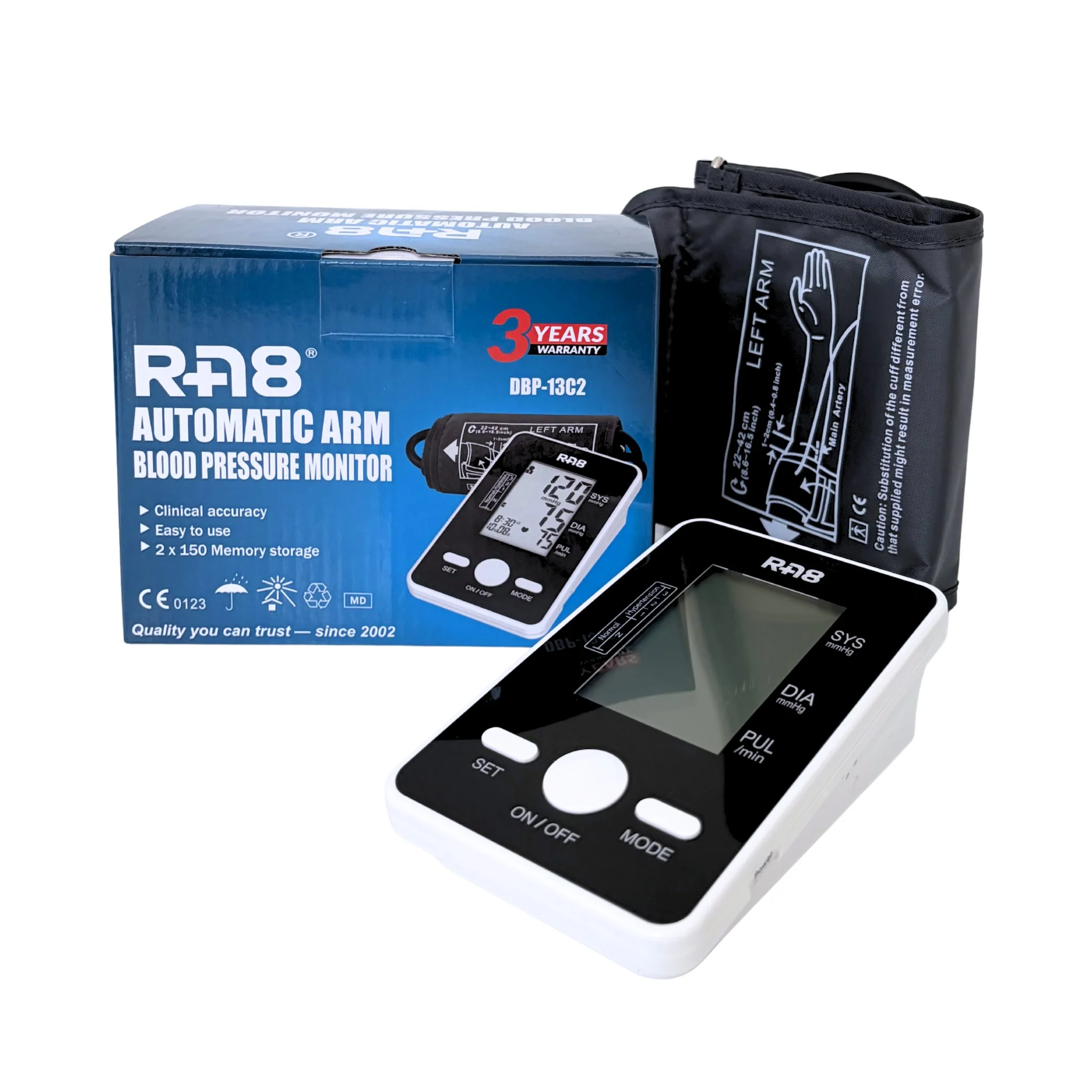
Best for: buyers who want independent clinical validation without paying a premium.
The RA8 is the pick for shoppers who care most about validation on a budget. Unlike most no-frills monitors, the RA8 is STRIDE BP approved and listed on the Australian Register of Therapeutic Goods, which means an independent body has checked it against recognised accuracy standards. That is the single most important quality signal for a home monitor, and it is unusual to find at this price.
It is a straightforward upper-arm device with a large, easy-to-read LCD, a cuff that fits 22 to 42cm arms, and memory for 150 readings each across two users, which is ample for two people tracking daily. Irregular-heartbeat detection is included, and the display uses a clear layout so the numbers are easy to interpret at a glance.
The trade-off is that it keeps things basic: there is no Bluetooth, no app and no talking function, so if you want digital history you will be logging readings yourself. It is sold through Australian pharmacy channels rather than a big NZ retail chain, so check shipping. But if your priority is a monitor you can trust to be accurate, without a brand-name premium, the RA8 delivers exactly that.
Pros: Independently validated (STRIDE BP) and ARTG listed; 150 readings each for two users; Clear large LCD and irregular-heartbeat detection; Strong value for a validated device.
Cons: No Bluetooth, app or talking function; Sold via AU pharmacy channels, so check NZ shipping.
Key specs: Model RA8 (DBP-13C2); upper arm; cuff 22-42cm; STRIDE BP validated and ARTG listed; 2 users, 150 readings each; irregular heartbeat detection; large LCD.
8. Upper Arm Blood Pressure Monitor (Rechargeable)
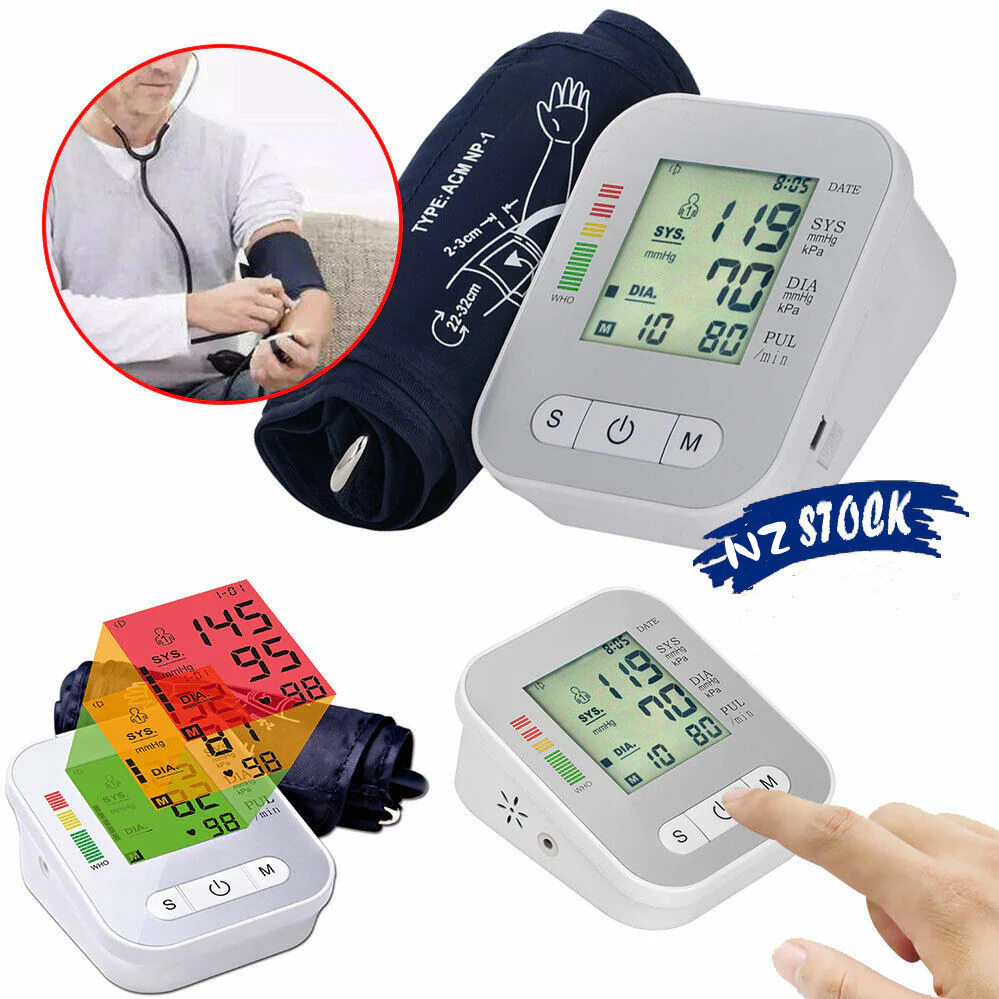
Best for: large arms and anyone who prefers a rechargeable monitor over buying batteries.
This rechargeable upper-arm monitor rounds out the list as a practical pick for two specific needs: large arms and a dislike of disposable batteries. The cuff extends further than most, comfortably fitting larger upper arms, and it charges over USB rather than eating AAA cells, which is handy if the device lives on a bedside table.
It uses a large LED display that is easy to read in low light, a voice broadcast that announces the reading, and automatic inflation. On-device memory holds up to 240 readings across two users (120 each), which is generous, and the fully automatic operation keeps the daily routine to a single button. Owner feedback on the NZ retailers that stock it centres on the clear screen and simple use.
As with the other unbranded pick, the trade-off is trust: there is no published clinical-validation listing and no companion app, so it suits general awareness rather than clinical decision-making. Specifications for these generic models can also vary slightly between batches, so confirm the exact cuff range and whether a charging cable is included before you buy. For a rechargeable, large-arm-friendly monitor at a low price, it fills a real gap.
Pros: USB rechargeable, no disposable batteries; Fits larger arms; Large LED display and voice broadcast; Up to 240 readings across two users.
Cons: Unbranded with no clinical-validation listing or app; Generic specs vary between batches, so confirm cuff size and cable.
Key specs: Model OBD2; upper arm; large LED display; USB rechargeable; voice broadcast; 2 users, up to 240 readings; automatic operation.
How we chose
We compared each model using the manufacturers’ official specifications, NZ and AU retailer listings, independent clinical-validation databases (including STRIDE BP), and verified owner reviews. We confirmed every pick is a current model sold in NZ or AU, then ranked them on measurement reliability, cuff fit, ease of use, useful features, memory and value.
We deliberately included budget and accessibility options alongside premium brands, and flagged where a device is unbranded or lacks a validation listing. For a fuller picture of heart health, many readers also look at omega-3 supplements and magnesium supplements, which are often discussed alongside blood pressure.
To track results at home, the guide to pulse oximeters is worth a look.
The verdict
For most New Zealanders, the Omron Smart Elite+ HEM-7600T is the best blood pressure monitor to buy: it is a validated upper-arm design, the tubeless cuff is genuinely easier to live with, and Omron Connect makes it simple to share trends with a GP. If a standard cuff does not suit you, the Omron HEM-6232T is the wrist monitor to trust, and the Garmin Index BPM is the pick for data-minded, multi-user households.
On a budget, the RA8 stands out because it is independently validated, which matters more than any feature list. The Omron HEM-7144T1 is the safe first-time buy, MedeScan is the accessibility champion, and the two unbranded picks cover very wide cuffs and rechargeable convenience. Pair daily monitoring with heart-friendly habits, including fish oil for heart health, and always use the correct cuff size.
Frequently Asked Questions
Is an upper-arm or wrist blood pressure monitor more accurate?
Upper-arm monitors are generally more accurate and are the type most health bodies recommend for home use. Wrist monitors can be reliable if held at heart height, but they are far more sensitive to position, so a small height error can change the reading. Choose a wrist monitor mainly if an arm cuff does not fit.
Are home blood pressure monitors accurate?
Yes, a clinically validated home monitor can be very accurate, and home readings can reflect your everyday blood pressure better than a single clinic reading because you are more relaxed. Accuracy depends on using a validated device, the right cuff size, correct arm position, and sitting still and quiet during the measurement.
How often should I check my blood pressure at home?
When starting out, many health services suggest measuring twice a day, morning and evening, for about a week, taking two readings each time. For ongoing monitoring, measure at the same time daily for several days before a check-up. Always follow the specific advice your GP gives you.
What is a normal blood pressure reading?
An ideal blood pressure is around 120/80 mmHg or lower, though the right target varies by person. Readings consistently above roughly 135/85 mmHg at home may suggest high blood pressure. Numbers should be interpreted by your GP alongside your overall health rather than judged from a single reading.
What does clinically validated mean on a blood pressure monitor?
A clinically validated monitor has been tested against a recognised accuracy standard by an independent process, so its readings can be trusted. Look for validation listings such as STRIDE BP. Validation is the most important thing to check, because an unvalidated device may give inaccurate numbers even if it looks identical.
Which arm should I use to measure blood pressure?
Use the same arm each time for consistent tracking, and rest the cuff at heart height while seated with your back and arm supported. Some people read slightly higher on one arm; if the difference is large, mention it to your GP. Avoid caffeine, exercise and talking just before measuring.
