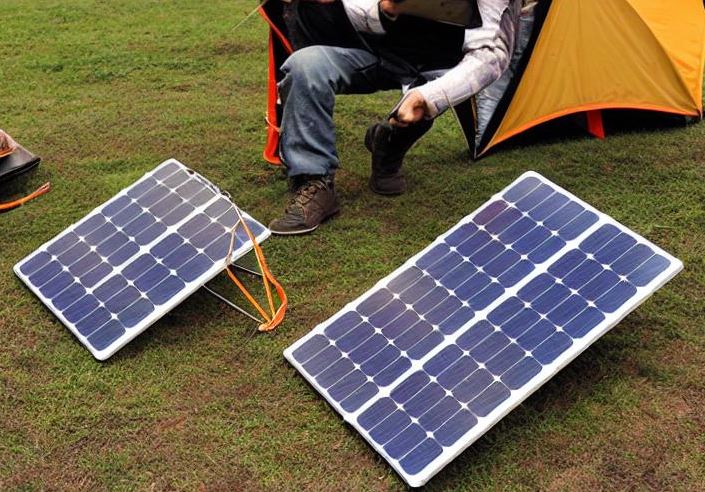
The best portable solar panel in NZ overall is the Jackery Solar Saga 100W, a folding monocrystalline panel with ETFE-laminated cells, built-in adjustable kickstands and a rubber carry handle, designed to pair with the brand’s Explorer power stations. Panels like it earn their keep at New Zealand’s unpowered DOC campsites, where a kickstand that lets you chase a low winter sun matters as much as the wattage printed on the box.
Whether you’re camping off-grid, running a caravan leisure battery, or just want backup power for a phone during a hike, a portable solar panel keeps devices charged without mains power.
We’ve compared 10 portable solar panels available in New Zealand, from lightweight 28W hiking chargers to 220W caravan kits, so you can match wattage, weight and connector type to how you actually plan to use it.
Comparison Table
| Product | Best For | Key Specs |
|---|---|---|
| Jackery Solar Saga 100W Solar Panel | Best Overall | 100W · monocrystalline ETFE · IP67 · 4.8kg · kickstand |
| EcoFlow 110W Portable Solar Panel | Best Premium | 110W · IP68 · 23% efficiency · 3.99kg · kickstand case |
| ALLPOWERS SOLAX SE200 200W Solar Panel | Best High-Wattage | 200W · 41.6V/4.8A · IP68 · 23-25% efficiency · 7.16kg |
| DOKIO 220W Foldable Solar Panel Kit | Best for Caravans | 220W · 12V PWM controller kit · USB 5V/2A · 2.8cm folded · caravan/RV |
| ALLPOWERS SE100 100W Solar Panel | Best for Balcony & Caravan Solar | 100W · 25% efficiency · IP68 · 4kg · XT60 connector |
| BigBlue 60W Portable Solar Panel | Best Multi-Device Charging | 60W · 45W USB-C PD + 20W USB-A · IP68 · N-type cells · kickstand |
| FlexSolar 100W Portable Solar Panel | Best Value | 100W · 24% efficiency · 1.86kg · USB-C PD3.0 + USB-A QC3.0 · 4-in-1 DC cable |
| BigBlue 28W Lightweight Solar Charger | Best Lightweight/Hiking | 28W · 3 ports (2x USB-C + USB-A) · 671g · N-type 25.3% efficiency |
| SunJack 40W Compact Solar Panel | Best Compact | 40W · PD30W USB-C + USB-A + DC · IP67 · folds to tablet size · kickstands |
| FlexSolar 40W Budget Solar Panel | Best Budget | 40W · 24.7% efficiency · 750g · USB-C PD + USB-A QC3.0 + DC · IP67 body |
1. Jackery Solar Saga 100W Solar Panel
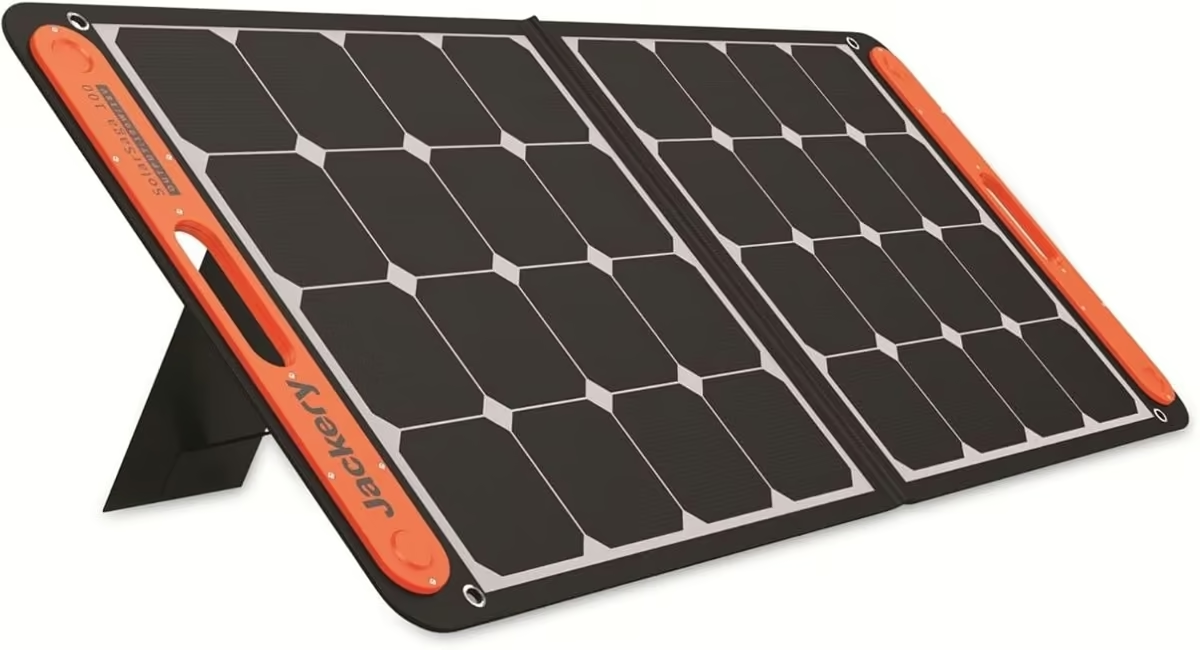
Jackery’s Solar Saga 100W is a folding monocrystalline panel built to pair with the brand’s Explorer power stations, making it a natural pick for campers, tradies and weekend off-gridders who want a proven, well-known name rather than a generic import.
It uses ETFE-laminated cells for weather resistance, folds up with a rubber carry handle, and has adjustable kickstands built in along with a small pouch for stashing cables and connectors while it’s packed away.
Conversion efficiency is rated up to 23%, the whole unit weighs 4.8kg, and the housing carries an IP67 rating so light rain or dust on a campsite isn’t a concern once it’s unfolded and angled towards the sun.
It sits at a higher price than most generic 100W panels on this list, the warranty is shorter than some rivals’ two-year cover, and it’s really designed to be paired with a Jackery power station rather than used as a standalone phone charger.
Pros
- Trusted, well-established brand
- Weatherproof ETFE construction rated IP67
- Adjustable kickstands for easy sun-angling
- Solid 23% conversion efficiency
Cons
- Premium price for a 100W panel
- Shorter warranty than some rivals
- Best suited to Jackery’s own power stations
Key specs: 100W · monocrystalline ETFE · IP67 · 4.8kg · kickstand
2. EcoFlow 110W Portable Solar Panel
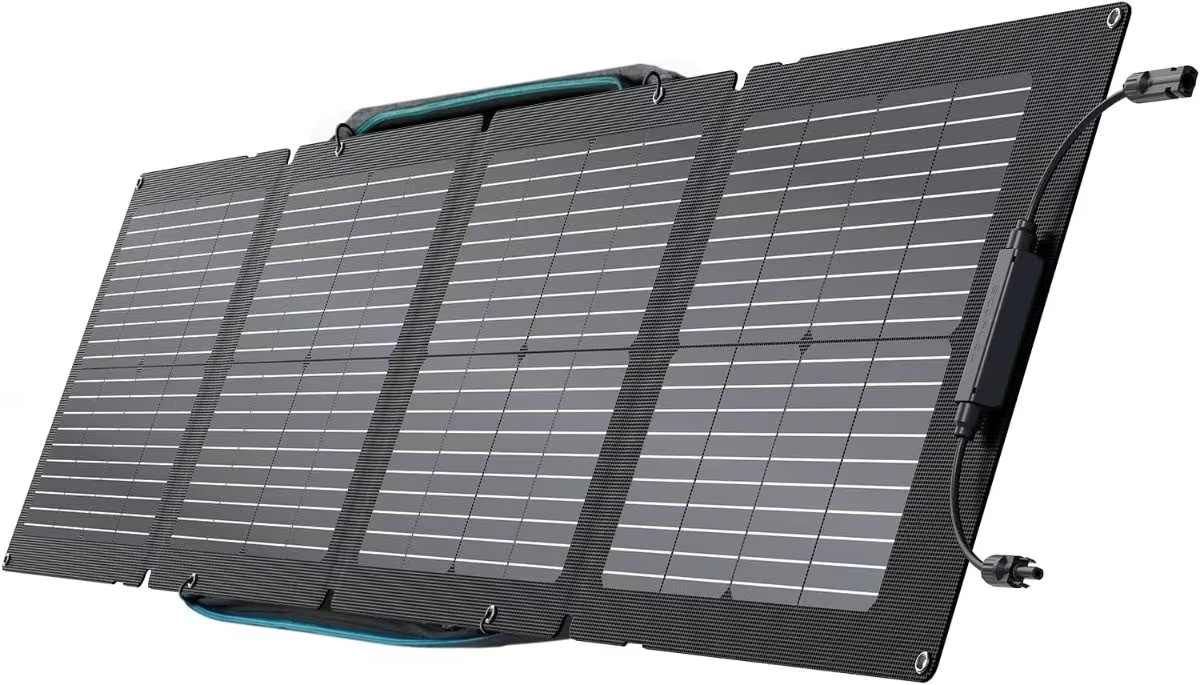
EcoFlow’s 110W folding panel targets Delta and River power station owners, along with anyone else who wants the fastest practical top-up for a solar generator rather than a basic phone charger.
It carries an IP68 rating, a step up from the IP65-67 seen on most rivals here, and its carry case doubles as an adjustable kickstand so the panel can be angled precisely at the sun for maximum output.
Rated to around 23% conversion efficiency, it folds down to a compact size and weighs just under 4kg, and it plugs into most power stations with a solar input, not only EcoFlow’s own range.
It is the most expensive panel in this line-up by a clear margin, and there’s no direct USB port for charging a phone on its own, since it’s built specifically to feed a power station’s DC input.
Pros
- Top-tier IP68 waterproofing
- Carry case doubles as a kickstand
- High 23% conversion efficiency
- Broad compatibility beyond EcoFlow’s own stations
Cons
- The highest price on this list
- No direct USB port for standalone phone charging
- Heavier than the lightweight hiking panels
Key specs: 110W · IP68 · 23% efficiency · 3.99kg · kickstand case
3. ALLPOWERS SOLAX SE200 200W Solar Panel
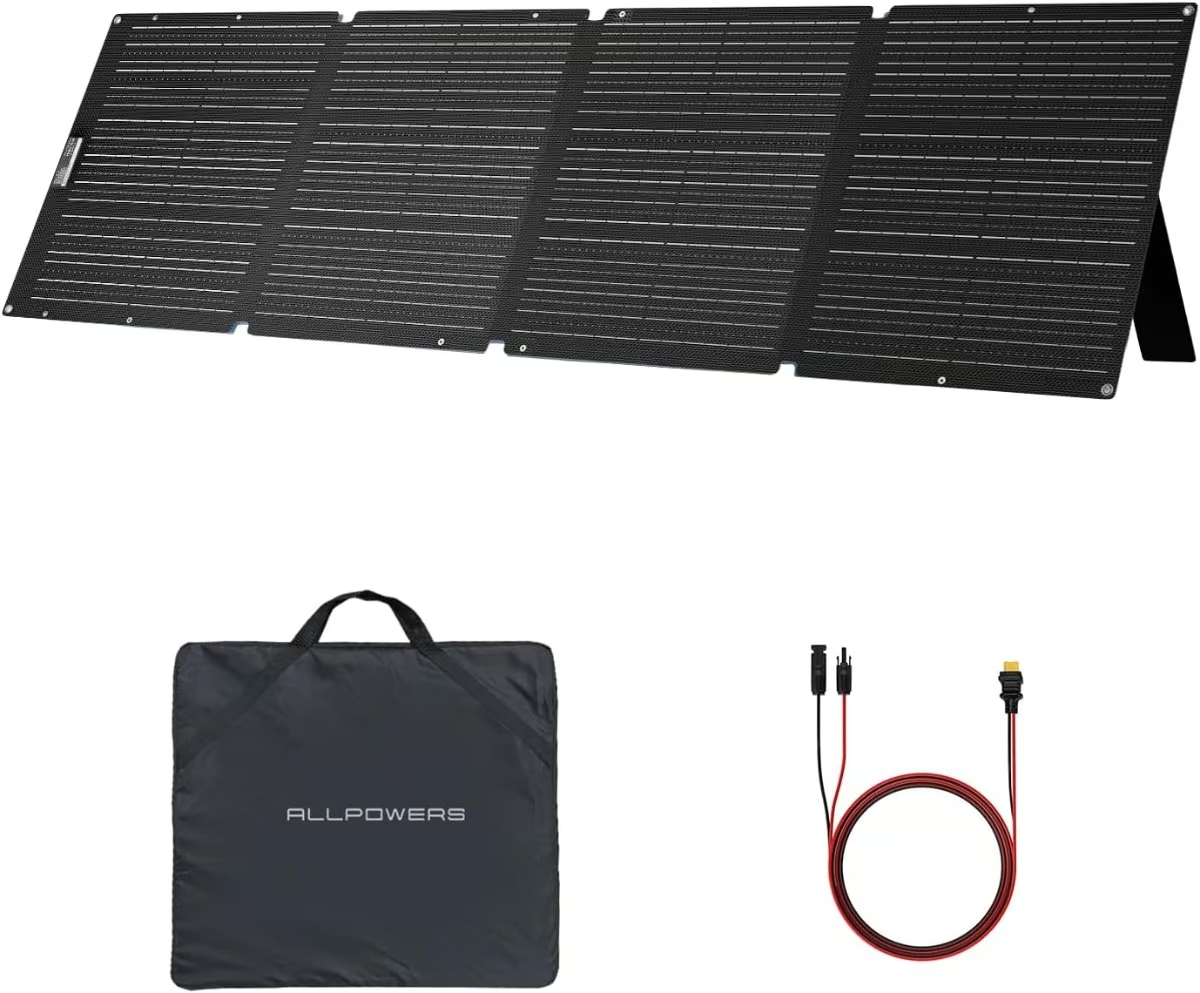
The SOLAX SE200 is a 200W folding panel aimed at caravanners and longer off-grid stays, giving a bigger power station a genuine chance of a full recharge in a single sunny day rather than a slow trickle.
Despite its size it folds to a slim profile, carries an IP68 rating against dust and rain, and weighs about 7.16kg once packed down.
It runs at 41.6V and 4.8A for roughly 23-25% conversion efficiency, and while it’s built to complement ALLPOWERS’ own power station range, it’s also compatible with most other 12V and 24V systems.
At over 7kg it’s not something most people would want to carry on foot for any distance, and with only a handful of customer reviews so far, its long-term reliability isn’t yet well proven.
Pros
- High power output for the price bracket
- Versatile 12V/24V compatibility
- IP68 rated against dust and rain
- Slim folded profile despite its size
Cons
- Heavy and bulky for backpacking use
- Limited review history so far
- No carry bag listed among included components
Key specs: 200W · 41.6V/4.8A · IP68 · 23-25% efficiency · 7.16kg
4. DOKIO 220W Foldable Solar Panel Kit
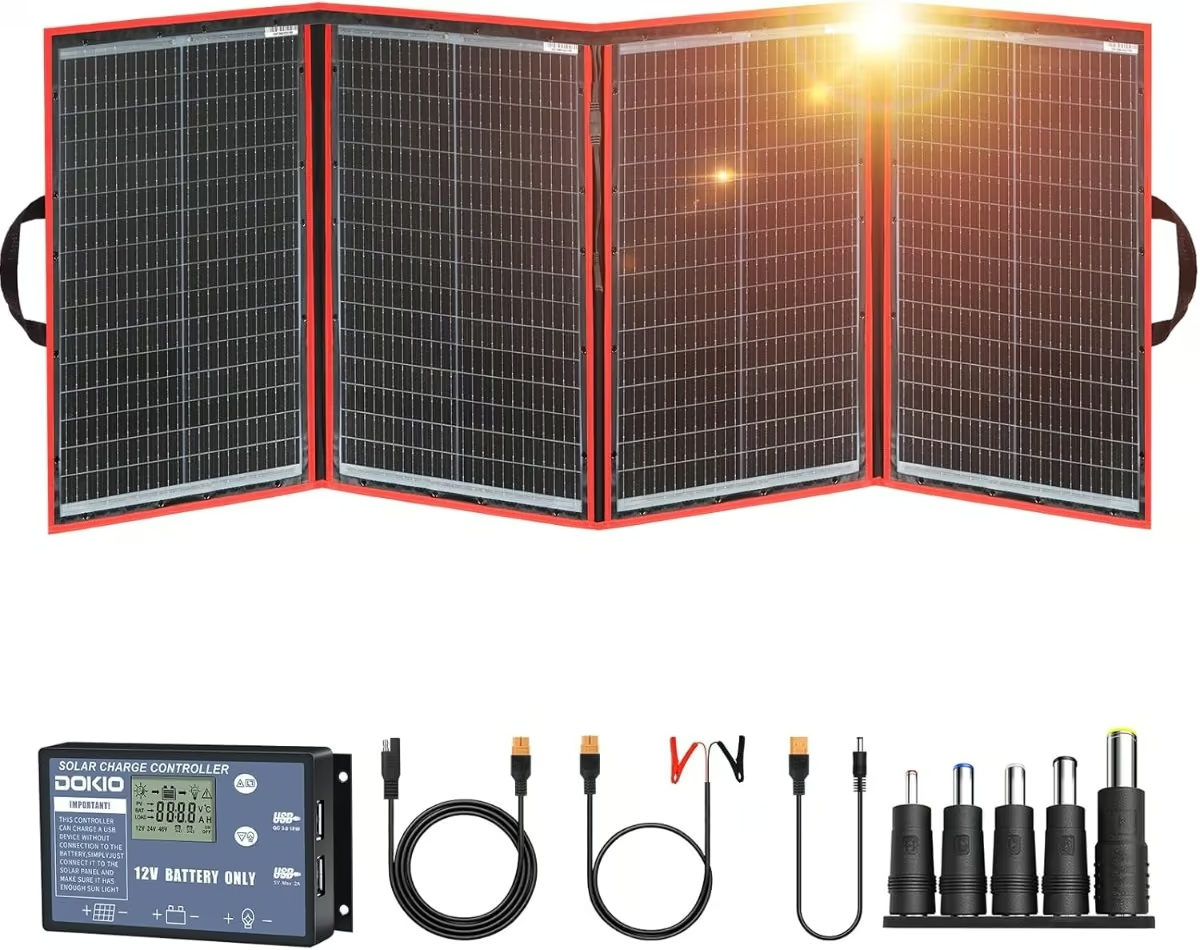
DOKIO’s 220W folding kit is aimed squarely at caravan and motorhome owners who want to trickle-charge a 12V leisure battery directly, rather than simply topping up a small power station.
It folds to a slim profile, comes bundled with a 20A PWM charge controller offering reverse-polarity and overcharge protection, and adds built-in 5V/2A USB ports for charging phones on the side.
DOKIO estimates 400-500Wh of charge on a good sunny day, and a 3m cable running from panel to controller gives useful flexibility in where the panel is set up relative to the battery.
Getting it wired into a battery via the controller is more involved than a plug-and-play USB panel, and buyers should treat the exact packed weight as approximate given some inconsistency on the listing.
Pros
- Bundled 20A PWM charge controller
- Built-in USB ports for phones
- Strong value for 220W of output
- Suits direct 12V battery charging
Cons
- More setup involved than USB-only panels
- Weight/dimension figures on the listing are inconsistent, so treat as approximate
- Still a limited number of customer reviews
Key specs: 220W · 12V PWM controller kit · USB 5V/2A · 2.8cm folded · caravan/RV
5. ALLPOWERS SE100 100W Solar Panel
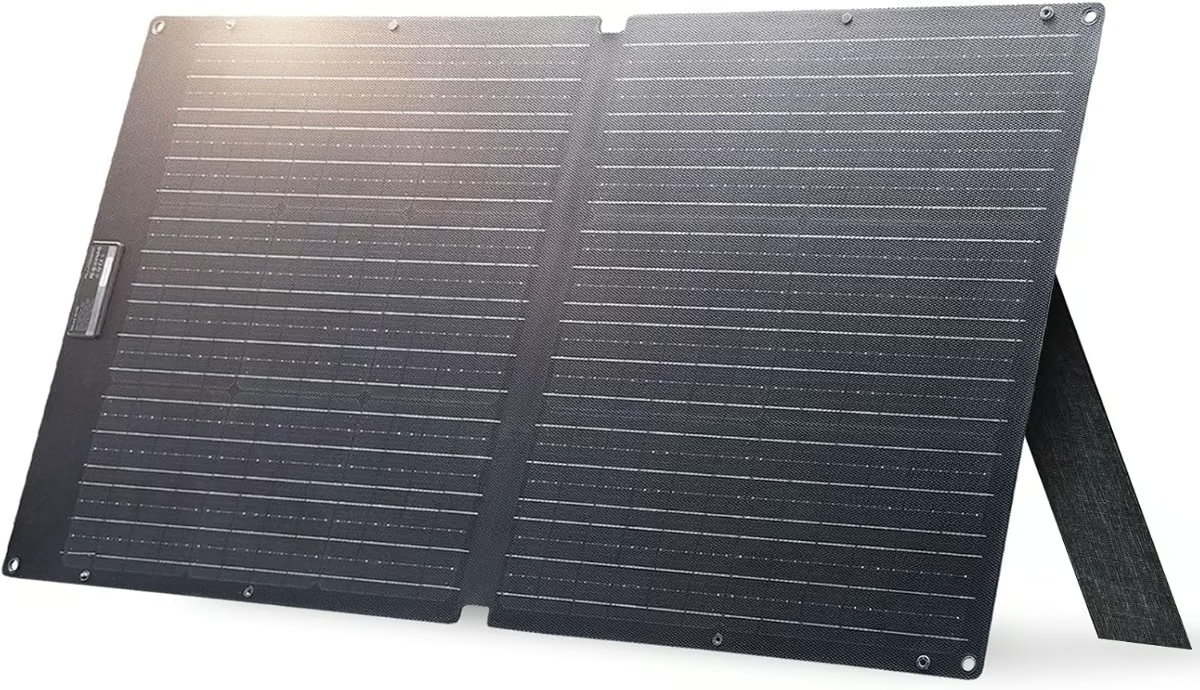
The ALLPOWERS SE100 is a 100W folding panel pitched specifically at balcony solar setups, caravanners and motorhome owners after a simple plug-in top-up panel rather than a full hiking kit.
It uses an ETFE film face for weather resistance, carries an IP68 rating, and folds into its own storage bag while weighing around 4kg.
Conversion efficiency is rated at 25%, and it uses XT60-style connectors, which keeps it compatible with a wide range of solar generators and power stations on the market.
It’s a newer listing with only a small number of customer reviews so far, and it ships with fewer bundled connector adapters than some of the more established panels on this list.
Pros
- High 25% conversion efficiency
- IP68 waterproofing
- Purpose-built for balcony and caravan use
- Compact packed size at around 4kg
Cons
- Limited customer review history so far
- Fewer bundled connector adapters than some rivals
Key specs: 100W · 25% efficiency · IP68 · 4kg · XT60 connector
6. BigBlue 60W Portable Solar Panel
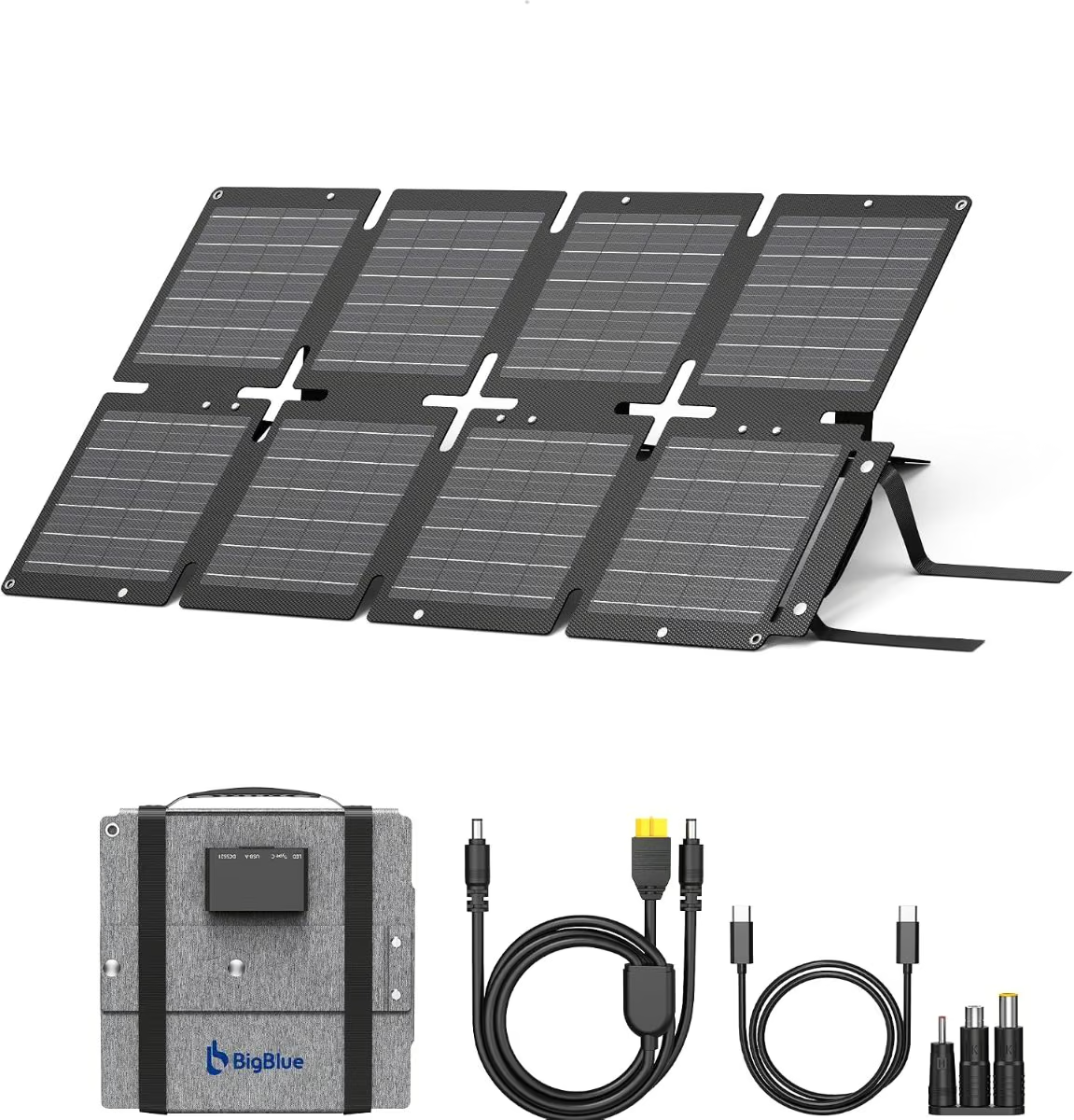
BigBlue’s 60W panel is built around fast-charging ports rather than a single DC output, suiting campers who want to top up phones, tablets and a power bank at the same time as a power station.
It has a built-in kickstand, an IP68 waterproof rating, and folds down to a compact footprint.
It uses newer N-type solar cells rated at 24.7% efficiency, with a 45W USB-C PD port, a 20W USB-A port and a DC output all able to charge simultaneously, backed by a 2-year warranty.
60W is fairly modest if the goal is fast-charging a larger solar generator, and like all panel-only chargers there’s no battery buffer, so output drops sharply the moment the sun goes behind cloud.
Pros
- 45W USB-C PD fast charging
- IP68 waterproof rating
- N-type cells for better low-light performance
- Backed by a 2-year warranty
Cons
- 60W ceiling limits charging speed for larger power stations
- No built-in battery storage
- Output drops noticeably in cloud or shade
Key specs: 60W · 45W USB-C PD + 20W USB-A · IP68 · N-type cells · kickstand
7. FlexSolar 100W Portable Solar Panel
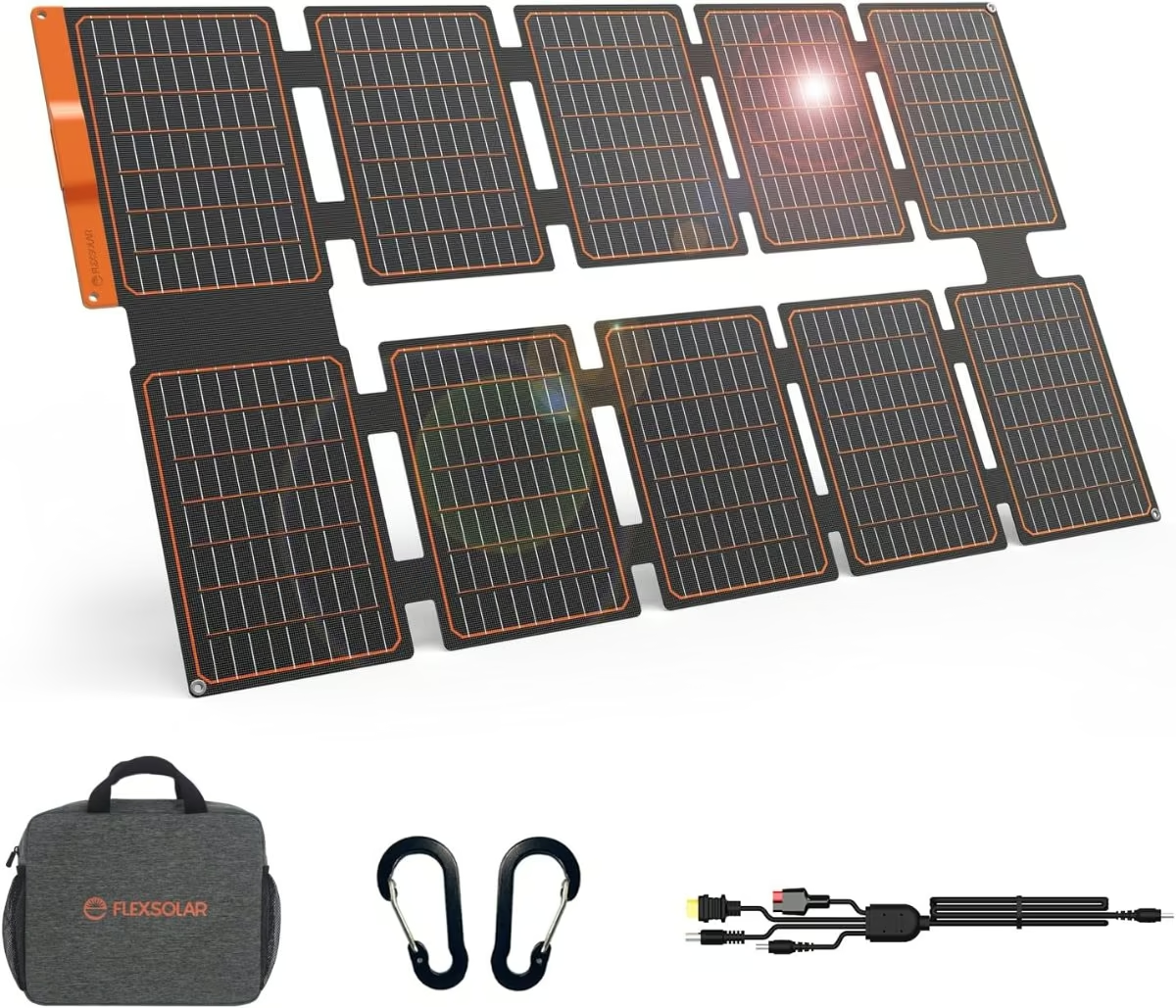
FlexSolar’s 100W panel undercuts most name-brand rivals on price while still offering a genuinely wide connector kit, aimed at buyers who want solid wattage without paying a premium-brand markup.
Its ETFE-laminated housing folds down to a compact size and weighs only 1.86kg, notably lighter than most other 100W panels in this line-up.
It’s rated to 24% conversion efficiency and includes a 4-in-1 DC cable covering DC7909, XT60, Anderson and DC5521 connectors, plus USB-A QC3.0 and USB-C PD3.0 ports for direct device charging.
As a newer, less established brand it has a thinner review history than BigBlue or the major power-station brands, and the bundled carry bag is basic rather than a padded case.
Pros
- Strong value for 100W of output
- Very light at 1.86kg
- Wide connector compatibility via 4-in-1 cable
- Both USB and DC charging options
Cons
- Newer brand with a shorter review history
- Basic accessory bag rather than a padded case
Key specs: 100W · 24% efficiency · 1.86kg · USB-C PD3.0 + USB-A QC3.0 · 4-in-1 DC cable
8. BigBlue 28W Lightweight Solar Charger
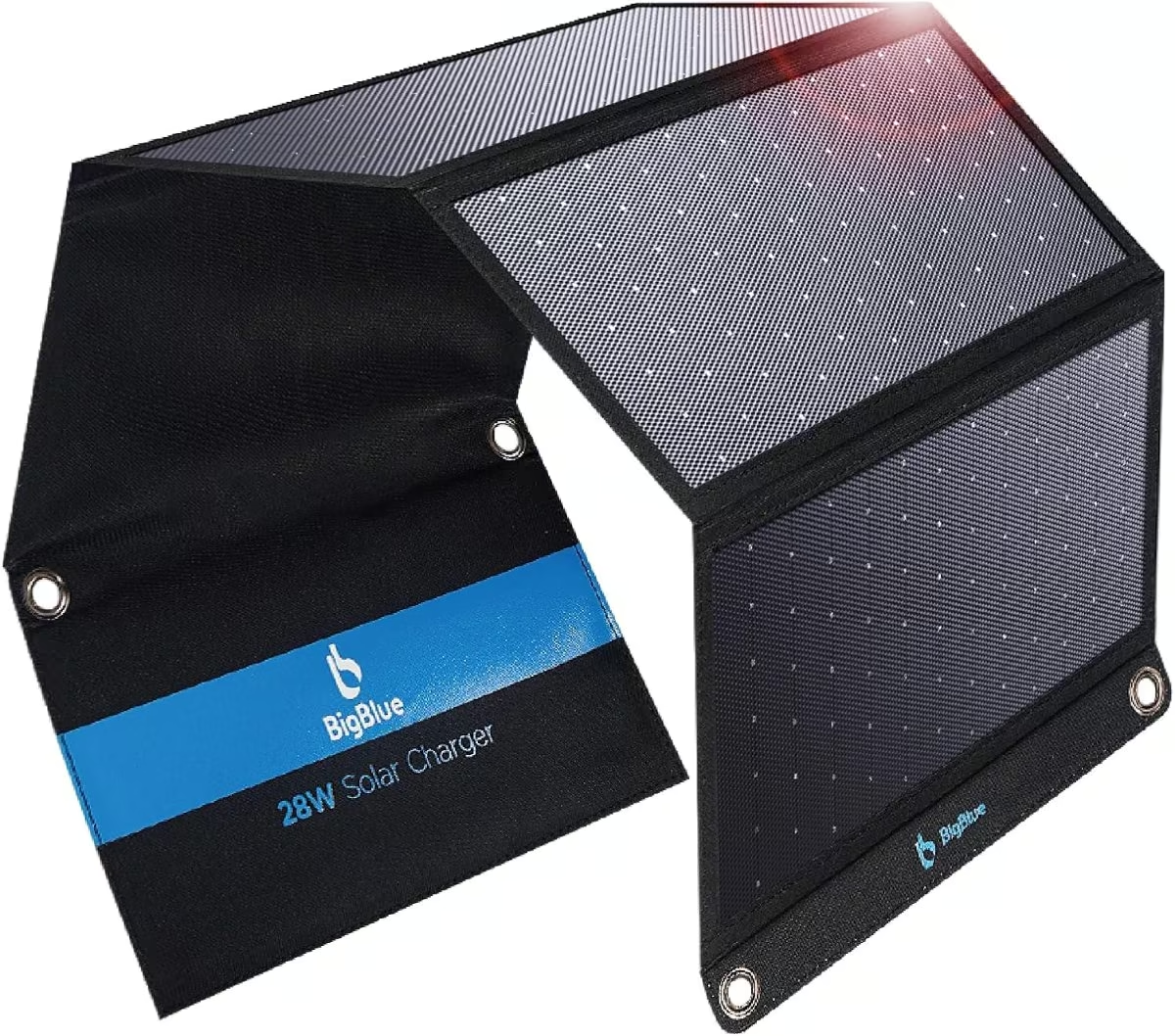
BigBlue’s 28W panel is designed purely for direct device charging on the trail, suiting hikers, trampers and cyclists who just need to keep a phone or power bank topped up rather than run a power station.
It folds to a compact size and weighs just 671g, light enough to clip to the outside of a pack, with a durable PET-polymer surface and rubber-covered ports.
It uses N-type cells rated to 25.3% efficiency, offers three ports (two USB-C and one USB-A) for charging multiple small devices at once, and is one of the most reviewed solar chargers on Amazon.
At only 28W it can’t usefully charge a full-size power station, and like any panel-only charger it stores no power itself, so output stops the moment cloud cover rolls in.
Pros
- Extremely lightweight and packable
- Huge proven track record with thousands of reviews
- Three simultaneous charging ports
- 18-month warranty
Cons
- Too low-wattage for power stations or laptops
- No built-in battery storage
- Needs direct sun to be genuinely useful
Key specs: 28W · 3 ports (2x USB-C + USB-A) · 671g · N-type 25.3% efficiency
9. SunJack 40W Compact Solar Panel
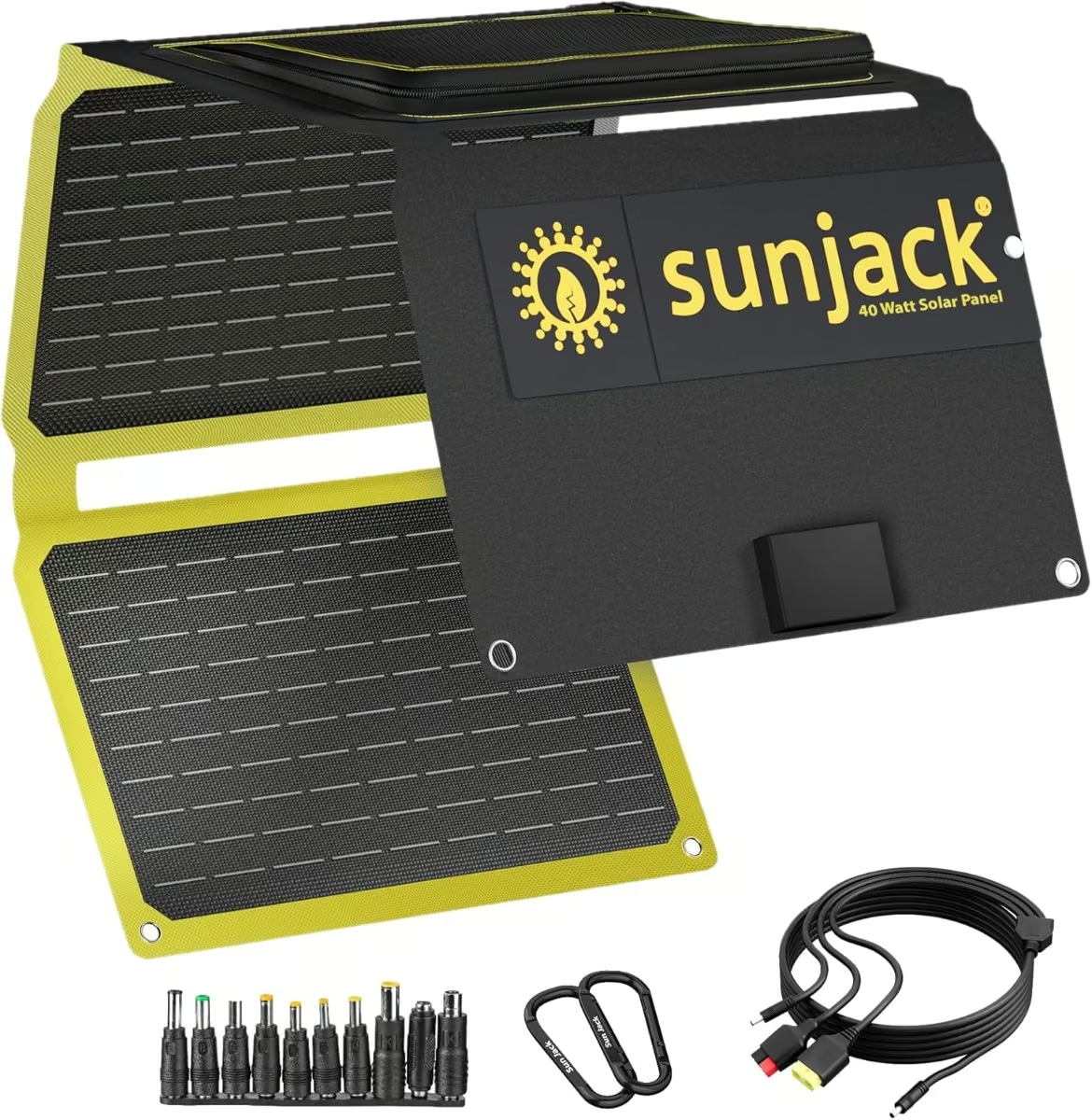
SunJack’s 40W panel folds down to roughly the size of a tablet, aimed at minimalist campers and backpackers who care more about pack size than raw wattage.
It’s built with rugged ETFE lamination and IP67-rated ports, with integrated kickstands and carabiners included for hanging or angling the panel towards the sun.
It delivers up to 40W through simultaneous PD30W USB-C, USB-A and DC outputs thanks to its onboard charging chip, and is backed by US-based customer support.
It’s priced closer to some 100W panels despite its lower 40W output, so buyers are really paying a premium for the tablet-sized folding design rather than for raw power, and its review base is still fairly small.
Pros
- Folds down to a tablet-sized footprint
- Simultaneous multi-port charging
- Rugged IP67 ETFE build
- US-based support and warranty handling
Cons
- Relatively expensive for only 40W of output
- Small review base so far
- Not enough power to usefully run a large power station
Key specs: 40W · PD30W USB-C + USB-A + DC · IP67 · folds to tablet size · kickstands
10. FlexSolar 40W Budget Solar Panel
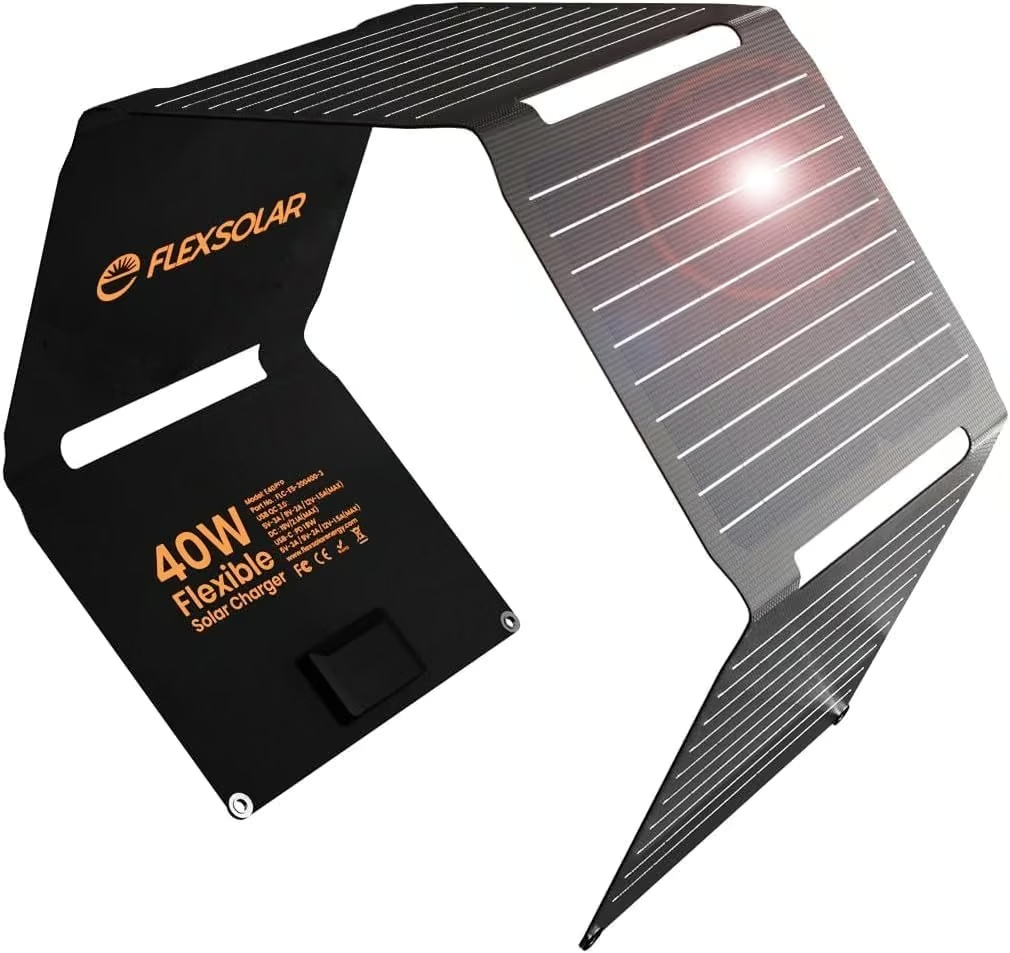
This is the most affordable panel in the line-up, a 40W folding charger for anyone who wants a genuine, name-plated solar panel for light camping or emergency use without a big outlay.
It folds to a compact size and weighs just 750g, built with ETFE and UV-resistant EVA lamination for a longer working life than basic PET-film panels.
It’s rated to 24.7% efficiency with an 18W QC3.0 USB-A port, an 18W PD USB-C port and a 40W DC port, so it can trickle-charge a small power station as well as phones and tablets directly.
At 40W it’s only really suited to slow power-station top-ups or single-device charging, and the junction box isn’t waterproof even though the rest of the unit carries an IP67 rating.
Pros
- Budget-friendly entry point
- Genuinely lightweight at 750g
- Both USB and DC charging options
- IP67-rated body
Cons
- 40W is too slow for larger power stations
- Junction box itself isn’t waterproof
- Thinner review history than the big-name brands
Key specs: 40W · 24.7% efficiency · 750g · USB-C PD + USB-A QC3.0 + DC · IP67 body
How to Choose a Portable Solar Panel
Wattage for your use case
A 20-60W panel is plenty for keeping a phone or power bank topped up on a tramp. Recharging a larger power station on an overnight trip calls for 100-200W or more, and caravan leisure batteries often benefit from 200W-plus kits with a dedicated charge controller.
Weight and folded size
Hikers and trampers should prioritise light, compact panels under 1kg, while caravan and car camping setups can accommodate heavier, higher-output panels since weight matters less when it travels in a vehicle.
Connectors and compatibility
USB-A and USB-C ports let a panel charge phones and tablets directly, while DC, MC4, XT60 or Anderson connectors are aimed at feeding a separate portable power station or 12V battery. Check your power station’s solar input before buying.
Weatherproofing
Most panels carry an IP65 to IP68 rating on the panel face, but the connector or junction box isn’t always sealed to the same standard, so it’s worth checking before leaving one out unattended in the rain.
If you are packing for a full trip, the guides to camping cookware, drones and gazebos cover what else earns its space.
Verdict
The Jackery Solar Saga 100W is our overall pick for most buyers, pairing a trusted brand with solid weatherproofing and efficiency for general camping and off-grid use. Caravan owners after a bigger charge should look at the DOKIO 220W kit with its bundled charge controller, while hikers wanting the lightest possible option should go for the BigBlue 28W. Matching wattage and connector type to your actual power station or device will matter far more than chasing the highest efficiency percentage on the spec sheet.
Frequently Asked Questions
How much sunlight do I need to charge a power station with a portable solar panel?
Direct, unobstructed sunlight gives the best results, ideally with the panel angled towards the sun using its kickstand or a similar prop. Even in good conditions, real-world output usually sits well below the panel’s rated wattage, and cloud cover or hazy skies can cut it by half or more. Late morning through mid-afternoon tends to be the most productive charging window in New Zealand’s climate.
What size solar panel do I actually need?
For simply keeping a phone or small power bank topped up on a tramp, a 20-60W panel is usually plenty. For recharging a larger portable power station on an overnight camping trip, look towards 100-200W or higher, and consider two panels in parallel if you regularly run fridges or other larger appliances off-grid.
Can a portable solar panel charge my devices directly, or does it need a power station?
Many panels include USB-A and USB-C ports, so phones, tablets and power banks can be plugged in directly without any other equipment. Higher-wattage panels are typically sold with DC or MC4-style connectors intended to feed a separate portable power station, though a number also include USB ports for smaller devices at the same time.
Are these panels waterproof enough to leave out in the rain?
Most portable solar panels carry an IP65 to IP68 rating on the panel surface itself, meaning they handle rain and splashes well. However, the junction box or connector housing on many models isn’t fully sealed, so it’s worth checking a specific product’s waterproofing notes before leaving one out unattended in wet weather.
How long do foldable solar panels typically last?
With reasonable care, ETFE or monocrystalline foldable panels commonly last several years of regular outdoor use, and most reputable brands back them with a one to two year warranty. Lifespan is mostly determined by how carefully the panel is folded, stored and protected from punctures, rather than by sun exposure itself.
Can I use a portable solar panel with any brand of power station?
Many panels use universal connectors such as MC4, XT60, DC5521 or Anderson plugs, plus an adapter cable, which makes them broadly compatible across brands like Jackery, EcoFlow, Bluetti and Anker. It’s still worth double-checking the specific connector type and voltage range against your power station’s solar input specs before buying, since some brands favour proprietary charging ports.
