
The best drone in NZ overall is the Holy Stone HS900, thanks to its 3-axis brushless gimbal, 4K video and sub-249g take-off weight, which keeps it in the lightest class for recreational flying under New Zealand’s Civil Aviation rules. Always check local airspace before you launch, since much of the country sits inside a controlled zone.
Drones have gone from a niche hobbyist gadget to one of the easiest ways to capture professional-looking aerial photos and video. Whether you want a premium camera drone, a GPS-equipped all-rounder, or a simple starter drone for a first flight, there is a drone built for it.
We have rounded up the best drones available in New Zealand right now that genuinely ship here, covering a range of budgets and skill levels.
Best Webcams | Best Security Cameras | Best True Wireless Earbuds
| Drone | Best For | Price |
|---|---|---|
| 1. Holy Stone HS900 | Best Premium Camera Drone | Check Price |
| 2. Potensic ATOM SE | Best GPS Fly More Combo | Check Price |
| 3. Holy Stone HS440 | Best Mid-Range Beginner Drone | Check Price |
| 4. Contixo F16 | Best Budget FPV Drone | Check Price |
| 5. F179 Drone | Best Obstacle-Avoidance Budget Drone | Check Price |
| 6. DEERC D20 | Best Mini Kids Drone | Check Price |
| 7. Loolinn Kids Drone | Best Drone for Kids Gift | Check Price |
| 8. MOCVOO Drone | Best Entry-Level Beginner Drone | Check Price |
What Are the Drone Flying Rules and Regulations in NZ?
The Civil Aviation Authority (CAA) regulates all drone flying in New Zealand under Part 101 of the Civil Aviation Act. Most hobby flying does not require a licence, but you still have to follow the rules.
- You do not need a licence for recreational flying, unless you are flying at night or within 4km of an aerodrome.
- Maximum height is 120 metres (400 feet) above the ground.
- You must keep the drone within your own unaided visual line of sight at all times.
- You need the property owner’s consent before flying over people or private land.
- There are no weight exemptions, even drones under 249g must still follow these rules.
Read the full rules on the CAA website, and check Airshare before flying near an aerodrome.
How to Choose the Best Drone for You
When it comes to the best drones, there are some things you will need to consider before picking a new one. Below are the points to think about before buying.
How Long Can a Drone Fly?
Generally, more advanced drones last longer than budget-friendly ones, often 20 to 30 minutes per battery, while simple toy drones may only manage 10 to 15 minutes. Flying time also depends on wind, temperature and how hard you push the drone, so check the real-world flight time rather than just the marketing figure.
What Size Drone Is Ideal for You?
The size of your drone affects how easily you can travel with it and store it at home. Sub-249g folding drones are the easiest to carry and do not trigger the same registration thresholds as heavier models in some countries, while larger drones often trade portability for longer range and better cameras.
Does Camera Quality Matter?
Drones are flying cameras, so if aerial photography or video is your main goal, look for GPS positioning and genuine HD or 4K video rather than just a high-resolution photo mode. Beginners and kids who only want simple fun flying do not need an advanced camera at all.
What Is the Auto Return Home Function?
With a built-in return-to-home feature, you can call your drone back at the touch of a button, or have it return automatically if the battery gets low or the signal drops. This is especially useful if you are flying over hills, trees or other obstacles where you could lose sight of the drone.
The Best Drones You Can Buy Today
1. Holy Stone HS900 – Best Premium Camera Drone
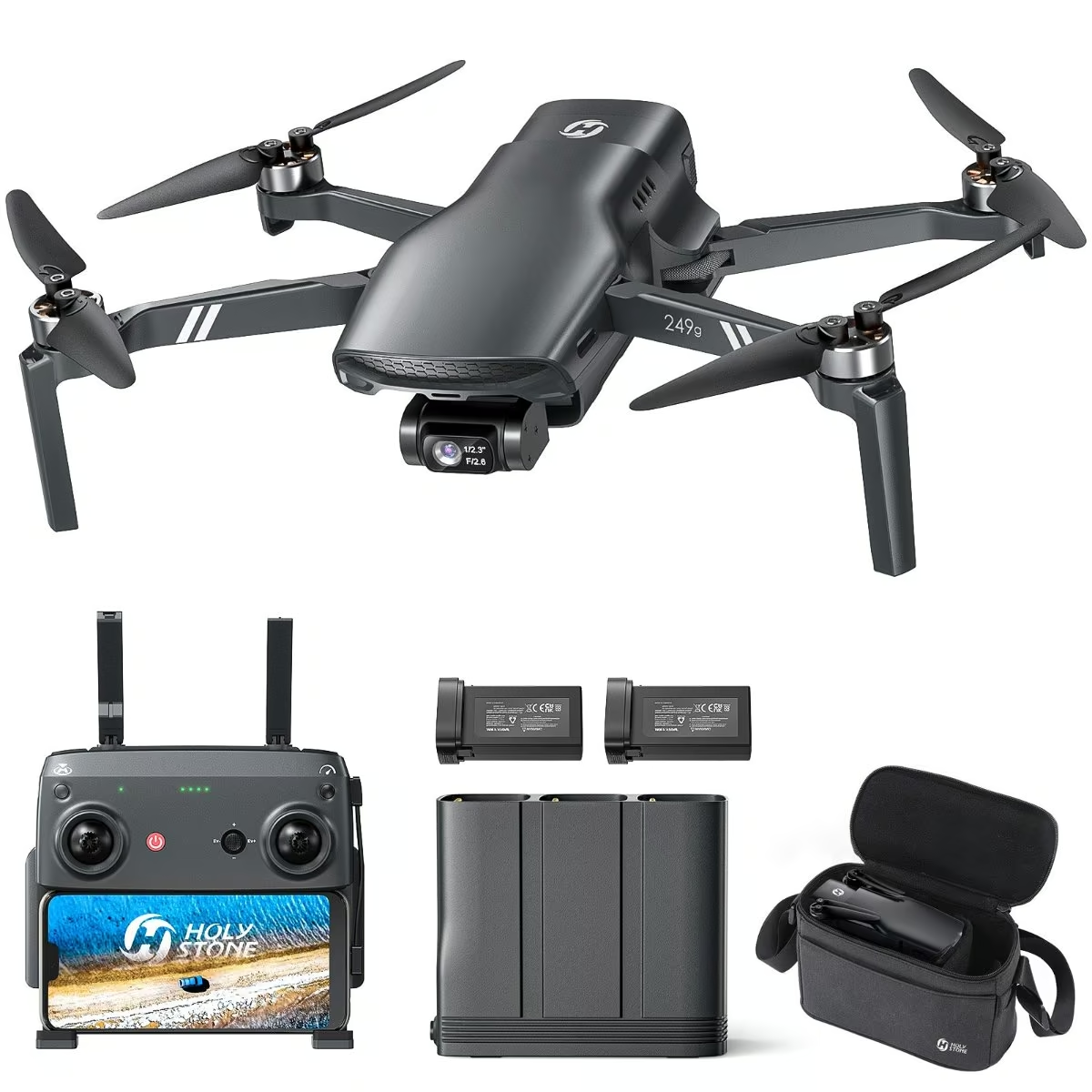
The HS900 is Holy Stone’s flagship sub-249g GPS drone, built around a 3-axis brushless gimbal and a foldable arm design. It ships with two batteries and a Fly More style kit, using a 1/2.3-inch sensor with an f/2.6 fixed-focus lens.
Photo output tops out at 8K (48MP), with video capped at 4K at 30fps, and the drone uses 5.8GHz digital transmission rated to roughly 6km in open, interference-free conditions. Independent testing rated the image quality as very good, and praised the drone’s flight stability plus features like subject tracking, cruise control and automated QuickShots patterns uncommon at this price point.
With both batteries in play, combined flight time reaches up to 60 minutes. There is no obstacle avoidance system, so it suits beginner to intermediate pilots who want DJI-style features such as smart return home and follow-me without the DJI price tag.
Pros
- Strong 48MP photo and 4K/30fps video quality for the price, aided by 3-axis gimbal stabilisation
- Long combined flight time (up to 60 minutes) across the two included batteries
- Impressive feature set for the price: subject tracking, cruise control, QuickShots, smart return home
Cons
- No obstacle avoidance sensors
- Real-world per-battery flight time is average rather than exceptional
Key specs: Weighs under 249g with a foldable, 3-axis brushless gimbal · 1/2.3-inch sensor, f/2.6 lens: 8K/48MP photo, 4K@30fps video · 5.8GHz digital transmission, rated up to approx. 6km · Two batteries for up to 60 minutes combined flight time · GPS-assisted auto return, one-tap take-off/landing, Follow Me, QuickShots
2. Potensic ATOM SE – Best GPS Fly More Combo
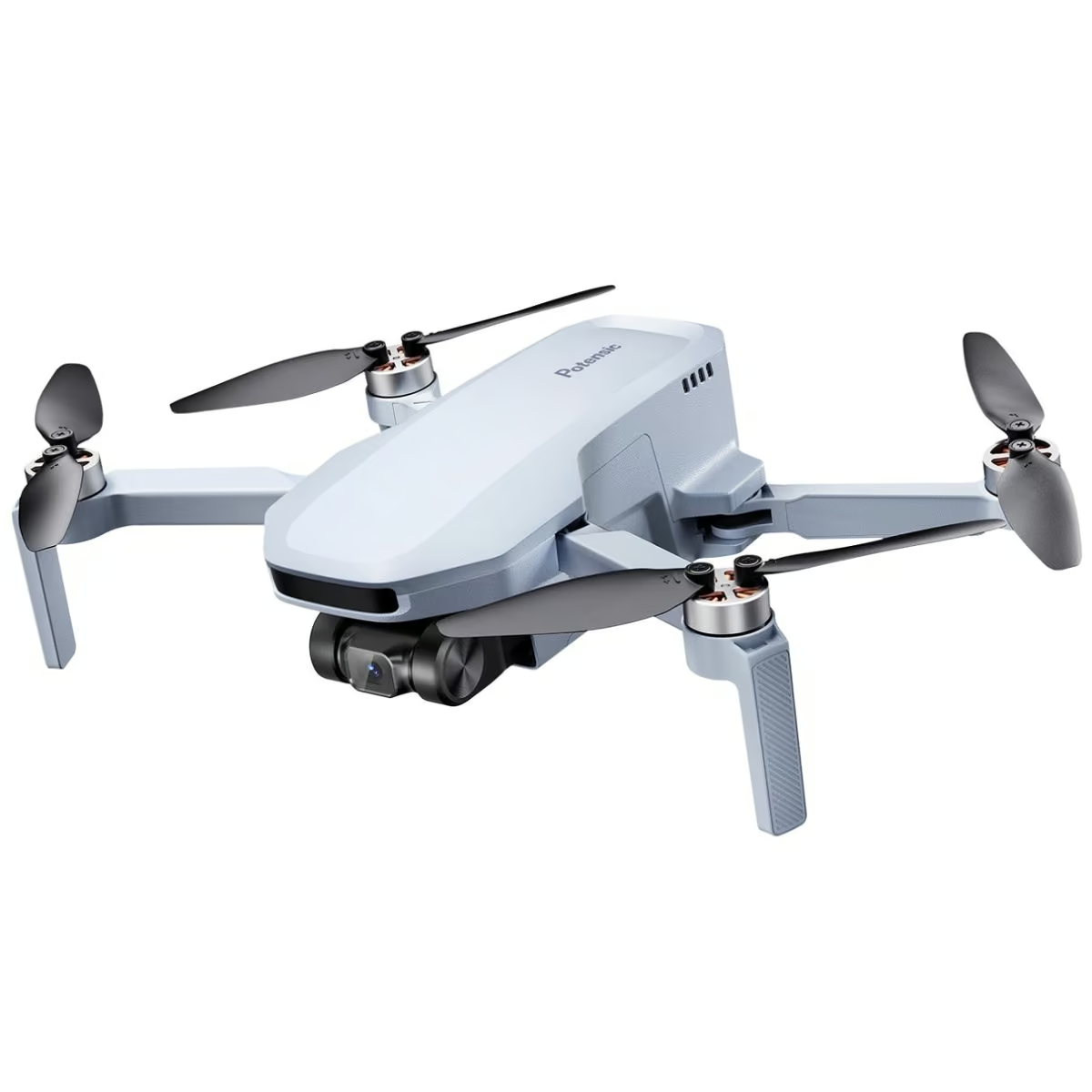
The Potensic ATOM SE is a foldable GPS drone that tips the scales at under 249g, a weight class that keeps it out of drone registration requirements in many regions. Its body folds down to a pocket-friendly size, unfolding for flight. A Sony 1/3 inch 12MP CMOS sensor sits behind ShakeVanish electronic image stabilisation, capturing 4K video and 12MP stills across a 118 degree field of view.
On the performance side, the ATOM SE uses Potensic’s SurgeFly flight control system with Video, Normal and Sport modes, hitting a top horizontal speed of 16m/s in Sport mode. The Pixsync 2.0 transmission system extends control and video feed range to 4km, and a single 2500mAh battery is rated for up to 31 minutes of flight. Fly More Combo kits add two or three batteries plus an optional 60W Fast Parallel Charging Hub.
This drone suits beginner to intermediate flyers who want genuine 4K footage and long range without carrying a heavier, registration-triggering machine. The trade-off is that headline multi-battery flight-time totals only apply once a pilot buys into the pricier Fly More Combo, since a single battery gives 31 minutes.
Pros
- Sub-249g take-off weight avoids drone registration in many countries while still carrying a Sony 12MP/4K sensor with ShakeVanish EIS
- Long 4km Pixsync 2.0 transmission range and a competitive 31-minute per-battery flight time
- Quick Sport-mode acceleration plus three selectable flight modes for both steady filming and livelier flying
Cons
- Advertised multi-battery flight time totals require buying the pricier Fly More Combo with extra batteries
- Certain kit variants can be limited in stock
Key specs: Camera: Sony 1/3″ 12MP CMOS sensor, 4K video, 118 degree FOV, ShakeVanish EIS · Weight: under 249g take-off weight, foldable · Flight performance: up to 31 minutes per 2500mAh battery, max speed 16m/s (Sport mode) · Transmission: Pixsync 2.0 system with up to 4km range · Charging: optional 60W Fast Parallel Charging Hub for multi-battery kits
3. Holy Stone HS440 – Best Mid-Range Beginner Drone
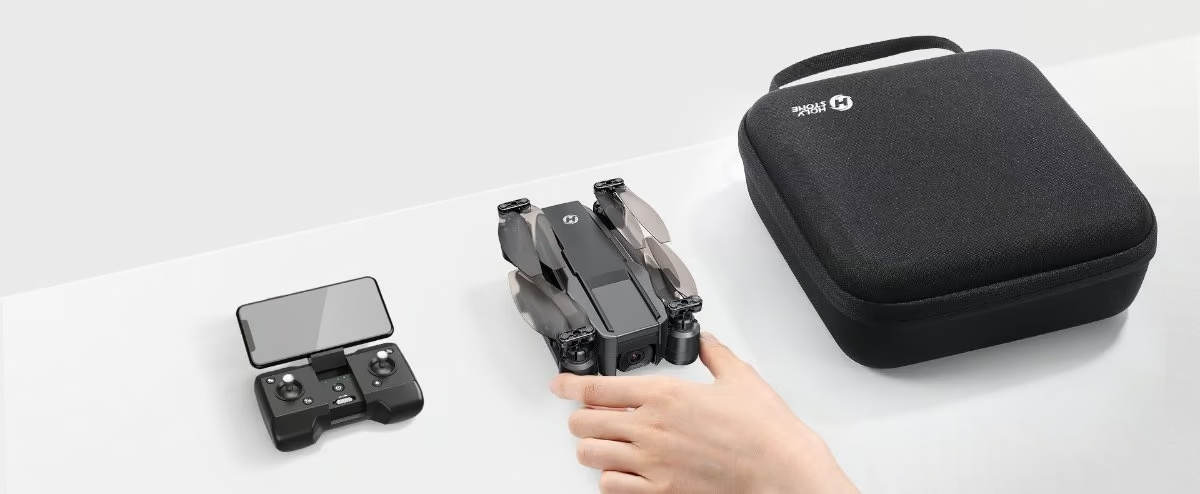
The Holy Stone HS440 is a foldable FPV camera drone aimed squarely at first-time pilots and family use. It weighs 166g, folds down to a compact size, and ships with a carrying case. A 1080P camera with a 112 degree wide-angle lens and 90 degree adjustable tilt handles photo and video duties, feeding a live FPV view back to the paired phone.
Flight is built around beginner conveniences: one-key take-off and landing with automatic altitude hold, headless mode, an emergency stop, and a gesture-triggered selfie photo mode. Power comes from a modular 3.8V 1900mAh battery pack, officially rated for up to 20 minutes of flight time, with a stated charge time of around 180 minutes. Holy Stone’s own spec sheet lists brushed motors and a control/FPV range of around 100 metres.
The HS440 fits people buying a first drone for a child, teen or adult beginner who wants simple, low-stakes flying rather than long range or 4K footage. Its 100m range and brushed motors put it well behind Holy Stone’s own GPS-equipped siblings in the same series.
Pros
- Lightweight (166g) foldable build with an included carrying case makes it an easy grab-and-go beginner drone
- Automated safety features (one-key take-off/landing, altitude hold, headless mode, emergency stop) lower the learning curve for new pilots
- Modular, swappable battery pack lets pilots carry spares to extend total flying time
Cons
- Uses brushed motors and control/FPV range is limited to roughly 100 metres, well short of GPS-camera drones
- 1080P camera and lack of GPS/return-to-home mean it trails Holy Stone’s own higher-tier variants
Key specs: Camera: 1080P HD, 112 degree wide-angle lens, 90 degree adjustable tilt, live FPV feed · Weight: 166g, foldable, includes carrying case · Flight time: up to 20 minutes, modular 3.8V 1900mAh battery, approx. 180 minute charge time · Range: approx. 100 metres; brushed motors · Beginner features: one-key take-off/landing with auto altitude hold, headless mode, emergency stop, gesture selfie
4. Contixo F16 – Best Budget FPV Drone
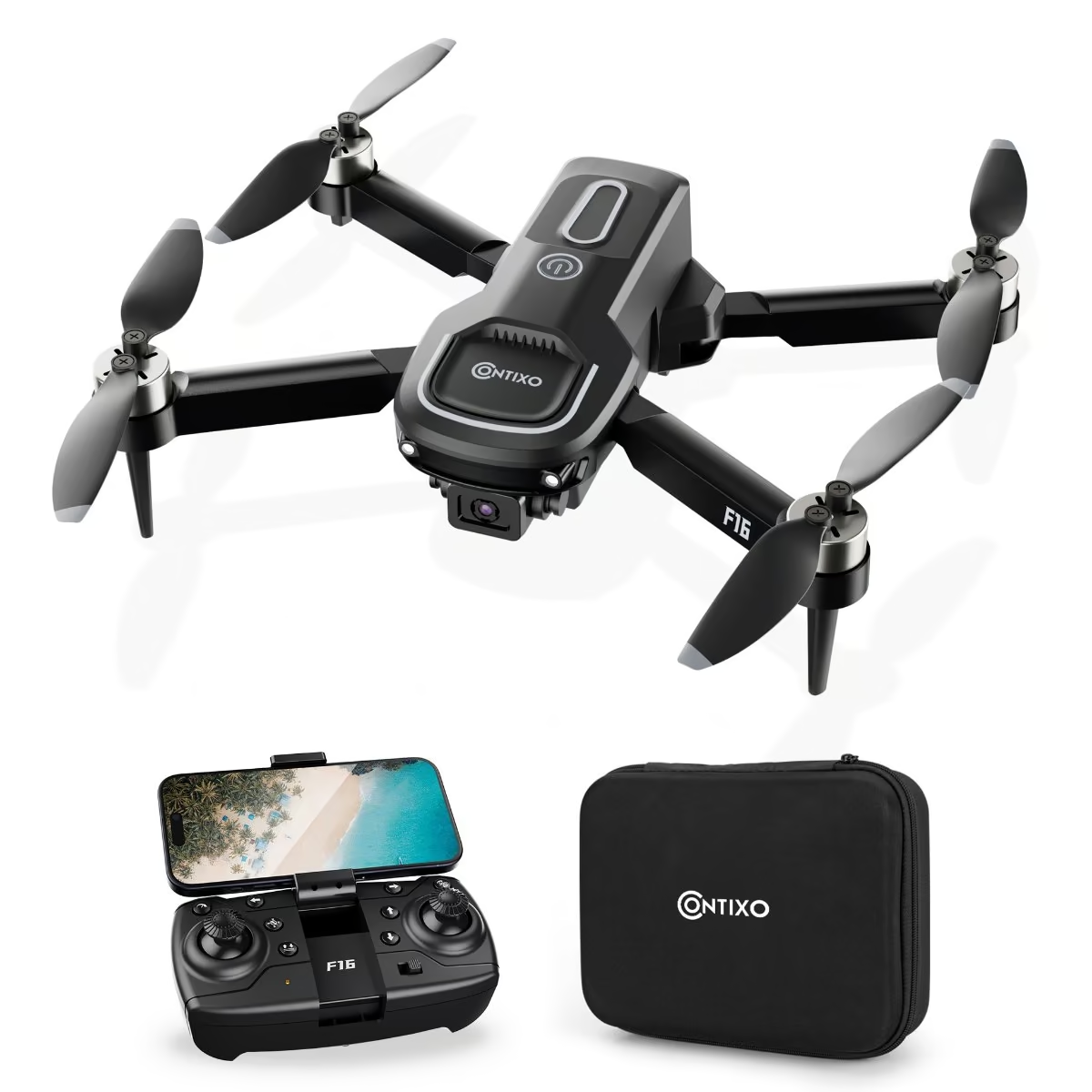
The Contixo F16 is a foldable FPV stunt drone built around a 1080P HD camera that streams live video to a phone over WiFi. It weighs around 140g and folds down to a compact size, making it easy to pack for a weekend trip. It ships with a carry case, spare propellers and a 3.7V 1800mAh battery.
Contixo lists optical flow positioning and altitude hold as the core stability features, which keep the F16 steady in a hover without needing GPS. Flight time is rated at up to 16 minutes per charge, with a control range of about 50 metres. Extras include one-key takeoff and landing, gesture control for selfie-style shots, Follow Me mode, headless mode and 360-degree flips.
Because it sits under 250g, the F16 suits first-time flyers who do not want the paperwork of heavier drones. The trade-off is a shorter flight window than pricier camera drones and a WiFi video link rather than a long-range digital transmission system, so it is best suited to backyard practice and learning the basics of FPV flight.
Pros
- 1080P camera with live WiFi FPV streaming to a smartphone
- Optical flow positioning and altitude hold for stable hovering
- Foldable, sub-250g design with one-key takeoff/landing and headless mode
Cons
- Flight time capped at around 16 minutes per battery
- No gimbal, so footage is more suited to casual clips than stabilised video
Key specs: Camera: 1080P HD with WiFi FPV live streaming · Weight: approx. 140g, foldable arms · Battery: 3.7V 1800mAh, roughly 16 minutes flight time · Range: approx. 50m control range · Flight aids: optical flow positioning, altitude hold, headless mode, Follow Me, gesture control, 360-degree flips
5. F179 Drone – Best Obstacle-Avoidance Budget Drone
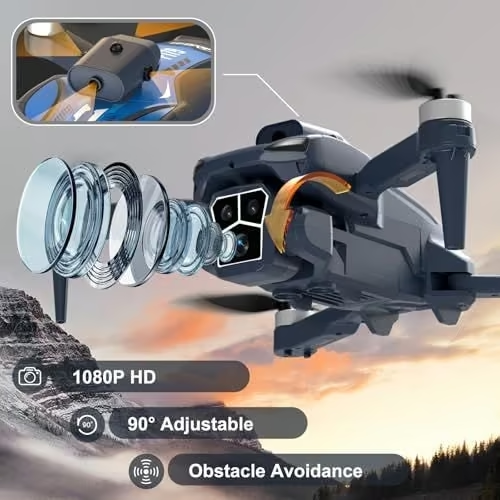
The F179 is a lightweight foldable quadcopter aimed squarely at beginners, weighing around 153g, and using four brushless motors rather than the brushed motors common on cheaper drones, which typically means better wind resistance and a longer motor life.
Its 1080P camera sits on an electrically operated 90-degree tilt mount, and the drone leans on optical flow positioning plus front-facing infrared sensors for obstacle detection, rather than GPS. The bundled remote has a built-in LCD screen so pilots do not need a phone mounted on the controller, and flight time is rated at around 15 minutes from the included battery. It also comes with a microSD card, a carry case and spare parts.
It handles well for a first drone, with the LCD remote screen a genuine beginner-friendly touch, but its light frame makes it prone to drifting in wind and the obstacle avoidance loses effectiveness at higher speeds. It is a sensible pick for someone wanting to learn the basics of FPV and obstacle-aware flying rather than a drone built for demanding conditions.
Pros
- Four brushless motors for better wind resistance and longer motor life than brushed alternatives
- Built-in LCD screen on the remote, so no phone/app is strictly required to fly
- Front-facing obstacle avoidance plus optical flow positioning for steadier, safer hovering
Cons
- Light build is noticeably affected by wind gusts
- Obstacle avoidance becomes less reliable at higher flight speeds
Key specs: Camera: 1080P HD on an electric 90-degree tilting mount · Weight: approx. 153g, foldable · Motors: 4x brushless motors · Battery: approx. 15 minutes flight time · Extras: LCD remote screen, optical flow positioning, obstacle avoidance, microSD card included, carrying case
6. DEERC D20 – Best Mini Kids Drone
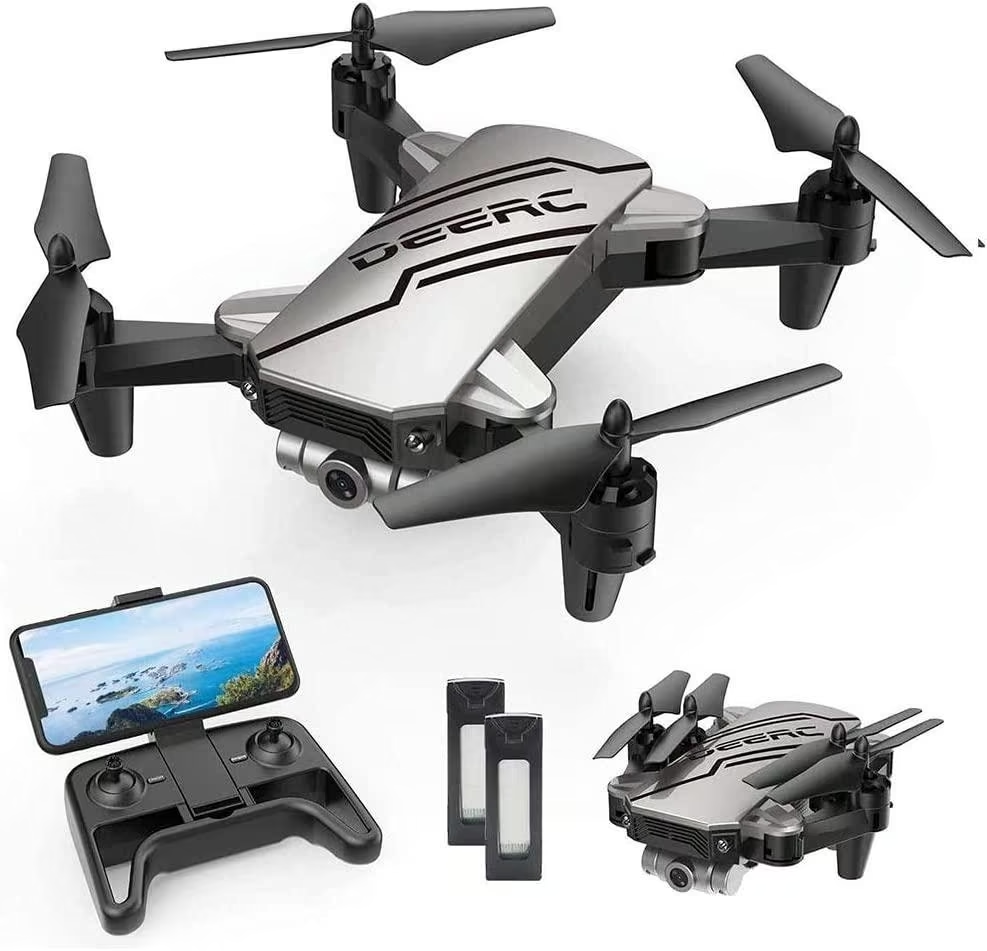
The DEERC D20 is a palm-sized quadcopter weighing just 69 grams, with a foldable arm design that makes it easy to carry. Four propeller guards wrap the rotors, which combined with the light body helps reduce the sting of beginner crashes. It ships with a 720P HD FPV camera set at an 80-degree field of view.
Performance is built around beginner-friendly assists rather than raw speed. Altitude hold lets it sit steady in the air, one key start and landing removes the need to manually throttle up, and headless mode means the drone flies relative to the pilot rather than its own orientation. It also adds voice commands, gesture-triggered selfies, three speed modes and 360-degree flips, plus a low battery alarm and emergency stop.
Two batteries are included, giving roughly 10 minutes of flight each for about 20 minutes total, with an 80 minute recharge time. That short per-battery runtime and the basic 720P camera are the trade-offs of a budget-friendly kids’ drone. It suits children and true first-time pilots wanting an easy, low-stakes introduction to flying.
Pros
- Very light (69g) and foldable, with propeller guards fitted as standard for safer indoor and outdoor use
- Beginner-friendly assists: altitude hold, one key start/land and headless mode make it easy for kids to control
- Extra flying features at this price point: voice control, gesture selfies, 3D flips and waypoint flight
Cons
- Only around 10 minutes of flight per battery before a swap is needed
- 720P camera and roughly 40m transmission range are basic compared with adult/hobbyist drones
Key specs: Camera: 720P HD FPV, 80-degree field of view, live view via smartphone app · Weight/size: 69g, foldable arms · Battery: 2 batteries, approx. 10 min flight each (approx. 20 min total), 80 min charge time · Control range: approx. 40m via Wi-Fi transmitter · Flight features: altitude hold, headless mode, one key start/land, 3D flips, voice control, gesture selfie, propeller guards
7. Loolinn Kids Drone – Best Drone for Kids Gift
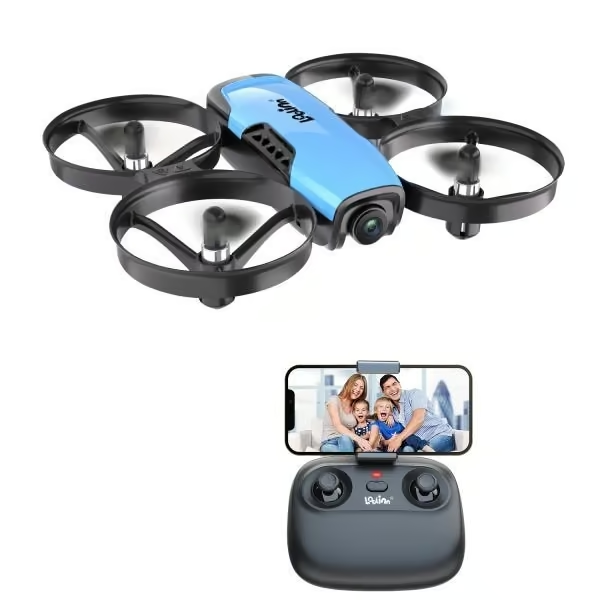
This Loolinn model is a small remote control quadcopter aimed at children aged 8 and up, built around a manually adjustable camera that tilts up to 90 degrees so kids can angle their own shots rather than being stuck with a fixed lens. It comes with propeller safety guards fitted as standard.
In use, it offers FPV real-time transmission so photos and video stream live to a paired phone, three adjustable speed settings to match a child’s confidence level, and an app feature that lets a flight path be drawn on-screen with a finger for the drone to follow. Two batteries are included, each rated for about 7 minutes, for roughly 14 minutes of total flying time.
The short per-charge runtime and modest feature set (no altitude hold or headless mode) mark this out as a simple starter toy rather than a camera drone for serious aerial photography. It suits younger or first-time flyers wanting a low-cost, low-risk gift drone with a bit of photo/video novelty.
Pros
- 90-degree manually adjustable camera lets kids angle their own photos and video, a step up from a fixed lens
- FPV real-time video transmission to a smartphone, plus propeller guards for safer play
- 24-month warranty with refund/replacement offered directly by the brand
Cons
- Only about 14 minutes total flight time across two batteries
- No altitude hold or headless mode, so it demands more manual control input from a young flyer
Key specs: Camera: 90-degree manually adjustable, FPV real-time transmission to phone · Recommended age: 8 years and up · Battery: 2 batteries, approx. 7 min flight each (approx. 14 min total) · Flight features: 3 adjustable speed settings, app-based finger-drawn flight path, propeller safety guards · Warranty: 24-month warranty with refund/replacement
8. MOCVOO Drone – Best Entry-Level Beginner Drone
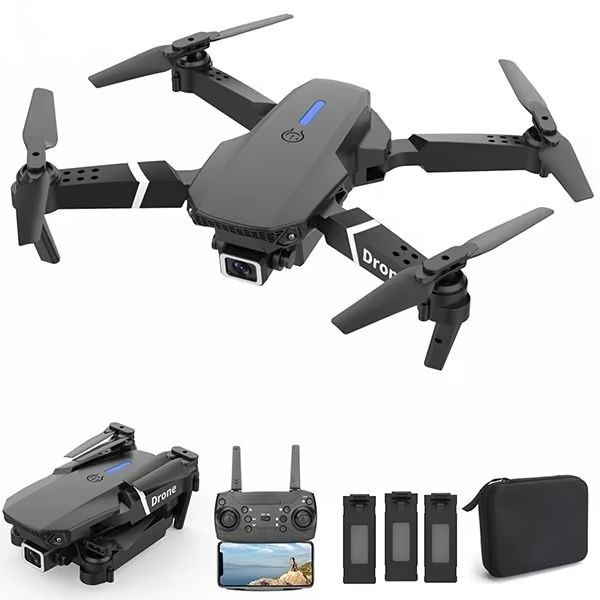
MOCVOO’s foldable camera drones are aimed at adults, beginners and kids, using a 1080P HD wide-angle dual camera with a 120-degree adjustable angle and real-time FPV transmission to a paired smartphone.
MOCVOO’s own listings show its drones shipping with multiple 3.7V 1800mAh batteries for a combined flight time well above what a single-battery budget drone typically offers. Flight aids include one-key takeoff/landing, headless mode, three adjustable speed levels, gesture-triggered photo/video capture, app-based waypoint flight planning and 360-degree flips, plus propeller guards and a low-battery warning light.
It is a foldable, carry-case-included package built for people who have never flown a drone before, prioritising ease of use and generous battery life over image quality or range. Buyers wanting cinematic footage or long-range flight should look elsewhere, but as an entry point for kids or first-time adult flyers it covers the basics well.
Pros
- Multiple included batteries for combined flight time well above typical budget drones
- App-based waypoint flight planning alongside the usual headless mode and one-key takeoff/landing
- Foldable design with carrying case, propeller guards and a low-battery warning light
Cons
- 120-degree wide FPV camera has no gimbal, so footage will show more shake than stabilised drones
- Marketed as a beginner/family drone, so range and build quality trail purpose-built camera drones
Key specs: Camera: 1080P HD wide-angle dual camera, 120-degree adjustable angle, live FPV transmission · Battery: multiple 3.7V 1800mAh batteries, extended combined flight time · Flight aids: one-key takeoff/landing, headless mode, 3 speed levels, gesture-triggered capture, app waypoint flight · Extras: foldable arms, carrying case, propeller guards, low-battery warning light
For the rest of your kit, the guides to gumboots, inflatable kayaks and inflatable paddle boards are worth a look.
If this is a first drone and you fully expect to put it into a tree while learning, start with an affordable drone and save the good one for once you can land it.
Frequently Asked Questions
Do I need a licence to fly a drone in NZ?
No, not for recreational flying under CAA Part 101, unless you are flying at night or within 4km of an aerodrome. Commercial operations need Part 102 certification.
How high can I legally fly a drone in New Zealand?
Up to 120 metres (400 feet) above the ground, and you must always keep the drone within your own unaided line of sight.
Can I fly my drone near an airport?
No, you must stay at least 4km away from any aerodrome unless you hold the required qualifications and have consent.
Do I need permission to fly over someone’s property?
Yes, you need the property owner’s consent before flying over private land or over people.
What is the best drone for a complete beginner?
A lightweight, sub-249g drone with automatic hovering and beginner modes, such as the DEERC D20 or Holy Stone HS440, is the easiest way to start.
Do drones under 249g still need to follow the CAA rules?
Yes, there is no weight exemption in New Zealand. Even the smallest drones must follow the same Part 101 rules as larger ones.
Verdict
For most people chasing real camera quality, the Holy Stone HS900 is the standout pick here: a 3-axis gimbal, 8K photos and genuine 4K video for a fraction of a premium brand-name drone. If you want GPS smarts and long range, the Potensic ATOM SE is the stronger all-rounder, while the DEERC D20 or Loolinn are safer, simpler starting points for kids.
Whichever you choose, make sure you understand the CAA rules above before your first flight, and always fly with consent, within line of sight, and below 120 metres.
