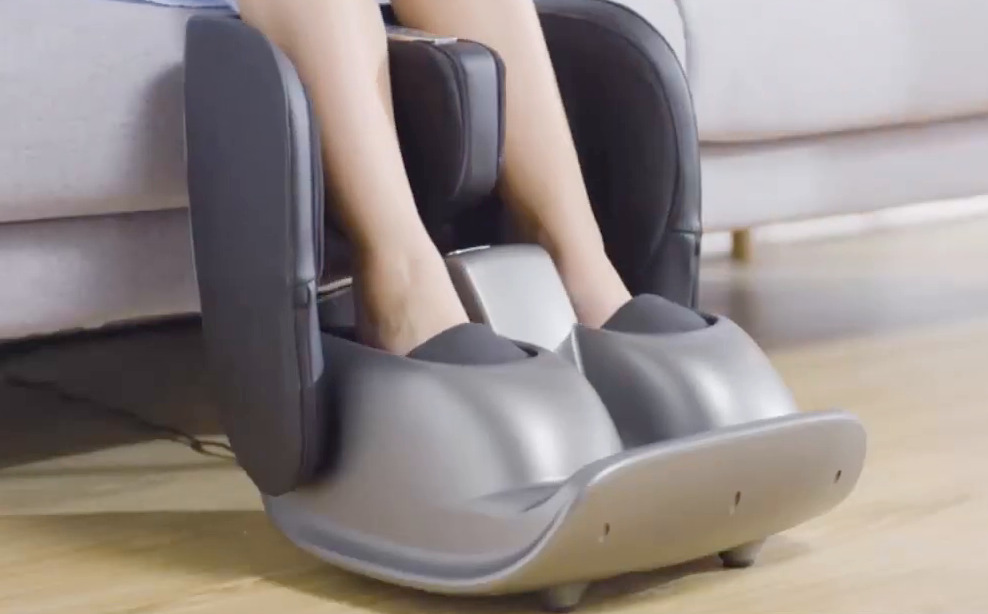
The best foot massager in NZ overall is the Luxury Automatic Shiatsu Foot and Calf Massager, thanks to its six massage techniques, cushioned air compression and one-touch operation that work the feet and calves together. This guide compares ten foot massagers available in New Zealand right now, from deep shiatsu kneading and heated air compression to EMS circulation pads and a cordless rechargeable pick, so shoppers can match the right machine to tired, aching or swollen feet.
Every pick below is available in New Zealand at the time of writing. The list is ordered from the most well-rounded all-rounder to more specialised picks for legs, circulation and multi-use flexibility. For aches higher up the body, a dedicated neck and shoulder massager covers a different need.
Quick comparison
| Foot massager | Best for | Massage type | Heat |
|---|---|---|---|
| Luxury Automatic Shiatsu Foot and Calf Massager | Best overall | Shiatsu and air compression | No |
| EMS TENS Electric Foot Massager | Circulation and nerve stimulation | EMS and TENS pulse pad | No |
| Livemor Kneading Heated Foot Massager | Deep kneading with warmth | Kneading and air pressure | Yes |
| Livemor Air Compression Leg Massager | Legs, calves and thighs | Air compression | Yes |
| Electromagnetic Wave Pulse Foot Massager | Most reviewed value pick | EMS pulse with infrared heat | Yes |
| Shiatsu Kneading Foot, Leg and Arm Massager | Most versatile | Shiatsu and air compression | Yes |
| FIT KING Air Compression Foot and Leg Massager | Best brand-name leg massager | Air compression | No |
| Bob and Brad Shiatsu Foot Massager Lite | Best premium shiatsu | Shiatsu, rolling and air compression | Yes |
| AERLANG Foot Massager Machine with Heat | Best budget shiatsu | Kneading and shiatsu | Yes |
| e-SoBanLife Rechargeable EMS TENS Foot Massager | Best cordless / rechargeable | EMS and TENS pulse | No |
1. Luxury Automatic Shiatsu Foot and Calf Massager – Best Overall
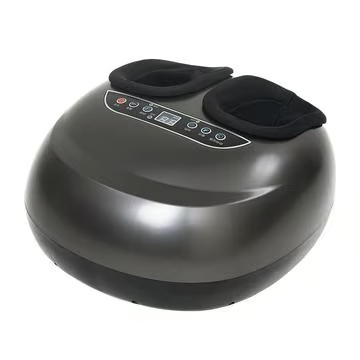
This is the best foot massager in NZ for shoppers who want their feet and calves worked at the same time. It is an enclosed twin-chamber unit in a sleek matte black finish, with a one-touch digital display on top that keeps operation simple. The footprint suits sitting on a couch or the edge of a bed, and the housing feels solid rather than flimsy.
Where it earns the top spot is breadth of control. It offers six massage techniques, three intensity levels and cushioned airbag compression that hugs the foot and lower calf for a spa-like squeeze, plus an intelligent timer with three time settings so a session can be short or long. Testers of this style of enclosed massager find the air compression the standout, easing the heavy, tight feeling after a long day standing.
The honest trade-off is that this model has no heat function, so anyone who specifically wants warmth on cold feet should look at the heated picks further down. The enclosed foot chambers also suit average feet best and can feel snug for very large sizes.
Pros
- Six massage techniques plus three intensity levels
- Cushioned air compression covers feet and lower calves
- Simple one-touch digital display and three-setting timer
Cons
- No heat function
- Enclosed chambers can feel snug for very large feet
Key specs: six massage techniques, three intensity levels, air compression airbags, three timer settings, black finish, model V888 (ELOSUNG15023).
2. EMS TENS Electric Foot Massager – Best for Circulation
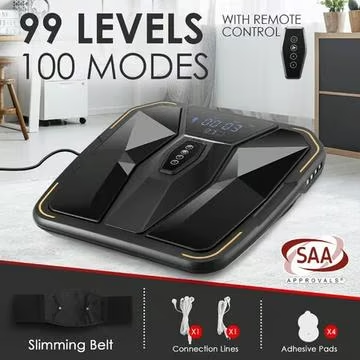
This pick is best for circulation and nerve stimulation rather than physical kneading. Instead of rollers, it is a flat, foldable pad roughly 40 x 37.5 x 13 cm that the feet rest on, finished in black plastic and light enough to slide under a desk or store in a drawer. It runs on mains power with an included remote control that takes two AAA batteries.
The appeal is the sheer range of electrical stimulation on offer: 50 TENS modes and 50 EMS modes for 100 settings in total, 99 intensity levels and a timer adjustable from 0 to 60 minutes. It also ships with a slimming belt and four adhesive electrode pads, so the same unit can send pulses to calves, arms or the lower back. People who use EMS pads report a tingling, pulsing sensation and less heaviness in the feet after standing all day.
The clear trade-off is that this model has no infrared heat and no sole roller, so it stimulates the muscles electrically rather than physically massaging them. The pulse sensation is an acquired taste, and EMS devices are not suitable for anyone with a pacemaker or metal implants.
Pros
- 100 combined TENS and EMS modes with 99 intensity levels
- Remote control and 0 to 60 minute timer
- Folds flat and includes a belt and electrode pads for other body areas
Cons
- No heat and no rolling nodes, so it is stimulation only
- Not suitable for people with pacemakers or metal implants
Key specs: 50 TENS plus 50 EMS modes, 99 intensity levels, 0 to 60 minute timer, remote control, AC 100 to 240V, black, product code 90401.
3. Livemor Heated Foot Massager – Best for Deep Kneading with Heat
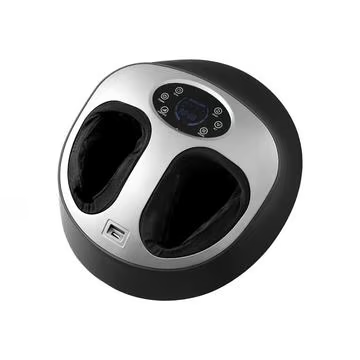
For shoppers who want firm kneading plus warmth, this Livemor unit is the standout. It is an enclosed foot-pocket massager measuring 39 x 34 x 23 cm in black, and it fits AU shoe sizes 4 to 12. The shell is ABS plastic with a polyester lining, and the zippered fabric liner is removable and washable, which keeps it hygienic between users.
Control is generous for a machine at this level. A touch screen sits on the top of the unit and it also comes with a remote, with automatic and manual modes, five time settings with auto shut off, nine intensity levels and five massage modes. A built-in heating function adds warmth, while flexible air-pressure kneading pads target pressure points. Combined, the nine intensity levels and heat deliver a genuinely deep massage that suits stiff, cold feet in winter.
The trade-offs are practical. The rated working time is 15 minutes, so it shuts off rather than running for long stretches, the enclosed pockets stop at AU 12 so larger feet may not fit comfortably, and the kneading nodes can feel firm on the first few uses until you settle on the right intensity. It comes with a one year warranty.
Pros
- Nine intensity levels, five modes, heat and air-pressure kneading
- Touch screen plus remote, with washable zippered liner
- One year warranty
Cons
- 15 minute rated run time before auto shut off
- Enclosed pockets stop at AU size 12
Key specs: 5 massage modes, 9 intensity levels, 5 time settings, heating, air-pressure pads, ABS and polyester, 50W, 220 to 240V, 39 x 34 x 23 cm, black, one year warranty, SKU PR14207.
4. Livemor Air Compression Leg Massager – Best for Legs and Calves
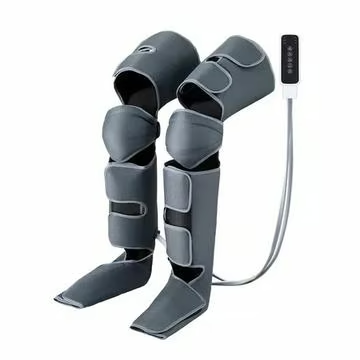
When the ache sits in the calves and thighs rather than only the soles, this Livemor wrap is the better tool. Instead of a rigid foot box, it uses fabric cuffs that strap around the feet, calves and thighs, so it treats the whole lower leg. The cuffs fit calves from 44 to 53 cm and thighs from 55 to 74 cm, and the finish is black fabric.
It works by inflating and releasing air chambers to squeeze the leg. There are three massage modes, including a separate mode that targets the feet, calf or thigh individually and a combine mode that cycles the whole leg, along with three intensity levels and two heat levels of 42 or 50 degrees. A session runs about 15 minutes with a 20 minute auto-off. This kind of air compression is well suited to swollen, tired legs and to gentle circulation work.
The trade-offs come from the wrap design. Fit matters, so very large legs can find the cuffs tight, the auto-off cycle is fixed at 20 minutes, and because it relies on air compression there are no rolling shiatsu nodes, so shoppers chasing deep-tissue kneading of the sole should choose a roller model instead.
Pros
- Covers feet, calves and thighs in one wrap
- Three modes, three intensity levels and two heat levels
- Good for swollen, tired legs and circulation
Cons
- Wrap fit can feel tight on very large legs
- Compression only, with no rolling shiatsu nodes
Key specs: air compression, 3 massage modes, 3 intensity levels, 2 heat levels (42 or 50 degrees), 15 minute cycle, 20 minute auto-off, fits calf 44 to 53 cm and thigh 55 to 74 cm, 24W, black, product code 94920.
5. Electromagnetic Wave Pulse Foot Massager – Best Value and Most Reviewed
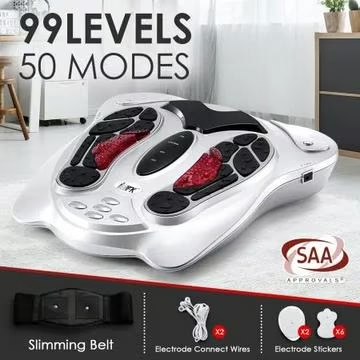
This is the most reviewed pick in the group and a strong value choice for circulation with heat. It is a silver footpad measuring roughly 42 x 45 x 10 cm and weighing about 2.6 kg, so it sits flat on the floor in front of a chair. Unlike the plain EMS pad above, this one adds an infrared heating function on top of the electrical stimulation.
The feature set is broad: a remote control, 50 working modes, 99 electromagnetic-wave intensity levels and a timer that can be set anywhere from 1 to 90 minutes. It comes with a slimming belt and eight electrode stickers so the pulses can be applied to other areas. Owners report instant relief from instep and foot pain and a feeling of improved circulation after a big day on their feet, and the long-running review count reflects steady interest.
The honest cons are well documented by owners. The manual is basic and does not explain what each mode does, the remote buttons are fiddly and the built-in voice prompt cannot be muted, and relief can be temporary so ongoing use is needed. As with any EMS device, it is not for people with metal implants or artificial limbs. Stock is also listed as almost sold out, so availability may be limited.
Pros
- Infrared heat plus 50 modes and 99 intensity levels
- Long, freely set 1 to 90 minute timer
- Most reviewed model here, with reports of quick foot-pain relief
Cons
- Basic manual and a voice prompt that cannot be muted
- Not suitable for people with metal implants or artificial limbs
Key specs: 50 modes, 99 intensity levels, infrared heat, 1 to 90 minute timer, remote, slimming belt and 8 electrode stickers, AC 220 to 240V, silver, about 2.6 kg, product code 18817.
6. Shiatsu Kneading Foot, Leg and Arm Massager – Most Versatile
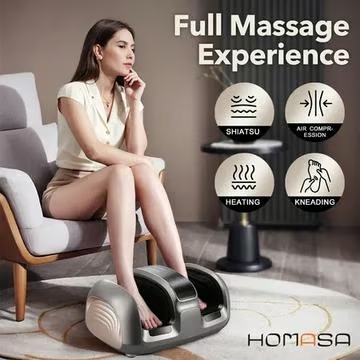
The most versatile pick here is this shiatsu unit, whose adjustable bracket lets it tilt so the same machine can work feet, calves, ankles or even arms. It is a grey ABS unit measuring 50 x 35 x 20 cm with a non-slip base, and the bracket adjusts between 90 and 120 degrees to change the angle of attack. That flexibility makes it the pick for a household where more than one body area needs attention.
It combines shiatsu-style kneading with air compression, three intensity levels and a heat function, and it is controlled from an LCD touchscreen with ambient LED lighting and several timer options. Running on a 30W supply, the rolling nodes plus compression give a firmer, more physical massage than the EMS pads, and the tilt function genuinely widens what it can treat.
The trade-offs are worth weighing. Controls live on the on-unit LCD only, with no remote, so you have to reach down to change settings, the grey plastic looks more functional than premium, and enclosed shiatsu kneading can feel firm while the heat on units like this is often milder than expected. It is also the largest machine in this list, so it needs a bit more floor space.
Pros
- Adjustable 90 to 120 degree bracket treats feet, calves and arms
- Shiatsu kneading plus air compression and heat
- LCD touchscreen with timer options and non-slip base
Cons
- On-unit controls only, with no remote
- Largest footprint in this list
Key specs: shiatsu kneading and air compression, 3 intensity levels, heat, LCD touchscreen, LED lighting, adjustable 90 to 120 degree bracket, DC 12V 30W, ABS, grey, 50 x 35 x 20 cm, product code 85346.
7. FIT KING Air Compression Foot and Leg Massager – Best Brand-Name Leg Massager
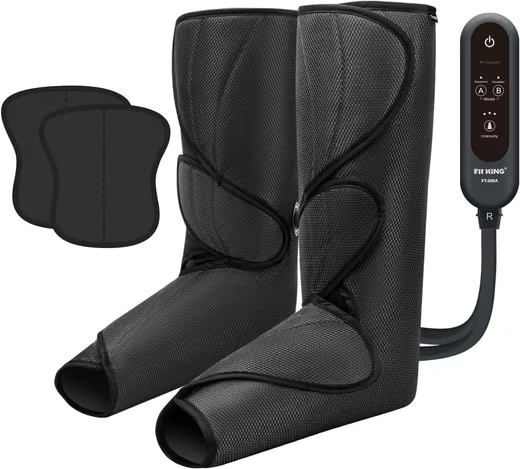
Shoppers who want an established leg-massager brand should look at the FIT KING air compression foot and leg massager, a long-running model (FT-009A) that has been on sale since 2019 and has built up a very large base of owner ratings. It wraps around the feet and calves and uses four large air bags, two per leg, to squeeze and release in a rolling pattern meant to ease tired legs and help circulation after long periods of sitting or standing.
Control is through a handheld remote with two modes and three intensities, and a 20-minute auto shut-off stops sessions running too long. The wraps fasten with Velcro, and two extension pieces are included so they fit calves up to about 72cm around, which makes it easier to share between people of different sizes. It runs from the mains rather than a battery.
The trade-off for that simplicity is a short feature list. There is no heat function, only two modes, and the wraps cover the feet and calves but not the thighs, so anyone after warmth or full-leg coverage is better served by the Livemor leg wrap above.
Pros
- Long-established model with a large base of owner ratings
- Velcro wraps with extensions fit calves up to about 72cm
- Simple remote with 20-minute auto-off
Cons
- No heat setting
- Only two modes and three intensities
- Mains-powered, covers feet and calves only
Key specs: model FT-009A, mains powered, 4 air bags (2 per leg), 2 modes, 3 intensities, 20-minute auto shut-off, fits calves up to approx. 72cm with extensions, approx. 1.5kg.
8. Bob and Brad Shiatsu Foot Massager Lite – Best Premium Shiatsu
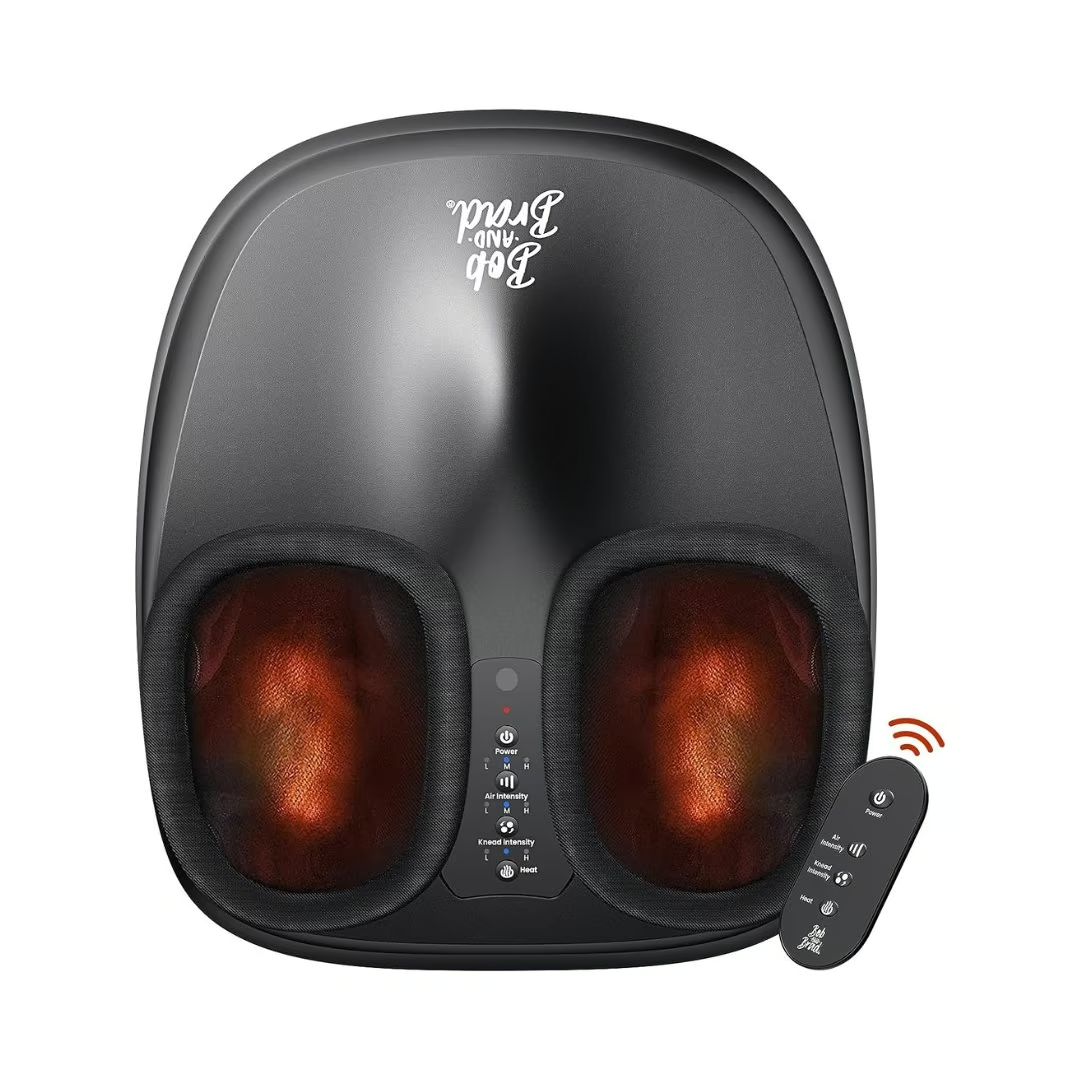
Shoppers who want a foot massager designed with input from real physiotherapists should look at the Bob and Brad Shiatsu Foot Massager Lite. Bob and Brad are physical therapists with a large following built on practical, no-nonsense advice, and this open-front unit combines deep kneading shiatsu, rolling and full-wrap air compression rather than any single technique. It runs on corded AC power at 24W and weighs 2.4kg.
Controls cover four squeeze intensities from low to max, four massage programs, and the kneading action can be switched off separately if only compression and heat are wanted. Heat runs up to around 55 degrees Celsius with NTC intelligent temperature control, and a 15-minute auto-off with overheat protection keeps sessions to a sensible length. The open front fits up to US men’s size 12, and the foot sleeves unzip for washing.
Genuine owner reviews on Bob and Brad’s own site praise the combination of kneading, heat and compression, the quiet motor and the easy-to-use remote, with several reviewers specifically noting relief for plantar fasciitis and tired feet. The main criticisms are that it runs a little large for smaller feet and that it is corded rather than rechargeable.
Pros
- Backed by real physiotherapists with a large following
- Four intensity levels and four massage programs, with kneading toggle
- Removable, washable foot sleeves for hygiene
Cons
- Corded electric, not rechargeable or battery-powered
- Runs large for smaller feet, per owner feedback
Key specs: 4 intensities, 4 programs, heat to about 55C, 15-minute auto-off, fits up to US size 12, 24W, 2.4kg, 2-year warranty.
9. AERLANG Foot Massager Machine with Heat – Best Budget Shiatsu
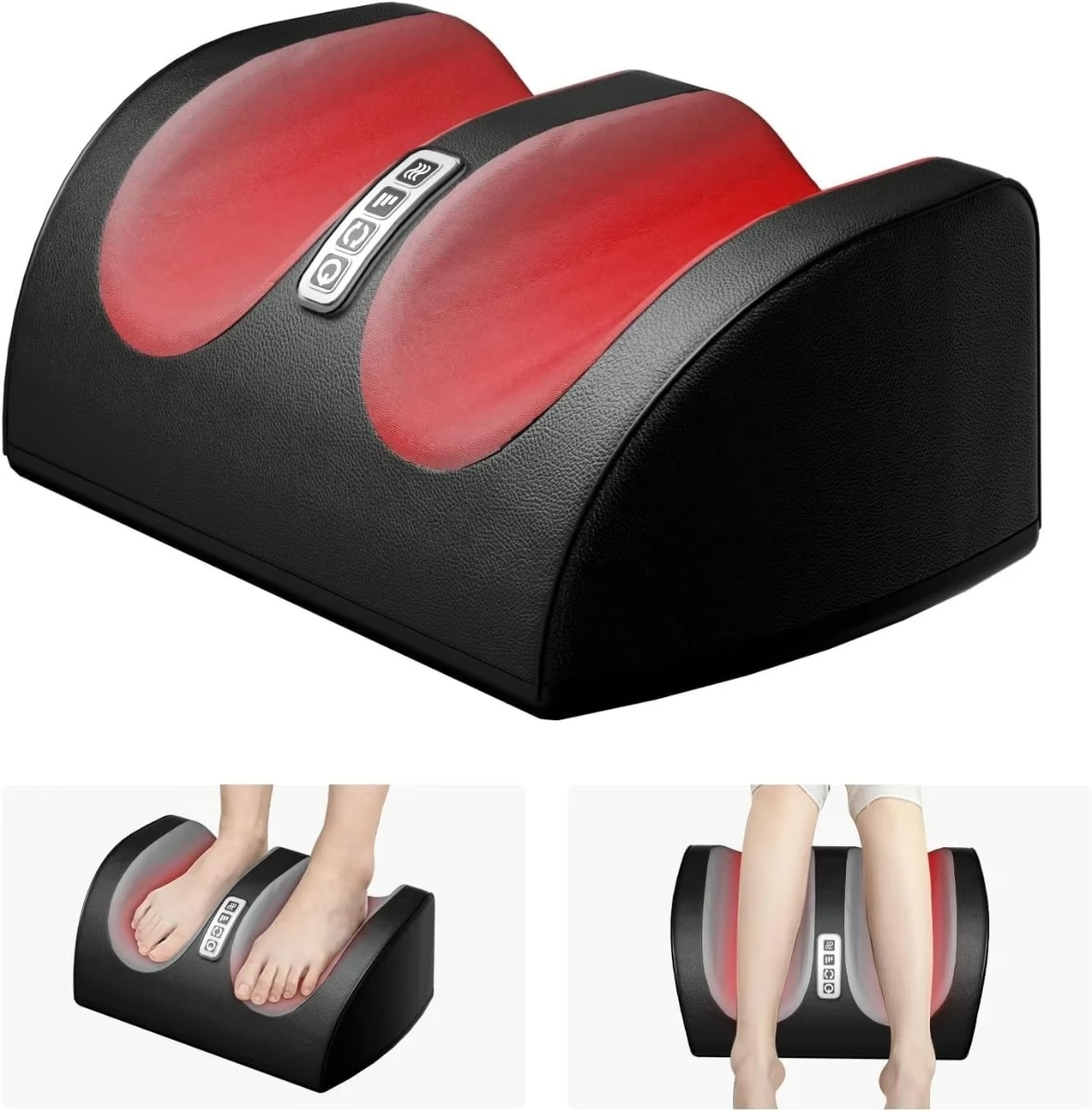
Shoppers on a tighter budget who still want shiatsu kneading and heat should look at this AERLANG foot massager. It is a compact, lightweight unit at just 1.18kg and 35.6 x 22 x 14cm, small enough to store in a cupboard between uses, and it targets both the feet and calves with a deep kneading shiatsu action.
Controls are deliberately simple: a single button cycles through kneading, heat therapy and strength modes, and the motor is rated at a low 35 to 55 decibels so it will not drown out a television in the next room. A built-in 15-minute auto shutoff protects against overuse, and the unit comes with a storage box.
This exact listing is currently live on eBay Australia through a highly rated seller with hundreds of completed sales and matching specifications, though no product-specific review text beyond general seller feedback could be independently verified.
Pros
- Lowest price of any pick in this guide
- Quiet motor rated at 35 to 55 decibels
- Compact and lightweight at 1.18kg for easy storage
Cons
- No detailed owner review text found, only general seller feedback
- Single-button control is less granular than a dial or remote
Key specs: kneading, shiatsu and heat modes, 1.18kg, 35.6 x 22 x 14cm, 15-minute auto shutoff, 35-55dB noise level.
10. e-SoBanLife Rechargeable EMS TENS Foot Massager – Best Cordless / Rechargeable
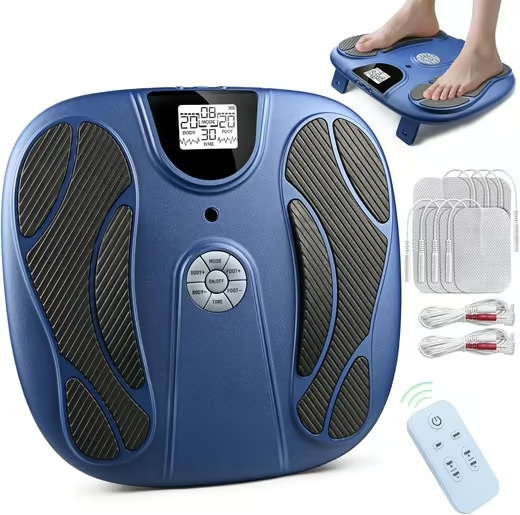
Anyone who wants a foot massager that is not tethered to a wall socket should look at this rechargeable EMS and TENS foot pad from e-SoBanLife (model AST-300D). It is a thin silicone pad, about 32cm square and 3cm deep, with a fold-out stand that tilts it to a more comfortable angle and folds flat for storage.
It combines seven EMS modes, aimed at stimulating muscles, with eight TENS modes intended for temporary relief of sore and aching muscles, across 20 intensity levels. A built-in 400mAh battery recharges in about two and a half hours, an LCD display shows the settings, and it switches itself off automatically at the end of a session.
This is a new listing with no owner reviews yet and limited stock, and it is short on detail such as runtime per charge or whether extra electrode pads for other body parts are included, so it is a less proven pick than the rest of this list. As with any EMS pad, it needs bare feet on the pad to work and feels like a tingling pulse rather than a kneading massage.
Pros
- Cordless and rechargeable
- 15 modes (7 EMS, 8 TENS) and 20 intensity levels
- Thin, foldable design that stores flat
Cons
- New listing with no owner reviews yet
- Runtime per charge not stated
- EMS pulse rather than a kneading massage
Key specs: rechargeable EMS/TENS foot pad, 400mAh battery, approx. 2.5-hour charge, 7 EMS + 8 TENS modes, 20 intensity levels, LCD display, auto shut-off, foldable stand, 32 x 32.5 x 3cm.
How to choose a foot massager in NZ
Start with the massage type. Shiatsu and kneading models use rotating nodes for a firm, physical massage that suits stiff arches and sore soles. Air compression wraps squeeze the foot or whole leg and are gentler, which suits swelling and circulation. EMS and TENS pads send electrical pulses to stimulate muscles and nerves rather than pressing on them, so they feel very different and are better for circulation than for kneading out knots.
Decide how much of the leg you want covered. Foot-only units are compact, while leg wraps and tilt-bracket models reach the calves and thighs. Then weigh heat, which increases local blood flow and helps muscles relax, intensity range, timer length and whether the controls are a remote or an on-unit screen. Runners and gym-goers who want percussive recovery may also want a massage gun alongside a foot massager.
Finally, factor in your own routine. People whose foot fatigue comes from long days standing often pair sessions with magnesium supplements for cramp-prone muscles, and keeping an eye on daily load with a fitness tracker can show whether tired feet are a sign of overdoing it. Anyone with diabetes, reduced foot sensation or circulation conditions should check with a doctor before using a motorised or heated massager.
For most New Zealand shoppers, the Luxury Automatic Shiatsu Foot and Calf Massager is the best all-round choice, combining six techniques, air compression and simple controls across feet and calves. Choose the Livemor Kneading Heated Foot Massager if warmth and deep kneading matter most, the Livemor Air Compression Leg Massager for tired calves and thighs, and the EMS pads for circulation-focused stimulation. The tilt-bracket shiatsu unit is the pick when one machine has to cover feet, legs and arms. Among the newer additions, the Bob and Brad Shiatsu Foot Massager Lite is worth the extra spend for physiotherapist-designed kneading and compression, the AERLANG is the value pick for simple shiatsu and heat, and the e-SoBanLife EMS pad suits anyone who wants a cordless, rechargeable option.
For recovery between sessions, the guides to massage chairs and red light therapy panels are worth a look.
FAQs
Do foot massagers really work?
Yes. Foot massagers use rollers, air compression, vibration, heat or electrical pulses to stimulate muscles and improve circulation. Users commonly report less foot pain and heaviness after regular sessions, and studies on gentle daily foot massage show measurable reductions in pain scores, though results depend on the technology and consistent use.
Are foot massagers safe for people with diabetes?
They can help circulation, but caution is essential. Anyone with diabetes, neuropathy or reduced foot sensation should consult a doctor first, check their feet before and after use, and be careful with heat and firm shiatsu settings. Reduced sensation means a user may not feel when pressure or heat is too high.
How often should you use a foot massager?
Most guidance suggests sessions of about 15 to 20 minutes, three to four times a week. Overuse can irritate or desensitise the feet, and deep-tissue settings are best limited to around once a week. Many machines have an auto shut off timer that helps keep sessions to a sensible length.
What is the difference between shiatsu and EMS foot massagers?
Shiatsu massagers use rotating nodes to physically knead the feet, easing stiffness and fascia-related pain. EMS and TENS massagers send electrical pulses through a flat pad to stimulate muscles and nerves and improve circulation. Shiatsu feels like a firm hands-on massage, while EMS feels like a tingling pulse rather than pressure.
Can a foot massager help with plantar fasciitis?
Many people find relief. Kneading and rolling massagers, especially with heat, can loosen the plantar fascia and ease arch tension, while gentle stretching of the sole helps too. A massager is a comfort aid rather than a cure, so persistent heel or arch pain should be assessed by a podiatrist.
How long should each foot massage session last?
Around 15 to 20 minutes per session is typical, which is why many foot massagers auto shut off in that window. Starting on a lower intensity and building up is sensible, and using heat can shorten the time needed to relax the muscles. Avoid very long or repeated sessions in one sitting.
