
The best rowing machine in NZ overall is the Protrain Water Rowing Machine, thanks to its smooth water resistance, sturdy frame rated to 150kg and the realistic on-water feel that keeps home workouts genuinely engaging. Rowing is a low-impact, full-body exercise that works roughly 86% of the body’s muscles in one stroke, which is why it has become a staple of Kiwi home gyms alongside elliptical trainers and compact home gym packages.
This guide compares five rowing machines currently in stock in New Zealand, covering all four resistance types: water, magnetic, air and hydraulic. Each pick is ranked with a clear “best for” angle so shoppers can match a rower to their space, budget and workout style. Testers weighed up stroke feel, noise, footprint, build quality and how easily each machine folds away between sessions.
Quick comparison
| Rowing machine | Best for | Resistance | Levels | Weight capacity | Assembled size |
|---|---|---|---|---|---|
| Protrain Water Rowing Machine | Best overall | Water | 6 (plus effort-based) | 120kg | 201 x 50.4 x 89cm |
| Protrain Elastic Resistance Rower | Best for app tracking | Magnetic | 16 | 120kg | 167 x 44 x 67cm |
| Protrain Air Resistance Rowing Machine | Best for high-intensity cardio | Air and belt | 8 | 150kg | 189 x 63 x 60cm |
| Protrain Elastic Rope Rowing Machine | Best budget foldable | Elastic rope | 4 | 150kg | 174 x 38 x 54cm |
| Everfit Hydraulic Rowing Machine | Best for small spaces | Hydraulic | 12 | 110kg | 145.4 x 55 x 67.5cm |
1. Protrain Water Rowing Machine – Best Overall
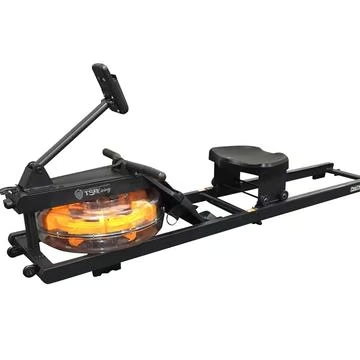
For the most authentic rowing experience of the group, the Protrain Water Rowing Machine is the standout all-rounder. Pulling the strap spins twin paddles inside a clear, reinforced 14L tank, so each stroke pushes real water and produces a soft splashing swoosh that many rowers find meditative. Because it is water-braked, resistance climbs the harder and faster the stroke, and topping up the tank adds a further step of difficulty, closely mirroring sculling on open water.
The machine is a substantial piece of kit at 201cm long and 50.4cm wide, so it wants around two metres of clear floor, though it stands upright on the tank end for storage. The frame is rated to hold users up to 150kg with a stated 120kg working weight capacity, and testers noted the seat sits 26cm off the ground on an 83.4cm guide rail. A big backlit LCD tracks time, stroke count, calories and pulse, while a padded, textured handle and large footrests with adjustable straps keep longer rows comfortable. The trade-off is upkeep and heft: the water needs occasional purification tablets, the tank has to be filled and drained, and at 27kg boxed it is the heaviest to shift. It suits a dedicated home gym rather than a shared apartment.
Pros
- Realistic, self-adjusting water resistance with a calming stroke sound
- Strong frame rated to 150kg and a comfortable padded handle
- Large LCD monitor and upright storage on the tank end
Cons
- Heaviest to move and needs a roughly two-metre footprint in use
- Water requires refilling and occasional purification tablets
Key specs: Protrain Water Rower, SKU PR7985, water resistance with 6 manual levels, 14L tank, 83.4cm rail, 120kg capacity, 201 x 50.4 x 89cm.
2. Protrain Elastic Resistance Rower – Best for App and Tech Tracking
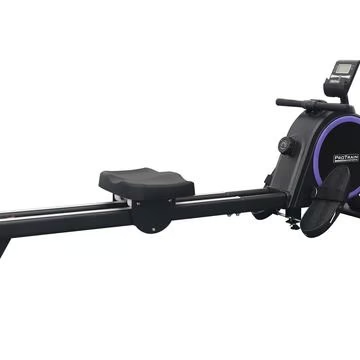
Despite its name, the Protrain Elastic Resistance Rower actually runs on a magnetic brake system, and that makes it the smartest pick for data-driven training. It pairs with a Bluetooth fitness app so stroke rate, time, distance and calories can be logged on a phone, a natural companion to fitness trackers for anyone chasing measurable progress. Sixteen resistance levels give the widest adjustment range here, dialled in with a simple twist rather than by rowing harder.
Magnetic braking is near-silent because nothing physically touches the flywheel, so this is the rower least likely to annoy flatmates or neighbours, and it needs almost no maintenance. The 3kg flywheel, dual aluminium glide rails and a wide padded handle deliver a smooth, consistent pull, while the moulded seat and adjustable large footrests keep form honest through longer sets. An LCD console cycles through run, scan, count, time, total, calories and mode. At 167 x 44 x 67cm assembled it is more apartment-friendly than the water rower, and transport rollers help it tuck away. The honest limits: it arrives flat-packed and needs assembling, the 3kg flywheel is light so it carries less momentum than a heavier gym flywheel, and because magnetic resistance is fixed per level it will not ramp up mid-stroke the way air or water rowers do.
Pros
- Bluetooth app plus 16 magnetic resistance levels for detailed tracking
- Near-silent operation and very low maintenance
- Dual aluminium rails and transport rollers for easy storage
Cons
- Assembly required out of the box
- Light 3kg flywheel and fixed per-level resistance feel less dynamic than air or water
Key specs: Protrain Elastic Resistance Rower, SKU PR71973, magnetic brake, 16 levels, 3kg flywheel, Bluetooth app, 120kg capacity, 167 x 44 x 67cm.
3. Protrain Air Resistance Rowing Machine – Best for High-Intensity Cardio
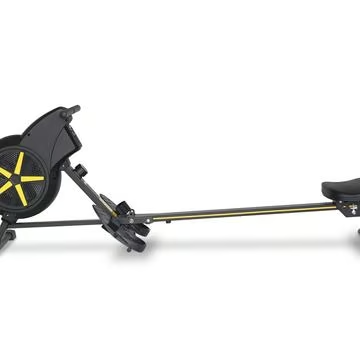
Interval fans and harder-charging rowers will get on best with the Protrain Air Resistance Rowing Machine. Its air-and-belt brake means resistance responds directly to effort: pull faster and the fan meets more air, so a sprint instantly feels heavier while a recovery stroke eases off. That dynamic response is exactly what suits HIIT sets and race-pace pieces, and it is why air rowers dominate commercial gym floors.
It is the most heavy-duty pick, with a 150kg weight capacity, a durable steel wheel-glide rail and a commercial-style moulded seat that testers found supportive on longer efforts. Eight resistance settings plus the effort-based air braking cover everything from steady cardio to flat-out intervals, and a large LCD keeps pace and calories in view. The frame folds on a non-slip stand for space-saving storage, though at 189 x 63 x 60cm it is the widest here and wants a bit more room either side. The clear trade-off is noise: air rowers produce a fan-like whoosh that grows louder the harder the stroke, typically the loudest resistance type, so it is better suited to a garage or spare room than a quiet apartment or pre-dawn session. Pair it with a couple of massage guns for recovery after tough intervals.
Pros
- Effort-based air resistance ideal for HIIT and interval training
- Sturdy steel rail with a high 150kg weight capacity
- Foldable design with a supportive commercial-style seat
Cons
- Loudest of the group, so less apartment-friendly
- Widest footprint at 63cm across
Key specs: Protrain Air Resistance Rowing Machine, SKU PR66615 (ET-7411R), air and belt resistance, 8 levels, 130cm row length, 150kg capacity, 189 x 63 x 60cm.
4. Protrain Elastic Rope Rowing Machine – Best Budget Foldable
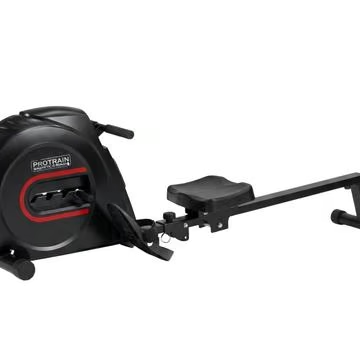
Shoppers who want to start rowing without committing much floor space or money should look at the Protrain Elastic Rope Rowing Machine in black. It uses a simple elastic-rope system with four levels of manual resistance, targeting the back, legs and core in a straightforward full-body workout. The draw here is portability: it is the narrowest rower in the guide at just 38cm wide, folds down for storage and rolls away on built-in wheels.
Build quality punches above the entry price, with a durable steel glide rail, a commercial comfort moulded seat and anti-slip footrests with adjustable straps for secure, smooth glides. Despite the compact frame it still carries a generous 150kg weight capacity, and a large LCD tracks the basics so beginners can see progress. It is a sensible companion to some adjustable dumbbells for a complete small-space setup. The compromises are inherent to the resistance type: with only four levels and elastic-rope tension, the pull feels less smooth and consistent than magnetic or water braking, and the shorter 90cm rail limits stroke length, so taller users may feel cramped at full reach. For light, regular home training in a tight space, though, it is hard to beat on value.
Pros
- Narrowest, most affordable pick that folds and rolls away
- Steel rail and 150kg capacity despite the compact frame
- Simple setup that suits beginners and light home use
Cons
- Only four levels and elastic-rope tension feels less consistent
- Short 90cm rail can cramp taller rowers at full stroke
Key specs: Protrain Elastic Rope Rowing Machine (Black), SKU PR8066, elastic-rope resistance, 4 levels, 90cm row length, 150kg capacity, 174 x 38 x 54cm.
5. Everfit Hydraulic Rowing Machine – Best for Small Spaces
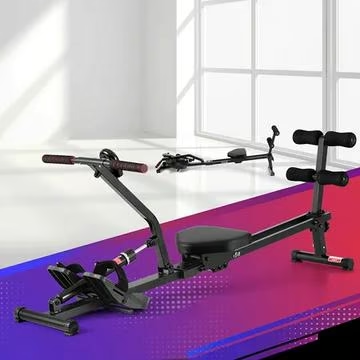
When floor space is the real constraint, the Everfit Hydraulic Rowing Machine is the easiest to live with. It uses a hydraulic-piston system with 12 resistance levels, and its headline trick is storage: the frame folds from 145.4cm long down to a 23.4cm-thick profile that slides under a bed or stands against a wall. That makes it a natural fit for apartments, spare bedrooms and shared flats where a full-length rower simply will not go.
For an entry-level machine the build is reassuring, with a double wheel-glide rail on a steel frame, a commercial-comfort seat and an LCD monitor for time, count and calories, and it ships with a one-year warranty. Twelve hydraulic settings give a surprisingly wide range for beginners and casual users, and operation stays quiet, another point in its favour for apartment living. The honest limits are typical of hydraulic rowers: the piston can warm up and fade on very long sessions, resistance is applied through the arm rather than a single central pull so the stroke does not sync arms and legs as naturally as a water or air rower, and at 110kg it has the lowest weight capacity here along with a shorter 84.5cm stroke. For short, regular workouts in a small home, it delivers the most convenience for the money.
Pros
- Folds to just 23.4cm thick for the smallest storage footprint
- 12 hydraulic levels and quiet operation suit apartments
- Steel double-rail frame with a one-year warranty
Cons
- Hydraulic piston can fade on long sessions and arms row separately
- Lowest 110kg weight capacity and a shorter 84.5cm stroke
Key specs: Everfit Hydraulic Rowing Machine, model ROWING-C-OIL-12L-B-BK, hydraulic resistance, 12 levels, 84.5cm row length, 110kg capacity, folds to 144.6 x 55 x 23.4cm.
How to choose a rowing machine in NZ
Resistance type. Water and air rowers self-adjust to effort and feel closest to real rowing, so they suit purists and interval training. Magnetic rowers are near-silent and low-maintenance, ideal for apartments, while hydraulic rowers are the most compact and affordable entry point but fade on very long sessions.
Noise. As a rough guide, magnetic rowers run quietest, water rowers add a rhythmic swoosh, and air rowers are loudest under load. If early-morning rows or shared walls are a factor, favour a magnetic or hydraulic model.
Space and storage. Full-length rowers need roughly two metres of clear floor. Check the folded dimensions if storage matters: the hydraulic pick folds to 23.4cm thick, the water rower stores upright, and the elastic-rope model is the narrowest at 38cm.
Weight capacity and stroke length. Heavier or taller users should prioritise a higher weight rating (the air and elastic-rope picks reach 150kg) and a longer rail so the stroke is not cut short. Shorter 84.5cm to 90cm rails can feel cramped for tall rowers.
Monitor and tracking. Every model here has an LCD for the basics; only the magnetic rower adds Bluetooth app syncing for detailed logging. Also weigh up assembly, since most arrive flat-packed and need putting together.
Rowing is full-body and demanding, which makes it a poor recovery-day option; the best vibration plate fills that gap without loading the joints again. Not every session needs to be hard, and walking treadmills cover the easy mileage that keeps a training week sustainable.
Verdict
For the best overall balance of realistic feel, build and comfort, the Protrain Water Rowing Machine leads the field. Data-focused rowers should choose the magnetic Protrain Elastic Resistance Rower for its app and 16 levels, interval trainers will prefer the effort-based Protrain Air Resistance Rowing Machine, and anyone tight on space or budget is well served by the foldable Protrain Elastic Rope model or the ultra-compact Everfit Hydraulic Rowing Machine. Match the resistance type to your space, noise tolerance and workout style and any of these five will earn its place at home.
FAQs
Which type of rowing machine is best?
It depends on priorities. Water and air rowers self-adjust to effort and feel most like real rowing. Magnetic rowers run near-silent with little maintenance, ideal for apartments. Hydraulic rowers are the most compact and affordable but can fade on long sessions. Match the type to your space and goals.
Are rowing machines good for weight loss?
Yes. Rowing is a low-impact, full-body workout that engages around 86% of your muscles and burns significant calories, roughly 250 to 300 in 30 minutes at moderate effort for many adults. Combined with a calorie deficit and regular sessions, it is an effective and joint-friendly way to lose weight.
What muscles does a rowing machine work?
Rowing is a full-body exercise. About 60% of the power comes from the legs (quads, hamstrings, glutes) and 40% from the upper body, working the back, lats, shoulders, biceps and forearms, with the core stabilising every stroke. Few home machines train as many muscle groups at once.
Is 20 minutes on a rowing machine enough?
For most people, yes, especially beginners. A 5-minute warm-up plus 15 to 20 minutes of steady rowing at a pace where you can still hold a short conversation delivers a solid cardio workout. Aim for three to five sessions a week and add intervals as fitness improves.
Are magnetic or water rowers better for apartments?
Magnetic rowers are usually the better apartment choice because the brake is near-silent and transmits little vibration. Water rowers sound calming but send more vibration through the floor, which neighbours below can feel. If quiet matters most, choose magnetic or a compact hydraulic rower over an air model.
How much space do you need for a rowing machine?
A full-length rower needs roughly two metres of clear floor plus room to sit and reach behind. If space is tight, check folded dimensions: foldable hydraulic models collapse to around 23cm thick to slide under a bed, and water rowers can stand upright on the tank end for storage.
