
The best pulse oximeter in NZ overall is the Medisana PM 100, because it comes from an established health brand and states a measurement accuracy of plus or minus 0.5 percent, tighter than the plus or minus 2 percent quoted by most fingertip units. Every other pick below is a budget device chosen for a specific use rather than for clinical precision.
One thing to be upfront about before anything else. Most consumer fingertip oximeters are sold as sports and wellness devices, not as medical equipment, and several of the products in this guide say so explicitly in their own manufacturer listings. They are useful for spot checks during exercise or at altitude, and they are not a substitute for a medical assessment.
For other home health monitoring, the blood pressure monitors and bathroom scales guides cover those, and many smart watches now include an SpO2 sensor.
| Pick | Best for | Display | Key detail |
|---|---|---|---|
| Medisana PM 100 | Overall | OLED | +/-0.5%, 70-100% SpO2 |
| Amemo Fingertip | Detailed readings | Dual OLED | Waveform + perfusion index |
| mibest Dual Color OLED | Display | Dual OLED | +/-2%, 6 display modes |
| Vibeat Bluetooth | App tracking | OLED | Bluetooth, PDF/CSV export |
| CHOICEMMED | Sport and altitude | LED | 40 hr battery, wide finger fit |
| HealthSmart Red LED | Easy-read display | Red LED | 70-99% SpO2, big numbers |
| HealthSmart Green LED | Budget brand | Green LED | 70-100% SpO2, 30-255 bpm |
| LA BAIESO | Cheapest | OLED | Specs not fully published |
An important note on medical use
Several of the devices in this guide carry an explicit manufacturer statement that they are for sports and aviation use only and are not intended for medical use. The mibest and CHOICEMMED listings both say this in their own product descriptions. That is not a criticism of those products, it is simply what they are sold as, and it is worth knowing before buying one for any reason other than exercise.
A consumer fingertip oximeter is not a diagnostic device and cannot tell anyone whether they are unwell. Readings can be affected by cold hands, poor circulation, nail polish, movement and bright ambient light, which is why the better units here report a perfusion index to indicate whether the signal was strong enough to trust. Anyone with a health concern, or acting on a reading that worries them, should speak to a doctor or call Healthline rather than rely on a device like this.
The Best Pulse Oximeters in NZ
1. Medisana PM 100 Pulse Oximeter – Best Overall
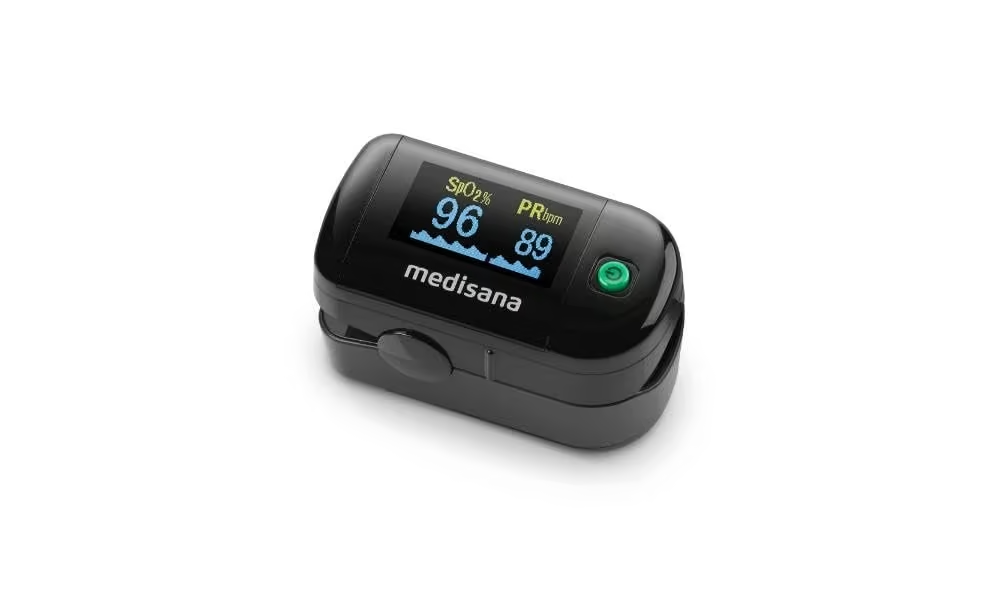
The PM 100 comes from Medisana, a German health and wellness brand, and it is the most thoroughly specified device in this guide. It measures oxygen saturation from 70 to 100 percent and pulse from 30 to 235 bpm, with a stated measurement accuracy of plus or minus 0.5 percent, which is tighter than the plus or minus 2 percent most fingertip units quote.
Readings appear on an OLED display that offers six different layouts and ten brightness levels, and results can be shown as either a bar or a waveform. Operation is a single button, and the unit switches itself off if no measurement is detected within eight seconds, which preserves the two AA batteries supplied in the box. A carrying strap is included.
It is the most expensive pick here by a wide margin and the only one that does not ship free, though the delivery charge is modest. Two AA cells make it slightly bulkier than the AAA-powered units. It suits someone who wants a recognised health brand and the tightest stated accuracy rather than the cheapest way to check a reading.
Pros
- Stated measurement accuracy of plus or minus 0.5 percent, tighter than most fingertip units
- Wide measuring range, 70 to 100 percent SpO2 and 30 to 235 bpm
- OLED display with six layouts, ten brightness levels and bar or waveform views
- From an established German health brand, with batteries and carry strap included
Cons
- The most expensive device in this guide
- The only pick here that does not ship free, though the charge is small
- Uses two AA batteries, so it is bulkier than the AAA-powered units
Key specs: SpO2 70 to 100 percent, pulse 30 to 235 bpm | Stated accuracy plus or minus 0.5 percent | OLED, 6 display layouts, 10 brightness levels | One-touch operation, 8 second auto off | 2 AA batteries included
2. Amemo Fingertip Pulse Oximeter – Best for Detailed Readings
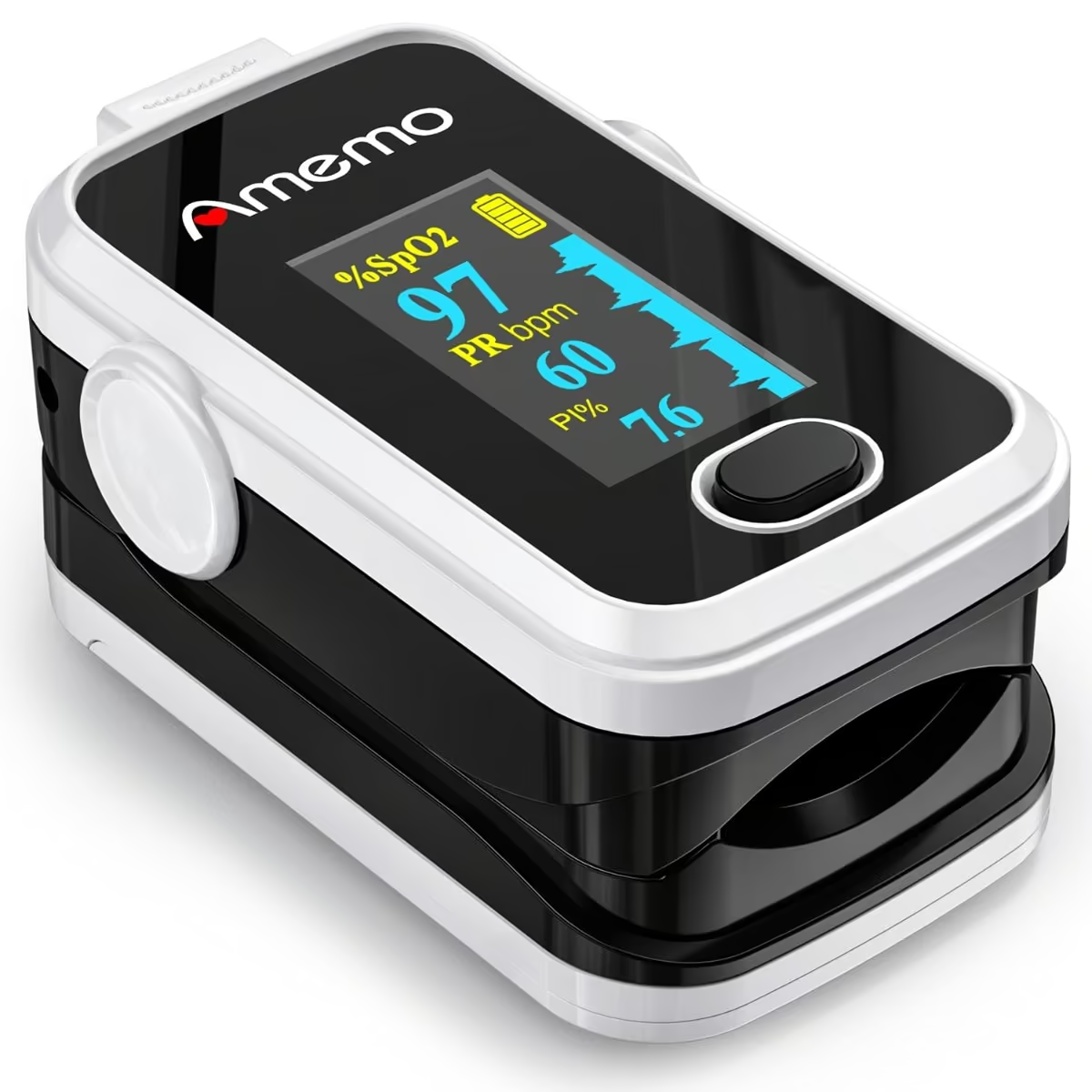
This Amemo unit reports more than the usual two numbers. Alongside oxygen saturation and pulse rate it displays a plethysmograph waveform and a perfusion index, the latter indicating how strong the blood flow at the fingertip is, which is a useful signal for whether a reading can be trusted at all.
The listing states the device deviates less than one percent under laboratory conditions, and that an upgraded LED and sensor allow readings at low perfusion, which is where cheaper units tend to struggle. Construction is an ABS shell with an OLED screen, acrylic panel, anti-slip silicone inside and a silicone finger mould. A reading takes about ten seconds.
The dual-colour OLED is bright enough to read in direct sunlight, which is why the listing points at climbers, skiers and cyclists. It is the second most expensive pick here and the extra data will be wasted on anyone who only wants a single number. It suits someone who wants to see whether the reading is reliable rather than just what it says.
Pros
- Shows a plethysmograph waveform and perfusion index alongside SpO2 and pulse
- Listing claims under one percent deviation in laboratory conditions
- Designed to read at low perfusion, where cheaper units often fail
- Bright dual-colour OLED readable in strong sunlight
Cons
- Second most expensive pick here
- The extra readouts are unnecessary for simple spot checks
- Amazon lists the measuring range as inferred rather than manufacturer stated
Key specs: SpO2 and pulse rate, plus plethysmograph waveform and perfusion index | Dual-colour OLED | About 10 second reading | ABS shell with silicone finger mould | 2 AAA batteries included
3. mibest Dual Color OLED Pulse Oximeter – Best Display
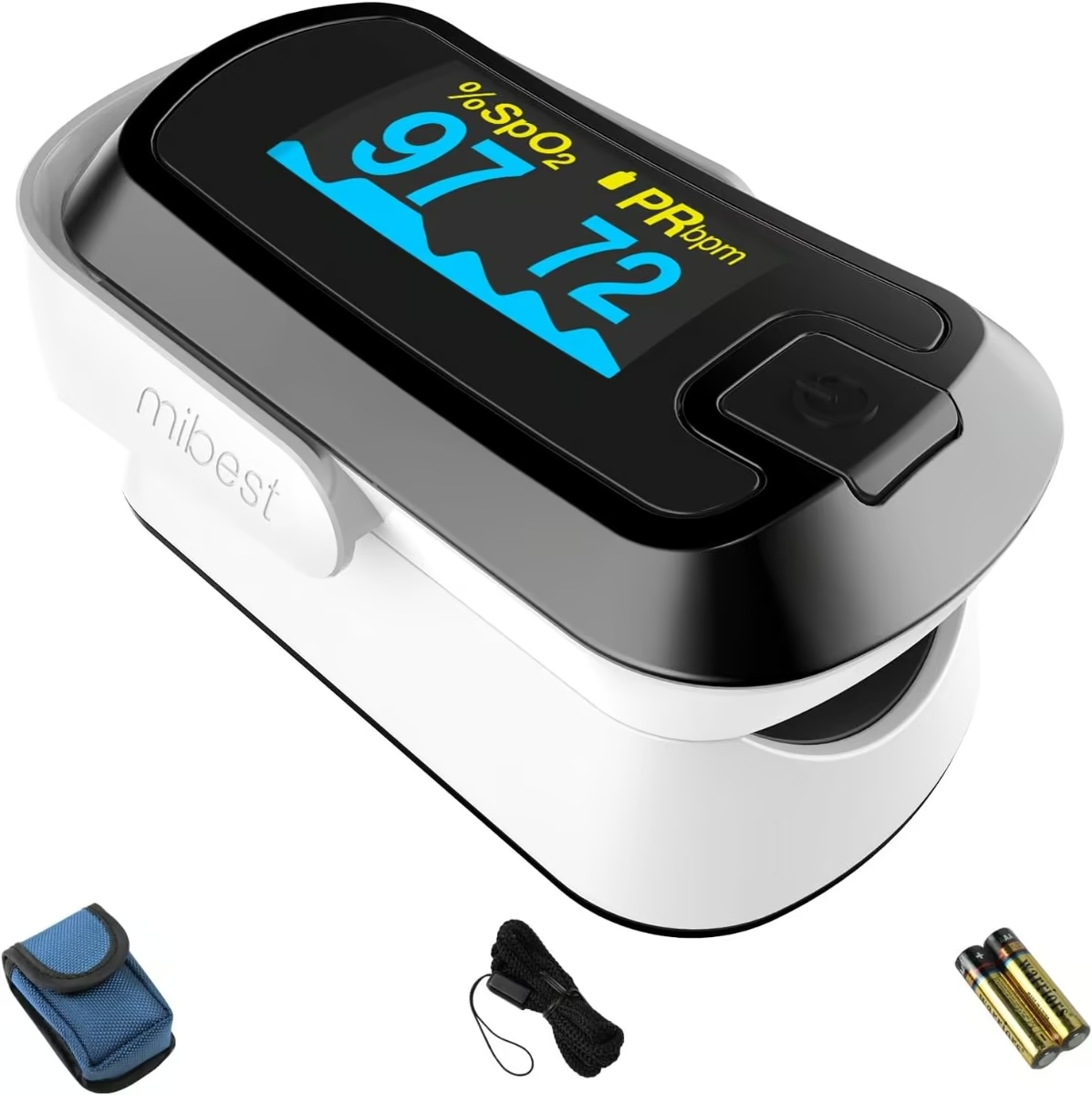
The mibest is built around its screen. The dual-colour OLED shows SpO2 waveforms in four orientations across six display modes with ten levels of adjustable brightness, so the reading can be turned to face whoever is looking at it. A pulse bar graph shows signal strength alongside the numbers, and a battery-low indicator is built in.
Operation is a single button and the stated measurement accuracy is plus or minus 2 percent across a 70 to 100 percent SpO2 range, with pulse from 30 to 250 bpm. Everything needed is in the box, including two AAA alkaline batteries, a detachable adjustable neck lanyard and an instruction manual, so it works straight away.
One thing to be clear about: mibest states plainly that this device is for sports and aviation use only and is not intended for medical use. The listing also describes it as suitable for children as well as adults. It suits climbers, cyclists and trainers wanting to spot check readings, not anyone monitoring a health condition.
Pros
- Dual-colour OLED with six display modes, four waveform orientations and ten brightness levels
- Pulse bar graph shows signal strength alongside the numbers
- Stated accuracy of plus or minus 2 percent across 70 to 100 percent SpO2
- Batteries, lanyard and manual included, ready out of the box
Cons
- mibest states it is for sports and aviation use only, not for medical use
- Plus or minus 2 percent accuracy is looser than the Medisana
- Ships to New Zealand from Amazon US
Key specs: SpO2 70 to 100 percent, pulse 30 to 250 bpm | Stated accuracy plus or minus 2 percent | Dual-colour OLED, 6 modes, 10 brightness levels | Sports and aviation use only per the manufacturer | 2 AAA batteries included
4. Vibeat Bluetooth Pulse Oximeter – Best with an App
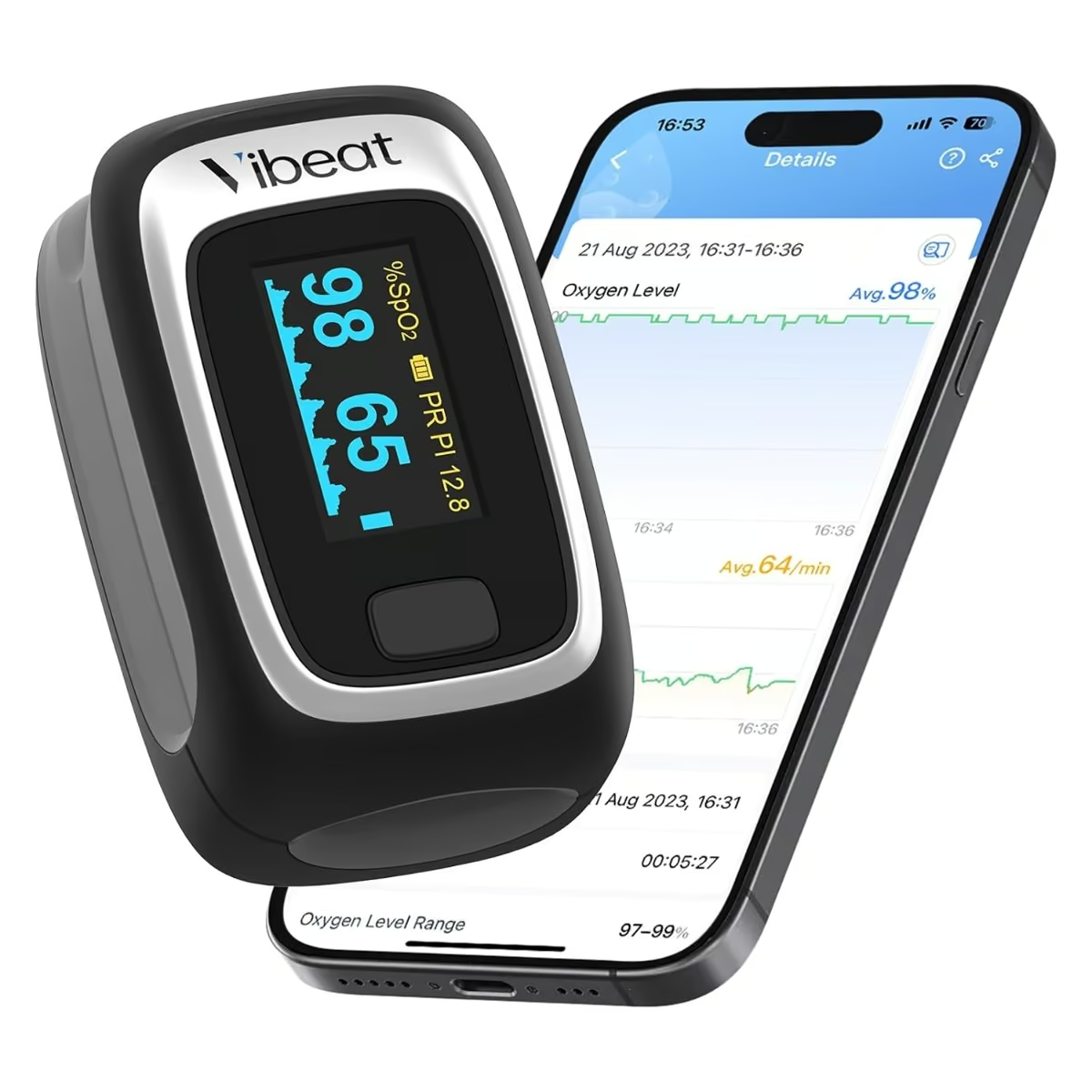
The Vibeat is the only pick here that connects to a phone. It pairs over Bluetooth with the Vihealth app on both iOS and Android, which receives and stores readings automatically while the app is running and turns them into graphical reports and trends that can be exported as PDF or CSV. The device itself also holds the twelve most recent readings.
Alongside SpO2 and pulse rate it shows perfusion index and a pulse waveform on an OLED screen, and a simple finger clip starts the measurement. A notification function lets thresholds be set for oxygen and pulse, and the unit beeps and flashes the reading if a value falls outside them, which is the practical reason to choose this one.
The app dependency cuts both ways, since the trend features only work while the app runs and rely on Vibeat continuing to support it. The stated accuracy is plus or minus 2, in line with the other budget units here rather than the Medisana. It suits someone who wants to track readings over time rather than take one-off spot checks.
Pros
- Bluetooth sync to the Vihealth app on iOS and Android, with PDF and CSV export
- Adjustable notification thresholds that beep and flash if a reading falls outside them
- Stores the latest 12 readings on the device itself
- Shows perfusion index and pulse waveform as well as SpO2 and pulse rate
Cons
- Trend tracking depends on the app continuing to be supported
- Stated accuracy of plus or minus 2 is looser than the Medisana
- Ships to New Zealand from Amazon US
Key specs: SpO2 70 to 100 percent, pulse 30 to 250 bpm, perfusion index 0 to 20 percent | Stated accuracy plus or minus 2 | Bluetooth to Vihealth app, iOS and Android | Stores 12 readings on device | 2 AAA batteries, lanyard and pouch included
5. CHOICEMMED Fingertip Pulse Oximeter – Best for Sport and Altitude
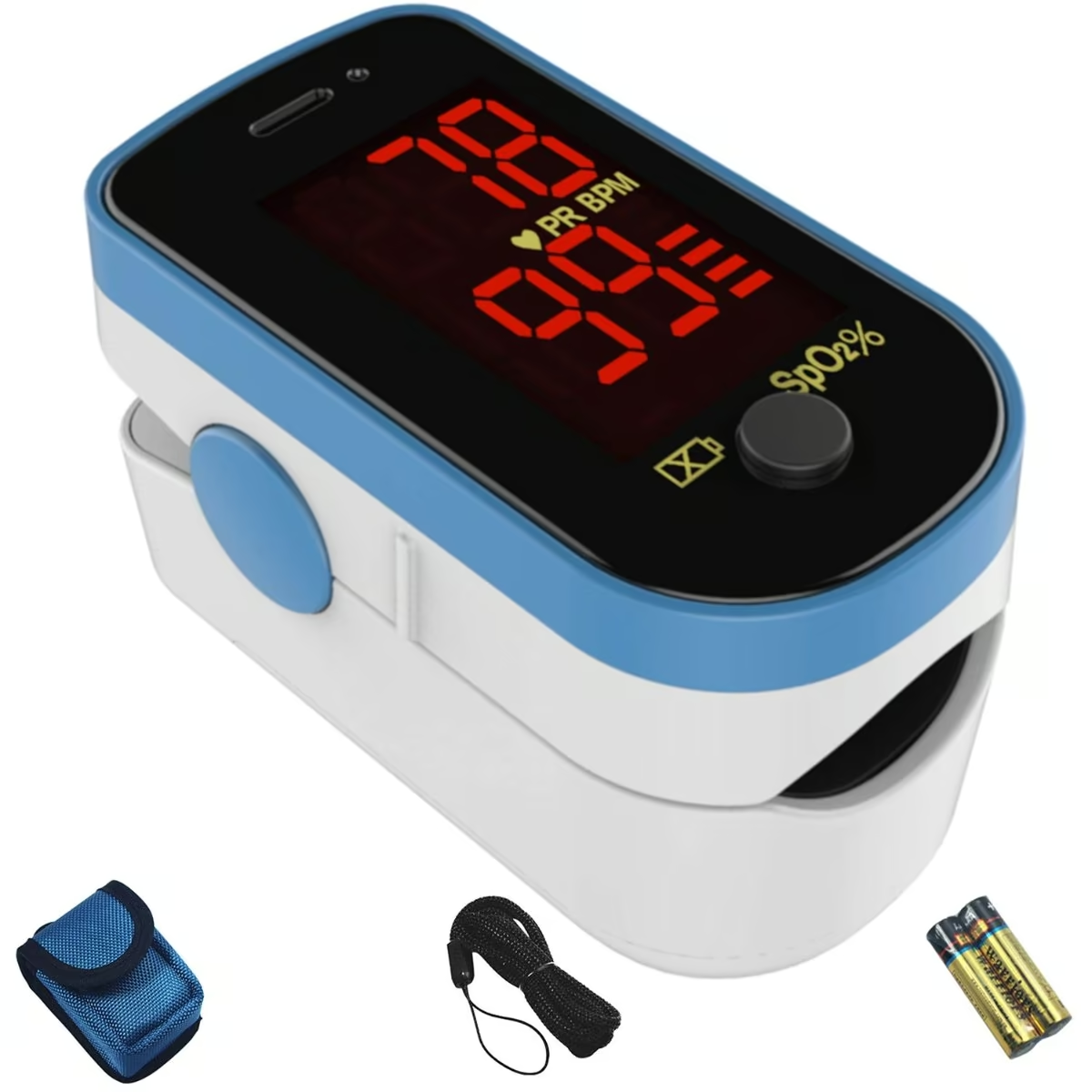
The CHOICEMMED reads SpO2 in about ten seconds on a large LED display, with a pulse bar graph showing signal strength next to the numbers. Operation is one button, and the housing accommodates a wide range of finger sizes, which matters more than it sounds when a device is shared around a household or a climbing group.
Battery life is the standout figure at a stated 40 hours, with automatic power off after eight seconds, so a set of AAA cells lasts a long time between changes. The box includes a durable protective pouch with a belt loop, a detachable neck lanyard, batteries and a manual, which is a more complete kit than most at this price.
As with the mibest, CHOICEMMED states this device is for sports and aviation use only and not intended for medical use. The LED display is less configurable than the OLED units here and harder to read in bright sun. It suits climbers, cyclists and trainers who want a rugged, long-running unit for spot checks on the move.
Pros
- Stated 40 hour battery life, the longest quoted in this guide
- Protective pouch with belt loop, lanyard and batteries all included
- Accommodates a wide range of finger sizes
- Reads in about 10 seconds with a pulse strength bar graph
Cons
- CHOICEMMED states it is for sports and aviation use only, not for medical use
- LED display is less configurable and harder to read in bright sunlight than an OLED
- Ships to New Zealand from Amazon US
Key specs: SpO2 display up to 100 percent | Stated accuracy plus or minus 2 percent | Large LED display with pulse bar graph | Stated 40 hour battery life, 8 second auto off | Pouch, lanyard and 2 AAA batteries included
6. HealthSmart Pulse Oximeter, Red LED – Best Easy-Read Display
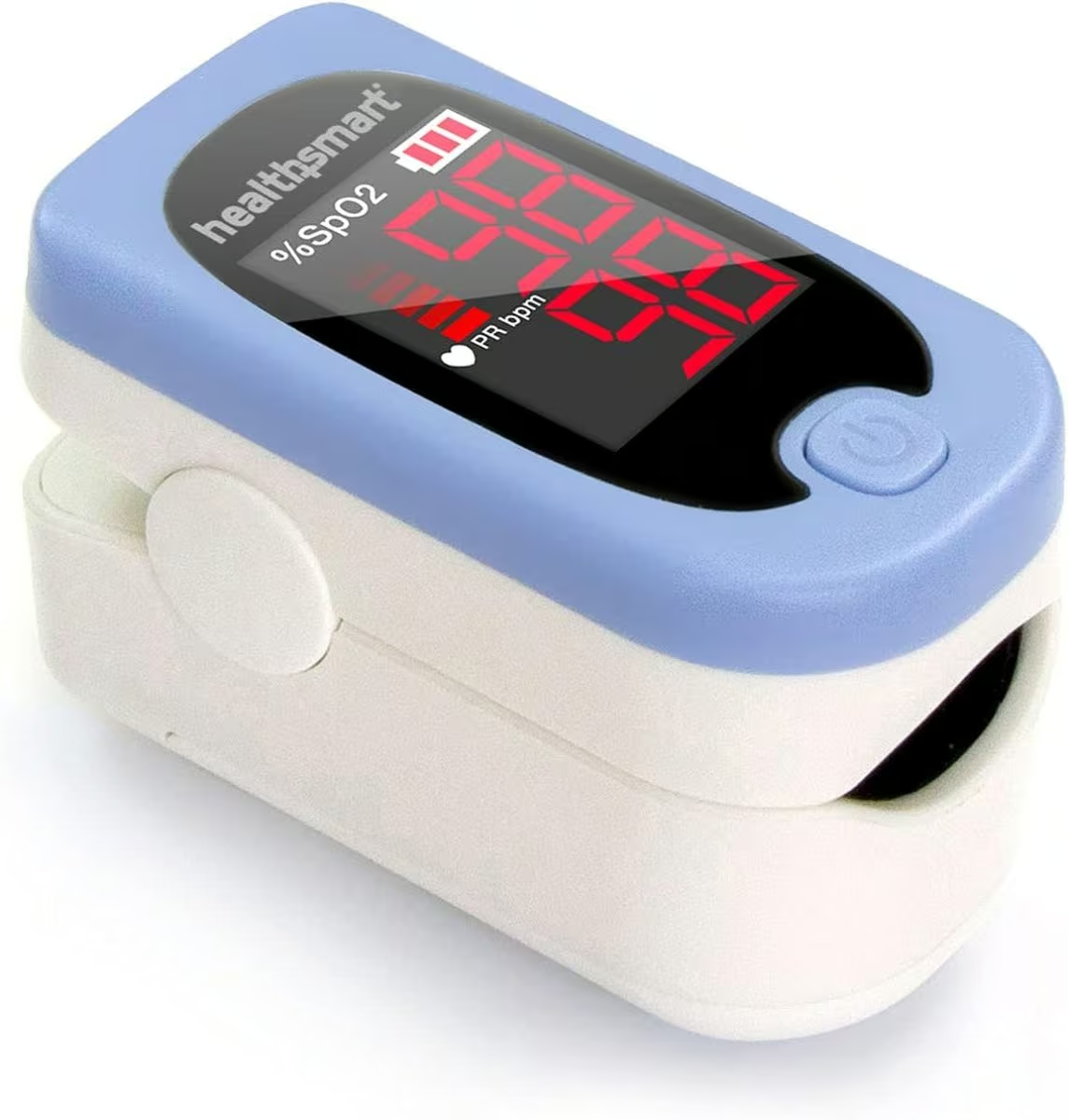
The HealthSmart takes the opposite approach to the OLED units here. Instead of configurable layouts it uses a single large red LED display showing big, plain numbers, which is easier to read at a glance for anyone who finds small multi-panel screens fiddly. Readings appear within seconds of clipping it on.
Operation is one button with three modes, power off, sleep and measure, and it drops into sleep automatically within eight seconds of the finger being removed. HealthSmart states a measuring range of 70 to 99 percent SpO2 with a tolerance of plus or minus 2 digits. The unit is small and light enough to keep in a bag or glovebox.
The trade-off is that the display cannot be rotated or dimmed, and an LED is harder to read in direct sun than the OLED screens here. There is no waveform, perfusion index or app. It suits an older user, or anyone who wants two clear numbers with no configuration at all, and it includes a lanyard, batteries and a bilingual manual.
Pros
- Large red LED with big plain numbers, easy to read at a glance
- One button with three simple modes and automatic sleep after 8 seconds
- Small and light enough to keep in a bag or glovebox
- Lanyard, 2 AAA batteries and a bilingual manual included
Cons
- Display cannot be rotated or dimmed, unlike the OLED units here
- No waveform, perfusion index or app connectivity
- Ships to New Zealand from Amazon US
Key specs: SpO2 70 to 99 percent, plus or minus 2 digits | Large red LED display | One button, three modes, 8 second auto sleep | Lanyard and 2 AAA batteries included
7. HealthSmart Pulse Oximeter, Green LED – Best Budget Brand Pick
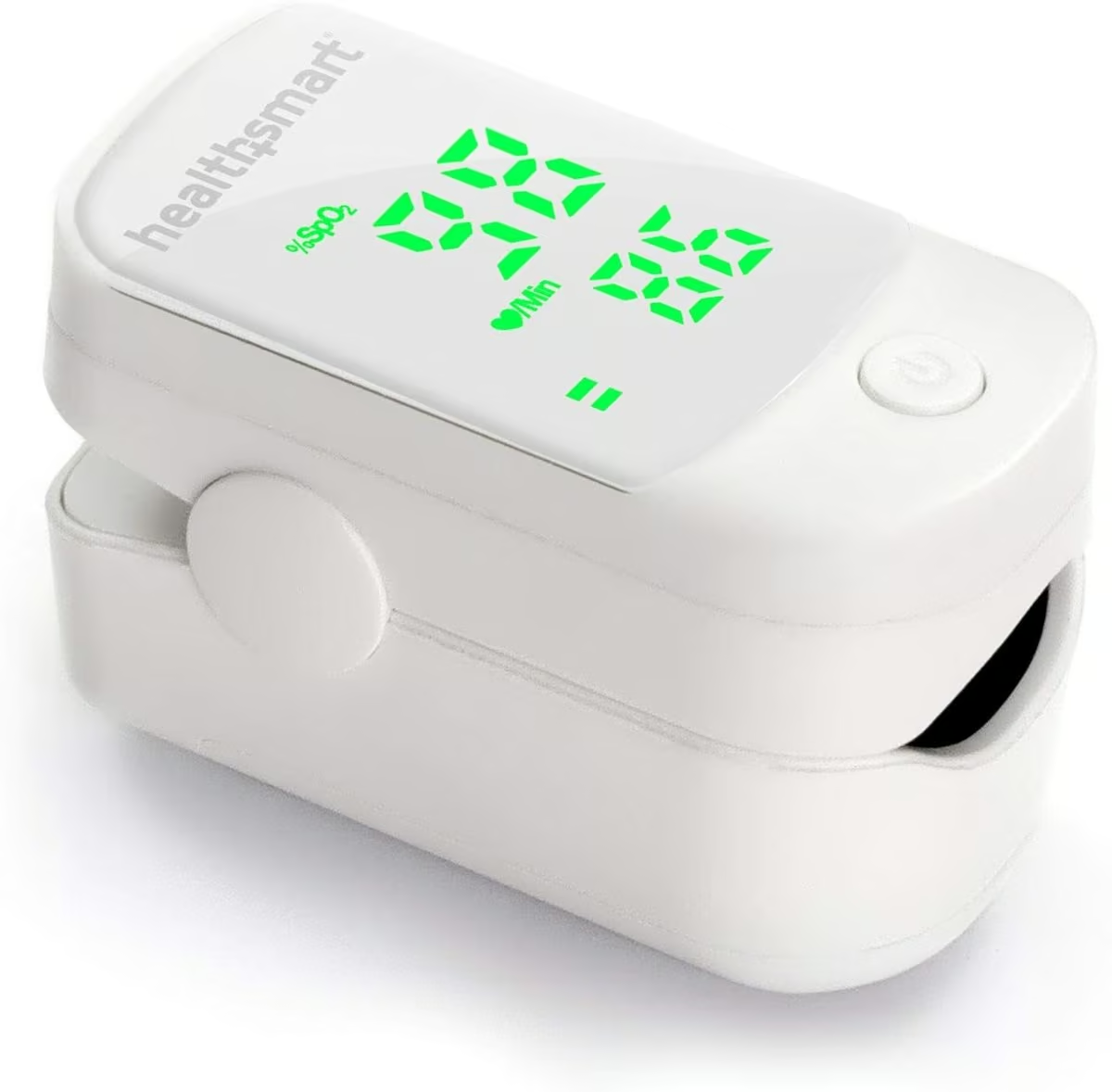
This is the same HealthSmart device as the red model above with a green LED display, and it sits at a noticeably lower price, which makes it the best value way to get a recognised brand rather than an unbranded unit. The behaviour is identical: big plain numbers, one button, three modes and automatic sleep after eight seconds.
HealthSmart lists this version with a measuring range of 70 to 100 percent SpO2 and a pulse range of 30 to 255 bpm, so the working range is slightly wider than the red model’s stated figures. It ships with a lanyard, two AAA batteries and instructions in English and Spanish, so nothing else is needed.
Green LEDs are generally a little easier on the eyes than red in a dim room, though like the red version the display cannot be rotated or dimmed and washes out in direct sunlight. There is no waveform or app. It suits anyone who wants a straightforward branded unit at the lowest sensible price.
Pros
- Same device as the red HealthSmart at a lower price
- Slightly wider stated range, 70 to 100 percent SpO2 and 30 to 255 bpm
- Green LED is easier on the eyes than red in a dim room
- Lanyard, 2 AAA batteries and manual included
Cons
- Display cannot be rotated or dimmed and washes out in direct sunlight
- No waveform, perfusion index or app connectivity
- Ships to New Zealand from Amazon US
Key specs: SpO2 70 to 100 percent, pulse 30 to 255 bpm | Large green LED display | One button, three modes, 8 second auto sleep | Lanyard and 2 AAA batteries included
8. LA BAIESO Fingertip Pulse Oximeter – Cheapest Pick
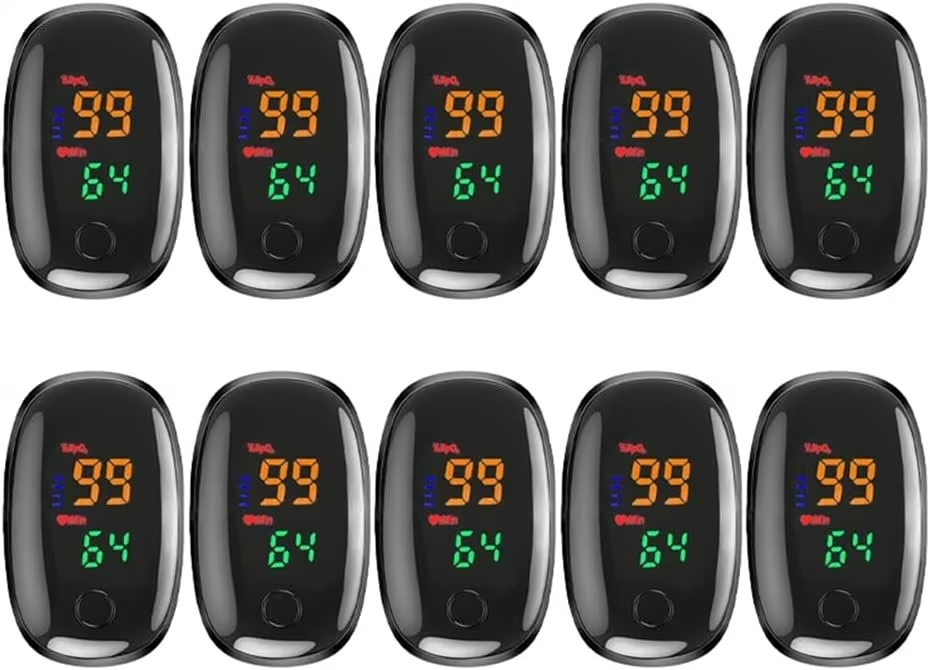
The LA BAIESO is the cheapest device in this guide and keeps to the essentials. A finger goes into the sensor, and SpO2 and pulse appear on an OLED screen within seconds. The clip adapts to different finger sizes and the listing puts it at users aged twelve and up, so it is not intended for young children.
It is described as a sports-grade non-invasive oximeter with an accelerometer that senses body motion, aimed at climbers, skiers and cyclists wanting real-time readings during activity. Power consumption is low with automatic power off, and a detachable lanyard is included. Battery life is listed at 10 hours, the shortest here.
The listing is the thinnest of the group. LA BAIESO does not publish a measurement accuracy figure or a measuring range, and the battery type is listed only as unknown, so there is less to go on than with any other pick. It suits someone who wants the lowest cost entry and accepts that the specifications are not fully documented.
Pros
- The lowest cost device in this guide
- OLED display rather than the LED used by other budget picks
- Adapts to a range of finger sizes, with a detachable lanyard included
- Automatic power off and low power consumption
Cons
- No published measurement accuracy or measuring range, unlike every other pick here
- Listed battery life of 10 hours is the shortest in this guide, and the battery type is not specified
- Sold by a third-party seller, and the listing states it is for users aged 12 and up
Key specs: SpO2 and pulse on an OLED display | Accuracy and measuring range not published | Stated 10 hour battery life | Adapts to a range of finger sizes | Listed for ages 12 and up | Detachable lanyard included
How to choose a pulse oximeter in NZ
Start with what the manufacturer actually claims. Stated measurement accuracy across this guide ranges from plus or minus 0.5 percent on the Medisana to plus or minus 2 percent on most budget units, and one pick publishes no accuracy figure at all. A device that does not state its accuracy or measuring range is telling you something by omission.
Check the display type against where it will be used. OLED screens can usually be rotated, dimmed and switched between layouts, and they stay readable in direct sunlight, which matters outdoors. LED displays show larger, plainer numbers that are easier to read at a glance indoors but wash out in bright light.
Look for a perfusion index if the readings matter. Perfusion index indicates how strong the blood flow at the fingertip is, which is the best available signal for whether a reading should be trusted. Cold hands and poor circulation are the most common causes of an unreliable result.
Decide whether tracking over time is useful. Only the Vibeat here connects to a phone, syncing readings to an app that builds trends and exports them. Everything else takes a reading, shows it, and forgets it, though a couple store a small number of recent results on the device.
Finally, factor in the practical details. Battery life across this guide runs from a stated 10 hours to 40 hours, most units take two AAA cells, and nearly all include a lanyard. A wide finger fitting matters if the device is shared across a household.
The verdict
The Medisana PM 100 is the pick for most buyers, because it is the only device here from an established health brand and the only one quoting accuracy tighter than plus or minus 2 percent. Anyone wanting to see whether a reading is trustworthy should take the Amemo instead, since its perfusion index and waveform show signal quality rather than just a number.
For tracking readings over time the Vibeat is the only option here with an app, and for sport and altitude the CHOICEMMED offers the longest quoted battery life at 40 hours. On a budget, the HealthSmart Green LED is the cheapest way to buy a recognised brand rather than an unbranded unit.
Frequently Asked Questions
Are consumer pulse oximeters medical devices?
Generally no. Most fingertip oximeters sold online are classed as sports or wellness devices, and several products in this guide state in their own manufacturer listings that they are for sports and aviation use only and not intended for medical use. They are designed for spot checks during exercise or at altitude. Anyone who needs a reading for medical reasons should use equipment provided or recommended by a health professional.
What can make a pulse oximeter reading inaccurate?
Cold hands and poor circulation are the most common causes, because the device relies on detecting blood flow at the fingertip. Movement, nail polish or artificial nails, very bright ambient light and a loose fit can all affect the result too. Devices that report a perfusion index give you an indication of whether the signal was strong enough for the reading to be meaningful.
What is perfusion index and why does it matter?
Perfusion index is a measure of how strong the pulse signal is at the point of measurement. A low value suggests weak blood flow at the fingertip, which usually means the reading should be treated with caution or repeated with a warmer hand. The Amemo and Vibeat picks in this guide both display it, most of the cheaper units do not.
OLED or LED display, which is better?
OLED screens are more flexible, typically offering several layouts, adjustable brightness and the ability to rotate the reading, and they stay legible in direct sunlight. LED displays show larger, simpler numbers that many people find easier to read at a glance indoors, but they wash out outdoors and cannot usually be adjusted. Choose OLED for outdoor use and LED for straightforward indoor spot checks.
Do pulse oximeters work on children?
It depends on the device, and the listings vary. The mibest states it can be used for children as well as adults, while one budget pick in this guide is listed for users aged twelve and up. Fit matters, because a finger that is too small for the sensor will not give a reliable reading. Check the specific product listing rather than assuming, and consult a health professional about any reading taken from a child.
How long do the batteries last?
Most of these devices run on two AAA cells and switch themselves off automatically after about eight seconds without a finger detected, which greatly extends battery life. Stated figures in this guide range from 10 hours on the cheapest pick to 40 hours on the CHOICEMMED. The Medisana is the exception, using two AA batteries instead.
