
The best bagless vacuum cleaner in NZ overall is the Midea Bagless Vacuum Cleaner, a corded barrel that runs at 68 dB with a Class 12 HEPA filter and tidy onboard tools. It is quiet enough for a flat and has enough reach for a family home. Bagless vacuums save you the ongoing cost of bags, let you see the dirt you have picked up, and tip straight into the bin, which is why they dominate NZ shelves. The catch is that cheaper bagless models can lose suction as the filter clogs and can puff dust when you empty them, so filtration quality and how easy the bin is to empty matter as much as raw wattage.
This guide covers ten bagless vacuums available to NZ shoppers, from a premium Miele cylinder to budget and pet-hair specialists, an upright with auto cord rewind, and three long-standing local favourites, each with a clear best-for use. If you would rather automate floors entirely, it is worth comparing these against the best robot vacuums.
| Vacuum | Best for | Type | Suction / key feature |
|---|---|---|---|
| 1. Miele Boost CX1 Powerline | Premium pick | Corded cylinder | 890W, AirClean filter |
| 2. BISSELL CleanView 1994F | Hard floors and carpets | Corded canister | 2000W, multi-cyclonic |
| 3. Vax Advance Pet | Pet hair | Corded canister | 2000W, 360AW, HEPA 12 |
| 4. Russell Hobbs CompactXS | Compact and space-saving | Corded cylinder | 700W, triple dust lock filtration |
| 5. EUREKA NEN180 | Best value | Corded cylinder | 2000W, 24 kPa, HEPA |
| 6. BISSELL PowerForce Helix Turbo Rewind | Upright with auto cord rewind | Corded upright | 1000W, Helix separation |
| 7. Akitas C6 | High-suction budget pick | Corded cylinder | 2400W, over 24 kPa, HEPA |
| 8. Midea Bagless Vacuum Cleaner | Best overall | Corded barrel | 130W suction, 68 dB, Class 12 HEPA |
| 9. Devanti 2200W Cyclonic Bagless | Allergy sufferers | Corded multi-cyclonic barrel | 19 kPa, washable HEPA 99.97% |
| 10. Cordless Anti-Mite Vacuum | Mattresses and bedding | Cordless handheld | 520 mL cup, 1.5 kg, LED display |
1. Miele Boost CX1 Powerline – Best Premium Pick
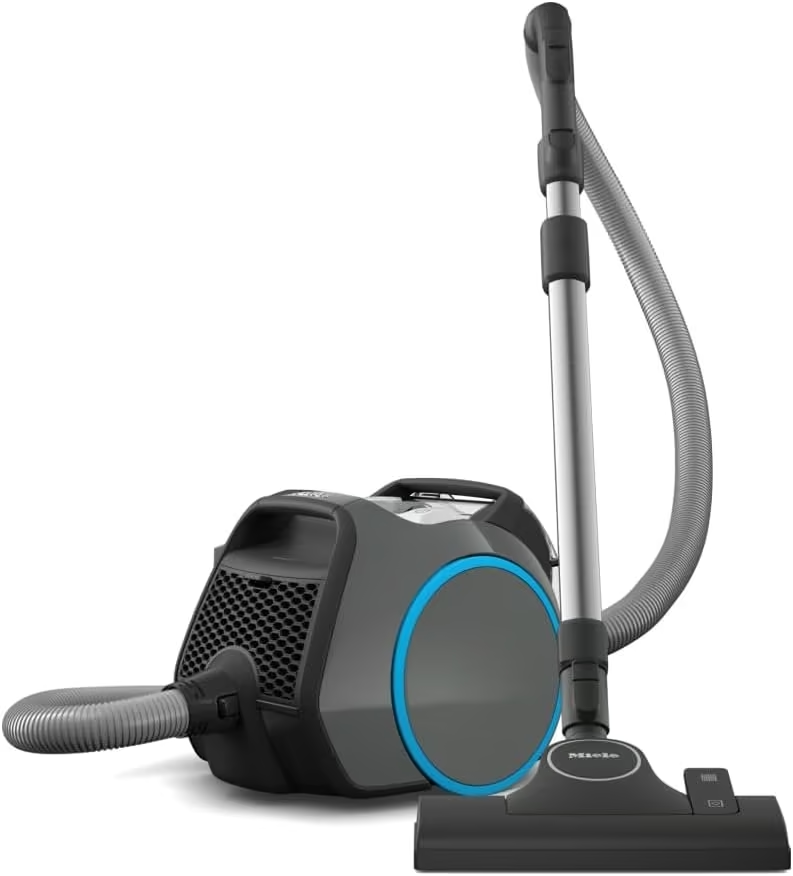
Miele’s Boost CX1 Powerline is the premium pick in this guide, a compact corded cylinder with 890W of suction and the brand’s Vortex airflow technology, built to capture both coarse soil and fine dust in one pass across hard floors and carpet.
It takes up less floor space than an open magazine, and a height-adjustable telescopic tube plus TrackDrive side wheels keep it on course and manoeuvrable around furniture. A Hygiene AirClean filter is fitted to catch the smallest particles for cleaner exhaust air.
It comes with a turbo brush, dusting brush, upholstery nozzle and crevice nozzle, all with integrated storage, and it carries a 4.4-star rating from 166 reviewers on the Amazon listing. Miele backs it with a 2-year manufacturer warranty.
At 9.5kg it is one of the heavier units in this guide, and it is corded only with no cordless option, so it suits a plug-in clean rather than a grab-and-go tidy. It is also the most expensive pick here by a wide margin.
Pros
- Compact, space-saving design with a small footprint
- Vortex airflow technology captures coarse and fine debris
- 2-year manufacturer warranty
Cons
- Most expensive pick in this guide
- 9.5kg and corded only, no cordless option
Key specs: Model Boost CX1. 890W. HEPA-grade AirClean filter. 1L capacity. 9.5kg. 2-year warranty.
2. BISSELL CleanView Bagless Canister Vacuum – Best for Hard Floors and Carpets
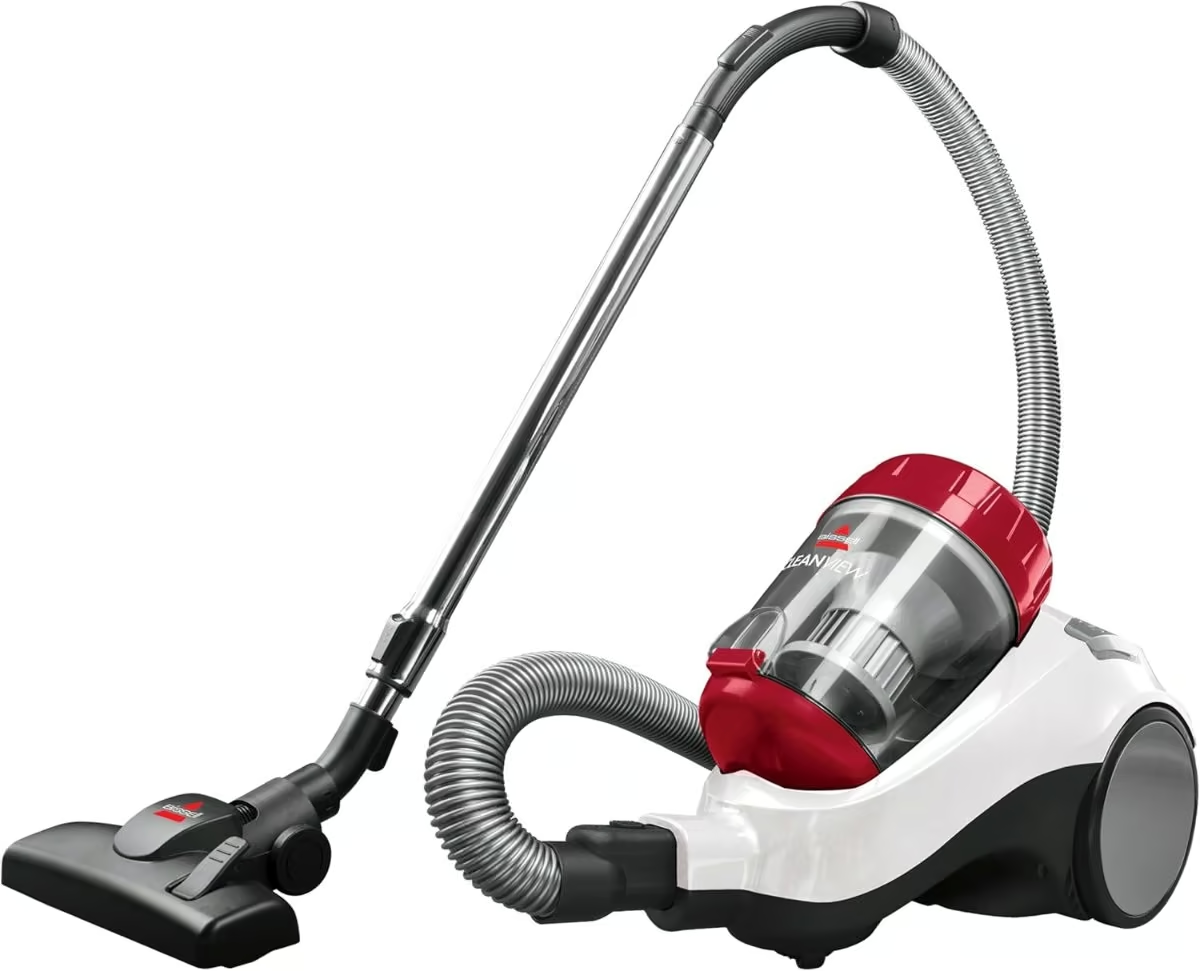
BISSELL’s CleanView 1994F is built with multi-cyclonic technology and a combination floorhead specifically designed to switch between hard floors and carpet without changing tools, earning it the pick here for mixed-flooring homes.
A 2.2 litre dirt tank cuts down on emptying trips, and a 5.5 metre automatic cord rewind means fewer socket changes and a tidy cord at the end of a clean. A telescopic wand plus dusting brush, crevice tool and upholstery tool round out the kit.
It runs at 2000W and is genuinely portable at 4.6kg, easy to carry between rooms or up and down stairs. It carries a 4.8-star rating on the Amazon listing, though from a small sample of 8 reviews so far.
The filter is a foam type rather than a sealed HEPA system, so it is a reasonable everyday performer rather than an allergy specialist, and the small review count means the rating deserves a little more time to firm up.
Pros
- Combination floorhead suits hard floors and carpet
- 2.2L tank and automatic cord rewind
- Lightweight and portable at 4.6kg
Cons
- Foam filter rather than a sealed HEPA system
- Only 8 reviews on the Amazon listing so far
Key specs: Model 1994F. 2000W. 2.2L tank. Automatic cord rewind. 4.6kg. 2-year warranty.
3. Vax Advance Pet – Best for Pet Hair
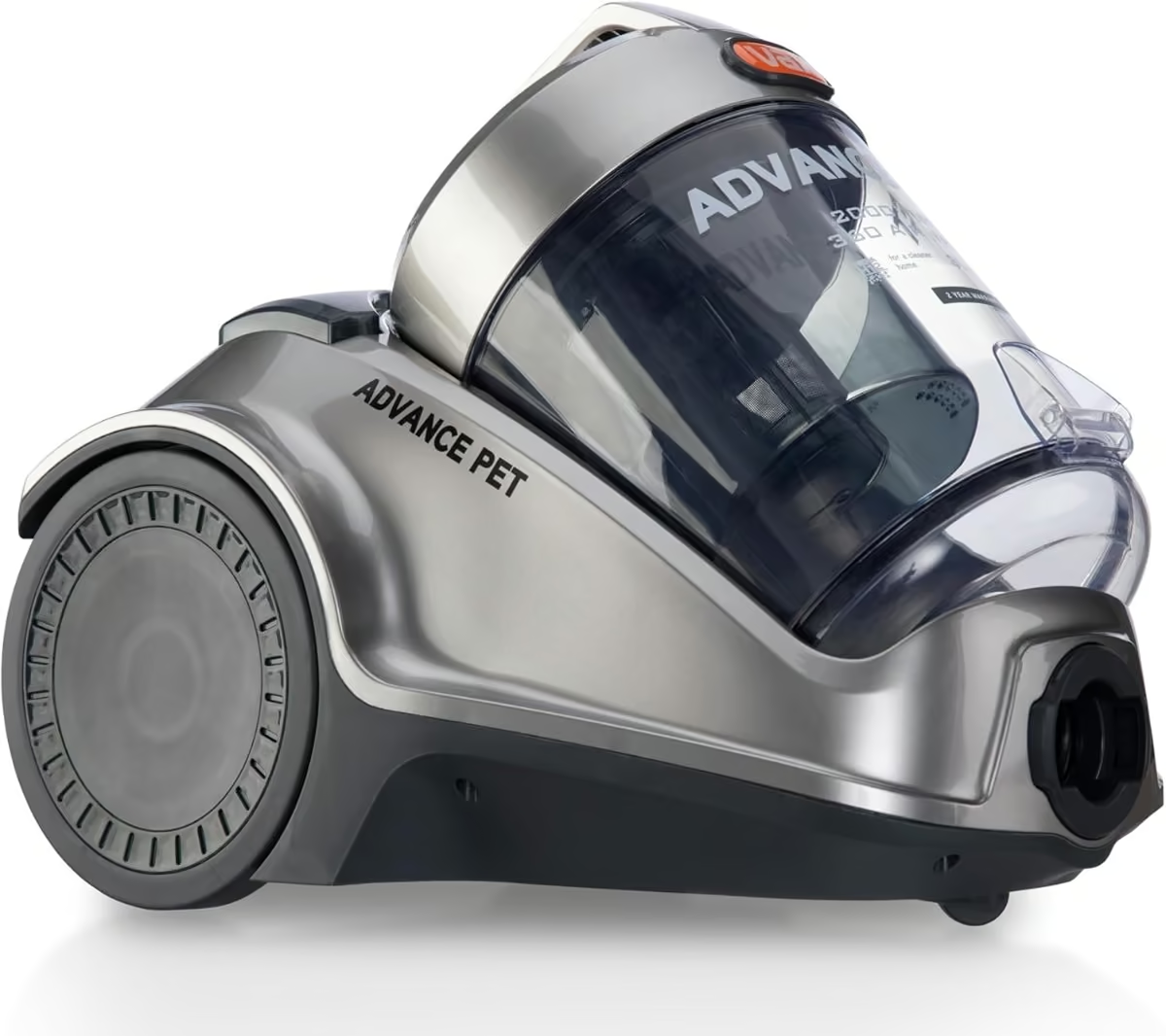
Vax’s Advance Pet is built around pet-hair pickup, pairing 2000W of power with 360AW of suction force and a HEPA 12 filter to capture the dander and allergens that come with fur along with the hair itself.
The kit includes a mini turbo tool alongside the telescopic wand, upholstery tool, turbo brush, combination head, crevice tool and dusting brush, so couches and stairs get the same attention as the floors.
A large 3 litre bin means fewer emptying trips even with a shedding pet in the house, and it carries a 4.2-star rating from 28 reviewers on the Amazon listing.
At 8.6kg it is one of the heavier picks here, and like any upright-style canister it is corded rather than cordless, so it suits a dedicated pet-hair session rather than quick grab-and-go tidying.
Pros
- Mini turbo tool included for upholstery and pet hair
- HEPA 12 filter captures dander and allergens
- Large 3L bin for fewer empties
Cons
- 8.6kg, one of the heavier picks here
- Corded, not suited to quick grab-and-go jobs
Key specs: Model VX71C. 2000W, 360AW suction. HEPA 12 filter. 3L bin. 8.6kg.
4. Russell Hobbs CompactXS – Best Compact
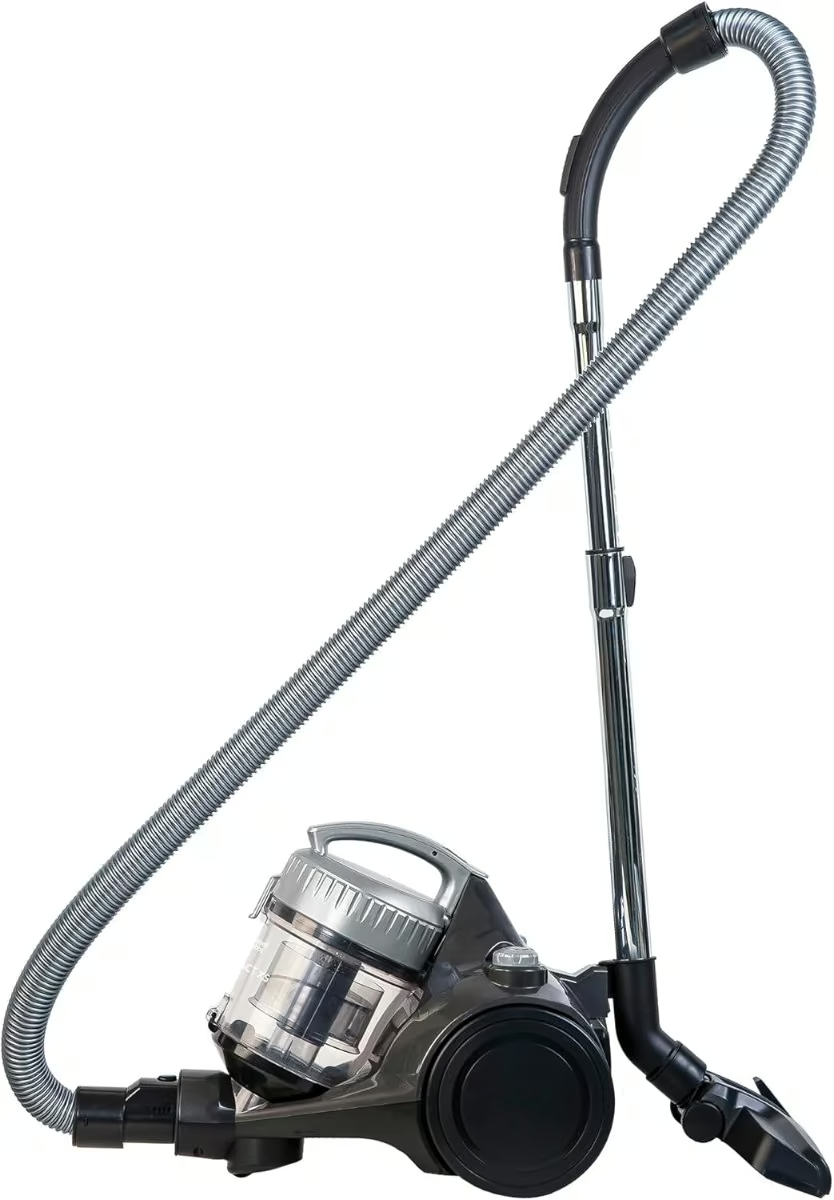
Russell Hobbs’ CompactXS is built for small homes and apartments, with a footprint small enough to fit in a cupboard or tuck under the stairs, earning it the space-saving pick in this guide.
Despite the small size, the 1.5 litre bin and triple dust lock filtration reduce how often it needs emptying, and a lift-and-lock bin system empties without releasing a cloud of dust. A 3-in-1 multi tool handles crevices, dusting and upholstery.
A 5 metre power cord gives an 8 metre cleaning radius, so fewer socket changes moving between rooms, and the whole unit is lightweight with a rewindable cord for easy storage. It carries a 4.7-star rating from 11 reviewers on the Amazon listing.
At 700W it is the least powerful corded unit in this guide, better suited to regular light-duty cleaning than a deep once-over on thick carpet, and the review count is still small.
Pros
- Small footprint fits easily into a cupboard
- Lift-and-lock bin empties without a dust cloud
- 5m cord gives an 8m cleaning radius
Cons
- Least powerful corded unit in this guide at 700W
- Only 11 reviews on the Amazon listing so far
Key specs: Model RHCV1611-AU. 700W. 1.5L tank. Triple dust lock filtration. 5m cord.
5. EUREKA NEN180 – Best Value
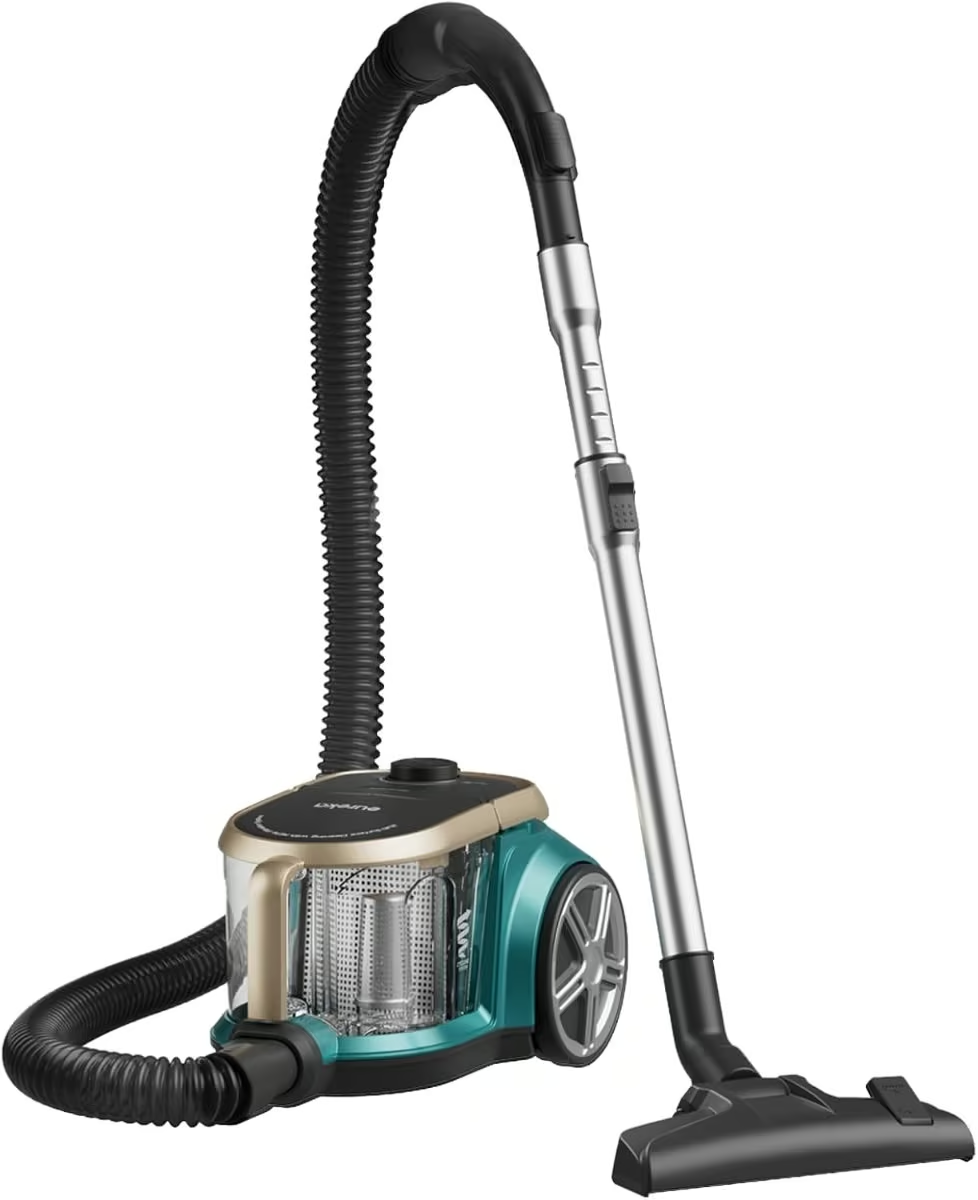
EUREKA’s NEN180 pairs a 2000W motor with a stated 24 kPa of suction, comfortably inside the 19 to 24 kPa range this guide’s how-to-choose section flags as strong enough for carpet and pet hair, at one of the lowest prices here.
A telescoping wand and 2-in-1 dusting brush handle everyday jobs, and automatic cord rewind stores the cord at the touch of a button. Large wheels and a free swivel keep it manoeuvrable around furniture.
At 5.6kg it is light enough to carry between floors, the 2.2 litre dust container keeps emptying trips down, and it carries a 4.2-star rating from 328 reviewers on the Amazon listing, one of the larger review counts in this guide.
The filter is a standard HEPA type rather than a washable, long-life design, and at 2000W it is a solid everyday performer rather than the strongest suction in this guide.
Pros
- One of the cheapest picks in this guide
- 24 kPa suction, in the guide’s recommended range for carpet
- 328 reviews at 4.2 stars, a solid sample size
Cons
- HEPA filter is not a washable long-life design
- Not the strongest suction in this guide
Key specs: Model NEN180GR. 2000W, 24 kPa suction. HEPA filter. 2.2L tank. 5.6kg.
6. BISSELL PowerForce Helix Turbo Rewind – Best Upright with Auto Cord Rewind
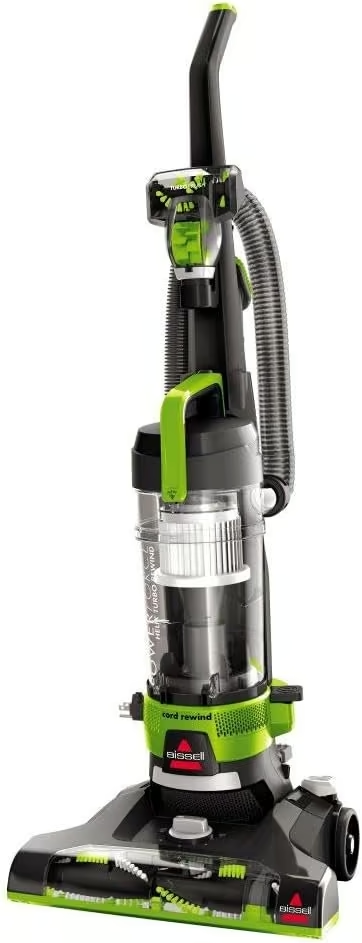
The BISSELL PowerForce Helix Turbo Rewind is the only true upright in this guide, using a Helix dirt separation system to keep debris away from the filter and hold suction longer between cleans on carpet and bare floors.
A wide motorised floorhead lifts embedded dirt and hair, a turbo brush tool stores neatly on the handle, and a 7.6 metre retractable power cord rewinds automatically at the touch of a button.
It comes with a crevice tool, extension wand and a dedicated pet hair eraser tool, and carries a 4.5-star rating from 53 reviewers on the Amazon listing. The brush height is adjustable for different carpet pile.
Its 1 litre dirt tank is the smallest capacity in this guide, so it suits regular quick cleans rather than one big session, and an upright is less flexible for stairs and above-floor work than the canister and cylinder models here.
Pros
- Automatic cord rewind on a 7.6m cord
- Dedicated pet hair eraser tool included
- Adjustable brush height for different carpet pile
Cons
- Smallest dirt tank capacity in this guide at 1L
- Upright design is less flexible for stairs and above-floor jobs
Key specs: Model 2261F. 1000W. Helix separation system. 7.6m retractable cord. 1L tank.
7. Akitas C6 – Best High-Suction Budget Pick
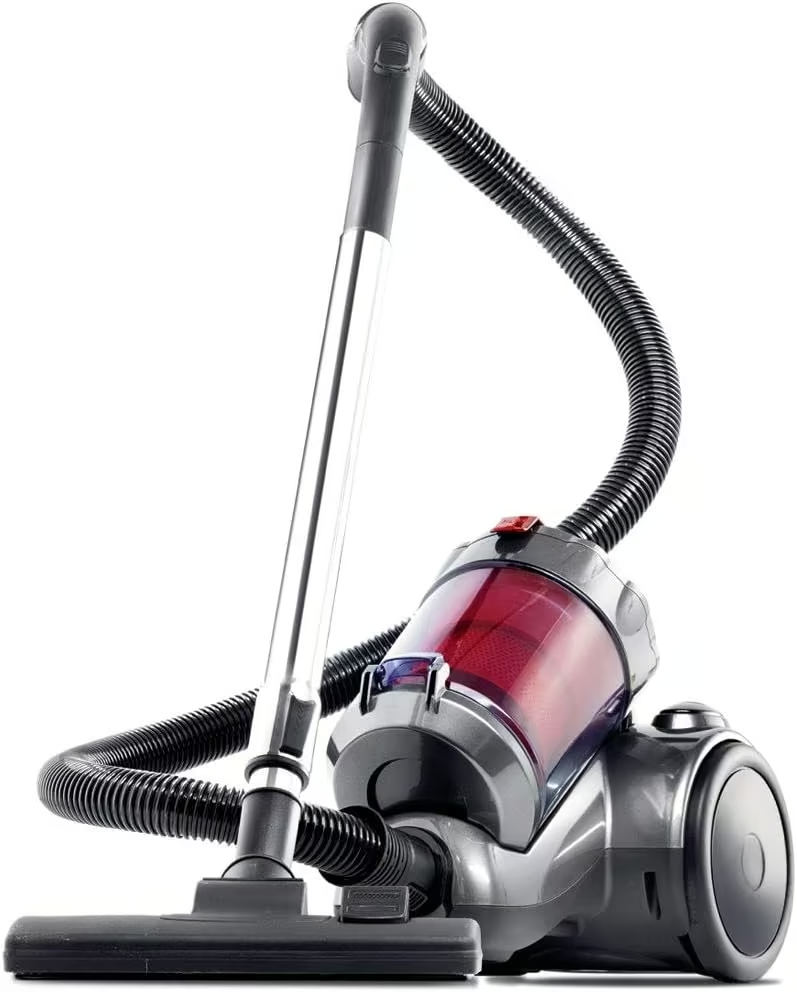
The Akitas C6 pairs a 2400W motor with a stated suction of over 24 kPa for one of the cheapest prices in this guide, and it is currently the top-ranked cylinder vacuum in its Amazon AU category with a large 8,632-review sample at 4.0 stars.
A combination floor nozzle and crevice tool cover hard floors, carpet and tight corners, and a large 2.5 litre dust container with one-button disposal cuts down on emptying trips.
A washable HEPA filter captures fine dust and allergens while protecting the motor, and the compact cylinder body includes a telescopic tube and automatic cord rewind for easy storage. It weighs 5kg.
It carries a shorter 1-year warranty than some rivals in this guide, and the sheer size of the review count next to its low price is worth taking as a broad popularity signal rather than a guarantee of long-term durability.
Pros
- One of the cheapest picks in this guide
- Over 24 kPa suction and a washable HEPA filter
- 8,632 reviews, the largest sample in this guide
Cons
- Shorter 1-year warranty than some rivals here
- Lesser-known brand next to Miele, BISSELL or Vax
Key specs: Model C6 AU. 2400W, over 24 kPa suction. Washable HEPA filter. 2.5L tank. 5kg.
8. Midea Bagless Vacuum Cleaner – Best Overall
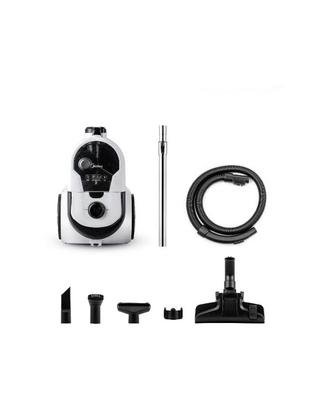
Best for: quiet, well-equipped everyday cleaning from a trusted brand. The best bagless vacuum in NZ overall for most homes is the Midea Bagless Vacuum Cleaner, a tidy corded barrel that balances quiet running, real HEPA filtration and sensible tool storage. It measures a compact 410 x 265 x 240 mm and trails a 5 m power cord plus a 1.5 m hose, giving useful reach around a typical lounge or hallway without constant unplugging. The standout for shared homes is noise: at a rated 68 dB it is noticeably quieter than the high-wattage cyclonic barrels, so you can vacuum without drowning out the room.
A Class 12 HEPA filter traps fine dust on the exhaust, and the 3 L bagless cup empties without buying bags. A neat practical touch is that the three tools, a crevice nozzle, a round dusting brush and an upholstery brush, clip onto the tube itself so they do not vanish into a drawer. The trade-off is suction: the motor is rated 600 W with around 130 W of suction power, which is fine for hard floors, rugs and everyday dust but less aggressive than the 19 kPa cyclonic Devanti below on deep carpet or heavy pet hair. It is also corded and, as a delivery-only line, can sell through quickly. For quiet, low-fuss everyday cleaning, it is the easy all-round pick.
Pros
- Quiet 68 dB operation for a barrel vacuum
- Class 12 HEPA filter on the exhaust
- Three tools stored on the tube so they stay handy
- 5 m cord plus 1.5 m hose for good reach
Cons
- 130 W suction is modest for deep carpet or heavy pet hair
- Corded only
- Delivery-only line that can sell out
Key specs: Brand Midea, model MBC1860WB (SKU PR9226); corded bagless barrel; 600W motor / 130W suction; 3L dust cup; Class 12 HEPA; 68 dB; 5m cord, 1.5m hose; 410 x 265 x 240 mm; crevice, round and upholstery tools; 24-month warranty plus 12-month extended.
9. Devanti Cyclonic Bagless Vacuum – Best for Allergy Sufferers
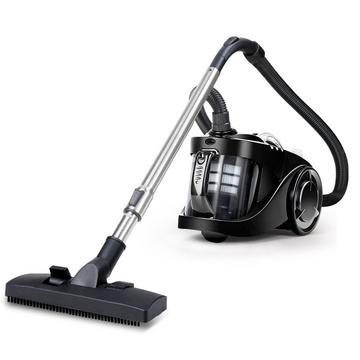
Best for: allergy-friendly deep cleaning with a washable HEPA filter. For allergy sufferers, the Devanti 2200W Cyclonic Bagless Vacuum is the pick, thanks to a washable HEPA filter and a multi-cyclonic system rated to capture up to 99.97% of dust and allergens. Where the Midea prioritises quiet, this Devanti prioritises pull: it delivers 19 kPa of suction with airflow above 2.0 cubic metres a minute, and a variable suction control lets you ease off for curtains or rugs. The multi-cyclonic chamber spins larger debris away from fine dust so the filter clogs more slowly, which helps it hold suction better than a basic single-stage bagless unit.
The 3.5 L dust cup empties one-handed, and because the HEPA filter is washable and reusable there are no replacement-filter costs, a genuine plus given that filter supply is a common frustration with budget vacuums. Build is practical: a 50 to 84 cm telescopic stainless steel wand, a 360-degree rotatable hose, large rear castors and a 5 m retractable cord that auto-rewinds, plus a 2-in-1 convertible nozzle for floors and detail work. The honest trade-offs are noise and bulk: at a rated 80 dB it is loud, it is a heavier corded barrel to lug between rooms, and it arrives needing some assembly. For households chasing dust, dander and allergens on a budget, the washable HEPA and strong suction make it the standout.
Pros
- Strong 19 kPa suction with variable control
- Washable, reusable HEPA filter with no filter costs
- Multi-cyclonic separation helps hold suction
- Auto-rewind 5 m cord and telescopic steel wand
Cons
- Loud at a rated 80 dB
- Heavier corded barrel to move between rooms
- Some assembly required
Key specs: Brand Devanti, model VAC-008-BK (SKU PR12685); corded multi-cyclonic bagless barrel; 2200W nominal (2800W max); 19 kPa; washable HEPA up to 99.97%; 3.5L dust cup; 5m auto-rewind cord; 50-84cm telescopic stainless wand; 360-degree hose; 80 dB; black.
10. Cordless Anti-Mite Vacuum – Best for Mattresses and Bedding
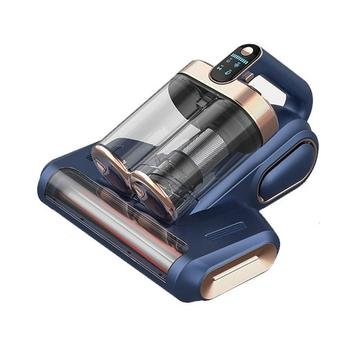
Best for: deep-cleaning mattresses, bedding and upholstery against dust mites. The Cordless Anti-Mite Vacuum is a specialist handheld aimed squarely at mattresses, pillows, sofas and bedding, where dust mites and skin-cell debris collect. It is light at 1.5 kg and fully cordless, charging over a standard 5V-2A USB supply, so it is easy to run over a bed or couch without wrestling a hose. An LED display shows status as you work, and the 520 mL dust cup is sized for the job. Rated at 120 W on a 12 V system, it is built for short, targeted bursts on fabric rather than whole-floor cleaning.
Regular bed vacuuming genuinely reduces the allergen load that triggers sneezing and morning congestion, and the compact 294.5 x 270 x 185.4 mm body stores easily in a wardrobe. Maintenance is simple: empty the 520 mL container after each use and brush the filter clean. The trade-offs are clear. This is a handheld, not a floor vacuum, so it complements rather than replaces the barrel units above; the small cup needs frequent emptying on a dusty mattress; and the page does not state a HEPA rating or battery run time, so plan for shortish sessions and recharge between rooms. It also contains a lithium battery, worth noting for storage and travel. For anyone focused on bedroom allergens, it is a useful, affordable specialist.
Pros
- Lightweight 1.5 kg cordless handheld
- Targets mattress and bedding dust mites
- Simple USB charging
- LED status display
Cons
- Handheld only, not a floor vacuum
- Small 520 mL cup needs frequent emptying
- No stated HEPA rating or battery run time
Key specs: Model LP-018 (SKU PR13979); cordless handheld anti-mite vacuum; 120W; 12V; 1800mAh battery; 5V-2A USB charging; 520mL dust cup; 1.5kg; 294.5 x 270 x 185.4 mm; LED display; blue.
How to choose a bagless vacuum in NZ
Judge suction by kPa or air watts, not motor watts. A high motor wattage (the Midea barrel quotes 600W, the Devanti 2200W) only measures power draw, not cleaning pull. The number that matters is kPa or air watts: roughly 19 to 24 kPa, like the Devanti and the EUREKA NEN180 here, handles carpet and pet hair well. Always check the kPa or air-watt figure on the listing rather than the headline wattage.
Keep bagless suction strong. Bagless vacuums can lose suction as the filter clogs, so empty the dust cup before it overfills and wash or replace the filter on schedule. Cyclonic models like the Devanti spin debris away from the filter, which helps maintain performance between cleans.
Think about allergies. Emptying a bagless cup can puff a dust cloud, so empty it outside or straight over a bin, and look for a sealed system with a HEPA filter rather than a filter alone. A washable HEPA filter, like the Devanti’s, keeps fine particles out of the exhaust without ongoing replacement costs.
Corded or cordless. Corded barrels give constant, unlimited power for longer cleans, while cordless sticks win on convenience but run on a battery. Consumer NZ testing found stick vacuums average about 13 minutes on their highest setting, ranging from roughly 6 to 33 minutes, so for larger homes look for swappable batteries or multiple run-time modes.
Match the tool to the job. A full-size barrel is overkill for the car, where a compact car vacuum cleaner is far handier. Glass, shower screens and condensation are jobs for a dedicated window vacuum rather than a floor vacuum.
Verdict
Of the new Amazon picks leading this guide, the Miele Boost CX1 is the premium choice for anyone wanting a trusted brand and thorough filtration, the Vax Advance Pet and BISSELL PowerForce Helix Turbo Rewind both suit pet-hair households, and the EUREKA NEN180 and Akitas C6 are the picks if budget matters most. For most NZ homes overall, the long-standing Midea Bagless Vacuum Cleaner remains the best all-round bagless pick: quiet, HEPA-filtered and easy to live with for everyday cleaning. Allergy sufferers should look hard at the Devanti 2200W Cyclonic for its washable HEPA and stronger 19 kPa suction, while the cordless anti-mite handheld is a smart, affordable add-on for mattresses and bedding.
FAQs
Are bagless vacuums worth it?
Yes, for most NZ homes. Bagless vacuums skip the ongoing cost of bags, let you see what you have collected, and tip straight into the bin. The trade-off is more maintenance: you need to empty the cup regularly and clean the filter so suction stays strong. Choose one with a washable HEPA filter to keep running costs down.
Are bagged or bagless vacuums better for allergies?
Bagged vacuums contain dust when you dispose of the bag, so they suit severe allergy sufferers. Bagless models can puff a dust cloud when emptied, so empty them outside or over a bin. What matters most is a sealed system with a HEPA filter, which traps fine particles rather than recirculating them into the room.
Do bagless vacuums lose suction over time?
They can, if the filter and dust cup are not maintained. As fine dust clogs the filter, airflow drops and suction fades. Cyclonic models reduce this by spinning debris away from the filter. Empty the cup before it overfills and wash or replace the filter on schedule, and suction stays close to new.
How often should you empty and clean a bagless vacuum filter?
Empty the dust cup after most uses, or whenever it reaches the max line, to protect suction. Wash or tap out the filter every few weeks with regular use, and let washable HEPA filters dry fully before refitting. Non-washable HEPA filters usually need replacing every 6 to 12 months.
How much suction do I need in a vacuum?
Judge suction by kPa or air watts, not the motor’s wattage, which only measures power draw. As a rough guide, around 19 to 24 kPa handles carpet and pet hair well, while lighter dusting needs less. A high motor wattage does not guarantee strong suction, so check the kPa or air-watt figure on the listing.
Corded or cordless vacuum – which is better?
Corded vacuums give constant, unlimited power and suit longer cleans, which is why barrel models still dominate for whole-home work. Cordless sticks are lighter and far more convenient for quick jobs and stairs, but run on a battery. Pick corded for sustained suction and cordless for grab-and-go ease; many NZ homes own one of each.
How long does a cordless vacuum run on one charge?
It varies a lot by model and power mode. Consumer NZ testing found stick vacuums average about 13 minutes on their highest setting, ranging from roughly 6 to 33 minutes, with lower modes lasting longer. For larger homes, look for swappable batteries or multiple run-time modes.
Are cyclonic vacuums better?
Cyclonic bagless vacuums use spinning airflow to fling larger debris away from the filter, which keeps the filter cleaner and helps hold suction during a clean. They are generally better at maintaining performance than a basic single-stage bagless unit. They can be louder, though, and still need the dust cup emptied and the filter cleaned regularly.
