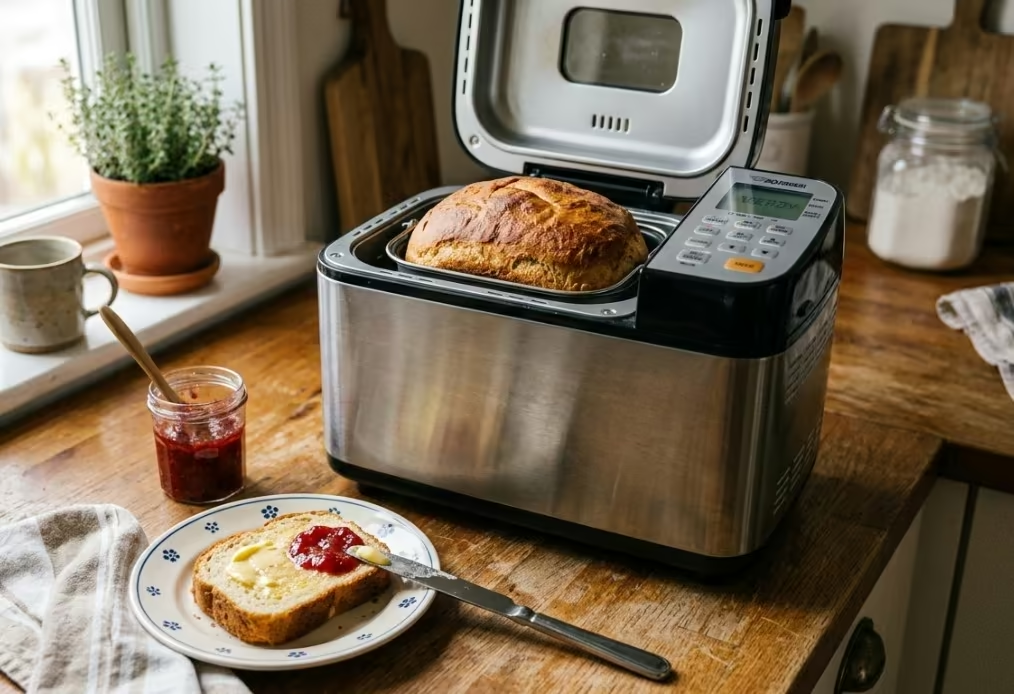
The best bread maker in NZ overall is Breville’s the Baker’s Dozen, which covers 13 programmes and holds a 4.6 out of 5 rating from 135 owner reviews. A bread maker mixes, kneads, proves and bakes a loaf in one sealed pan, so the only real work is measuring ingredients in.
Machines separate on four things. Programme count decides how far past a basic white loaf you can go, into doughs, jams and cakes. Dedicated gluten-free modes matter because a true gluten-free cycle changes the knead and rise times rather than just relabelling a setting. Loaf size and shape ranges from compact single loaves to full 1.25kg tins. Footprint decides whether it lives on the bench or in a cupboard.
Match the loaf size to how fast your household actually eats bread, because a homemade loaf has no preservatives and stales within two to three days. A delay timer is the feature most owners end up using daily, since it lets you load the pan at night and wake to a finished loaf. If you need gluten-free, confirm the machine lists a specific gluten-free programme rather than a generic one.
This guide compares five bread makers available in New Zealand, from a space-saving compact through to a machine that also makes yoghurt and pasta, with programme range, gluten-free capability, loaf size and bench footprint for each.
Quick comparison
| Bread Maker | Best For | Programmes |
|---|---|---|
| Breville the Baker’s Dozen | Best Overall | 13 |
| Breville the Custom Loaf Pro | Premium / Most Customisable | 13 + 9 custom |
| Panasonic Compact Bread Maker | Best Compact | 18 |
| Panasonic Premium Automatic Bread Maker | Best for Gluten-Free | 31 |
| Tefal Pain and Delices Bread Maker | Most Versatile Programmes | 20 |
1. Breville the Baker’s Dozen – Best Overall
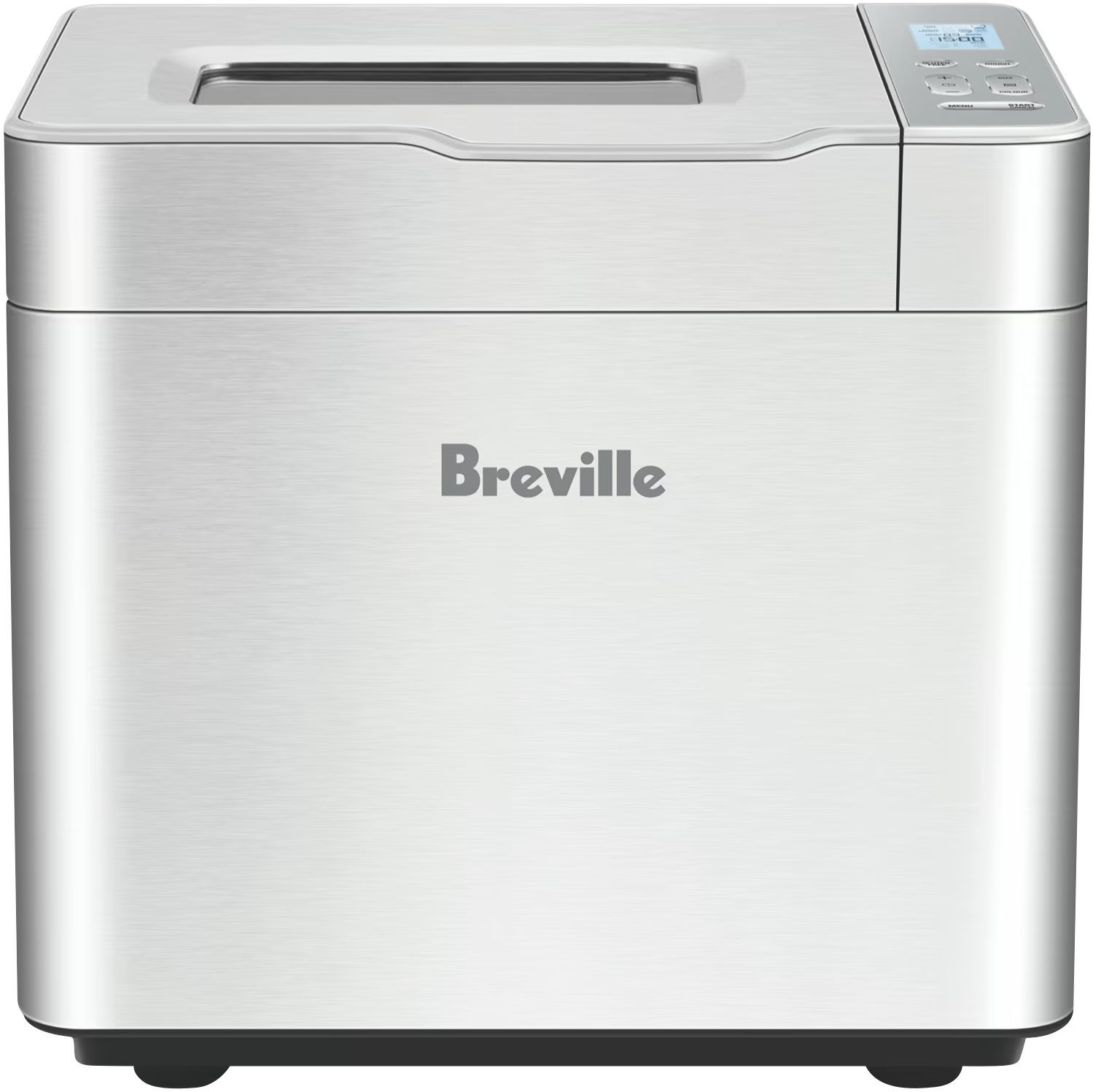
Breville’s Baker’s Dozen covers 13 preset programmes, from Basic, French and Whole Wheat through to Gluten Free, Jam and even a Yoghurt setting, all controlled from a clear LCD display, which makes it a genuinely capable all-rounder rather than a one-trick loaf maker.
It bakes small, medium or large loaves up to 900g with light, medium or dark crust control, has a 15-hour delay start timer plus up to an hour of automatic keep-warm, and an automatic dispenser drops in raisins or nuts at the right point in the cycle. It’s also the most reviewed bread maker in this guide, rated 4.6 out of 5 across 135 owners , with one buyer writing that fresh homemade bread “has saved us money and reduced food waste… simple to operate and reliable from day one.”
A small number of reviewers note that a full-size large loaf can sit close enough to touch the lid, and the kneading paddle occasionally stays embedded in the finished loaf rather than lifting out cleanly, both minor, common bread-maker quirks rather than deal-breakers.
Pros
- 13 versatile preset programmes including gluten-free and jam
- Automatic raisin and nut dispenser
- Strong owner reviews (4.6/5, 135 reviews)
- 15-hour delay timer and keep-warm function
Cons
- Large loaves can sit close to the lid
- Kneading paddle can stay in the baked loaf
Key specs: 730W, loaves up to 900g, 13 programmes, 15-hour delay timer, LCD display.
2. Breville the Custom Loaf Pro – Premium / Most Customisable
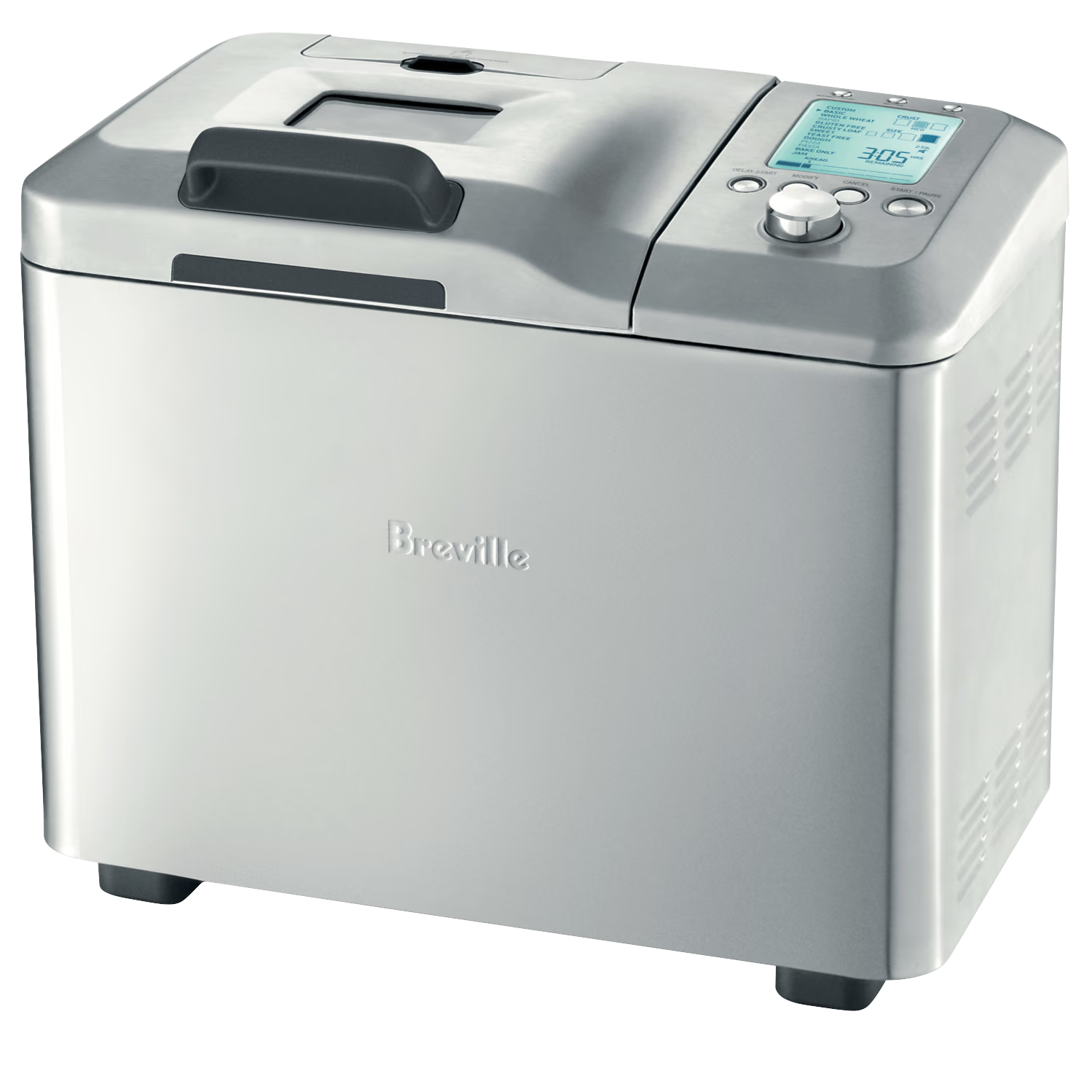
The Custom Loaf Pro steps up from the Baker’s Dozen with 13 automatic programmes plus 9 storable custom settings, so you can save your own tweaked timings and settings for a favourite loaf rather than starting from scratch every time.
It handles four loaf sizes from 500g up to 1.25kg with three crust colour options, a collapsible kneading blade designed to leave fewer holes in the finished loaf, and an automatic raisin and nut dispenser. It’s also outstandingly well reviewed, rated 4.6 out of 5 across 257 owners , with several buyers specifically replacing a worn-out earlier Breville model with this one, one writing that after “many years of flawless work our previous copy of this model died so we have purchased a replacement.”
At $406.69 it’s the most expensive bread maker in this guide, and a small number of reviewers found the instruction manual harder to follow than expected, or noted the collapsible paddle can still bake into the loaf occasionally. For anyone who bakes bread often enough to want saved custom settings, it’s the strongest option here.
Pros
- 9 storable custom recipe settings
- 4 loaf sizes from 500g to 1.25kg
- Outstanding owner reviews (4.6/5, 257 reviews)
- Collapsible paddle reduces holes in loaves
Cons
- Most expensive bread maker in this guide
- Instruction manual can be harder to follow
- Paddle can still bake into the loaf occasionally
Key specs: 830W, loaves 500g-1.25kg, 13 programmes + 9 custom settings, stainless steel.
3. Panasonic Compact Bread Maker – Best Compact
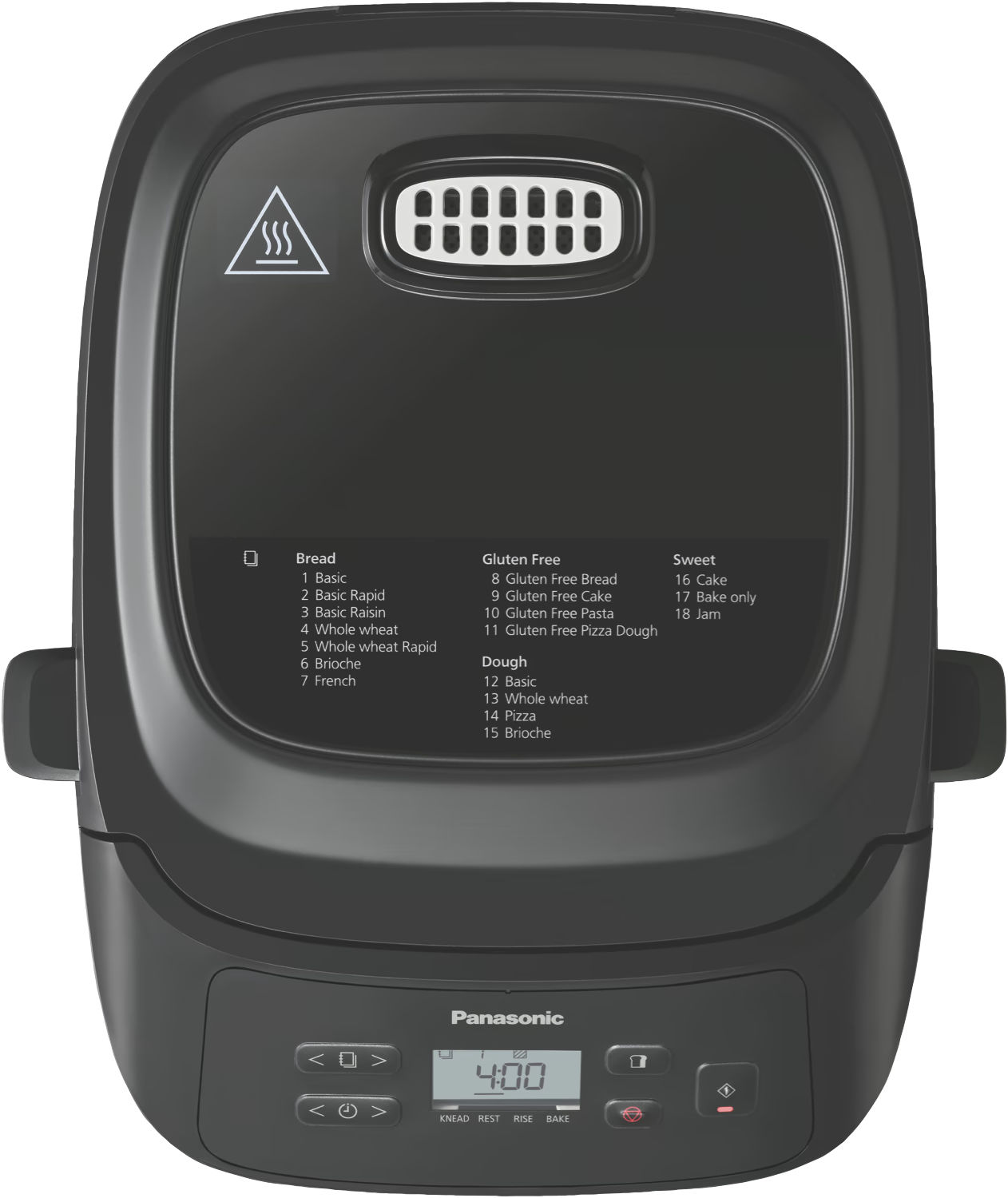
Panasonic’s Compact Bread Maker is built for smaller households, with a 400g loaf capacity that suits one to three people rather than a full family-size loaf, in a genuinely space-saving black unit.
Artisan-style kneading and dual temperature sensors aim for a more even, bakery-style crumb, and 18 auto programmes include four dedicated gluten-free modes alongside standard crust control and a 13-hour delay timer. It’s the best-reviewed bread maker in this whole guide, rated 4.8 out of 5 across 21 owners , with a 100% recommend rate and praise for consistently well-textured loaves.
The trade-off for its compact size is a smaller maximum loaf than every other machine here, so it’s not the right choice if you regularly bake for a full family. For a smaller household wanting genuinely good bread without a bulky appliance, though, it’s hard to fault.
Pros
- Outstanding owner reviews (4.8/5, 100% recommend)
- Genuinely compact footprint
- 4 dedicated gluten-free modes
- Artisan-style kneading with dual temperature sensors
Cons
- Smaller 400g loaf capacity than every other pick here
- Review sample size is still fairly small
Key specs: 340W, 400g loaf capacity, 18 programmes including 4 gluten-free modes, 3.5kg.
4. Panasonic Premium Automatic Bread Maker – Best for Gluten-Free
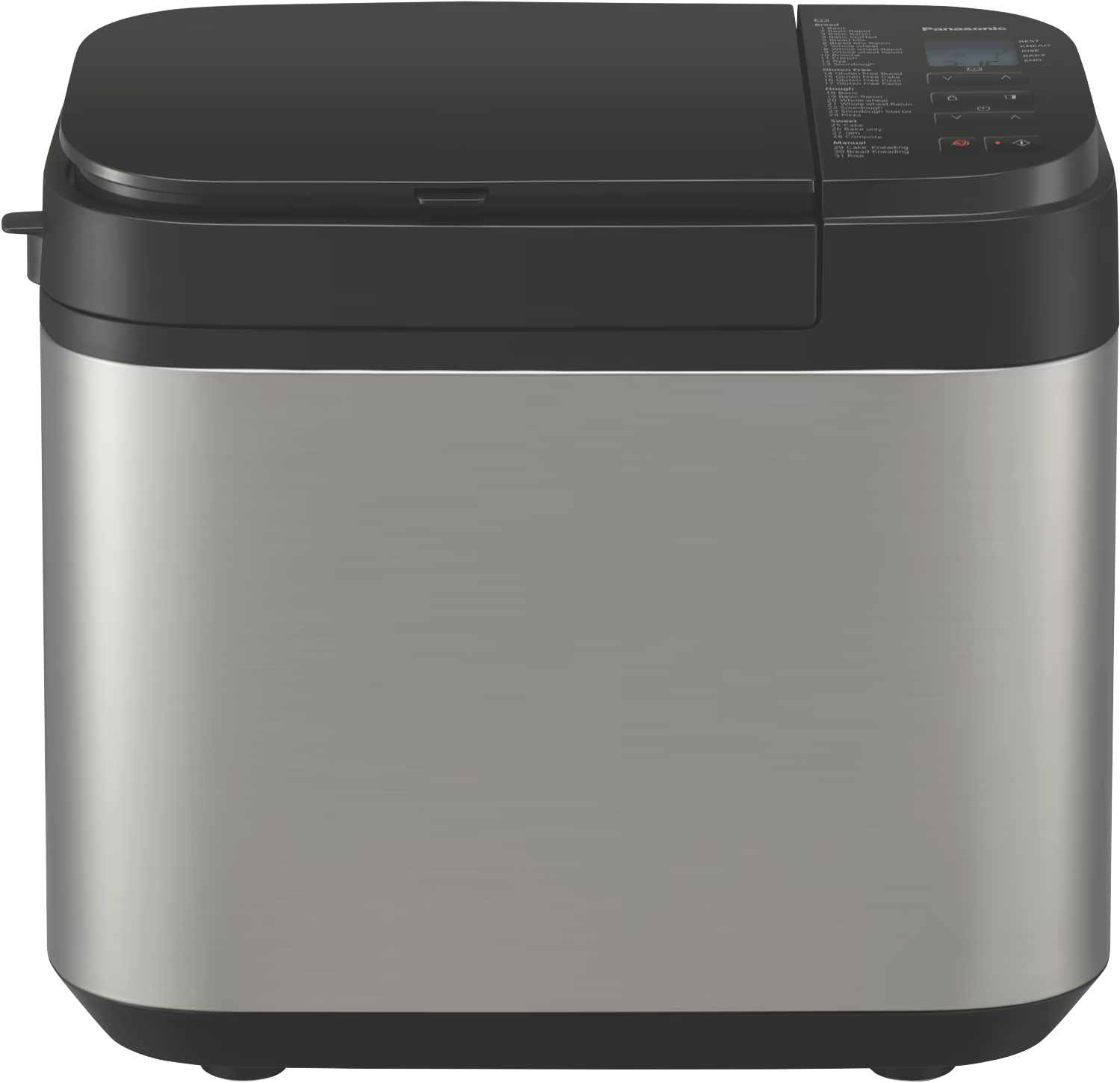
At the other end of Panasonic’s range, the Premium Automatic Bread Maker steps up to 31 auto menus, including four separate gluten-free options, and bakes a full 1.1 to 1.2kg loaf for larger households.
Automatic yeast and raisin/nut dispensers, dual temperature sensors and a diamond-fluorine coated non-stick pan round out a genuinely feature-rich stainless steel machine. Owners on Bing Lee AU rate it 4.7 out of 5 across 81 reviews, with a 91% recommend rate and comments like “makes amazing bread every time, it’s very easy to use” and “have been using it for a month and so far it’s been impressive.”
At $333.71 it costs more than the Compact model above, and its larger 7.5kg build means it needs a permanent spot on the bench rather than being easily tucked away. For anyone wanting the widest range of programmes and the most gluten-free options in this guide, it’s the clear pick.
Pros
- 31 programmes, including 4 gluten-free modes
- Automatic yeast and raisin/nut dispensers
- Strong owner reviews (4.7/5, 91% recommend)
- Bakes a full 1.1-1.2kg family-size loaf
Cons
- Costs more than the Compact model
- Larger, heavier build needs permanent bench space
Key specs: 550W, loaves up to 1.2kg, 31 programmes including 4 gluten-free modes, 7.5kg.
5. Tefal Pain and Delices Bread Maker – Most Versatile Programmes
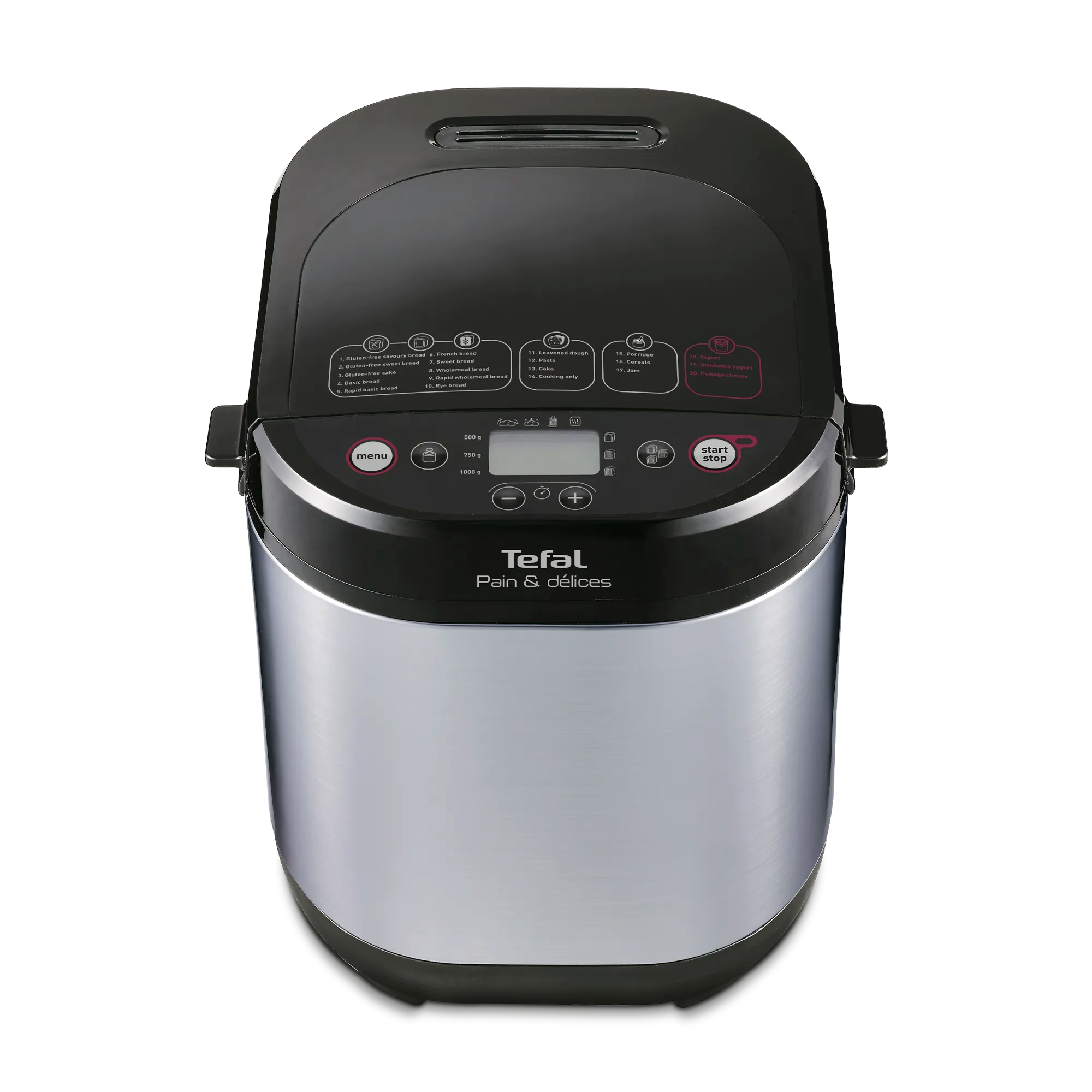
Tefal’s Pain & Delices takes bread makers beyond bread, with 20 automatic programmes covering 7 standard breads, 3 gluten-free options, dough, pasta, cake and jam settings, plus 3 dedicated dairy programmes for making your own yoghurt or cottage cheese.
It bakes three loaf sizes from 500g to 1kg with three-level crust control, a 15-hour delay timer and an hour of keep-warm, and comes with a 1L yoghurt pot, a cottage cheese filter and baguette-shaping accessories included in the box.
It’s worth being upfront that no AU or NZ retailer we checked had a populated review section for this exact model, so unlike the other bread makers in this guide, there’s no independent local star rating to share yet. Judge it on the genuinely unusual range of programmes rather than a review score, and expect that to fill in as more Kiwi buyers pick one up.
Pros
- 20 programmes including pasta, cake, jam and yoghurt
- Includes yoghurt pot and cottage cheese filter
- 3 loaf sizes with 15-hour delay timer
- Widest range of non-bread functions in this guide
Cons
- No confirmed AU/NZ owner reviews found yet
- Fewer bread-specific programmes than the Panasonic Premium
Key specs: 720W, loaves 500g-1kg, 20 programmes including dough, pasta, cake and yoghurt, 15-hour timer.
How to choose a bread maker in NZ
Loaf size and capacity. Compact machines like the Panasonic Compact suit one to three people, while a 900g to 1.25kg capacity, like the Breville and Panasonic Premium models here, suits a full family.
Programme count and gluten-free options. More programmes generally means more flexibility for wholemeal, French, sweet or gluten-free loaves. If gluten-free baking matters to you, check exactly how many dedicated gluten-free modes a model offers, since this varies significantly between machines.
Crust control and timers. Look for adjustable crust colour settings and a delay start timer so a loaf can be ready at a specific time, plus a keep-warm function so bread doesn’t go cold if you’re not there the moment it finishes.
Dispensers and paddles. An automatic raisin or nut dispenser adds ingredients at the right point in the kneading cycle rather than all at once, and a collapsible or removable kneading paddle generally leaves a cleaner loaf with fewer holes.
Beyond bread. Some machines, like the Tefal Pain & Delices here, also make dough, pasta, cake, jam or even yoghurt, which can be worth paying for if you’ll genuinely use those extra functions rather than just the bread settings.
Flatbreads, crumpets and pikelets never go near a loaf tin, and an electric frypan handles all three properly. Some multi cookers include a dough programme, so check whether one machine covers both jobs before you buy two. A fresh loaf is only half the job, and the best toasters decide what the second half tastes like on day three.
Verdict
For most Kiwi households, Breville’s Baker’s Dozen is the easiest bread maker to recommend, combining a genuinely versatile programme list with the strongest, most established review base in this guide. Anyone who bakes often enough to want saved custom settings should look at the Custom Loaf Pro, while a smaller household is better served by the outstandingly reviewed Panasonic Compact.
If gluten-free baking or the widest possible programme range matters most, the Panasonic Premium is the strongest pick, and anyone who wants a bread maker that also handles pasta, cake, jam and yoghurt should consider the Tefal Pain and Delices, keeping in mind it doesn’t yet have the same local review track record as the others.
FAQs
How long does it take to bake a loaf in a bread maker?
A standard loaf typically takes 3 to 4 hours from start to finish, including kneading, rising and baking. Most machines also offer a faster express setting that can produce a loaf in under an hour, usually with a slightly denser texture.
Can bread makers make gluten-free bread?
Yes, many bread makers include one or more dedicated gluten-free programmes, which use different kneading and rising times suited to gluten-free flour blends. It’s still worth using a flour blend specifically designed for bread machines rather than a general all-purpose gluten-free flour for the best result.
Do I need to use bread flour, or will plain flour work?
Bread flour has a higher protein content than plain flour, which helps develop the gluten structure needed for a good rise, so it generally gives better results in a bread maker. Plain flour can still be used, but the loaf is likely to be denser and less airy.
Why did my bread maker loaf collapse or have a hole from the paddle?
A collapsed loaf is often caused by too much liquid or yeast, or a rising time that’s too long for a warm kitchen, while a hole from the kneading paddle is a normal, common quirk of bread machines rather than a fault. Removing the paddle after the final knead, if your model allows it, can reduce this.
Can a bread maker make more than just bread?
Many bread makers include settings for dough, jam, cake or pasta, and some, like the Tefal model in this guide, even make yoghurt or cottage cheese. Check the specific programme list before buying if these extra functions matter to you.
How long does bread from a bread maker stay fresh?
Homemade bread without commercial preservatives typically stays fresh for 2 to 3 days at room temperature in an airtight container, noticeably shorter than store-bought bread. Slicing and freezing what you won’t eat within a few days is the best way to keep it fresh for longer.
