
The best wall oven in NZ overall is the Bosch Series 8 Built-In Multifunction Pyrolytic Oven, thanks to its 14 heating methods, pyrolytic self-clean and refined TFT touch controls. Shoppers on a tight budget get the most for their money from the Midea 60cm Built-In Oven, which still packs nine functions and even convection cooking into a black-glass 60cm build.
Choosing a built-in oven in New Zealand comes down to a few real decisions: how it cleans (pyrolytic, catalytic or manual), what width and capacity suit your kitchen, whether you want one cavity or two, and how many cooking functions you will actually use. Every pick below was checked on a live NZ retailer page, then researched against owner reviews on other New Zealand and Australian sites so the verdicts reflect real use rather than spec sheets. If you also cook a lot on the bench, it is worth pairing a wall oven with one of the top air fryers for quick weeknight meals.
Picks are listed in order, each with a clear “best for” angle so no two compete for the same buyer. Prices are not listed because they move often at NZ retailers, so check the live product link under each review for the current deal.
Quick comparison
| Wall oven | Best for | Capacity | Functions | Cleaning |
|---|---|---|---|---|
| 1. Midea 60cm Built-In Oven | Best value | 72 L | 9 | Manual enamel |
| 2. Parmco Series 6 Pyrolytic | Best self-cleaning value | 80 L | 14 | Pyrolytic |
| 3. Parmco Series 1 Stainless | Best simple knob control | 80 L | 10 | Catalytic |
| 4. Midea 14-Function Pyro Oven | Best feature range on a budget | 72 L | 14 | Pyrolytic |
| 5. Midea Double Wall Oven | Best for large families | 35 + 70 L | 13 total | Manual |
| 6. Bosch Series 4 Built-In Oven | Best trusted everyday brand | 71 L | 7 | EcoClean |
| 7. Fisher & Paykel Pyrolytic Oven | Best large-capacity NZ brand | 76 cm class | Multi | Pyro + steam |
| 8. Bosch Series 8 Pyrolytic Oven | Best premium pick | 71 L | 14 | Pyrolytic |
1. Midea 60cm Built-In Oven – Best Value
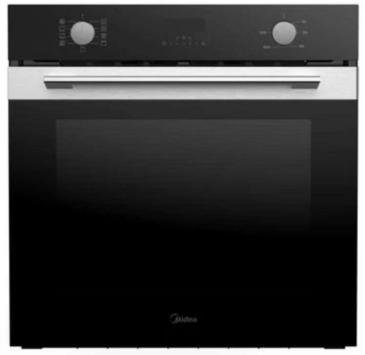
Best for budget kitchens, the Midea 60cm Built-In Oven is the easiest way to get a tidy black-glass built-in look without a premium price. It is a standard 60cm unit (roughly 595 x 565 x 595mm) with a 72L flat enamel cavity, so it drops into most NZ cabinetry and still swallows a large roasting tray. The front is black glass with a stainless handle and simple knob controls, which reads more expensive than it is.
Nine cooking functions cover the everyday jobs, and the dual airflow convection system is the detail owners single out: the fan browns evenly and speeds up roasting compared with older drop-in ovens. The interior is wipe-clean enamel rather than self-cleaning, and the three-layer removable glass door makes it easy to clean the inside of the glass. Testers found first-run setup straightforward and the knob layout intuitive for anyone moving from an older stove.
This is a value brand, so manage expectations on the long haul. Some NZ owners report patchy after-sales support, and one flagged grill-mount screws rusting through the oven top after about three years. It suits a rental, a first home or a budget renovation more than a forever kitchen.
Pros
- Big 72L cavity and even convection cooking for the money
- Black-glass front looks premium; simple, intuitive knobs
- Three-year warranty (24 months plus 12 months extended)
Cons
- Manual enamel cleaning only, no self-clean cycle
- Value-brand durability and after-sales support are hit and miss
- Listed as delivery only, with limited South Island stock
Key specs: 60cm width, 72L enamel cavity, 9 functions, dual airflow convection, knob controls, three-layer removable glass door, max 2300W, 3-year warranty, TSB code PR13361.
2. Parmco Series 6 Pyrolytic Oven – Best Self-Cleaning Value
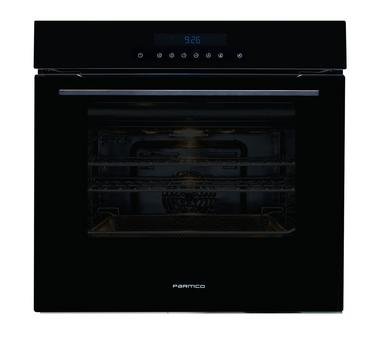
Best for cooks who want true self-cleaning without paying European money, the Parmco Series 6 brings a full pyrolytic cycle to a mid-range 60cm oven. The cavity is a generous 80L usable, the finish is black, and the digital touch controls and timer keep the fascia clean and modern. The standout build detail is the Quadglaze cool-touch door: four glass layers keep the outer surface safe to touch even during high-heat cooking, which owners with young kids appreciate.
Fourteen functions is a lot at this level and includes an air-fry mode, rapid pre-heat, fan-forced baking, defrost and an eco setting, so it can stand in for several top air fryers and benchtop gadgets. The pyrolytic cycle heats the cavity to around 430C and turns baked-on grease to a fine ash you simply wipe out, which is the whole reason to buy this over a manual-clean oven. Parmco also backs it with a long seven-year warranty.
The honest caveat is brand consistency. Parmco reviews across NZ are mixed: some owners report temperature accuracy drifting, control-panel markings wearing off within a few months, or interior rust before the warranty is up, and rust claims are sometimes declined. Plenty get trouble-free years out of them, but it is a roll of the dice rather than a sure thing.
Pros
- Genuine pyrolytic self-clean at a mid-range price
- 14 functions including air fry, plus a 7-year warranty
- Quadglaze cool-touch door is safer around children
Cons
- Brand-wide reports of variable temperature accuracy
- Some owners note panel markings wearing or interior rust
- Pyrolytic cycle uses a lot of power and runs hot
Key specs: 60cm width, 80L usable, 14 functions, pyrolytic self-clean, digital touch controls, Quadglaze 4-layer cool-touch door, 15A supply, child lock, 7-year warranty, model OV66B14P.
3. Parmco Series 1 Stainless Oven – Best Simple Knob Control
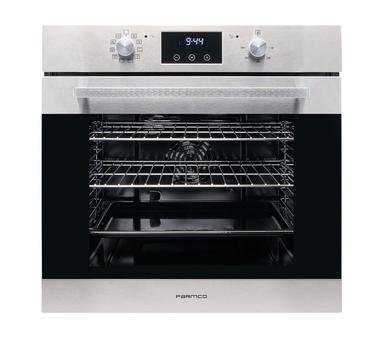
Best for shoppers who want stainless steel and straightforward dials rather than a touchscreen, the Parmco Series 1 keeps things deliberately simple. It is a 60cm oven with the same generous 80L usable cavity as its pyrolytic sibling, but in a brushed stainless face with a single control knob and a digital timer. The triple-glazed glass door is the notable physical detail, helping hold heat while staying cooler on the outside.
Ten functions give you the staples: conventional bake, fan-forced, several grill modes, fan-assisted bottom bake, defrost and eco. Reviewers repeatedly call out the fan-forced setting for even browning across a full tray, and the no-nonsense knob operation suits anyone replacing an old oven who does not want to learn a menu system. Cleaning is via catalytic liners that oxidise splatter at cooking temperatures, so day-to-day grease is handled, though you still scrub the oven floor by hand.
As with all Parmco, the brand-level reservations apply: mixed reports on temperature accuracy and the occasional rust or worn-marking complaint. The trade-off versus the Series 6 is clear, you save money and get a simpler, knob-driven oven, but you give up the hands-off pyrolytic clean. For a no-frills stainless oven with a long warranty, it is a sensible buy.
Pros
- Clean stainless look with simple, reliable knob control
- 80L cavity and even fan-forced browning
- Catalytic liners reduce routine cleaning; 7-year warranty
Cons
- Catalytic only, you still hand-clean the oven base
- Same Parmco brand concerns over temperature and finish wear
- Fewer functions than the pyrolytic Series 6
Key specs: 60cm width, 80L usable, 10 functions, catalytic liners, knob control with digital timer, triple-glazed door, 15A supply, 7-year warranty, model OV16S10.
4. Midea 14-Function Pyrolytic Oven – Best Feature Range on a Budget
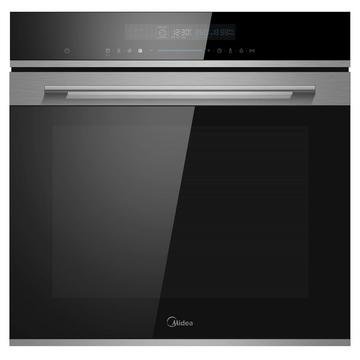
Best for buyers who want the longest feature list for the least money, this Midea pairs a full 14 functions with a pyrolytic self-clean cycle in a 60cm black-glass body. The cavity is 72L net (around 82L gross), and the fascia uses slide-touch controls on a slim 96mm panel. The detail that lifts it above its price is the four-layer full-glass door with soft-close hinges, which eases shut quietly instead of slamming, a touch usually reserved for dearer ovens.
In use, the dual airflow system spreads heat for even baking, and having pyrolytic cleaning at this level means you can burn off a roasting disaster rather than scrubbing it. Owners like the breadth of modes for the money, and at a peak 3000W it pre-heats quickly. If you would rather keep frying off the bench entirely, the air and fan modes here cover a lot of what the electric frypans and deep fryers do.
The same value-brand caveat as the other Midea applies: pyrolytic cleaning runs very hot and is energy-hungry, and independent long-term reliability data for Midea in NZ is thin compared with European names. It is a lot of oven for the outlay, best suited to a budget renovation where features matter more than a 15-year service record.
Pros
- 14 functions plus pyrolytic self-clean at a low price
- Soft-close four-layer glass door feels premium
- Fast 3000W pre-heat and even dual-airflow baking
Cons
- Pyrolytic cycle is hot and power-hungry
- Limited independent long-term reliability data in NZ
- Slide-touch panel is less tactile than physical knobs
Key specs: 60cm width, 72L net / 82L gross, 14 functions, pyrolytic self-clean, slide-touch controls, dual airflow, soft-close 4-layer glass door, max 3000W, 3-year warranty, model 7NP30T0.
5. Midea Double Wall Oven – Best for Large Families
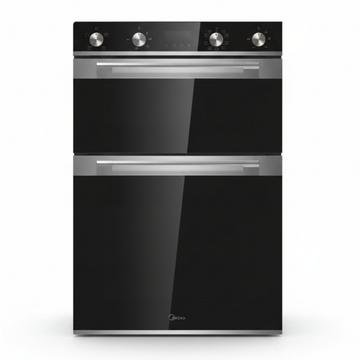
Best for big households and entertainers, the Midea Double Wall Oven gives you two separate cavities in one stacked unit: a 35L oven up top and a full 70L oven below, for roughly 105 to 107L of combined cooking space. It is a tall, substantial appliance at about 88.5cm high and 59.4cm wide, and it weighs around 95kg boxed, so cabinetry has to be sized for a double-oven housing from the start.
The split design is the whole point. The compact top cavity (four grill and light functions) is ideal for quick or frozen items, while the nine-function bottom oven handles the roast, the sides and the baking at the same time on a different setting. Controls mix a knob with a touch panel and digital timer, and owners describe it as easy to use with precise temperature control. The bottom door is triple-glazed for better heat retention.
The honest trade-off is that the 35L top oven is genuinely small, useful for reheating and small trays but not a true second full oven, so two large roasts at once is not on the menu. Cleaning is manual across both cavities. For Christmas lunches and full-house dinners, though, the second oven earns its space.
Pros
- Two independent ovens for cooking several dishes at once
- Full 70L lower cavity plus a handy 35L upper oven
- Triple-glazed lower door; precise, easy controls
Cons
- 35L top oven is small, not a full second oven
- Manual cleaning only on both cavities
- Tall and heavy (about 95kg); needs double-oven cabinetry
Key specs: 59.4cm width, 35L top (4 functions) plus 70L bottom (9 functions), manual clean, stainless steel, knob and touch controls with timer, auto cut-off, 88.5cm high, about 95kg, 3-year warranty, model D70M30D0.
6. Bosch Series 4 Built-In Oven – Best Trusted Everyday Brand
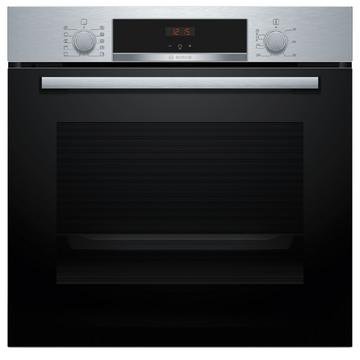
Best for buyers who want a known European brand for everyday baking, the Bosch Series 4 is a 60cm stainless oven (595 x 594 x 548mm) with a 71L cavity. It is the entry point into Bosch built-in ovens, so it skips the premium extras and concentrates on getting the basics right. Bakers are the natural audience: the 3D Hotair fan system pushes heat across up to three shelves at once, so a tray of biscuits up top and a cake lower down bake evenly together.
Seven heating functions cover grilling, pizza, top-and-bottom and fan modes, and cleaning is handled by EcoClean Direct, a catalytic-style liner that absorbs grease during normal cooking rather than running a high-heat burn-off. Owners across NZ and Australian review sites describe it as reliable and good value, with even results and the dependable Bosch feel. It is a sensible, no-drama oven for a family kitchen.
Two cautions. First, several owners on review sites report door-assembly issues, with the inner glass not seating correctly or, in a few cases, the glass door coming loose, so it is worth checking the door action on delivery. Second, EcoClean is less thorough than a true pyrolytic clean, and there is no steam or smart connectivity at this level. At Noel Leeming it is currently a special-order item, so confirm lead time before you buy.
Pros
- Trusted Bosch build with even 3D Hotair multi-shelf baking
- Reliable, good-value everyday performance
- EcoClean liners reduce routine cleaning effort
Cons
- Reports of inner-door glass not seating or coming loose
- EcoClean is less thorough than pyrolytic self-clean
- No steam or smart features; listed as special order
Key specs: 60cm width, 71L cavity, 7 functions, 3D Hotair, EcoClean Direct cleaning, stainless steel, 2-year warranty, model HBA534BS3A.
7. Fisher & Paykel Pyrolytic Oven – Best Large-Capacity NZ Brand
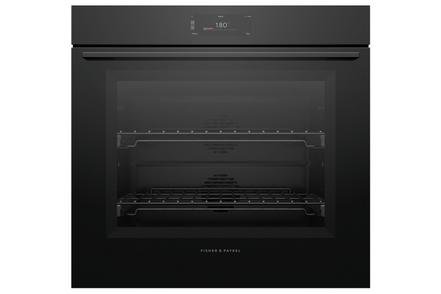
Best for shoppers who want a wide, large-capacity oven from New Zealand’s home-grown brand, the Fisher & Paykel OB76SMPUB3 is a 76cm built-in with pyrolytic self-cleaning and steam assist (the SM in the code denotes the steam-capable model). The extra width over a standard 60cm oven gives noticeably more usable cavity, which is why owners of the 76cm Fisher & Paykel range say it feels bigger inside than rival ovens and handles large bakes and roasts with room to spare.
Controls combine a touchscreen with a control dial, and the steam-assist function adds moisture for bread and roasts that a dry oven cannot match. The pyrolytic cycle is the most aggressive self-clean here: the cavity climbs to around 500C and the door physically locks shut until it cools, so you clear the racks first and expect the kitchen to warm up while it runs. As a Fisher & Paykel, it is backed by a widely available NZ service network.
The trade-offs are real. A 2021 CHOICE reliability survey rated Fisher & Paykel below Bosch, Neff and Miele, and some owners of the 76cm pyrolytic ovens report uneven cooking or electronics faults, including repeat circuit-board repairs. It is also the largest and dearest option in this guide, and the 76cm width means it will not fit a 60cm cabinet. Confirm current stock and the exact specification with the retailer before ordering.
Pros
- Wide 76cm cavity with generous, usable space
- Pyrolytic self-clean plus steam assist for better baking
- Local Fisher & Paykel brand and NZ service network
Cons
- Rated below Bosch, Neff and Miele in a CHOICE reliability survey
- Some reports of uneven cooking and electronics faults
- Largest and most expensive here; needs a 76cm cabinet
Key specs: 76cm width, pyrolytic self-clean, steam assist, touchscreen plus control dial, model OB76SMPUB3. Confirm exact capacity, function count and warranty with the retailer.
8. Bosch Series 8 Pyrolytic Oven – Best Premium Pick
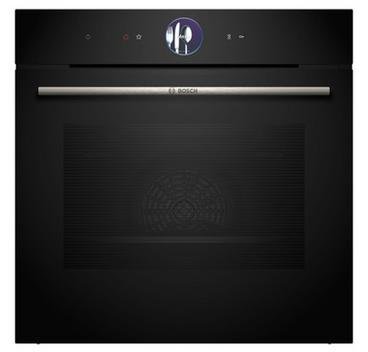
Best overall for buyers who want a flagship 60cm oven, the Bosch Series 8 HBG776KB1A is the most complete oven in this guide. It is a 60cm built-in (595 x 594 x 548mm) with a 71L cavity and 14 heating methods, including 4D Hot Air for even results on any shelf, a dedicated Air Fry function with its own tray, and a pizza setting. The black-glass front is operated through a TFT touch display and a digital control ring rather than physical knobs, which is what gives it that premium feel.
It cleans itself with a full pyrolytic cycle, connects to Home Connect for app control, and the SoftOpen and SoftClose door is the tactile highlight: it glides shut silently instead of slamming. Owners call it a fantastic, refined unit with fast pre-heating, precise control and strong energy efficiency, and it scores highly for both features and everyday usability on review sites.
The main risk to weigh is the all-touch interface. The single most common owner complaint is TFT touch-panel failure: if the panel stops responding, the oven becomes unusable even though the element still works, so the two-year warranty matters. The pyrolytic cycle is also noticeably louder than normal cooking. Those caveats aside, it is the pick to beat for a premium NZ kitchen.
Pros
- 14 functions with 4D Hot Air, Air Fry and pizza modes
- Pyrolytic self-clean plus Home Connect smart control
- Refined TFT controls and silent SoftClose door
Cons
- Owners report TFT touch-panel failures that disable the oven
- Pyrolytic cycle is noticeably louder
- Premium price; all-touch interface has no manual backup
Key specs: 60cm width, 71L cavity, 14 heating methods, pyrolytic self-clean, Air Fry with tray, TFT display and control ring, Home Connect, SoftOpen/SoftClose door, 2-year warranty, model HBG776KB1A.
How to choose a wall oven in NZ
Cleaning type is the first decision. Pyrolytic ovens heat the cavity to around 450 to 500C and burn baked-on grease to ash you wipe away, which is the most hands-off option but costs more and uses more power. Catalytic liners (and Bosch EcoClean) oxidise splatter at cooking temperatures, cheaper and lower-effort day to day, but you still hand-clean the floor and liners last around five years. Manual enamel cavities are the most affordable and the most scrubbing.
Size and width come next. 60cm is the NZ standard and fits most cabinetry; 70 to 76cm and double ovens are the upsize for big families and entertainers. A double oven gives you two cavities for cooking different dishes at once, but needs taller cabinetry and a bigger budget. If bench space is tight, a single oven plus one of the electric frypans or deep fryers can cover overflow cooking.
Functions and extras. Most cooks use four or five settings, so do not pay only for a big function count. An air-fry mode is genuinely useful and can replace a benchtop unit; steam assist helps bread and roasts. If you bake pizza often, a dedicated pizza setting helps, though a standalone pizza oven still gets hotter.
Installation and running costs. A built-in oven in NZ must be installed into a compliant enclosure and hard-wired by a registered electrician if it needs a dedicated circuit, so budget for the install on top of the oven, not just delivery. On running costs, NZ ovens carry a 1 to 6 star energy label and each extra star is worth roughly 10 percent in efficiency; a typical 4-star oven costs on the order of NZ$80 a year to run for an average household, so the model’s star rating matters more than its sticker over a 10 to 15 year life.
Reliability and brand. European names like Bosch and Miele tend to top NZ and Australian reliability surveys, Fisher & Paykel offers strong local service, and value brands like Midea and Parmco deliver more features per dollar but with a shorter or patchier track record. Match the brand to how long you plan to keep the kitchen. For more kitchen-prep gear, see our guide to the food processors.
Separating the oven from the hob is the whole point of going built-in, which only pays off if the induction cooktops you pair it with are chosen just as carefully.
Verdict
For a premium NZ kitchen, the Bosch Series 8 Pyrolytic Oven is the one to beat: 14 functions, air fry, pyrolytic self-clean and refined controls, with the touch-panel caveat the only real risk. Budget renovators get remarkable value from the Midea 60cm Built-In Oven, while the Parmco Series 6 is the smart middle ground for genuine self-cleaning without European pricing. Big families should look at the Midea Double Wall Oven, and anyone wanting a local brand with a wide cavity has the Fisher & Paykel. Match the cleaning type and size to how you cook, and check the live product link for current stock and pricing.
FAQs
Pyrolytic vs catalytic vs steam: which self-cleaning oven is best?
Pyrolytic is the most hands-off: it heats to around 450 to 500C and burns residue to ash you wipe out. Catalytic liners oxidise grease at cooking temperatures and cost less but need some hand cleaning. Steam cleaning loosens light soiling at low heat. Pyrolytic suits frequent roasters; catalytic suits lighter, budget-conscious use.
Is a pyrolytic self-cleaning oven worth the extra money in NZ?
If you roast often and dislike scrubbing, yes. Pyrolytic ovens cost more upfront and use extra power per clean cycle, but they turn baked-on grease to wipe-away ash with no chemicals. For light bakers, a cheaper catalytic or manual oven plus occasional cleaning is usually the better value in New Zealand.
What size wall oven should I buy: is 60cm enough?
For most NZ kitchens 60cm is plenty and fits standard cabinetry, giving roughly 70 to 80L of cavity. Step up to 70 to 76cm or a double oven only if you regularly cook for large groups or want two cavities running at once. Larger ovens need wider, taller housings and cost more to buy and run.
Single vs double wall oven: which should I choose?
Choose a single oven for most households; it is cheaper, simpler and fits standard cabinetry. A double oven gives two independent cavities so you can roast and bake at different temperatures at once, ideal for big families and entertainers. The trade-off is a taller housing, higher price and, on stacked models, a smaller upper cavity.
What is the best oven brand in New Zealand?
There is no single winner. Bosch and Miele consistently rate well for reliability, Fisher & Paykel is the strong local brand with wide NZ service, and value brands like Midea and Parmco offer more features per dollar with a patchier long-term record. Pick based on budget, how long you will keep the kitchen, and the cleaning type you want.
Fisher & Paykel vs Bosch vs Miele: which is more reliable?
Independent surveys such as CHOICE have rated Bosch, Neff and Miele above Fisher & Paykel for reliability, with Miele often top for longevity. Fisher & Paykel counters with strong local NZ service and parts. For lowest fault risk choose Bosch or Miele; for local support and large 76cm cavities, Fisher & Paykel is a reasonable pick.
How many cooking functions does a wall oven actually need?
Most home cooks use only four or five functions: fan bake, conventional bake, grill, fan grill and defrost. Beyond that, extras like air fry, pizza and steam are nice but not essential, so do not pay purely for a high function count. Focus on the modes you will use and on cooking evenness instead.
Is an air-fryer or steam function in a built-in oven worth it?
An air-fry mode is genuinely useful and can replace a benchtop air fryer, freeing up bench space, though it usually adds to the price. Steam assist improves bread, roasts and reheating. Both are worth it if you cook those foods often; if not, a standalone appliance is often cheaper and just as good.
How much does it cost to install a wall oven in NZ?
Budget for installation on top of the oven price. A straight swap into an existing compliant cabinet is cheapest, while a new enclosure or a dedicated circuit means hiring a registered electrician, which raises the cost. Always confirm the cavity dimensions and power supply before buying so the oven fits and can be wired safely.
How long do wall ovens last and what do they cost to run in NZ?
A good built-in oven typically lasts 10 to 15 years. Running cost depends on the NZ energy star rating, where each extra star is worth roughly 10 percent efficiency; a common 4-star oven costs on the order of NZ$80 a year for an average household. Over a decade, the star rating matters far more than small price differences.
