
The best deep fryer in NZ for most households is the TSB Living Single Tank Electric Fryer, thanks to its simple dial controls, 10-litre tank and everyday-friendly running cost. This guide to the best deep fryers in NZ covers eight electric fryers, from a compact space-saving model and a family-sized 3-basket unit to versatile multi-cookers and a twin-tank option for bigger households. Every pick below has been checked for genuine specs and real availability, with independent owner feedback included where it exists.
Quick comparison
| Fryer | Best for | Oil capacity | Power | Standout feature |
| Tefal Versalio FR4900 | Best overall / most versatile | Adjustable | 1300W | 7 cooking modes in one pot |
| Sunbeam DF4500 | Best multi-cooker | ~2L oil / 1kg food | 1600W | Deep fry, roast, boil, braise & more |
| 5L 3-Basket Fryer | Best for cooking two dishes at once | 5L (3 baskets) | 2000W | Viewing window + 3 removable baskets |
| Healthy Choice DF380 | Best budget | 3.8L | 2000W | Thermal safety device + 60-min timer |
| TSB Living Single Tank | Best overall / everyday frying | 6L (10L tank) | 2300W | Simple dial controls |
| 3L Commercial Fryer | Best for family batches & small cafes | 3L | 2000W | Dual temperature probes |
| 2.5L Compact Fryer | Best compact / space-saving | 1.5L oil (2.5L unit) | 1000W | Digital timer + viewing window |
| TSB Living Twin Tank | Best for families / two foods at once | 6L x2 (10L tanks) | 2800W x2 | Dual oil drain taps |
1. Tefal Versalio 7 In 1 MultiFryer – Best Overall / Most Versatile
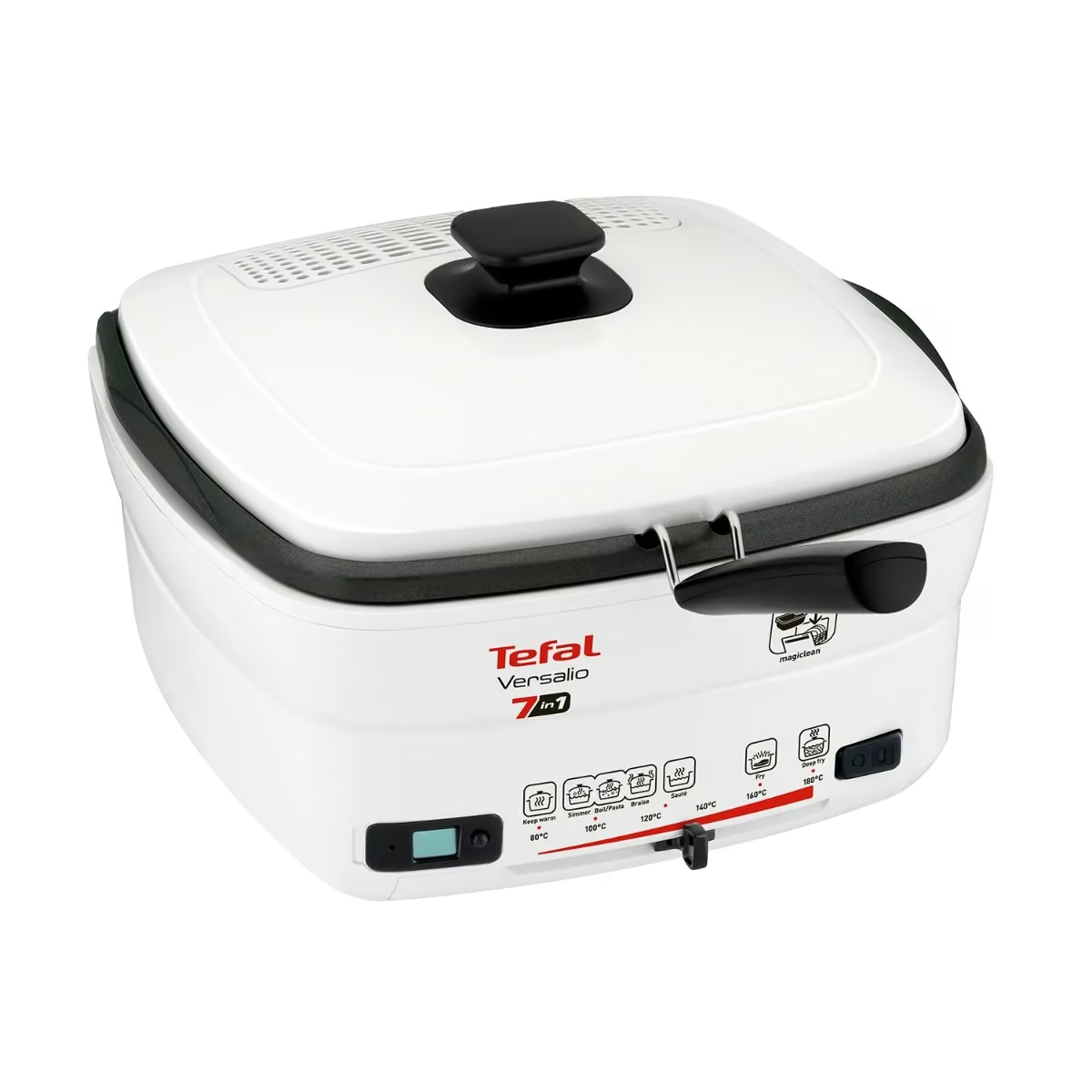
Shoppers who want one appliance that does more than just deep frying should look at the Tefal Versalio 7 In 1 MultiFryer, which switches between seven cooking modes in the same removable pot: deep fry, fry, simmer, braise, saute, boil/pasta and keep warm. It is built around a 1300W element inside a 36 x 36.5 x 20.4cm white plastic body weighing 4.61kg, and the removable bowl and lid are both dishwasher-safe.
An adjustable thermostat runs from 80 to 180 degrees Celsius and a removable timer keeps track of cooking time across all seven modes. Tefal includes a 20-recipe book to help new owners get past the basics, and the oil capacity itself is adjustable rather than fixed to one fill line.
Owner reviews on ProductReview.com.au sit at 2.5 out of 5 from nine reviews, a mixed result. Some owners praise the chip results as crunchy outside and soft in the middle with even heat distribution, while others report the element cycles on and off unpredictably rather than holding a steady temperature.
Pros
- Seven cooking modes in one removable pot
- Dishwasher-safe bowl and lid
- Includes a 20-recipe book
Cons
- Owner reviews report inconsistent heating cycles on some units
- Mixed 2.5/5 rating from verified ProductReview.com.au owners
Key specs: model FR4900, 1300W, 80-180C adjustable thermostat, 7 cooking modes, dishwasher-safe bowl and lid.
2. Sunbeam DF4500 Multi Cooker Deep Fryer – Best Multi-Cooker
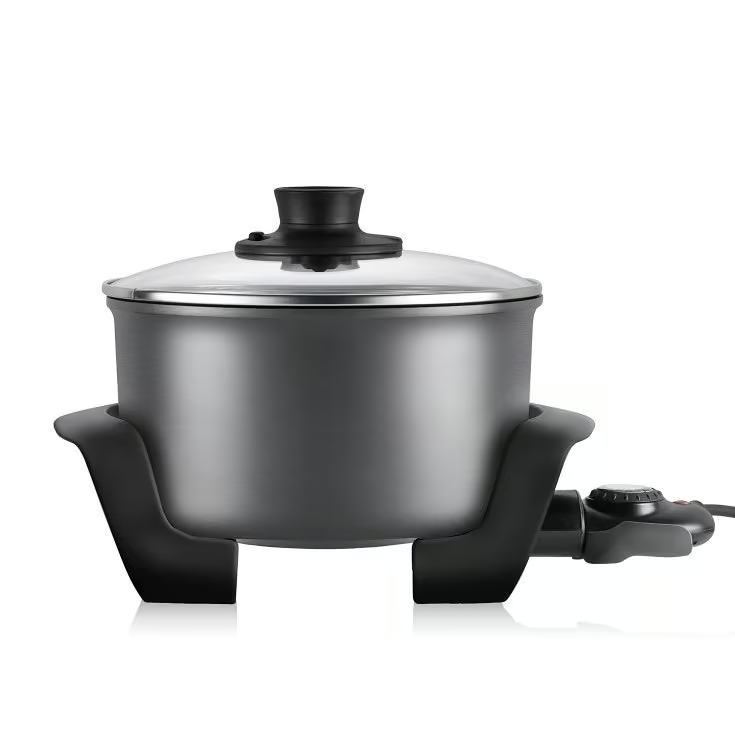
Households that want a single appliance to cover more than frying are well served by the Sunbeam DF4500, a charcoal-coloured multi cooker built around a 1600W element and a 5-litre pot that takes around 2 litres of oil for up to 1kg of food. Sunbeam markets it as three appliances in one: a deep fryer, a frypan and a saucepan, covering boil, roast, casserole, braise, stir-fry and deep-fry.
A sliding temperature dial switches between those modes, and the stainless steel frying basket has a draining lever that rests securely inside the rim of the pot for hands-free draining. The non-stick coated pot and glass lid are both dishwasher-safe, and a thermostat indicator light cycles on and off to show the element is maintaining temperature.
Independent owner reviews are mixed but leaning positive: ProductReview.com.au shows 3.1 out of 5 from 45 reviews, and NZ retailer Appliances Online lists it at 3.2 out of 5 from 33 reviews. One reviewer specifically praised it for frying well while doubling as a pot for curries and stews, while another felt it never reached a proper frying temperature for crisp results.
Pros
- Genuinely multi-purpose beyond frying (boil, roast, braise, stir-fry)
- Basket drains hands-free via a lever that rests in the pot rim
- Holds a consistent 3.1-3.2/5 rating across two independent retailers
Cons
- Some owners report it does not reach a hot enough frying temperature
- Non-stick coating needs gentler care than bare stainless steel
Key specs: model DF4500, 1600W, 5L pot, ~2L oil fill, 1kg food capacity.
3. 5L Electric Deep Fryer with 3 Baskets – Best for Cooking Two Dishes at Once
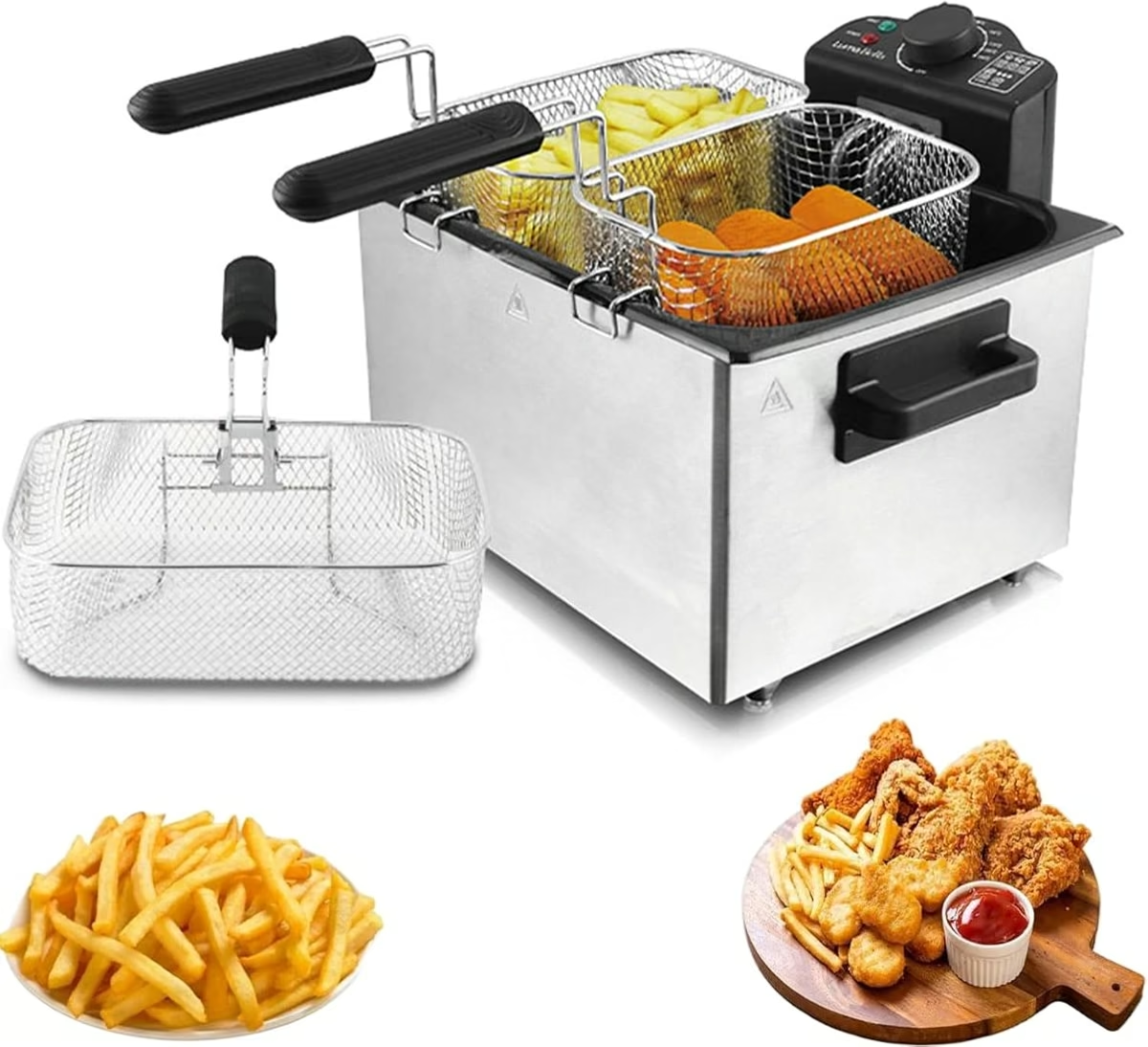
Families who need to fry two different foods without mixing flavours or reheating a second batch should look at this 5-litre electric deep fryer, which ships with three separate frying baskets rather than the usual one or two. A 2000W submerged heating element and an anti-grease filter are built to fry quickly and evenly across all three baskets.
Temperature is adjustable from 160 to 190 degrees Celsius, with a power indicator and heating light to help track when the oil is at temperature. The detachable cool-touch handle and detachable non-stick enamelled pot make cleanup straightforward, and a viewing window in the lid lets you check on food without lifting it and releasing splatter.
This is sold by a smaller import-focused seller rather than an established appliance brand, and no independent owner reviews outside the retailer listing itself could be verified for this model.
Pros
- Three baskets let two foods fry separately at once
- Detachable non-stick pot and handle for easy cleaning
- Viewing window lid reduces splatter while cooking
Cons
- No independent owner reviews found for this model
- Generic import brand rather than an established appliance maker
Key specs: 2000W, 5L / 21-cup capacity, 3 baskets, 160-190C adjustable, viewing-window lid.
4. Healthy Choice 3.8L Deep Fryer – Best Budget
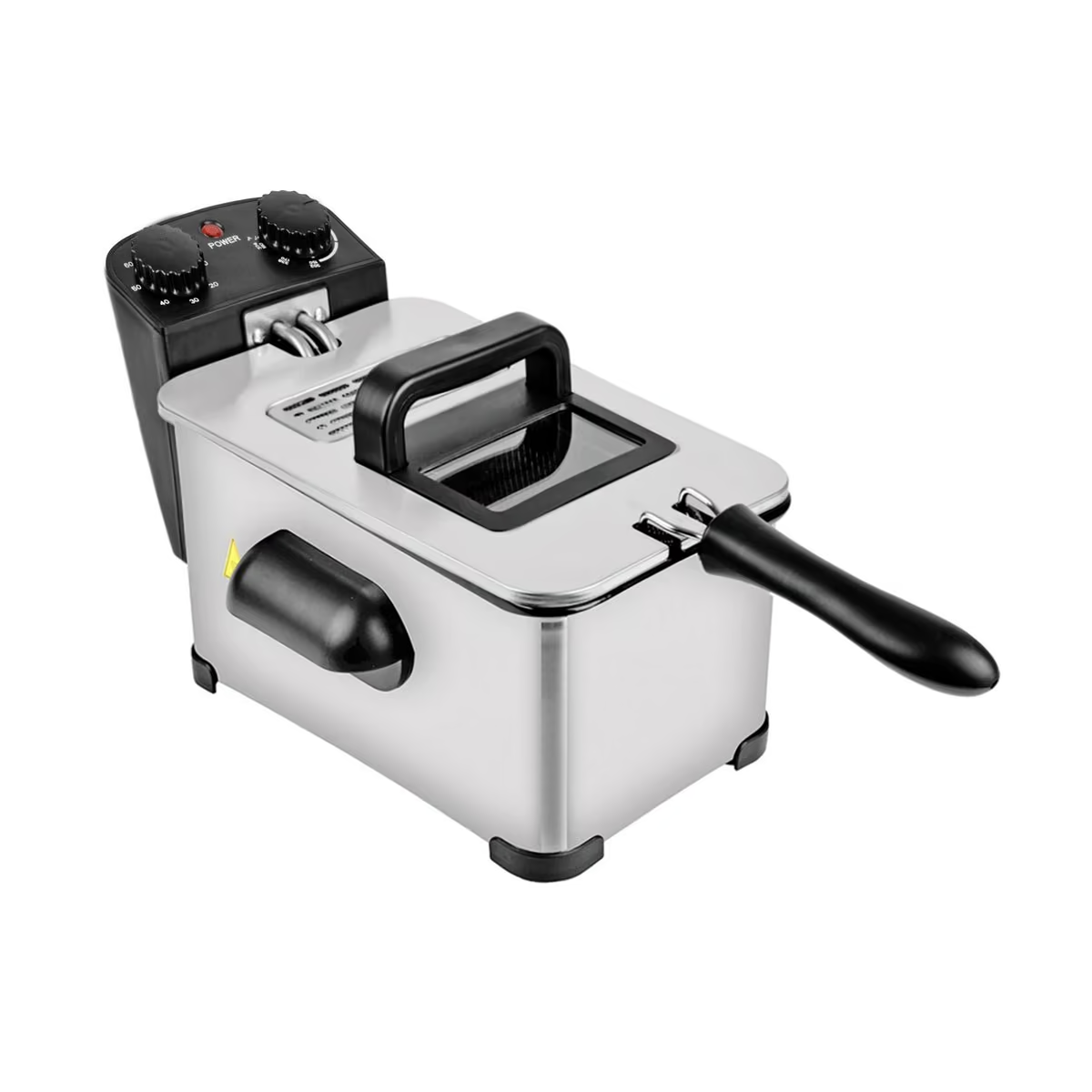
Shoppers after the lowest realistic entry price for a proper 2000W fryer should look at the Healthy Choice 3.8L Deep Fryer, model DF380, distributed in Australia and New Zealand by Lenoxx Electronics. It runs a temperature range of 150 to 190 degrees Celsius via a dial control, with a timer control knob good for up to 60 minutes.
A thermal safety device automatically switches the unit off if it overheats, and the lid combines a viewing window with an odour-reducing filter so kitchen smells stay down during frying. The stainless steel body measures 40 x 24.4 x 24cm and weighs 2.8kg, with a submersible heating element and a dishwasher-safe basket.
Bunnings Australia lists this model at 5 out of 5, though that rating is based on only a single review, so it should be read as a thin data point rather than a strong signal either way.
Pros
- Lowest entry price of any 2000W fryer in this guide
- Thermal safety cut-out included as standard
- Odour-reducing filter built into the lid
Cons
- Only one review exists on its Bunnings listing, so feedback is thin
- Dial controls only, no digital display
Key specs: model DF380, 3.8L, 2000W, 150-190C, 60-minute timer.
5. TSB Living Single Tank Electric Fryer – Best Overall
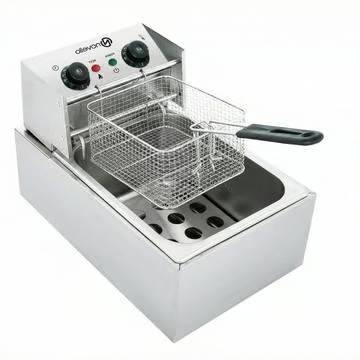
The best deep fryer in NZ overall for most households is the TSB Living Single Tank Electric Fryer, thanks to its straightforward dial controls and low running cost for everyday chips, fish and fritters. It is a compact single 10-litre tank unit measuring 29 x 45.5 x 30.5cm, a benchtop footprint that fits most NZ kitchens without hogging space. The body is commercial-grade stainless steel with a silver finish, analog dial controls rather than a digital display, and it includes a fryer cover lid and heatproof basket handle.
A separate temperature dial (60 to 200 degrees Celsius) and a 60-minute timer knob both need to be switched on before the element heats, a step testers found easy to overlook the first time. Owners on TSB Living’s own review page, five reviews and all five-star, describe setup and clean-up as straightforward. The tank takes a 6-litre oil fill and runs on a 2300W element through a 10A SAA-approved plug suited to a standard NZ power point.
Pros
- Simple, affordable single-tank fryer
- Easy to set up and clean per owner reviews
- Commercial-grade stainless steel body
Cons
- No viewing window or digital display
- Weight figures vary between retailer listings
Key specs: SKU PR9139, 10L tank, 6L oil fill, 2300W, 60-200C, 60-minute timer.
6. Electric Deep Fryer with Porcelain Oil Tank – Best for Family Batches & Small Cafes
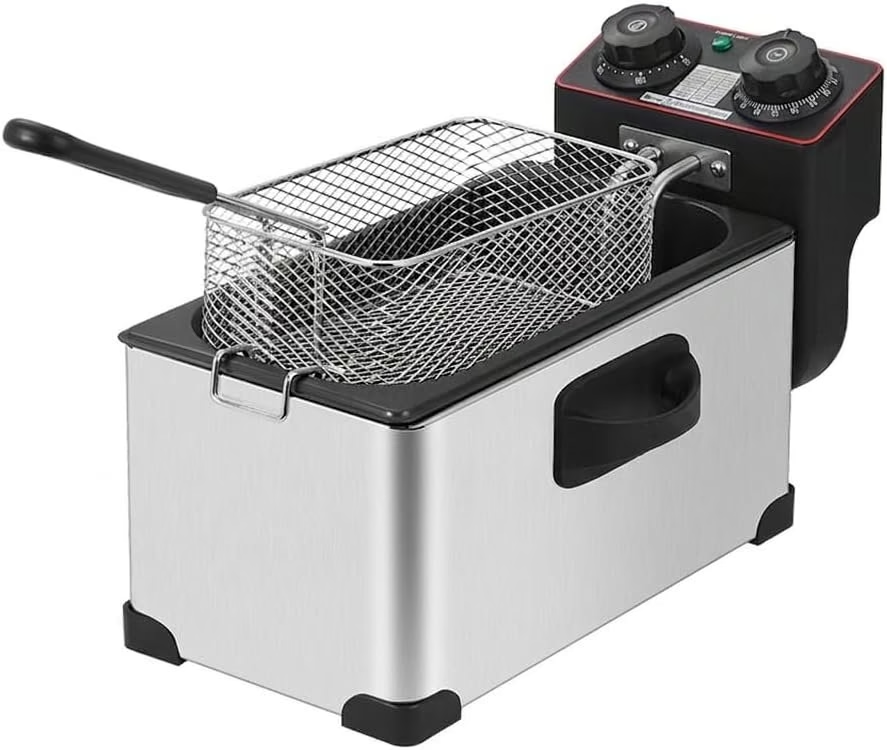
Anyone frying bigger batches at home, or running a small cafe or food truck, is the target market for this 3-litre commercial-style electric deep fryer, built around a heavy-duty 2000W U-shaped immersion element for fast heat recovery between batches. The heavy-duty enamel and porcelain oil tank is sized for large batches of chips, wings or fried chicken in one go.
Independent dual-dial controls separate the adjustable thermostat, which runs up to 190 degrees Celsius, from a built-in mechanical timer good for up to 60 minutes. Integrated dual temperature probes provide more accurate heat monitoring than a single sensor, with an auto-shutdown overheat safety feature built in. A slider-type detachable control head lets the heating element, control panel, oil tank, lid and crumb guard all be pulled apart for cleaning.
No independent owner reviews outside the retailer listing itself could be verified for this model.
Pros
- Dual temperature probes for more accurate heat control
- Fully detachable parts for thorough cleaning
- Reasonably priced for a 2000W commercial-style unit
Cons
- No independent owner reviews found for this model
- Porcelain-coated tank needs more careful handling than plain stainless steel
Key specs: 2000W, 3L porcelain oil tank, dual temperature probes, 60-minute timer, 190C max.
7. Compact Deep Fryer with Viewing Window – Best Compact / Space-Saving
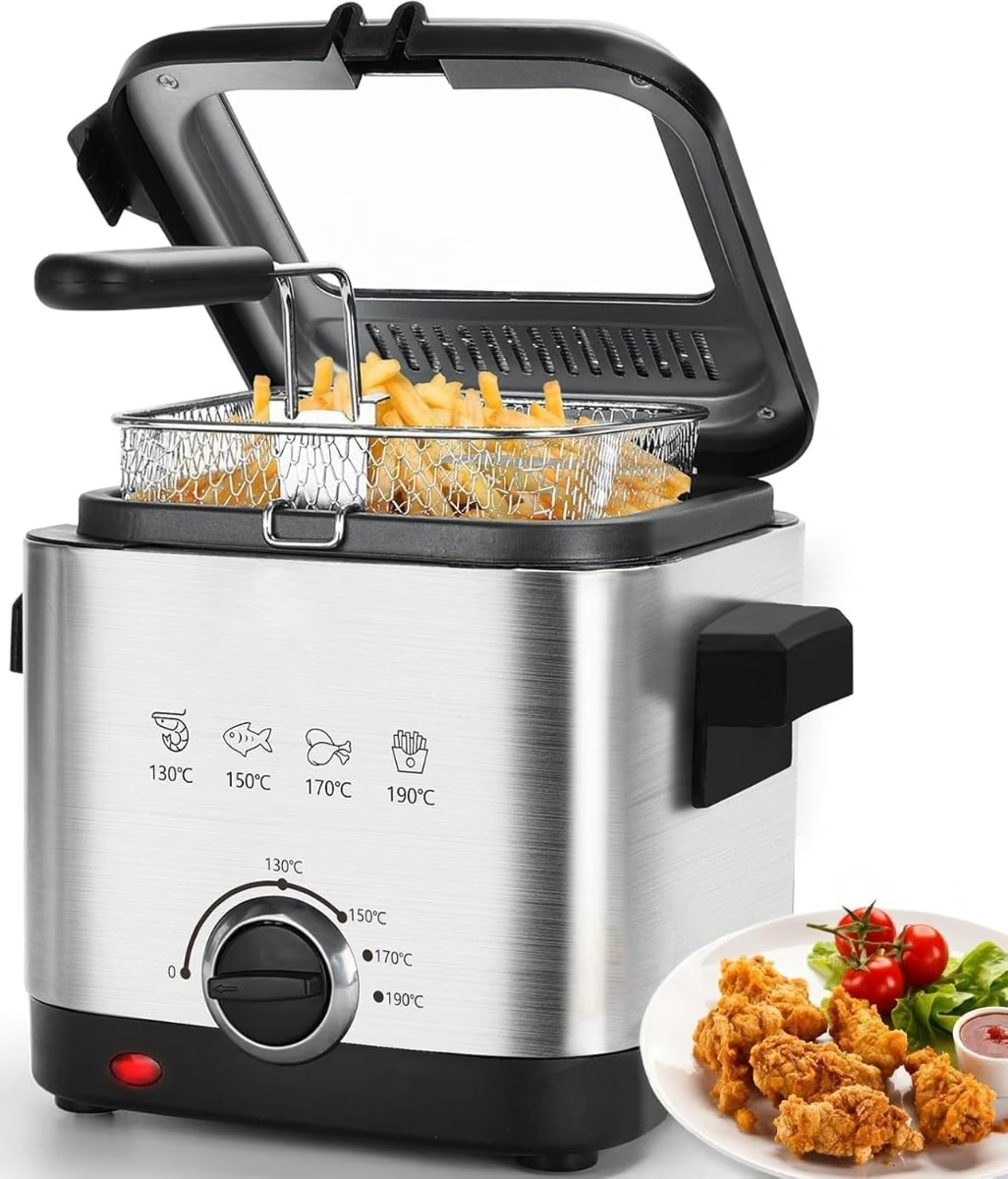
Studio kitchens, small households or anyone short on bench space should look at this compact 2.5-litre deep fryer, which holds 1.5 litres of oil and runs on a 1000W element, enough for chips, chicken pieces or calamari for one or two people. A digital thermostat adjustable from 130 to 190 degrees Celsius uses dual sensors to keep oil heat more consistent than a single-sensor design.
The stainless steel body has heat-insulated walls and a viewing window so food can be checked without lifting the lid, and the removable basket has a foldable handle plus a dishwasher-safe finish. An integrated smoke filter helps reduce cooking odours, and a clear oil-level indicator plus pouring spout help avoid overfilling and spills.
No independent owner reviews outside the retailer listing itself could be verified for this model, and the manufacturer backs it with a 2-year warranty.
Pros
- Smallest footprint of any fryer in this guide
- Digital thermostat with dual sensors for steadier heat
- Backed by a 2-year manufacturer warranty
Cons
- No independent owner reviews found for this model
- 1.5L oil capacity limits batch size to small portions
Key specs: 1000W, 2.5L unit / 1.5L oil capacity, 130-190C digital thermostat, 2-year warranty.
8. TSB Living Twin Tank Electric Fryer with Dual Oil Taps – Best for Families
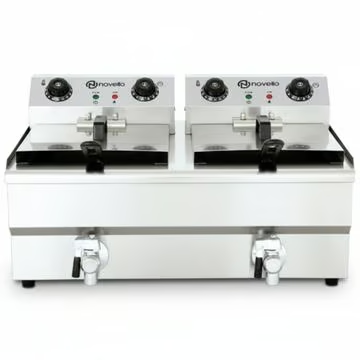
Households that fry more than one thing at a time are better served by the TSB Living Twin Tank Electric Fryer, which runs two independent 10-litre tanks so chips and fish never have to share the same oil. Its footprint is understandably wider at 59.5 x 58 x 36cm, and it can run as two separate fryers or be used as one combined unit. The silver stainless steel body feels heavy-duty, with dial-style temperature and timer knobs on each tank, twin removable baskets with heatproof handles, and a cover lid for each side.
Each tank runs its own 2800W element (5600W combined), which is worth checking against the household circuit before plugging both sides in alongside other high-draw appliances. Every tank has its own temperature control (60 to 200 degrees Celsius) and 60-minute timer, and dual oil drain taps make emptying or swapping oil noticeably more convenient than lifting a full tank to pour it out. TSB Living’s own safety note warns that both the temperature and timer knob need to be turned on before frying starts.
Pros
- Two independent tanks for different foods or temperatures
- Dual oil drain taps for easier emptying
- Heavy-duty stainless steel build
Cons
- No independent owner reviews found for this model
- Warranty period not clearly stated by the retailer
Key specs: SKU PR9142, two 10L tanks, 6L oil fill per side, 2800W per element.
How to choose a deep fryer in NZ
Oil capacity matters most. A single 10-litre tank fryer, like TSB Living’s single-tank model, suits a couple or small family cooking chips and fish a few nights a month. A twin-tank fryer earns its bench space if the household fries different foods at different temperatures, or feeds a crowd, since each tank runs independently. Multi-cooker style fryers like the Tefal Versalio and Sunbeam DF4500 add extra cooking modes beyond frying, while 3-basket models let two foods fry separately without stepping up to a full twin-tank unit.
Power draw is worth checking against the household circuit. Twin-tank fryers running two 2000W-plus elements at once, or a single 2000W-plus commercial-style unit, can pull more current than a single power point or multiboard is rated for, so it pays to check the plug rating before buying.
Look for a thermal cut-out or high-limit shutoff that stops the element if oil overheats, cool-touch handles on the basket, and a lid that keeps dust and splatter off unused oil. Shoppers who fry only occasionally may prefer to compare capacity and running cost in our guide to air fryers first. For shallow frying rather than deep frying, an electric frypan is worth a look too.
Related guides: shoppers stocking a NZ kitchen from scratch can also compare our picks for the best food processors. For weekend entertaining, our pizza oven guide covers wood-fired and electric options sold in NZ.
Doughnuts are the obvious thing to drop in the oil, though donut makers bake them instead if you would rather not deal with the smell for two days. For cooking at the table rather than battering in the kitchen, electric hot pots do the sociable version of the same job with far less cleanup. Not everything worth making at home involves a tank of hot oil, and the best yogurt makers sit at the opposite end of the effort scale.
Verdict
The TSB Living Single Tank Electric Fryer remains the best all-round pick for most NZ kitchens: simple to run, easy to clean and inexpensive enough to replace if it wears out. Families who fry two things at once should step up to the twin-tank version, while the Tefal Versalio 7 In 1 MultiFryer suits shoppers who want extra cooking modes beyond frying. Budget-conscious buyers get the most fryer for their money from the Healthy Choice 3.8L, and anyone frying bigger batches for a crowd, a cafe or a food truck should look at the 3-basket or 3-litre commercial-style units instead.
FAQs
Is a deep fryer better than an air fryer for chips?
A deep fryer generally produces a crispier, more traditional fried texture because food is fully submerged in hot oil, while an air fryer uses far less oil and is easier to clean. Deep fryers cook slightly faster and give an authentic fried result, but air fryers are more versatile day to day.
How much oil does a home deep fryer need?
It depends on the tank. Compact single-tank home fryers like the models here typically need 4 to 6 litres, while commercial-style countertop units may need as little as 3.5 to 5 litres per tank. Always fill to the manufacturer’s marked line rather than guessing, since underfilling exposes the element.
How often should you change deep fryer oil at home?
Most home cooks should change oil every 8 to 10 uses for lightly battered food, but only 2 to 4 uses for heavily breaded or fatty items, which break down oil faster. Watch for darker colour, a rancid smell, or foaming when hot as signs it needs replacing sooner.
Can you leave oil in a deep fryer between uses?
Yes, provided the fryer has a lid and the oil is strained of food debris first. Oil can typically be kept in a covered fryer for a few days to a couple of weeks between uses, or filtered and stored in a cool, dark place for longer. Discard it once it smells off.
What safety features should a deep fryer have?
Look for a thermal cut-out or high-limit shutoff that stops the element if oil overheats, a cool-touch exterior or handles, and a stable base with non-slip feet. A lid also reduces splatter risk and keeps stored oil cleaner between uses at home.
What size deep fryer suits a family?
A single tank of around 10 litres capacity, holding roughly 6 litres of oil, suits most households of two to five people cooking a few nights a month. Larger families, or households that fry different foods at once, are better served by a twin-tank fryer running two independent temperatures.
