
The best smart watch in NZ overall is the Garmin vivoactive 5, thanks to a bright 1.2-inch AMOLED display and a 26g case that sits flat under a shirt cuff without looking like a training device.
Choosing a smart watch in 2026 means weighing battery life against features, and rugged build against everyday comfort. We compared ten current smart watches, from Garmin’s running-focused GPS watches through to slim all-day trackers and a dedicated health-metrics watch, to help you match a model to how you actually plan to use it.
Every pick below is currently available with fast, reliable shipping to New Zealand, and we have grouped them by what each one does best rather than by price alone.
Quick comparison
| Smart Watch | Best For | Battery Life | Water Rating |
|---|---|---|---|
| Garmin vivoactive 5 | Best Overall | Up to 11 days | 5 ATM |
| Amazfit Active 2 | Best Value All-Rounder | Up to 10 days | 5 ATM |
| Amazfit Bip 6 | Best Budget | Up to 14 days | 5 ATM |
| Multi-metric Health Smart Watch | Best for All-in-One Wellness Tracking | Multi-day | Splash resistant |
| Redmi Watch 6 | Best Battery Life | Up to 24 days | 5 ATM |
| Huawei Watch Fit 4 | Best Slim and Lightweight | Up to 10 days | 5 ATM |
| Fitbit Charge 6 | Best Fitness Tracker | Up to 7 days | 5 ATM |
| Garmin Forerunner 265 | Best for Runners | Up to 13 days | 5 ATM |
| Amazfit T-Rex 3 | Best Rugged and Outdoor | Up to 27 days | 10 ATM |
| Samsung Galaxy Watch8 | Best Premium Android | Up to 30 hrs (AOD) | 5 ATM + IP68 |
1. Garmin vivoactive 5 – Best Overall
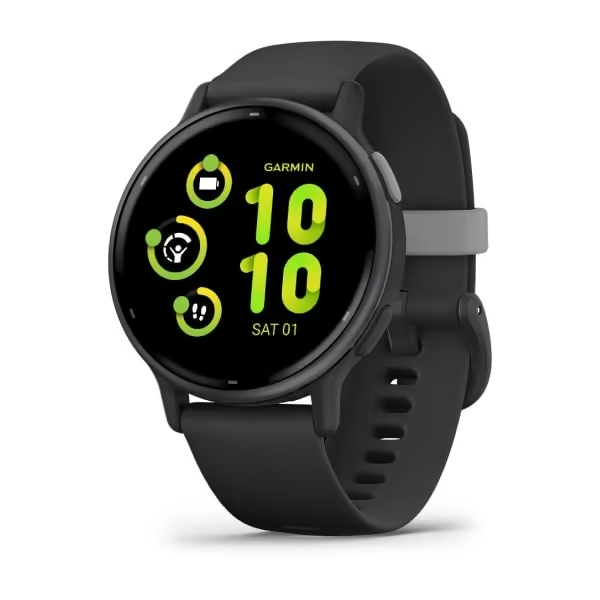
The vivoactive 5 keeps things compact at 42.2 by 42.2 by 11.1 mm and 26 g for the watch alone, or 36 g with the included band, so it sits flat under a shirt cuff and suits smaller wrists. The 30.4 mm (1.2 inch) AMOLED panel runs at 390 by 390 pixels behind Corning Gorilla Glass 3, set in an anodised aluminium bezel over a fibre-reinforced polymer case. Always-on display is optional, and the 20 mm quick release bands make swapping straps easy.
Garmin rates it at up to 11 days in smartwatch mode, dropping to roughly 5 days with the display always on, plus 21 hours of GPS-only tracking or 17 hours using all satellite systems. Positioning covers GPS, GLONASS and Galileo, while the Garmin Elevate wrist heart rate sensor works alongside a Pulse Ox blood oxygen monitor, compass, accelerometer and ambient light sensor. There is 4 GB of memory for offline music, and the 5 ATM rating means it is fine for pool and open water swimming.
The notable omission is a barometric altimeter, which is not listed in the specifications, so elevation data is less precise than on Garmin’s outdoor models. It also sticks to standard multi-GNSS rather than the multi-band positioning found further up the range. For a buyer who wants mature health tracking, Body Battery energy monitoring and genuine multi-day battery in a small, light case, it is the most complete all-rounder here.
Pros
- Up to 11 days smartwatch battery and 21 hours GPS-only tracking
- Small and light at 26 g with a 42.2 mm case that suits slim wrists
- Bright 390 by 390 AMOLED behind Gorilla Glass 3 with optional always-on mode
- 4 GB memory for offline music storage and 5 ATM swim rating
Cons
- No barometric altimeter listed, so elevation tracking is less accurate
- Single-band GNSS only, not the multi-band positioning of pricier Garmin models
- Smallest display in this guide at 1.2 inches
Key specs: 30.4 mm (1.2 inch) AMOLED at 390 by 390 pixels, up to 11 days smartwatch battery or 21 hours GPS-only, Elevate wrist heart rate, Pulse Ox, compass, accelerometer and ambient light sensors, GPS plus GLONASS and Galileo, 5 ATM water rating, 42.2 mm case at 26 g.
2. Amazfit Active 2 – Best Value All-Rounder
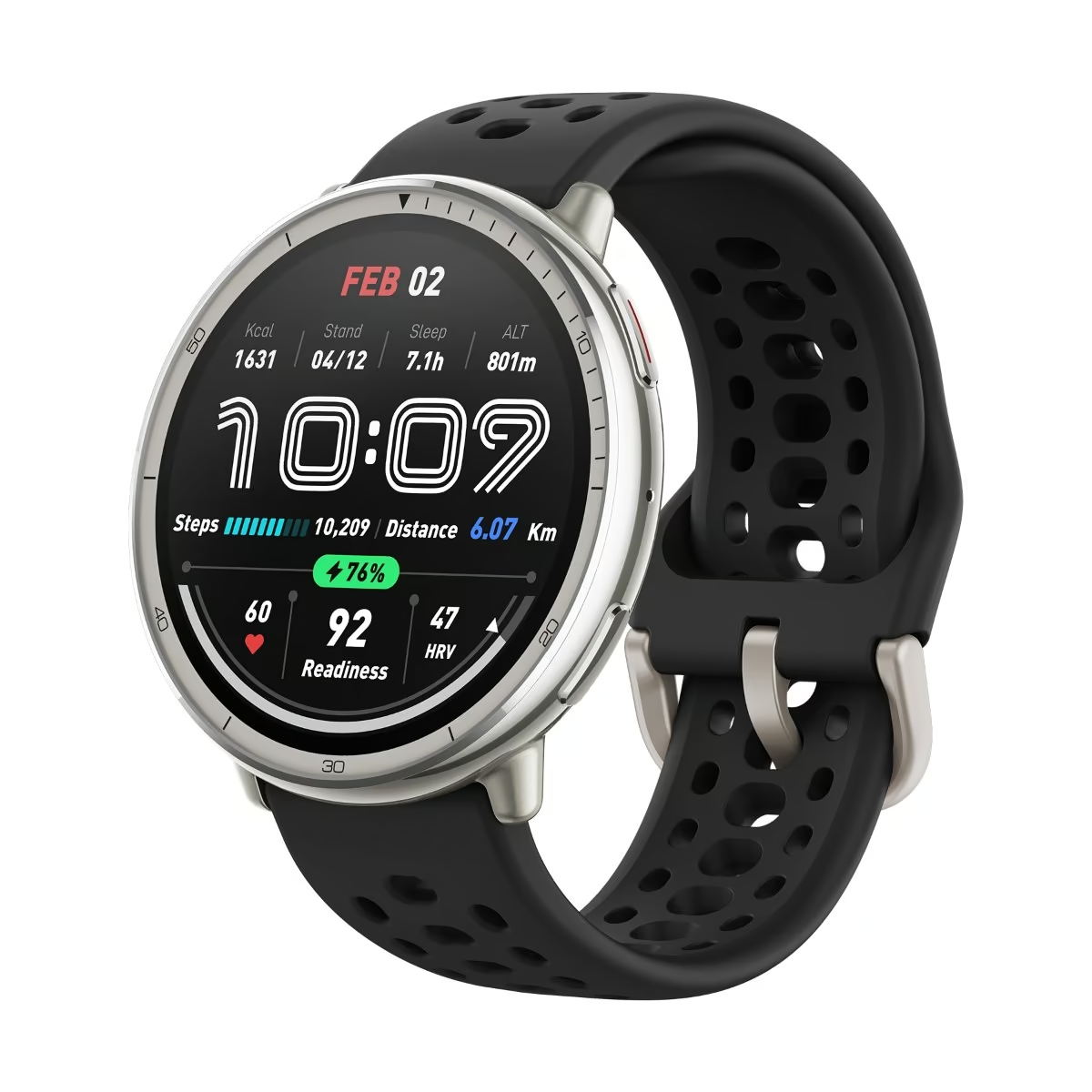
The Active 2 is a round watch built around a stainless steel bezel and a polymer middle frame, weighing 29.5 g without its strap. Its 1.32 inch AMOLED screen runs 466 by 466 pixels at 353 ppi and peaks at 2,000 nits, so it stays readable in harsh midday glare. It uses 2.5D tempered glass with an anti-fingerprint coating, and takes a 20 mm strap with a classic pin buckle.
A 270 mAh cell is rated for up to 10 days of typical use, around 5 days under heavy use, up to 19 days in battery saver mode and 21 hours of continuous GPS. Positioning draws on five satellite systems with circularly polarised antenna technology, and the BioTracker 6.0 PPG sensor is joined by an accelerometer, gyroscope, geomagnetic sensor, barometric altimeter, temperature sensor and ambient light sensor. It carries a 5 ATM rating tested to ISO 22810:2010, covers 164 sports modes and includes a microphone and speaker for Bluetooth calls.
The trade-offs are mostly about the platform rather than the hardware, since Zepp’s training analysis is less established than Garmin’s. Offline map road name display and Zepp Flow voice control still add real everyday utility. It suits a buyer who wants a bright screen, a full sensor set and broad sport coverage in one watch, without moving to a dedicated multisport device.
Pros
- Bright 1.32 inch 466 by 466 AMOLED with a 2,000 nit peak and 353 ppi
- Full sensor set including barometric altimeter, temperature and geomagnetic sensors
- Up to 10 days typical battery, 19 days in saver mode and 21 hours continuous GPS
- 164 sports modes plus microphone and speaker for Bluetooth calls
Cons
- Tempered glass rather than sapphire on this model
- Zepp app ecosystem is less mature than Garmin’s for advanced training analysis
- No offline topographic maps, only road name overlays
Key specs: 1.32 inch AMOLED at 466 by 466 pixels, 353 ppi and up to 2,000 nits, 270 mAh battery rated up to 10 days typical or 21 hours continuous GPS, BioTracker 6.0 PPG plus accelerometer, gyroscope, geomagnetic, barometric altimeter, temperature and ambient light sensors, five satellite positioning systems, 5 ATM water rating, 29.5 g without strap.
3. Amazfit Bip 6 – Best Budget
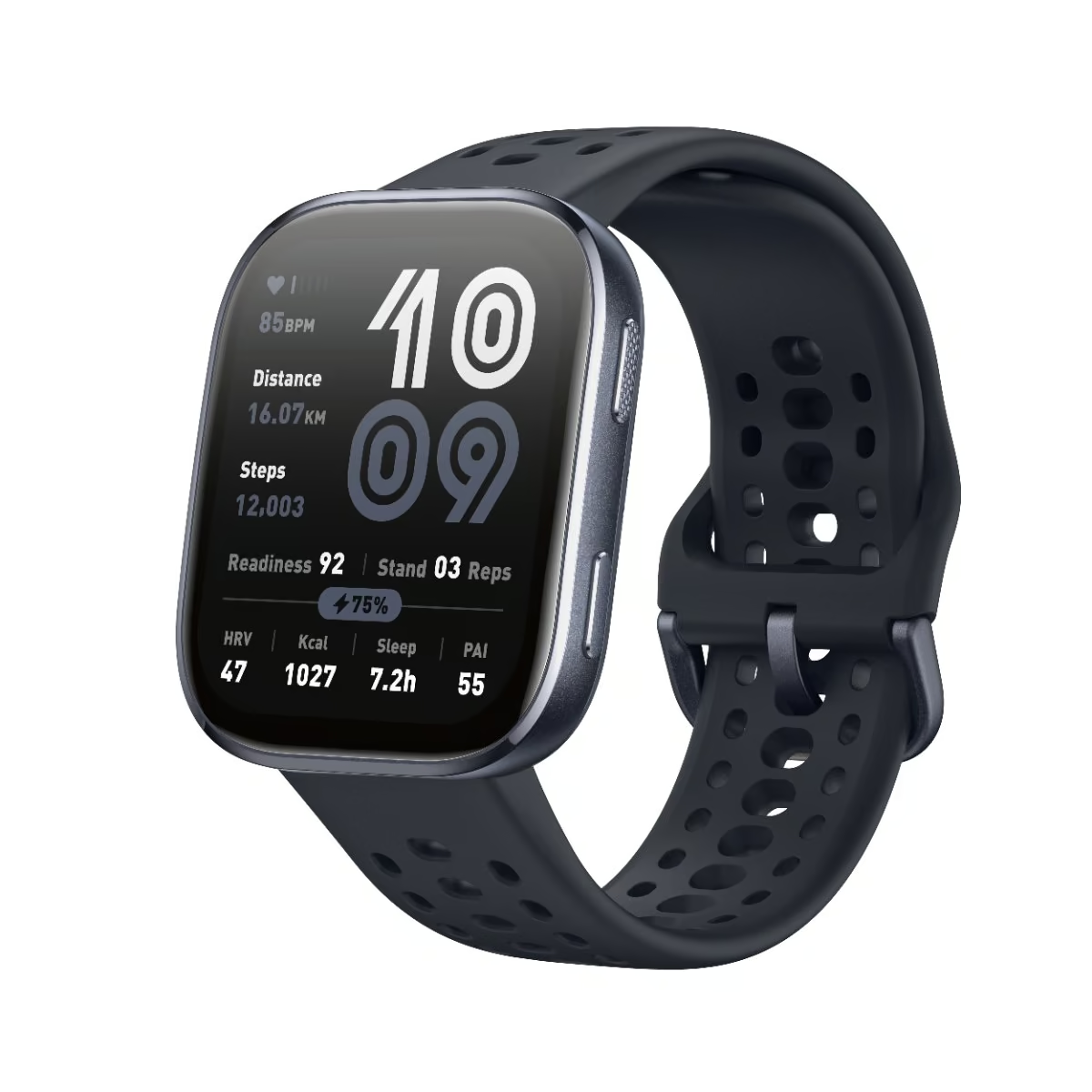
The Bip 6 takes a squared-off approach, measuring 46.3 by 40.2 by 10.45 mm with an aluminium alloy frame over a fibre-reinforced polymer case, and weighing 27.9 g before the strap. Its 1.97 inch AMOLED panel is easily the largest here at 390 by 450 pixels with a 2,000 nit peak, protected by tempered glass with an anti-fingerprint coating. The 22 mm liquid silicone band is soft enough to leave on overnight for sleep tracking.
Battery life is the headline figure, with a 340 mAh cell rated for up to 14 days of typical use, roughly 6 days under heavy use, up to 26 days in battery saver mode and 32 hours of continuous GPS. Five satellite positioning systems handle location, while the BioTracker PPG sensor uses a 5PD and 2LED arrangement to read heart rate, blood oxygen, stress and heart rate variability. It is rated 5 ATM to ISO 22810:2010 and covers more than 140 sports and lifestyle activities.
The compromises show in the sensor list, which covers acceleration, gyroscope, ambient light and geomagnetic sensing but no barometric altimeter, so elevation and stair work are limited. Connectivity is Bluetooth 5.2 only, meaning calls and notifications depend on a paired phone staying in range. For a first smartwatch, a teenager, or anyone who mainly wants a big readable display and a fortnight between charges, it handles the essentials well.
Pros
- Largest display in this guide at 1.97 inches, 390 by 450 pixels and 2,000 nits
- Up to 14 days typical battery, 26 days in saver mode and 32 hours continuous GPS
- Light at 27.9 g without the strap, with an aluminium alloy frame
- 5 ATM water rating and more than 140 sports and lifestyle activities
Cons
- No barometric altimeter in the listed sensor set
- Lower pixel density than the round Amazfit models
- Tempered glass rather than sapphire, and a polymer case behind the metal frame
Key specs: 1.97 inch AMOLED at 390 by 450 pixels with up to 2,000 nits, 340 mAh battery rated up to 14 days typical or 32 hours continuous GPS, BioTracker PPG (5PD and 2LED) plus acceleration, gyroscope, ambient light and geomagnetic sensors, five satellite positioning systems, 5 ATM water rating, 46.3 by 40.2 by 10.45 mm at 27.9 g.
4. Multi-metric Health Smart Watch – Best for All-in-One Wellness Tracking
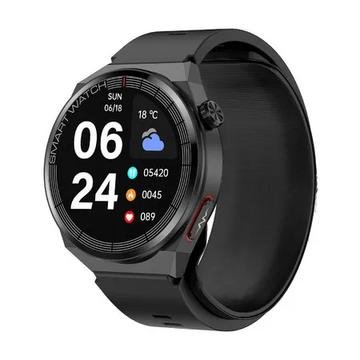
For the data-curious shopper, this multi-metric health watch casts the widest net, tracking heart rate, blood pressure, blood-sugar trends, uric acid, blood lipids and body temperature in one black sports-styled device. The verdict: nothing else here attempts this many readings at once.
The design is a modern rounded-rectangle with a bright colour touchscreen and a sporty black strap, so it looks the part at the gym or the office. It is light on the wrist for all-day and overnight wear, and the interface groups the many health tiles into a scrollable dashboard plus remote-care sharing so a family member can view trends.
It layers those health metrics over standard sports modes, sleep tracking and remote care. The honest caveat matters here: non-invasive blood-sugar, uric-acid and blood-lipid figures are estimated trends produced by optical sensors and algorithms, not laboratory or medical-device results. They should be read as general wellness indicators, never as a basis for managing a diagnosed condition.
Pros
- The broadest health-metric set of any watch here
- Bright colour display with a clear, tile-based dashboard
- Remote-care sharing and full sports and sleep tracking
Cons
- Blood-sugar, uric-acid and lipid readings are estimates only, not medical measurements
- So many metrics can overwhelm casual users
- Companion-app experience is basic compared with major brands
Key specs: heart rate, blood pressure, blood-sugar trend, uric acid, blood lipid and body-temperature monitoring, remote care, sports modes, black colourway. Product code PID 67094.
5. Redmi Watch 6 – Best Battery Life
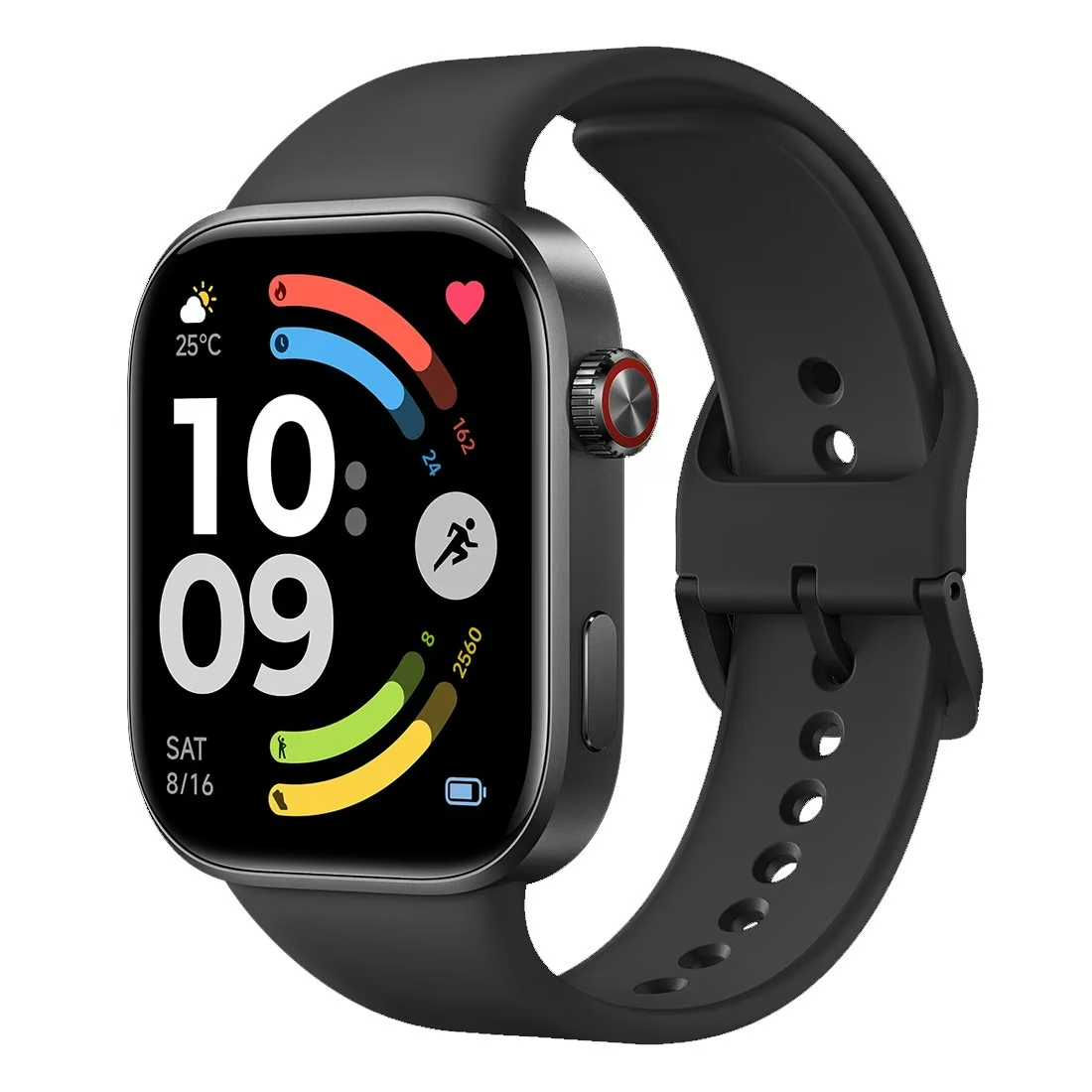
The Redmi Watch 6 wears a 2.07 inch AMOLED display bordered by an ultra narrow bezel, giving the screen an almost edge to edge look for a device this size. Its aluminium alloy frame keeps the case slim at 9.9mm thick and light at 31 grams, so it settles onto the wrist without adding bulk. The 432 x 514 resolution panel reaches up to 2000 nits, keeping the watch face legible outdoors even in strong sunlight.
A 550mAh cell is the standout feature, rated for up to 24 days of use under typical conditions, well beyond what most AMOLED smartwatches manage. Positioning draws on GPS, GLONASS, Galileo, BeiDou and QZSS through dual L1 antennas, while onboard sensors cover heart rate with blood oxygen, an accelerometer, gyroscope and electronic compass for everyday activity tracking. Bluetooth 5.4 handles calls and notifications, and the watch carries a 5ATM water resistance rating for showering, swimming or being caught in the rain.
The trade-off for that battery stamina is a simpler sensor set than pricier watches, with no barometer or dual band satellite positioning, so it suits everyday wearers more than serious altitude or ultra endurance athletes. Anyone who finds themselves charging a smartwatch every night or two will appreciate how rarely this one needs to come off the wrist. It is a sensible pick for buyers who want long stretches between charges without giving up a sharp, bright display.
Pros
- Up to 24 days of battery life on a single charge
- Bright 2.07 inch AMOLED display in a slim, light 31g build
- 5ATM water resistance and multi-constellation GPS support
Cons
- No barometer or altimeter for elevation tracking
- Single-band GPS positioning rather than dual-band
- Bluetooth calling relies on a paired phone’s connection
Key specs: 2.07-inch AMOLED display (432×514, up to 2000 nits), 550mAh battery rated up to 24 days, heart rate with SpO2, accelerometer, gyroscope and compass sensors, GPS/GLONASS/Galileo/BeiDou/QZSS positioning, 5ATM water resistance, 31g case weight.
6. Huawei Watch Fit 4 – Best Slim and Lightweight
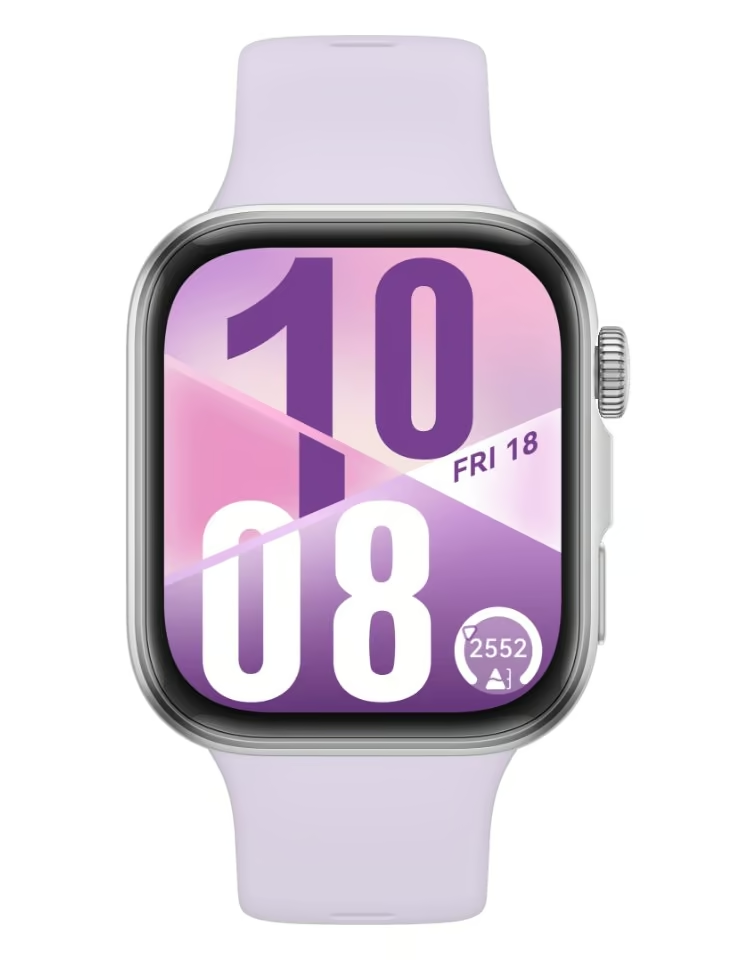
The Watch Fit 4 keeps its footprint small, measuring 43.0 x 38.0 x 9.5mm and weighing about 27 grams without the strap, making it one of the more discreet smartwatches to wear all day. Its 1.82 inch AMOLED display uses a 480 x 408 resolution panel with peak brightness of 2000 nits, so the screen stays crisp and easy to read indoors or out. The aluminium alloy case comes in purple, grey, white and black finishes.
Battery life runs up to 10 days under light use, dropping to a typical 7 days with regular tracking and around 4 days if the always-on display is left switched on. Location tracking uses dual band GPS, drawing on GPS, GLONASS, Galileo, BeiDou and QZSS across both L1 and L5 bands for more accurate route mapping. Onboard sensors include an accelerometer, gyroscope, magnetometer, barometer, ambient light sensor and optical heart rate sensor, and the watch is rated 5ATM water resistant to the ISO 22810:2010 standard.
NFC for contactless payments is limited to the grey colourway, so buyers wanting tap and pay convenience need to choose their colour carefully. Its slim, light build makes it an easy recommendation for anyone who finds standard smartwatches too chunky on a smaller wrist, or who simply forgets they are wearing it during a workout. It suits people who prioritise all-day comfort and a slim profile over the very longest battery runtimes or the deepest analytics.
Pros
- Slim 9.5mm case and light 27g weight
- Dual-band GPS across five satellite systems
- Up to 10 days of battery life with a full sensor suite including a barometer
Cons
- NFC payments only available on the grey colour option
- Always-on display use cuts battery life to about 4 days
- Smaller 1.82 inch display than some full-size smartwatches
Key specs: 1.82-inch AMOLED display (480×408, 347 PPI, 2000 nits), battery up to 10 days (7 typical, 4 with always-on display), accelerometer, gyroscope, magnetometer, barometer and optical heart rate sensors, dual-band GPS (L1+L5) across GPS/GLONASS/Galileo/BDS/QZSS, 5ATM water resistance, approximately 27g.
7. Fitbit Charge 6 – Best Fitness Tracker
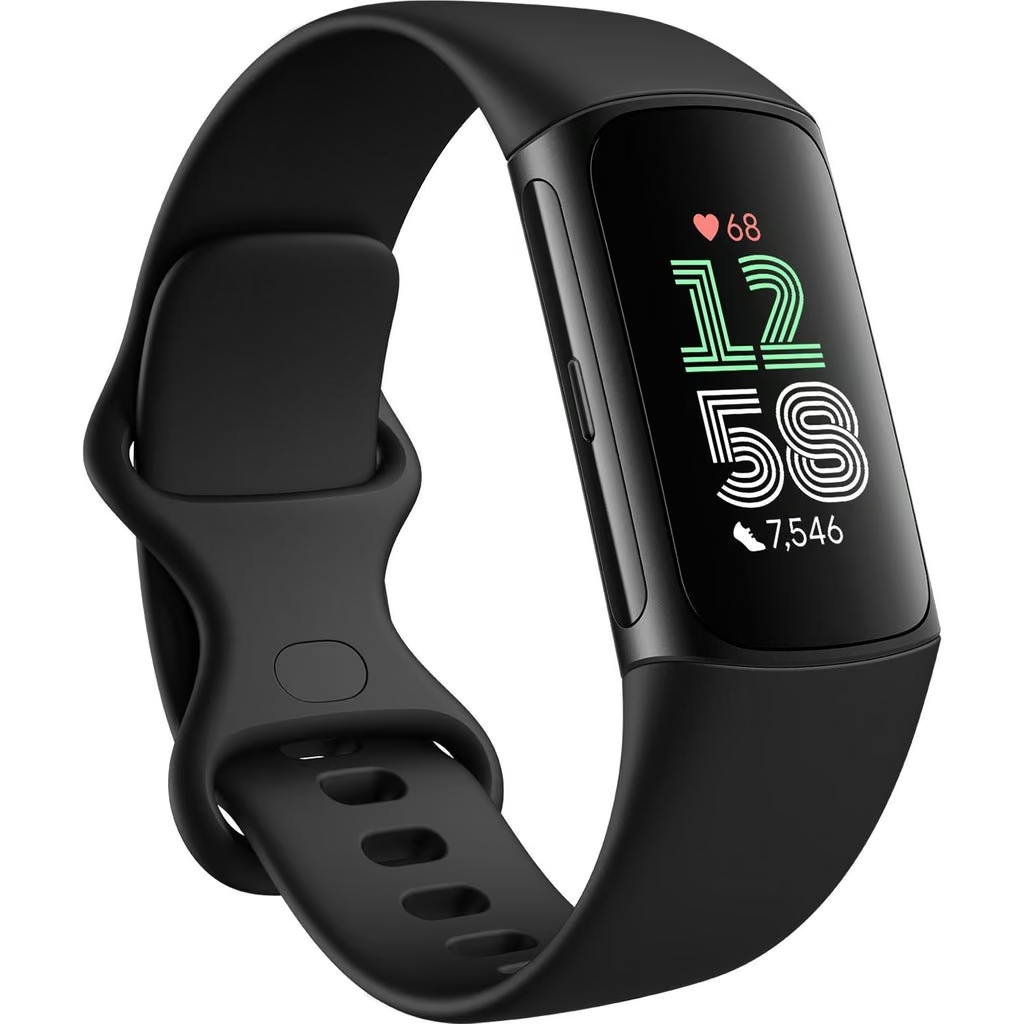
The Charge 6 sticks to Fitbit’s familiar slim band design, with a 1.04 inch AMOLED display protected by Corning Gorilla Glass 3 set into a case measuring roughly 36.7mm long, 23.1mm wide and 11.2mm high, weighing about 30 grams. It sits closer to a fitness band than a full smartwatch, with a side button rather than a touch-only crown for navigating menus. Google’s design influence shows through in the Wallet and Maps integrations built into the software.
Health tracking runs through a 3-axis accelerometer, an SpO2 sensor, a skin temperature sensor and multipurpose electrical sensors that support both an ECG app and an EDA Scan stress-tracking app, alongside continuous heart rate monitoring. Built-in GPS and GLONASS allow pace and distance to be logged on outdoor runs without a phone nearby, and battery life is rated at up to 7 days between charges. The tracker carries a 5ATM water resistance rating under the ISO 22810:2010 standard, so it can handle showers and pool laps.
Compared with a full smartwatch, the smaller display and lack of a rotating crown mean less room for apps and on-screen detail, so it suits people who want fitness and health metrics front and centre rather than a do-everything wrist computer. The ECG and EDA sensors add genuine clinical-style tracking that some rivals in this size class skip. It is a strong fit for anyone who wants serious activity and heart tracking in a slim, low-profile band.
Pros
- ECG and EDA Scan sensors for heart rhythm and stress tracking
- Built-in GPS and GLONASS for phone-free pace and distance
- Compact, lightweight band design at about 30 grams
Cons
- Smaller 1.04 inch display limits on-screen detail
- Battery life of up to 7 days is shorter than dedicated smartwatches
- Side-button navigation rather than a rotating crown
Key specs: 1.04-inch AMOLED display with Corning Gorilla Glass 3, battery rated up to 7 days, sensors include a 3-axis accelerometer, SpO2, skin temperature and multipurpose electrical sensors (ECG app and EDA Scan app), built-in GPS and GLONASS, 5ATM water resistance, approximately 30g.
8. Garmin Forerunner 265 – Best for Runners
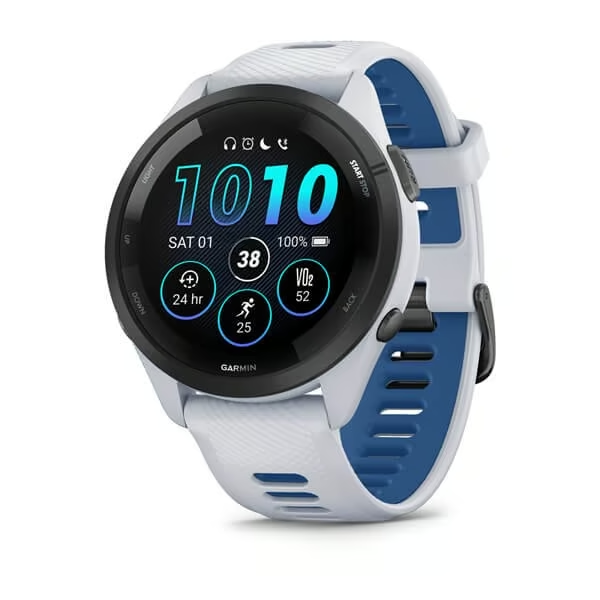
The Forerunner 265 wears a 1.3 inch AMOLED touchscreen in a 46.1 mm case that weighs just 47 grams, so it stays light on the wrist over long training blocks. The display supports an always-on option and renders Garmin’s watch faces and data screens in vivid colour rather than the flatter transflective panels of older Forerunners. Its silicone band uses a standard 22 mm quick-release fitting, so swapping straps is straightforward.
Multi-band GPS with Garmin’s SatIQ technology automatically switches between single and dual-frequency satellite tracking to hold a route through built-up streets or under tree cover, and it manages up to 14 hours of GPS time with all satellite systems engaged or up to 20 hours in GPS-only mode. The Garmin Elevate wrist heart rate sensor works alongside Pulse Ox blood oxygen monitoring, running dynamics support and a race predictor to turn each session into structured training data in Garmin Connect. Left on standby it lasts up to 13 days between charges, and it carries a 5 ATM water rating for swimming, showers and sweat.
This is a runner’s tool first, so it lacks the rugged casing, offline topographic mapping and multi-week battery life built into adventure watches designed for multi-day trips. It suits people training seriously for running events who want accurate pace, recovery and heart rate data in a light, everyday watch.
Pros
- Bright always-on AMOLED touchscreen in a light 47 g case
- Multi-band GPS with SatIQ for accurate tracking in cities and under tree cover
- Deep running tools including a race predictor, training load and recovery insights
- Up to 13 days of battery life in smartwatch mode
Cons
- 5 ATM rating covers swimming but not diving
- GPS battery life drops to around 14 hours with all satellite systems switched on
- No offline topographic mapping for backcountry navigation
Key specs: 1.3 inch AMOLED display (416×416), up to 13 days battery in smartwatch mode (14 hours GPS with all satellite systems, 20 hours GPS-only), Garmin Elevate wrist heart rate sensor with Pulse Ox, multi-band/dual-frequency GPS, 5 ATM water rating, 47 g.
9. Amazfit T-Rex 3 – Best Rugged and Outdoor
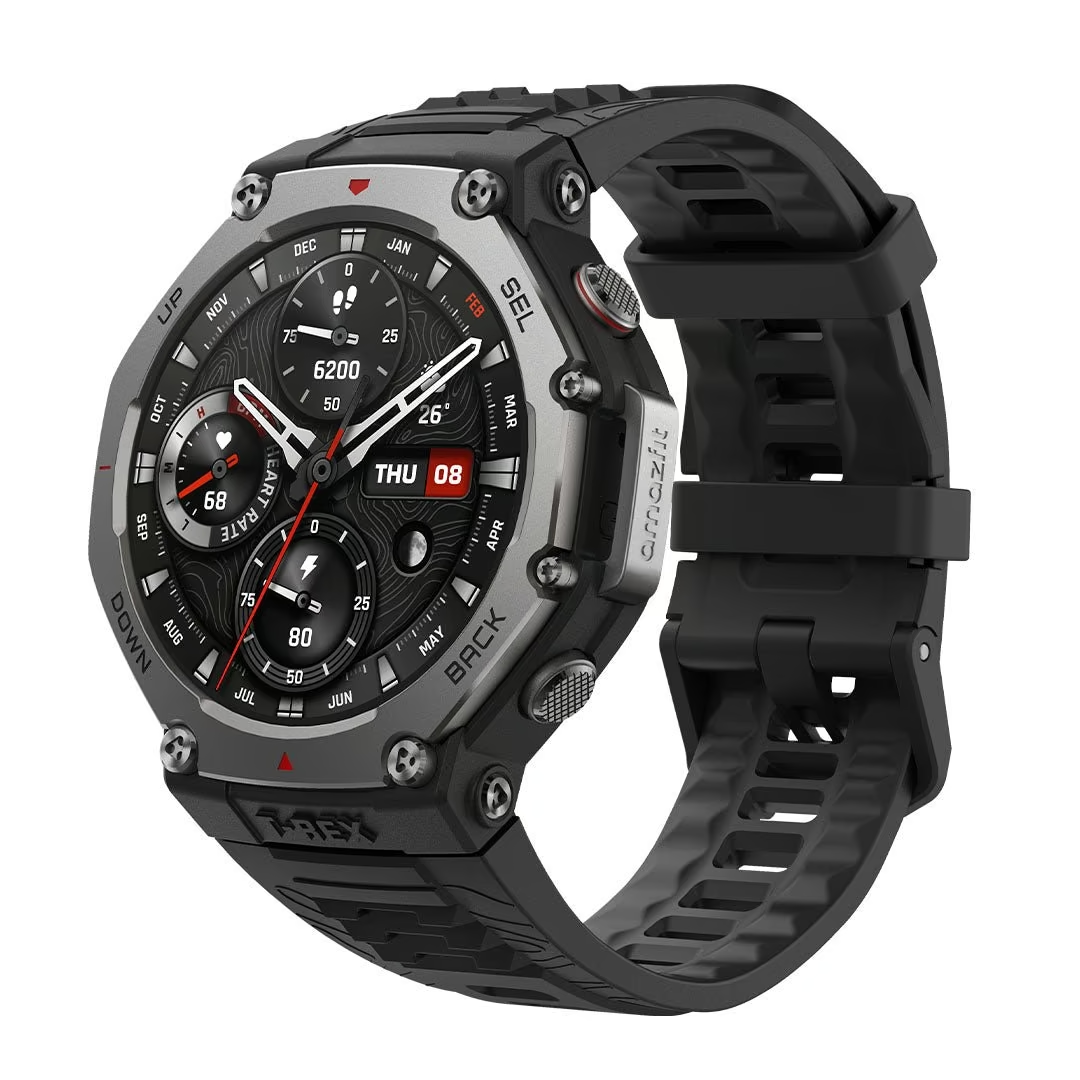
The T-Rex 3 pairs a 1.5 inch AMOLED display, rated to 2,000 nits peak brightness, with a stainless steel bezel and polymer middle frame built to a tougher spec than a typical fitness watch. At 48.5 mm across and 68.3 grams without the strap it sits larger on the wrist, and the case is rated to keep working from minus 30 to 70 degrees Celsius. Four physical buttons keep it usable with gloves on or when the touchscreen is wet.
Positioning comes from dual-band GPS working across six satellite systems, paired with downloadable offline maps for route finding away from mobile coverage. The BioTracker 6.0 PPG sensor handles continuous heart rate alongside an altimeter, gyroscope, geomagnetic sensor and ambient light sensor. Amazfit rates the battery at up to 27 days of typical use, dropping to around 13 days under heavier GPS and display use, and water resistance reaches 10 ATM with certification for freediving to 147 feet.
The trade-off for that endurance and toughness is bulk and a simpler smartwatch app ecosystem than Garmin or Samsung offer. It suits hikers, climbers and outdoor athletes who spend long stretches away from a charger and need a watch that can take a hit, rather than someone after the slimmest possible everyday design.
Pros
- Up to 27 days of typical battery life, or around 13 days with heavier GPS use
- Rugged stainless steel and polymer build rated from minus 30 to 70 degrees Celsius
- Dual-band GPS across six satellite systems with offline map support
- 10 ATM water resistance with freediving certification
Cons
- Larger 48.5 mm case and 68.3 g weight feel bulky for everyday wear
- Smartwatch software and app ecosystem is less developed than Garmin or Samsung
- No ECG or blood pressure sensor on this model
Key specs: 1.5 inch AMOLED display at up to 2,000 nits, up to 27 days typical battery life (about 13 days under heavy use), BioTracker 6.0 PPG heart rate sensor, dual-band GPS across six satellite systems, 10 ATM water rating, 68.3 g case weight without strap.
10. Samsung Galaxy Watch8 – Best Premium Android
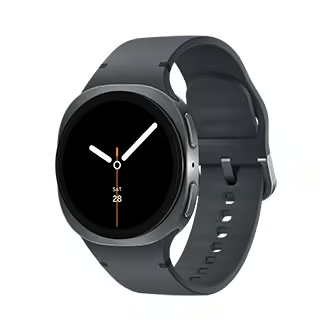
Samsung’s Galaxy Watch8 moves to a cushion-shaped case with a Dynamic Lug System that curves the straps in against the wrist, and the standard model is around 11 percent thinner than the previous Galaxy Watch7. It comes in 40 mm and 44 mm sizes in Graphite or Silver, with an AMOLED display Samsung rates at up to 3,000 nits so it stays legible outdoors. A physical ring frames the screen in place of the rotating bezel, keeping the familiar Galaxy Watch feel while cutting bulk.
A 3 nm five-core processor drives the BioActive sensor, which combines heart rate, blood oxygen, ECG and blood pressure capability with a separate temperature sensor, and Galaxy AI layers on automated sleep coaching and health insights. L1+L5 dual-frequency GPS improves location accuracy around tall buildings and in cities. Battery capacity is 325 mAh in the 40 mm case or 435 mAh in the 44 mm, rated for up to 30 hours with the always-on display active, and the watch carries a 5 ATM plus IP68 rating alongside MIL-STD-810H durability testing.
This is built firmly around the Android and Samsung ecosystem, so ECG readings and some Galaxy AI features depend on pairing with a compatible Samsung or Android phone rather than an iPhone. It suits Android owners after a premium, slimmer daily smartwatch with strong health tracking, rather than someone chasing the T-Rex 3’s ruggedness or the Forerunner’s running-specific tools.
Pros
- Slimmer cushion design, about 11 percent thinner than Galaxy Watch7
- AMOLED display rated up to 3,000 nits for outdoor visibility
- BioActive sensor covers heart rate, blood oxygen, ECG and blood pressure in one watch
- L1+L5 dual-frequency GPS and a 3 nm processor for Galaxy AI features
Cons
- ECG and some Galaxy AI features require pairing with a compatible Samsung or Android phone, not an iPhone
- Rated battery life of up to 30 hours with always-on display active is short next to rugged rivals
- 5 ATM plus IP68 water resistance sits below the T-Rex 3’s 10 ATM rating
Key specs: AMOLED display up to 3,000 nits, 325 mAh (40mm) or 435 mAh (44mm) battery rated up to 30 hours with always-on display, BioActive sensor (heart rate, blood oxygen, ECG, blood pressure) plus temperature sensor, L1+L5 dual-frequency GPS, 3 nm five-core processor, 5 ATM plus IP68 and MIL-STD-810H rating.
How to choose a smart watch in NZ
Start with battery life if you find yourself charging devices constantly. Watches like the Amazfit T-Rex 3 and Redmi Watch 6 go weeks between charges, while premium AMOLED-heavy watches such as the Galaxy Watch8 measure battery in hours with always-on features enabled.
Think about GPS accuracy if you run, cycle or hike. Multi-band GPS, found on the Garmin Forerunner 265 and the T-Rex 3, holds a more accurate route through cities and under tree cover than the single-band GPS on cheaper watches.
Check the sensor set against what you actually want to track. An ECG app and stress sensor (Fitbit Charge 6) suit someone focused on heart health, while a dedicated multi-metric watch is better suited to broad, casual wellness tracking than clinical decisions.
Finally, weigh size and weight against your wrist and your wardrobe. A slim watch like the Huawei Watch Fit 4 disappears under a shirt cuff, while a rugged outdoor watch like the T-Rex 3 is bulkier by design.
If you like measuring progress, the guides to blood pressure monitors, pulse oximeters and kids’ smart watches cover the rest of the home health kit.
Notifications and apps are what push the price up here; strip those away and affordable fitness trackers measure the same heart rate and sleep.
Verdict
For most buyers, the Garmin vivoactive 5 is the smart watch to beat, combining a light, comfortable case with genuinely useful health tracking and enough battery life to forget about the charger for over a week.
Runners chasing accurate pace and recovery data should look at the Garmin Forerunner 265, while anyone heading off-grid for days at a time is better served by the rugged, long-lasting Amazfit T-Rex 3. Buyers who want the broadest single-device health snapshot, including blood pressure and blood-sugar trend estimates, should still consider the Multi-metric Health Smart Watch, understanding those readings are general wellness indicators rather than medical measurements.
FAQs
What is the difference between a smart watch and a fitness tracker?
A smart watch like the Garmin vivoactive 5 or Samsung Galaxy Watch8 runs a full app ecosystem, notifications and often onboard GPS and payments alongside health tracking. A fitness tracker such as the Fitbit Charge 6 focuses on a slimmer band with core health and activity metrics and fewer smartwatch-style apps.
How accurate is smart watch heart rate and blood oxygen tracking?
Wrist-based optical sensors are generally reliable for trends over time, such as resting heart rate or how your sleep is changing week to week, but they are not medical-grade devices. For anything used to manage a diagnosed condition, always confirm readings with a doctor or a proper medical device.
Do these smart watches work without a phone?
Most work for step counting, heart rate and sleep tracking without a phone nearby. Watches with built-in GPS, like the Garmin models, the Amazfit T-Rex 3 and the Fitbit Charge 6, can also log outdoor runs and rides phone-free, though calls, messages and app installs still need a paired phone.
Which smart watch has the best battery life?
The Amazfit T-Rex 3 leads this guide at up to 27 days of typical use, followed by the Redmi Watch 6 at up to 24 days. Watches with brighter always-on AMOLED displays and more sensors active, such as the Samsung Galaxy Watch8, trade battery life for screen quality and measure runtime in hours rather than days.
Can a smart watch accurately measure blood pressure or blood sugar?
Non-invasive blood pressure, blood-sugar and blood-lipid readings on consumer smart watches, including the Multi-metric Health Smart Watch in this guide, are estimated trends from optical sensors and algorithms, not laboratory or medical-device results. They are useful as general wellness indicators, but should never replace a proper blood pressure cuff, blood test or medical advice.
Which smart watch is best for runners in NZ?
The Garmin Forerunner 265 is the strongest pick for runners here, with multi-band GPS, detailed running dynamics and a race predictor built specifically around training and recovery. Amazfit’s T-Rex 3 is a solid alternative for trail runners who also want a genuinely rugged, long-lasting watch.
