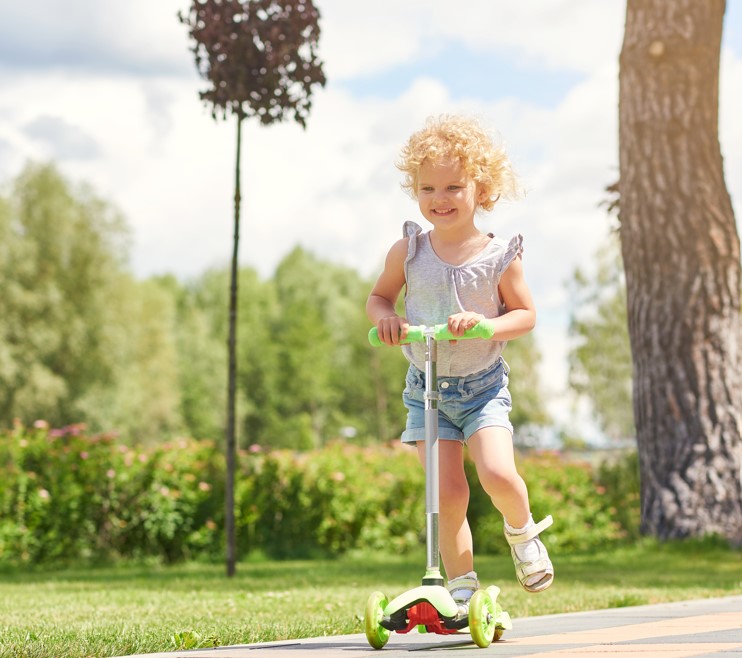
The best kids scooter in NZ for a preschooler is the Mini Micro Deluxe, a three wheel lean-to-steer model with a 51cm deck, an adjustable T-bar and a 50kg load limit, which Micro rates for ages 2 to 5. Age decides this more than price does, so the guide is ordered by who each scooter fits: a confident school-age rider is better served by the two wheel Micro Sprite or the budget Razor A.
Two numbers matter more than anything else on a kids scooter: the handlebar height range and the maximum rider weight. Those vary enormously here, from a 19.5kg ceiling on the toddler Razor Rollie DLX to 100kg on the Micro Sprite and Cruiser, so both are listed for every pick below.
If the child is also at the age for a first wearable, the kids smart watches guide covers those, and older riders moving beyond scooters can look at the electric bikes guide.
| Pick | Best for | Type | Age and weight limit |
|---|---|---|---|
| Mini Micro Deluxe | Toddlers | 3 wheel | Ages 2-5, 50kg, lean-to-steer |
| Razor A Kick Scooter | Budget | 2 wheel | Ages 5+, 64kg, folds |
| Micro Sprite | Ages 5-12 | 2 wheel | Ages 5+, 100kg, folds |
| Madd Gear MG2 | Stunt riding | 2 wheel | Ages 5+, 100kg, non-folding |
| Globber Primo Lights | Light-up wheels | 3 wheel | From 3 yrs, 50kg, battery-free LEDs |
| Maxi Micro Deluxe ECO LED | Older kids | 3 wheel | Ages 5-12, motion LEDs |
| Madd Gear Rush 125 | Folding value | 2 wheel | Ages 5+, 100kg, folds |
| Micro Cruiser | Bigger kids | 2 wheel | 200mm wheels, 100kg, folds |
| Razor Rollie DLX | Under-fives | 3 wheel | 30mth-4yr, 19.5kg, seat converts |
The Best Kids Scooters in NZ
1. Mini Micro Deluxe 3 Wheel Scooter – Best for Toddlers
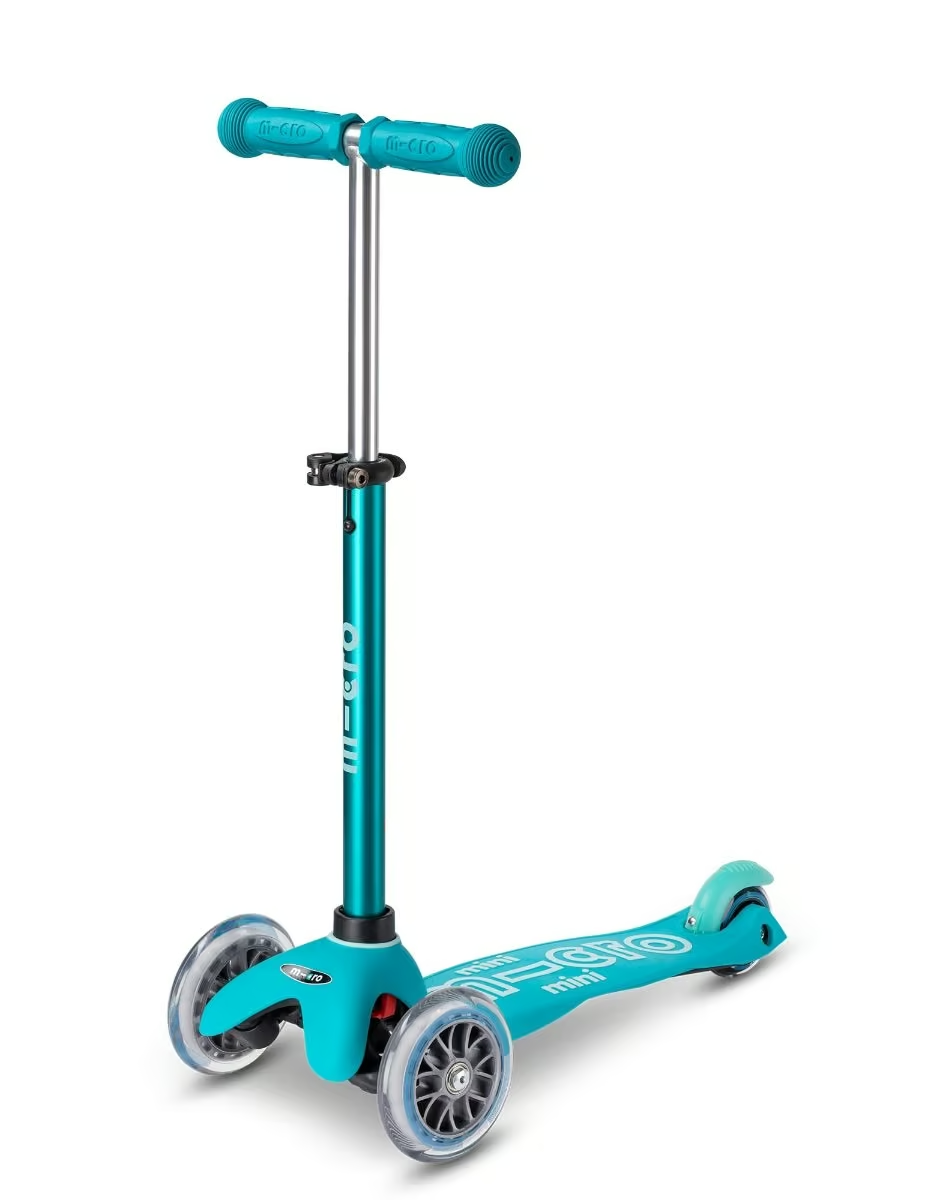
The Mini Micro Deluxe is a three wheel kick scooter with two 120mm wheels at the front and a single 80mm wheel at the rear. It uses an adjustable T-bar, a raised silicone deck for grip and an anodised finish. The deck measures 51cm long and 11cm wide with a 30cm foot area and 3cm of ground clearance.
Micro lists an age range of 2 to 5 years and a maximum load of 50kg. Steering is lean-to-steer rather than a turning handlebar, which is built to develop preschooler balance and coordination rather than to be fast. The handlebar adjusts from 49cm to 67cm and the whole scooter weighs 1.95kg, so most parents can carry it one-handed alongside a child.
The rear brake is designed so that even slight pressure brings the scooter to a gentle halt, which suits a rider still learning to judge speed. The 67cm handlebar ceiling is the real limit, and taller five year olds will reach it before they outgrow the deck. Note this is the standard Deluxe rather than the separate foldable version, and the plain-wheel model rather than the LED variants.
Pros
- Lean-to-steer three wheel design aimed squarely at 2 to 5 year olds
- Handlebar adjusts across 49 to 67cm so it grows with a preschooler
- Light at 1.95kg, easy for a parent to carry
- Raised silicone deck and 11cm width give a stable standing platform
Cons
- Handlebar stops at 67cm, so taller children outgrow it before the stated age 5 upper limit
- This listing is the non-folding version, sold separately from the foldable model
- 50kg maximum load is well below the 100kg allowed on Micro two wheel scooters
Key specs: Ages 2 to 5 | Max load 50kg | 120mm front, 80mm rear wheels | Handlebar 49 to 67cm adjustable | Non-folding | 1.95kg
2. Razor A Kick Scooter – Best Budget
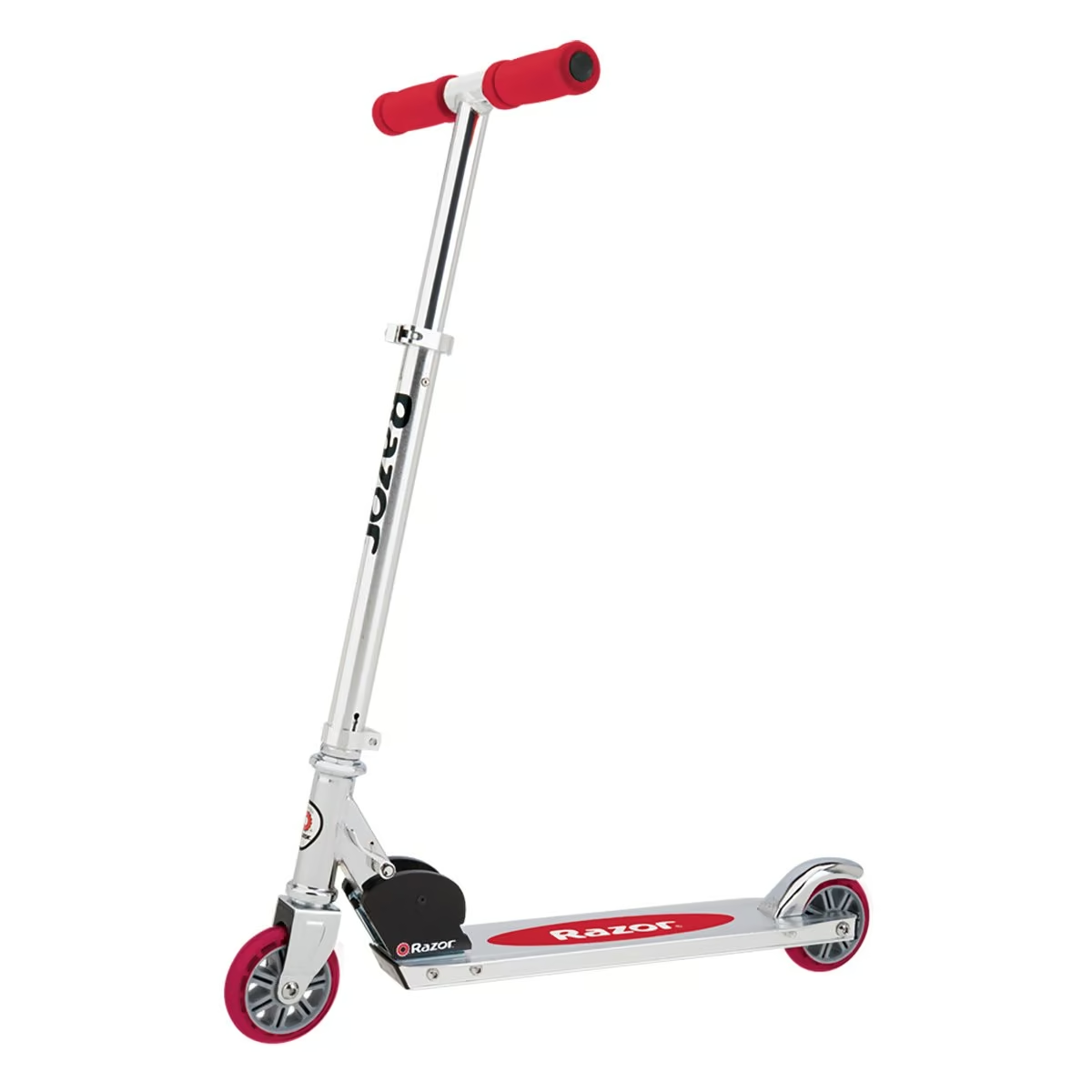
The Razor A is built around an aircraft-grade aluminium T-tube and deck, with the deck measuring 440mm by 92mm. Razor’s original patented folding mechanism collapses the downtube against the deck, and the handlebars are both height adjustable and folding. Steering is conventional two wheel handlebar steering with foam grips, so there is no lean-to-steer mechanism to learn.
Razor lists the A for ages 5 and up with a maximum rider weight of 64kg, which covers most of primary school and a good deal beyond it. The wheels are 95mm urethane, which suits smooth footpaths, courts and skatepark surfaces rather than coarse chipseal or gravel. It is light enough for a child to carry once folded.
The small 95mm wheels transmit more of the road surface than the larger wheels used on many rivals, and there is no suspension to take the edge off. Braking comes from a single foot-operated rear fender brake, which takes some practice for a rider new to scooters. It suits families who want a simple, durable, genuinely foldable aluminium scooter for sealed surfaces.
Pros
- Aircraft-grade aluminium T-tube and deck
- Patented folding mechanism plus folding, height-adjustable handlebars
- Light enough for a child to carry folded
- Wide usable window, ages 5 and up to a 64kg rider weight
Cons
- 95mm wheels are small, so it is best kept to smooth sealed surfaces
- Only a single foot-operated rear fender brake
- Razor publishes an assembled height but no handlebar height range, so fit is hard to check before buying
Key specs: Ages 5 and up | Max rider weight 64kg | 95mm urethane wheels | Adjustable folding handlebars, assembled height 823mm | Folds | Aluminium frame
3. Micro Sprite Kids Scooter – Best for Ages 5-12
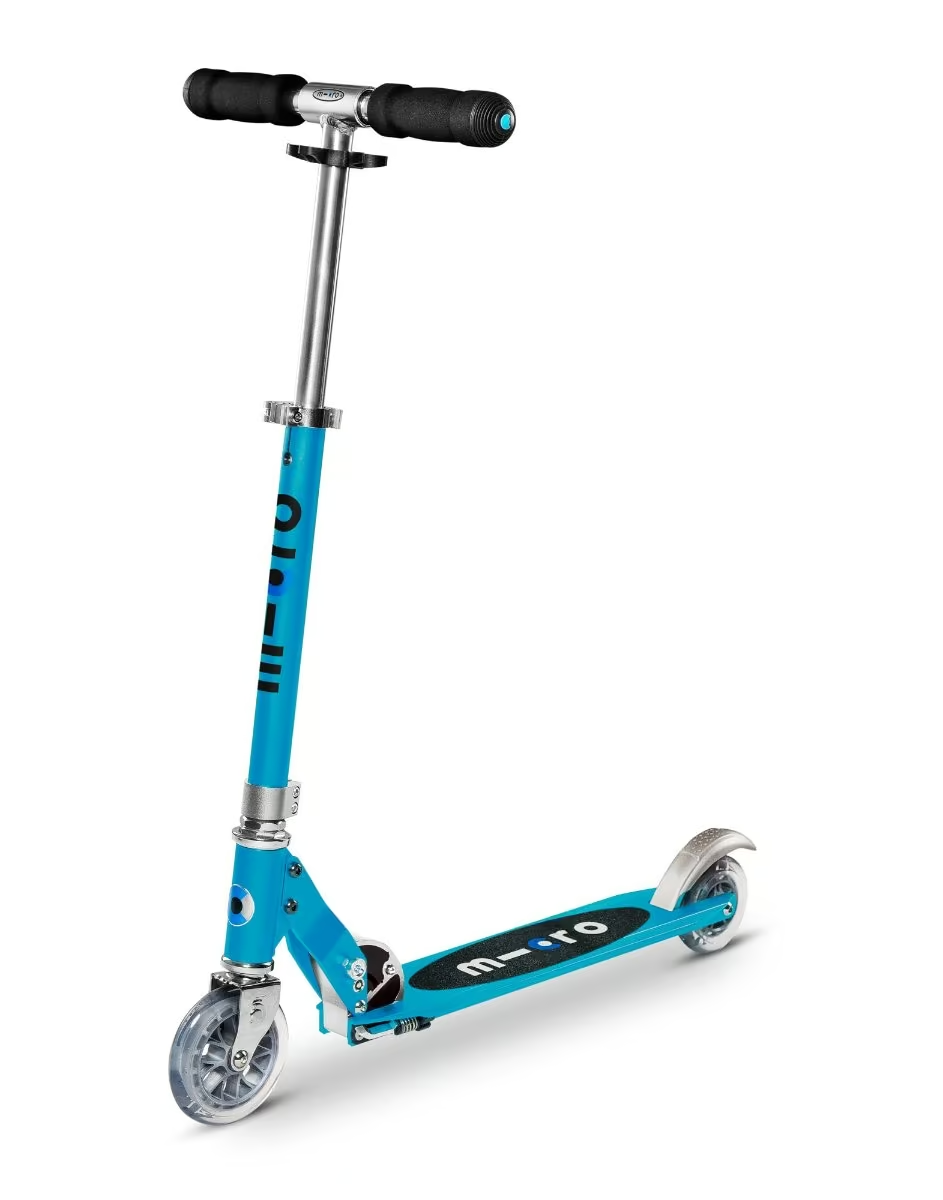
The Micro Sprite is a two wheel folding kick scooter built on a lightweight aluminium frame. The deck runs 50cm long and 10cm wide with a 34cm foot area and 4cm of ground clearance. Wheels are mismatched by design, 120mm at the front and 100mm at the rear, made from 87A polyurethane and running ABEC 5 bearings.
Micro lists the Sprite for ages 5 to adult with a maximum load of 100kg. The handlebar is adjustable and the scooter steers through a conventional 360 degree turn rather than by leaning, so it rides like a bike. The folding action is quick, and a kickstand lets the scooter stand upright on its own.
The generous 100kg load rating and adjustable bar mean the Sprite outlasts most kids scooters, and at under 3kg a child can carry it themselves. Micro’s own product page and spec page disagree slightly on weight and handlebar range, so treat those figures as approximate. The larger front wheel helps over footpath joins, but 120mm is still small over genuinely rough ground.
Pros
- 100kg maximum load means it lasts well past primary school
- Folds quickly and includes a kickstand for upright parking
- Larger 120mm front wheel handles footpath imperfections better than an even pair
- Around 2.7 to 2.85kg, light enough for a child to carry
Cons
- Micro does not state a brake type for the standard Sprite
- Micro publishes slightly different weight and handlebar figures across its own pages
- 120mm and 100mm wheels roll less smoothly over rough ground than the 200mm Cruiser
Key specs: Ages 5 to adult | Max load 100kg | 120mm front, 100mm rear PU wheels, ABEC 5 | Handlebar 63 to 93cm adjustable | Folds, with kickstand | About 2.7 to 2.85kg
4. Madd Gear MG2 Pro Stunt Scooter – Best Stunt Scooter
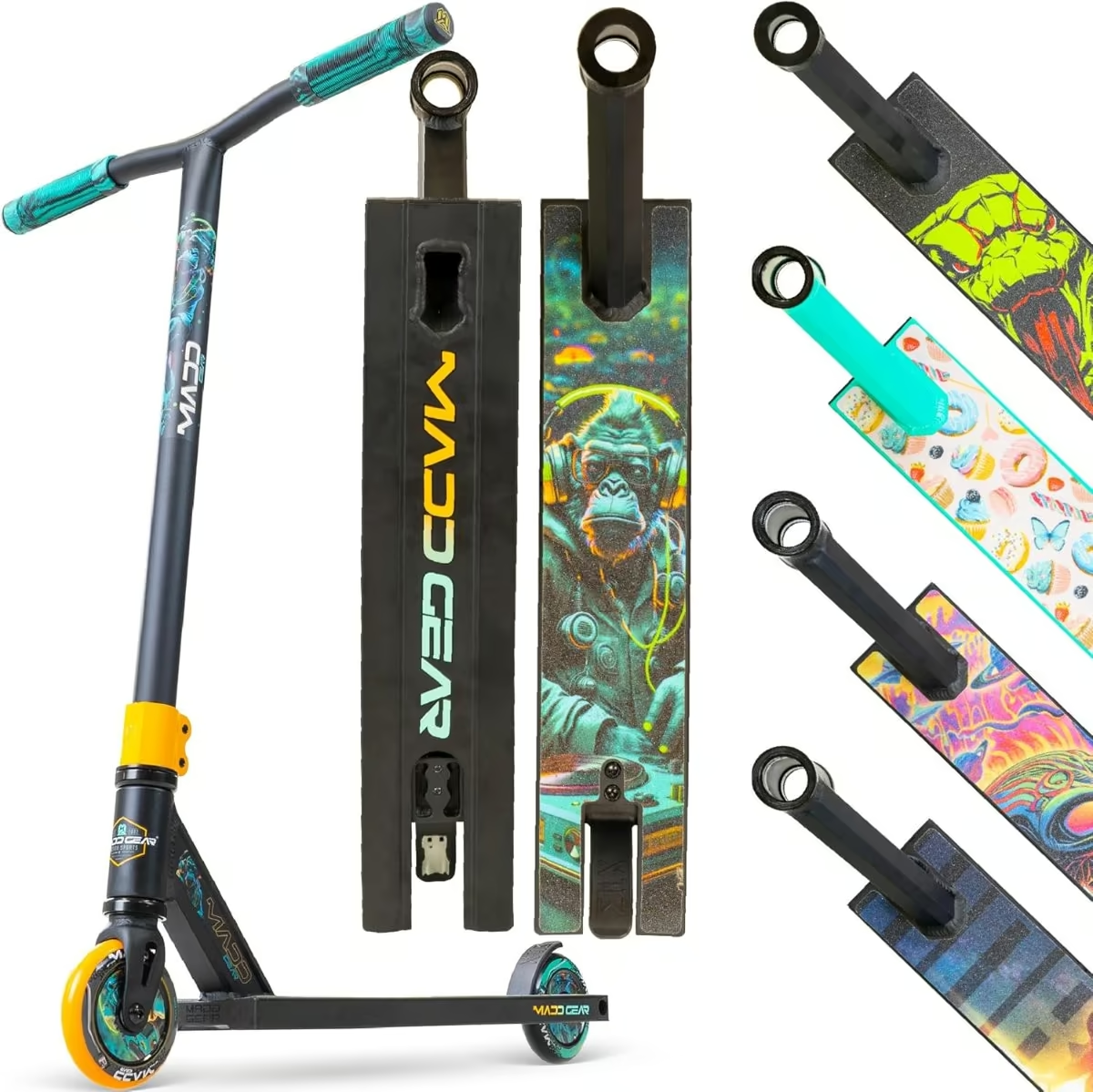
The MG2 is Madd Gear’s entry-level trick scooter, built around an extruded aluminium deck paired with a one-piece steel T-bar. That one-piece bar is the defining feature of a pro scooter, because it removes the folding hinge and height clamp that are the usual failure points on a recreational scooter, giving a rattle-free ride under load. The deck is finished with non-slip grip tape.
Madd Gear lists it for kids aged 5 and up with a weight limit of 220 pounds, around 100kg, so the frame is not the thing a child will outgrow. It rolls on 110mm 88A polyurethane wheels turning on ABEC-7 bearings, which is a step up in roll speed and stability from the 100mm ABEC-5 setups common at this level. It arrives needing only quick assembly with the included tools.
The trade-off with any pro scooter is that nothing adjusts. The bar is a fixed height and the scooter does not fold, so it is sized for a phase rather than bought to grow into, and it takes more boot space than a folding commuter scooter. It suits a child who has outgrown a folding scooter and is ready for kerbs, ledges and a skatepark rather than the walk to school.
Pros
- One-piece steel T-bar removes the folding hinge that is the usual weak point on kids scooters
- 110mm 88A wheels on ABEC-7 bearings roll faster and more stably than typical entry setups
- Extruded aluminium deck with non-slip grip tape
- Backed by a stated 3-year manufacturer warranty
Cons
- Bar height is fixed and the scooter does not fold, so it cannot grow with the child
- Bulkier to store and carry than a folding scooter
- A trick deck is unnecessary for a child who only rides to school
Key specs: Ages 5 and up | Weight limit 220 pounds, about 100kg | 110mm 88A polyurethane wheels, ABEC-7 bearings | Extruded aluminium deck, one-piece steel T-bar | Non-folding, fixed bar height
5. Globber Primo Lights 3 Wheel Scooter – Best 3 Wheel with Light-Up Wheels
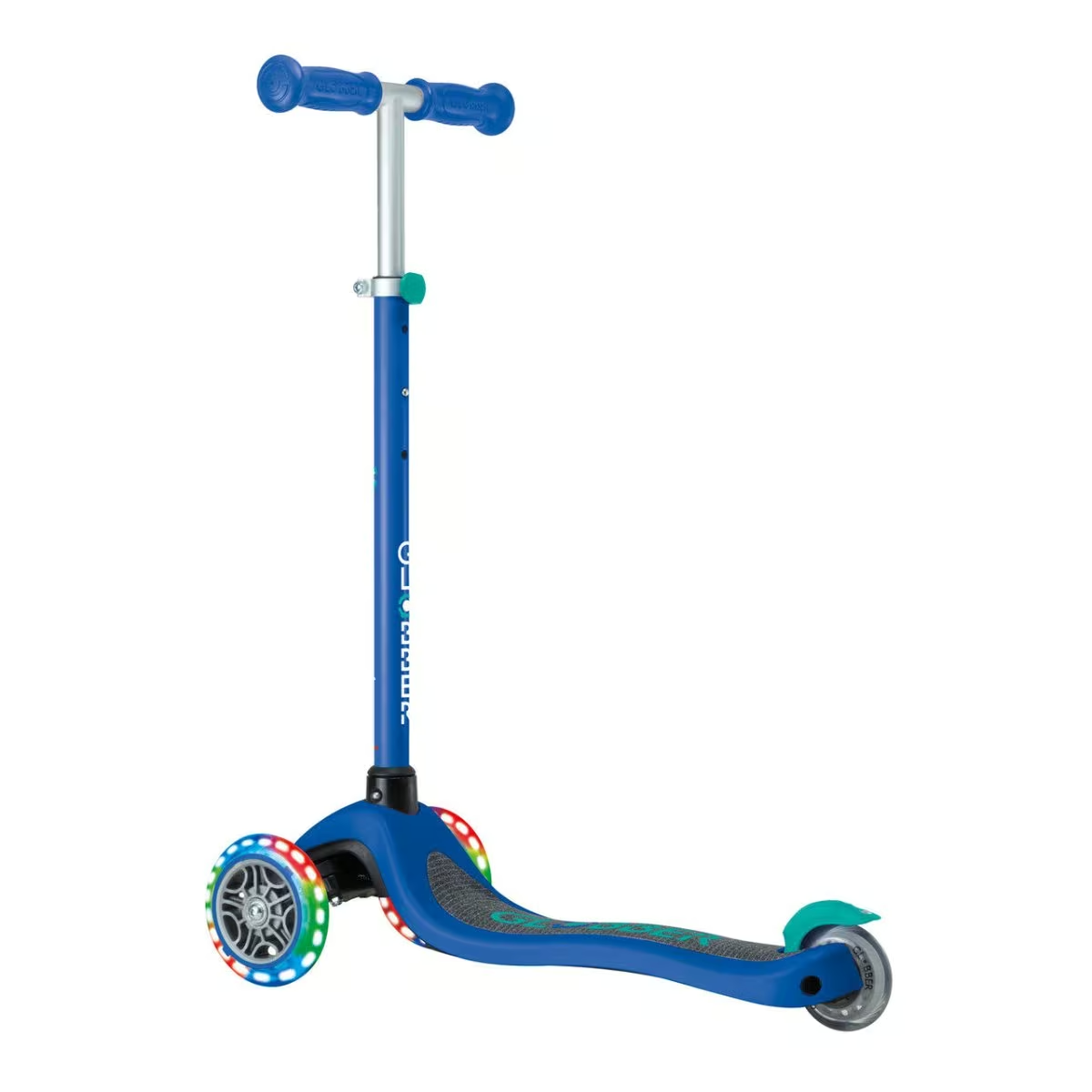
The Primo Lights is a three wheel scooter with two wheels at the front and one at the rear, sitting on an anti-slip composite deck measuring 545mm by 115mm with a low reinforced structure. This version adds a textured griptape strip bonded to the deck for extra footing. The T-bar is painted metal and locks at three heights of 67.5cm, 72.5cm and 77.5cm measured from the ground.
Steering is lean-to-steer, and Globber’s patented steering lock button on the front of the deck fixes the two front wheels so they only travel forward and backward while a child is still finding their balance. The 121mm front wheels house dynamo LEDs, so they light up from the motion of scooting and need no batteries at all, flashing brighter the faster the child moves. Wheels are high-rebound cast PU on ABEC 9 bearings with an 80mm rear wheel and a mechanical composite rear brake.
Globber rates the scooter for riders from three years, roughly 95cm to 120cm tall, with a maximum rider weight of 50kg, and sizing by height is more reliable than by age here. It does not fold, so the foldable version in the same range is the answer for boot space or a bus trip. It suits a three to five year old learning to balance and steer, where the steering lock and the battery-free lights are the real drawcards.
Pros
- Battery-free dynamo LEDs in the 121mm front wheels, brighter the faster the child scoots
- Patented steering lock button holds the front wheels straight for beginners
- Three-height T-bar at 67.5, 72.5 and 77.5cm from the ground
- 50kg maximum rider weight is generous for the age band, and it weighs only 2.33kg
Cons
- Does not fold, unlike the foldable version in the same range
- Only three T-bar heights, so a tall child runs out of adjustment
- Sizing is best judged by the 95 to 120cm rider height rather than by age
Key specs: From 3 years, rider height 95 to 120cm | Max rider weight 50kg | 121mm front, 80mm rear, ABEC 9 | T-bar 67.5 / 72.5 / 77.5cm | Non-folding | 2.33kg
6. Maxi Micro Deluxe ECO LED Scooter – Best for Older Kids
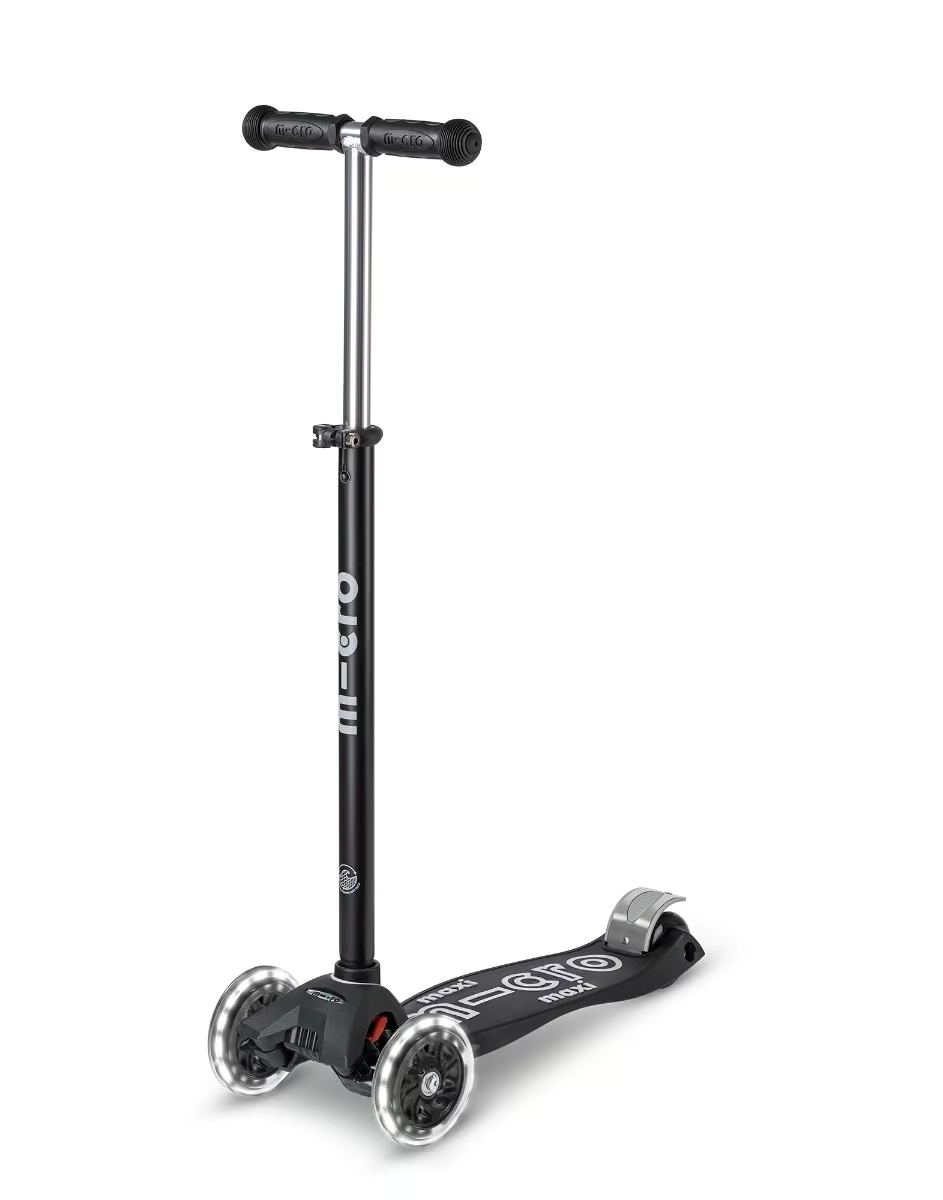
The Maxi Micro Deluxe ECO LED is the larger three wheel Micro, keeping the lean-to-steer setup but scaling up the deck and handlebar for school-age riders. The deck and brake are made from recycled maritime plastic, sourced from discarded fishing nets, ropes and trawls, and the deck is silicone-injected for extra grip. Wheels measure 120mm at the front pair and 80mm at the rear.
Micro lists the age range as 5 to 12 and the handlebar adjusts from 68cm to 91cm, so it covers most of primary school. On weight, Micro states the scooter is tested to 70kg and meets the EU norm of 50kg, which is worth reading carefully because the certified figure and the tested figure are not the same number. The LED wheels are powered by motion, so there are no batteries to buy or replace.
The ECO badge refers to material sourcing rather than performance, and Micro donates 1 percent of annual worldwide sales from its Eco range to environmental causes. At 2.75kg the scooter is still easy to carry, though the three wheel footprint is wider than a two wheeler and takes more room in a hallway or car boot. It suits a primary-age rider who still prefers the stability of three wheels.
Pros
- Motion-powered LED wheels need no batteries
- Handlebar adjusts 68 to 91cm, covering ages 5 to 12
- Deck and brake made from recycled maritime plastic
- Silicone-injected deck adds grip, and 2.75kg is light for its size
Cons
- The stated weight limit is two-tiered, tested to 70kg but certified to the EU norm of 50kg
- LED wheels only light up while moving, so they add nothing when stopped
- Three wheel footprint is bulkier to store than a folding two wheeler
Key specs: Ages 5 to 12 | Tested to 70kg, meets the EU norm of 50kg | 120mm front, 80mm rear motion-powered LED wheels | Handlebar 68 to 91cm | 2.75kg
7. Madd Gear Rush 125 Folding Kick Scooter – Best Folding Value
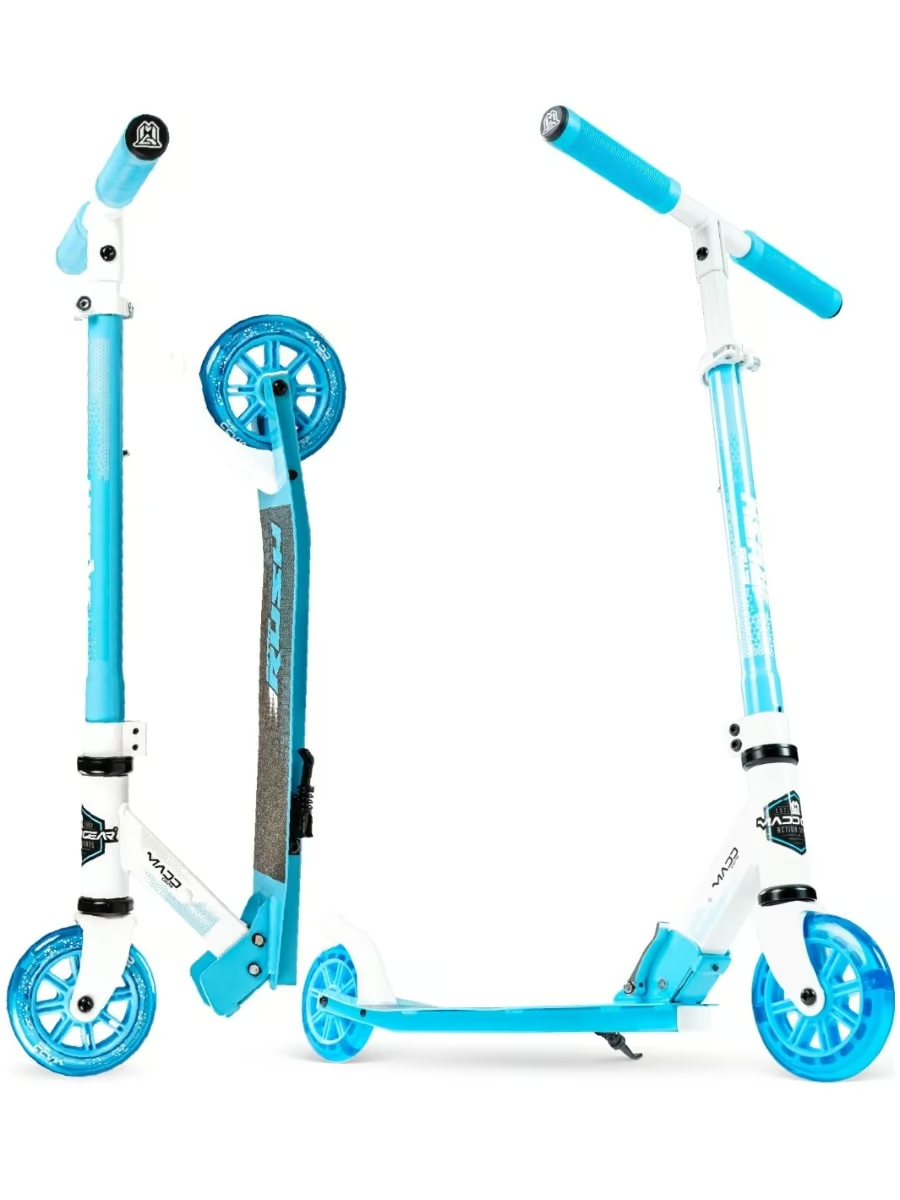
The Rush 125 is built around a carbon steel deck measuring 10.2cm wide by 48.3cm long, running full length grip tape and a slimline steering tube. The 125mm polyurethane wheels use clear nylon cores and are motion activated light-up wheels. Stopping is handled by a rear quick-stop sprung brake with a built-in reflector, turning on ABEC-5 bearings.
Madd Gear states the scooter is for riders aged 5 years and up with a weight capacity of up to 100kg, which covers most primary school riders and then some. The handlebar is height adjustable across a 79.5cm to 92.7cm range using a three stage easy-lock system, so it keeps pace as a child grows. Complete weight is 3.8kg, light enough for most children to carry up a driveway or onto a bus without help.
The easy-fold headtube is the main convenience feature, though any folding joint is a hinge that a fixed pro scooter does not have, so this is a footpath and commuting scooter rather than a skatepark one. The 40.5cm bar width suits smaller shoulders but will feel narrow for a rider at the upper end of the height range. It suits families who want one scooter for school runs and weekend rides that packs into a car boot.
Pros
- Handlebar adjusts across a genuine 79.5 to 92.7cm range, so it lasts several years
- Light-up wheels are motion activated, so there is nothing to charge or switch on
- 3.8kg complete weight is manageable for a young child to carry
- Rear sprung brake includes a reflector for low light visibility
Cons
- Folding hinge is an extra wear point compared with a fixed-deck scooter
- 40.5cm bar width is narrow for taller riders near the top of the age range
- Carbon steel frame is heavier than an aluminium pro deck
Key specs: Ages 5 and up | Weight capacity up to 100kg | 125mm light-up PU wheels, ABEC-5 | Handlebar 79.5 to 92.7cm, 40.5cm wide | Folds via easy-fold headtube | 3.8kg
8. Micro Cruiser 2 Wheel Kids Scooter – Best for Bigger Kids
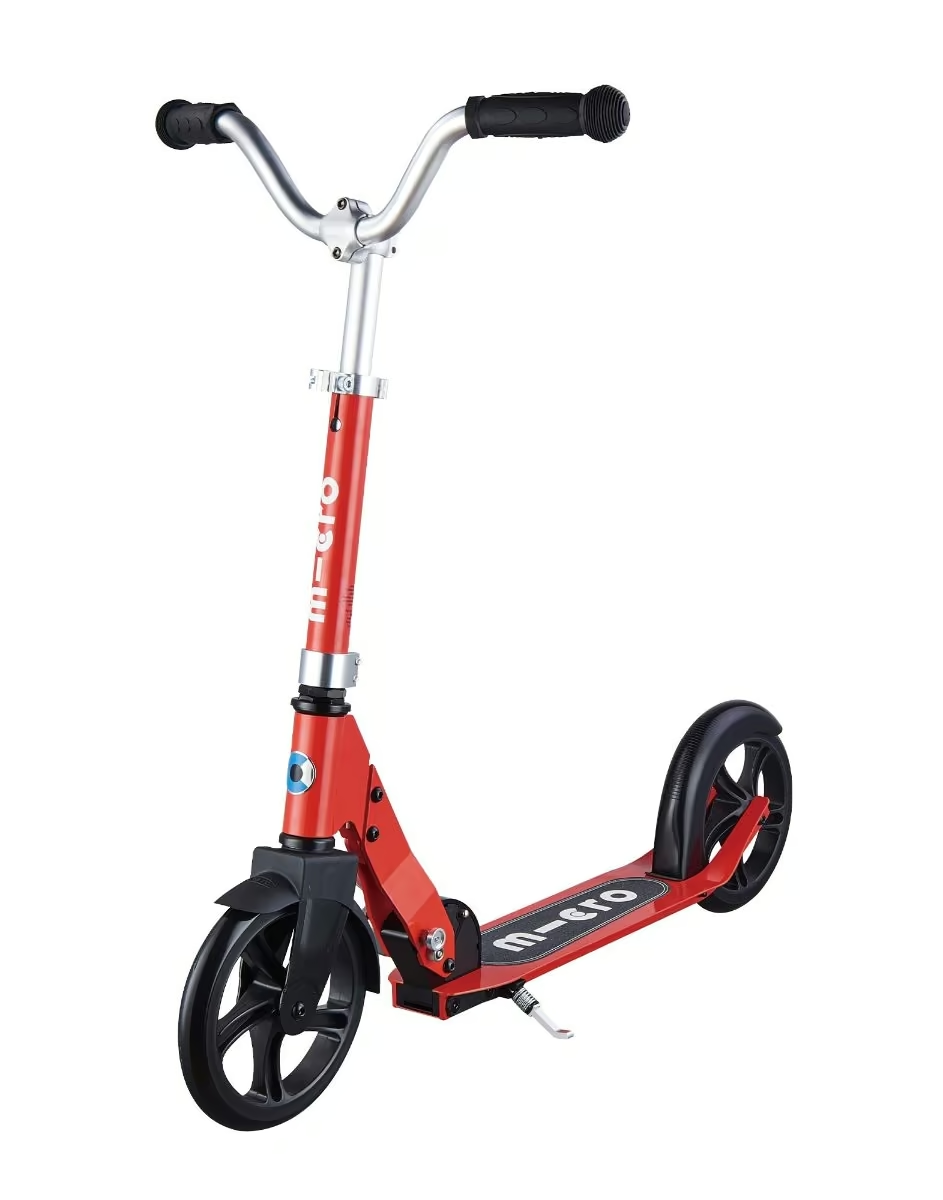
The Micro Cruiser is a two wheel folding kick scooter built around 200mm polyurethane wheels, the largest in Micro’s kids range. The handlebar is a wide retro bar measuring 510mm across, sitting on a stem adjustable from 74cm to 89cm. The deck is 40cm long and 11cm wide, and stopping is handled by a full fender brake that doubles as a mudguard.
Micro lists the Cruiser at ages 5 to teens with a maximum load of 100kg, though its own buying guide narrows the sweet spot to roughly 5 to 10 years. The large wheels are the point of difference, letting riders carry speed with less kicking and roll over lumps and cracks in the footpath that would stop a smaller wheel. The wide bar gives extra balance and control, and the scooter folds down for carrying or storage.
The trade-off is bulk. At 4.5kg the Cruiser is roughly 60 percent heavier than the Sprite, and the shorter 40cm deck offers less foot room. It suits a confident older child riding longer distances on sealed paths rather than a younger rider who needs to carry the scooter themselves.
Pros
- 200mm polyurethane wheels roll far more smoothly over rough footpaths than 120mm wheels
- Full fender brake doubles as a mudguard
- Wide 510mm retro handlebar adds balance and control
- 100kg maximum load and a folding frame
Cons
- At 4.5kg it is the heaviest scooter here and awkward for a small child to carry
- 40cm deck is shorter than the Sprite, giving less foot room
- Micro gives conflicting age guidance for this model, from 5 to 10 up to 5 to teens
Key specs: Ages 5 to teens | Max load 100kg | 200mm PU wheels | Handlebar 74 to 89cm, 510mm wide | Folds | 4.5kg
9. Razor Rollie DLX Convertible Scooter – Best for Under-Fives
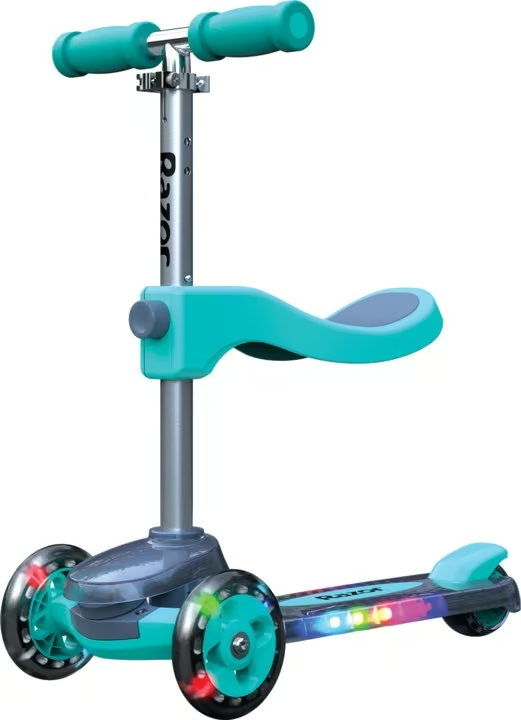
The Rollie DLX is a three wheel scooter with two wheels at the front, one wide wheel at the rear and a padded seat that mounts to the steel stem. Removing the seat converts it into a conventional stand-up kick scooter, which is where the 2-in-1 description comes from. Steering is tilt-to-turn, so the child leans the bar to corner rather than swivelling it, and the steel handlebar is height adjustable with foam grips.
Razor sets the range at 30 months to 4 years with a maximum rider weight of 19.5kg, which places it clearly in toddler territory rather than the school-age bracket. Some retailer listings quote wider age ranges, but Razor’s own figures are the ones to size against. The front wheels and the deck both carry multi-colour LEDs that run off three AAA batteries, and the deck lights switch off after 30 seconds of inactivity.
The narrow window is the main trade-off, because a 19.5kg ceiling is reached by plenty of four year olds. At 3kg it is also heavier than a plain toddler kick scooter, which matters on the walk home when the parent ends up carrying it. It suits a family starting a toddler who is not yet steady standing and steering, on the understanding that the child will move up within a year or two.
Pros
- Converts between seated and stand-up riding by detaching the seat
- Three wheels plus tilt-to-turn steering suit riders still building balance
- Multi-colour LEDs in both the front wheels and the deck, with a 30 second auto-off
- Height-adjustable steel handlebar and batteries included
Cons
- Maximum rider weight of just 19.5kg sharply limits how long it lasts
- Narrow 30 month to 4 year window, and some retailer listings overstate it
- Lights need three AAA batteries rather than being motion powered
Key specs: 30 months to 4 years | Max rider weight 19.5kg | Two light-up front wheels, one wide rear wheel | Adjustable-height steel handlebar | Does not fold, seat detaches | 3kg
How to choose the best kids scooter in NZ
Start with wheels, not age. Three wheel scooters stay upright on their own, so a child can push off and steer before they can balance, which is why they suit roughly two to five year olds. Two wheel scooters need the rider to balance actively and generally suit five and up, though a confident four year old often manages one.
Check how it steers. Most three wheel scooters use lean-to-steer, where the child tips the handlebar and the scooter turns, which builds balance and is hard to oversteer. Two wheel scooters use conventional handlebar steering that turns through a full circle, which is faster to learn for an older child but easier to get wrong at speed.
Size by height rather than by age. The handlebar should sit somewhere between the child’s waist and lower chest when they stand on the deck, so an adjustable T-bar is worth having and the published range matters more than the age on the box. Several scooters here list a rider height range, which is a far better fit test than a birthday.
Take the maximum rider weight seriously, because the range across this guide is enormous. The Razor Rollie DLX tops out at 19.5kg while the Micro Sprite and Cruiser allow 100kg, so a scooter that fits a five year old today may be at its limit within a year or two.
Finally, match the scooter to where it will be ridden. Small hard wheels are fine on smooth concrete and hopeless on coarse chipseal, which is where a larger wheel like the Micro Cruiser’s 200mm makes a real difference. Folding is genuinely useful for car boots and buses, but a folding hinge is a weak point, which is why stunt scooters are one piece and do not fold.
Scooter safety for kids
Helmets are not legally required for scooter riders in New Zealand, unlike cyclists, but every road safety agency recommends one and it is the single most useful thing to buy alongside the scooter. Wrist guards and knee pads are worth adding for a child learning tricks, where falls onto the hands are common. None of the scooters in this guide include protective gear.
Footpaths are legal for scooters in New Zealand provided the rider travels at a safe speed and gives way to pedestrians. Teach a child to slow at every driveway, because a car reversing out is the most common serious hazard, and check the brake and the handlebar clamp before each ride.
If you are shopping for the whole family, the guides to trampolines and electric scooters cover the other options.
The verdict
For a preschooler the Mini Micro Deluxe is the one to buy, because the lean-to-steer design and the gentle rear brake are built around a two to five year old rather than scaled down from an adult scooter. Families starting a younger toddler should look at the Razor Rollie DLX instead, provided they accept it will be outgrown by around four.
From five onwards the Micro Sprite is the best all-rounder, with a 100kg limit that sees a child well into their teens, while the Razor A does the same job for less. Choose the Micro Cruiser if the footpaths are rough and the rides are longer, and the Madd Gear MG2 only once a child is genuinely riding kerbs and ledges rather than commuting.
Frequently Asked Questions
What age can a child start riding a scooter?
Most children can manage a three wheel lean-to-steer scooter from about two years old, once they can walk confidently and push off. Two wheel scooters need active balance and usually suit five and up. Age is only a rough guide, so check the handlebar height range and the maximum rider weight against the actual child.
Three wheels or two wheels for a child?
Three wheels stay upright on their own, so a young child can concentrate on pushing and steering rather than balancing, and they are much harder to tip over. Two wheels need real balance but are lighter, faster and fold more easily. A rough rule is three wheels for preschoolers and two wheels from around five.
Do kids need a helmet on a scooter in NZ?
There is no legal requirement to wear a helmet on a scooter in New Zealand, which differs from cycling where helmets are mandatory. Road safety agencies still strongly recommend one, and it is the cheapest protection available for the most common type of scooter injury. None of the scooters in this guide include a helmet.
How do I choose the right size scooter?
Stand the child on the deck and check that the handlebar reaches somewhere between their waist and lower chest. Too high and they cannot steer properly, too low and they stoop. Look for an adjustable T-bar and compare its published height range against the child rather than relying on the age printed on the box.
What does lean-to-steer mean?
Lean-to-steer means the scooter turns when the rider tips the handlebar sideways rather than twisting it like a bike. It is used on most three wheel scooters because it is intuitive for small children, keeps both front wheels planted and makes oversteering difficult. Some models add a steering lock that holds the wheels straight while a beginner is still finding their balance.
Do light-up scooter wheels need batteries?
It depends on the model, so it is worth checking. The Globber Primo Lights, the Maxi Micro ECO LED and the Madd Gear Rush 125 all use motion-powered wheels that generate their own light as they turn, so there is nothing to charge or replace. The Razor Rollie DLX uses AAA batteries for its lights. Motion-powered wheels only glow while the scooter is moving.
