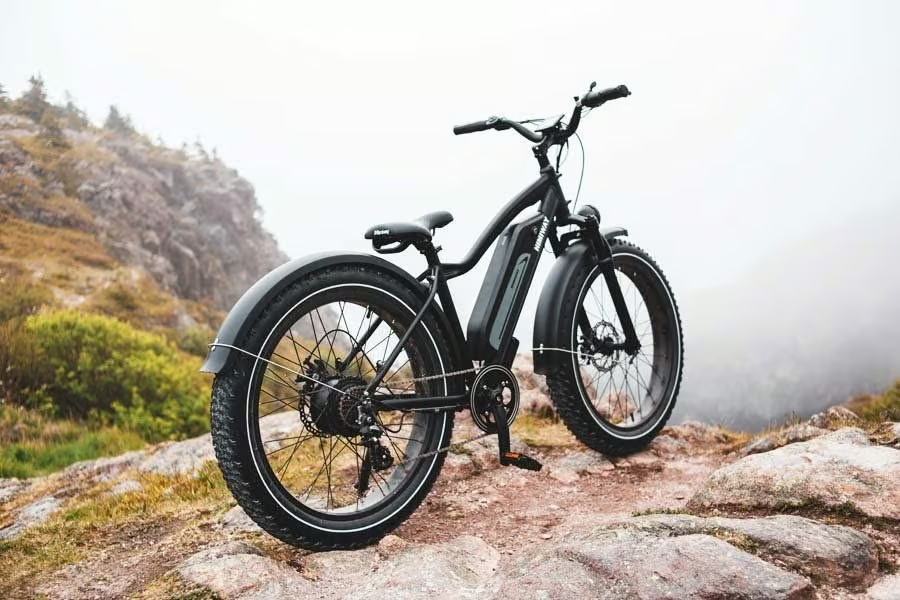
The best electric bike in NZ overall is the NCM Prague, a light hardtail e-MTB with a 250W Bafang rear hub motor, a 468Wh battery, a Suntour fork, Schwalbe tyres and Shimano gearing, weighing around 25kg. Worth knowing before you buy: New Zealand only classes a bike as a power-assisted cycle while its motor is rated at 300W or less, so higher-powered builds sit outside that definition and are worth checking against the rules for where you intend to ride.
An electric bike takes the effort out of hills, headwinds and long commutes, and the right one depends on whether you’re riding pavement, trails, or hauling cargo along the way.
We’ve rounded up 8 electric bikes, from folding commuters and a step-through trekking bike to fat-tyre and full-suspension builds, comparing motor power, battery capacity, weight and customer ratings where they exist, so you can see what each style of e-bike actually offers.
Comparison Table
| Product | Best For | Key Specs |
|---|---|---|
| NCM Prague Electric Mountain Bike, 250W, 36V 13Ah 468Wh | Best Overall | Motor: 250W Bafang rear hub | Battery: 36V 13Ah (468Wh) | Range: up to ~96km (Eco) | Assist speed: 25km/h | Speeds: 7 | Rating: 4.7★ (3 reviews) |
| NCM Paris Folding E-Bike, 250W, 36V 15Ah 540Wh, 20in | Best Folding | Motor: 250W Das-Kit rear hub | Battery: 36V 15Ah (540Wh), USB port | Range: 40-110km | Assist speed: 25km/h | Speeds: 7 | Max load: 125kg | Rating: 5.0★ (2 reviews) |
| shengmilo S600pro Dual-Motor Electric Mountain Bike, 48V 25Ah | Best for Mountain/Off-Road | Motor: dual hub (2 x 80Nm) | Battery: 48V 25Ah removable | Tyres: 26in fat | Suspension: dual | Speeds: 7 | Weight: ~45kg | Rating: 4.3★ (48 reviews) |
| NCM T7s Step-Thru Trekking E-Bike, 250W, 48V 19Ah 912Wh | Best Step-Through/Long-Range | Motor: 250W rear hub | Battery: 48V 19Ah (912Wh), USB port | Assist speed: 25km/h | Brakes: Tektro hydraulic, 180mm | Speeds: 8 | Max load: 140kg | Rating: no reviews yet |
| SAMEBIKE XD26-II Full Suspension Electric Mountain Bike, 48V 14Ah | Best Full-Suspension | Motor: 1500W peak brushless, 70Nm | Battery: 48V 14Ah (720Wh) | Range: 55-90km (PAS) | Suspension: full | Speeds: 7 | Weight: 25.5kg | Max load: 150kg | Rating: 5.0★ (5 reviews) |
| NCM Aspen Fat Electric Bike, 250W, 48V 13Ah 624Wh, 26in | Best Fat-Tyre | Motor: 250W hub | Battery: 48V 13Ah (624Wh), USB port | Tyres: 26 x 4.0in CST | Assist speed: 25km/h | Gears: Shimano Altus 3×7 | Max load: 120kg | Rating: 4.4★ (7 reviews) |
| SAMEBIKE M20 Fat Tyre Electric Bike, 2000W Peak, 48V 18Ah | Best High-Power Fat-Tyre | Motor: 2000W peak | Battery: 48V 18Ah (864Wh) removable | Range: 40-60km electric, up to 130km PAS | Tyres: 20 x 4.0in | Speeds: 7 | Weight: 43kg | Rating: no reviews yet |
| SAMEBIKE LOTDM200-II Folding Fat Tyre Electric Bike, 48V 13Ah | Best Folding Fat-Tyre | Motor: 1500W peak brushless geared | Battery: 48V 13Ah removable | Range: 50km+ | Max speed: 25km/h (listed) | Tyres: 20 x 4.0in | Speeds: 7 | Weight: 28kg | Rating: no reviews yet |
1. NCM Prague Electric Mountain Bike, 250W Bafang Motor, 468Wh Battery
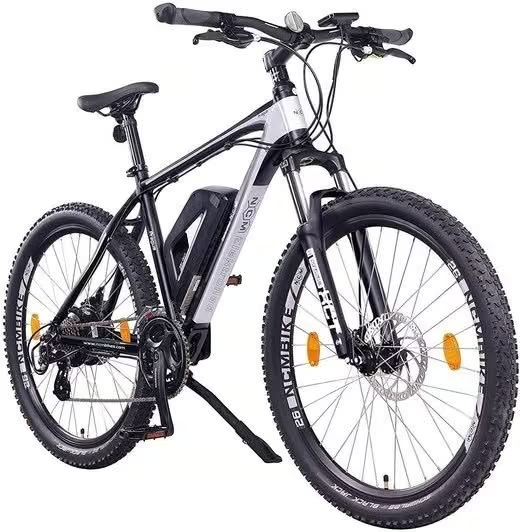
The NCM Prague is built like a regular hardtail mountain bike first and an e-bike second. Its aluminium alloy frame keeps the weight to around 25kg including the electric parts, so it steers and handles much like an unassisted bike. A Suntour XCT fork with preload adjustment takes the edge off rough ground, and Schwalbe Smart Sam tyres are a sensible all-rounder for gravel, trail and tarmac.
Power comes from a Bafang 250W rear hub motor and a 468Wh (36V 13Ah) DeHawk battery, run through a Das-Kit L6B LCD display with six levels of pedal assist plus a zero-assist setting. Assistance tops out at 25km/h, and the listing quotes up to about 96km of range in the lowest assist mode. Shimano shifters and derailleurs handle the gears and Tektro mechanical disc brakes do the stopping.
The 250W motor sits inside New Zealand’s 300W power-assisted cycle limit, which is the main reason it leads this list. The trade-offs are the ones you’d expect from a lower-powered bike: it won’t surge up hills like the high-wattage models further down, and there are only a handful of buyer reviews so far. The listing also gives conflicting wheel-size details, so check the frame and wheel size against your height before ordering.
Pros
- 250W Bafang motor stays within NZ’s 300W power-assisted cycle limit
- Light for an e-bike at around 25kg, so it handles like a normal mountain bike
- Name-brand parts: Suntour fork, Schwalbe tyres, Shimano gears, Tektro brakes
- Six assist levels plus a zero-assist mode
Cons
- Mechanical rather than hydraulic disc brakes
- Gentler hill-climbing than the high-power bikes on this list
- Listing shows conflicting wheel-size information
Key specs: Motor: 250W Bafang rear hub | Battery: 36V 13Ah (468Wh) | Range: up to ~96km (Eco) | Assist speed: 25km/h | Speeds: 7 | Rating: 4.7★ (3 reviews)
2. NCM Paris Folding E-Bike, 250W Motor, 540Wh Battery, 20in
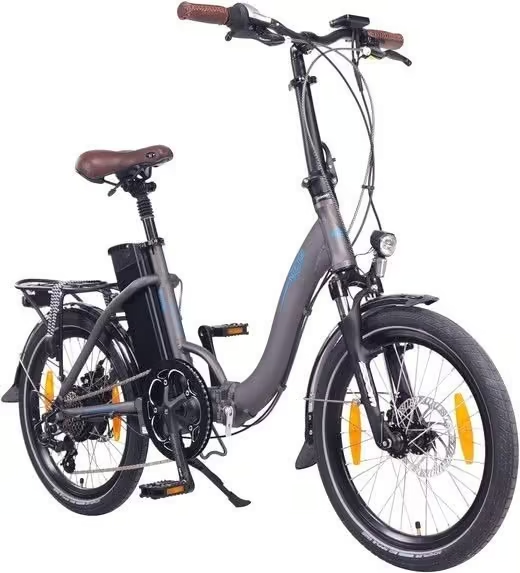
The NCM Paris folds without tools at the frame, stem, pedals and saddle, so it can go into a car boot, a hallway cupboard or under a desk at work. A very low step-through frame makes it easy to get on and off, and the 20 inch wheels keep the folded size down.
A Das-Kit 250W rear-drive motor assists up to 25km/h, fed by a removable 36V 15Ah (540Wh) battery that also has a USB port for charging a phone. The LCD display offers six assist levels and a walk mode, and the listing quotes 40 to 110km of range depending on how much assist you use. Tektro disc brakes, a Shimano Tourney 7-speed derailleur, a 20 lux Spanninga headlight, mudguards, a rear rack and a chain guard come fitted.
It is a practical city bike rather than a lightweight folder. The listing puts it at around 25kg (the spec table says 29kg), which is a lot to lift up stairs or onto a train, and small wheels give a firmer ride over rough streets than the full-size bikes here. Maximum rider load is 125kg.
Pros
- Tool-free folding frame, stem, pedals and saddle
- Very low step-through frame
- USB port on the 540Wh battery
- Comes with mudguards, rear rack, chain guard and lights
Cons
- Heavy to carry at around 25-29kg
- Small 20-inch wheels ride firmer than full-size bikes
- Only a couple of buyer reviews so far
Key specs: Motor: 250W Das-Kit rear hub | Battery: 36V 15Ah (540Wh), USB port | Range: 40-110km | Assist speed: 25km/h | Speeds: 7 | Max load: 125kg | Rating: 5.0★ (2 reviews)
3. shengmilo S600pro Dual-Motor Electric Mountain Bike, 48V 25Ah Battery
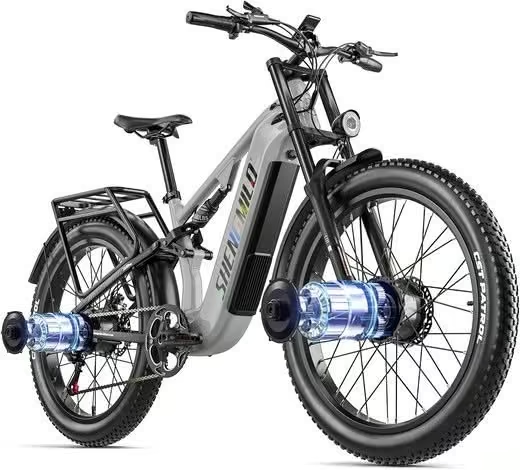
The shengmilo S600pro puts a hub motor in both wheels, quoted at 80Nm of torque each, which gives it two-wheel drive for loose climbs, sand and mud. Dual suspension and 26 inch fat tyres add grip and comfort over rough ground, and the motors carry an IP64 water and dust rating.
A removable 48V 25Ah battery sits inside the frame housing, and the colour display shows mileage, battery level, speed and the selected assist level. You get three riding modes, a 7-speed gear set, hydraulic disc brakes front and rear with motor cut-off on the levers, plus a cargo rack and mudguards. The listing says speed can be limited to 25km/h.
With 48 reviews at 4.3 stars, it has the most buyer feedback of any bike in this guide. It is also the heaviest at around 45kg, and two motors put it well outside the 300W power-assisted class, so check how it would be treated before riding it on the road. The listing’s battery capacity figures don’t quite agree with each other, so treat the range as approximate.
Pros
- Two hub motors for traction on steep, loose ground
- Dual suspension and fat tyres
- Large 48V 25Ah removable battery
- Most reviewed bike on this list (48 reviews, 4.3 stars)
Cons
- Very heavy at around 45kg
- Twin motors put it outside NZ’s 300W power-assisted cycle class
- Battery capacity figures in the listing are inconsistent
Key specs: Motor: dual hub (2 x 80Nm) | Battery: 48V 25Ah removable | Tyres: 26in fat | Suspension: dual | Speeds: 7 | Weight: ~45kg | Rating: 4.3★ (48 reviews)
4. NCM T7s Step-Thru Trekking E-Bike, 250W Motor, 912Wh Battery
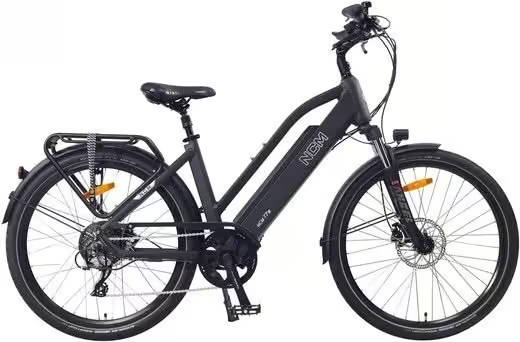
The NCM T7s is a step-through trekking bike for riders who want an easy mount and the battery to cover long routes. Schwalbe Marathon tyres, a Suntour suspension fork, a suspension seat post, Selle Royal ergonomic grips and an adjustable handlebar all point at comfort over long distances.
Its 250W rear hub motor is designed to hold 25km/h for long stretches, and the 48V 19Ah (912Wh) battery is the largest of the 250W bikes in this guide. It has a USB port, and the Das-Kit C8 display has a detachable control panel and six assist levels. Tektro hydraulic disc brakes with 180mm rotors, motor cut-off sensors in both levers, a Shimano Acera 8-speed derailleur and Spanninga front and rear lights round it out.
There are no buyer reviews yet, and parts of the listing copy refer to NCM’s Milano Plus model, so confirm the spec with the seller if any one detail matters to you. At 29kg it is not light, but the 140kg maximum load is generous and the 250W motor keeps it inside NZ’s power-assisted cycle limit.
Pros
- Big 912Wh battery for long commutes and touring
- Hydraulic disc brakes with 180mm rotors
- Comfort parts: suspension fork and seat post, Schwalbe Marathon tyres
- 250W motor stays within NZ’s 300W limit
Cons
- No buyer reviews yet
- Listing copy partly describes a different NCM model
- 29kg is heavy to lift
Key specs: Motor: 250W rear hub | Battery: 48V 19Ah (912Wh), USB port | Assist speed: 25km/h | Brakes: Tektro hydraulic, 180mm | Speeds: 8 | Max load: 140kg | Rating: no reviews yet
5. SAMEBIKE XD26-II Full Suspension Electric Mountain Bike, 48V 14Ah Battery
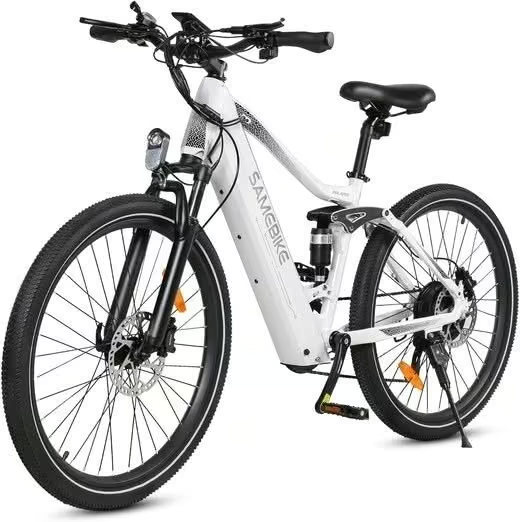
The SAMEBIKE XD26-II brings front and rear suspension to an aluminium frame that weighs a quoted 25.5kg, much lighter than the other full-suspension and fat-tyre bikes here. The suspension fork can be locked out for smooth roads, and 26 x 2.1 inch tyres suit road and gravel riding more than deep sand or mud.
A brushless hub motor with 1500W peak output and 70Nm of torque is quoted to climb slopes up to 25 degrees. The 48V 14Ah battery is rated for 55-90km with pedal assist or 40-50km on throttle alone. Three riding modes, 7 speeds, 160mm disc brakes, front and rear LED lights and a 3.5 inch LCD with fault detection on start-up are included, backed by a one-year warranty.
Its five reviews all sit at five stars, which is encouraging but a small sample. The listing currently quotes dispatch in two to three weeks, and the 1500W peak motor is far above NZ’s 300W power-assisted cycle limit, so check the rules for where you plan to ride.
Pros
- Full suspension with a lockable fork
- Light for a full-suspension e-bike at 25.5kg
- Strong 70Nm motor for hills
- Three riding modes and a fault-checking LCD
Cons
- 1500W peak motor is well above NZ’s 300W limit
- Two to three week dispatch time at the moment
- Narrower 2.1-inch tyres are less suited to sand and mud
Key specs: Motor: 1500W peak brushless, 70Nm | Battery: 48V 14Ah (720Wh) | Range: 55-90km (PAS) | Suspension: full | Speeds: 7 | Weight: 25.5kg | Max load: 150kg | Rating: 5.0★ (5 reviews)
6. NCM Aspen Fat Electric Bike, 250W Motor, 624Wh Battery, 26in
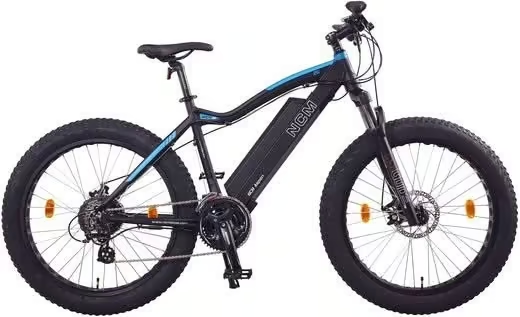
The NCM Aspen puts 26 x 4.0 inch CST fat tyres on a 6061 aluminium frame, giving it the float and stability to ride on beach sand, loose gravel and muddy tracks. An RST Guide fork handles the front suspension, and it is the only fat-tyre bike here with a 250W motor.
The 48V 250W motor assists up to 25km/h and is paired with a 48V 13Ah (624Wh) battery with a USB port. A Das-Kit L7B LCD gives six assist levels, Tektro disc brakes have motor cut-off sensors, and the drivetrain is Shimano Altus with a 3-speed front and 7-speed rear set-up.
It has seven reviews at 4.4 stars. The catch is weight: the listing quotes 35 to 38kg, and a 250W motor pushing 4-inch tyres won’t feel as punchy as the high-power fat bikes further down. The 120kg maximum load is also lower than most of the other picks.
Pros
- 4-inch fat tyres for sand, gravel and mud
- 250W motor stays within NZ’s 300W limit
- Shimano Altus gearing with a wide range
- Reasonable review base at 4.4 stars
Cons
- Heavy at 35-38kg
- Less acceleration than the high-power fat bikes
- Lower 120kg maximum load
Key specs: Motor: 250W hub | Battery: 48V 13Ah (624Wh), USB port | Tyres: 26 x 4.0in CST | Assist speed: 25km/h | Gears: Shimano Altus 3×7 | Max load: 120kg | Rating: 4.4★ (7 reviews)
7. SAMEBIKE M20 Fat Tyre Electric Bike, 2000W Peak Motor, 48V 18Ah Battery
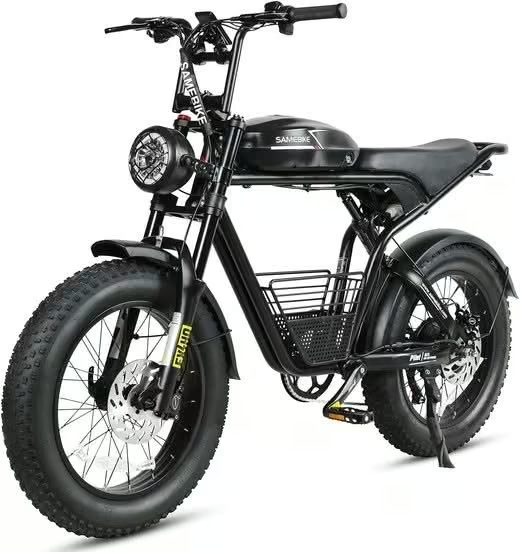
The SAMEBIKE M20 has a moped-style frame with a long seat and 20 x 4.0 inch fat tyres, with suspension front and rear. It is aimed at riders who want something that looks and rides more like a small motorbike than a bicycle, and it carries an IP54 water and dust rating.
A motor with 2000W peak output drives it through a 7-speed gear set, with a 3.5 inch LCD showing speed, distance and battery status. The removable 48V 18Ah (864Wh) battery is quoted at 40-60km on throttle alone and up to 130km with pedal assist, and takes six to eight hours to charge. LED lights and reflectors are fitted, about 85 percent of the bike comes pre-assembled, and the motor, battery, display and controller have a one-year warranty.
This is the bike on the list that most clearly sits outside the power-assisted cycle class: the listing quotes up to 50km/h, so check how it would be classed before you ride it on NZ roads. It is also heavy at 43kg with a carbon steel frame, it has no reviews yet, and the range figures vary between the title and the bullet points.
Pros
- Powerful 2000W peak motor
- Fat tyres and dual suspension
- Large 864Wh removable battery
- About 85% pre-assembled
Cons
- Far beyond NZ’s 300W power-assisted cycle limit
- Heavy 43kg carbon steel frame
- No reviews yet and inconsistent range claims
Key specs: Motor: 2000W peak | Battery: 48V 18Ah (864Wh) removable | Range: 40-60km electric, up to 130km PAS | Tyres: 20 x 4.0in | Speeds: 7 | Weight: 43kg | Rating: no reviews yet
8. SAMEBIKE LOTDM200-II Folding Fat Tyre Electric Bike, 48V 13Ah Battery
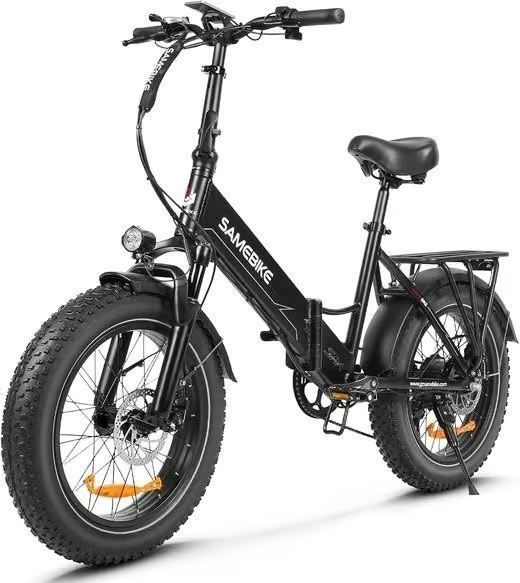
The SAMEBIKE LOTDM200-II combines a folding 6061 aluminium frame with 20 x 4.0 inch fat tyres, so it can be packed into a car and still handle gravel, sand and grass when you get there. The front suspension fork has a lock-out for smooth roads.
A brushless geared motor with 1500W peak output is listed with a 25km/h maximum speed, powered by a removable 48V 13Ah battery quoted at over 50km per charge. A 7-speed gear set, 160mm mechanical disc brakes front and rear, and front and rear LED lights with reflectors are fitted, and the quoted weight is 28kg.
There are no buyer reviews yet, and the range claim varies from 50km in the bullets to 100km in the title, so plan around the lower figure. Mechanical brakes need more frequent adjustment than hydraulic ones, and the 1500W peak rating is above NZ’s 300W power-assisted cycle limit.
Pros
- Folds for car or cupboard storage
- Fat tyres for mixed surfaces
- Lockable front suspension
- 28kg is moderate for a fat-tyre e-bike
Cons
- No reviews yet
- Mechanical rather than hydraulic brakes
- 1500W peak motor exceeds NZ’s 300W limit
Key specs: Motor: 1500W peak brushless geared | Battery: 48V 13Ah removable | Range: 50km+ | Max speed: 25km/h (listed) | Tyres: 20 x 4.0in | Speeds: 7 | Weight: 28kg | Rating: no reviews yet
How to Choose an Electric Bike
Motor power and battery capacity
Higher peak wattage gives stronger acceleration and hill-climbing, while a larger battery (measured in Wh) extends how far you can ride on pedal-assist before recharging. Match both to your terrain, hilly routes and cargo loads draw down a battery faster than flat commuting.
Frame and tire style
Step-through frames suit easy mounting and a relaxed riding position, folding frames trade some ride comfort for portability and storage, and fat tires add stability on sand, gravel or wet surfaces at the cost of extra weight.
Review count and rating
A high star rating from a small handful of reviews is a weaker signal than a slightly lower rating backed by hundreds or thousands of genuine buyers. Weigh both together rather than the star rating alone.
Assembly and warranty
Most e-bikes in this price range arrive partially assembled, so check what tools and time are needed before the first ride, and look for battery certifications like UL2849 alongside the manufacturer’s parts warranty.
If you are shopping for the whole family, the guides to trampolines, electric scooters and kids’ scooters cover the other options.
Verdict
The NCM Prague is our overall pick: its 250W motor keeps it within NZ’s power-assisted cycle definition, it uses name-brand parts from Bafang, Suntour, Schwalbe, Shimano and Tektro, and at around 25kg it still handles like a normal bike. Riders who need to fold and stash their bike should look at the NCM Paris, while the NCM T7s suits longer commutes with its 912Wh battery and hydraulic brakes. For rough trails, the twin-motor shengmilo S600pro has the most buyer reviews here, and the SAMEBIKE XD26-II brings full suspension at 25.5kg. Several of the high-power picks are well over 300W, so check how they are classed before riding them on the road. Match motor power, battery size and frame style to how and where you’ll actually ride, rather than chasing the single highest spec on the page.
Frequently Asked Questions
What’s the difference between a commuter e-bike and a mountain e-bike?
Commuter e-bikes are built around lighter frames, road-oriented tires, and features like fenders, racks, and lighting for pavement use, while mountain e-bikes use knobby tires, more aggressive suspension, and wider gear ranges suited to trails and uneven terrain. Choosing between them comes down to where most of the riding will actually happen.
How long do e-bike batteries typically last, and how can I extend their lifespan?
Most e-bike lithium-ion batteries are rated for several hundred charge cycles before capacity noticeably declines, often translating to several years of regular use. Keeping the battery between roughly 20% and 80% charge for everyday storage, avoiding extreme heat or cold, and using the charger supplied by the manufacturer all help preserve long-term capacity.
Do I need a licence, registration, or insurance to ride an e-bike in New Zealand?
Rules around e-bike classification, licensing, and where they can legally be ridden can vary and change over time, so rather than quote a specific answer here, check the current requirements directly with Waka Kotahi NZ Transport Agency or your local council before riding.
What is the power and speed limit for an e-bike to be treated as a bicycle rather than a moped in New Zealand?
These thresholds are set by transport regulations and are the kind of detail that is easy to get wrong or out of date, so confirm the current motor power and speed cut-offs with Waka Kotahi NZ Transport Agency or your local council rather than relying on a general guide.
How do I decide between a cargo e-bike and a standard e-bike?
A cargo e-bike makes sense if the bike will regularly carry groceries, kids, or other loads, since the reinforced frame, rack, and higher-capacity battery are built for that extra weight. For riders mainly commuting solo or riding for fitness, a standard commuter or mountain e-bike will usually be lighter, cheaper, and easier to manoeuvre.
How often should an e-bike be serviced, and what maintenance can I do myself?
Basic upkeep like keeping tires properly inflated, lubricating the chain, and checking brake pads can be done at home every few weeks depending on riding frequency, while the motor, battery connections, and drivetrain are worth having professionally inspected roughly once or twice a year. Riding in wet or sandy conditions more often will generally shorten the interval between check-ups.
