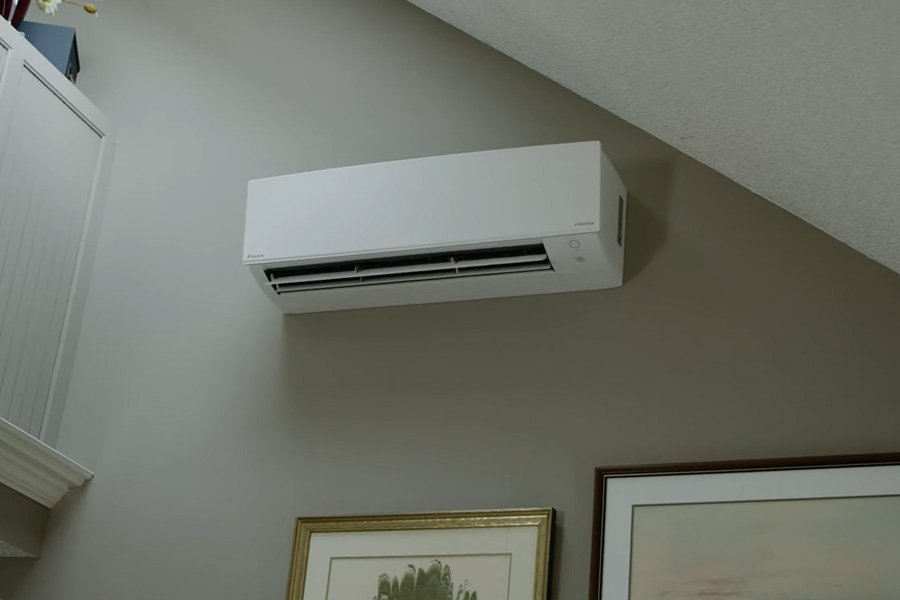
The best heat pump in NZ for most homes is the Mitsubishi Electric LN35 Black Diamond HyperCore, because it holds its full rated heat output all the way down to -15°C and runs at one of the highest efficiency ratings sold here. That said, the right unit really comes down to your room size, your climate and your budget, so this guide compares six current models you can buy in New Zealand right now.
Heat pumps remain the cheapest way to heat a Kiwi home, often using around half the power of a plug-in heater for the same warmth, and they cool in summer too. The picks below run from budget value units to premium cold-climate models. If you are heating a space too small to justify a split system, it is worth comparing the best electric heaters first, and for renters who cannot install a fixed unit, the best portable air conditioners are a flexible fallback.
How these picks were chosen
Each model here was checked on the retailer or manufacturer page to confirm it is a current, available product, then cross-referenced against New Zealand spec sheets, installer listings and owner feedback for heating capacity, energy rating, noise, smart features and warranty. Capacities, dimensions and ratings are quoted from the manufacturers’ published NZ data. We do not list prices because heat pump pricing in NZ is almost always quoted as a supply-and-install package that varies by home and region.
Quick comparison
Model | Best for | Heating | Energy rating | Quietest indoor | Warranty |
|---|---|---|---|---|---|
Midea Aurora 5kW | Value in medium–large living areas | 6.0 kW | 3.5 star | Low (no dB stated) | 5 years |
Midea Aurora 2.5kW (MFAB26NB) | Budget bedrooms | 3.2 kW | 5 star | Low (no dB stated) | 5 years |
Panasonic AERO Z CS-Z95AKR | Large open-plan rooms + air purifying | 10.3 kW | Approx. 2.0–3.0 HSPF | 35 dB(A) | 3 years |
Mitsubishi Electric LN35 Black Diamond | Cold climates + premium design | 4.0 kW | HSPF 5.02 (avg) | 19 dB(A) | 5 years |
Hitachi airHome 600 | Smart control + self-cleaning | 3.2–8.0 kW | Varies by model | Varies by model | 6 years |
Daikin Zena Vogue | Quiet, design-led comfort | 3.2–6.0 kW | Varies by model | Approx. 19 dB(A) | 5 years |
1. Midea Aurora 5kW — Best value for medium-to-large living areas
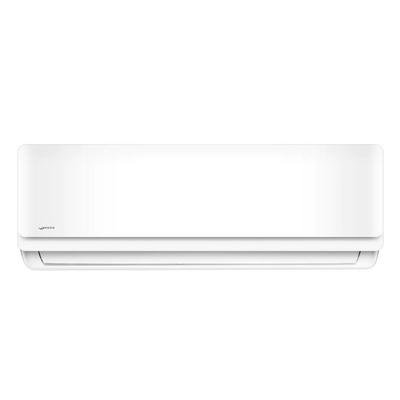
Best for value in a medium-to-large living area, the Midea Aurora 5kW (model PR9218) delivers 5kW of cooling and 6kW of heating for well under the cost of a premium brand. The indoor head is a wide 1080mm across (1080 x 226 x 335mm), so it suits a longer wall in an open lounge or dining space rather than a small bedroom. It runs on the current R32 refrigerant and carries a 3.5-star energy rating across heating and cooling, along with a high-density filter, refrigerant-leak detection, an ECO mode and a simple digital display.
Midea has sold into New Zealand for more than eight years (previously under the Sair name), and owners who pick one up tend to be pleasantly surprised by how much performance they get for the money. Control is via the included remote, with Wi-Fi available as an optional plug-and-play adaptor rather than built in. The trade-offs are real: the 3.5-star efficiency sits below the premium models here, and TSB Living sells it on a delivery-only basis with the installation package offered only in Auckland. Some owners also report rust or build niggles appearing after a few years, so siting it out of direct coastal spray helps. It comes with a 5-year warranty.
Pros & cons
- Strong heating output (6kW) for the price
- R32 refrigerant, leak detection and a 5-year warranty
- Con: only 3.5-star efficiency and Wi-Fi is an optional extra
- Con: delivery-only, with installed pricing limited to Auckland
Key specs:5kW cooling / 6kW heating; R32; 3.5-star; indoor 1080 x 226 x 335mm, outdoor 845 x 320 x 700mm; 5-year warranty.
2. Midea Aurora 2.5kW – Best budget pick for bedrooms
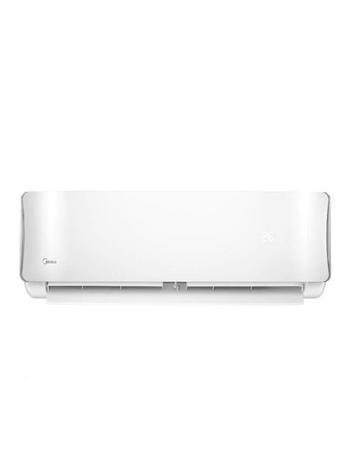
Best for a bedroom on a tight budget, the Midea Aurora 2.5kW (MFAB26NB) pairs 2.5kW of cooling with 3.2kW of heating and, usefully, earns a 5-star energy rating that actually beats its bigger 5kW sibling. The indoor unit is compact at 802 x 189 x 297mm, which Midea positions as a good fit for a large bedroom or a small living room. It shares the Aurora family hardware: R32 refrigerant, a high-density filter, refrigerant-leak detection, an ECO mode, a digital display and an optional Wi-Fi adaptor.
For a first heat pump in a single room, it covers the essentials without the premium price, and the 5-star rating means lower running costs per hour than many cheap units. The honest limitations: Midea does not publish a decibel figure for this model, so buyers sensitive to fan noise near a bed should hear one running first, and independent testing of Midea units has measured operating noise in the high-40s dB(A) on higher fan speeds. Stock can also be thin, with TSB Living showing it as low stock in Auckland and out of stock in Wellington and Christchurch at the time of writing, on a delivery-only basis (typically 3 to 6 days). It is backed by a 5-year warranty.
Pros & cons
- 5-star efficiency in an affordable single-room unit
- Compact indoor head suits a bedroom or small lounge
- Con: no published noise rating and Wi-Fi is optional
- Con: limited stock and delivery-only fulfilment
Key specs:2.5kW cooling / 3.2kW heating; R32; 5-star; indoor 802 x 189 x 297mm, outdoor 800 x 333 x 554mm; 5-year warranty.
3. Panasonic AERO – Best for large rooms & air purification
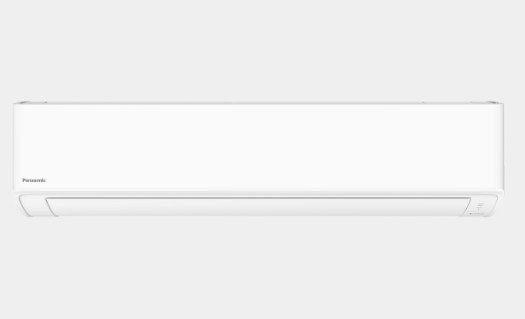
Best for a large open-plan room where air quality matters, the Panasonic AERO Z CS-Z95AKR is the heavyweight of this list, rated at 9.5kW cooling and 10.3kW heating. The indoor unit is correspondingly large at 1212mm wide and 17kg, so it needs a generous wall, while the outdoor unit weighs 55kg. Its headline feature is built-in nanoe X air purification, which Panasonic says inhibits bacteria, viruses, mould, allergens and pollen, and the unit is approved under the Sensitive Choice programme for allergy and asthma sufferers.
Living with it is genuinely quiet for such a big unit, dropping to 35 dB(A) on the Q-Low heating setting, and the AEROWINGS twin flaps throw air up to 25 metres across a long room. There is built-in Wi-Fi through the Comfort Cloud app with voice-assistant support, an iAUTO-X fast-start mode and an A.I.-driven ECO mode. It will heat down to -15°C outdoors. The catches: Panasonic backs it with only a 3-year warranty, shorter than most rivals here, and its efficiency is modest for the capacity (COP 3.71, with a cold-zone heating rating around 2.0 HSPF). Panasonic’s own online store currently lists it as out of stock, though it is stocked by retailers such as Harvey Norman, Heathcotes and NZ Depot.
Pros & cons
- Huge 10.3kW heating output for big open-plan spaces
- nanoe X purification, Sensitive Choice approved, built-in Wi-Fi
- Con: only a 3-year warranty
- Con: modest efficiency for its size and a large indoor footprint
Key specs:9.5kW cooling / 10.3kW heating; R32; heating to -15°C; indoor 1212 x 269 x 309mm (17kg); nanoe X; built-in Wi-Fi; 3-year warranty.
4. Mitsubishi Diamond HyperCore – Best for cold climates
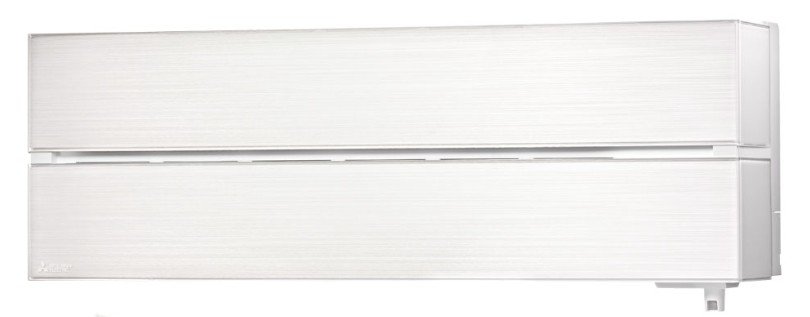
Best for cold-climate performance and a premium look, the Mitsubishi Electric LN35 Black Diamond HyperCore (MSZ-LN35VG2V) is rated at 3.5kW cooling and 4.0kW heating, and it is the standout for anyone in a frosty part of the country. HyperCore technology guarantees the full 4.0kW of heat right down to -15°C, where ordinary heat pumps start to fade, with operation continuing to -25°C. Efficiency is excellent too, at an average HSPF of 5.02 and a COP of 4.88.
It also looks the part. The Black Diamond range comes in a premium gloss finish (White, Red or Black Diamond) with a matching wireless controller, and the indoor head is a tidy 890mm wide at just 15.5kg. The everyday experience is where the money goes: built-in Wi-Fi with energy monitoring that shows running costs by the hour, a 3D i-See sensor that steers airflow toward or away from people, Plasma Quad Plus filtration, a patented Dual Barrier Coating that keeps the internals cleaner, and whisper-quiet running from 19 dB(A). The honest trade-offs are price and size: it sits at the premium end, and at 3.5kW/4.0kW it is sized for a bedroom or modest living room rather than a barn-sized lounge. In a mild northern climate the cold-weather engineering can be more than you need. Mitsubishi backs it with a 5-year parts and labour warranty.
Pros & cons
- Full rated heat to -15°C and guaranteed operation to -25°C
- Top-tier efficiency, built-in Wi-Fi energy monitoring and a 19 dB(A) quiet mode
- Premium gloss finish in three colours
- Con: premium pricing and a smaller 4.0kW capacity
Key specs:3.5kW cooling / 4.0kW heating; R32; full heat to -15°C, runs to -25°C; HSPF 5.02 avg, COP 4.88; indoor 890 x 233 x 307mm (15.5kg); 5-year warranty.
5. Hitachi airHome 600 — Best for smart control
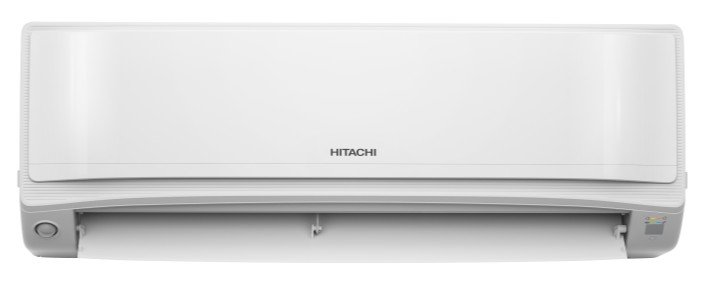
Best for hands-off smart control, the Hitachi airHome 600 is a wall-mounted range spanning roughly 2.5kW to 7kW cooling and 3.2kW to 8kW heating, so there is a size for most rooms. What sets it apart is the maintenance and automation tech. FrostWash freezes, melts and flushes dust off the outdoor heat exchanger to keep airflow up over the years, while a Mould Guard cycle dries and heats the internals to discourage mould between uses.
The airCloud Go app adds genuinely useful smarts: Smart-Fence uses your phone’s location to switch the unit off as you leave and pre-warm the room before you get home, and a Smart Eco mode drops the unit into energy-saving when the room is empty. Air is filtered through a ViroSense Z1 element that targets viruses and bacteria. The biggest selling point for long-term buyers is the warranty, a comprehensive 6 years on parts and labour, the longest in this list. The caveats: the headline features lean on Wi-Fi and the app, so connectivity matters, and because this is a range rather than a single SKU, the exact capacity, efficiency rating and noise level depend on which model you choose, so confirm the specific unit with your installer. Hitachi also carries a little less brand recognition in NZ than Mitsubishi or Daikin.
Pros & cons
- Class-leading 6-year parts and labour warranty
- FrostWash self-cleaning and Mould Guard reduce upkeep
- airCloud Go app with geofencing and occupancy sensing
- Con: features depend on Wi-Fi, and specs vary across the range
Key specs:Range approx. 2.5–7kW cooling / 3.2–8kW heating; R32; FrostWash; airCloud Go app; ViroSense Z1 filter; 6-year warranty.
6. Daikin Zena Vogue — Best for quiet, design-led comfort
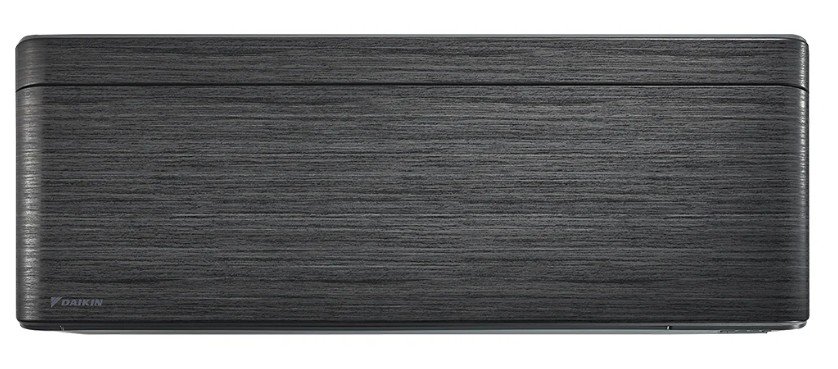
Best for a quiet, design-led room, the Daikin Zena Vogue is a reverse-cycle wall unit offered in eight models, covering 2.5kW to 6.0kW cooling and 3.2kW to 6.0kW heating on R32 refrigerant. It is one of the slimmest indoor heads here at 798 x 295 x 185mm, with softly curved corners and a textured front panel in either a Hairline White or a Black Wood finish, so it blends into a living room far better than a typical white box.
Daikin engineered the Zena around a redesigned super-quiet fan that runs close to inaudible at its lowest setting, which is why it suits bedrooms and studies where noise is the deciding factor. A Grid Eye sensor reads the room across a 64-square grid and steers air to where it is needed, while flash streamer technology handles air purification and the unit carries Sensitive Choice approval. A program dry function manages humidity, and a swing compressor keeps things smooth. The trade-offs: Wi-Fi control needs an optional adaptor rather than being built in, it sits at the premium end on price, and at the top of its capacity range the compact panel is better suited to a normal living room than a very large open-plan area. Daikin provides a 5-year parts and labour warranty.
Pros & cons
- Among the quietest and slimmest indoor units, in two designer finishes
- Grid Eye zoning, flash streamer purification, Sensitive Choice approved
- Con: Wi-Fi requires an optional adaptor
- Con: premium pricing for the capacity
Key specs:2.5–6.0kW cooling / 3.2–6.0kW heating; R32; indoor 798 x 295 x 185mm; Hairline White or Black Wood; Grid Eye sensor; 5-year warranty.
How to choose the best heat pump for your home
Match the kW to the room
Sizing is the decision that makes or breaks comfort. As a rough NZ guide, a bedroom of 12 to 18m² wants about 2.5 to 3.5kW, while an average living room of 20 to 35m² needs 4.0 to 6.0kW. Undersize it and the unit struggles in a cold snap; oversize it and you pay more upfront and run less efficiently. Insulation, ceiling height, window area and whether you are in the North or South Island all shift the number, so treat any online figure as a starting point and confirm with a heat-loss assessment from a qualified installer.
Look at heating capacity and the star rating, not just the headline kW
Heating capacity is the spec that matters most in NZ, since most people buy a heat pump to stay warm. Pair it with the energy star rating: a higher rating means lower running costs for the same warmth. The most efficient models here, like the Mitsubishi LN35, repay their premium over years of winters.
Cold-climate performance
If you are in Central Otago, Canterbury or the Central Plateau, check the low-temperature rating. Ordinary heat pumps lose output below about 7°C, whereas cold-climate models such as the Mitsubishi HyperCore hold full heat to -15°C. For milder Auckland and Northland homes this matters far less.
Noise, smart features and air quality
For bedrooms, the quietest indoor units (around 19 dB(A)) are worth seeking out. Built-in Wi-Fi, geofencing and energy monitoring add convenience, and filtration systems like nanoe X or flash streamer help allergy sufferers. If you only need to take the chill off a small space, a heater may be enough; for cheap summer cooling on a budget, the best air coolers are worth a look alongside a heat pump.
The verdict
For most New Zealand homes, the Mitsubishi Electric LN35 Black Diamond HyperCore is the heat pump to beat, combining cold-climate heating, top efficiency and quiet, good-looking design. Buyers on a budget should look at the Midea Aurora range, with the 5-star 2.5kW for bedrooms and the 5kW for larger living areas. Choose the Panasonic AERO Z for a big open-plan space with air-purifying nanoe X, the Hitachi airHome 600 for the longest warranty and the cleverest app, or the Daikin Zena Vogue when quiet running and a designer finish top your list.
Related guides
Keep your home comfortable year-round with Best Review’s other buying guides: the best electric heaters for smaller spaces, the best portable air conditioners for renters, the best electric blankets for extra winter warmth, and the best humidifiers for healthier indoor air.
Retrofitting a heat pump into a villa with no wall cavity gets expensive quickly, and an electric fireplace heats a single living room without any of that work. Only the rooms with a head installed get any benefit, so most homes still need a portable fan for the bedroom at the far end of the hallway. A heat pump in cooling mode costs real money to run all afternoon, whereas cooling fans handle a mild Auckland evening for a fraction of the power.
FAQs
Which heat pump brand is best in NZ?
Mitsubishi Electric is the most-installed brand in New Zealand and Daikin was rated the country’s number one for satisfaction in Canstar’s 2026 research. Panasonic leads on air purification, and Hitachi offers the longest warranty. The best brand for you depends on your room size, climate and budget rather than one universal winner.
What size heat pump do I need for my room?
As a guide, a bedroom of 12 to 18m² needs roughly 2.5 to 3.5kW, and a living room of 20 to 35m² needs about 4.0 to 6.0kW. Insulation, ceiling height, window area and your region change the figure, so confirm sizing with a qualified installer before buying.
How much does it cost to run a heat pump in NZ?
Running costs depend on size, efficiency and use. A small 2.5kW unit can cost under $200 a year, a typical living-room unit run a few hours a day lands near $400, and a very large 10kW-plus system used heavily can approach $1,000 a year. Higher star ratings lower the bill.
How much does heat pump installation cost in NZ?
A standard wall-mounted heat pump supplied and installed in NZ varies with unit size, brand and installation complexity, with a hi-wall unit in a medium living area sitting at the lower end of the range. Ducted whole-home systems cost considerably more.
What is the most energy-efficient heat pump in NZ?
Among current models, Daikin’s US7 series holds the highest efficiency rating in New Zealand. Of the units in this guide, the Mitsubishi Electric LN35 Black Diamond is the standout, with an average HSPF of 5.02 and a COP of 4.88, which translates to lower running costs over time.
Do heat pumps work in winter and in the cold?
Yes. Heat pumps are the main winter heat source for many Kiwi homes. Standard models lose some output below about 7°C, but cold-climate units such as the Mitsubishi HyperCore keep their full rated heat down to -15°C and operate to -25°C, making them suitable for the coldest parts of the South Island.
