
The best coffee grinder in NZ overall is the Baratza Encore ESP, because its 40mm steel conical burrs and split adjustment range cover both espresso and filter properly, rather than doing one well and the other badly. Every pick below is built around a different brewing habit and budget.
The one distinction that matters more than any other is burr versus blade. Eight of the ten grinders here use burrs, which mill beans to a consistent size. The last two use blades, which chop unevenly, and both are labelled as such rather than being passed off as something they are not.
A grinder is only half the setup, so it is worth reading alongside the coffee machines guide, the milk frothers guide and the kettles guide for pour-over.
| Pick | Best for | Burr type | Key detail |
|---|---|---|---|
| Baratza Encore ESP | Overall | Conical 40mm | 40 steps, espresso and filter |
| Sunbeam GrindFresh EM0440 | Budget burr | Conical | 25 settings, espresso capable |
| De’Longhi Dedica KG521M | Espresso | Conical | 18 settings, portafilter dosing |
| Sunbeam Cafe Series EMM0500BK | Mid-range | Conical | 24 settings, die-cast body |
| Baratza Virtuoso+ | Premium filter | Conical 40mm | 40 steps, filter only |
| Kenmore 64mm Flat Burr | Flat burr | Flat 64mm | 100 settings, single-dose or hopper |
| Timemore Chestnut C2S | Manual | Conical 38mm | Approx 36 levels, hand grinder |
| Krups Expert Burr GVX231 | Compact burr | Flat | 17 settings, 2 to 12 cups |
| Breville Coffee and Spice | Coffee and spices | Blade | 5 positions, spices and grains |
| Bodum Bistro Blade | Cheap blade grinder | Blade | No settings, 60g capacity |
The Best Coffee Grinders in NZ
1. Baratza Encore ESP – Best Overall
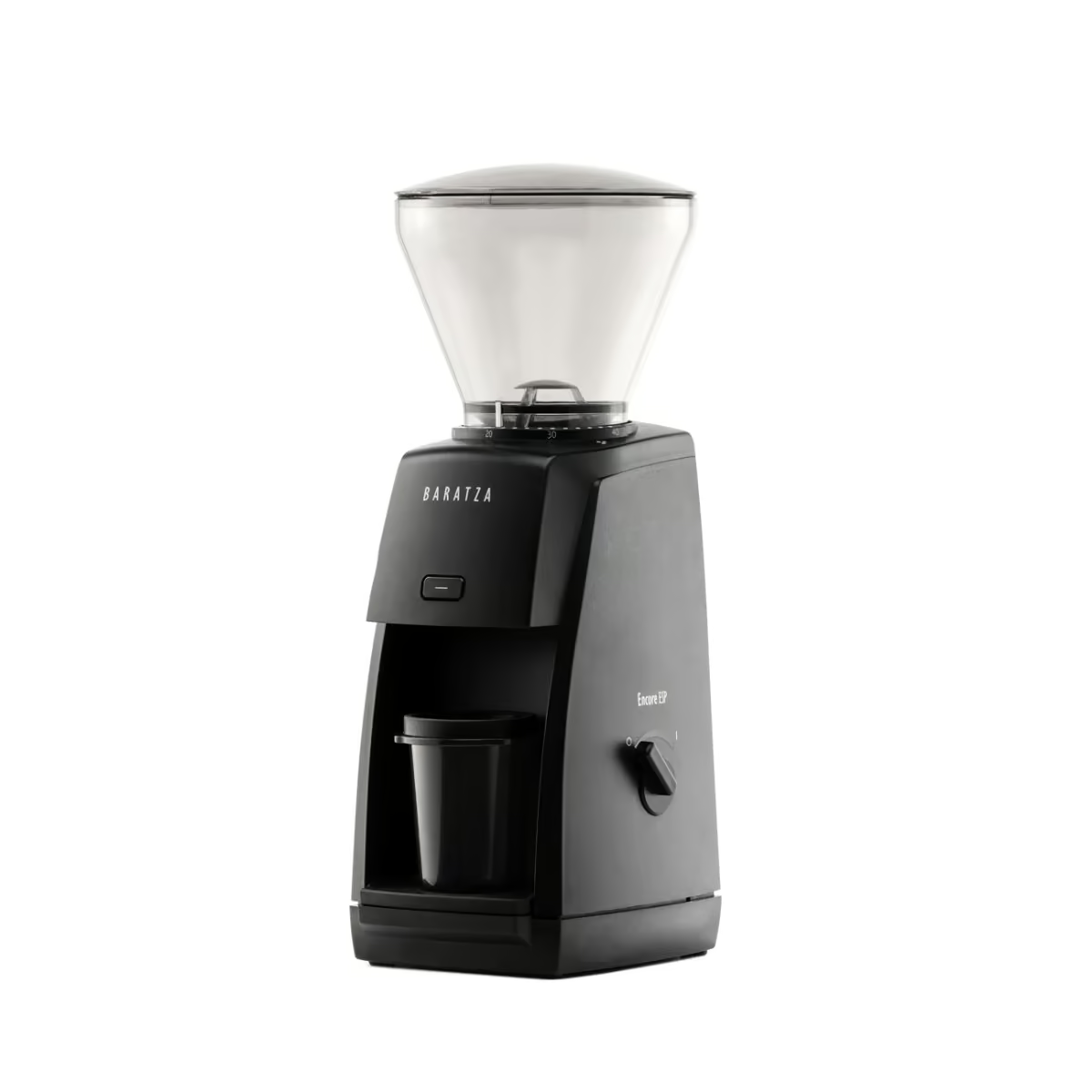
The Encore ESP is built around a 40mm M2 hardened steel conical burr set, not a blade, so particle size stays consistent across the dose. Grind size is set by rotating the hopper collar through 40 stepped positions, and the burr assembly is designed for quick release so it can be pulled out and brushed without dismantling the grinder. A 54mm anti-static dosing cup with a 58mm adapter is included in the box.
The 40 steps are split into two zones, which is the point of the ESP designation. Settings 1 to 20 are tightened micro-steps aimed at espresso, while 21 to 40 open into wider macro-steps for pour-over, plunger and drip. A DC motor turning the burrs at roughly 550rpm keeps the grounds from heating up during longer filter doses, and the 230g hopper is enough for a week of home use.
Adjustment is stepped rather than stepless, so espresso dialling can occasionally land between two settings and need a small change in dose or tamp instead. The housing is largely plastic and the unit is light at around 3.1kg, so it moves on the bench if the portafilter is knocked against it. It suits a household that wants one grinder covering both espresso and filter.
Pros
- 40mm M2 steel conical burrs give consistent particle size for both brew styles
- Dual-zone adjustment with fine espresso micro-steps and wider filter macro-steps
- Quick-release burr assembly makes routine cleaning straightforward
- Dosing cup and 58mm adapter included, so it works with common portafilters
Cons
- Stepped adjustment can be limiting when dialling in espresso precisely
- Mostly plastic housing and a light 3.1kg body
- 230g hopper is modest compared with larger benchtop grinders
Key specs: 40mm M2 steel conical burrs | 40 stepped settings, 1 to 20 espresso and 21 to 40 filter | Espresso and filter capable | 230g hopper | 3.1kg | 550rpm DC motor
2. Sunbeam GrindFresh Conical Burr Grinder – Best Budget Burr
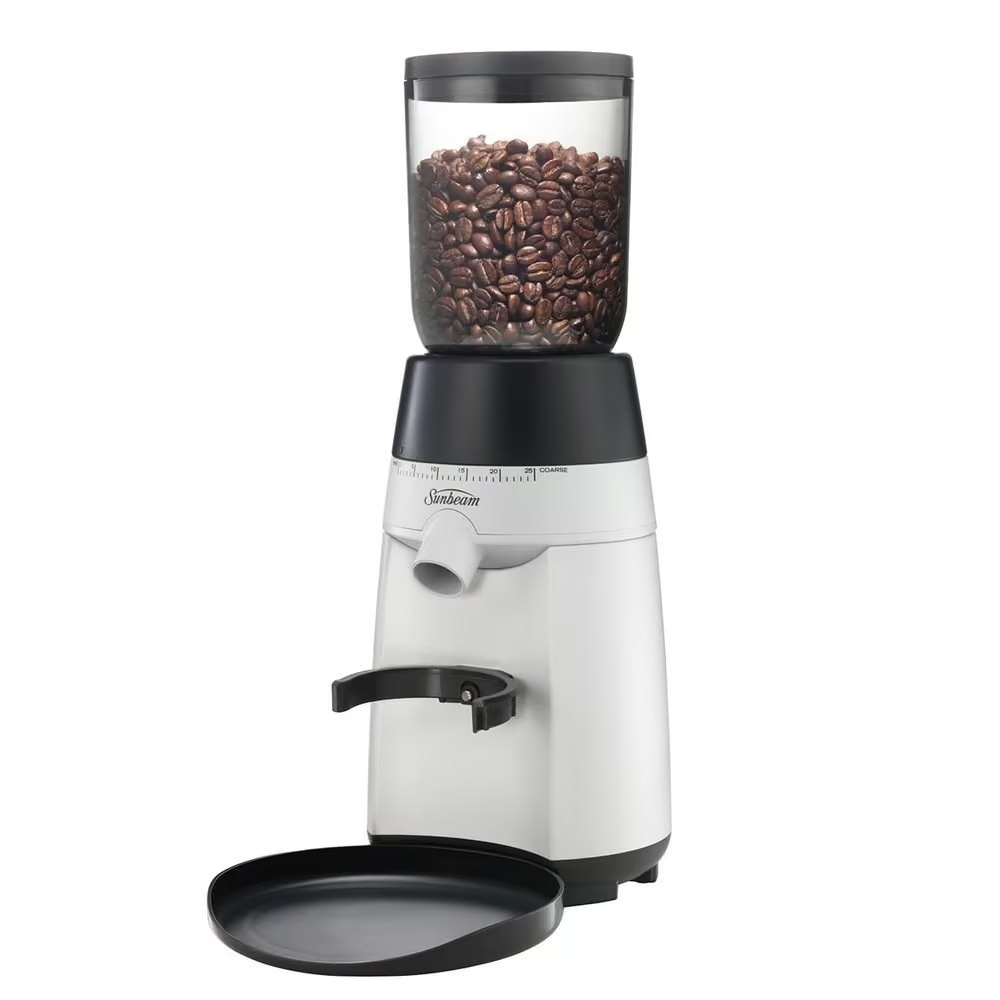
The GrindFresh uses Italian-made metal conical burrs that turn at low speed, which Sunbeam says limits the heat transferred into the grounds. Grind size is set by a large collar that rotates beneath the 250g bean hopper, marked from fine through to coarse across 25 positions. There is no timer and no digital dosing, so grinding starts only when a group handle is pressed against the on-demand button.
Sunbeam’s own grind chart puts espresso at settings 12 to 16, with 2 to 6 reserved for Turkish and 20 to 23 for drip filter and plunger, so the burr set genuinely reaches espresso-fine territory. Commercial and domestic group handle locators are supplied, so grounds go straight into a portafilter basket rather than into a container first. A silicone spout cover and a preparation mat catch the grounds that escape.
The trade-off is manual control. Dose is judged by eye and by how long the handle is held against the button, and the body is moulded plastic rather than die-cast metal. At 2.4kg it suits a first espresso setup or a household grinding for filter and plunger, rather than anyone chasing repeatable gram-accurate dosing.
Pros
- Genuine Italian metal conical burrs, not blades
- Grinds fine enough for espresso, with Sunbeam specifying settings 12 to 16
- Doses straight into commercial or domestic group handles
- Wide 25-position collar covers Turkish through to plunger
Cons
- No timer or weight-based dosing, so dose is judged by eye
- Plastic housing rather than the die-cast metal of the Cafe Series
- Grind-on-demand button means holding the portafilter in place throughout
Key specs: Italian metal conical burrs | 25 grind settings | Espresso capable, settings 12 to 16 | 250g bean hopper | 2.4kg | 382 x 135 x 262mm
3. De’Longhi Dedica Electric Coffee Grinder – Best for Espresso
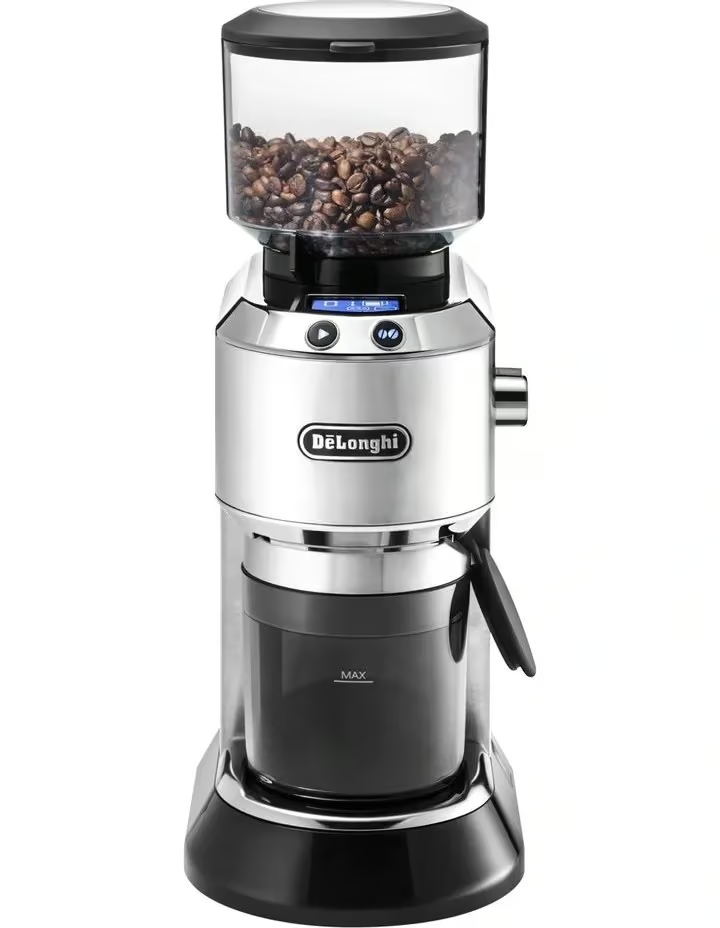
The Dedica grinder uses a stainless steel conical burr set with a removable upper burr for cleaning, housed in a slim metal-wrapped body just 154mm deep. An 18-position collar sets the grind size, and a 2.1 inch LCD shows the grind number, the cup count and the aroma setting. Cup selection runs from 1 to 14 and aroma offers light, normal or strong.
A portafilter adaptor lets the grinder dose straight into an espresso basket, or the 170g ground coffee container can be fitted to collect a larger batch. The 350g bean hopper is generous for the footprint, and the burrs turn slowly at around 350rpm, which keeps heat out of the grounds. Digital cup selection makes repeat doses easier to reproduce than on a purely manual grind-on-demand machine.
The limitation is the 18 steps themselves. They are stepped rather than stepless, so dialling in a single origin espresso can leave the grind sitting between two settings. At 2.75kg and 150W it is light and modest for a burr grinder, and cleaning still means lifting out the upper burr by hand. It suits a domestic espresso machine owner who wants portafilter dosing and a repeatable digital setting.
Pros
- Stainless steel conical burrs with a removable upper burr for cleaning
- Grinds directly into a portafilter via the supplied adaptor
- LCD shows grind level, cup count and aroma strength for repeatable doses
- Large 350g bean hopper in a narrow 154mm-deep body
Cons
- 18 stepped settings can be coarse when dialling in espresso
- 150W motor and 2.75kg build are light for regular espresso duty
- No integrated scale, so dosing is by cup count rather than by weight
Key specs: Stainless steel conical burrs | 18 grind settings | Espresso capable, doses direct to portafilter | 350g hopper, 170g grounds container | 2.75kg | 150W
4. Sunbeam Cafe Series Conical Burr Grinder – Best Mid-Range
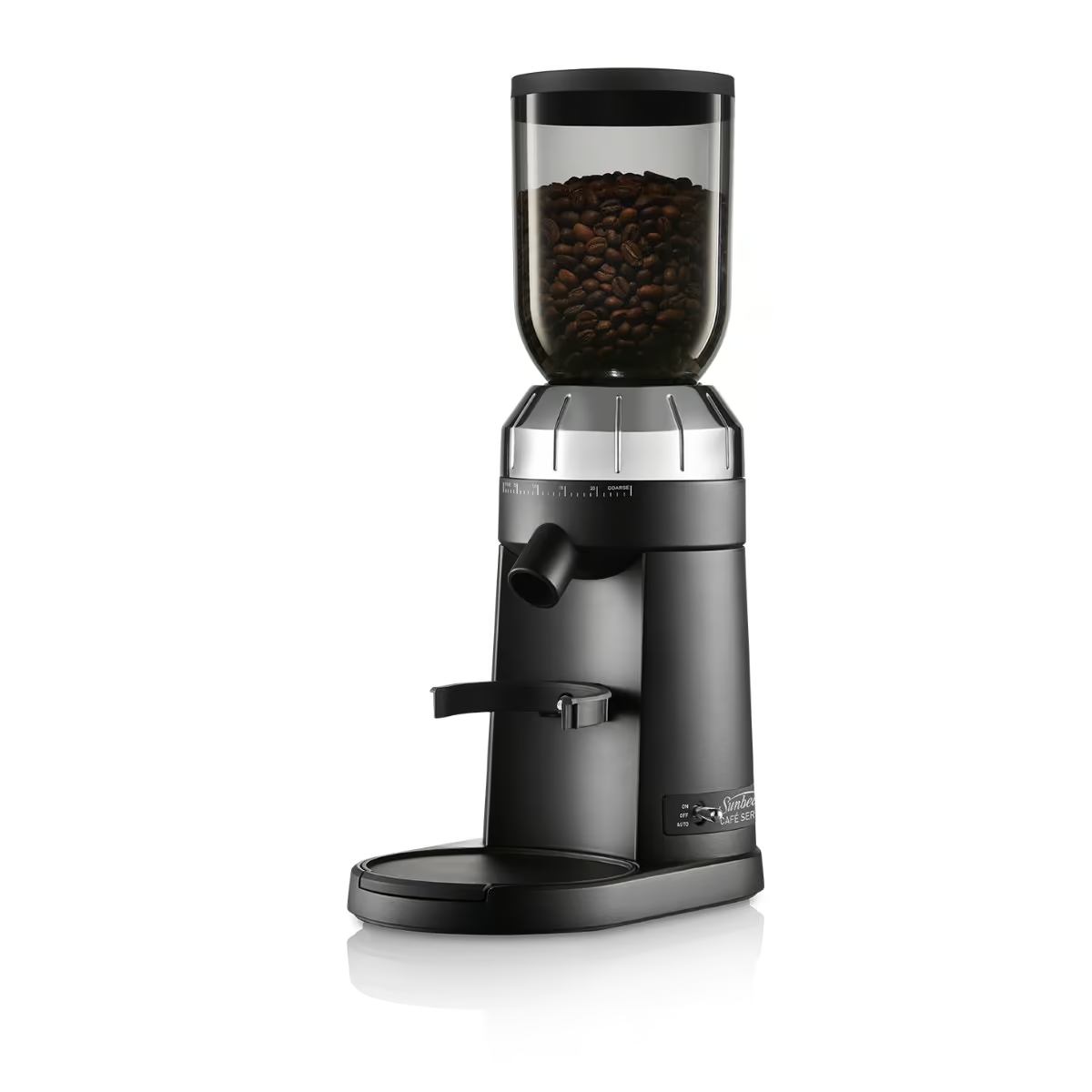
The Cafe Series wraps the same style of Italian-made metal conical burr in a heavy die-cast metal body, which adds mass and keeps the grinder planted on the bench. A large adjustment collar sits below the 250g bean hopper and covers 24 grind positions from fine to coarse. A three-position switch adds On, Off and Auto, so the grinder can run continuously into a container or grind only while a group handle is held against the button.
The hopper has a shutter release, so unused beans can be lifted off and stored without spilling, which matters for anyone rotating between roasts. Commercial and domestic group handle cradles are supplied along with matching dosing funnels, so grounds land in the basket instead of across the bench. A burr shield and cleaning brush make the regular burr clean straightforward.
Over the cheaper GrindFresh the real additions are the die-cast metal housing, the shutter-release hopper, the On and Auto switch, the two dosing funnels and the burr shield. Grind resolution actually drops by one step, from 25 to 24, so the gain is in build quality and workflow rather than finer adjustment. At 2.5kg it suits a home barista who grinds daily.
Pros
- Die-cast metal housing over a gear-driven motor
- Dual On and Auto modes, continuous into a container or on demand into a handle
- Shutter-release 250g hopper lets unused beans be removed cleanly
- Commercial and domestic cradles plus matching dosing funnels included
Cons
- One fewer grind setting than the cheaper GrindFresh, 24 against 25
- Still no timer or scale, so dosing remains manual
- Burrs need cleaning roughly every three months with daily use
Key specs: Italian metal conical burrs | 24 grind settings | Espresso capable | 250g shutter-release hopper | 2.5kg | 383 x 135 x 230mm
5. Baratza Virtuoso+ – Best Premium for Filter
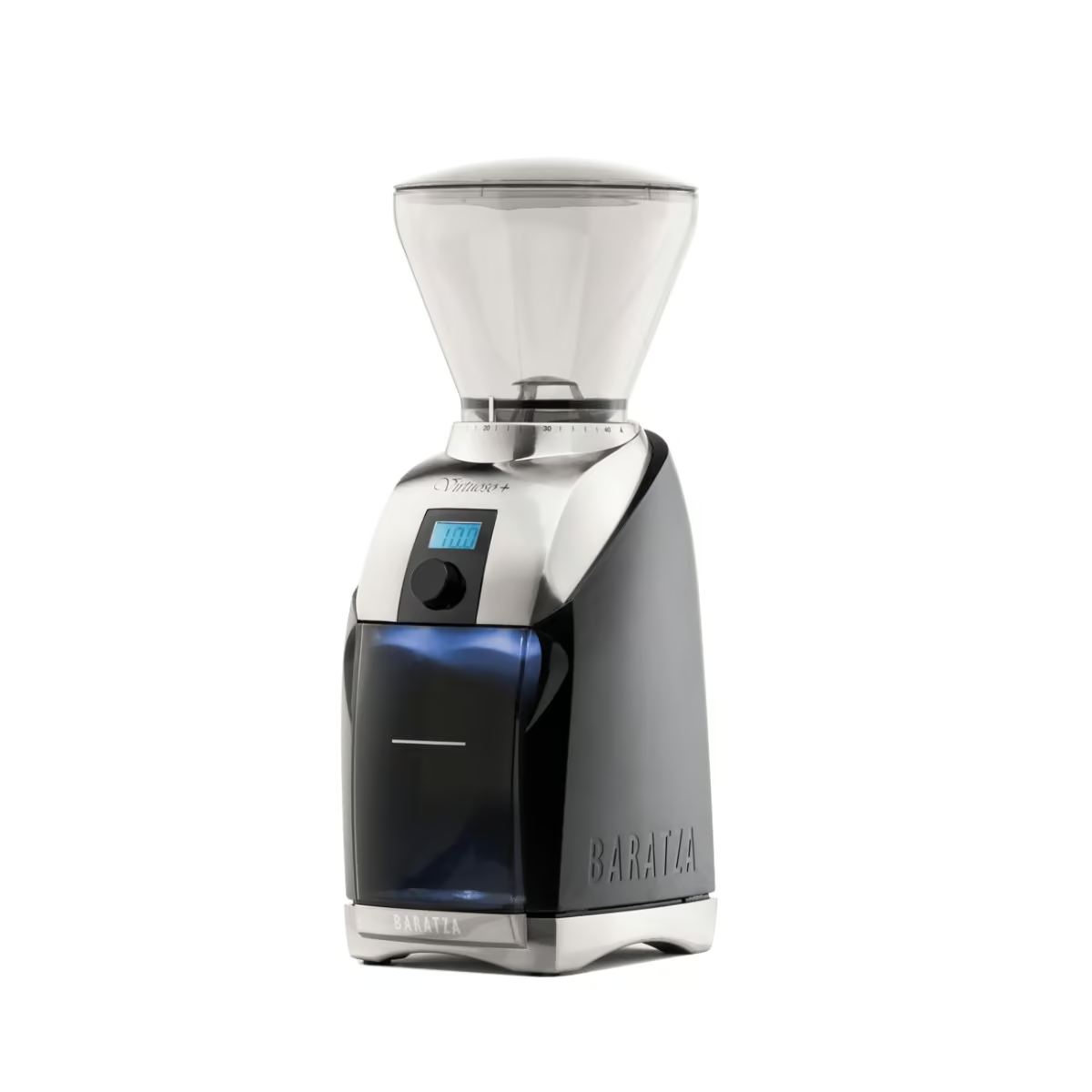
The Virtuoso+ pairs a 40mm M2 conical steel burr set with a heavier, part-metal body than the Encore line, which is where most of the extra cost sits. Grind size is selected by turning the hopper collar through 40 stepped positions, covering a range of roughly 200 to 1200 microns. The front panel carries a backlit digital timer that runs up to 40 seconds and adjusts in tenth-of-a-second increments.
That timer is the practical difference in daily use, because it lets the same dose be repeated without weighing every time. A high-torque DC motor turns the burrs at about 500rpm, feeding a 142g anti-static grounds bin below the 230g hopper. Across pour-over, plunger and drip the grind is uniform with few fines, which is what the conical M2 burr set is tuned for.
One thing to be clear about: Baratza does not position this as an espresso grinder and states it does not recommend the Virtuoso+ for espresso brewing. The stepped adjustment is too coarse at the fine end to dial in a shot reliably, so treating it as a dual-purpose machine will disappoint. It suits filter-focused drinkers who want repeatable dosing and a sturdier build.
Pros
- 40mm M2 conical steel burrs deliver a uniform filter grind with few fines
- Digital timer adjustable to a tenth of a second makes dosing repeatable
- Sturdier, part-metal body and a 142g anti-static grounds bin
- 40 stepped settings spanning roughly 200 to 1200 microns for all filter methods
Cons
- Baratza does not recommend it for espresso, so it is a filter grinder only
- Stepped adjustment offers no fine control at the espresso end of the range
- Heaviest here at around 3.6kg with a tall 35cm footprint
Key specs: 40mm M2 conical steel burrs | 40 stepped settings, roughly 200 to 1200 microns | Filter only, not recommended for espresso | 230g hopper, 142g grounds bin | 3.6kg | 500rpm, 40-second timer
6. Kenmore 64mm Flat Burr Coffee Grinder – Best Flat Burr
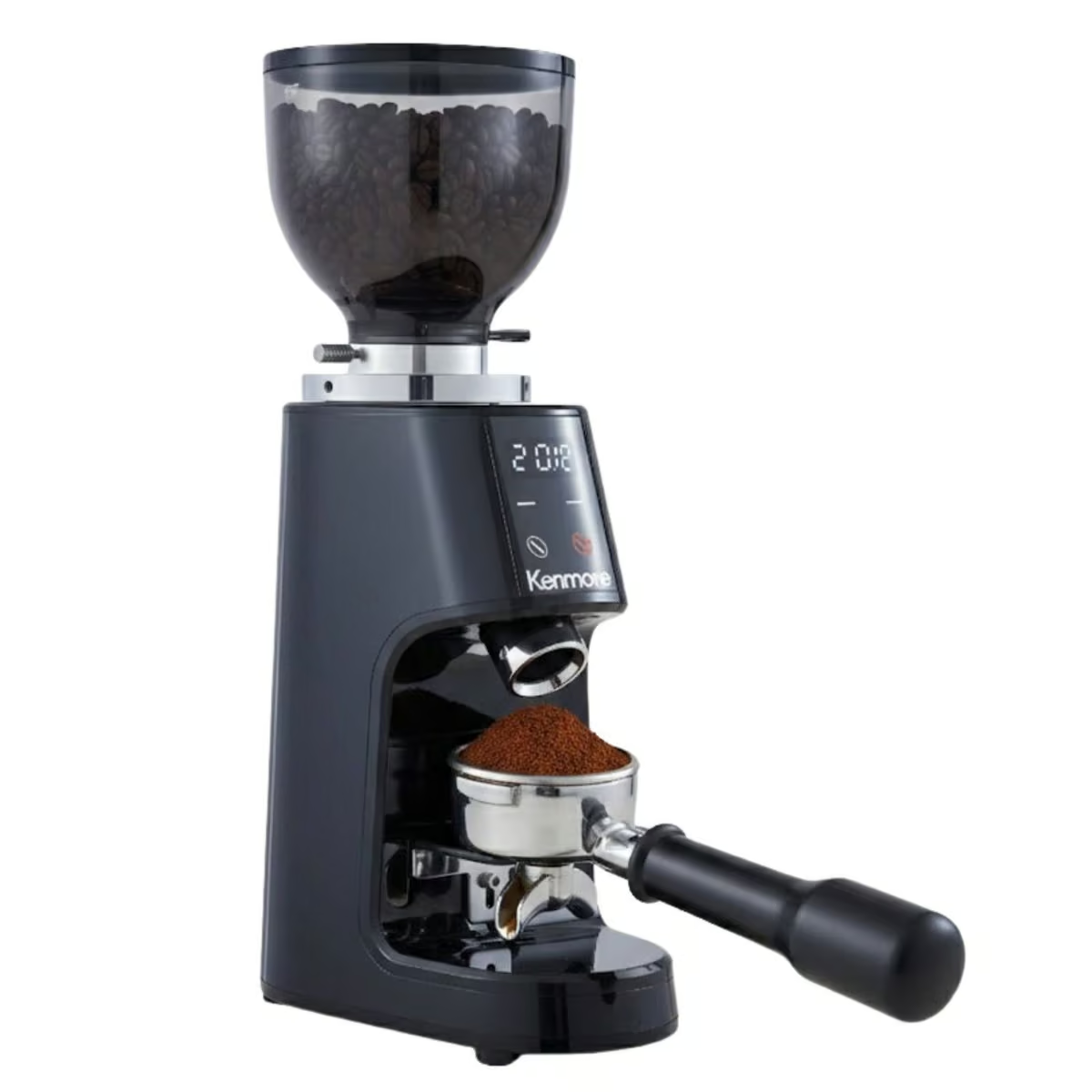
This Kenmore uses a 64mm stainless steel flat burr set in commercial-grade SUS420, which is a noticeably larger burr than the 40mm conical sets used in the Baratza grinders. Grind size runs across 100 settings, from fine enough for espresso through to coarse for plunger. A digital touch display handles grind timing, and a portafilter cradle underneath takes both 53mm and 58mm baskets.
Dosing can be driven three ways: by cup count from 2 to 12, by single or double espresso dose, or by time from 1 to 60 seconds. It is neither strictly single-dose nor strictly hopper-fed, because it ships both ways, with a single-dose lid and bellows for grinding bean by bean and a 255g hopper for everyday batch grinding. An anti-static system cuts down on grounds clinging to the chute, and the motor is rated at 260W.
The larger flat burr and the 100 settings give more adjustment resolution than either Baratza, but the supporting information is thin. No New Zealand retailer stocking this exact model could be found, and Kenmore publishes no spec sheet for it, so burr rpm, weight and dimensions remain unverified. It suits a buyer who wants flat burr resolution and is comfortable relying on retailer support rather than a local service network.
Pros
- 64mm flat burr set is considerably larger than the 40mm conical burrs in comparable home grinders
- 100 grind settings give finer adjustment resolution than 40-step conical grinders
- Runs as either a single-dose grinder with bellows or hopper-fed with a 255g hopper
- Digital timer with cup, espresso dose and time modes, plus a 53mm and 58mm portafilter cradle
Cons
- No New Zealand stockist found, so it has to be sourced from Australia
- Kenmore publishes no specification sheet, leaving burr rpm, weight and dimensions unverified
- Limited local service and parts support compared with established coffee brands
Key specs: 64mm SUS420 stainless flat burrs | 100 grind settings | Espresso capable, 53mm and 58mm portafilter cradle | 255g hopper or single-dose bellows | 260W | Weight not published
7. Timemore Chestnut C2S Manual Grinder – Best Manual
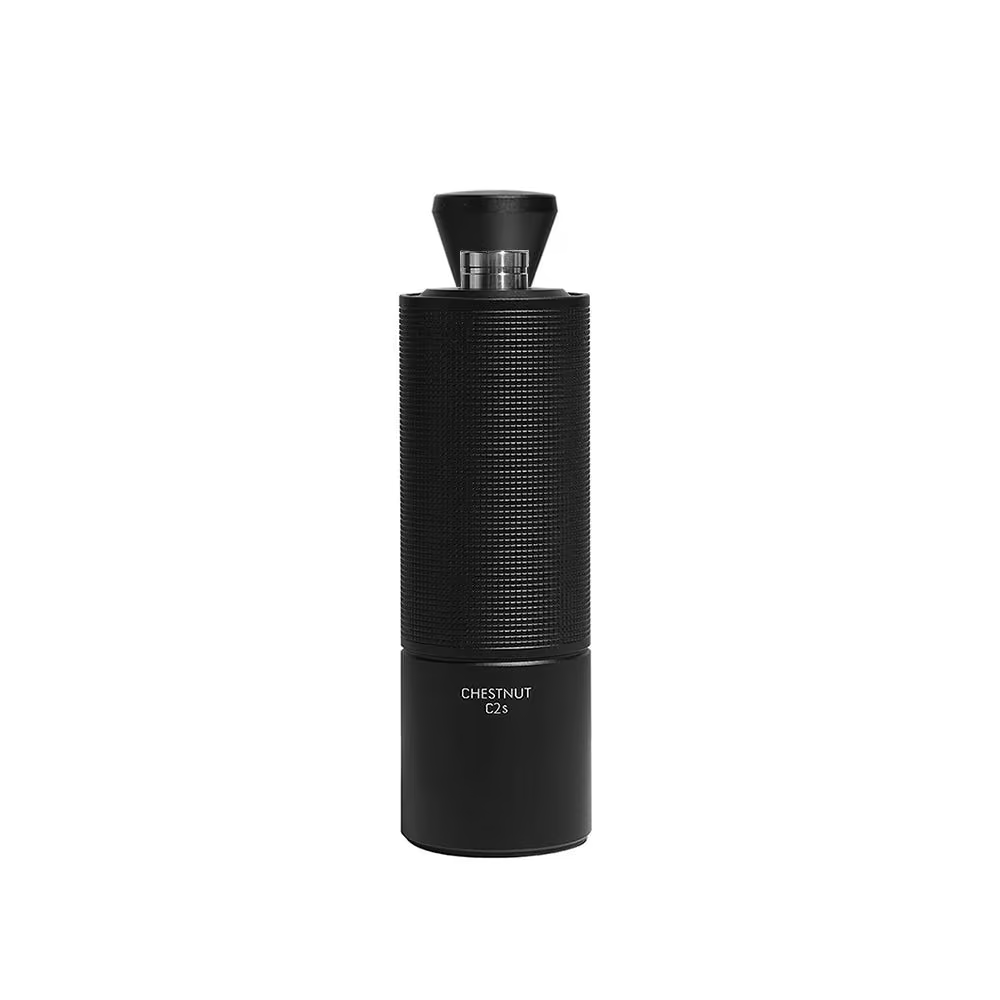
The C2S is the upgraded version of the Chestnut C2, with a full metal body where the original mixed aluminium with Tritan plastic. Grinding is done by a 38mm CNC machined stainless steel conical burr set, hardened to 55 to 58 HRC and held on a double bearing shaft. Coarseness is set with a stepped metal adjustment nut offering roughly 36 levels, clockwise for finer and anti-clockwise for coarser.
Bean capacity is 25g, which covers a single pour-over, an AeroPress dose or a moka pot basket. The double bearing shaft keeps the burr centred, and the 5-axis machined burr produces uniform particles with few oversized grains. It does reach espresso fineness, although retailer guidance points to pressurised or dual wall baskets on home machines rather than professional single wall baskets.
Timemore does not publish a clicks-per-rotation figure or a micron step for the C2S, which makes dialling in espresso a trial and error exercise rather than a repeatable setting. Published weight also varies between sources, sitting somewhere around 470g. It suits filter and immersion brewers who want an all-metal hand grinder that can stretch to home espresso.
Pros
- 38mm CNC stainless steel conical burrs with double bearing support
- Full metal body, an upgrade on the part-plastic C2
- Roughly 36 coarseness levels, covering filter through to espresso fineness
- 25g capacity is enough for a full single brew and packs easily for travel
Cons
- No stated micron step or clicks per rotation, so espresso dialling is guesswork
- Best paired with pressurised or dual wall baskets rather than single wall espresso baskets
- Ships to New Zealand from Amazon US, so delivery takes longer
Key specs: 38mm CNC stainless steel conical burrs | Approx 36 stepped levels | Espresso: yes for pressurised or dual wall baskets | 25g bean capacity | Around 470g
8. Krups Expert Burr Coffee Grinder – Best Compact Burr
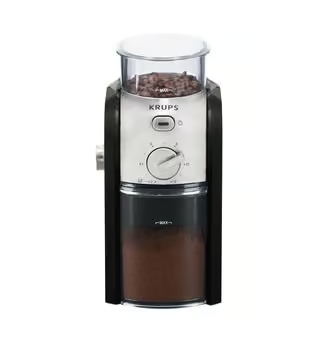
The GVX231 is finished in black with a brushed stainless steel fascia that Krups describes as easy to wipe clean. It is a genuine burr grinder using two flat stainless steel burrs, and the front dial moves those burrs closer together or further apart across 17 positions. A safety lid prevents the motor running until the hopper is sealed, and the motor is rated at 110W on 220 to 240V, which matches New Zealand mains.
The airtight bean hopper holds 200g and the removable ground coffee container holds 125g. A separate cup selector sets the dose anywhere from 2 to 12 cups, and the grinder switches itself off once that quantity has been ground, so nothing is wasted on an oversized batch. Milling between two burrs rather than chopping gives a far more even particle size than any blade grinder manages.
Cleaning is straightforward because the upper burr and the grounds container both lift out. Seventeen settings is a modest range next to a dedicated espresso grinder, and Krups does not state whether the finest setting reaches espresso fineness, so that is left unclaimed here rather than assumed. It suits a filter, plunger or stovetop household that wants an even grind and an automatic measured dose without a large machine on the bench.
Pros
- Two flat stainless steel burrs mill evenly instead of chopping
- 200g airtight bean hopper and 125g ground coffee container
- Cup selector from 2 to 12 cups with automatic shut off
- Removable upper burr and grounds container make cleaning simple
Cons
- 17 settings is a narrow adjustment range compared with dedicated espresso grinders
- Krups does not state espresso capability for this model
- Ships to New Zealand from Amazon UK, and no local retail listing was found
Key specs: Two flat stainless steel burrs | 17 grind settings | Espresso capability not stated by Krups | 200g hopper, 125g grounds container, 2 to 12 cup selector | 110W, 220 to 240V
9. Breville the Coffee and Spice Grinder – Best for Coffee and Spices
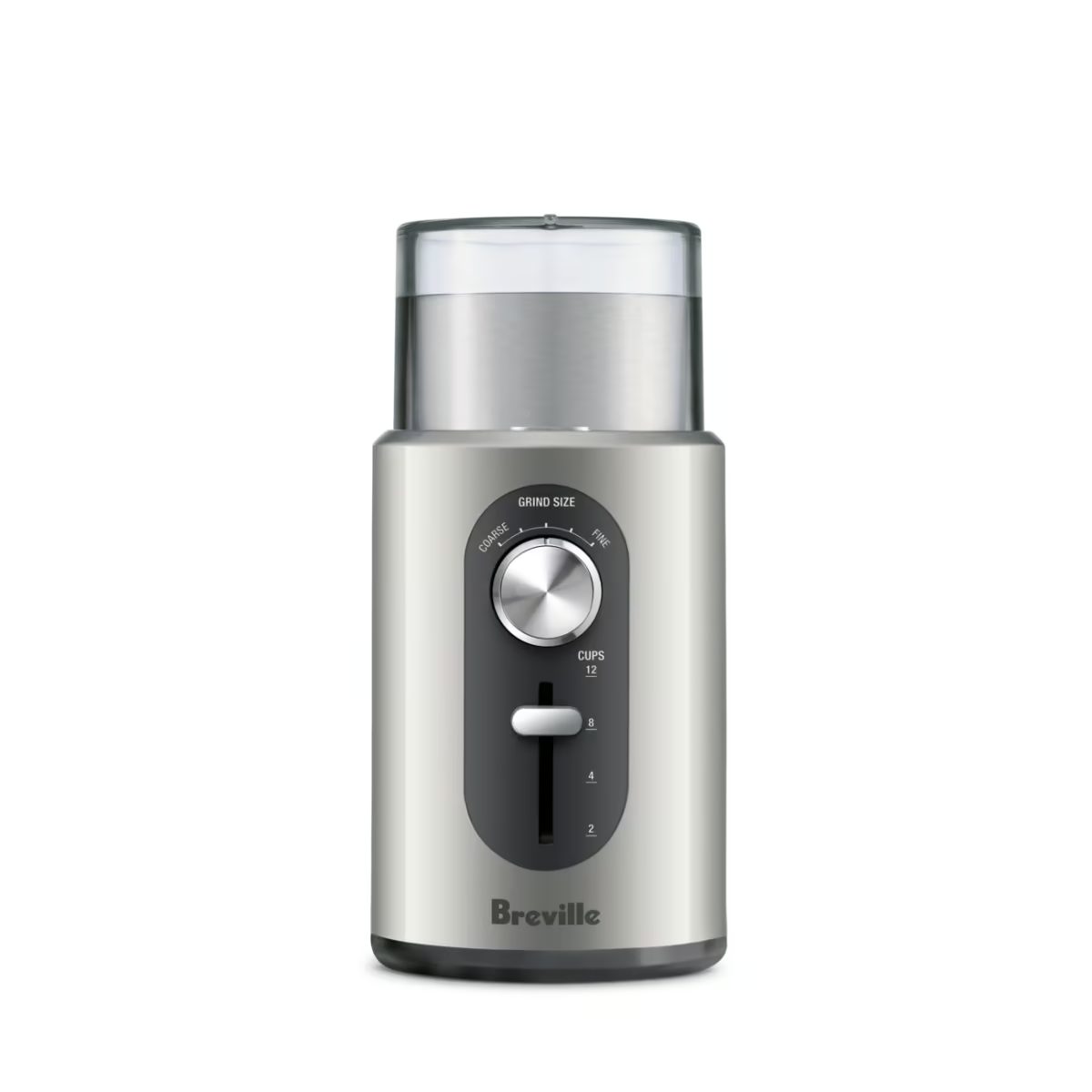
Despite the Precise name, this is a blade grinder rather than a burr grinder. Breville’s own instruction book lists a transparent lid, a single removable stainless steel grinding container, a touch start and cancel button, a grind selector and a cup slider, and repeatedly warns that the grinding blades are sharp. The grind dial is marked only from coarse to fine across five detented positions, while the cup slider runs from 2 to 12.
Because blades chop rather than mill, particle size varies within a single batch, and Breville’s instructions acknowledge this by telling users to check the result through the lid and run the grinder again if it is not fine enough. Maximum load is the 12 cup line for coffee and the 4 cup line for grains and spices. Run time is capped at one minute with a two minute rest, and a manual reset cut-out protects the motor.
The surprise is that only one grinding container is supplied, so coffee and spices share the same bowl. Breville’s own workaround is to brush it out with a pastry brush and grind raw white rice to absorb residual aromatics. That makes it a capable spice and grain mill and a workable plunger grinder, but it cannot hold the consistent fine grind espresso needs.
Pros
- Stainless steel bowl and blades handle hard spices, seeds and grains
- Removable bowl and lid make cleaning between coffee and spices easy
- Cup slider from 2 to 12 gives a repeatable batch size
- Compact 220mm-tall footprint with cord storage
Cons
- Blade grinder, so grind consistency is uneven and it is not suitable for espresso
- Only one grinding container is supplied, so coffee and spices share a bowl
- One minute maximum run time with a two minute rest between uses
Key specs: Stainless steel blades, NOT a burr grinder | Coarse to fine dial, five positions, plus a 2 to 12 cup slider | Not espresso capable | 12 cup max for coffee, 4 cup max for spices | 125 x 100 x 220mm
10. Bodum Bistro Blade Coffee Grinder – Best Cheap Blade Grinder
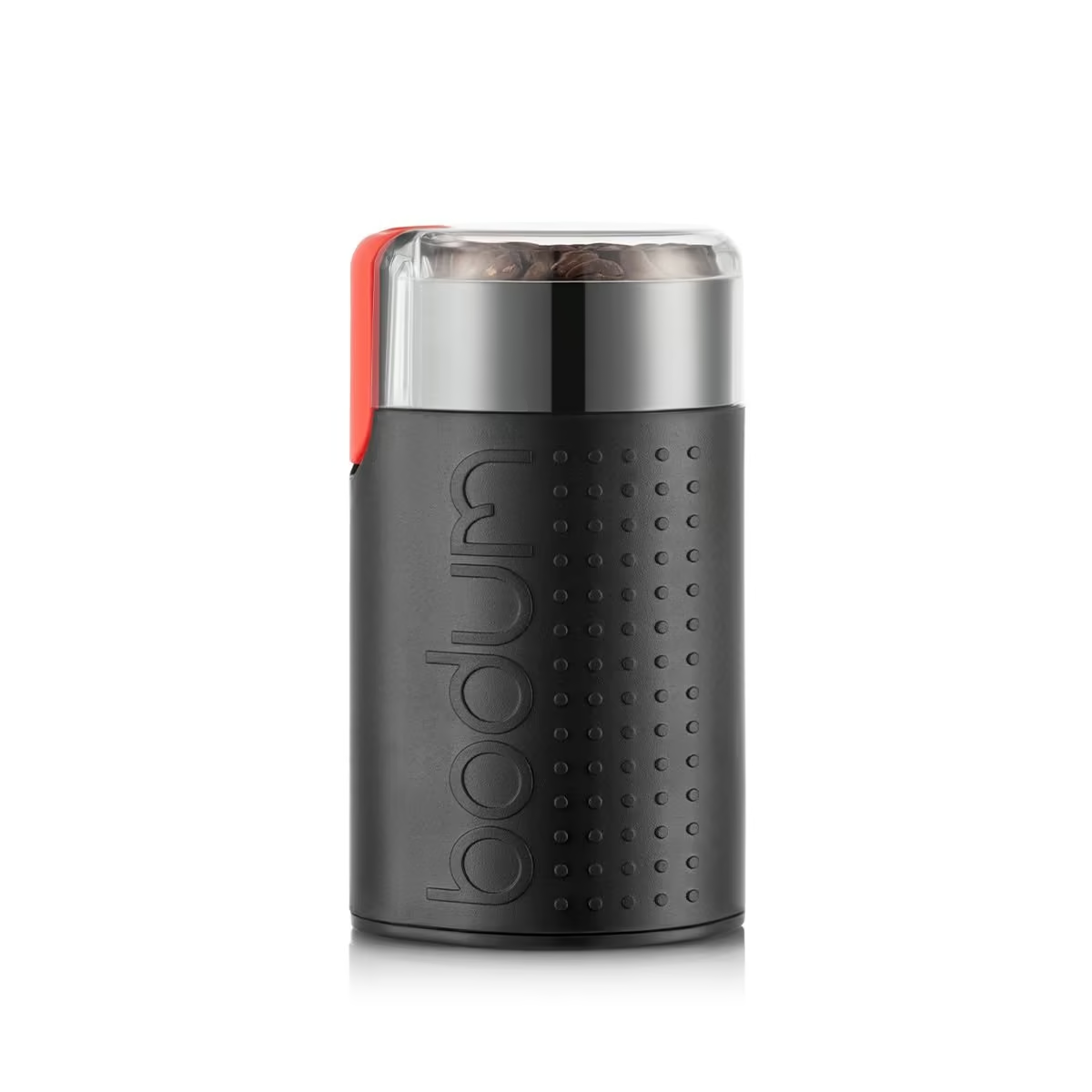
This is a blade grinder, not a burr grinder, and that single fact shapes everything else about it. Bodum’s New Zealand listing describes a stainless steel cutting blade spinning inside a stainless steel chamber, operated by one push button for either pulse or continuous grinding, under a transparent lid so the grounds can be watched. There is no grind setting dial at all, so coarseness is controlled purely by how long the button is held.
The chamber takes up to 60g of beans, which is several plunger doses at a time. Because a blade chops the beans rather than milling them between two surfaces, a single batch comes out as a mixture of powder and coarse chunks, and no amount of technique removes that. Short pulses with a shake between them even the result out a little, which is workable for a plunger or a drip filter.
The trade-off is simplicity and footprint against grind quality. It measures 9.5 by 16.8 by 8.7cm, cleans with a soft brush and a damp cloth, and must never be immersed in water. It suits a plunger or filter drinker moving away from pre-ground coffee who wants minimal bench space, while anyone brewing espresso should buy a burr grinder instead.
Pros
- 60g bean chamber, enough for several plunger doses in one go
- Single push button for pulse or continuous grinding, nothing to set up
- Compact at 9.5 by 16.8 by 8.7cm with cord storage in the base
- Stainless steel blade and chamber wipe clean easily
Cons
- Blade design chops rather than mills, so an uneven grind is inherent, not a fault
- No grind settings whatsoever, only run time
- Not suitable for espresso
Key specs: Stainless steel blade, NOT a burr grinder | No grind settings, pulse or continuous | Not espresso capable | 60g bean capacity | 9.5 x 16.8 x 8.7cm
How to choose the best coffee grinder in NZ
The single decision that matters most is burr or blade. A blade grinder chops beans with a spinning blade, which produces a mix of dust and chunks that extract at different rates, so the cup tastes both bitter and sour at once. A burr grinder mills beans between two surfaces to a consistent particle size, which is why most of the picks in this guide use burrs.
Match the grinder to the brew method. Espresso needs a fine, precisely repeatable grind and is the hardest thing to ask of a cheap grinder. Pour-over and drip sit in the middle, and plunger or cold brew want a coarse grind, which almost any burr grinder can manage.
Look at how the grind is adjusted. Stepped grinders click between fixed positions, which is simple and fine for filter, while stepless designs allow tiny changes and suit espresso far better. Some grinders, including the Baratza Encore ESP here, split their range so the espresso end has finer increments than the filter end.
Burr size and shape affect consistency. Larger burrs cut more cleanly at the same motor speed, so a 64mm flat burr set has a resolution advantage over a 40mm conical one, though conical burrs are quieter and cheaper to make. Either is a large step up from blades.
Finally, consider retention and cleaning. Grounds trapped inside the grinder go stale and end up in the next dose, so designs with quick-release burrs are easier to keep fresh. A grinder that cannot be opened without tools will get cleaned less often, whatever the intention.
The verdict
The Baratza Encore ESP is the one to buy for most people, because the split 40-step range means it can pull a decent espresso and still open up for filter without a second grinder. Anyone spending as little as possible should take the Sunbeam GrindFresh, which has real Italian conical burrs and a published espresso range rather than vague marketing.
For espresso specifically, the De’Longhi Dedica KG521M doses straight into a portafilter and remembers the setting, and the Kenmore 64mm Flat Burr offers the most adjustment resolution here if the thin local support is acceptable. Filter-only drinkers should look at the Baratza Virtuoso+, remembering Baratza does not recommend it for espresso, and anyone who wants one machine for coffee and spices should treat the Breville Coffee and Spice as a spice mill that also grinds plunger coffee.
Pods remove grinding from the equation altogether, and that is the honest trade: less control over extraction, but no burrs to clean, which is the case the best pod coffee makers make.
Frequently Asked Questions
Is a burr grinder really better than a blade grinder?
Yes, and it is the biggest single upgrade in home coffee. A blade grinder chops beans unevenly, producing dust and chunks that over-extract and under-extract in the same brew. A burr grinder mills to a consistent size, which makes the cup taste cleaner and more predictable. A blade grinder is only worth buying as a cheap starting point or for grinding spices.
How many grind settings do I actually need?
For filter coffee, plunger and cold brew, 15 to 40 stepped settings is plenty. Espresso is the demanding case, because small changes in grind size change the shot noticeably, so a grinder with either very fine steps or stepless adjustment is worth the extra. More settings only help if the grinder is consistent to begin with.
Can a budget grinder handle espresso?
Some can, but it is the hardest ask in this category. Entry-level burr grinders often cannot go fine enough, or cannot repeat the same grind twice, which makes dialling in a shot frustrating. If espresso is the main purpose, it is worth stretching to a grinder built for it rather than buying twice.
Conical or flat burrs, does it matter?
Both mill far more consistently than blades, so either is a good choice. Flat burrs, especially larger 64mm sets, tend to produce a more uniform particle size and are common in espresso-focused grinders. Conical burrs are quieter, cheaper to produce and very common in home grinders. Burr size and build quality matter more than the shape alone.
Are manual coffee grinders worth it?
A good manual grinder often has better burrs than an electric grinder at the same price, because none of the money goes into a motor. The trade-off is effort, roughly 30 to 60 seconds of cranking per cup, and they are impractical for grinding several doses at once. They suit one or two cups a day, travel, and anyone who wants quality burrs on a modest budget.
How often should a coffee grinder be cleaned?
A quick brush of the burrs and chute every week or two keeps stale grounds from tainting fresh coffee, and a deeper clean every few months is sensible. Oily dark roasts build up faster than light roasts. Grinders with quick-release burrs, like the Baratza models here, make this a two minute job rather than a chore.
