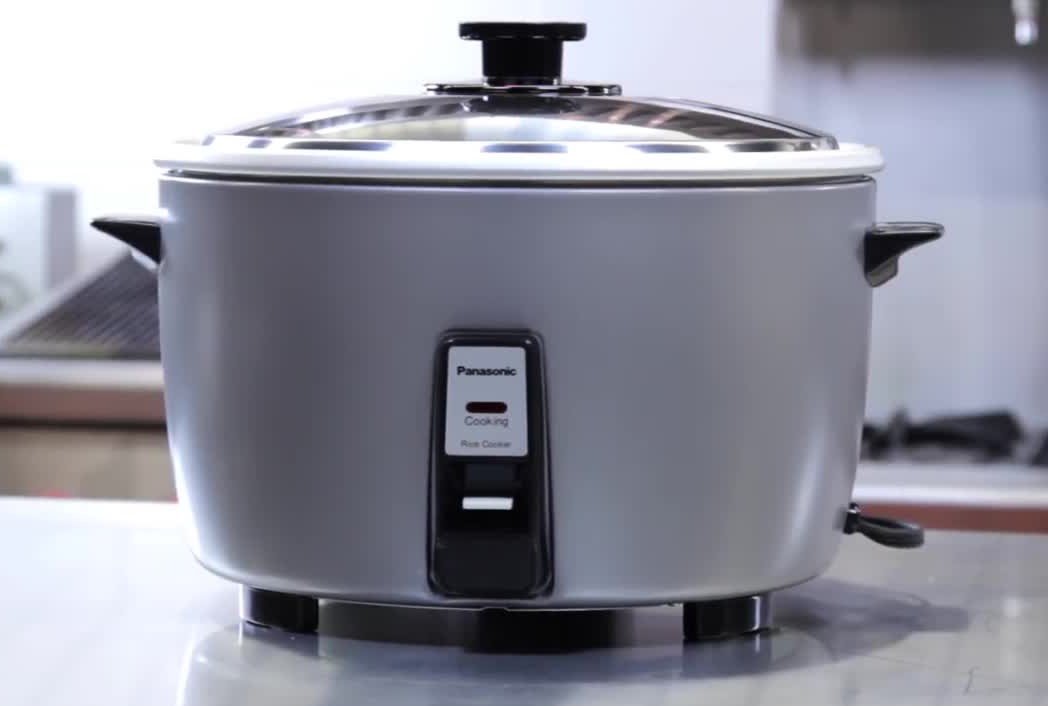
The best rice cooker in NZ overall is the Toshiba 1.8L IH Rice Cooker, thanks to genuine induction heating that cooks rice evenly across the whole pot.
Rice is a daily staple in a huge number of New Zealand households, and a good cooker takes the guesswork out of getting it right every time.
This guide covers eight rice cookers available to NZ shoppers, from compact cookers to family-size induction and multicooker models, based on real specs, dimensions and genuine owner feedback gathered from New Zealand and Australian retailers and review sites.
Each pick is ranked with a clear best-for angle and honest pros and cons, so it is easier to match a cooker to a household rather than just the biggest name on the box.
| Pick | Best For | Capacity | Standout Feature |
|---|---|---|---|
| Toshiba 1.8L IH Rice Cooker | Best Overall | 1.8L / 10 cups | Genuine induction heating |
| Midea 5L Rice Cooker | Best for Big Households | 5L / 10 cups | 17 menus, fast turbo cook |
| AIZYZYO 2L 10-in-1 Mini Rice Cooker | Best Compact Pick | 2L | 10 programs, 24-hour timer |
| Philips 5000 Series HD4814/31 | Best for Freshness | 1.8L / 10 cups | FreshDefense, fresh up to 48 hours |
| Sunbeam Rice Perfect Deluxe 7 | Best Budget Pick | 7 cups / 14 cooked | Built-in steaming tray |
| Panasonic SR-DA152WST | Best for Quick Cooking | 8 cups / 1.5L | Dedicated Quick Cook mode |
| Kambrook Rice Master KRC405BSS | Best Simple Everyday Pick | 5 cups | No-frills jar-style cooker |
| Instant Pot Duo 5.7L | Best Multi-Function Pick | 5.7L, feeds up to 6 | 7-in-1 multicooker |
How to choose a rice cooker
Capacity is the first decision to make. A cooker in the 1 to 3 cup range suits one or two people, a 5 to 6 cup model covers a family of four comfortably, and 8 cups or more makes sense for bigger households or anyone eating rice most nights. Rice cooker cups are smaller than a standard measuring cup, so it pays to check the listed litre capacity alongside the cup count.
Fuzzy logic and induction heating both improve on a basic hotplate-style cooker, just in different ways. Fuzzy logic uses sensors to adjust cooking time and temperature as it goes, while induction heating warms the whole pan rather than just the base, which tends to produce more even results. A basic cooker without either feature can still turn out decent rice, but it leans more heavily on the keep-warm cycle switching off at the right moment.
Build quality and coating matter more than most buyers expect. A thin or poorly applied non-stick coating shows up repeatedly in owner complaints for budget cookers, so a removable, hand-washable inner pot with a thicker coating is generally the safer long-term bet over the cheapest option on the shelf.
New Zealand runs on 220 to 240V power, so cookers built for the AU and NZ market, like every pick in this guide, are ready to use without a transformer. That is not guaranteed with cookers imported directly from Japan or the United States, which are often built for 100 to 120V.
Good rice starts with good water, so it is worth pairing a reliable cooker with a decent water filters setup rather than relying on the appliance alone. Rice cookers are also just one part of a well-stocked kitchen benchtop. Shoppers building out the rest of their setup might compare food processors for prep work, or air fryers for everyday cooking that does not involve rice at all.
1. Toshiba 1.8L IH Rice Cooker – Best Overall
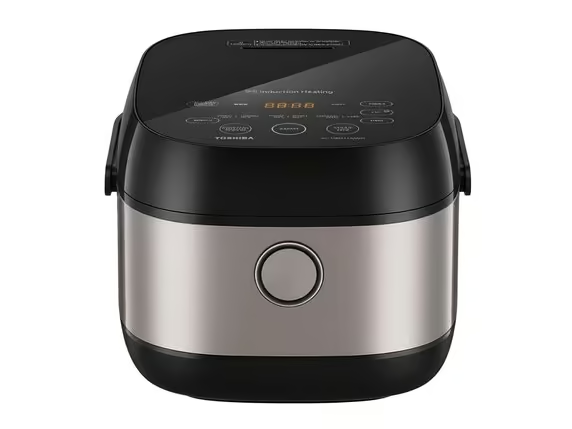
The best rice cooker in NZ overall is the Toshiba 1.8L IH Rice Cooker, thanks to genuine induction heating that cooks rice evenly across the whole pot, in a size that suits a family.
Toshiba’s RC-18IH1TAU(N) measures 367mm by 290mm by 249mm, with a durable metal outer shell and a touch control panel. It is a step up in size from Toshiba’s 1L model, so it needs a little more bench space, but the metal enclosure gives it a more solid feel than the plastic bodies of most budget cookers.
Inside, a 3.0mm multi-layer inner pot carries the non-stick coating, and induction heating warms the whole pan rather than relying on a hotplate under the base. That lets the cooker respond faster to changes and hold an even temperature across the pot, so rice near the edges cooks the same as rice in the middle. It draws 1300W while cooking.
Setup goes through the touch panel, with multiple menu settings for different cooking styles, a 24-hour preset timer so rice is ready when you get home, and automatic keep-warm once cooking finishes. Toshiba covers it with a 12-month warranty.
The trade-offs are size and feedback. At up to 10 cups it is more cooker than one or two people need, and its footprint is larger than the compact picks further down. It is also a newer model, so there is little owner feedback to go on yet, and Toshiba doesn’t publish a weight figure.
Pros
- Genuine induction heating for even results
- 1.8L / 10-cup capacity suits families
- Metal enclosure with touch controls
- 24-hour timer and auto keep-warm included
Cons
- Bigger footprint than a compact cooker
- Little owner feedback so far
- Manufacturer does not publish a weight figure
Key specs: model RC-18IH1TAU(N), 1.8L (up to 10 cups), 1300W, 220-240V, 367 x 290 x 249mm, 12-month warranty.
2. Midea 5L Rice Cooker – Best for Big Households
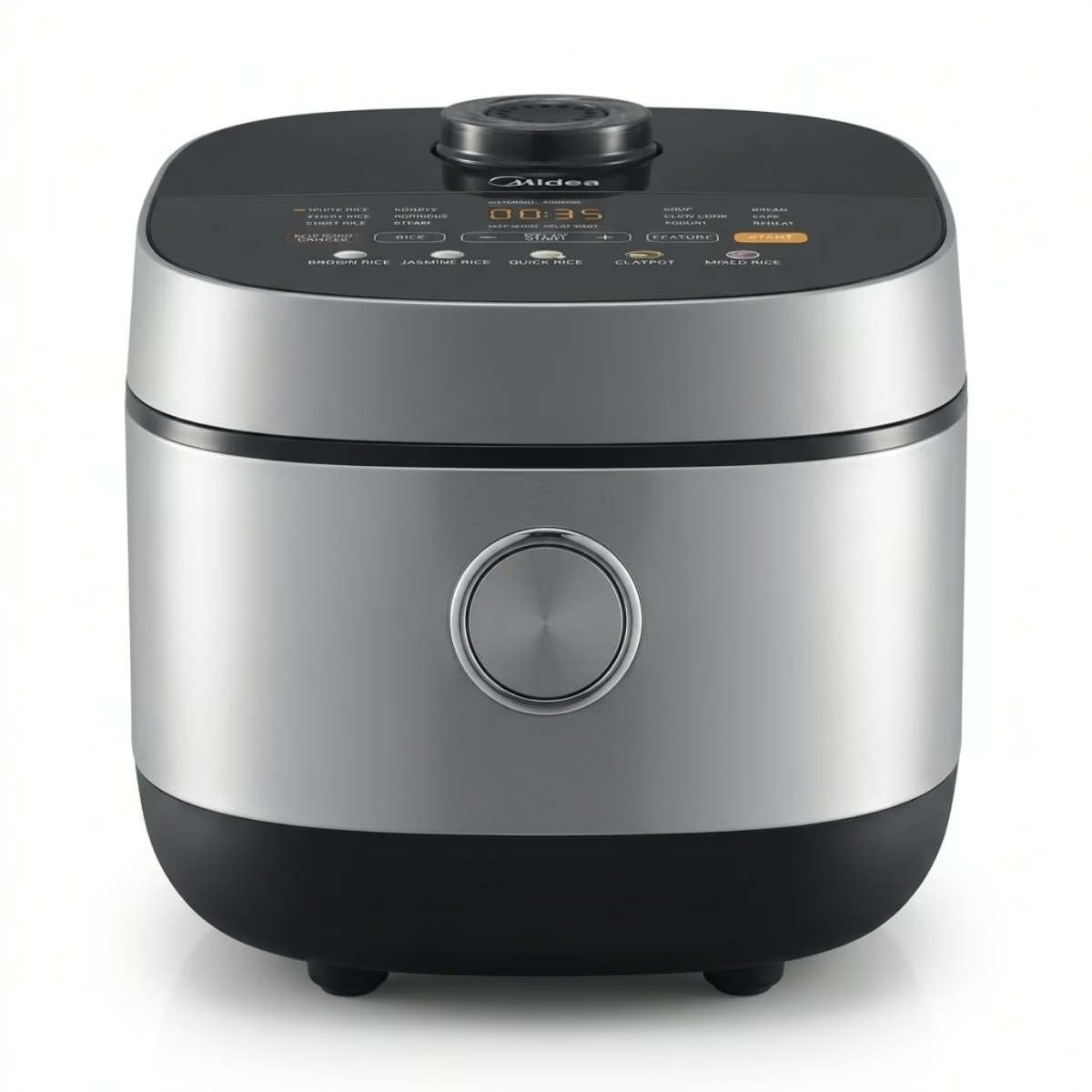
Families cooking rice most nights will get the most out of the Midea 5L Rice Cooker, which pairs family-size capacity with enough presets to cover more than plain rice.
At 32cm by 27cm by 28cm and 3.9kg net, this is a noticeably bigger appliance than a compact cooker, finished in silver and black with an LED touch control panel. It is built to sit as a permanent fixture on the benchtop rather than something to pack away between uses, so it suits a kitchen with the counter space to spare.
The inner pot uses a 1.7mm antibacterial non-stick coating, and Midea has built in 17 preprogrammed menus alongside a turbo air-convection valve that claims to cook rice in around 22 minutes. A 24-hour preset timer and automatic keep-warm cover the basics, and the lid and valve detach for washing.
One genuine owner review on PB Tech NZ reports that rice is always cooked right and praises the steam function specifically, which lines up with the multi-menu approach Midea has taken with this model.
The trade-off worth flagging is the warranty. TSB’s own product listing states a 12-month warranty in the body copy, but a separate badge on the same page references an extended cover option, so it is worth confirming the exact term directly with TSB before buying. Owner feedback is also still thin for this listing, since it is a newer addition to the range.
Pros
- Large 5L capacity suits bigger families
- 17 preprogrammed menus beyond plain rice
- Turbo cook claims around 22 minutes
- Detachable, washable lid and valve
Cons
- Warranty term is inconsistent on TSB’s own listing
- Owner review volume is still thin
- Larger footprint needs more bench space
Key specs: model MB-FS5021W, 760-905W, 220-240V.
3. AIZYZYO 2L 10-in-1 Mini Rice Cooker – Best Compact Pick
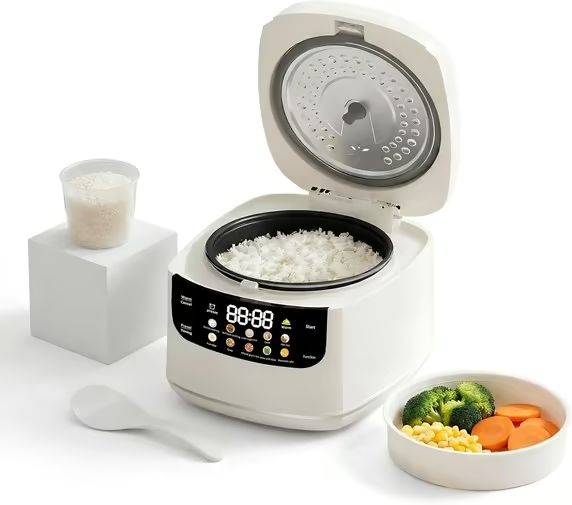
Singles, couples and small families who don’t need a big cooker will find this 2L 10-in-1 mini rice cooker covers the basics in a small footprint.
It measures 24cm deep, 21.5cm wide and 20cm high, and the white body sits easily on a small benchtop or in a cupboard between uses. The maker rates the 2L pot for three to four people, and a water-level line inside the pot takes the guesswork out of measuring.
Ten digital programs cover quick rice, white rice, brown rice, porridge, grains, mixed rice, steaming, soup and stew, and a 24-hour timer plus automatic keep-warm mean rice can be ready on schedule. The inner lid lifts out and the pot is non-stick, so cleaning is easy, and a steamer basket, rice scoop and measuring cup come in the box.
This is a little-known brand with only a small number of owner reviews so far, and at 400W it is a basic hotplate-style cooker without fuzzy logic or induction heating, so it won’t match the evenness of the Toshiba. The listing also claims a low-sugar rice function without explaining how it works, so treat that as a marketing line rather than a reason to buy.
Pros
- Small footprint for small kitchens
- 10 programs including porridge, steam and soup
- 24-hour timer and keep-warm
- Steamer, scoop and measuring cup included
Cons
- Little-known brand with few owner reviews
- Basic 400W heating, no fuzzy logic or IH
- Low-sugar claim isn’t explained
Key specs: 2L capacity, 10 programs, 24-hour timer, keep-warm, 400W, 220V, 24 x 21.5 x 20cm, non-stick inner pot.
4. Philips 5000 Series Digital Rice Cooker – Best for Freshness
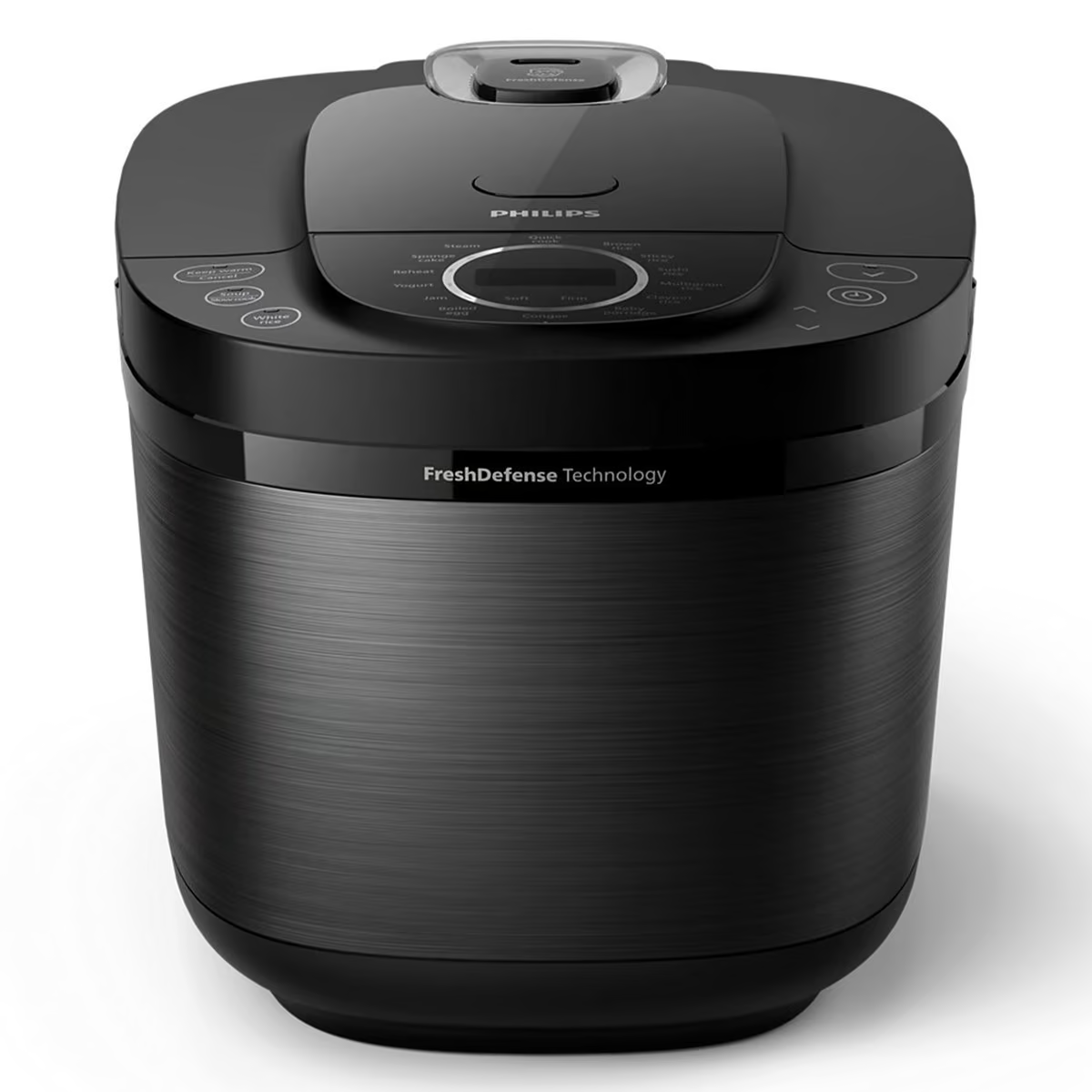
Anyone who regularly cooks rice ahead of time will appreciate what the Philips 5000 Series HD4814/31 does differently. Its FreshDefense technology is designed to keep cooked rice tasting fresh for up to 48 hours on keep-warm.
The cooker measures roughly 36.7cm by 27.3cm by 25.5cm and weighs 3.62kg, built in black with a stainless steel body and plastic detailing around the LCD display. It has a more substantial feel than entry-level plastic cookers, without tipping into the bulk of a full multicooker.
Philips has packed in 18 auto cooking menus covering soup, porridge and steaming alongside rice, and the accessories are dishwasher safe, which cuts down on hand-washing after every use. An automatic shutoff rounds out the safety features.
Retailer ratings are strong, with Bing Lee showing 4.8 out of 5 from 46 ratings. At the time of research, two other Australian retailers stocking the identical model had it listed as out of stock, which suggests steady demand and is worth factoring in if a specific retailer shows the item unavailable.
The trade-off worth noting is depth of independent review detail. Beyond the retailer star rating, written owner accounts for this specific model were hard to track down, so buyers are relying more on the aggregate score and spec sheet than detailed long-term feedback.
Pros
- FreshDefense keeps rice fresh for up to 48 hours
- 18 auto cooking menus
- Dishwasher-safe accessories
- Strong 4.8 out of 5 retailer rating
Cons
- Independent owner review detail is limited
- Some Australian retailers have shown stock shortages for this model
Key specs: model HD4814/31, 787-936W, 2-year warranty.
5. Sunbeam Rice Perfect Deluxe 7 – Best Budget Pick
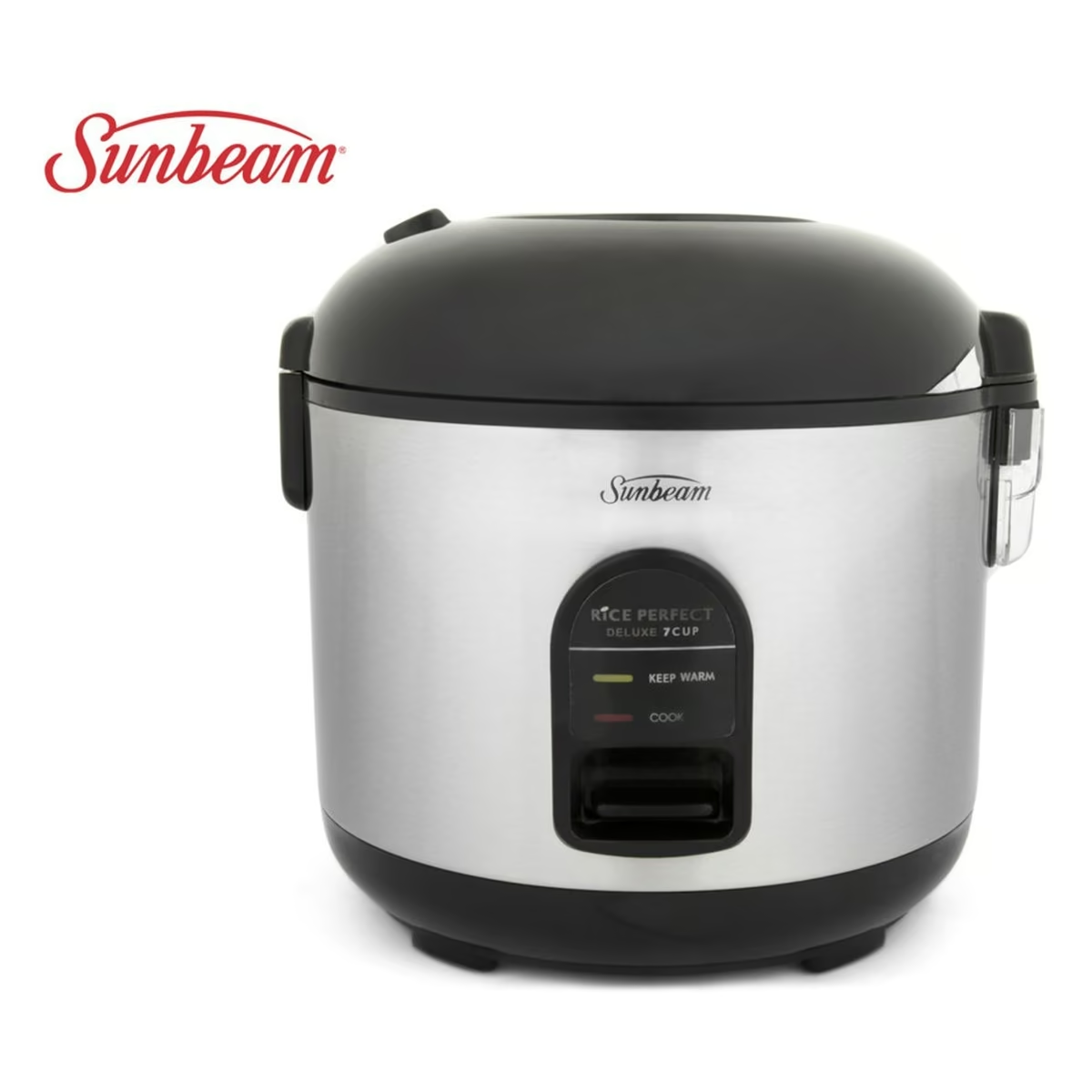
The Sunbeam Rice Perfect Deluxe 7 is the cheapest way onto this list, and it does the basics of cooking and steaming rice well, but it comes with a well-documented durability issue that buyers should go in aware of.
Built as a jar-style cooker with a sealed locking lid rather than a hinged one, it measures 260mm deep, 235mm high and 240mm wide, with a non-stick pan that holds 7 cups of uncooked rice, enough for up to 14 cups cooked. A removable steam tray adds vegetables or fish to the same cook cycle.
There is no LCD display, delay timer or fuzzy logic here, just a straightforward keep-warm switch, which keeps the cooker simple to operate for anyone who wants to set it and walk away.
The trade-off is real. ProductReview.com.au shows a 2.3 out of 5 rating from 54 reviews, with the most repeated complaint being that the non-stick coating flakes and peels, sometimes within weeks of purchase and sometimes not for over a year. Reviewers also report starchy water spurting from the steam vent during cooking, and condensation collecting in hard-to-reach spots around the lid. That said, a number of long-term owners who hand-wash carefully with plastic utensils report no issues at all and like the steaming tray for cooking a full meal in one appliance.
Pros
- Cheapest pick on this list
- Includes a removable steaming tray
- Simple one-switch operation
- Some long-term owners report no issues at all
Cons
- Non-stick coating flaking is a frequently reported issue
- Starchy water can spatter during cooking
- No timer, display or fuzzy logic
Key specs: model RC5600, hand-wash only inner pan, 1-year warranty.
6. Panasonic SR-DA152WST Rice Cooker – Best for Quick Cooking
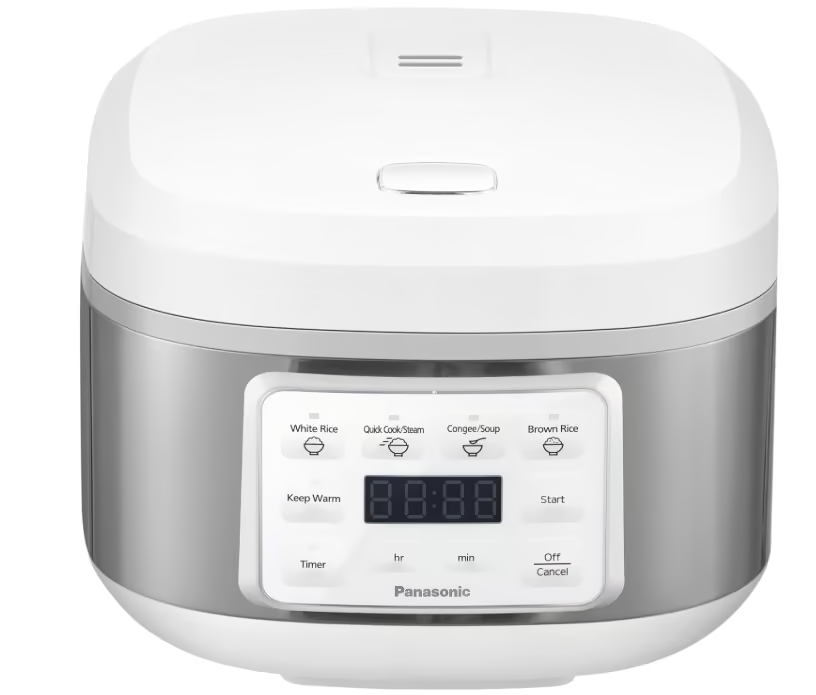
Families who want faster turnaround on rice night without stepping up to a full multicooker should look at the Panasonic SR-DA152WST, an 8-cup cooker built around a dedicated Quick Cook mode.
The cooker measures 266mm deep, 337mm wide and 210mm high, weighing 2.8kg net, with a white finish, plastic and metal body, and an LED display paired with touch controls. The inner pot uses a 1.2mm Binchotan charcoal non-stick coating with a gold-coated exterior, a small design touch that also makes it easy to spot wear over time.
Four auto menus cover white rice, congee and soup, quick cook or steam, and brown rice, and the 24-hour delay timer with up to 24 hours of keep-warm means a batch can be ready exactly when needed.
Owner feedback from PB Tech AU describes it as sleek and modern and very easy to use, with one reviewer specifically upgrading from an older-style cooker and noting the improvement in day-to-day handling.
The trade-off is that this is a newer release, so independent review volume beyond retailer feedback is still thin, and the exact warranty term was not published anywhere Claude could verify, so it is worth confirming that detail with the retailer before buying.
Pros
- Dedicated Quick Cook mode for faster turnaround
- 8-cup capacity suits families
- 24-hour delay timer and keep-warm
- Positive early owner feedback
Cons
- Newer release with limited independent review volume
- Exact warranty term not published
Key specs: model SR-DA152WST, 770W, 220-240V.
7. Kambrook Rice Master KRC405BSS – Best Simple Everyday Pick
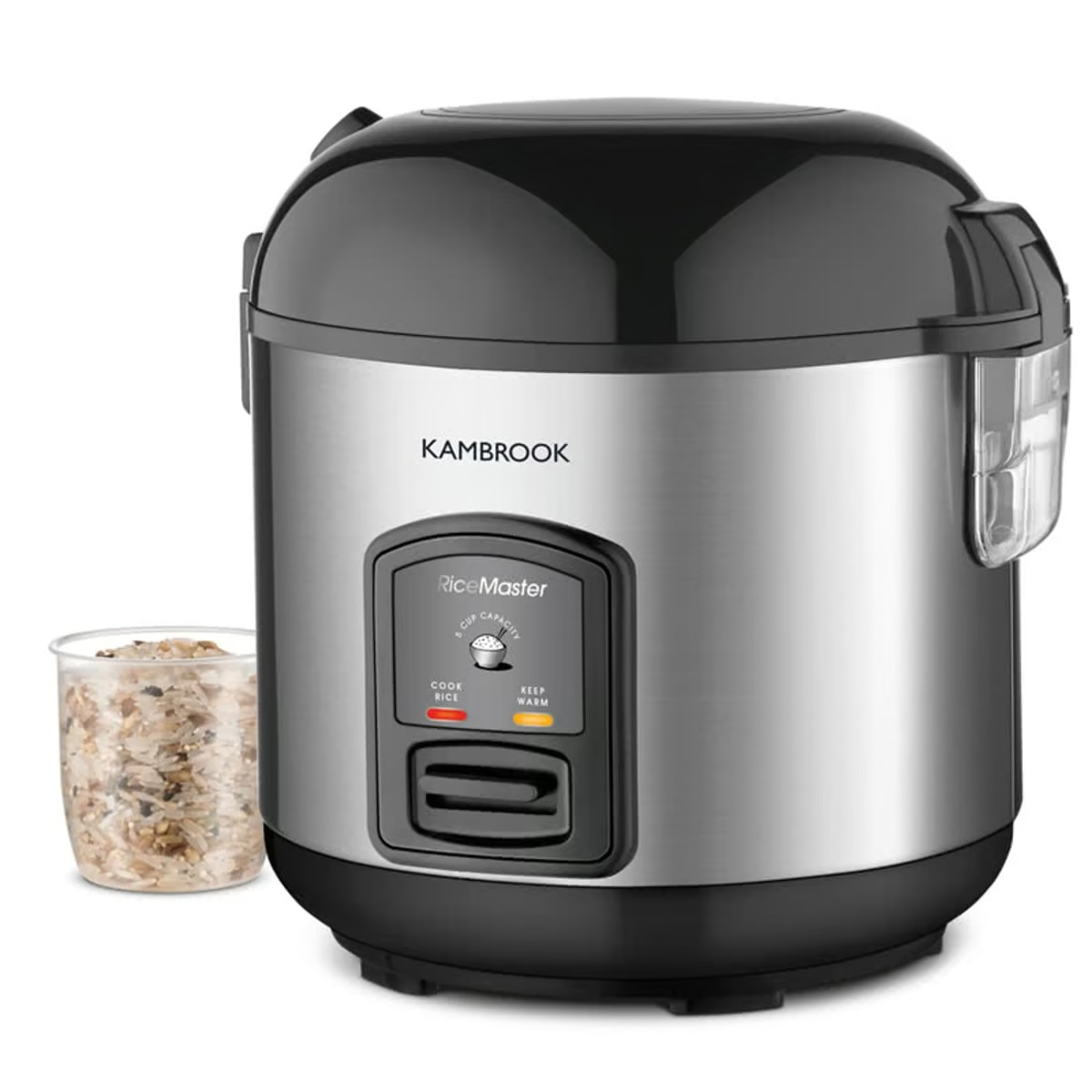
For shoppers who just want a cheap, no-frills cooker for everyday rice, the Kambrook Rice Master KRC405BSS covers the basics, though it comes with a mixed reliability track record worth knowing about upfront.
It is a jar-style cooker with a locking lid and visible water-level markings on the stainless steel exterior, holding 5 cups of rice in a removable non-stick aluminium bowl that is hand-wash only. There is no LCD display, delay timer or fuzzy logic, just two programs, cook and steam, plus a keep-warm function, which keeps it simple to operate for anyone who does not want to learn a menu system.
Owner reviews on ProductReview.com.au are polarised. Positive reviewers describe it cooking rice fluffy and beautiful with no crusty base or water leaking out of the lid, and several mention using the small clear overflow container on the side to manage runoff during cooking. On the negative side, multiple independent reviewers report the steam vent is positioned in a spot that can burn knuckles when opening the lid, and that starchy water spatters onto the bench during cooking. A handful describe units failing entirely within a couple of months of light use, or switching to keep-warm before the rice has properly cooked.
This is the most basic cooker on this list, with the fewest features of any pick here, so it suits buyers prioritising price over extras and who are comfortable with the trade-off in consistency that comes with it.
Pros
- Low price point
- Simple two-program operation
- Positive reviews for fluffy rice results
- Visible water-level markings
Cons
- Steam vent placement can burn knuckles when opening
- Reliability complaints from multiple independent reviewers
- No display, timer or fuzzy logic
Key specs: model KRC405BSS, 230V, 1-year warranty.
8. Instant Pot Duo 7-in-1 Multicooker 5.7L – Best Multi-Function Pick
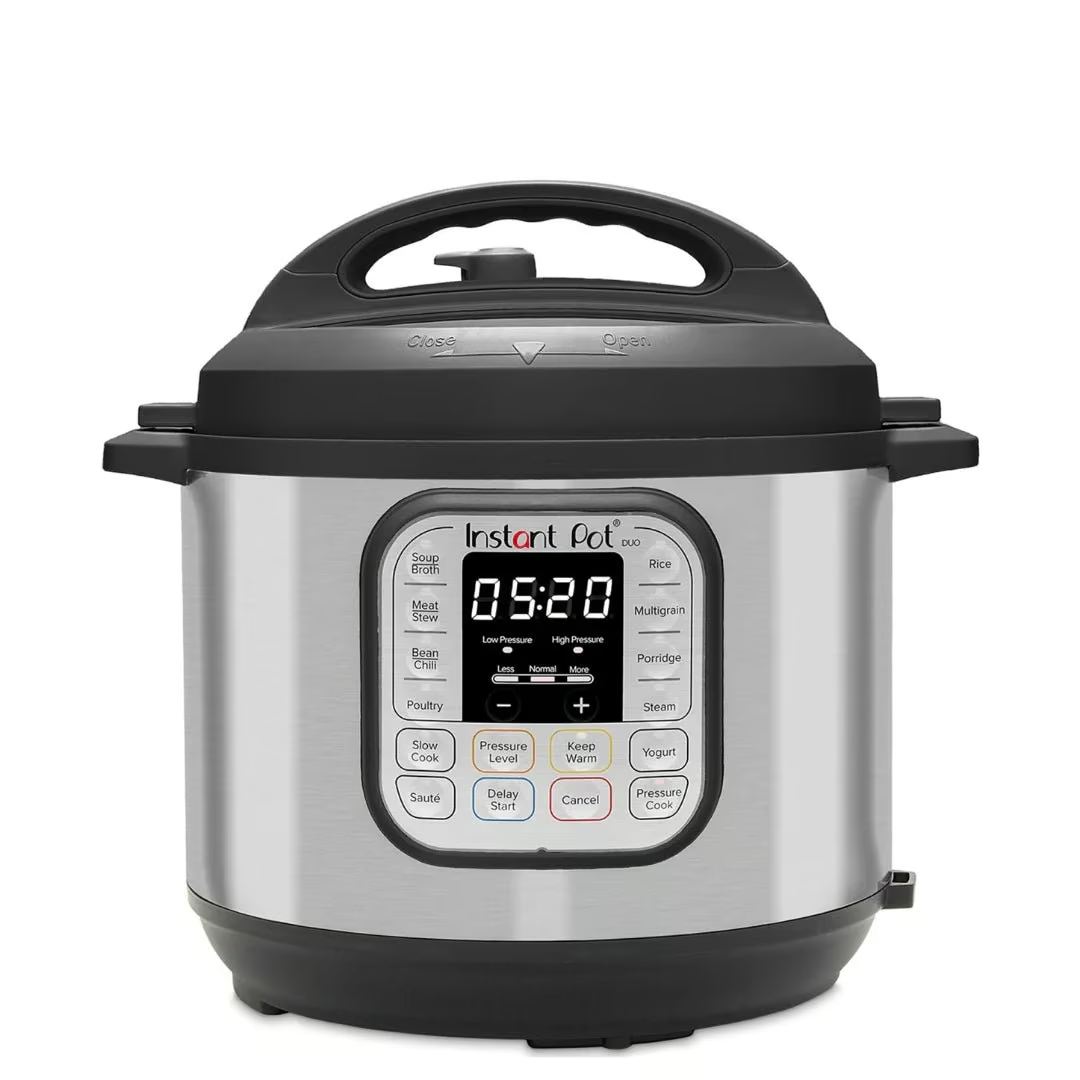
Anyone who wants one appliance to do the job of several should look at the Instant Pot Duo, a 7-in-1 multicooker that happens to be rated highly by owners specifically for its rice function.
At 5.7L and built to feed up to six, this is bulkier than a dedicated rice cooker, with a brushed stainless steel exterior and a 304-grade stainless steel inner pot that is not stovetop safe but is free of BPA, PFOA and PTFE. It functions as a pressure cooker, slow cooker, rice cooker, saute pan, steamer, yoghurt maker and food warmer, with 13 smart programmes and more than 11 safety features including overheat protection and a safe locking lid.
Owner reviews on ProductReview.com.au give it 4.0 out of 5 overall, with the rice-cooking sub-score sitting higher at 4.8 out of 5. Reviewers describe it as set-and-forget, praising how it turns off itself and needs little supervision, though a few note the channel where the lid fits can be awkward to clean thoroughly.
The trade-off is that this is a multicooker first, not a dedicated rice cooker, so it takes up more counter space and has a steeper learning curve than any other pick on this list. One reviewer also reported a pressure-sensor fault developing after several months, with a frustrating warranty-claim experience. Owners weighing this against a dedicated appliance for browning and searing might also compare it with a good electric frypan for that specific job, since the Instant Pot’s saute function is capable but not a full substitute for a flat cooking surface.
Pros
- Replaces several appliances with 7 functions
- Rice-cooking rated 4.8 out of 5 by owners
- Strong safety feature set
- Feeds up to six people
Cons
- Bulkier than a dedicated rice cooker
- Steeper learning curve than a simple cooker
- Lid channel can be tricky to clean fully
Key specs: model 112-0181-01-AU, 1000W, 220-240V, 12-month warranty.
If you are planning the whole kitchen, the guide to freestanding ovens covers the other appliances worth costing in.
Induction heating shows up across small appliances now, and the best donut makers use the same even-heat principle to avoid a raw middle. Rice is usually one component of a shared meal rather than the meal itself, and the best electric hot pots put the rest of it in the middle of the table. Communal eating is the thread here, and fondue sets do the European version of the same idea with a pot and long forks.
Verdict
For most NZ households, the Toshiba 1.8L IH Rice Cooker is the easiest overall recommendation, thanks to genuine induction heating and even results in a family-friendly size.
Bigger families cooking rice most nights will get more mileage from the Midea 5L Rice Cooker, and anyone who wants one appliance to replace several benchtop gadgets should look seriously at the Instant Pot Duo.
Budget shoppers considering the Sunbeam Rice Perfect Deluxe 7 or the Kambrook Rice Master should go in with realistic expectations. Both are cheap enough to justify some risk, but coating durability and reliability complaints turn up often enough in owner reviews to be worth knowing about before buying.
For the next benchtop upgrade worth considering, see the guide to the best coffee grinders.
Frequently Asked Questions
What size rice cooker do I need for my household?
As a rough guide, a 1 to 3 cup rice cooker suits one or two people, a 5 to 6 cup model suits a family of four, and 8 cups or more works better for larger or rice-heavy households. Rice cooker cups are smaller than a standard cup, roughly 180ml, so check the litre capacity too.
What is the difference between a fuzzy logic and an induction heating (IH) rice cooker?
Fuzzy logic uses sensors to judge cooking time and temperature and adjust automatically, while induction heating heats the entire pan rather than just the base plate. IH models tend to cook more evenly and respond faster to changes, which is why they usually sit at the premium end of the market.
Can you cook things other than rice in a rice cooker?
Yes. Most modern rice cookers include menus for porridge, soup, steaming vegetables, and slow-cook style dishes alongside white and brown rice. Multicookers such as the Instant Pot go further, adding pressure cooking, sauteing and yoghurt-making within the same appliance.
Will an imported rice cooker work safely on NZ’s power supply?
It depends on the market it was built for. New Zealand runs on 220 to 240V, so AU and NZ market rice cookers, like the models in this guide, are built for local power and plugs. Cookers imported directly from Japan or the US often run on 100 to 120V and need a step-down transformer to use safely here.
Is a rice cooker’s inner pot dishwasher safe?
It varies by model. Some inner pots and the removable steam baskets on several cookers in this guide are dishwasher safe, while others, particularly basic non-stick bowls, are hand-wash only to protect the coating. Always check the specific model’s care instructions before it goes in the dishwasher.
How do you stop rice coming out mushy or burnt?
Rinsing rice before cooking removes excess starch that causes gumminess, and getting the water-to-rice ratio right, usually marked on the inner pot, matters more than the appliance itself. Burnt bases are often linked to the keep-warm function triggering too early on basic cookers without fuzzy logic.
What is the difference between a rice cooker and a multicooker?
A dedicated rice cooker is built and calibrated specifically for rice, usually with simpler controls and a lower price. A multicooker, such as the Instant Pot Duo, adds pressure cooking, slow cooking, steaming and other functions in one appliance, trading some rice-specific calibration for versatility.
Does a rice cooker use a lot of power to run?
No. Rice cookers are low-wattage appliances, typically drawing 700 to 1000W while actively cooking and far less on keep-warm mode, so running one daily costs relatively little compared with larger kitchen appliances such as ovens.