The best iron supplement in NZ overall is Iron Melts Tablets, thanks to a melt-in-the-mouth format that makes a daily habit easy to stick to for kids, fussy tablet-takers, and anyone after a gentle, low-dose top-up rather than a clinical treatment dose.
For anyone with a confirmed deficiency, though, higher-strength options like Maltofer and Ferro-F-Tab further down this list are the better fit.
This guide compares nine iron supplements available in New Zealand, covering the form, elemental iron dose and genuine trade-offs of each, so shoppers can match the right pick to why they actually need iron.
Shoppers building out a broader supplement routine might also compare NZ’s best multivitamins alongside a dedicated iron pick.
This guide was last reviewed in July 2026 against current NZ pharmacy stock and general dosing guidance published by Healthify NZ.
Quick comparison
| Rank | Product | Best for | Form | Elemental iron per dose |
|---|---|---|---|---|
| 1 | Iron Melts Tablets 50s | Kids and fussy tablet-takers | Melt-in-mouth fizzy tablet | 5mg |
| 2 | Maltofer Oral Iron Tablets 30s | Diagnosed iron deficiency | Film-coated swallow tablet | 100mg |
| 3 | Clinicians Iron Boost Vege Capsules 30s | Vegans and vegetarians | Vege capsule | 24mg |
| 4 | Good Health Ferrofix Lipo Iron Sachets 20s | Sensitive stomachs (liposomal) | Powder sachet | 24mg |
| 5 | Lipo-Sachet Ferro Strawberry Sachets 30s | On-the-go convenience | Liposomal gel sachet | 20mg |
| 6 | Good Health Iron Chews Tablets 30s | Daily chewable maintenance | Chewable tablet | 20mg |
| 7 | Ferro-F-Tab 310mg 60s | Pregnancy and clinician-recommended use | Film-coated swallow tablet | 100mg |
| 8 | Carbonyl Iron Tablets 30s | Budget-friendly daily use | Swallow tablet | 18mg |
| 9 | Eve Wellness A Juicy Dose of Iron Capsules 30s | Women’s wellness branding | Vege capsule | 24mg |
1. Iron Melts Tablets – Best for kids and fussy tablet-takers
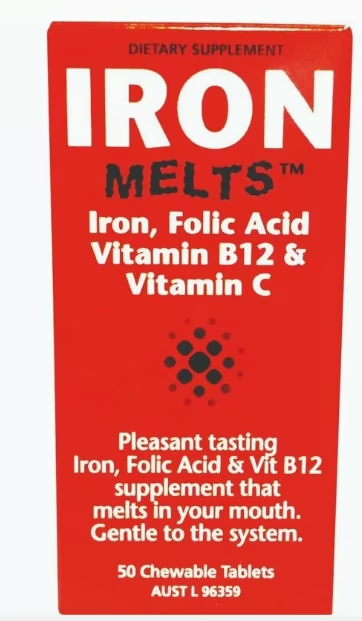
Iron Melts Tablets suit shoppers after the easiest possible way to take iron daily, especially kids over four and adults who dislike swallowing pills.
Design & shape: supplied as small fizzy tablets in a 50-count pack, they dissolve or melt directly in the mouth rather than being swallowed whole.
Look & finish: strawberry-flavoured and effervescent, one NZ retailer markets the format specifically as leaving “no iron after-taste.”
Build & materials: each tablet delivers ferrous fumarate equivalent to 5mg elemental iron, alongside 50mg vitamin C, 250mcg folic acid and 10mcg vitamin B12 to support absorption. The tablets are gluten-free, lactose-free and sweetened with aspartame.
User experience: testers who prefer to avoid capsules or bulky pills find the melt-in-mouth format genuinely easier to build into a routine, and the strawberry flavour is reported to go down well with children without the constipation that puts many people off iron supplements.
Performance: at 5mg elemental iron per tablet, this sits well below the 60-120mg range typically used to treat a diagnosed deficiency, so it functions as a nutritional top-up rather than a therapeutic dose.
Trade-offs: the aspartame content carries a phenylketonuria warning, worth checking for households avoiding artificial sweeteners, and shoppers with an existing diagnosed deficiency will likely need a stronger product from further down this list.
Pros
- Easy melt-in-mouth format for kids and pill-avoiders
- Strawberry flavour with no lingering iron aftertaste
- Includes vitamin C, B12 and folic acid for absorption
Cons
- Low 5mg elemental iron dose won’t treat a diagnosed deficiency
- Contains aspartame (phenylketonuria warning)
- Not suitable for children under 4
Key specs: Ferrous fumarate (5mg elemental iron), vitamin C 50mg, folic acid 250mcg, vitamin B12 10mcg; 50 tablets per pack; not for children under 4.
2. Maltofer Oral Iron Tablets – Best for diagnosed iron deficiency
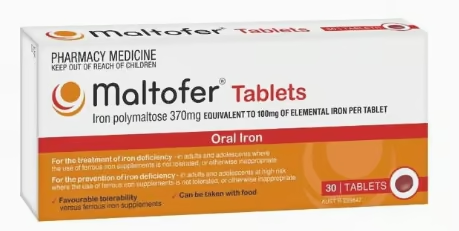
Maltofer Oral Iron Tablets are built for people who’ve had a blood test confirm low iron, not just those wanting a general top-up.
Design & shape: supplied as reddish-brown, round, biconvex film-coated tablets in aluminium blister packs of 30, swallowed whole with water rather than chewed.
Look & finish: the distinctive brownish tablet colour sets it apart from the typical white pill, and the film coating is designed to mask the taste of the iron polymaltose complex inside.
Build & materials: each tablet supplies 370mg iron polymaltose complex, equivalent to 100mg elemental iron, with no added vitamin C needed for absorption unlike ferrous salt forms.
User experience: official NZ medicine information and the manufacturer both note fewer gastrointestinal side effects than ferrous sulfate, and it can be taken with food without losing effectiveness. Real-world reviews are mixed, though: some testers report smooth use, while others still experience constipation, nausea or dark stools, which is listed as a genuinely common side effect.
Performance: at 100mg elemental iron, this is a clinically meaningful dose suited to correcting an actual deficiency rather than casual maintenance, with dosing running from one tablet daily for prevention up to two for treatment.
Trade-offs: tablets can’t be split for a lower dose, some users report tooth discolouration or a lingering metallic taste, and it isn’t recommended for children under 12.
Pros
- Clinically established 100mg elemental iron dose
- Documented lower GI side-effect rate than ferrous sulfate
- Can be taken with food without losing effectiveness
Cons
- Some users still report constipation, nausea or dark stools
- Tablets can’t be split for a lower dose
- Not for children under 12
Key specs: Iron polymaltose complex 370mg (100mg elemental iron); 30 film-coated tablets; adult and adolescent use only.
3. Clinicians Iron Boost Vege Capsules – Best for vegans and vegetarians
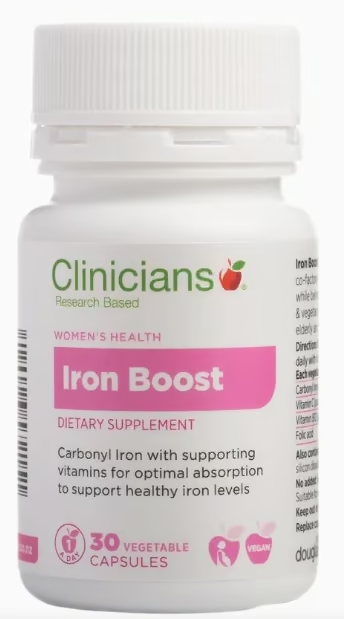
Clinicians Iron Boost Vege Capsules target shoppers who want a plant-based capsule free from animal-derived ingredients and artificial additives.
Design & shape: a vegetable capsule taken once daily with food, supplied 30 to a pack, naturally tinted purple by carrot extract rather than an artificial colourant.
Look & finish: the capsule contains no added flavours, sweeteners or preservatives, and a rice-hull and rice-extract excipient blend keeps the formulation entirely plant-derived.
Build & materials: each capsule delivers carbonyl iron equivalent to 24mg elemental iron, plus vitamin C (50mg), vitamin B12 (50mcg) and folic acid (300mcg) to support absorption and red blood cell formation.
User experience: the brand positions carbonyl iron as gentler on the gastrointestinal tract than iron salts, thanks to its small particle size and slower release, and states the product is safe for use in pregnancy and breastfeeding. Independent, product-specific customer reviews were hard to come by, so this gentleness claim should be read as manufacturer positioning rather than a verified tester consensus.
Performance: 24mg elemental iron per capsule sits in the moderate range, better suited to daily maintenance and mild deficiency support than treating a severe, clinically diagnosed anaemia.
Trade-offs: shoppers after a high-strength, fast-acting treatment dose will find this milder than options like Maltofer or Ferro-F-Tab, and as a practitioner brand it’s mainly found through pharmacies rather than supermarkets.
Pros
- Fully plant-based vege capsule with no artificial colours or flavours
- Includes vitamin C, B12 and folic acid
- Brand states it’s safe in pregnancy and breastfeeding
Cons
- Independent customer reviews are scarce
- Moderate 24mg dose isn’t a treatment-level strength
- Mainly sold through pharmacies rather than supermarkets
Key specs: Carbonyl iron (24mg elemental iron), vitamin C 50mg, vitamin B12 50mcg, folic acid 300mcg; 30 vege capsules.
4. Good Health Ferrofix Lipo Iron – Best liposomal iron for sensitive stomachs
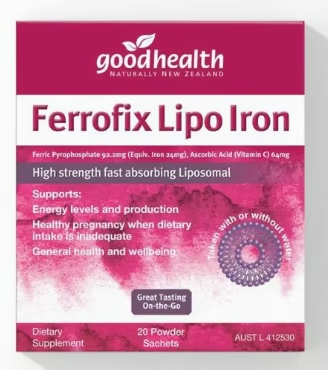
Good Health Ferrofix Lipo Iron Sachets are built around liposomal delivery technology for shoppers whose stomachs can’t tolerate standard iron tablets.
Design & shape: a powder sachet format, supplied 20 to a box, with each 2g sachet able to be mixed into water or taken directly without needing a drink.
Look & finish: lemon sherbet flavoured, with natural flavours and sweeteners only, and no added colours, gluten, egg, dairy or soy, making it suitable for vegans.
Build & materials: each sachet supplies ferric pyrophosphate equivalent to 24mg elemental iron, encapsulated in a liposomal structure described as similar to human cell membranes, alongside 64mg vitamin C to support absorption.
User experience: the microencapsulation is marketed specifically to reduce the upset-stomach risk that puts many people off traditional iron tablets, and pregnant women are listed among the intended users, dosed at one sachet daily with food. Independent customer reviews for this exact sachet were scarce across NZ retailers, so the gentle-on-digestion claim should be treated as a manufacturer position rather than a confirmed tester consensus.
Performance: 24mg elemental iron per sachet places it in the same moderate-dose bracket as several capsule-based competitors on this list, positioned for daily maintenance rather than acute treatment.
Trade-offs: the sachet format takes up more room in a bag or cupboard than a slim tablet blister pack, and anyone needing a higher treatment-level dose will need a stronger product.
Pros
- Liposomal delivery marketed to reduce stomach upset
- Convenient sachet needs no water
- Suitable for vegans, free of major allergens
Cons
- Independent reviews for this exact product are limited
- 24mg dose is moderate, not treatment-level
- Sachet format takes more room than a tablet blister pack
Key specs: Ferric pyrophosphate (24mg elemental iron), vitamin C 64mg; 20 x 2g sachets, lemon sherbet flavour.
5. Lipo-Sachet Ferro Strawberry – Best for on-the-go convenience
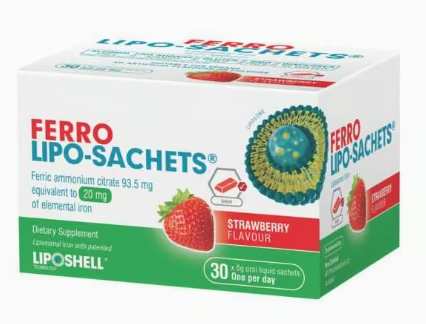
Lipo-Sachet Ferro Strawberry Sachets suit shoppers who want an iron dose they can take anywhere without water, a spoon or a pill.
Design & shape: a liquid gel sachet, supplied 30 to a box at 5g per sachet, designed to be squeezed straight into the mouth or stirred into a small amount of cold water or juice.
Look & finish: strawberry flavoured, using a patented liposomal encapsulation technology, with no artificial colours, flavours or thickeners and no added sugar beyond what occurs naturally in the formulation.
Build & materials: each sachet supplies ferric ammonium citrate equivalent to 20mg elemental iron, wrapped in a liposome structure intended to protect the gut lining from direct iron contact.
User experience: the format is genuinely fuss-free for travel or a rushed morning, and the manufacturer cites published research showing liposomal iron causes less nausea, cramping and constipation than standard iron salts. Verified independent customer reviews specific to this product were very thin on the ground, so real-world taste and tolerance feedback should be treated cautiously.
Performance: at 20mg elemental iron, this is the lowest dose among the liposomal sachets on this list, and the label itself states it’s a dietary supplement, not a treatment for diagnosed iron-deficiency anaemia.
Trade-offs: the modest elemental iron content means shoppers with a confirmed deficiency will likely need a stronger tablet-based product instead.
Pros
- Liquid gel sachet needs no water, ideal for travel
- Strawberry flavour masks the typical metallic iron taste
- Liposomal technology backed by published tolerability research
Cons
- Lowest elemental iron dose (20mg) on this list
- Label states it isn’t for treating diagnosed anaemia
- Very few independent customer reviews found
Key specs: Ferric ammonium citrate (20mg elemental iron); 30 x 5g gel sachets, strawberry flavour.
6. Good Health Iron Chews – Best chewable for daily maintenance
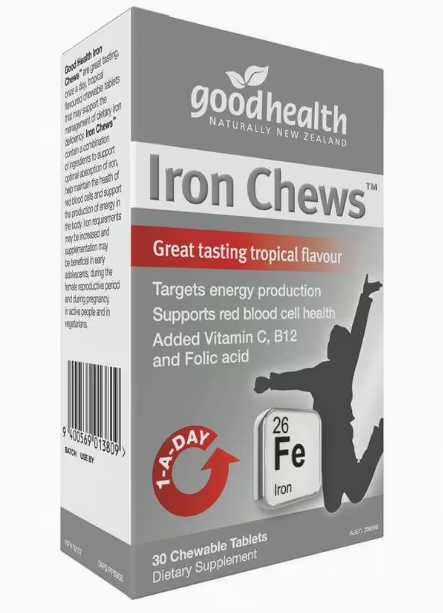
Good Health Iron Chews Tablets are for shoppers who want an iron tablet they can genuinely enjoy chewing rather than tolerate swallowing.
Design & shape: a tropical-flavoured chewable tablet, supplied 30 to a pack, taken once daily and suitable for adults and children over the age stated on pack.
Look & finish: reviewers consistently describe the tropical flavour as pleasant, with one noting a mild tang alongside the sweetness rather than a chalky or metallic aftertaste.
Build & materials: each tablet supplies ferrous fumarate equivalent to 20mg elemental iron, plus 50mg vitamin C, 50mcg vitamin B12 and 300mcg folic acid, with no artificial flavours, sweeteners, colours or preservatives, and it’s free of gluten, egg, dairy, soy and wheat.
User experience: customer reviews for the same Good Health formulation describe it as genuinely tasty and easy to build into a daily habit, including for people who normally struggle to remember tablets, and one reviewer credited it with a noticeable improvement in their iron levels over time.
Performance: 20mg elemental iron per tablet sits at a moderate maintenance dose, well below treatment-level doses like Maltofer’s 100mg, so it’s better suited to topping up mild deficiency than correcting a significant one.
Trade-offs: the mild tang some testers noticed won’t suit everyone, and the moderate dose means anyone with a confirmed deficiency should check with a pharmacist about whether a stronger product is needed.
Pros
- Genuinely pleasant tropical flavour, good for people who dislike swallowing pills
- Includes vitamin C, B12 and folic acid
- Free from artificial flavours, colours and preservatives
Cons
- One reviewer noted a mild tang
- Moderate 20mg dose is a maintenance rather than treatment strength
Key specs: Ferrous fumarate (20mg elemental iron), vitamin C 50mg, vitamin B12 50mcg, folic acid 300mcg; 30 chewable tablets, tropical flavour.
7. Ferro-F-Tab 310mg – Best for pregnancy and clinician-recommended use
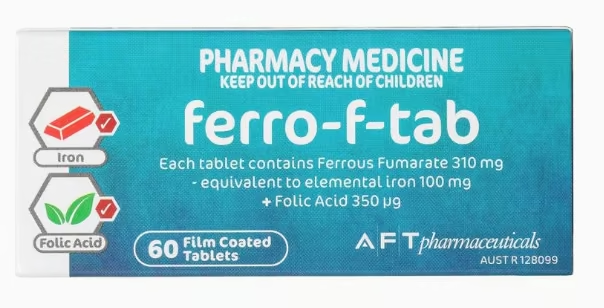
Ferro-F-Tab 310mg is the option most likely to already be sitting in a midwife’s or GP’s recommendation list, particularly for pregnancy-related iron deficiency.
Design & shape: a standard film-coated swallow tablet, supplied 60 to a pack, classified as a Pharmacy Only Medicine rather than a general supplement.
Look & finish: there’s no flavouring or chewable format here, just a straightforward pill taken with water, in keeping with its role as a therapeutic rather than lifestyle product.
Build & materials: each tablet supplies ferrous fumarate 310mg, equivalent to 100mg elemental iron, combined with 350mcg folic acid, a combination commonly recommended during pregnancy to support both iron status and folate levels.
User experience: it’s listed among recommended oral iron preparations in maternity clinical guidance used by NZ health services, reflecting real prescriber trust, and its consistent availability across NZ pharmacies points to it being a mainstream, easy-to-find option. As with most ferrous fumarate tablets, published clinical data shows gastrointestinal side effects (constipation, nausea, diarrhoea, dark stools) affect a meaningful share of users, so it’s worth taking with food if tolerability is a concern.
Performance: at 100mg elemental iron, this is a genuine treatment-level dose, with dosing moving from one tablet daily for prevention to two for treatment under medical guidance.
Trade-offs: the GI side effect profile is more noticeable than the gentler capsule and liposomal options on this list, and it shouldn’t be taken for more than 12 months without medical advice.
Pros
- Genuine treatment-level 100mg elemental iron dose
- Combined with folic acid, widely recommended in pregnancy care
- Consistently available across NZ pharmacies
Cons
- Ferrous fumarate carries a higher GI side-effect rate
- Shouldn’t be used beyond 12 months without medical advice
- Pharmacy Only Medicine, not an open-shelf supplement
Key specs: Ferrous fumarate 310mg (100mg elemental iron), folic acid 350mcg; 60 film-coated tablets, Pharmacy Only Medicine.
8. Carbonyl Iron Tablets – Best budget-friendly option
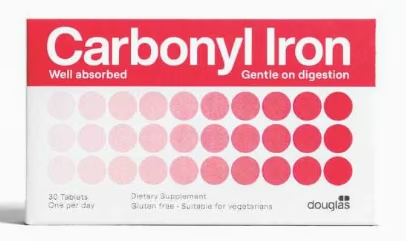
Carbonyl Iron Tablets are the straightforward, no-frills pick for shoppers who mainly want an affordable daily iron top-up.
Design & shape: a small swallow-whole tablet, supplied 30 to a pack, dosed at one tablet daily for adults and children over 8.
Look & finish: plain tableting with no added preservatives, sugar, starch, gluten or milk derivatives, and no flavouring since it’s meant to be swallowed rather than chewed.
Build & materials: each tablet delivers around 98% pure carbonyl iron, providing 18mg elemental iron, a form that differs from the iron salts used in most competing tablets on this list.
User experience: pharmacy customer feedback describes the tablet as small and genuinely easy to swallow, with parents reporting no constipation in children taking it daily, and carbonyl iron’s slower, more controlled release is widely cited as a reason it tends to sit more comfortably with sensitive stomachs.
Performance: at 18mg elemental iron, it’s the lowest tablet-based dose on this list, making it a maintenance-level product rather than a treatment for a confirmed deficiency, and its simple, no-frills tablet makes it an easy long-term habit to keep.
Trade-offs: carbonyl iron’s safety margin in overdose is genuinely better than iron-salt tablets, which matters in households with children, but it’s still not risk-free in large accidental doses, and it should be stored well out of reach regardless.
Pros
- Small, easy-to-swallow tablet
- Better overdose safety margin than iron-salt tablets
- Simple, additive-free formulation
Cons
- Lowest tablet-based dose (18mg) on this list
- Still requires safe storage away from children
- Not a treatment-level dose for diagnosed deficiency
Key specs: Carbonyl iron (18mg elemental iron); 30 tablets, swallow whole, do not chew.
9. Eve Wellness A Juicy Dose of Iron – Best women’s wellness brand pick
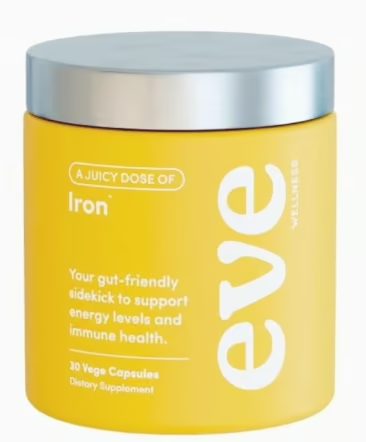
Eve Wellness A Juicy Dose of Iron is aimed squarely at women shopping for an iron supplement that doesn’t read like a clinical pharmacy product.
Design & shape: a vegan vegetable capsule, supplied 30 to a bottle for a month’s supply, taken once daily after meals.
Look & finish: the branding leans into a playful, colourful “juicy” identity that stands out on a pharmacy shelf next to more clinical-looking iron boxes, consistent with the brand’s broader women’s health range.
Build & materials: each capsule supplies iron bisglycinate chelate (Ferrochel) equivalent to 24mg elemental iron, alongside 1000IU vitamin D3 sourced from lichen to support absorption; unlike several other picks on this list, it doesn’t include added vitamin C or B12.
User experience: the brand markets this bisglycinate chelate form specifically as easier on the gut than traditional iron supplements, addressing a common complaint the category has, though independent customer review text for this exact product wasn’t available to verify that claim first-hand.
Performance: at 24mg elemental iron, it sits in the same moderate range as several capsule-based competitors, suited to daily maintenance rather than treating a diagnosed deficiency.
Trade-offs: the lack of added vitamin C means pairing it with a vitamin C-rich meal is worth considering for better absorption, and shoppers wanting cofactors bundled in already, like several other picks here, will need to add their own.
Pros
- Gentler bisglycinate chelate iron form
- Playful, approachable branding aimed at women’s health
- Vegan capsule with added vitamin D3
Cons
- No added vitamin C or B12, unlike several other picks
- Independent customer reviews weren’t available to verify gentleness claims
- Best paired with a vitamin C source for absorption
Key specs: Iron bisglycinate chelate/Ferrochel (24mg elemental iron), vitamin D3 1000IU; 30 vege capsules, vegan.
How to choose the best iron supplement in NZ
The right pick depends mostly on why iron is needed. Shoppers with a blood-test-confirmed deficiency generally need a higher-dose, clinically established option like Maltofer or Ferro-F-Tab, while those wanting a general daily top-up can usually get by with a gentler capsule, chewable or liposomal sachet at a more moderate dose.
Form matters almost as much as dose. Traditional ferrous salt tablets (ferrous fumarate, ferrous sulfate) are well-established and often the most affordable, but they carry the highest chance of constipation, nausea or stomach upset. Newer forms, iron bisglycinate chelate, carbonyl iron and liposomal iron, are generally marketed as gentler on digestion, though real-world tolerance still varies from person to person.
Iron works alongside other nutrients too: vitamin B12 and folate support the same red blood cell production process, so it’s worth checking NZ’s best vitamin B12 supplements if fatigue persists despite a normal iron level.
General energy complaints aren’t always iron-related either; magnesium deficiency is a common overlap worth ruling out with NZ’s best magnesium supplements.
Finally, anyone pregnant, on regular medication, or supplementing a child should check with a pharmacist or doctor before starting, since iron interacts with several common medications and overdose risk is genuinely serious in young children.
Frequently Asked Questions
Why might someone need an iron supplement?
Low iron is one of the most common nutrient deficiencies in NZ, particularly among menstruating women, pregnant women, vegetarians and endurance athletes. Symptoms like persistent fatigue, pale skin, breathlessness and difficulty concentrating often prompt a blood test, and a supplement is usually recommended once low iron or anaemia is confirmed.
What’s the best way to take iron supplements?
Iron absorbs best on an empty stomach with a source of vitamin C, such as orange juice, though taking it with food is a reasonable trade-off if it causes stomach upset. Tea, coffee, dairy and calcium supplements should be spaced at least two hours away, since they reduce absorption significantly.
Which iron supplement is best for women?
There’s no single best iron supplement for women, since the right pick depends on whether it’s for general maintenance or a diagnosed deficiency. Gentler capsule or liposomal options suit daily topping up, while higher-dose tablets like Maltofer or Ferro-F-Tab are typically reserved for confirmed low iron under medical guidance.
What are the symptoms of low iron?
Common signs include ongoing tiredness, pale skin, shortness of breath during normal activity, dizziness, brittle nails, and difficulty concentrating. Some people also notice unusual cravings for ice or non-food items. A simple blood test confirms low iron or anaemia, and it’s worth checking with a doctor before starting a high-dose supplement.
Is it better to take iron every day or every other day?
Research on alternate-day dosing suggests taking iron every other day can improve absorption and reduce stomach side effects for some people, compared with a daily dose. Many NZ products are still labelled for once-daily use, so it’s worth discussing an alternate-day schedule with a pharmacist if tolerability is a concern.
How long does it take for iron supplements to work?
Most people notice an improvement in energy within a few weeks of starting a suitable dose, though it typically takes two to three months of consistent use for iron stores to fully rebuild. A follow-up blood test is the most reliable way to confirm levels have genuinely improved.
Verdict
There’s no single “best” iron supplement in NZ for everyone, since the right choice depends on dose, form and how sensitive someone’s stomach is. Iron Melts Tablets and Good Health Iron Chews suit shoppers after an easy, low-fuss daily habit, the liposomal sachets from Good Health and Lipo-Sachet Ferro suit sensitive stomachs wanting a break from tablets altogether, and Maltofer or Ferro-F-Tab remain the go-to picks once a blood test confirms an actual deficiency.
Related guides: NZ’s best fish oil supplements is another everyday nutritional gap worth comparing alongside an iron top-up.
