
The best air purifier in NZ overall is the Philips 1000i Series, a three-stage unit whose NanoProtect HEPA filter captures 99.97 percent of particles down to 0.003 microns and whose AeraSense sensor adjusts fan speed automatically. That automation earns its keep in damp, poorly insulated Kiwi homes, where mould spores and dust mite allergens keep the air working hard right through winter, long after the spring pollen has gone.
Cleaner indoor air matters year-round in NZ, whether it is hay fever season, a damp winter, or a household with pets. We compared ten current air purifiers, from a set-and-forget smart HEPA tower through to a bedside model with a night light, to help you match a purifier to the room and the problem you actually have.
Two long-standing local favourites, the Devanti Air Purifier and the Compact HEPA Air Purifier, remain in this guide unchanged, alongside eight further picks available in New Zealand.
Quick comparison
| Air Purifier | Best For | CADR | Room Coverage |
|---|---|---|---|
| Philips 1000i Series | Best Smart Air Purifier | 300 m³/h | 78 m² |
| Levoit Core Mini-P | Best Budget | Not published | 23 m² |
| Winix Zero+ PRO 5-Stage | Best Premium | 410 m³/h | 100 m² |
| Shark NeverChange Compact Pro | Best Low-Maintenance Filter | Not published | 23 m² |
| Devanti Air Purifier | Best Overall | 180 m³/h | 20-30 m² |
| Levoit Core 300 | Best for Allergies | 187 m³/h | 80 m² |
| Winix Compact 4-Stage | Best Rated by Owners | 230 m³/h | 59 m² |
| Breville the Easy Air Connect | Best Smart and Connected | 91 m³/h | 25 m² |
| Philips 600i Series | Best Compact and Quiet | 170 m³/h | 44 m² |
| Compact HEPA Air Purifier | Best for Bedrooms and Baby’s Room | Not published | Small-medium rooms |
1. Philips 1000i Series Air Purifier – Best Smart Air Purifier
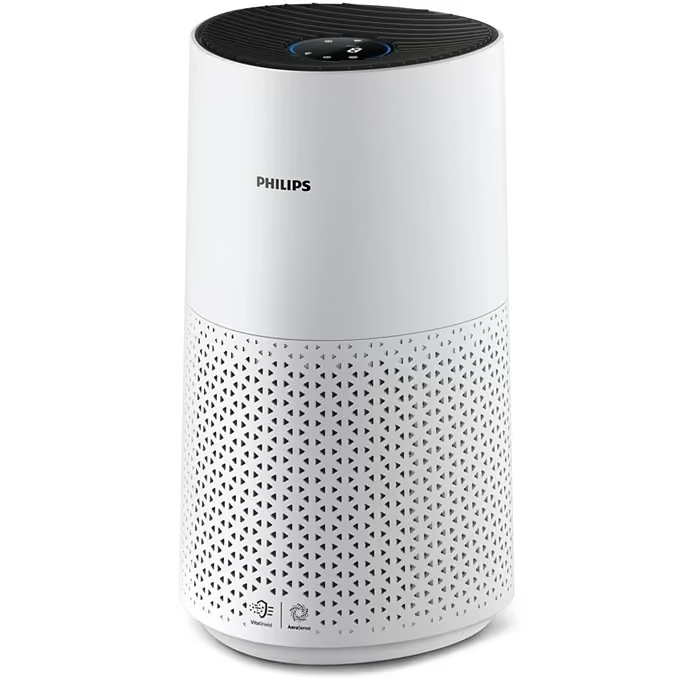
The Philips 1000i Series Air Purifier is a white cylindrical tower with a top-mounted control ring and digital display. It uses three-layer filtration made up of a pre-filter, an active carbon layer and a NanoProtect HEPA filter, rated to capture 99.97 percent of particles as small as 0.003 microns and 99.99 percent of allergens. An AeraSense sensor reads indoor air quality roughly 1,000 times a second and adjusts fan speed automatically.
In real use the unit delivers a Clean Air Delivery Rate of 300 cubic metres per hour and is rated to purify rooms up to 78 square metres. It runs as quietly as 15 decibels in sleep mode, climbing to 50 decibels on turbo, while drawing a maximum of 27 watts. The Air+ app connects over WiFi for remote monitoring, and voice control works with Amazon Alexa and Google Home.
This model suits open-plan living areas or larger bedrooms where a compact unit would struggle, and the automatic air quality response is handy for households that want a set-and-forget purifier. It is a good fit for buyers who value smart monitoring and app control over sheer maximum coverage.
Pros
- Three-layer NanoProtect HEPA filtration capturing 99.97% of particles at 0.003 microns
- AeraSense sensor with automatic fan speed adjustment
- WiFi app and voice control via Alexa and Google Home
- Very quiet 15 dB sleep mode
Cons
- Noise rises to 50 dB on turbo mode
- Rated coverage tops out at 78 m², which Philips itself calls medium rather than large rooms
- Filter stages still need periodic replacement
Key specs: CADR 300 m³/h, covers up to 78 m², three-layer filtration (NanoProtect HEPA, active carbon, pre-filter) capturing 99.97% of particles at 0.003 microns, noise range 15-50 dB, 27 W maximum power draw.
2. Levoit Core Mini-P Air Purifier with Night Light – Best Budget
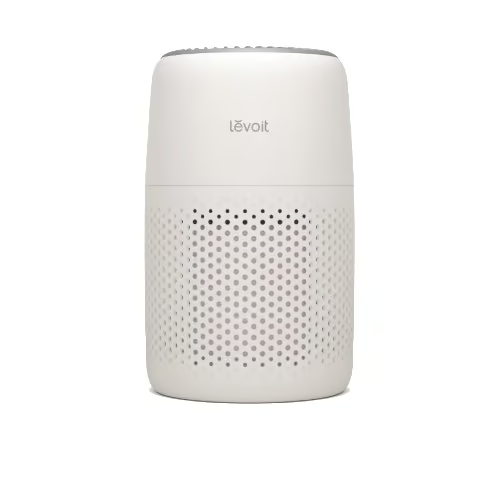
The Levoit Core Mini-P is a small cylindrical unit designed for bedside or desktop use, available in grey, cream and white. It includes a built-in adjustable night light and an aroma pad for adding essential oils, features aimed squarely at bedroom use. Its three-stage filtration system, combining a pre-filter, activated carbon and a particle filter, is rated to trap 99.97 percent of airborne particles down to 0.3 microns.
Levoit rates the unit to purify rooms up to 253 square feet, or around 23 square metres, and says it cleans a smaller 53 square foot room most efficiently. Three fan speed settings are offered, and the night light can be dimmed or switched off for a darker sleeping environment.
This is a compact, single-room purifier rather than a whole-home solution, so it suits a bedroom, nursery or small office rather than an open living area. The night light and aroma pad are the standout extras that separate it from a bare-bones budget purifier.
Pros
- Built-in adjustable night light suited to bedroom use
- Aroma pad for essential oils
- Three-stage filtration capturing 99.97% of particles down to 0.3 microns
- Small, lightweight footprint with multiple colour options
Cons
- No published CADR, noise (dB) or wattage figures on Levoit’s own site for this model
- Coverage limited to around 23 m² (253 sq ft), suited to one room only
- No formal HEPA certification stated for this filter
Key specs: Three-stage filtration capturing 99.97% of particles down to 0.3 microns, covers up to 253 sq ft (approximately 23 m²).
3. Winix Zero+ PRO 5-Stage Air Purifier – Best Premium
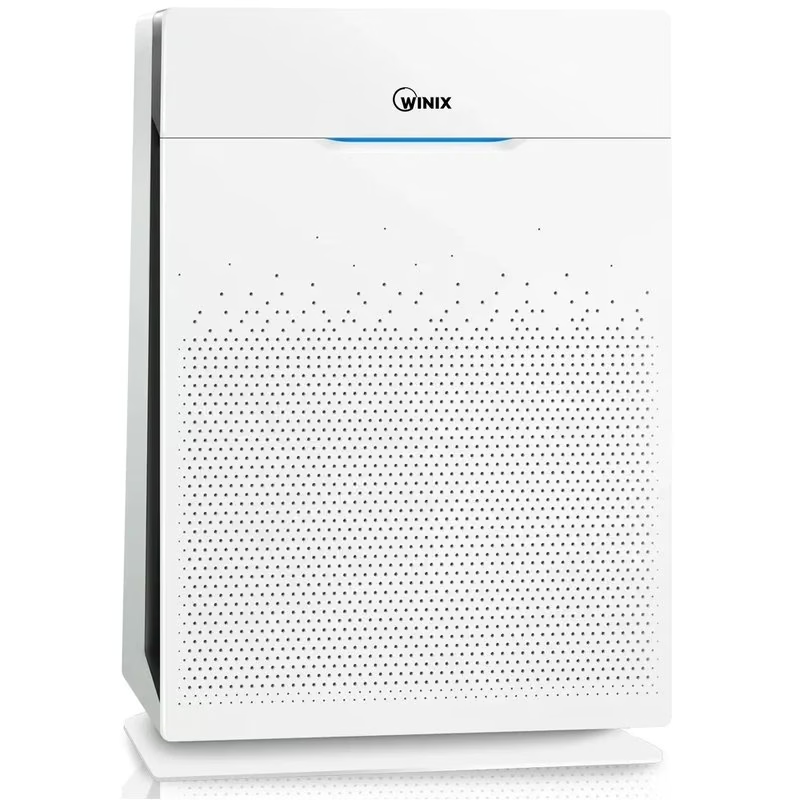
The Winix Zero+ PRO is a tall, boxy freestanding unit with a top control panel and a smart air quality display. It runs five filtration stages: a dedicated pet filter, a washable pre-filter, an activated carbon filter, a hospital-grade True HEPA filter rated at 99.97 percent capture at 0.3 microns, and Winix’s PlasmaWave 2.0 technology. A Triple Smart Sensor feeds the real-time display so the unit can respond automatically to changing air quality.
It is rated at a Clean Air Delivery Rate of 410 cubic metres per hour and is recommended for rooms up to 100 square metres. Noise is rated at 27 decibels with a maximum power draw of 50 watts, and it offers four fan speeds plus auto and sleep modes. The dedicated pet filter and hospital-grade HEPA stage are aimed at households dealing with pet dander, odours or higher pollutant loads.
At 8.5 kilograms and 60 centimetres tall, it is larger and heavier than compact single-room purifiers, reflecting its bigger coverage area and extra filtration stage. It suits larger living rooms, multi-pet households or anyone wanting hospital-grade filtration rather than a basic HEPA unit.
Pros
- Five-stage filtration including a dedicated pet filter and hospital-grade True HEPA
- PlasmaWave 2.0 technology alongside HEPA filtration
- CADR of 410 m³/h covering rooms up to 100 m²
- Smart Air Quality Display with Triple Smart Sensor for automatic response
Cons
- Larger and heavier (8.5 kg) than compact single-room purifiers
- Premium positioning compared with entry-level Winix models
- Filter stages still require periodic replacement
Key specs: CADR 410 m³/h, recommended for rooms up to 100 m², five-stage filtration with hospital-grade True HEPA (99.97% at 0.3 microns) plus PlasmaWave 2.0, 27 dB noise, 50 W maximum power.
4. Shark NeverChange Air Purifier Compact Pro – Best Low-Maintenance Filter
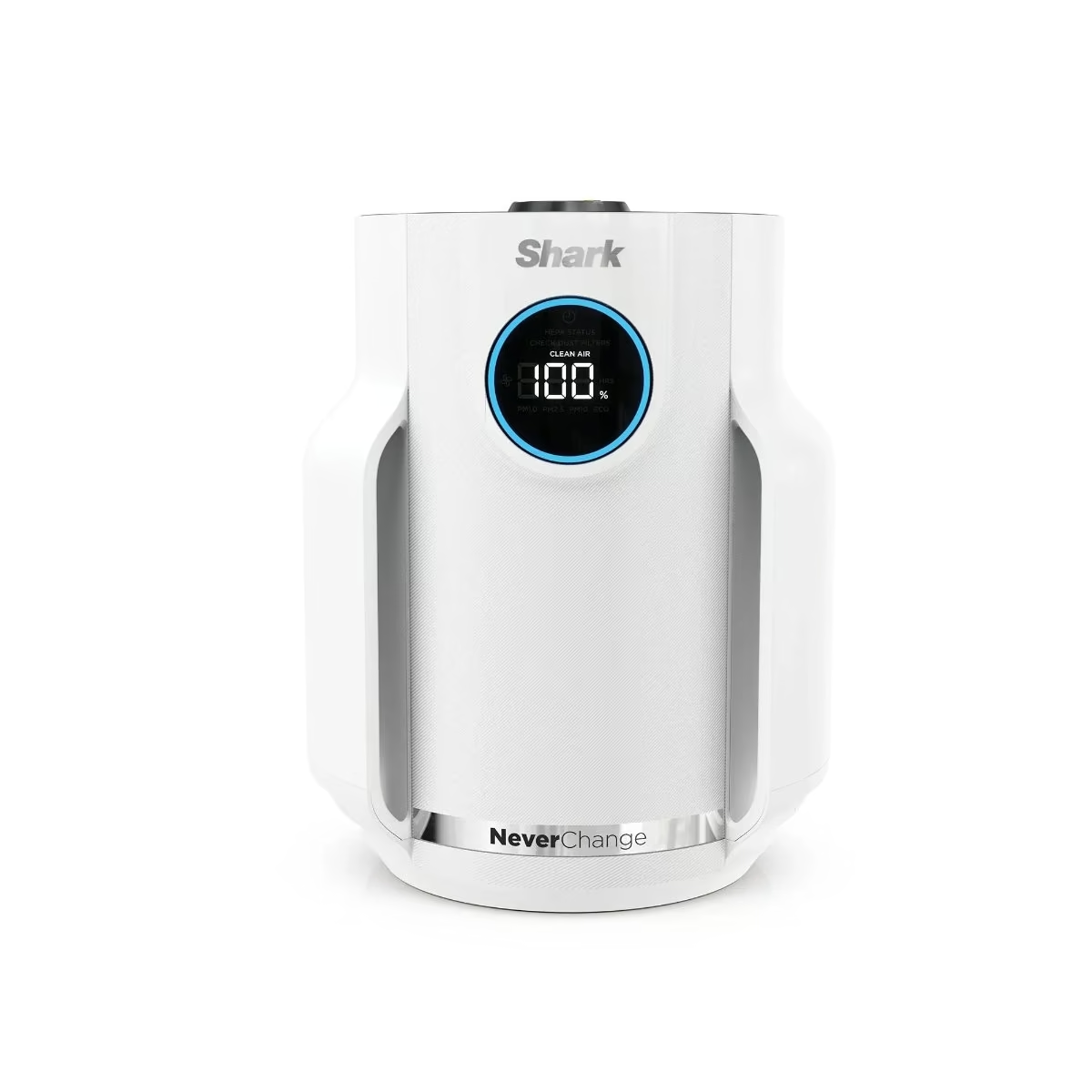
The Shark NeverChange Air Purifier Compact Pro is a small cylindrical unit weighing just 2.09 kilograms, with Debris Defense pre-filtration and an included odour-neutraliser cartridge feeding into its anti-allergen HEPA-exceeding filter. Shark states the filter traps 99.97 percent of particles, tested down to 0.1 to 0.2 microns. The compact body measures 29 by 24.3 by 22.5 centimetres.
In use it purifies rooms up to 23 square metres and draws a maximum of just 16 watts, making it economical to run continuously. A CleanSense IQ display shows real-time air quality, and fan settings run from Auto through levels 1 to 4 up to Max.
The headline advantage is the NeverChange5 filter, rated by Shark to last up to five years under specified conditions of 300 square feet and 12 hours of daily use on max fan speed. That makes it a strong option for anyone who wants to avoid the ongoing cost and hassle of buying replacement filters. Its smaller coverage area means it suits a bedroom, home office or similarly sized single room rather than an open-plan living space.
Pros
- NeverChange5 filter rated to last up to 5 years under specified use conditions
- Low 16 W maximum power draw
- CleanSense IQ display for real-time air quality feedback
- Compact and lightweight at 2.09 kg
Cons
- No published CADR or noise (dB) figures for this model
- Coverage limited to 23 m², suited to a single room
- Five-year filter rating is based on specific test conditions that may not match every household’s usage
Key specs: Covers up to 23 m², anti-allergen HEPA-exceeding filtration traps 99.97% of particles (tested to 0.1-0.2 microns), NeverChange5 filter rated up to 5 years, 16 W maximum power draw.
5. Devanti Air Purifier – Best Overall
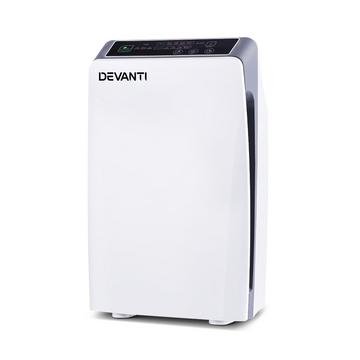
Best for: whole-room HEPA cleaning with hands-off auto control. The best air purifier in NZ overall is the Devanti Air Purifier, a free-standing tower that pairs a true four-layer HEPA system with an air-quality sensor for set-and-forget cleaning across a living room or open-plan space. It stands 52 cm tall on a compact 31.5 x 20 cm footprint, so it tucks beside a couch or sideboard without dominating the room, and a moulded carry handle plus a 1.6 m cord make it easy to shift between rooms. The white casing and digital control panel read as tidy and modern rather than flashy.
Inside, a pre-filter, an H11-grade HEPA layer rated to capture 99.97% of particles down to 0.3 microns, an activated carbon layer and a built-in ioniser work in sequence, while the coloured air-quality sensor shifts between good, fair and poor so the unit ramps itself up on the Automatic setting. Rated CADR is 180 m³/h, which suits roughly 20 to 30 square metres. NZ owners of this Devanti model report it runs quietly on auto and sleep modes, sets up in minutes, and noticeably eased hay fever and dust allergies at home. The main trade-off owners flag is that replacement HEPA filters can be hard to source locally, so check filter supply before buying, and the 180 CADR means it is happiest in small-to-medium rooms rather than large lounges.
Pros
- True H11 HEPA plus carbon filter and ioniser
- Air-quality sensor with hands-off auto mode
- Quiet on sleep setting; remote and 8-hour timer
- Portable with a built-in carry handle
Cons
- Replacement filters can be hard to find locally
- CADR of 180 best suits rooms up to about 30 m²
- Built-in ioniser produces a trace of ozone
Key specs: Brand Devanti, model PURI-D-501-WH (SKU PR10451); H11 HEPA + activated carbon + ioniser; CADR 180 m³/h; coverage about 20-30 m²; 4 modes (Automatic, Normal, Efficient, Silent); 8-hour timer; 50W; 31.5 x 20 x 52 cm; white; remote included.
6. Levoit Core 300 Air Purifier – Best for Allergies
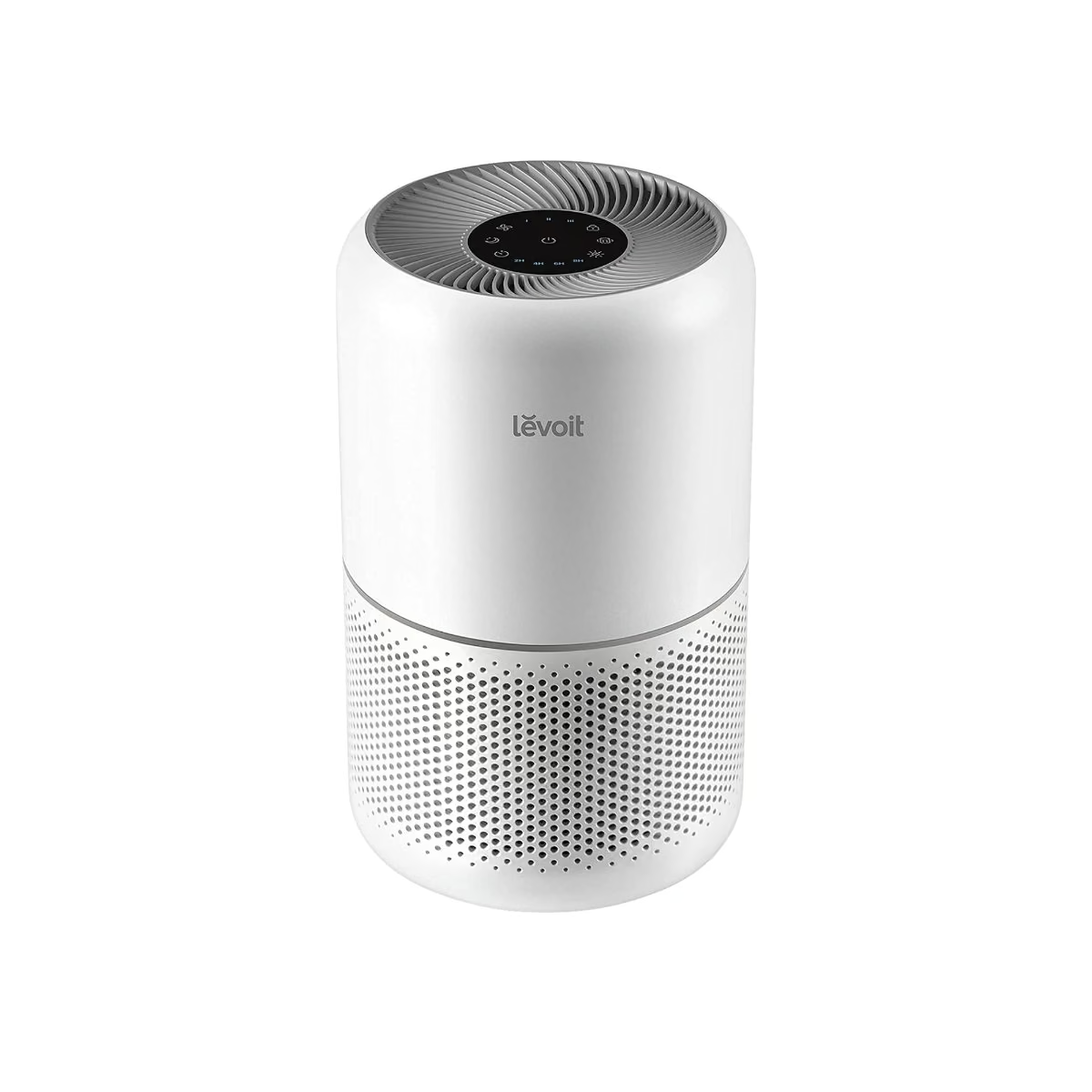
The Levoit Core 300 uses a compact cylindrical design finished in white plastic, with a touch panel on top for fan speed and timer control. Its 3-stage filtration system combines a fine pre-filter, a HEPA filter and an activated carbon layer, and owners can swap in specialised versions of the filter for pet allergies, toxins, or mould and bacteria.
With a clean air delivery rate of 187 m³/h, the unit is rated to refresh the air in an 80 square metre room once an hour, or a 40 square metre room twice an hour. It captures 99.97 percent of airborne particles down to 0.3 microns, and its QuietKEAP technology keeps sleep mode down to 24 decibels, with four fan speeds and a timer that runs from two to eight hours.
There is no app or WiFi control on this model, so it suits buyers who prefer straightforward manual operation over smart home integration. It organises well in a bedroom or small living space, though its 80 square metre rating means larger open-plan rooms will need a bigger unit for effective coverage.
Pros
- 187 m³/h CADR verified for an 80 square metre room
- 3-stage HEPA and activated carbon filtration with 99.97% capture at 0.3 microns
- Very quiet 24dB sleep mode
- Four fan speeds plus a flexible 2-8 hour timer
Cons
- No WiFi or app control
- Wattage is not published on the brand’s product page
- Manual speed control only, no automatic air-quality response
Key specs: CADR 187 m³/h with coverage up to 80m² (1 air change per hour), 3-stage HEPA plus activated carbon filtration capturing 99.97% of particles down to 0.3 microns, and a 24dB sleep-mode noise level.
7. Winix Compact 4-Stage Air Purifier – Best Rated by Owners
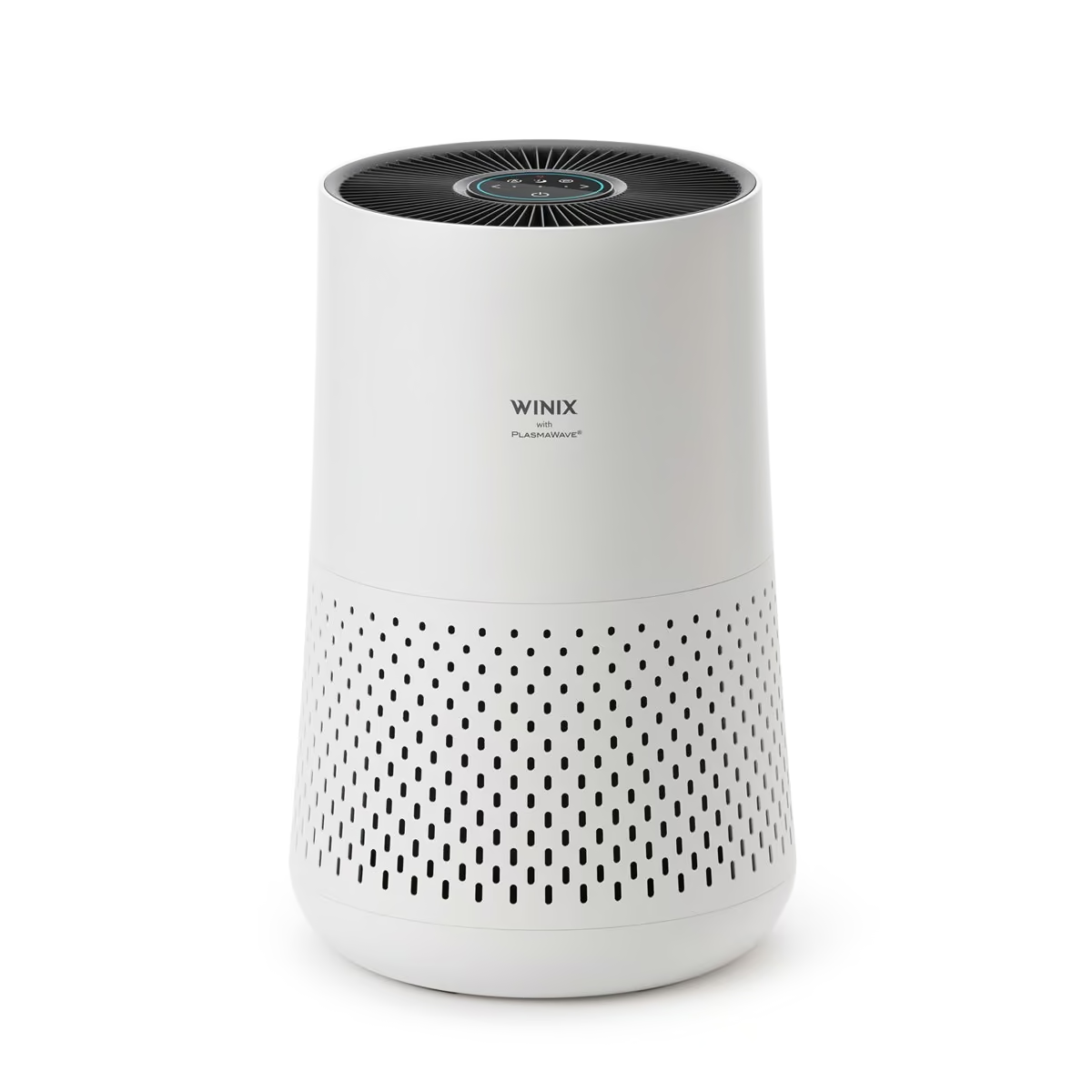
The Winix Compact 4-Stage Air Purifier is a small cylindrical tower measuring 371 by 241 by 241mm and weighing 3.1kg, finished in white or black. It runs a 4-stage filtration system combining a fine mesh pre-filter, an activated carbon filter, a 360-degree hospital-grade True HEPA filter rated at 99.97 percent capture at 0.3 microns, and Winix’s PlasmaWave technology.
It delivers a Clean Air Delivery Rate of 230 cubic metres per hour and is rated for rooms up to 59 square metres, drawing a maximum of 55 watts. Noise is rated at 24.8 decibels on its quietest setting, and owner reviews consistently highlight how quiet the sleep mode is overnight alongside noticeable improvements for dust, pet dander and allergy symptoms.
It suits a bedroom, living room or office rather than a large open-plan space, and buyers wanting smart app control or a bigger footprint should look at Winix’s larger models instead. With a 4.8 out of 5 rating from 68 verified owner reviews on its official distributor page, it stands out for real-world reliability rather than just spec-sheet numbers.
Pros
- 230 m³/h CADR for rooms up to 59 square metres
- 4-stage filtration with hospital-grade True HEPA (99.97% at 0.3 microns) plus PlasmaWave
- Quiet 24.8 dB operation, praised repeatedly in owner reviews
- Rated 4.8 out of 5 from 68 verified owner reviews
Cons
- No WiFi or app control on this model
- 59 m² coverage suits small-to-medium rooms rather than open-plan living
- 55W power draw is higher than some compact rivals
Key specs: CADR 230 m³/h, covers up to 59 m², 4-stage filtration (pre-filter, activated carbon, hospital-grade True HEPA 99.97% at 0.3 microns, PlasmaWave), 24.8 dB noise, 55W power draw.
8. Breville the Easy Air Connect Purifier – Best Smart and Connected
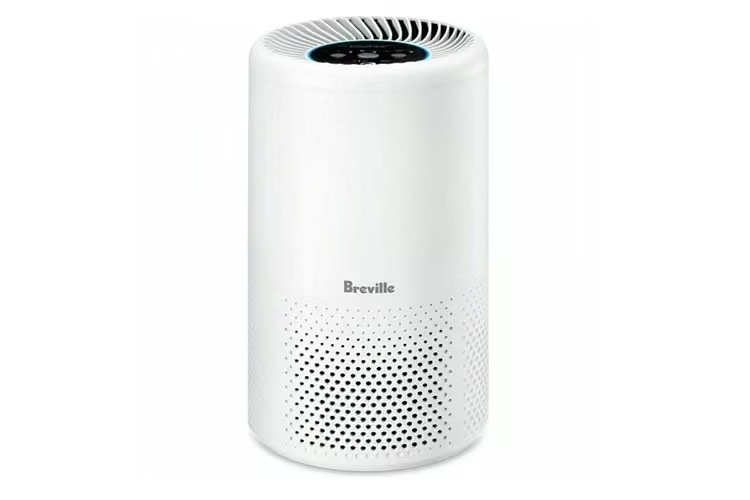
The Breville the Easy Air Connect Purifier is a compact white cylinder with a touch control panel on top and a perforated lower housing for air intake. Its 4-stage filtration system pairs a pre-filter for dust with a True HEPA-13 filter, an activated carbon filter for smoke and odours, and a Microbe Shield UV light aimed at bacteria and viruses.
Breville rates the unit’s clean air delivery rate at up to 91 m³/h, recommending it for rooms up to 25 square metres such as a bedroom or home office. It runs on 15 watts of power, offers four manual fan speeds, and connects to the Breville Home Connect app over WiFi for remote control, with compatibility for Amazon Alexa and Google Home voice commands.
This is a smaller-room purifier rather than a whole-house solution, so it suits a single bedroom, nursery or study rather than an open living area. Buyers after WiFi scheduling and voice control will get more from it than those who just want a basic manual unit.
Pros
- WiFi control via the Breville Home Connect app, plus Amazon Alexa and Google Home compatibility
- 4-stage filtration including a Microbe Shield UV light for bacteria and viruses
- Low 15W power draw
- Sensitive Choice certified in Australia and New Zealand
Cons
- Rated for rooms only up to 25 square metres
- Official noise level in decibels is not published on Breville’s own product page
- Smart features mean more initial setup than a basic manual purifier
Key specs: CADR up to 91 m³/h for rooms up to 25m², 4-stage filtration (pre-filter, True HEPA-13, activated carbon, Microbe Shield UV light) capturing 99.97% of particles down to 0.3 microns, running on 15W.
9. Philips 600i Series Air Purifier – Best Compact and Quiet
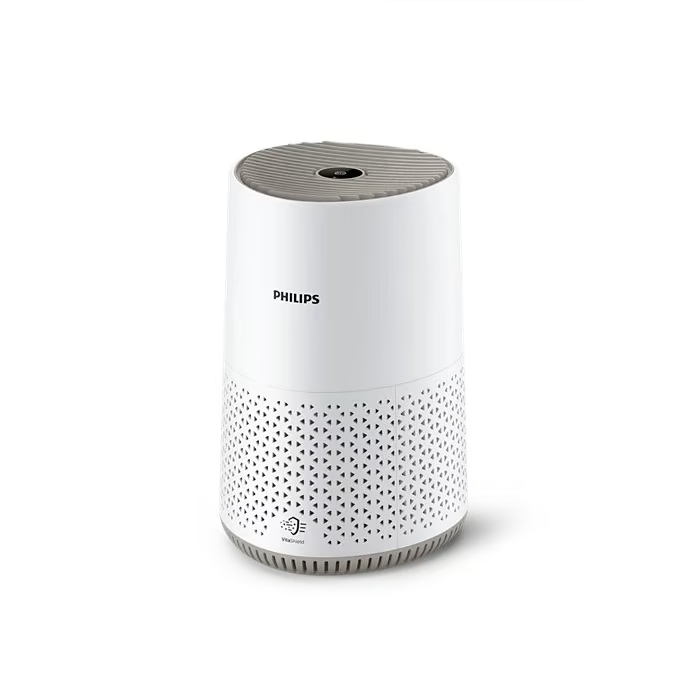
The Philips 600i series Air Purifier is a small, cylindrical unit finished in white or silk beige, with a digital touch interface on top and a perforated lower housing that draws air in from all sides. It uses a 2-layer filtration system combining a pre-filter with Philips’ NanoProtect HEPA filter, rated to capture 99.97 percent of ultra-fine particles down to 0.003 microns.
Its clean air delivery rate is 170 m³/h, with Philips rating it for rooms up to 44 square metres. The purifier runs from a maximum of just 12 watts, dropping to under 1 watt on standby, and its sleep setting is rated at 19 decibels, rising to 49 decibels at its loudest turbo speed. It connects to the Philips Air+ app over WiFi for scheduling and filter monitoring, though it has no automatic mode or voice control.
There are only three manual speed settings (sleep, medium and turbo) and no air quality sensor, so it will not automatically respond to changing air quality on its own. It suits buyers who want a quiet, energy-efficient purifier for a bedroom or small living space.
Pros
- Very low running cost at a maximum of 12W
- Quiet 19dB sleep mode
- 2-layer NanoProtect HEPA filtration capturing 99.97% of particles down to 0.003 microns
- WiFi app control with filter-life monitoring
Cons
- No automatic mode or air quality sensor, so speed must be set manually
- Only three fan speeds
- 44 square metre coverage suits small-to-medium rooms rather than open-plan living areas
Key specs: CADR 170 m³/h for rooms up to 44m², 2-layer NanoProtect HEPA filtration (99.97% capture at 0.003 microns), noise from 19dB (sleep) to 49dB (turbo), and a 12W maximum power draw.
10. Compact HEPA Air Purifier – Best for Bedrooms and Baby’s Room
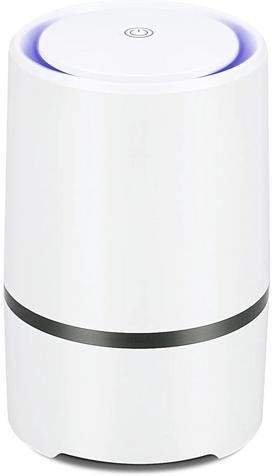
Best for: quiet, sensor-equipped HEPA cleaning in bedrooms and nurseries. Despite a compact desktop footprint, this purifier runs a multi-stage system: a pre-filter, a HEPA-grade layer the maker rates at 99.995%, dual activated-carbon filters for odours, and a built-in ioniser, with 360-degree airflow drawing air in from all sides. The black PP and ABS casing has a touchscreen on top and keeps things understated on a bedside table or nursery shelf.
The built-in PM2.5 sensor reports air quality in real time, and the sleep mode drops noise low: the page quotes operation between 24 and 45 dB, quiet enough to leave on overnight. Parents choosing it for a nursery will appreciate that it monitors as well as filters, so you can see when cooking or pollen has spiked indoor particles. The maker claims it clears a room in about 15 minutes, which is best treated as a manufacturer figure rather than a tested one, since NZ has no regulated room-size standard for these claims. The main limitations are only two fan settings, so there is little fine control, and coverage is geared to small-to-medium rooms rather than a large open lounge.
Pros
- Multi-stage HEPA-grade filter plus carbon and ioniser
- Real-time PM2.5 air-quality sensor
- Quiet 24 dB sleep mode for overnight use
- Touchscreen and 360-degree airflow in a compact body
Cons
- Only two fan settings, so limited fine control
- Coverage suited to smaller rooms
- The 15-minute clean is an unverified maker claim
Key specs: SKU PR14049; pre-filter + HEPA-grade (99.995%) + dual activated carbon + ioniser; PM2.5 sensor; noise 24-45 dB; 2 settings; touchscreen; 360-degree airflow; PP/ABS; black.
How to choose an air purifier in NZ
Match CADR and room coverage to the actual space. A small bedside unit like the Levoit Core Mini-P or Shark NeverChange Compact Pro suits a bedroom or nursery, while an open-plan living area needs a higher-CADR model like the Winix Zero+ PRO or Philips 1000i.
Check the filter type and running cost. A true HEPA filter captures fine particles like pollen and dust, and features like the Shark’s 5-year NeverChange filter or Philips’ low-wattage 600i cut down on replacement cost and hassle.
Decide if you want smart features. Models like the Philips 1000i, Breville Easy Air Connect and Devanti Air Purifier include sensors or app control that adjust automatically to changing air quality, which suits a set-and-forget approach over manually switching fan speeds.
Consider noise, especially for a bedroom. Look for a documented sleep-mode decibel rating, ideally in the low-20s or better, if the purifier will run overnight next to where you sleep.
For year-round comfort, the guides to outdoor heaters, panel heaters and portable air conditioners cover the other side of home climate control.
Come winter the problem reverses and that same shut-up room needs warmth rather than filtration, which is where the best electric fireplace picks come in. Homes running a heat pump year-round tend to need filtration more, not less, because the windows stay closed for months at a time. Purifiers are built to filter rather than to move air, so through a Kiwi February you will still want one of the best cooling fans running alongside it.
Verdict
For most NZ homes, the Devanti Air Purifier remains the best all-rounder, pairing true HEPA filtration with an air-quality sensor for hands-off cleaning across a living room or open-plan space.
Buyers wanting the smartest, most automated experience should look at the Philips 1000i Series, while anyone after hospital-grade filtration for a larger room or multiple pets is better served by the Winix Zero+ PRO. For a nursery or bedside table, the Compact HEPA Air Purifier and Levoit Core Mini-P both stay small and quiet without sacrificing genuine filtration.
FAQs
Do air purifiers actually work?
Yes. HEPA air purifiers genuinely reduce airborne particles like dust, pollen, pet dander and smoke by pulling air through a fine filter. They work on what is floating in the air, not on surfaces, so they will not fix settled dust or mould on walls. For NZ homes, running one continuously in the room you use most gives the best result.
Are air purifiers worth it in NZ?
For most NZ households dealing with allergies, pets, smoke or stuffy rooms, yes. A HEPA model noticeably cuts airborne dust and pollen and helps sensitive sleepers. Running costs are modest, often only a few dollars a month for a low-wattage unit. Match the purifier to your room size so you are not paying for capacity you never use.
Do air purifiers help with allergies and asthma?
A true HEPA air purifier can reduce airborne allergens such as pollen, dust mites and pet dander, which may ease hay fever and asthma symptoms for some people. It is a helpful support, not a cure, and should sit alongside medical advice and treatment. Choose a HEPA model rather than an ioniser for allergy relief.
Do air purifiers help with mould?
A HEPA air purifier can capture airborne mould spores, which helps reduce their spread, but it cannot remove mould already growing on walls or ceilings. In damp NZ homes the real fix is lowering humidity and improving ventilation. Use a purifier to manage spores in the air while you tackle the moisture source directly.
What is the difference between HEPA and ionic air purifiers?
A HEPA purifier draws air through a dense filter that physically traps fine particles and holds them until you change the filter. An ioniser charges particles so they clump and settle out of the air instead of being captured. HEPA is better for allergies and visible dust, while ionisers are cheaper, filterless and best for light odour control.
Are ozone and ioniser air purifiers safe?
Ionisers produce only a trace of ozone and are generally fine in ventilated rooms. Dedicated ozone generators are different: ozone can irritate the lungs, so these must run only in empty rooms and the space should be aired out before re-entering. Never use an ozone device around people or pets, and follow the maker’s safety instructions.
Should you sleep with an air purifier on?
Yes. Air purifiers are designed for continuous use, and running one overnight keeps bedroom air cleaner while you sleep, which can help allergy and asthma sufferers. Choose a model with a quiet sleep mode of around 24 to 35 dB and a dimmable display so light and noise do not disturb you. Avoid ozone generators in occupied bedrooms.
Where should you place an air purifier?
Put it in the room you use most, usually the bedroom or living room, raised slightly off the floor and clear of walls and furniture so air can flow freely into it. Keep it out of corners and away from curtains. For bedrooms, a spot a couple of metres from the bed works well for cleaner air while you sleep.
