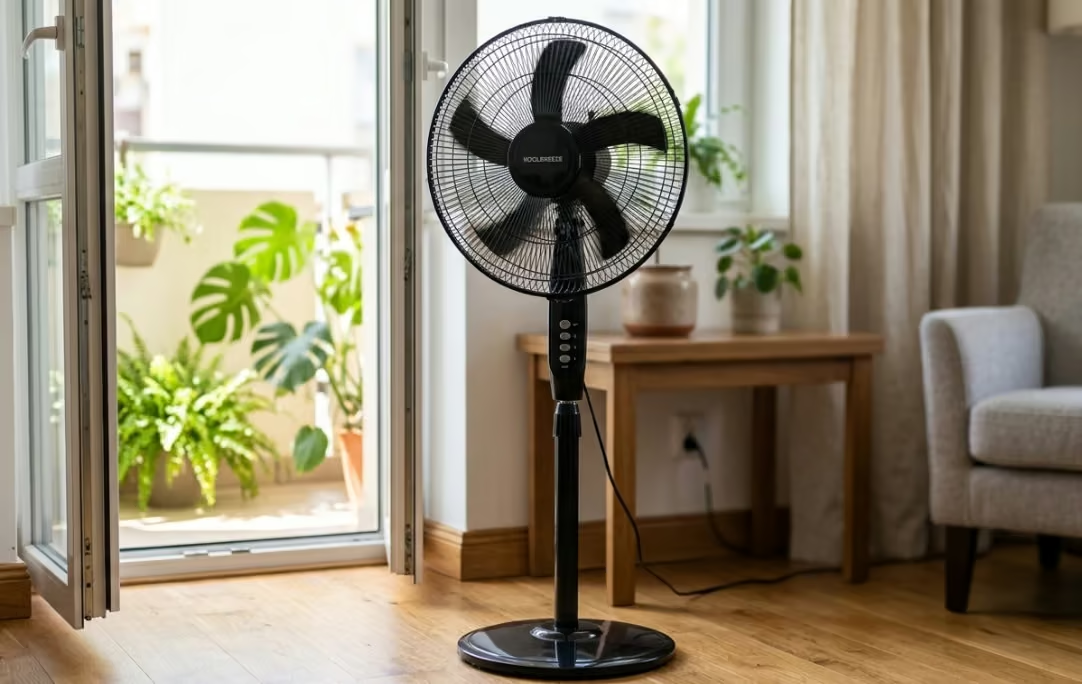
A cooling fan moves air across your skin to speed up evaporation and create a wind-chill effect. It doesn’t lower the actual temperature of a room, which is the main difference between a fan and an air conditioner or heat pump.
Cooling fans come in several distinct types. Tower fans stand upright and oscillate air across a wide arc from a slim floor footprint. Pedestal fans sit on an adjustable-height stand and move a stronger, more direct airflow across a room. Ceiling fans mount overhead and circulate air continuously without using any floor space. Desk and personal fans aim a small, focused airflow at one person. Wall-mounted fans free up floor space in a small room by fixing to a wall. Misting fans add a fine water spray to the airflow for extra cooling outdoors.
As a rough sizing guide, a 52-inch ceiling fan suits a room of around 15 to 20 square metres (160 to 215 square feet), while a desk or personal fan is designed to cool one person rather than a whole room.
This guide compares tower, pedestal, ceiling, desk, wall-mounted and misting fans available in New Zealand, across a range of room sizes and budgets.
| Product | Best For |
|---|---|
| Midea Circulator Fan | Best Air Circulator |
| Devanti 52″ Ceiling Fan DC Motor with Light and Remote | Best Ceiling Fan |
| Devanti Oscillating Tower Fan 93cm | Best Budget Tower Fan |
| Midea 7-Inch Table Circulation Fan | Best Compact Desk Fan |
| USB Rechargeable Bladeless Portable Neck Fan | Best Portable and Personal Fan |
| Philips Smart Pedestal Fan 3000 | Best Pedestal Fan |
| 12-Inch Wall-Mounted Oscillating Fan | Best Wall-Mounted Fan |
| 20-Inch Bladeless Tower Fan | Best Bladeless Tower Fan |
| 16-Inch High-Velocity Industrial Floor Fan | Best High-Velocity and Garage Fan |
| Shark FlexBreeze HydroGo Misting Portable Fan | Best Outdoor Misting Fan |
1. Midea Circulator Fan – Best Air Circulator
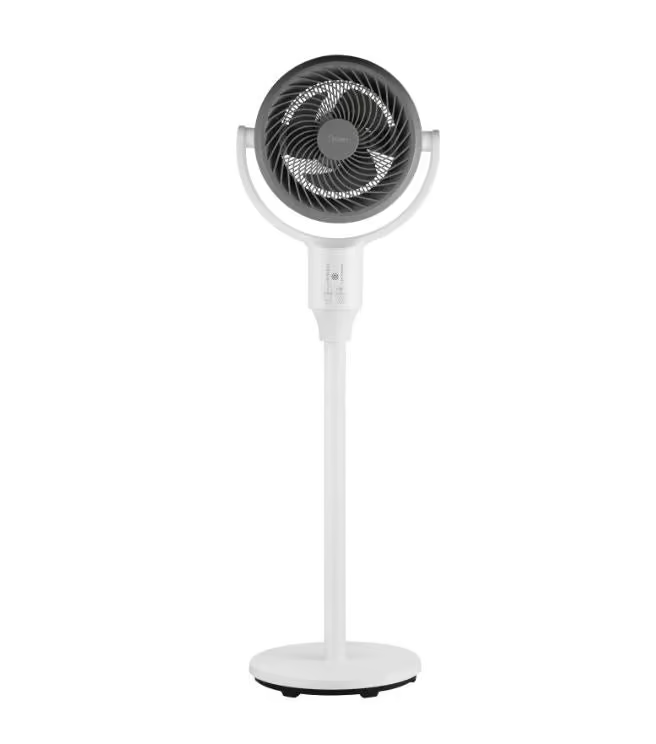
The Midea Circulator Fan is built to move air around a whole room rather than blow a direct breeze at one spot, using a long radian blade shape that reduces the vortex drag ordinary fan blades create.
Four speed levels take it from a low setting quiet enough for a child’s room up to a Turbo mode for fast air movement, and the head swings through 85 degrees horizontally and 135 degrees vertically to cover a wider spread than a fixed-head fan.
The base is height-adjustable and the front grille is detachable, so it can be pulled apart for a proper clean rather than just wiped over.
Pros
- Four distinct speed levels including a Turbo setting for fast air movement
- Wide 85° horizontal and 135° vertical swing covers more of a room than a fixed-head fan
- Adjustable height and a detachable grille make it easy to clean
Cons
- No remote control, so speed and angle are set by hand at the unit
- Built to circulate air rather than deliver the strong, direct breeze of a pedestal fan
Key specs: Power: 35W. Voltage: 220-240V, 50Hz. Speeds: 4 (Low, Mid, High, Turbo). Oscillation: 85° horizontal, 135° vertical.
2. Devanti 52″ Ceiling Fan DC Motor with Light and Remote – Best Ceiling Fan
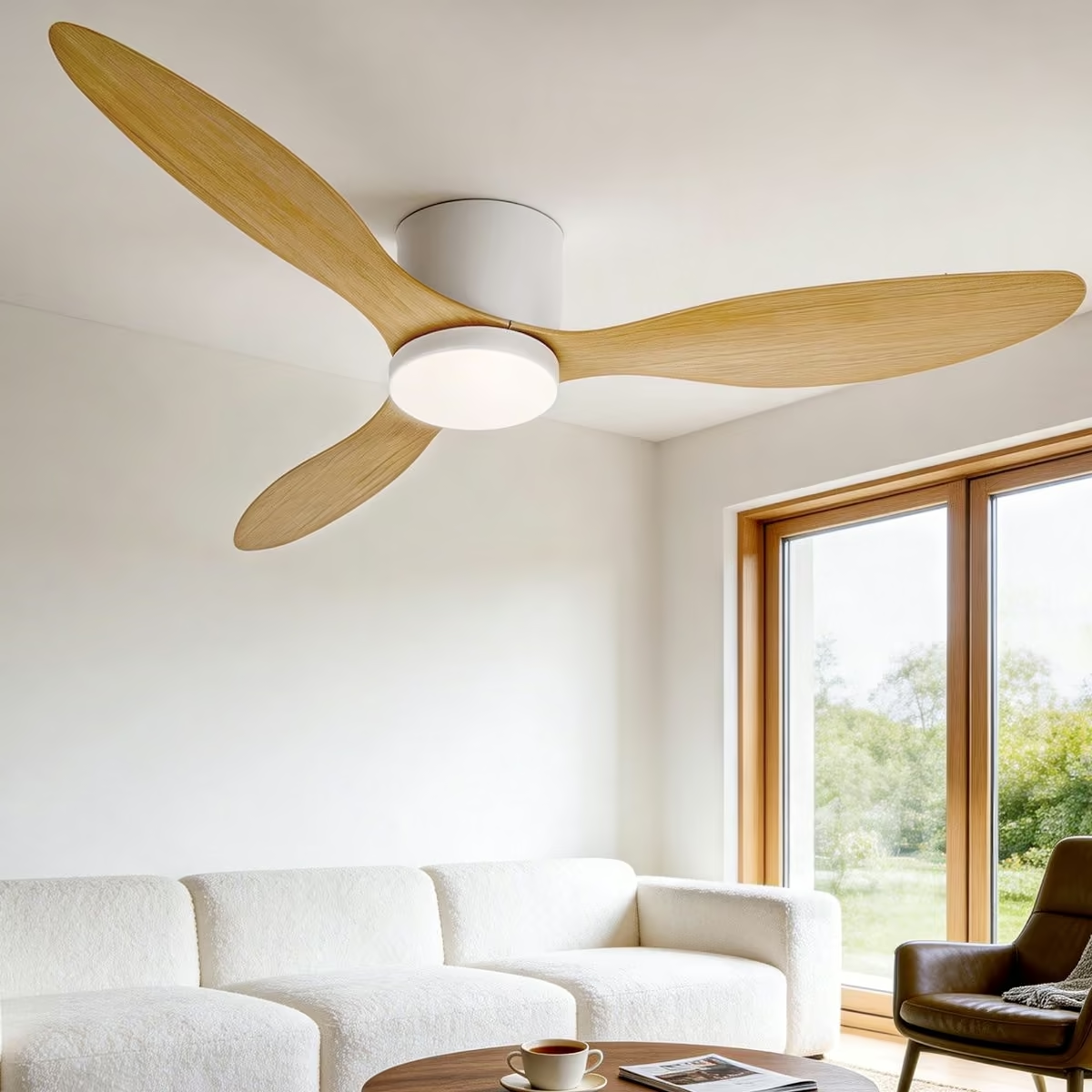
This Devanti ceiling fan pairs a 52-inch, three-blade design with a DC motor, which draws less power and runs quieter across its five speeds than the AC motors found in most budget ceiling fans.
A reverse-cycle setting lets it push cool air straight down in summer or draw warm air upward in winter to help a heat pump or heater work more evenly, and a built-in 18W LED light with three colour settings means it can double as the room’s main light fitting.
It’s rated for indoor use or an undercover outdoor space, with an 8-hour timer and remote control included, though as a hard-wired fixture it needs to go in through a licensed electrician rather than a wall socket.
Pros
- DC motor with 5 speeds runs quieter and more efficiently than a typical AC ceiling fan
- Reverse-cycle mode gives it a genuine use in both summer and winter
- Built-in 3-colour LED light doubles as the room’s main light fitting
Cons
- Must be hard-wired by a licensed electrician rather than simply plugged in
- Only a handful of units were left in stock at the time of writing
Key specs: Power: 35W. Motor: DC. Speeds: 5. Fan size: 52-inch, 3 blades. Suggested room size: 15-20 sqm. Timer: up to 8 hours.
3. Devanti Oscillating Tower Fan 93cm – Best Budget Tower Fan
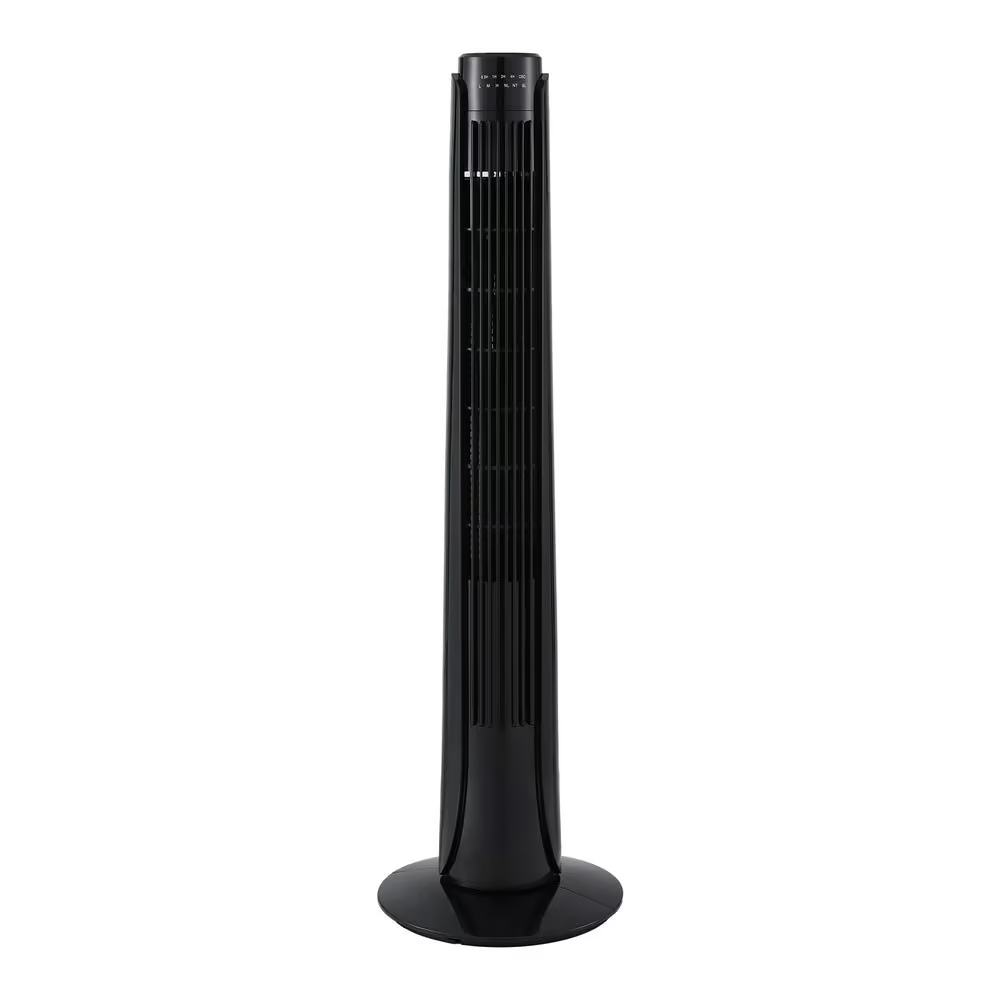
At 93cm tall, this Devanti tower fan takes up a slim footprint next to a bed or sofa while still moving a genuine amount of air from its 50W motor.
Three speeds and three wind modes, Normal, Natural and Sleep, are set from either the touch panel on the unit or the included remote, and 85 degrees of oscillation spreads the airflow wider than a fixed desk fan without needing to be repositioned.
A 7.5-hour timer and overheat protection round out a straightforward, no-fuss tower fan for a bedroom or small living space.
Pros
- Touch panel and remote cover every angle of use
- Normal, Natural and Sleep modes give more control over airflow pattern than a single-speed fan
- Slim 93cm footprint suits a bedroom or small living room
Cons
- 85° oscillation is narrower than the full sweep some pedestal fans offer
- As a standard bladed tower fan, it isn’t as safe around curious toddlers or pets as a bladeless design
Key specs: Power: 50W. Height: 93cm. Speeds: 3. Modes: 3 (Normal, Natural, Sleep). Oscillation: 85°. Timer: up to 7.5 hours.
4. Midea 7-Inch Table Circulation Fan – Best Compact Desk Fan
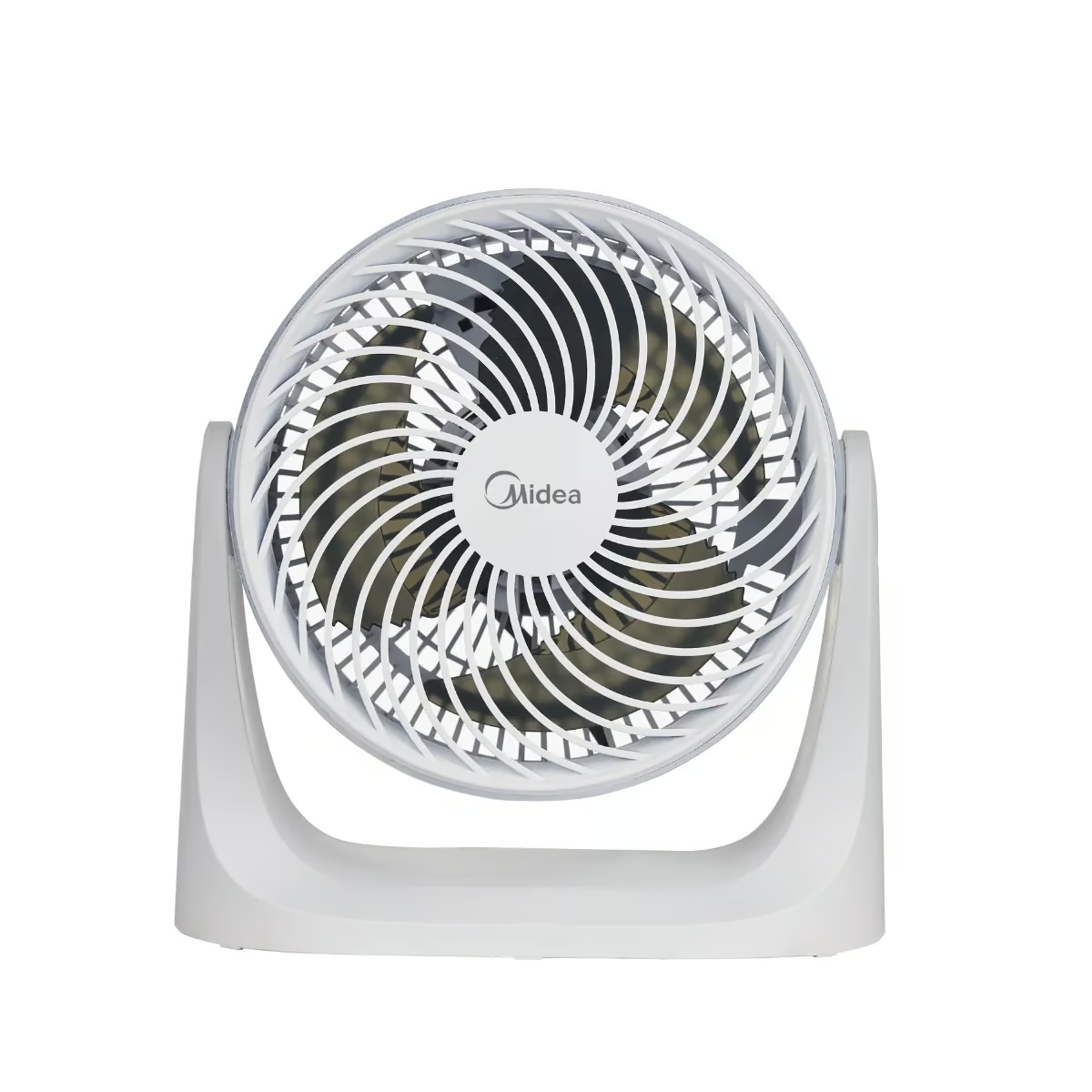
This Midea table fan is sized for a desk or bedside table rather than a whole room, with a 7-inch head that still manages a maximum air speed of around 240 metres per minute across three speeds.
The head tilts roughly 90 degrees and oscillates side to side, so airflow can be pointed exactly where it’s needed rather than straight ahead only, and everything is controlled with a simple knob at the base.
At under 1.5kg, it’s light enough to move between rooms or pack away when the weather cools down.
Pros
- Compact enough for a desk or bedside table without taking up much room
- Head tilts and oscillates to aim airflow exactly where it’s needed
- Simple knob control with no setup required
Cons
- No remote or timer, so speed has to be adjusted at the fan itself
- The smaller 7-inch head moves less air than a full-size desk or pedestal fan
Key specs: Power supply: 220-240V, 50Hz. Speeds: 3. Tilt: 90°±10°. Weight: 1.43kg.
5. USB Rechargeable Bladeless Portable Neck Fan – Best Portable and Personal Fan
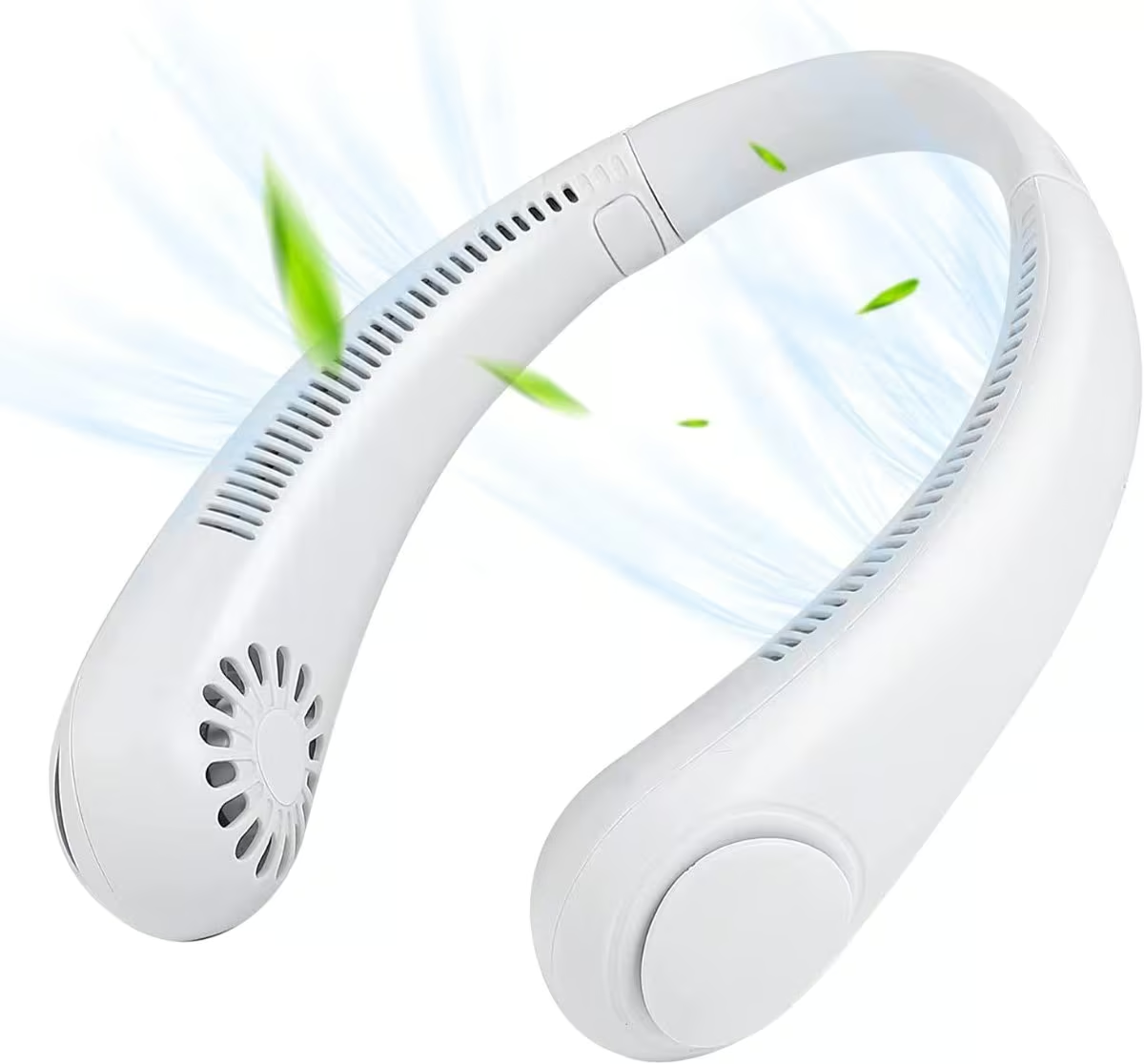
Worn around the neck, this bladeless fan pulls air in and pushes it out through 80 evenly spaced outlets for a steady 360-degree airflow rather than a single stream aimed at your face.
Three speeds cover everything from a gentle breeze for an air-conditioned office to a stronger setting for standing in the sun, and the fully enclosed, bladeless design means there’s nothing exposed to catch hair or little fingers.
A 1200mAh battery gives 3 to 5 hours of use per charge depending on speed, and the flexible, silicone-padded band folds flat enough to drop in a bag for the gym, a walk or a day at the cricket.
Pros
- Bladeless design is safe to wear around kids, pets and long hair
- Hands-free, wearable design suits walking, the gym, gardening or travel
- Up to 3 to 5 hours of cordless runtime on a single USB charge
Cons
- Airflow is aimed at one person rather than cooling a room
- Battery life drops noticeably on the highest of the three speeds
Key specs: Battery: 1200mAh, USB rechargeable. Runtime: 3-5 hours per charge. Speeds: 3. Weight: 250g.
6. Philips Smart Pedestal Fan 3000 – Best Pedestal Fan
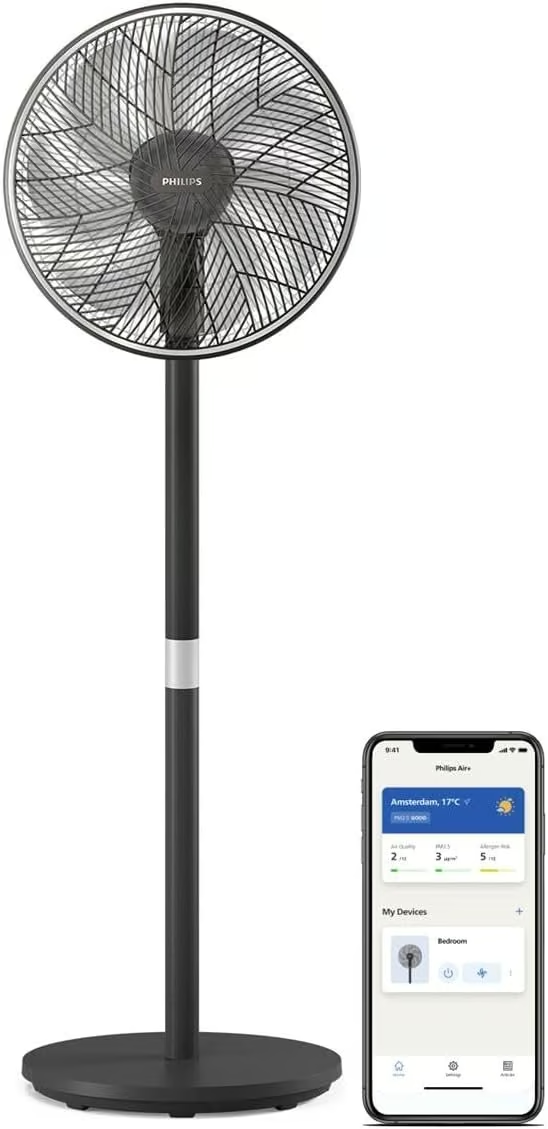
Philips built this pedestal fan around its SilentWings technology, which keeps operating noise down to as little as 19dB, quiet enough to leave running next to a bed overnight.
Three speeds plus Natural Breeze and Sleep modes are adjustable from the fan itself or through the Air+ app, which adds scheduling and remote control from a phone, and the head rotates automatically for even coverage across a room.
It also converts between a tabletop height and a full pedestal height, so one fan can work as either a desk fan or a floor-standing fan depending on where it’s needed.
Pros
- SilentWings technology keeps noise down to 19dB, quiet enough for overnight use
- Air+ app adds scheduling and remote control on top of the physical buttons
- Converts between tabletop and full pedestal height
Cons
- The app’s scheduling features need a home Wi-Fi connection to unlock
- Priced noticeably higher than a basic, button-only pedestal fan
Key specs: Noise level: as low as 19dB (SilentWings). Speeds: 3, plus Natural Breeze and Sleep modes. Control: on-device or Air+ app. Height: table-top or pedestal.
7. 12-Inch Wall-Mounted Oscillating Fan – Best Wall-Mounted Fan
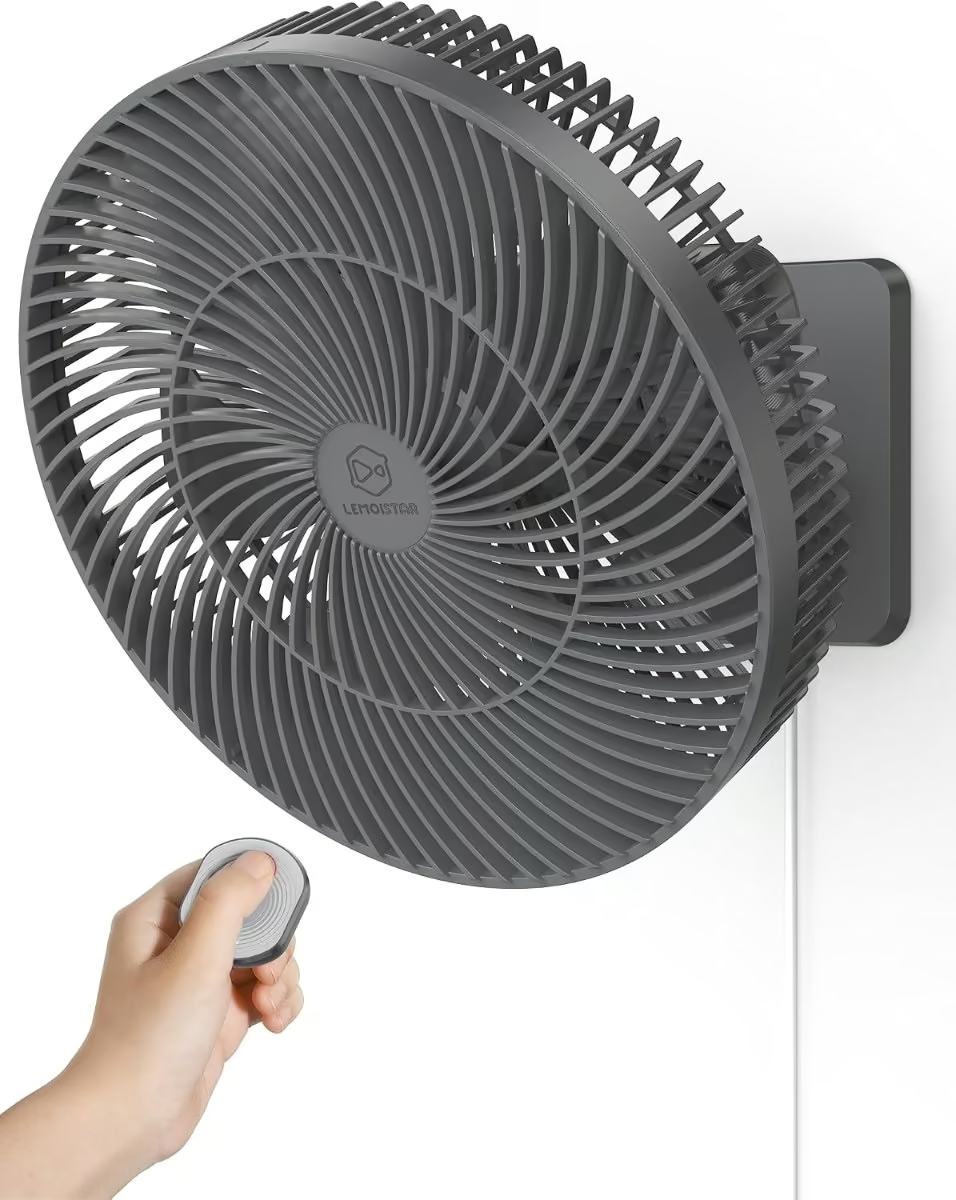
Mounted to a wall bracket rather than standing on the floor, this 12-inch fan is aimed at bathrooms, garages, campervans and other spaces where floor space is tight.
It self-oscillates through 90 degrees and can also be tilted manually a further 75 degrees up or 50 degrees down, so one fixed mounting point can still cover a wide area, and four speeds are set from a magnetic remote that clips straight onto the fan head so it’s less likely to go missing.
A variable timer running from 30 minutes up to 8 hours means it can be set and left rather than needing to be switched off manually.
Pros
- Wall mounting frees up floor space in a small bathroom, garage or campervan
- 90° automatic oscillation plus a further manual tilt covers a wide area from one fixed point
- Magnetic remote stores directly on the fan head so it’s harder to lose
Cons
- Needs a wall bracket fitted before use, so it isn’t as instant as a plug-in floor fan
- Corded design means it needs a nearby power point
Key specs: Blade size: 12-inch. Speeds: 4. Oscillation: 90° automatic, plus manual tilt. Timer: 0.5 to 8 hours. Cord length: 8.2ft (2.5m).
8. 20-Inch Bladeless Tower Fan – Best Bladeless Tower Fan
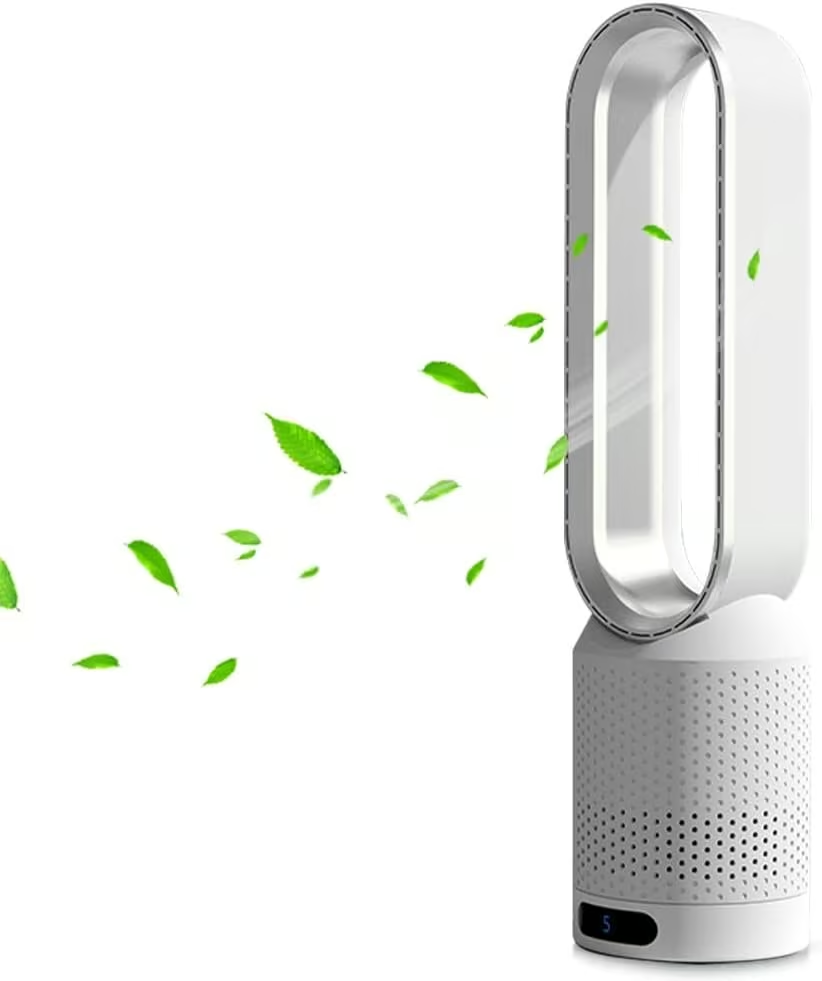
Instead of a spinning blade, this tower fan draws air through an internal centrifugal wind wheel and pushes it back out through the leafless housing, which means there’s no exposed blade for hands or hair to reach.
Eight speed settings give noticeably finer control over airflow than the usual 3-speed tower fan, adjusted from touch buttons on the unit, a remote with roughly 5 metres of range, or read straight off the built-in LED display.
At 90 degrees of oscillation, it spreads air across a bedroom or living room without needing to be repositioned.
Pros
- No exposed blade, so it’s safer around young children and pets than a standard tower fan
- 8 speed settings give finer control than the usual 3-speed tower fan
- LED display and remote make it easy to check and change settings from across the room
Cons
- A newer, lesser-known brand rather than an established fan maker
- Reviewers rate it more mixed than the better-known pedestal and misting picks in this guide
Key specs: Speeds: 8. Motor: Brushless DC. Oscillation: 90°. Control: touch panel plus remote.
9. 16-Inch High-Velocity Industrial Floor Fan – Best High-Velocity and Garage Fan
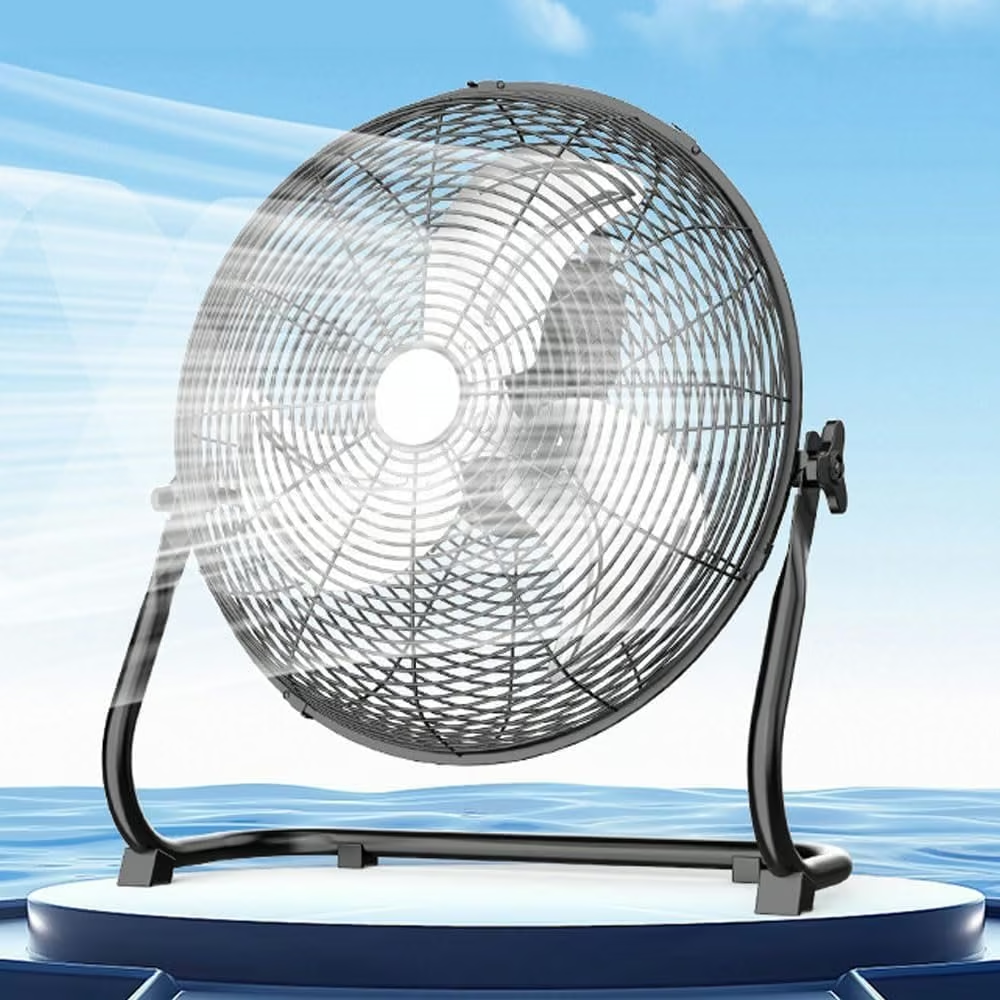
This is a different class of fan to the rest of this guide, built with a metal body, a pure copper motor and three aluminium blades for the kind of continuous daily use a garage, workshop or factory floor puts a fan through.
Four speeds and a 130-degree pivoting head direct a genuinely strong airflow exactly where it’s needed, whether that’s drying out a wet garage floor or keeping a workbench cool through a hot afternoon.
It’s noticeably louder at full speed than the household-focused fans in this guide, which is the trade-off for the extra airflow it produces.
Pros
- Metal body and copper motor are built for continuous workshop or garage use, not just occasional home use
- 130° pivoting head directs airflow exactly where it’s needed
- Moves noticeably more air than a standard household pedestal fan
Cons
- Sized and styled for a garage or workshop rather than a living room
- Louder at full speed than any of the household fans in this guide
Key specs: Motor: pure copper. Blades: 3, aluminium. Speeds: 4. Tilt: 130° adjustable.
10. Shark FlexBreeze HydroGo Misting Portable Fan – Best Outdoor Misting Fan
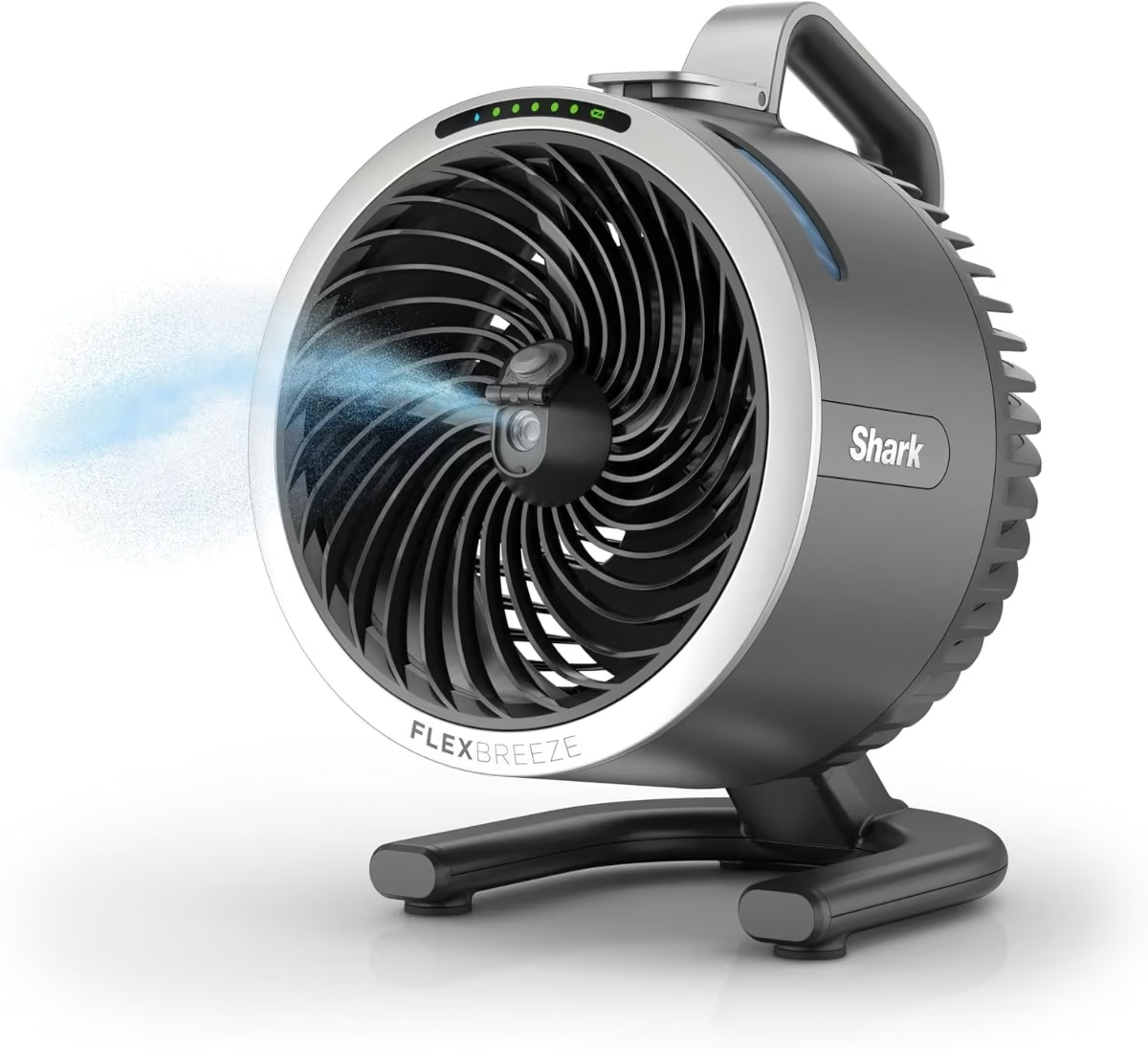
The Shark FlexBreeze HydroGo adds a fine, integrated water mist to its airflow, which Shark’s own testing found can drop the felt temperature by up to 3°C at a distance of one metre on its highest speed.
At under 2kg with a refillable built-in tank, it’s genuinely portable between the deck, the beach and the sideline of a Saturday sports game, and it runs cordless for up to 12 hours on its lowest setting or plugs in for unlimited runtime.
Multiple speed settings plus a Breeze Boost mode give it a wider range than a standard misting fan, though the misting side means it needs a water refill and isn’t meant for use near delicate furniture or electronics.
Pros
- Misting function adds extra outdoor cooling that a dry fan alone can’t match
- Runs cordless for up to 12 hours, so it isn’t tied to a power point outdoors
- Genuinely portable at under 2kg with an easy-refill integrated tank
Cons
- The misting side needs a water refill and isn’t for use near delicate furniture or electronics
- The most expensive fan in this guide
Key specs: Range: up to 20m. Runtime: up to 12 hours on battery. Weight: under 2kg. Misting: integrated, refillable tank.
How to Choose a Cooling Fan
Room size and fan type. A desk or personal fan cools one person, a tower or pedestal fan suits a single bedroom or living room, and a ceiling fan is the only type that circulates air across an entire room without taking up floor space.
Noise. If the fan is going to run overnight, look for a specific decibel rating or a dedicated sleep mode rather than assuming all fans are equally quiet at low speed.
Floor space and mounting. A wall-mounted fan or ceiling fan is worth considering in a small bathroom, garage or bedroom where a pedestal or tower fan’s footprint would get in the way.
Indoor vs outdoor use. Standard fans are built for indoor use only; if you want airflow on a deck or patio, a misting fan adds extra cooling that a dry indoor fan can’t provide outdoors.
Controls. A remote, timer or app control matters more for a ceiling fan or pedestal fan left running unattended than for a desk fan you’re sitting right next to.
The same room that needs air moving through February will want the best panel heater by the middle of June. As above, a fan changes how the heat feels rather than the temperature itself, and only a portable air conditioner actually lowers it. Summer gear tends to get bought in one go, and portable camp water heaters cover the other half of a January weekend away.
Verdict
For most New Zealand homes, a pedestal or tower fan is the easiest starting point: it needs no installation, moves between rooms, and covers a single bedroom or living area comfortably. A ceiling fan is worth the electrician’s visit if you want whole-room airflow without any floor footprint at all, and a wall-mounted fan is the better fit for a small bathroom, garage or campervan. For anyone spending time outdoors in summer, a misting fan adds a level of cooling that a standard fan can’t match, while a compact desk or neck fan is best kept as a second, personal fan rather than a room’s only source of airflow.
Frequently Asked Questions
Does a fan actually cool down a room?
A fan doesn’t lower the air temperature; it moves air across your skin to speed up evaporation and create a wind-chill effect, which makes a room feel cooler even though the thermometer reading doesn’t change. Pointing it toward an open window or door on the exhaust side helps it pull in outside air instead of just recirculating warm indoor air.
What size fan do I need for my room?
As a rough guide, a 52-inch ceiling fan suits a room of around 15 to 20 square metres, a full-size pedestal or tower fan suits a single bedroom or living room, and a desk or personal fan is designed to cool one person rather than a whole room.
Is a bladeless fan actually safer than a normal fan?
Yes. Bladeless tower fans and neck fans draw air through an enclosed internal mechanism rather than spinning an exposed blade, so there’s nothing for small fingers, pets or hair to get caught in, even though the airflow itself feels much the same as a standard fan.
Can I leave a fan running overnight or all day?
Most household fans are designed for continuous use, and many include an automatic timer, commonly ranging from half an hour up to 8 hours, if you’d rather it switch off on its own. Check the individual product’s timer range if that matters to you.
How do I clean a cooling fan?
Pedestal, tower and desk fans with a removable grille can usually be wiped down or detached for a proper clean, as noted on the individual product’s features. Ceiling fan blades should be wiped with a soft, dry cloth while the power is off, since built-up dust affects both airflow and noise over time.
Does a fan use much power to run?
Household cooling fans are among the lowest-power appliances in the home, typically drawing well under 250 watts even at their highest speed, which is a fraction of what a portable air conditioner or heat pump uses to run.
