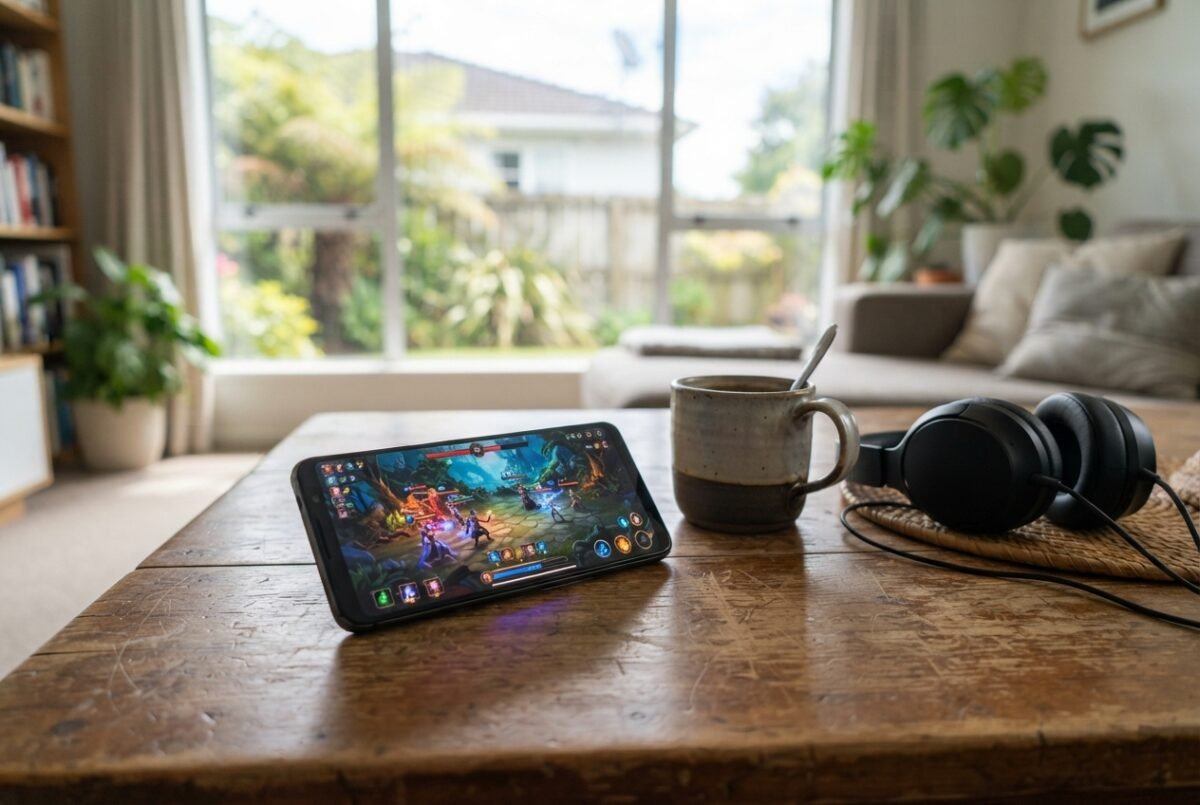
A gaming phone is a smartphone built to hold high frame rates for long sessions, using a fast chip, a high refresh rate screen and a cooling design that limits throttling.
The phones in this guide fall into three groups. Dedicated gaming phones add shoulder triggers and a fan. Flagship phones use the fastest chips without gaming-specific hardware. Mid-range phones suit lighter games and run cool.
Peak benchmark scores do not tell the whole story. Independent testing found the fan on the REDMAGIC 11 Air made no difference in stress tests, while some of the fastest flagship chips lose roughly half their performance under sustained load and cheaper chips stay steady.
This guide compares seven gaming phones available to New Zealand buyers, using manufacturer specifications and independent lab results.
| Product | Best For |
|---|---|
| REDMAGIC 11 Air | Best Dedicated Gaming Phone |
| realme GT 8 Pro | Best Flagship Chip for Raw Performance |
| Xiaomi 17T Pro | Best for Battery Life and Display |
| Xiaomi 17T | Best Upper-Midrange Pick for Cool-Running Play |
| Xiaomi Redmi Note 15 Pro+ 5G | Best Mid-Range Pick for Casual Gaming |
| Xiaomi Redmi Note 15 5G | Best Cool-Running Budget Phone for Light Games |
| Nothing Phone (4a) | Best Stylish Pick for Light Gaming |
1. REDMAGIC 11 Air – Best Dedicated Gaming Phone
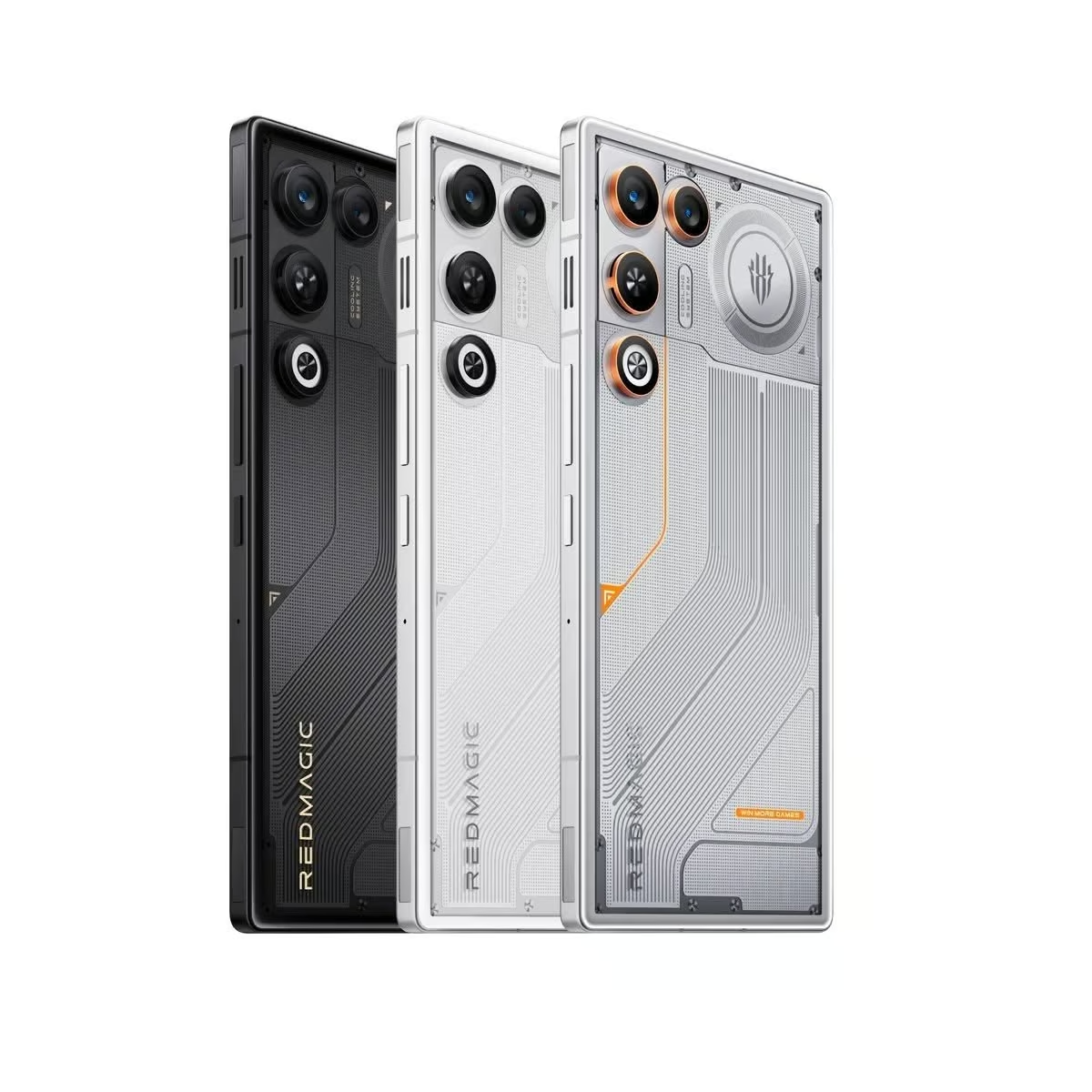
The REDMAGIC 11 Air is a purpose-built gaming phone that stays relatively slim at 8.0 mm and 207 g. It uses a notch-less 6.85 inch 144Hz AMOLED panel with an under-display selfie camera, so nothing interrupts the picture during play. Dedicated 520Hz shoulder trigger touchpads sit on the top edge, and the official spec sheet lists a peak touch sampling rate of 2,500Hz.
The phone runs a Snapdragon 8 Elite with 12GB of RAM and 256GB of UFS 4.1 storage, plus a built-in fan, vapour chamber and graphene layers. GSMArena measured an Active Use Score of 17:20h from the 7,000 mAh battery, and the phone supports 80W wired charging and bypass charging for gaming while plugged in. REDMAGIC’s Game Space overlay adds controller mapping and a PC screen-casting tool.
The main trade-off is that the fan does less than the marketing suggests. GSMArena ran its CPU and GPU stress tests with and without the fan and saw no difference, and CPU performance throttled to about 50% in under five minutes. The camera is basic compared with a regular flagship, and there is no 3.5mm headphone jack.
Pros
- Dedicated 520Hz shoulder trigger touchpads and a notch-less 144Hz AMOLED screen
- Snapdragon 8 Elite with 7,000 mAh battery and 80W charging with bypass charging
- Slim and light for a gaming phone at 8.0 mm and 207 g
- Game Space overlay with controller mapping and PC screen casting
Cons
- Independent stress tests found the cooling fan made no measurable difference
- CPU throttled to about 50% within five minutes in a sustained test
- Camera quality is not a strength
- No 3.5mm headphone jack
Key specs: Chipset: Snapdragon 8 Elite (3nm) | RAM/Storage: 12GB + 256GB UFS 4.1 | Display: 6.85 inch AMOLED, 144Hz, 1216 x 2688 | Touch: up to 2,500Hz peak, 520Hz shoulder triggers | Battery: 7,000 mAh, 80W wired | Cooling: active fan (24,000 RPM), vapour chamber, graphene | Headphone jack: no | Weight: 207 g
2. realme GT 8 Pro – Best Flagship Chip for Raw Performance
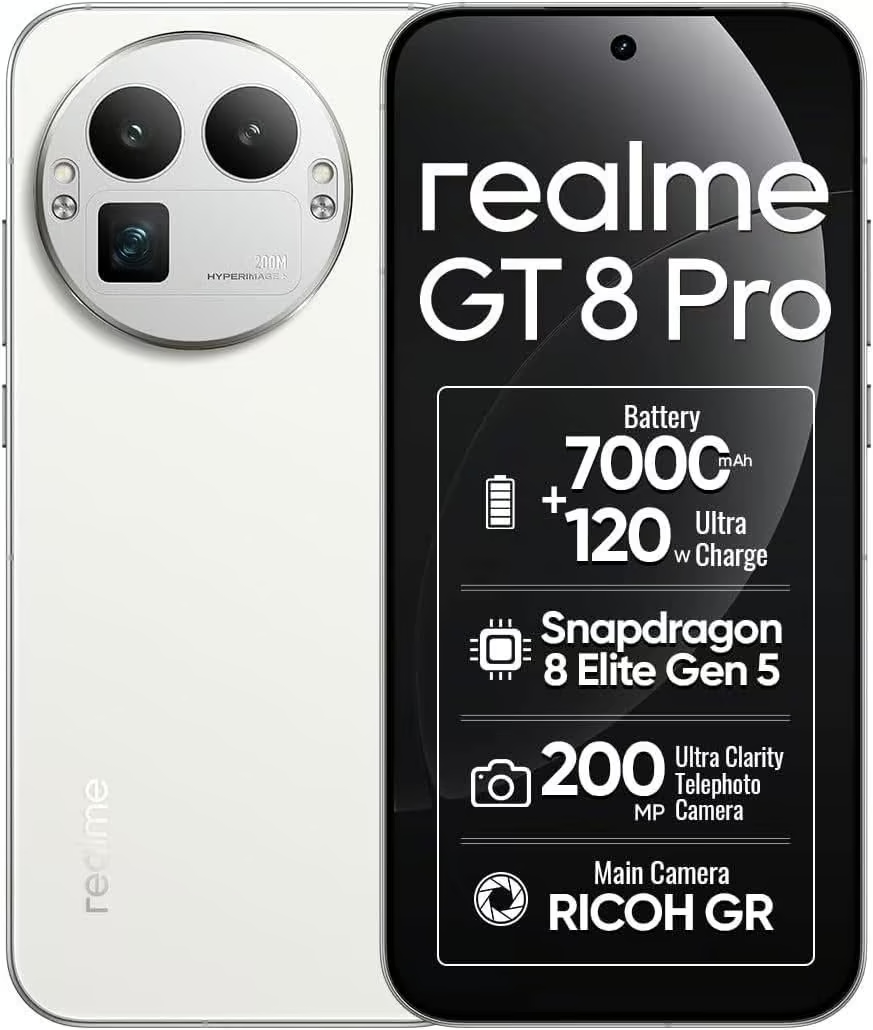
The realme GT 8 Pro is a conventional flagship rather than a gaming phone, with a 6.79 inch 144Hz LTPO AMOLED display at 1440 x 3136 and a 7,000 mAh battery. It weighs 214 g or 218 g depending on the back finish, is rated IP68 and IP69, and has a swappable camera ring that gives it a distinctive look. There is no headphone jack and no shoulder triggers.
The Snapdragon 8 Elite Gen 5 delivers some of the highest benchmark scores GSMArena has recorded, including AnTuTu v10 2,955,505 and Geekbench 6 multi-core 10,694. Battery life is strong, with an Active Use Score of 20:24h and 120W wired charging (15 minutes to 50% per GSMArena’s spec listing). The 144Hz mode only applied in some games in GSMArena’s testing, and Call of Duty: Mobile topped out at 90fps with all performance modes enabled.
Heat is the concern. GSMArena noted notably worse stability in its 20 minute GPU stress test and measured a surface temperature of 54 degrees Celsius, while Notebookcheck observed up to 70% throttling in 3DMark stress tests. Notebookcheck then found that Genshin Impact at maximum detail still averaged 59.2fps after heavy load, against 59.4fps when cool, so real games held up better than the synthetic tests suggest.
Pros
- Snapdragon 8 Elite Gen 5 with top-tier benchmark results
- 7,000 mAh battery with an Active Use Score of 20:24h and 120W charging
- 144Hz LTPO display with high resolution and very high peak brightness
- Genshin Impact at maximum settings held about 59fps after a heat soak test
Cons
- Heavy GPU throttling in stress tests and a 54 degree Celsius surface reading
- 144Hz only works in selected games
- No shoulder triggers, no active cooling and no headphone jack
- Realme’s software is less polished than some rivals
Key specs: Chipset: Snapdragon 8 Elite Gen 5 (3nm) | RAM/Storage: 12GB + 256GB UFS 4.1 | Display: 6.79 inch LTPO AMOLED, 144Hz, 1440 x 3136 | Battery: 7,000 mAh, 120W wired, 50W wireless | Cooling: passive (no fan) | Headphone jack: no | Weight: 214 g or 218 g
3. Xiaomi 17T Pro – Best for Battery Life and Display
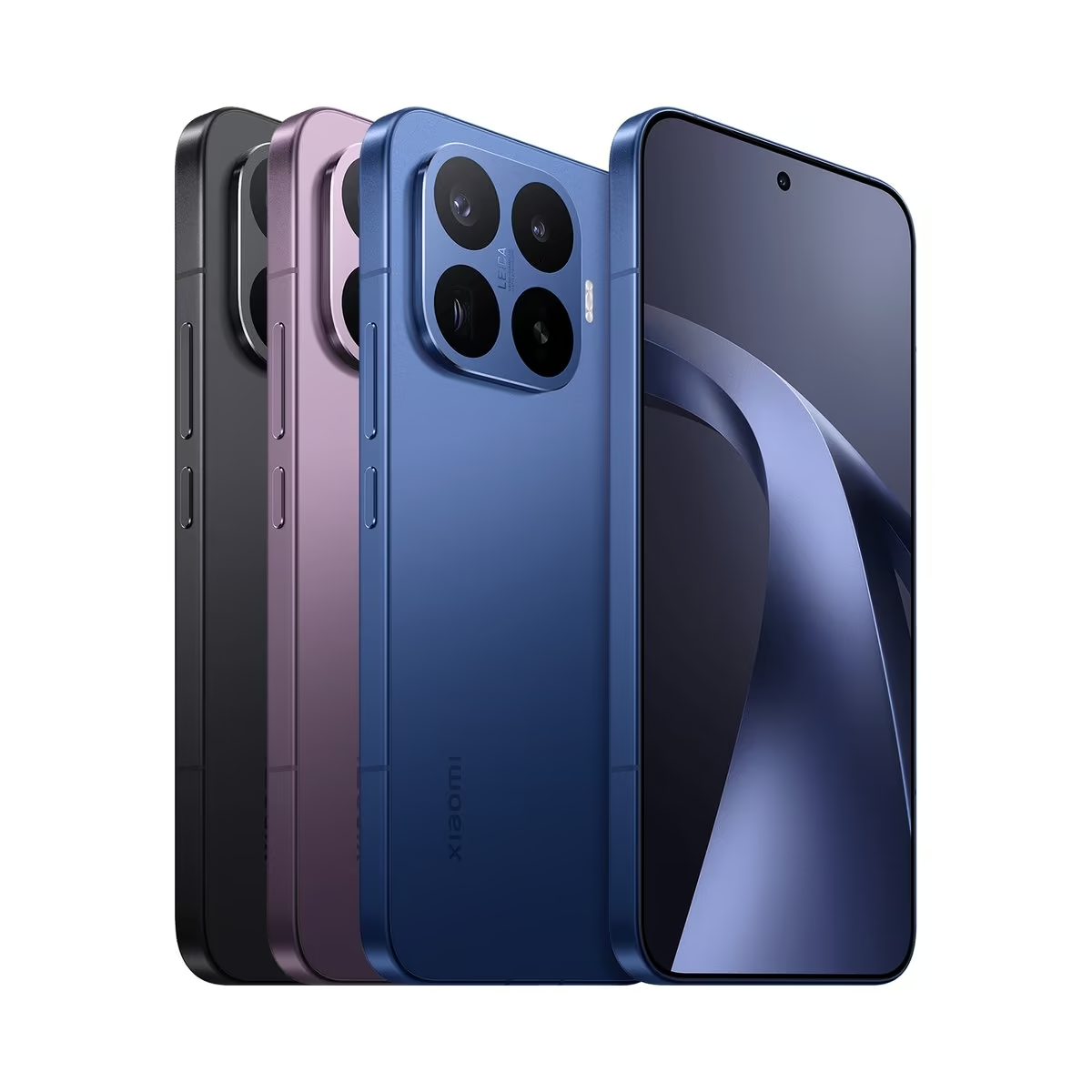
The Xiaomi 17T Pro pairs a 6.83 inch LTPO AMOLED panel (1280 x 2772, 144Hz) with a 7,000 mAh battery in a 219 g body. GSMArena measured peak brightness of about 3,498 nits in auto mode and noted the default setting drops to 60Hz when idle or watching video. A 5x telephoto camera sits alongside a Leica-tuned main camera, and the phone also supports 50W wireless charging.
The MediaTek Dimensity 9500 posted AnTuTu v10 2,795,030, Geekbench 6 multi-core 9,766 and 3DMark Wild Life Extreme 6,939 in GSMArena’s lab. That trails the Snapdragon 8 Elite Gen 5 phones, but battery endurance is excellent with an Active Use Score of 21:41h, and charging from 0% to full took 44 minutes.
Sustained load is the weak spot. GSMArena described the Dimensity 9500 as hard to keep cool and saw CPU performance fall within a few minutes and settle at about 50% of its theoretical level. Game Turbo is included, but there are no shoulder triggers, no fan and no headphone jack.
Pros
- Excellent endurance with an Active Use Score of 21:41h from a 7,000 mAh battery
- Bright 144Hz LTPO AMOLED display
- Fast charging (0 to 100% in 44 minutes) plus 50W wireless charging
- Strong all-round hardware including a 5x telephoto camera
Cons
- CPU settles at about 50% of theoretical performance under sustained load
- Slower than Snapdragon 8 Elite Gen 5 phones in benchmarks
- Default refresh mode drops to 60Hz and was not seen at 144Hz in testing
- No headphone jack, no shoulder triggers and no active cooling
Key specs: Chipset: MediaTek Dimensity 9500 (3nm) | RAM/Storage: 12GB + 256GB UFS 4.1 | Display: 6.83 inch LTPO AMOLED, 144Hz, 1280 x 2772 | Battery: 7,000 mAh, 100W wired, 50W wireless | Cooling: passive (no fan) | Headphone jack: no | Weight: 219 g
4. Xiaomi 17T – Best Upper-Midrange Pick for Cool-Running Play
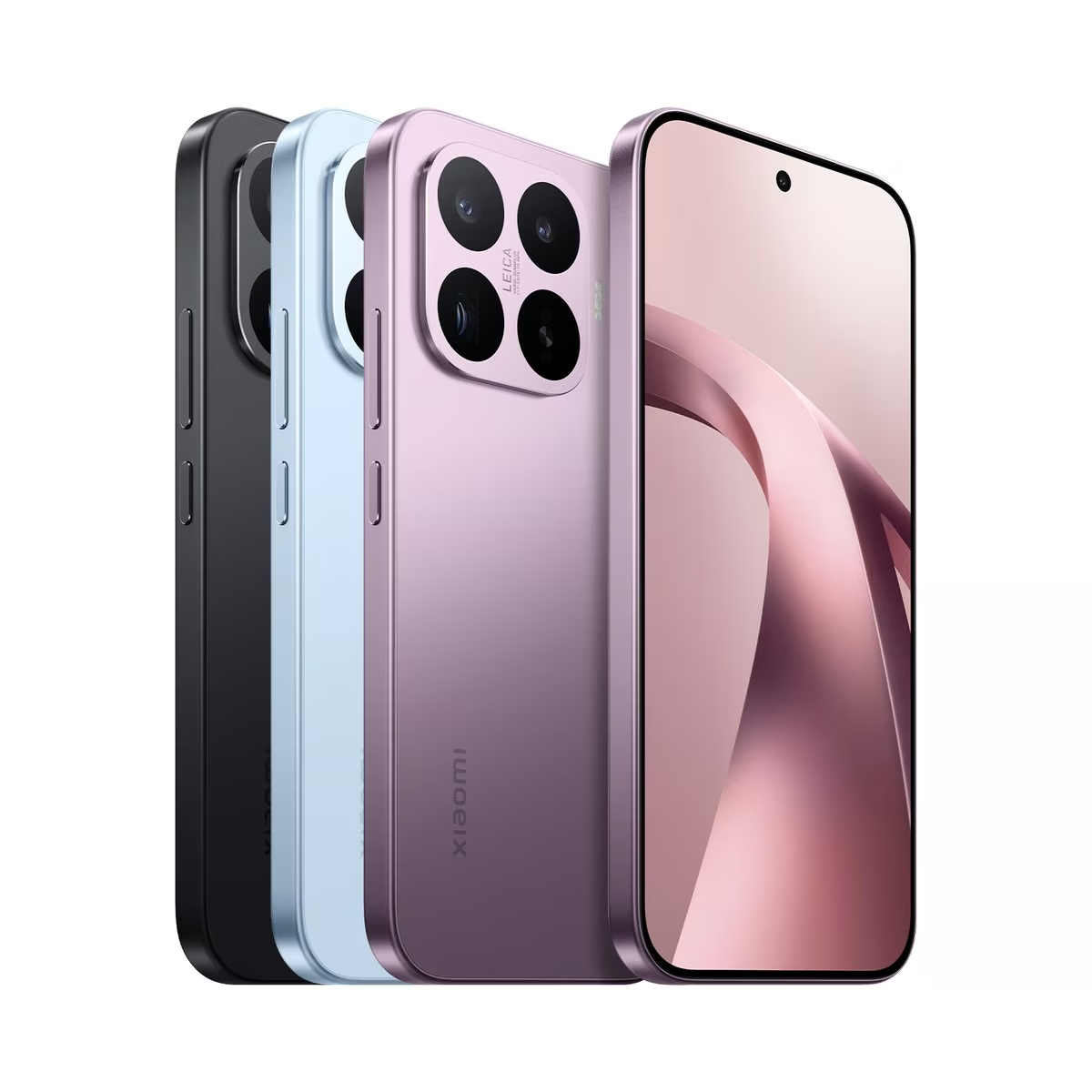
The Xiaomi 17T is a smaller and lighter alternative at 6.59 inches and 200 g, with a 120Hz AMOLED display (1268 x 2756) that peaks around 3,500 nits. The global model carries a 6,500 mAh battery with 67W wired charging and no wireless charging. A 5x telephoto camera and HyperOS 3 with five years of OS updates round out the package.
The MediaTek Dimensity 8500 Ultra on a 4nm process is described by GSMArena as capable but not flagship grade. Its listed benchmarks are AnTuTu v10 1,640,834 and Geekbench 6 6,607, well below the Dimensity 9500 in the Pro. The review notes it hardly throttles and holds most of its performance under torture testing, and battery life was excellent with an Active Use Score above 17 hours.
The review also noted odd 3DMark GPU results that came in lower than the older Xiaomi 15T despite an extra GPU core, with no explanation found. Refresh rate handling is not perfect, although a per-app setting can force 120Hz. The phone has no shoulder triggers, no fan and no headphone jack.
Pros
- Barely throttles and keeps most of its performance under sustained load
- Active Use Score above 17 hours from the 6,500 mAh battery
- Compact, light 200 g body with a bright 120Hz AMOLED screen
- Per-app refresh rate control for forcing 120Hz in supported games
Cons
- Not a flagship-class GPU; 3DMark results were lower than expected
- No wireless charging and 67W wired charging only
- Refresh rate switching is not perfect
- No headphone jack, no shoulder triggers and no active cooling
Key specs: Chipset: MediaTek Dimensity 8500 Ultra (4nm) | RAM/Storage: 12GB + 256GB UFS 4.1 | Display: 6.59 inch AMOLED, 120Hz, 1268 x 2756 | Battery: 6,500 mAh (global), 67W wired | Cooling: passive (no fan) | Headphone jack: no | Weight: 200 g
5. Xiaomi Redmi Note 15 Pro+ 5G – Best Mid-Range Pick for Casual Gaming
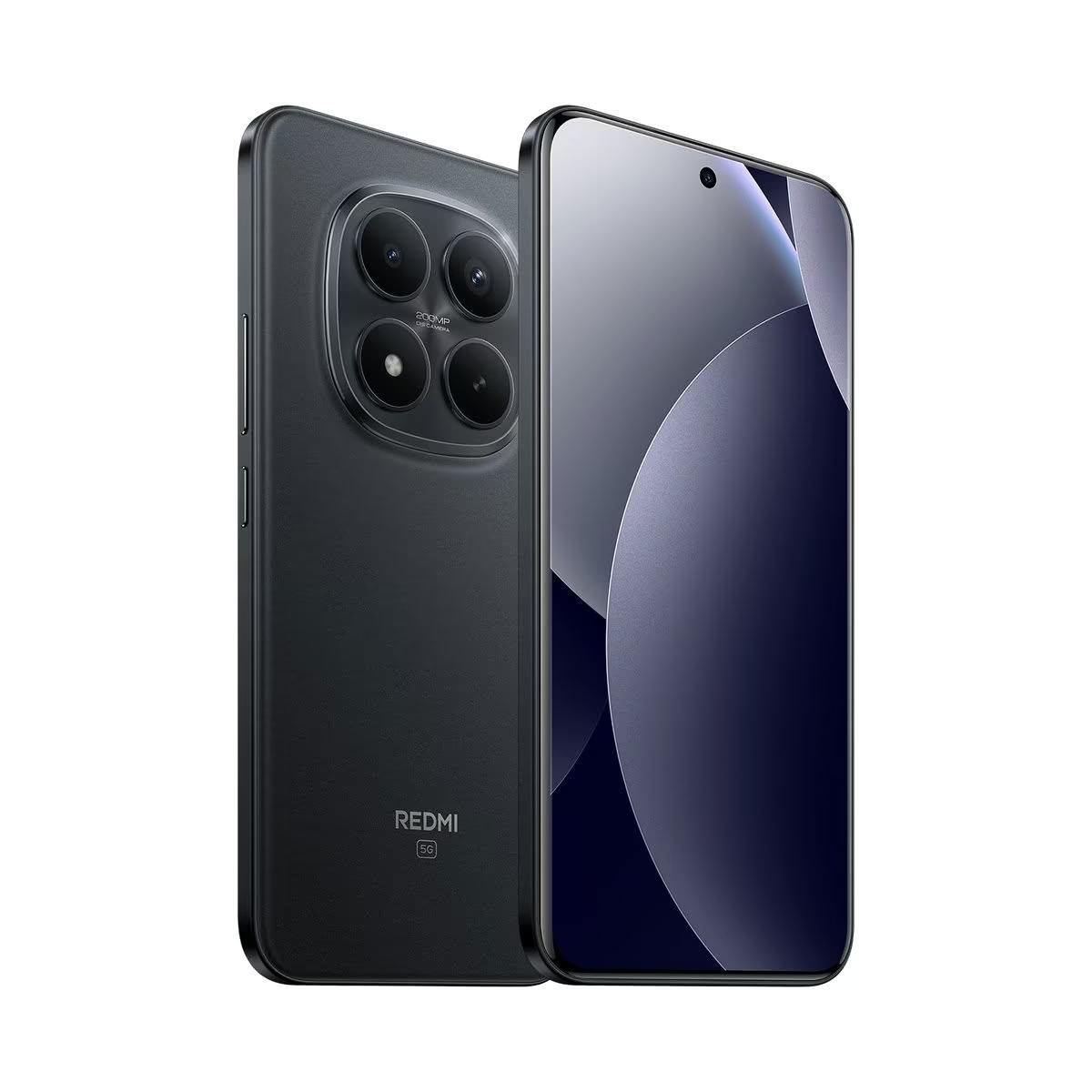
The Redmi Note 15 Pro+ 5G has a large 6.83 inch 120Hz AMOLED display (1280 x 2772), a 6,500 mAh battery and 100W wired charging, with a quoted 100% in 40 minutes. It weighs 207 g and is rated IP68 and IP69K. The AU sold version is the global model with a 200MP main camera and 256GB of storage.
The Snapdragon 7s Gen 4 is a mid-range chip. GSMArena lists AnTuTu v10 817,755, Geekbench 6 3,060 and 3DMark Wild Life Extreme 1,111, and MySmartPrice recorded 99.40% stability in the same 3DMark test and 59.6fps in BGMI at smooth graphics. TuttoAndroid reported PUBG Mobile at 60fps for about two hours without heavy throttling, but Genshin Impact on high settings dropped to about 45fps after 30 minutes.
PhoneArena estimated about 7 hours 58 minutes of gaming battery life against an average of 9 hours 59 minutes for comparable phones, so gaming runtime is below average despite the large battery. There are no shoulder triggers or fan, and the phone is best suited to lighter titles and medium settings.
Pros
- Stable performance with 99.40% 3DMark stability in one lab test
- Large 6.83 inch 120Hz AMOLED screen
- 100W wired charging from a 6,500 mAh battery
- Durable IP68/IP69K body
Cons
- Mid-range GPU struggles with demanding games at high settings
- Below-average gaming battery estimate in one review
- No shoulder triggers, fan or headphone jack
- Fast charging needs Xiaomi’s own charger, which was not in the box in one review
Key specs: Chipset: Snapdragon 7s Gen 4 (4nm) | RAM/Storage: 8GB or 12GB + 256GB | Display: 6.83 inch AMOLED, 120Hz, 1280 x 2772 | Battery: 6,500 mAh, 100W wired | Cooling: passive (no fan) | Headphone jack: no | Weight: 207 g
6. Xiaomi Redmi Note 15 5G – Best Cool-Running Budget Phone for Light Games
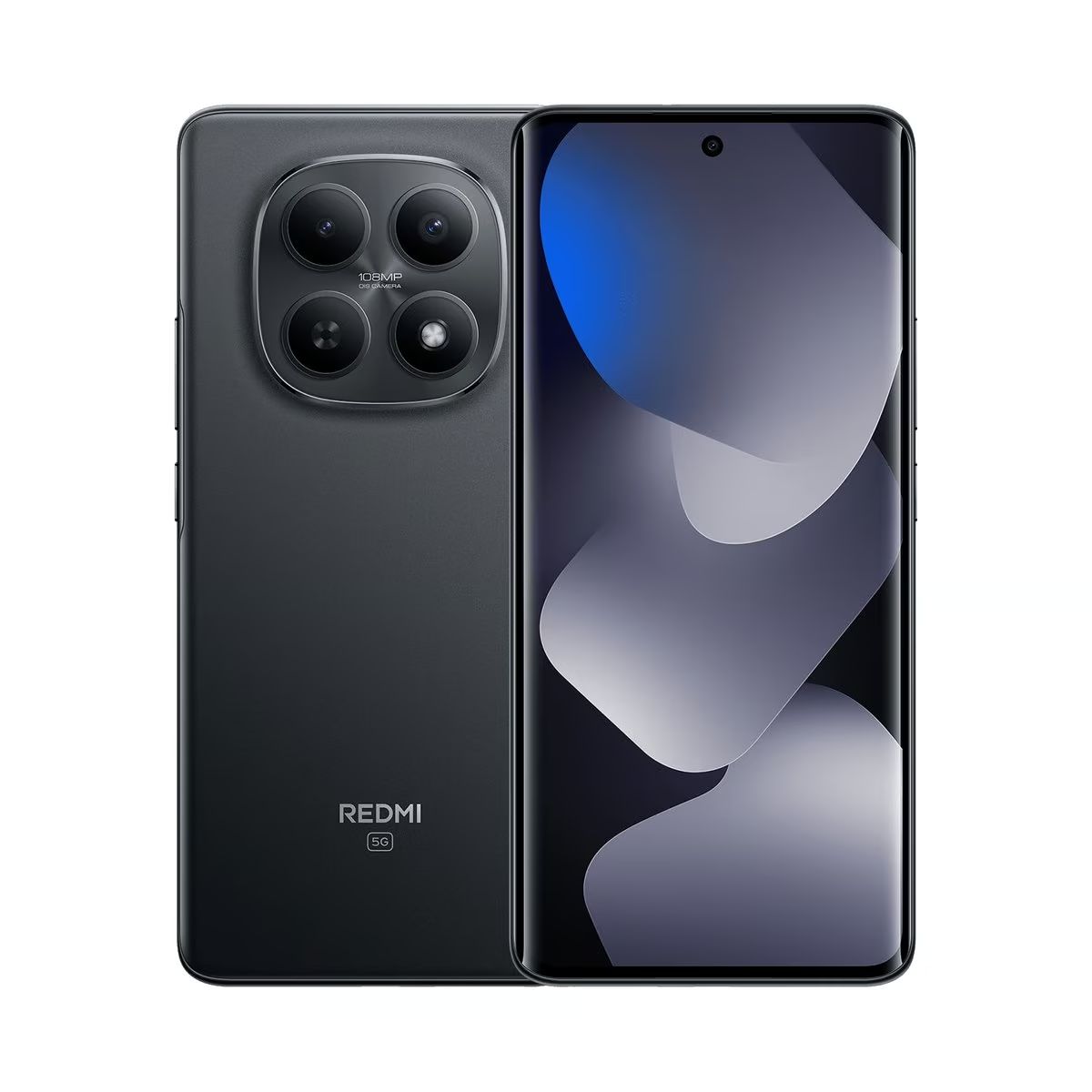
The Redmi Note 15 5G is the lightest and slimmest phone here at 178 g and 7.4 mm, with a 6.77 inch 120Hz AMOLED display (1080 x 2392) that peaks at 3,200 nits. It uses a 5,520 mAh battery with 45W wired charging and is rated IP66. The global listing offers up to 12GB of RAM and 512GB of storage, with 256GB being the relevant configuration for this review.
The Snapdragon 6 Gen 3 is an entry-level chip, with GSMArena listing AnTuTu v10 637,266, Geekbench 6 2,958 and 3DMark Wild Life Extreme 861. GSMArena found thermal throttling to be practically not a thing even under torture testing, and battery endurance scored over 14 hours of Active Use. The review also notes the phone did rather poorly in the battery gaming test and that gaming expectations should be tempered.
This is a phone for casual and older titles rather than demanding 3D games. It has no shoulder triggers, no fan and no headphone jack, and charging at 45W is only mid-pack.
Pros
- Practically no thermal throttling under stress testing
- Light 178 g body with a bright 120Hz AMOLED screen
- Over 14 hours Active Use Score from a 5,520 mAh battery
- IP66 rating and strong value for casual players
Cons
- Modest GPU suited to casual or older games
- Gaming battery test result was rather poor
- 45W charging is only mid-pack
- No shoulder triggers, fan or headphone jack
Key specs: Chipset: Snapdragon 6 Gen 3 (4nm) | RAM/Storage: 8GB + 256GB | Display: 6.77 inch AMOLED, 120Hz, 1080 x 2392 | Battery: 5,520 mAh, 45W wired | Cooling: passive (no fan) | Headphone jack: no | Weight: 178 g
7. Nothing Phone (4a) – Best Stylish Pick for Light Gaming
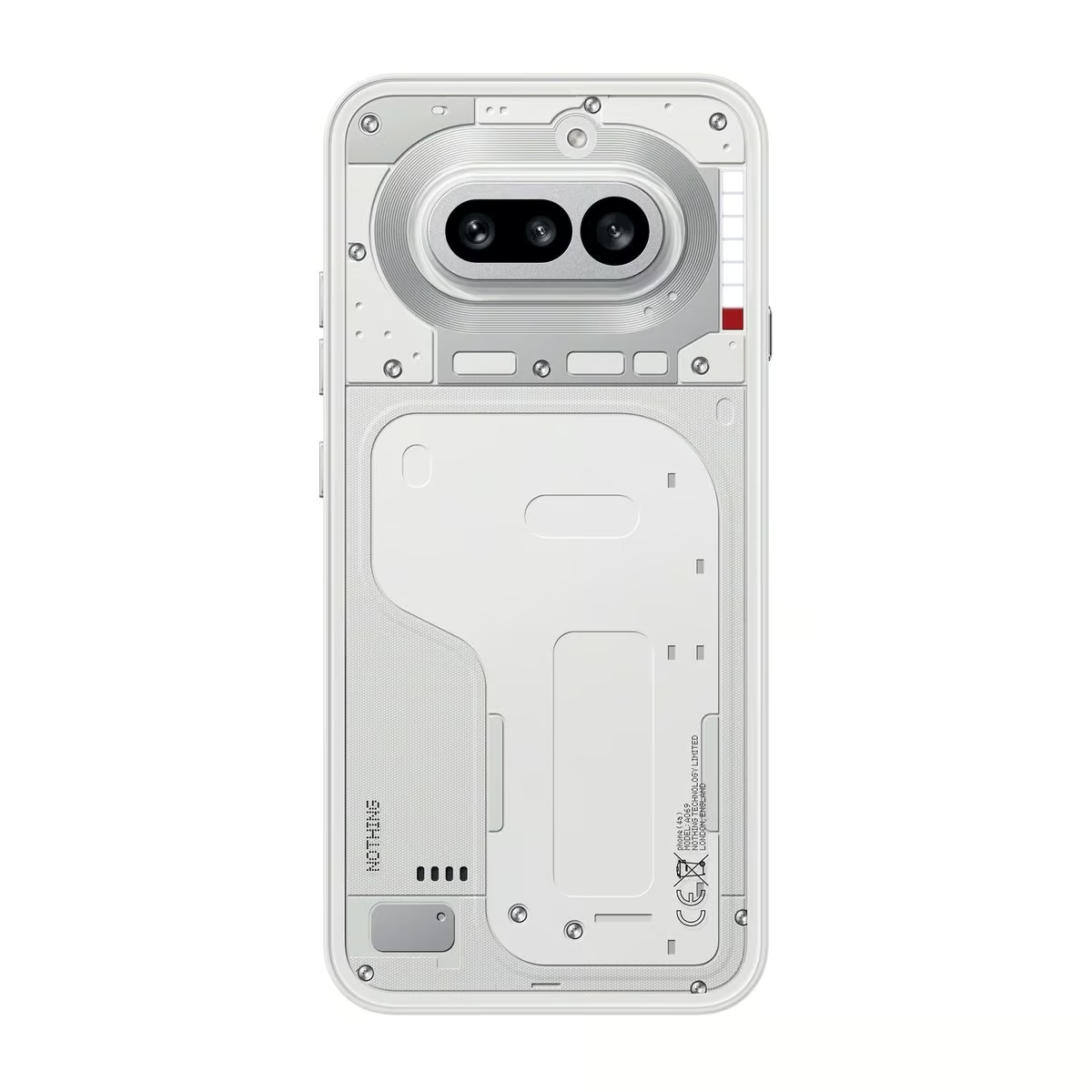
The Nothing Phone (4a) has a 6.78 inch 120Hz AMOLED display (1224 x 2720) with up to 4,500 nits peak brightness and weighs 205 g. It is rated IP64 and its signature Glyph Bar is a six-segment LED strip at the back. The battery is 5,080 mAh with 50W wired charging, and the phone has no wireless charging.
The Snapdragon 7s Gen 4 with 8GB of RAM and UFS 3.1 storage scores AnTuTu v10 863,305, Geekbench 6 1,279 single-core and 3,374 multi-core, and 3DMark Wild Life Extreme 1,128. GSMArena says the phone barely thermal-throttles at all and never gets more than lukewarm. Refresh rate behaviour is a limitation, since high refresh gaming failed in all of GSMArena’s usual titles, although Battlegrounds Mobile India and Call of Duty: Mobile did reach 120Hz.
The 4a also did not fare as well as the Phone (3a) in GSMArena’s gaming battery test, and video streaming endurance was almost 22 hours. It is best treated as a cool, well-built phone for casual games and everyday use, with no shoulder triggers, fan or headphone jack.
Pros
- Barely throttles and stays only lukewarm under load
- Bright 120Hz AMOLED display with a distinctive design
- Almost 22 hours of video streaming endurance
- Clean software with long update support
Cons
- Mid-range GPU limits demanding games
- High refresh rate gaming failed in most of GSMArena’s test titles
- Gaming battery test result was weaker than the previous model
- No wireless charging, shoulder triggers, fan or headphone jack
Key specs: Chipset: Snapdragon 7s Gen 4 (4nm) | RAM/Storage: 8GB + 128GB UFS 3.1 | Display: 6.78 inch AMOLED, 120Hz, 1224 x 2720 | Battery: 5,080 mAh, 50W wired | Cooling: passive (no fan) | Headphone jack: no (not listed) | Weight: 205 g
How to Choose a Gaming Phone
Start with the chip, because it sets the ceiling for frame rates. Snapdragon 8 Elite and 8 Elite Gen 5 phones lead in benchmarks, the Dimensity 9500 is a step behind, and mid-range chips such as the Snapdragon 7s Gen 4 suit lighter games.
Check sustained performance, not just peak scores. GSMArena and Notebookcheck both found that some of the fastest phones throttle heavily in long stress tests, while some mid-range chips stay stable, so independent thermal results matter more than a peak benchmark number.
Decide whether triggers and a headphone jack matter. Only the REDMAGIC 11 Air here has dedicated shoulder triggers, and none of the seven phones has a 3.5mm headphone jack, so wireless or USB-C audio is needed.
Confirm NZ band support and local backing before buying. The global versions list n1, n3, n28, n77 and n78, but carrier approval, warranty and local service vary by seller, so check these first.
None of the phones here has a headphone jack, so a good pair of wireless earbuds or noise cancelling headphones is worth planning for, and a gaming keyboard or gaming chair rounds out a setup at home.
If gaming is only part of what the phone needs to do, our guides to the best smartphones and best mid-range smartphones compare all-round options.
For players who want physical shoulder triggers and a notch-less screen, the REDMAGIC 11 Air is the most gaming-focused phone here, though its fan did not change stress test results. The realme GT 8 Pro has the fastest chip and the Xiaomi 17T Pro offers the longest battery life, though both throttle under long sustained load. The Xiaomi 17T is the steadier choice for long sessions, and the Redmi Note 15 Pro+ 5G, Redmi Note 15 5G and Nothing Phone (4a) suit lighter titles at lower cost. Check that the exact model variant supports the main New Zealand network bands before buying.
Frequently Asked Questions
What is the best gaming phone in NZ?
It depends on how much the buyer values triggers and cooling against battery life and cameras. The REDMAGIC 11 Air is the most gaming-focused option here, while the realme GT 8 Pro has the strongest chip. Phones such as the Xiaomi 17T Pro suit players who also want long battery life and a good camera.
Is a dedicated gaming phone better than a flagship?
A dedicated gaming phone adds shoulder triggers, a notch-less screen and gaming software, but its camera is usually weaker. Flagships with the same chip often match it in raw speed, and independent testing found the REDMAGIC 11 Air’s fan made no difference to its stress test results. Players who rely on triggers benefit most from the dedicated design.
Do gaming phones need active cooling?
Not always, because throttling depends on the chip as much as the cooler. GSMArena found the Dimensity 8500 Ultra and Snapdragon 7s Gen 4 phones throttle very little, while the Snapdragon 8 Elite Gen 5 and Dimensity 9500 flagships drop sharply in long stress tests. Real games often hold up better than synthetic stress tests.
How long does a gaming phone battery last?
GSMArena’s Active Use Scores range from about 14 hours for the Redmi Note 15 5G to 21 hours 41 minutes for the Xiaomi 17T Pro. Gaming drains the battery faster than the mixed score suggests, and PhoneArena estimated about 8 hours of gaming on the Redmi Note 15 Pro+. Fast charging from 80W to 120W helps top up between sessions.
Is 144Hz better than 120Hz for gaming?
The difference is small and only matters when a game actually runs at the higher rate. GSMArena found the realme GT 8 Pro’s 144Hz mode applied in only some games, and Call of Duty: Mobile reached 90fps on that phone. Many popular titles are capped at 60fps or 90fps regardless of the screen.
Will these phones work on NZ 5G networks?
The global versions of all seven phones list the main NZ bands (5G n1, n3, n28, n77 and n78, and 4G B1, B3 and B28). Band lists do not guarantee carrier approval, so buyers should confirm with Spark, One NZ or 2degrees and check the exact model variant before buying. A case or small clip-on fan is optional rather than required, though a case helps protect the back glass during long sessions.