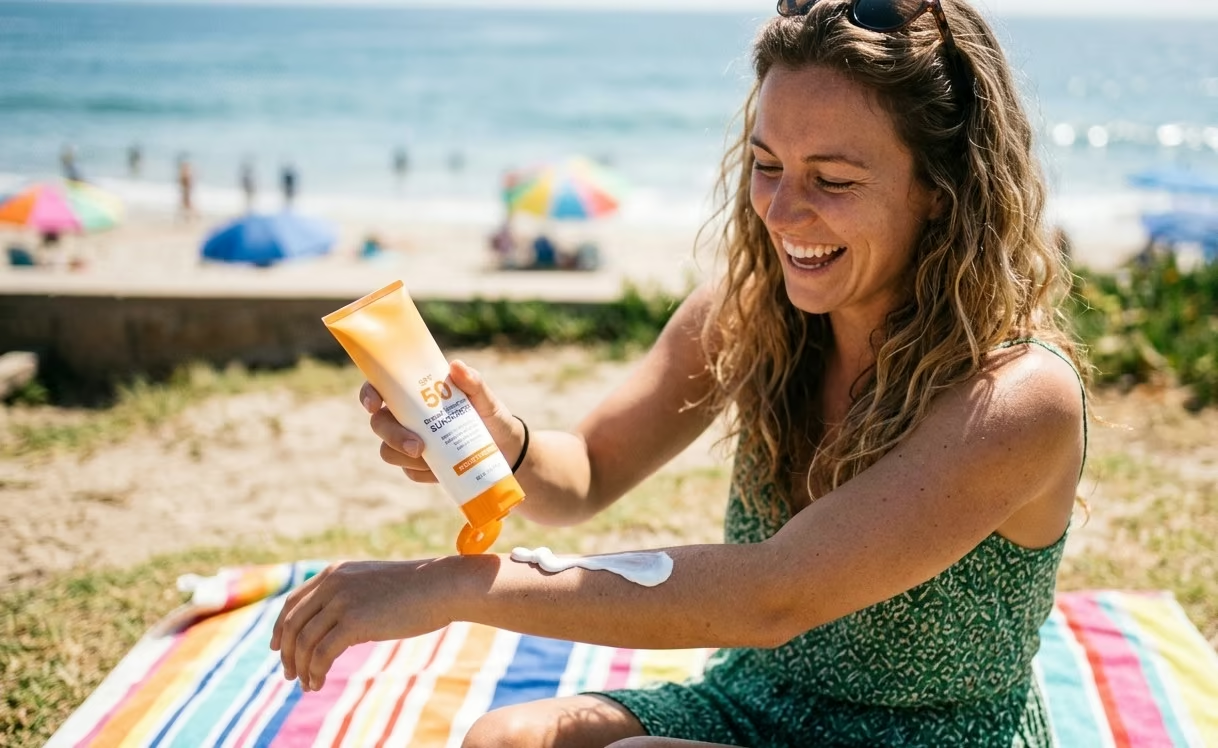
Sunscreen is a topical product that filters ultraviolet radiation before it reaches the living layers of the skin, reducing both the short-term risk of burning and the long-term risk of skin cancer and photoageing. It is not the same thing as an SPF moisturiser or a foundation with SPF in it: those carry sun filters, but they are formulated and applied in quantities far below the level at which their labelled protection was tested.
Sunscreens sold in New Zealand fall into a handful of distinct types. Chemical sunscreens use organic filters that absorb UV energy and are usually the lightest and most invisible on skin. Mineral sunscreens are built on zinc oxide, sit on the skin’s surface, and tend to suit sensitive or blemish-prone skin. Facial sunscreens are formulated to be non-comedogenic and wearable under makeup. Tinted sunscreens add mineral pigments so a single step covers protection, moisture and sheer coverage. Sun sticks are solid formats made for reapplying over makeup during the day. Water-resistant and sport sunscreens carry a tested rating, either two or four hours, for swimming and sweating.
The single number that decides whether any of them work is the amount you apply. An average-sized adult needs about seven teaspoons, roughly 35 mL, for one full body application, which is around a teaspoon per limb, a teaspoon for the front of the body, one for the back, and one for the face, ears and neck. Apply it 20 minutes before going outside and reapply at least every two hours, or more often after swimming or sweating. SunSmart advises a broad-spectrum, water-resistant sunscreen of at least SPF 30, and a mandatory product safety standard under the Sunscreen (Product Safety Standard) Act 2022 requires relevant products manufactured or imported after 8 March 2022 to back up the claims on their label.
This guide compares ten sunscreens available in New Zealand across the jobs people actually buy them for: daily facial wear, oily and sensitive skin, tinted one-step routines, reapplication over makeup, swimming, family-sized value, kids and babies.
Sunscreen comparison
| Product | Best for | SPF | Size | Filter type | Water resistance |
|---|---|---|---|---|---|
| La Roche-Posay Anthelios UVmune400 SPF50+ | Best Overall | SPF50+ | 50ml | Chemical | Water and sand resistant |
| Neutrogena Ultra Sheer Face Lotion SPF50 | Best for Oily Skin | SPF50 | 88ml | Chemical | Not stated |
| Antipodes Supernatural SPF50+ Ceramide Silk Facial Sunscreen | Best Mineral Sunscreen for Sensitive Skin | SPF50+ | 60ml | Mineral (zinc oxide) | Not stated |
| Trilogy SPF50+ Sheer Tinted Moisturising Sunscreen | Best Tinted Sunscreen | SPF50+ | 50ml | Mineral (non-nano zinc) | 2 hours |
| Beauty of Joseon Matte Sun Stick | Best for Reapplying Over Makeup | See label | 18g | Stick | Not stated |
| Nivea Sun Protect & Moisture Lotion SPF50 1L | Best Value for Families | SPF50 | 1L | Chemical | 4 hours |
| La Roche-Posay Anthelios Wet Skin SPF50+ | Best for Swimming | SPF50+ | 200ml | Chemical | 4 hours, applies to wet skin |
| Skinnies Sungel SPF30 | Best NZ-Made | SPF30 | 200ml | Water-free gel | Not stated |
| Skinnies Kids SPF50 Sun Buster | Best for Kids | SPF50 | 100ml | Water-free gel | 2 hours |
| Wotnot Natural Sunscreen for Baby SPF30 | Best for Babies and Very Sensitive Skin | SPF30 | 100g | Mineral | Not stated |
1. La Roche-Posay Anthelios UVmune400 SPF50+ – Best Overall
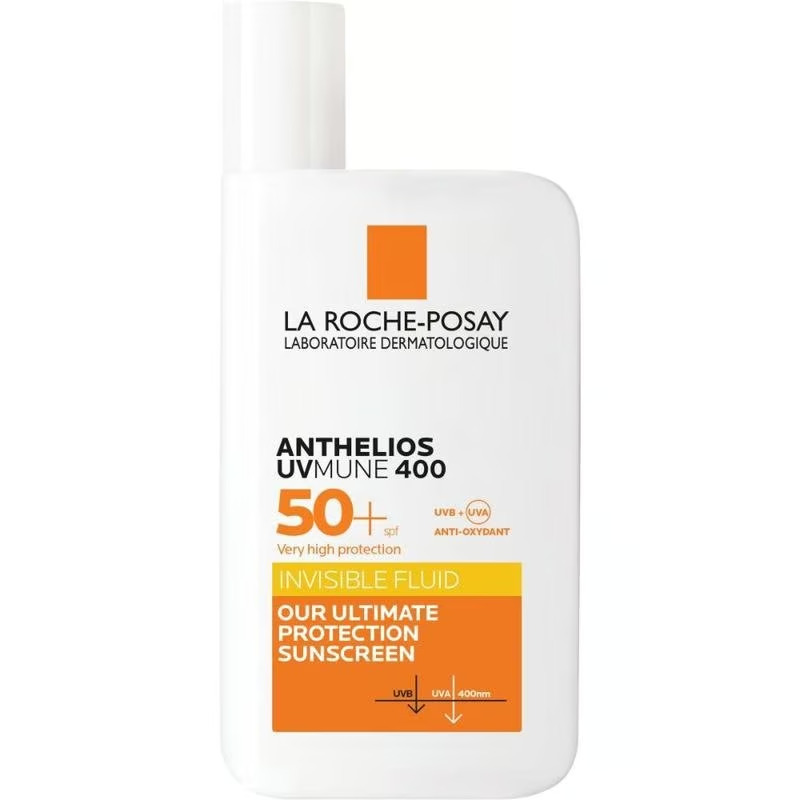
La Roche-Posay built this one around MEXORYL400, a filter aimed specifically at ultra-long UVA, the deeper-penetrating wavelengths that ordinary broad-spectrum formulas cover least well. The texture is the reason it works as a daily face sunscreen rather than a holiday-only one: it is invisible, lightweight and fragrance-free, and the brand tests it on sensitive, reactive and intolerant skin across all phototypes. It is also formulated to resist water and sand, and to avoid the eye-stinging that makes people skip reapplication.
Pros
- MEXORYL400 filter targets ultra-long UVA specifically, on top of standard UVB and UVA cover
- Invisible, lightweight texture that sits under makeup without pilling
- Fragrance-free and tested on sensitive, reactive and intolerant skin
- Anti-eye-sting formulation, which matters for reapplying on a hot day
- Resistant to both water and sand
Cons
- 50ml is a face-sized tube, so it is an expensive way to cover arms and legs
- Sits at the premium end of the pharmacy shelf
- No tint, so it does nothing to even out skin tone
Key specs: SPF50+ broad spectrum. 50ml. Chemical filter system including MEXORYL400. Fragrance-free. Water and sand resistant.
2. Neutrogena Ultra Sheer Face Lotion SPF50 – Best for Oily Skin
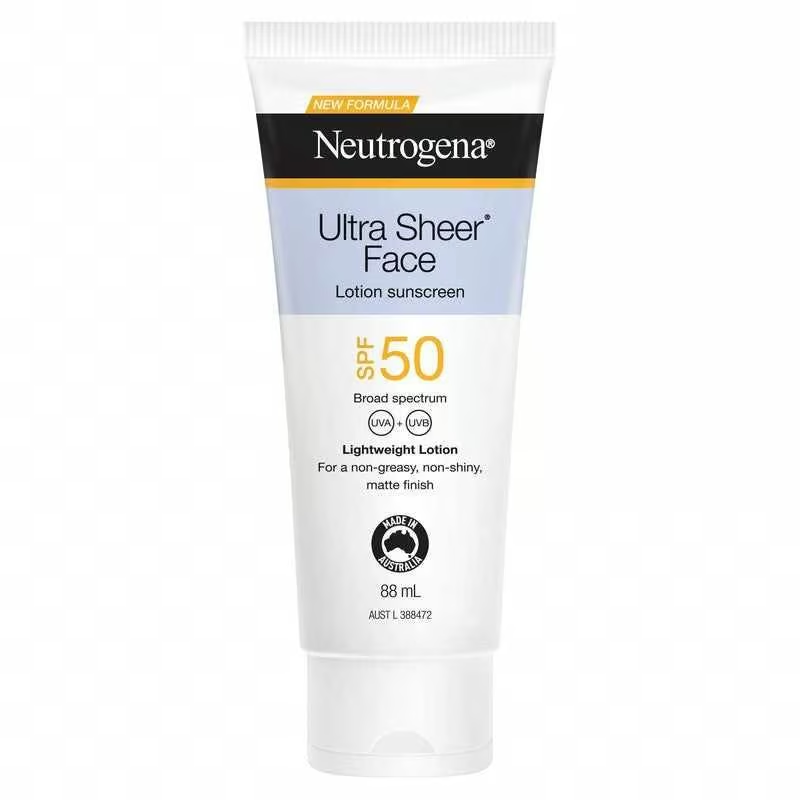
This is the one to reach for if every sunscreen you have tried has left your face shiny by mid-morning. Neutrogena’s Dry Touch technology finishes matte rather than dewy, and the formula is oil-free and non-comedogenic, so it is a sensible daily option for oily, combination or breakout-prone skin. The SPF50 protection is stabilised with the brand’s Helioplex system, and the 88ml bottle is large enough to last a full season of daily use on the face and neck.
Pros
- Matte, non-shiny finish from the Dry Touch technology
- Oil-free and non-comedogenic, so it will not clog pores
- Broad-spectrum SPF50 stabilised with Helioplex
- Widely stocked and easy to replace mid-season
- Generous bottle size for a facial sunscreen
Cons
- The matte finish can look flat or drying on genuinely dry skin
- No water-resistance rating is stated, so it is not the pick for swimming
- Lotion is white on application and needs working in on deeper skin tones
Key specs: SPF50 broad spectrum UVA/UVB. 88ml. Oil-free, non-comedogenic. Dry Touch matte finish. Helioplex stabilised.
3. Antipodes Supernatural SPF50+ Ceramide Silk Facial Sunscreen – Best Mineral Sunscreen for Sensitive Skin
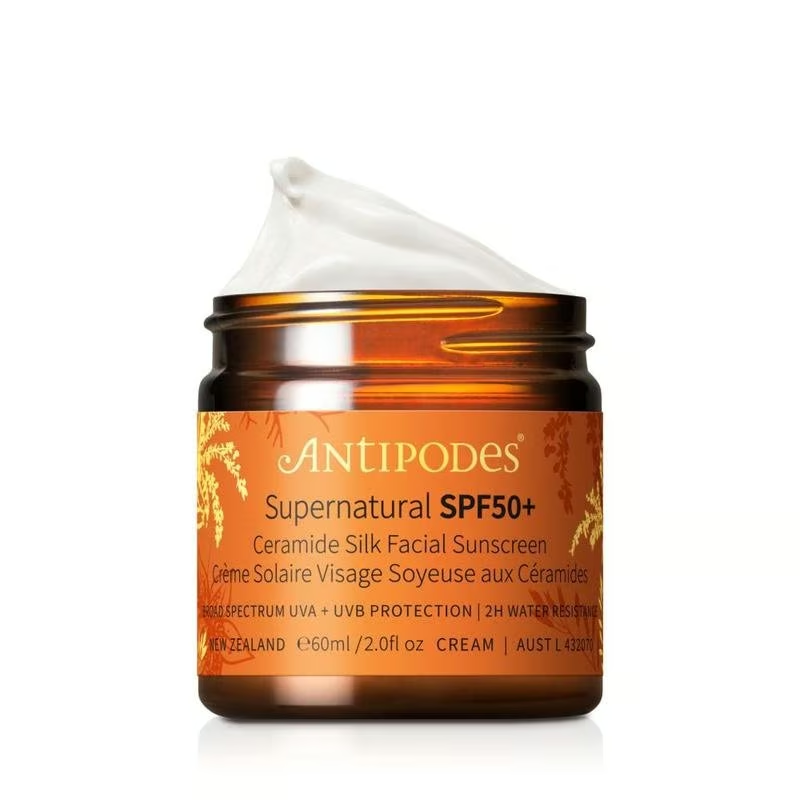
Antipodes is a New Zealand brand, and this is the pick for anyone whose skin reacts to chemical filters. It uses natural zinc oxide for broad-spectrum UVA and UVB cover, but unlike most zinc formulas it is built not to leave a white residue, which makes it usable as a makeup base rather than something you wear only at the beach. Ceramides are included for barrier support, and the brand holds TGA approval, one of the stricter SPF regulatory regimes. Packaging is plastic-free: recyclable glass, an aluminium lid and FSC cardboard.
Pros
- Zinc oxide mineral filter, a genuine option for skin that reacts to chemical sunscreens
- Formulated to avoid the usual white residue of zinc formulas
- Doubles as a glow-enhancing base under makeup
- Ceramides included for barrier support
- Certified vegan with 100% natural-origin ingredients and plastic-free packaging
Cons
- Glass packaging is heavier and more breakable than a plastic tube in a beach bag
- Even well-formulated zinc can leave a faint cast on deeper skin tones
- 60ml facial size, so not intended for body coverage
Key specs: SPF50+ broad spectrum. 60ml. Natural zinc oxide mineral filter. With ceramides. TGA-approved. Certified vegan. Recyclable glass and aluminium packaging.
4. Trilogy SPF50+ Sheer Tinted Moisturising Sunscreen – Best Tinted Sunscreen
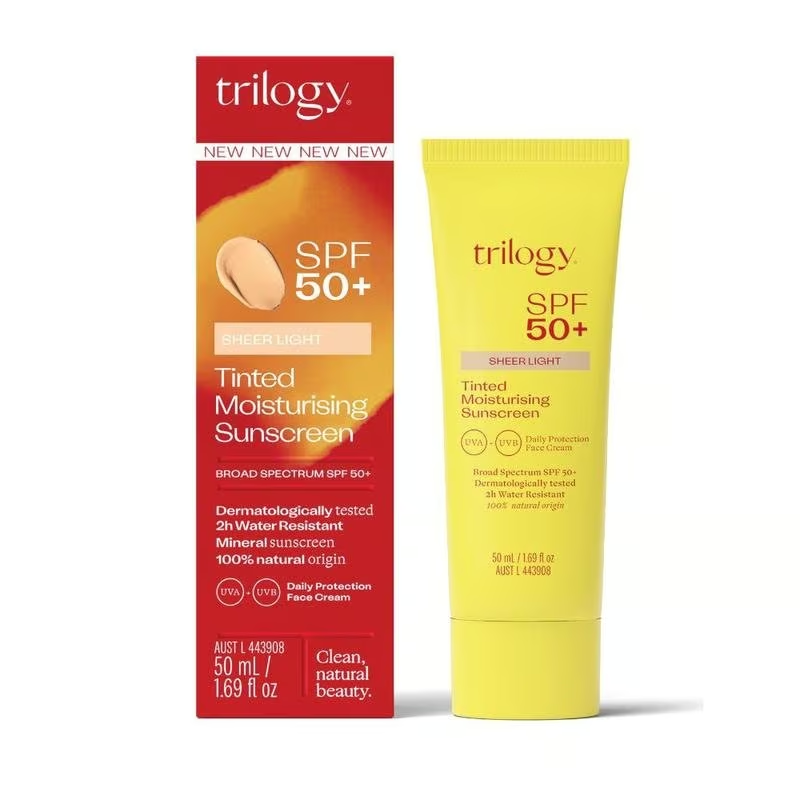
Trilogy, another New Zealand brand, positions this as a three-in-one: sunscreen, moisturiser and sheer tint in a single step. It uses non-nano zinc oxide for very high mineral protection, with mineral pigments providing enough coverage to even out tone without the chalky finish mineral formulas are known for. Vitamin E and omega-rich plant oils handle the moisturising side. It comes in Light, Medium and Deep, so there is some shade matching, though the range is narrower than a foundation line.
Pros
- Combines sunscreen, moisturiser and sheer tint, which removes a step from the morning
- Non-nano zinc oxide for very high mineral protection
- Dewy, non-whitening finish rather than the usual mineral chalkiness
- 100% natural origin, non-comedogenic and vegan
- Available in three shades
Cons
- Only two hours of water resistance, the shortest rating in this lineup
- Three shades is a limited range if your tone sits between them
- Tinted formulas can transfer onto collars and phone screens
Key specs: SPF50+ broad spectrum. 50ml. Non-nano zinc oxide mineral filter. Two hours water resistant. Shades: Light, Medium, Deep. Non-comedogenic, vegan.
5. Beauty of Joseon Matte Sun Stick – Best for Reapplying Over Makeup
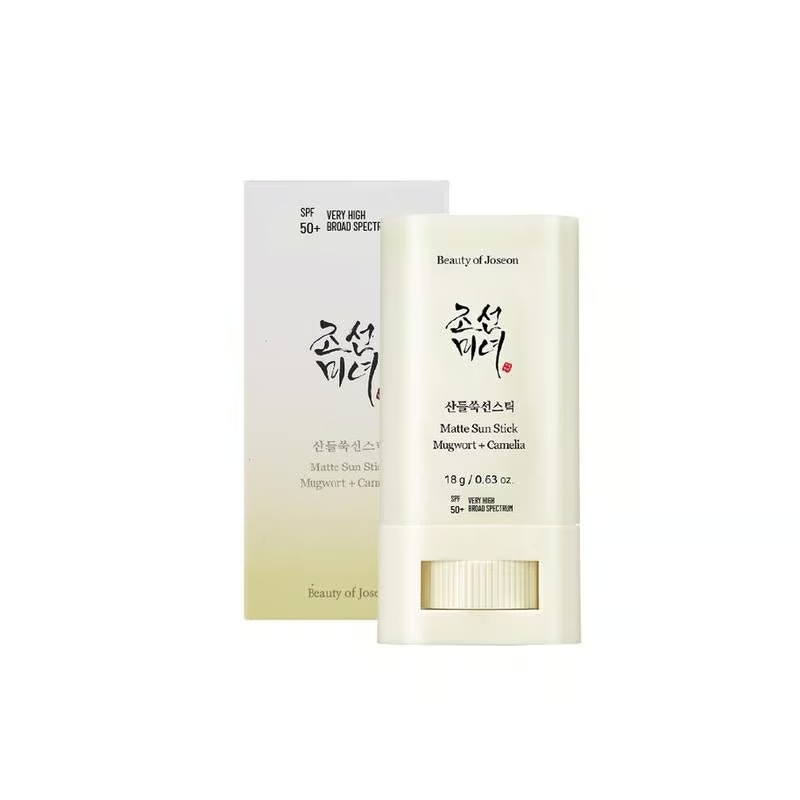
Reapplication is where most sunscreen routines fail, and a stick is the format that solves it. This one was developed with cosmetic chemist Ramon and is deliberately designed for everyday urban wear rather than only for outdoor sport, so it glides over makeup without clumping or turning greasy. A sebum-control silica powder keeps the finish matte and helps it grip, and artemisia and green tea extracts are included on the skincare side. Keep one in a bag or a car glovebox for the two-hourly top-up.
Pros
- Applies cleanly over makeup, which is the format’s whole reason for existing
- Matte finish from sebum-control silica, so no midday shine
- No hands and no mess, which makes reapplication far more likely to actually happen
- Compact enough to live in a handbag, backpack or glovebox
- Artemisia capillaris and green tea extracts on the skincare side
Cons
- Very hard to apply the full recommended amount from a stick, so treat it as a top-up rather than your first application of the day
- 18g does not go far if used as a primary sunscreen
- Sticks can soften and smear if left in a hot car
Key specs: Sun stick format. 18g. Matte finish with sebum-control silica. Artemisia capillaris and green tea extracts. Designed for reapplication over makeup.
6. Nivea Sun Protect & Moisture Lotion SPF50 1L – Best Value for Families
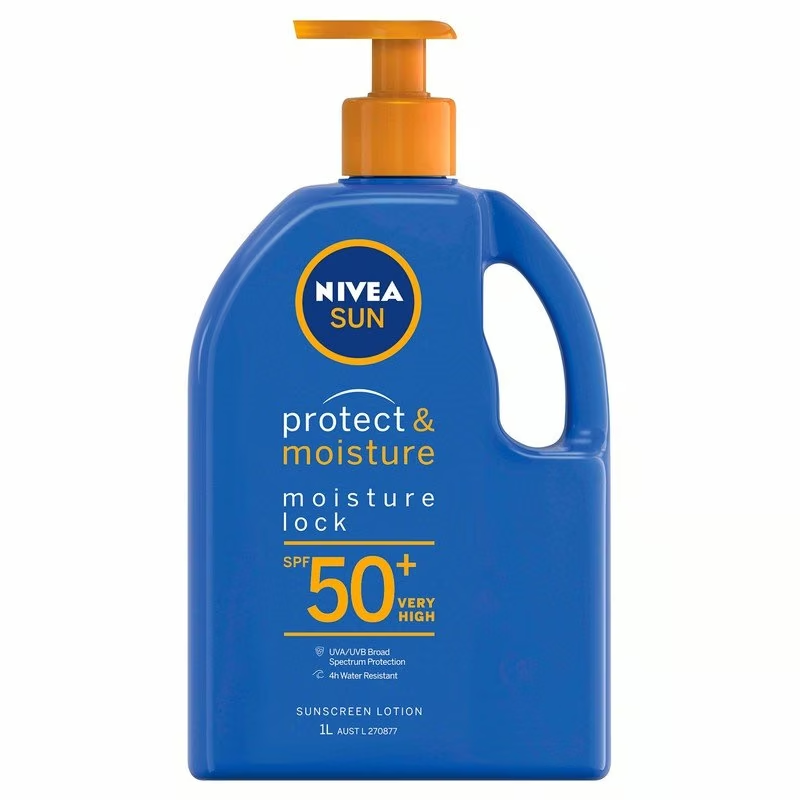
If your household burns through sunscreen over summer, buying it in a one-litre pump is the single biggest thing you can do to make generous application affordable. That matters more than it sounds: under-application is the most common reason people get burnt while wearing sunscreen, and a large pump bottle removes the instinct to ration. This is broad-spectrum SPF50 with four hours of water resistance, and vitamin E and panthenol on the moisturising side. Keep it by the back door and decant a smaller bottle for the beach bag.
Pros
- One litre makes it realistic to apply the full recommended amount every time
- Four hours water resistance, the longest rating in this lineup
- Vitamin E and panthenol for moisturising alongside protection
- Dermatologically tested as non-irritating and non-sensitising
- Pump dispenser is quick for getting children covered
Cons
- A one-litre pump bottle is not something you carry to the beach
- Lotion texture is heavier than the gels here and takes longer to rub in
- White on application, so it needs working in properly
Key specs: SPF50 broad spectrum. 1L pump bottle. Four hours water resistant. With vitamin E and panthenol. Dermatologically tested.
7. La Roche-Posay Anthelios Wet Skin SPF50+ – Best for Swimming
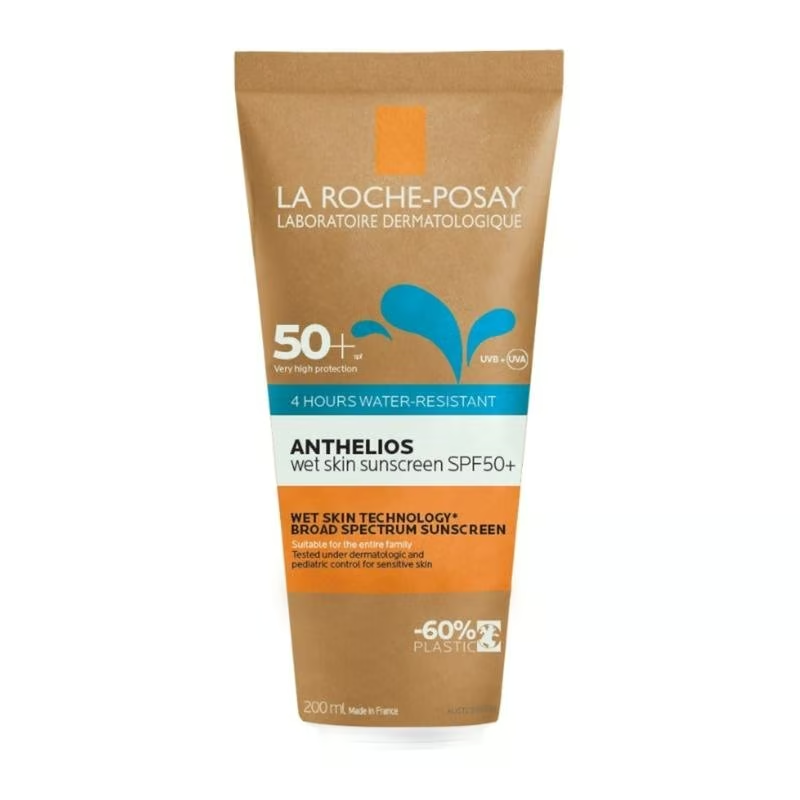
The problem this solves is specific and genuinely annoying: reapplying sunscreen to a wet child, or to yourself between swims, normally means towelling off first and waiting. Wet Skin Technology lets the gel go straight onto wet skin and still deliver four hours of water resistance. The texture is a clear lotion that stays non-greasy and non-sticky with no white marks even when applied wet, and it is tested under both dermatological and paediatric control. The bottle also uses 60% less plastic than the brand’s previous version.
Pros
- Applies directly to wet skin, with no towelling off first
- Four hours water resistance even when applied wet
- Clear, non-greasy texture with no white marks
- Tested under dermatological and paediatric control, so it suits family use
- 60% less plastic in the packaging
Cons
- Gel texture feels slippery to anyone used to a cream
- No tint and no mattifying effect, so it is a body-first sunscreen
- Still needs reapplying every two hours out of the water, whatever the water-resistance rating
Key specs: SPF50+ very high broad spectrum. 200ml. Wet Skin Technology, applies to wet or dry skin. Four hours water resistant. With thermal spring water and glycerin.
8. Skinnies Sungel SPF30 – Best NZ-Made
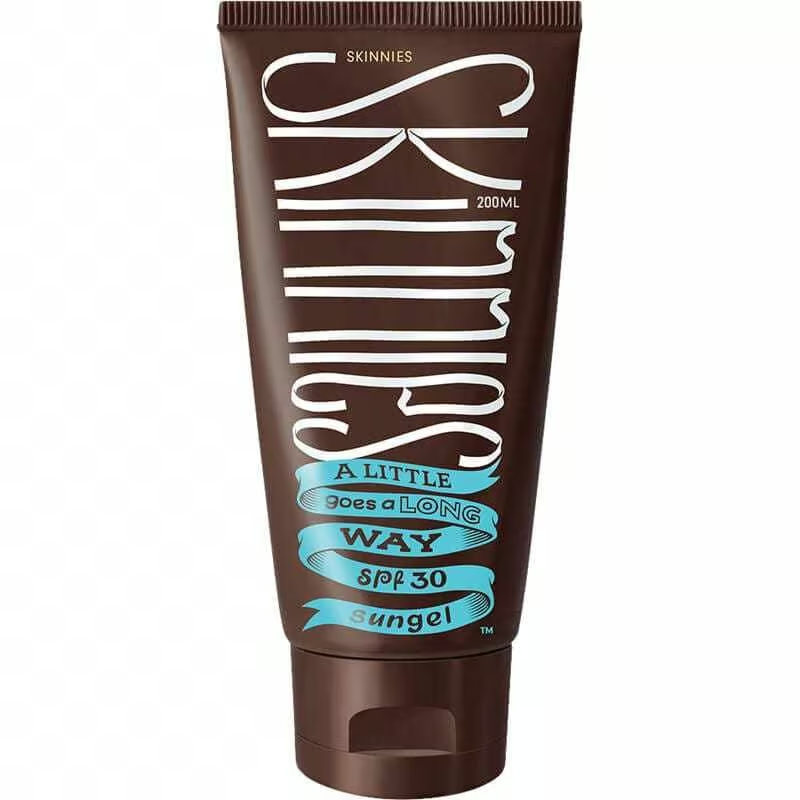
Skinnies is a New Zealand company, and the product is genuinely unusual: the gel contains no water at all. Conventional sunscreens are largely water, which evaporates, and that is part of why they feel greasy and why people use too little. Removing it means a far smaller amount covers the same skin, so a 200ml tube lasts considerably longer than the volume suggests. It rubs in clear and does not sting eyes. The trade-off is honest: this is SPF30, not SPF50+, though that still clears the minimum New Zealand health authorities recommend.
Pros
- Water-free gel, so you use noticeably less product per application
- Rubs in clear with no white cast
- Does not sting eyes, which makes it easier on children and on sweaty faces
- Made in New Zealand
- 200ml goes much further than the same volume of a conventional lotion
Cons
- SPF30 rather than SPF50+, the lower end of what is sensible for a New Zealand summer
- The gel texture is unfamiliar, and the small amount needed makes it easy to under-apply out of habit
- Clear formula makes it hard to see where you have missed
Key specs: SPF30 broad spectrum. 200ml. Water-free gel formula. Rubs in clear. Non-stinging. Made in New Zealand.
9. Skinnies Kids SPF50 Sun Buster – Best for Kids
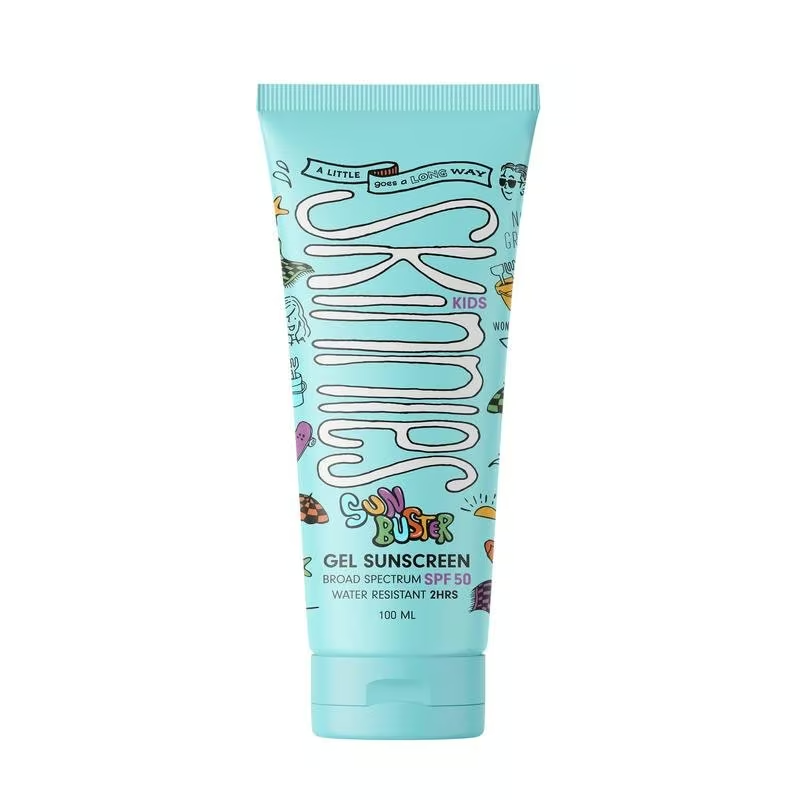
The kids’ version of the water-free gel steps the protection up to SPF50 while keeping the two features that decide whether a child will tolerate sunscreen at all: it rubs in clear, so there is no white face to argue about, and it does not sting eyes. The gel bonds to the top of the skin rather than soaking in, and it is dermatologist tested for sensitive skin. It is also reef-conscious, meeting Hawaii Act 104 compliance and leaving out oxybenzone and octinoxate.
Pros
- SPF50 broad spectrum, a step up from the adult Sungel
- Rubs in clear with no white cast, which removes the usual fight
- Will not sting eyes
- Free from oxybenzone and octinoxate, and Hawaii Act 104 reef compliant
- Dermatologist tested for sensitive skin, free from preservatives and parabens
Cons
- Only two hours water resistance, so it needs reapplying after every swim
- 100ml is small for a family beach day
- Clear gel makes missed patches hard to spot on a wriggling child
Key specs: SPF50 broad spectrum. 100ml. Water-free gel. Two hours water resistant. Reef compliant, free from oxybenzone and octinoxate. Vegan, animal test free.
10. Wotnot Natural Sunscreen for Baby SPF30 – Best for Babies and Very Sensitive Skin
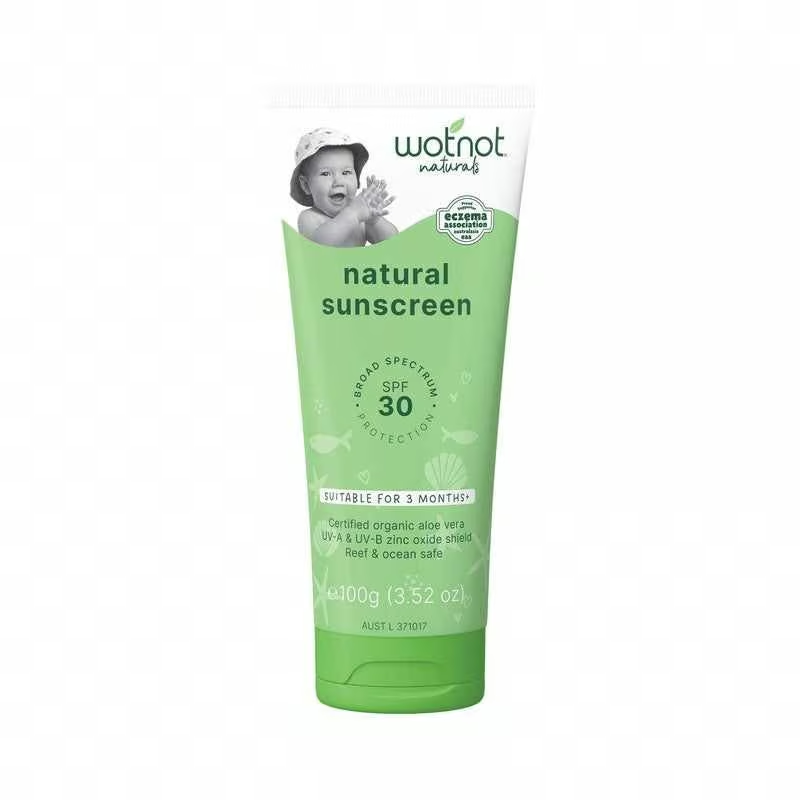
For babies, and for adults whose skin reacts to almost everything, the shortest ingredient list usually wins. Wotnot leaves out chemical UV absorbers entirely, along with titanium dioxide, sulphates, petrochemicals, PEGs, parabens, glycols and artificial fragrances and preservatives. What is left is broad-spectrum UVA and UVB protection plus certified organic aloe vera, GMO-free vitamin E and jojoba oil to soothe and nourish. It is SPF30, so it meets the recommended minimum rather than exceeding it: pair it with a hat and shade rather than relying on it alone.
Pros
- Free from chemical UV absorbers, for skin that reacts to them
- Very short exclusion list, with no sulphates, petrochemicals, PEGs, parabens, glycols, artificial fragrance or preservatives
- Certified organic aloe vera, vitamin E and jojoba oil to soothe
- Broad spectrum UVA and UVB cover
- Gentle enough for babies’ skin
Cons
- SPF30 rather than SPF50+, so it needs pairing with shade and clothing
- Natural mineral formulas can leave a visible cast
- 100g tube does not go far across a whole family
Key specs: SPF30 broad spectrum UVA/UVB. 100g. Free from chemical UV absorbers and titanium dioxide. With certified organic aloe vera, vitamin E and jojoba oil.
How to choose a sunscreen in NZ
Start with the job rather than the brand. A sunscreen you will wear on your face every working day has to be cosmetically acceptable, because the one that sits in the cupboard protects nobody. A sunscreen for a day on the water has to survive immersion and towelling. Those are different products, and most households need at least two.
Match the filter type to your skin, not to marketing. If chemical sunscreens have stung, irritated or triggered breakouts in the past, a zinc oxide formula is the practical alternative, and modern ones are far better at avoiding the white cast that put people off mineral sunscreen a decade ago. If you have oily skin, look for oil-free and non-comedogenic wording and a matte finish. If you have dry skin, a matte formula will emphasise it, and a moisturising or tinted option will sit better.
Read the water-resistance rating literally. It is a tested claim, either two hours or four hours, and it describes performance in water, not permission to skip reapplication. Whatever the rating, two-hourly reapplication is still the rule, and anything that has been towelled off has been partly removed.
Finally, buy a size that matches how you will use it. The most common cause of sunburn in people who wore sunscreen is applying too little, and a small premium tube quietly encourages rationing. For body coverage, a large pump bottle is usually the better decision even if the tube looks nicer. Facial sunscreen is one part of a wider routine, so it is worth reading alongside our guides to the best face moisturisers in NZ and the best eye creams, since layering order affects how well a sunscreen performs. A morning vitamin C serum sits under sunscreen as a complementary antioxidant step, and getting the filters off again at night is exactly what a good face cleanser is for. For the rest of the summer kit, our roundups of beach tents and summer dresses cover the shade and clothing side of sun protection, which does more work than most people credit.
Verdict
For most people the La Roche-Posay Anthelios UVmune400 SPF50+ is the strongest all-round facial pick, because its MEXORYL400 filter targets ultra-long UVA specifically and the texture is light enough to wear daily. If your skin runs oily, the Neutrogena Ultra Sheer Face Lotion SPF50 is the more comfortable everyday option, and if it reacts to chemical filters, the Antipodes Supernatural SPF50+ is a New Zealand-made zinc formula that works as a makeup base rather than a beach-only product.
For the body, the decision is usually about volume rather than formulation: the Nivea Sun Protect & Moisture SPF50 in a one-litre pump makes generous application affordable, which matters more than any other single factor. For swimming, the La Roche-Posay Anthelios Wet Skin SPF50+ is the only pick here that applies straight onto wet skin. Families with young children are well served by Skinnies Kids SPF50 Sun Buster, which rubs in clear and will not sting eyes, while Wotnot Natural Sunscreen for Baby SPF30 suits babies and skin that reacts to almost everything. Whichever you choose, check current stock and pricing directly with the retailer before buying, since both change regularly.
FAQs
What SPF sunscreen should you use in New Zealand?
SunSmart advises always using a broad-spectrum, water-resistant sunscreen of at least SPF 30. Most of the picks in this guide go further at SPF50 or SPF50+, which is sensible for a New Zealand summer, but the number on the bottle matters far less than how much you apply and how often you reapply. An SPF50+ applied thinly once a day protects you less well than an SPF30 applied properly and topped up every two hours.
How much sunscreen do you actually need to apply?
An average-sized adult needs about seven teaspoons, roughly 35 mL, for one full body application. That works out at around a teaspoon for each arm, each leg, the front of the body, the back of the body, and the face including ears and neck. Almost nobody applies this much, which is why a large-format bottle is often a better buy than a small premium tube for body use.
How often should you reapply sunscreen?
Reapply at least every two hours, and more often if you have been swimming, towelling off or sweating. Water resistance ratings do not change this: a four-hour water-resistant sunscreen still needs reapplying every two hours of sun exposure. Applying 20 minutes before you go outside also matters, since the filters need time to form an even film on the skin.
Is mineral or chemical sunscreen better?
Neither is universally better, they just suit different skin. Mineral formulas built on zinc oxide, such as the Antipodes and Trilogy picks here, sit on the surface and tend to suit sensitive, reactive or blemish-prone skin. Chemical filters like those in the La Roche-Posay products absorb UV and usually feel lighter and disappear more completely on the skin. The best one is the one you will actually wear every day.
Does sunscreen sold in New Zealand have to meet a standard?
Yes. Sunscreen is covered by a mandatory product safety standard under the Sunscreen (Product Safety Standard) Act 2022, and relevant products manufactured or imported after 8 March 2022 must comply with it. In practice that means the SPF and broad-spectrum claims on the label have to be supported by testing, which is a meaningful reason to buy sunscreen through established retail channels rather than from an unknown online seller.
Can a moisturiser with SPF replace a dedicated sunscreen?
Not for extended time outdoors. Most people apply far less moisturiser than the amount used in SPF testing, so a tinted or moisturising SPF under-delivers its labelled protection in real use. A moisturiser with SPF is a reasonable baseline for a commute or a short walk, but a dedicated sunscreen, applied generously and reapplied, is what you want for a day at the beach or on the water.
What is the difference between SPF50 and SPF50+?
The difference in measured UVB protection between the two is small, and both are high. SPF50+ simply indicates the product tested above the SPF50 threshold. What separates the products in practice is texture, water resistance and how well they cover UVA, which is the range associated with longer-term skin damage rather than burning, and which is not reflected in the SPF number at all.
