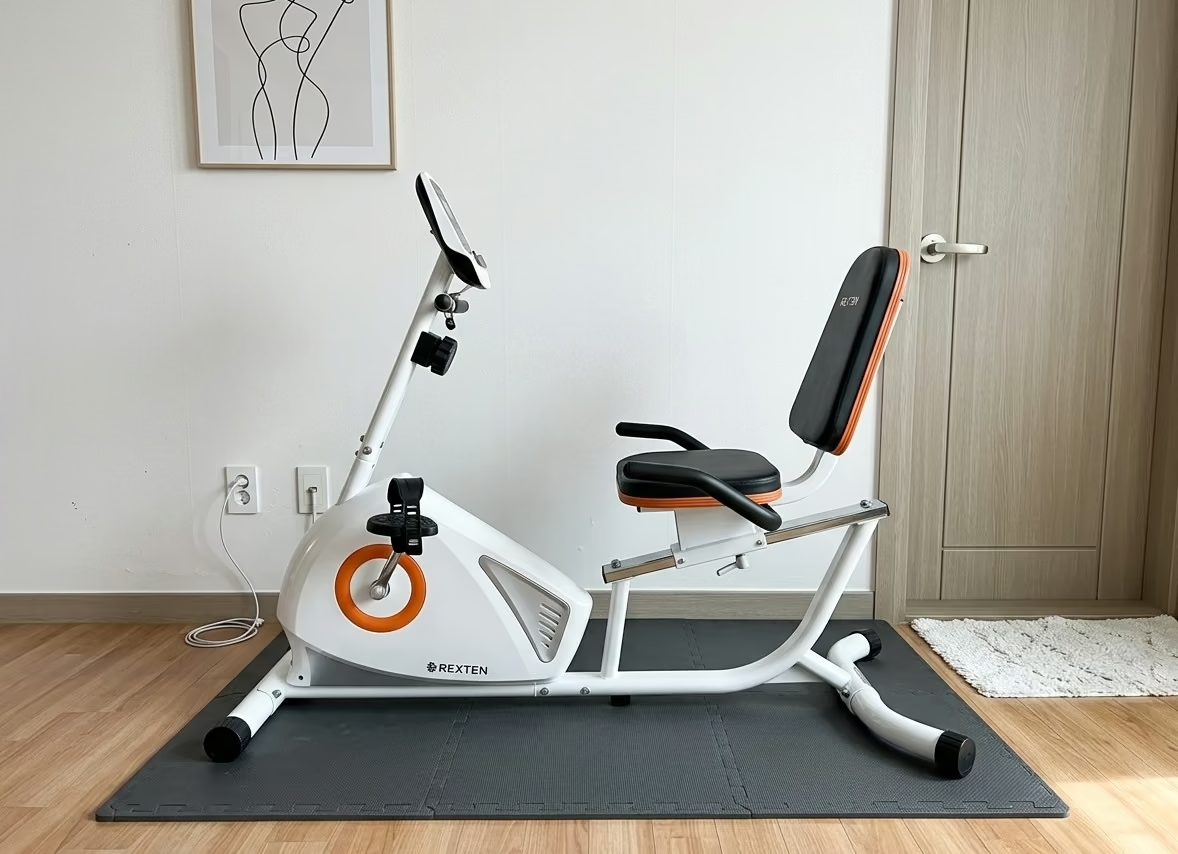
The best recumbent exercise bike in NZ overall is the TSB Living Upgraded Recumbent Bike, thanks to its breathable mesh backrest, Bluetooth app connectivity and smooth, near-silent magnetic resistance. Recumbent bikes seat you in a reclined, fully supported position that takes pressure off the knees, hips and lower back, which is why they are a favourite for seniors, post-injury rehab and anyone easing back into cardio at home.
This guide compares five recumbent and semi-recumbent bikes you can buy in New Zealand right now, from full step-through trainers to folding X-bikes that tuck away in a cupboard. Every pick was checked for live availability, stock and specifications. If a fully upright, low-impact stride appeals more than a seated ride, it is also worth comparing elliptical cross trainers before deciding.
Quick comparison
| Bike | Best for | Resistance | Max user weight | Footprint (L x W x H) |
|---|---|---|---|---|
| Upgraded Recumbent Bike | Best overall | 8 magnetic levels | 110 kg | 123.6 x 49 x 121.1 cm |
| New Design Recumbent Bike | Seniors and rehab | 8 magnetic levels | 100 kg | 131.5 x 63.5 x 106.5 cm |
| Recumbent Bike | Higher weight capacity | 8 magnetic levels | 130 kg | 135 x 64 x 93 cm |
| X-Bike Folding Recumbent With Rope | Small spaces and arms | 8 magnetic levels | 100 kg | 82 x 44 x 116 cm (folds to 41 x 44 x 111 cm) |
| 3-in-1 Folding Exercise X-Bike | Budget and versatility | 10 resistance levels | Folding X-frame | Compact folding |
1. Upgraded Recumbent Bike – Best Overall
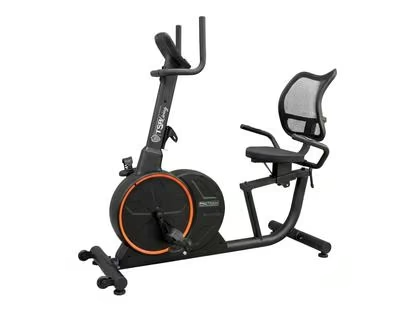
The Upgraded Recumbent Bike is the best all-round choice for most New Zealand homes, because it pairs a supportive, breathable backrest with app connectivity that keeps longer sessions interesting. It sits on a powder-coated steel frame measuring 123.6 x 49 x 121.1 cm and weighs about 36 kg assembled, so it is a permanent-feeling piece of kit rather than something you shift daily, though built-in transport rollers and floor levelers make it easy to reposition and steady on carpet or tile.
Where it stands out is the air-mesh backrest, which breathes better than the solid pads on cheaper bikes, plus a central LCD and a phone or tablet holder. Resistance runs through a silent magnetic system with eight levels set by a tension knob, and the seat length adjusts to suit different leg lengths. Bluetooth lets it sync with popular fitness apps for guided rides, and a resistance band is included for upper-body moves between intervals. The monitor reports time, speed, distance, calories, odometer and pulse. It is a strong anchor for anyone building a complete home gym around low-impact cardio.
Pros
- Breathable air-mesh backrest and lumbar support for long, comfortable rides
- Bluetooth syncs with fitness apps, and a resistance band is included
- Transport rollers and floor levelers make it easy to move and stabilise
Cons
- 110 kg maximum user weight is lower than the 130 kg pick below
- Resistance is a manual tension knob rather than electronic control
- App relies on third-party apps over Bluetooth, not a bespoke platform
Key specs: Model PR72095, powder-coated steel, 8 magnetic levels, 110 kg max user weight, 123.6 x 49 x 121.1 cm, 36 kg assembled, LCD with pulse.
2. New Design Recumbent Bike – Best for Seniors and Rehab
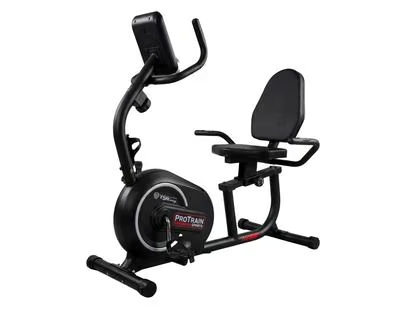
The New Design Recumbent Bike is the pick for older riders and anyone rebuilding strength after injury, because its low, step-through frame is easy to get on and off. It measures 131.5 x 63.5 x 106.5 cm and uses a ribbed two-way belt drive with a magnetic brake, so the pedalling motion stays smooth and quiet enough for early mornings or late evenings without disturbing the house.
The seat length adjusts from 150 mm to 190 mm to fit shorter or taller legs, and lumbar support plus grab handles on the seat make positioning simple. One New Zealand owner recovering from a stroke reported it felt safe to sit on, adjusted easily for long or short legs, and that the seat handles were convenient. Eight magnetic resistance levels, non-slip feet with pedal straps and a phone or tablet holder round it out, while the LCD tracks time, speed, distance, calories and pulse. Pair it with adjustable dumbbells for gentle strength work between rides.
Pros
- Low step-through frame and seat handles suit seniors and rehab users
- Seat length adjusts 150 to 190 mm for different leg lengths
- Ribbed two-way belt drive stays smooth and quiet
Cons
- 100 kg maximum user weight is the lowest of the dedicated recumbents here
- Basic monitor with no odometer and no app connectivity
- Ships as a heavier 47 kg flat-pack that needs assembling
Key specs: Model PR65008, powder-coated steel, magnetic brake, 8 levels, seat length 150 to 190 mm, 100 kg max user weight, 131.5 x 63.5 x 106.5 cm.
3. Recumbent Bike – Best for Higher Weight Capacity
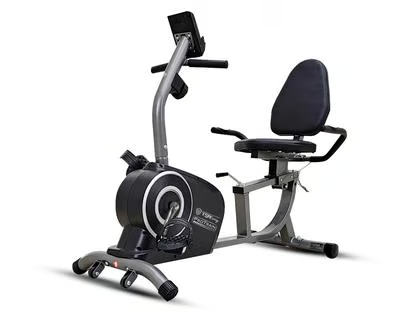
The standard Recumbent Bike earns its place on capacity alone, supporting up to 130 kg, the sturdiest ceiling in this line-up. It has a lower-profile stance at 135 x 64 x 93 cm and weighs around 30 kg assembled, which keeps it stable during harder efforts while still fitting under a window or against a lounge wall.
The build is familiar TSB Living: an industrial-strength powder-coated steel frame with lumbar seat support, an adjustable seat length and non-slip feet with pedal straps. A silent magnetic system delivers eight resistance levels, and the LCD covers time, speed, distance, calories, odometer and pulse, with a phone or tablet holder for entertainment. It is a no-frills, everyday workhorse rather than a feature showcase, which is exactly why heavier riders and shared households tend to prefer it.
Pros
- Highest 130 kg maximum user weight in this guide
- Lower, stable stance with a compact 135 x 64 x 93 cm footprint
- Full monitor including odometer, plus a phone or tablet holder
Cons
- No mesh backrest or app connectivity
- Seat comfort is basic next to the mesh-backed pick above
- Simplest specification of the dedicated recumbents
Key specs: Model PR5195, powder-coated steel, 8 magnetic levels, 130 kg max user weight, 135 x 64 x 93 cm, 30 kg assembled, LCD with odometer and pulse.
4. X-Bike Folding Recumbent Exercise Bike With Rope – Best for Small Spaces
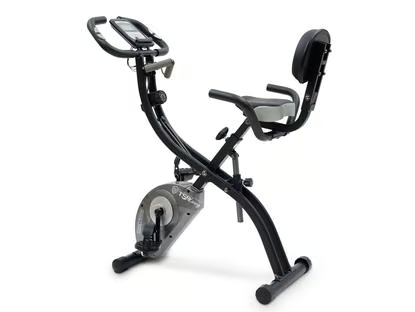
The X-Bike is the answer for apartments and shared rooms, because its steel X-frame folds down for storage and it adds a pull rope for upper-body work that the dedicated recumbents lack. Assembled it measures about 82 x 44 x 116 cm, folds to roughly 41 x 44 x 111 cm and weighs around 20 kg, so it is genuinely easy to wheel into a cupboard between sessions.
Despite the compact size it feels sturdy on non-slip feet, and the extra-wide cushioned PU saddle comes with a backrest and arm supports for a semi-recumbent position. Eight magnetic resistance levels, four seat-height settings and quick pull-pin adjustments suit riders from 155 cm to 185 cm, while the LCD tracks time, distance, speed, calories and hand pulse. The rope pulley lets you add shoulder and arm reps without extra kit. Keeping an eye on heart rate is easier with a fitness tracker on your wrist during intervals.
Pros
- Folds flat to around 41 x 44 x 111 cm for easy storage
- Pull rope adds upper-body work most recumbents cannot
- Extra-wide cushioned seat with backrest and arm supports
Cons
- Light 1.6 kg flywheel gives less momentum, so the pedal feel is less flowing
- Semi-recumbent seat is less plush than the full recumbents above
- 100 kg maximum user weight and a suggested height range of 155 to 185 cm
Key specs: Model PR6045, powder-coated steel X-frame, 8 magnetic levels, 4 seat-height settings, 100 kg max user weight, folds to 41 x 44 x 111 cm, about 20 kg.
5. 3-in-1 Folding Exercise X-Bike – Best Budget and Most Versatile
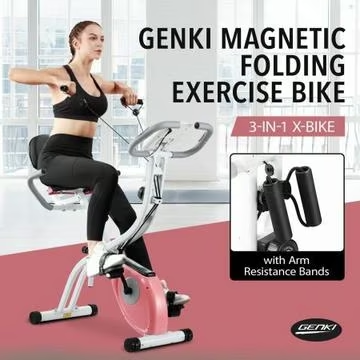
The BestDeals 3-in-1 Folding Exercise X-Bike is the most flexible pick for tight budgets, because a single knob twist converts it between an upright bike, a recumbent position and a bike trainer. The folding X-frame collapses for storage, making it the most compact option here for renters and small apartments.
It carries a padded, adjustable backrest seat and an LCD monitor, and offers ten resistance levels for a wider range of effort than the eight-level recumbents. On BestDeals it holds an 11-review rating, and stock is listed as available. The trade-off is inherent to folding X-bikes: the lighter-duty frame is less planted than a full steel recumbent, the seat and backrest are more compact, and the published specifications are lighter on detail than the dedicated trainers. For occasional low-impact cardio and easy storage, though, it is hard to beat.
Pros
- Converts between upright, recumbent and trainer modes
- Ten resistance levels, more than the eight-level recumbents
- Folding X-frame is the most compact and storable pick
Cons
- Lighter-duty folding frame is less stable than a steel recumbent
- Compact seat and backrest offer less support on long rides
- Published specifications are lighter on detail than dedicated recumbents
Key specs: BestDeals item 50659, 3-in-1 upright, recumbent and trainer, 10 resistance levels, adjustable padded backrest, folding X-frame, LCD monitor.
How to choose the best recumbent exercise bike
Start with footprint and access. A full recumbent like the picks above needs a permanent spot but gives the lowest, most supported step-through, while a folding X-bike trades some stability for the ability to store it away. Measure the space first, then decide whether a fixed trainer or a folding one fits your room and routine.
Match the maximum user weight to the heaviest person who will ride it, with headroom to spare. The bikes here range from 100 kg to 130 kg, so shared or heavier households should lean toward the higher-capacity models. Then look at resistance: all of these use quiet magnetic resistance, with eight levels on the recumbents and ten on the convertible X-bike, adjusted by a knob rather than electronically.
Comfort comes down to the seat and backrest. Mesh backrests breathe better on long sessions, adjustable seat length matters for taller or shorter riders, and grab handles help anyone with balance concerns. Finally, weigh up the monitor and connectivity. A basic LCD covers the essentials, while Bluetooth app syncing adds guided rides, and pairing your bike with a fitness tracker gives a fuller picture of heart rate and calories over time.
Seated cycling is deliberately low impact, and a vibration plate follows the same logic for people who cannot tolerate jolting through the knees. Recumbents take up a corner permanently, so in a smaller flat walking pads fold away between sessions and still cover the daily movement.
Verdict
For most New Zealand buyers the Upgraded Recumbent Bike is the best recumbent exercise bike overall, balancing a breathable backrest, app connectivity and a solid 110 kg capacity. Seniors and rehab riders are best served by the step-through New Design Recumbent Bike, heavier or shared households should choose the 130 kg Recumbent Bike, small spaces suit the folding X-Bike with its pull rope, and the 3-in-1 Folding Exercise X-Bike is the budget-friendly all-rounder.
For recovery between sessions, it is worth reading up on a massage gun to keep tired legs loose.
FAQs
Are recumbent exercise bikes good for weight loss?
Yes. A recumbent bike burns calories through steady, low-impact cardio, and because the seated position is comfortable, most riders can train longer and more often without joint pain. Consistent sessions of 30 to 45 minutes, combined with a sensible diet, support steady weight loss over time.
Is a recumbent bike good for bad knees?
Recumbent bikes are one of the best options for sensitive knees. The reclined position and larger seat reduce joint contact forces compared with upright cycling, so pedalling feels smoother and less painful. Physiotherapists often recommend them for arthritis, post-surgery rehab and gentle range-of-motion work.
Are recumbent bikes good for seniors?
Yes. The low step-through frame, back support and stable base make recumbent bikes ideal for older adults. They allow seated, low-impact cardio that improves heart health and leg strength without stressing the knees, hips or lower back, and getting on and off is easy and safe.
Is 30 minutes on a recumbent bike enough?
For most people 30 minutes a day is plenty to improve cardiovascular fitness and burn a meaningful number of calories. Beginners can start with 10 to 15 minutes and build up. Raising the resistance or adding short faster intervals increases the benefit within the same time.
What muscles does a recumbent bike work?
A recumbent bike mainly works the lower body: the quadriceps, hamstrings, glutes and calves. The seated backrest also lets the core stay relaxed and supported. Pedalling against higher resistance recruits more muscle, while the reclined position keeps the effort focused on the legs.
Recumbent bike or upright bike: which is better?
It depends on your goals. Recumbent bikes offer more back support and comfort, making them better for beginners, seniors and rehab. Upright bikes engage the core more and mimic outdoor cycling. For low-impact, joint-friendly cardio at home, a recumbent bike is usually the easier choice.
