
The best collagen supplement in NZ overall is the Jeuneora Renew+ Marine Collagen Starter Kit, because it pairs a 6,000 mg flavoured marine collagen drink with targeted hair-skin-nails capsules and is the easiest way for a first-timer to build a daily habit. For skin-focused support, the Lipo-Sachets Age Repair Marine Collagen pairs 2,500 mg of marine collagen with vitamin C in single-serve sachets, while the Vital Proteins Unflavoured Marine Collagen is the most flexible if you want a single-ingredient powder to stir into anything.
Collagen is the protein that keeps skin firm, joints cushioned and hair and nails resilient, and the body makes less of it from the mid-20s onward. Supplements use hydrolysed collagen peptides – collagen broken into smaller chains the gut absorbs more easily. Research is strongest for skin elasticity, hydration and joint comfort, with most people noticing changes after roughly 8–12 weeks of daily use; hair-growth claims are weaker. Below, every pick is grouped by who it actually suits, with honest trade-offs. Prices are not listed here — check the linked retailer for current pricing.
Quick comparison
Product | Type & source | Collagen / serve | Format | Best for |
Jeuneora Renew+ Starter Kit | Marine (Naticol) | 6,000 mg + capsules | Powder + capsules | Beginners / starter routine |
Lipo-Sachets Age Repair Marine Collagen | Marine (liposomal) | 2,500 mg | Sachets | Skin age repair |
Vital Proteins Marine Collagen | Marine (whitefish) | 12 g | Powder (unflavoured) | Mixing into anything |
Simply Nootropics Vital Beauty Mixed Berry | Bovine (Types I, II & III) | 15 g | Powder (flavoured) | Flavoured daily collagen |
Vital Proteins Peptides Chocolate | Bovine (Type I & III) | 10 g | Powder (chocolate) | Coffee & hot drinks |
The Collagen Co Splice Glow Shake | Bovine (grass-fed) | 17,500 mg | Meal-replacement powder | Meal swap + weight goals |
The Good Vitamin Co Effervescent | Marine | 500 mg | Effervescent tablet | No-powder grab-and-go |
Good Health Imaglow Capsules | Marine (NZ) | Not stated | Capsules | Capsule users / skin nutrients |
1. Lipo-Sachets Age Repair Marine Collagen – Best for skin age repair
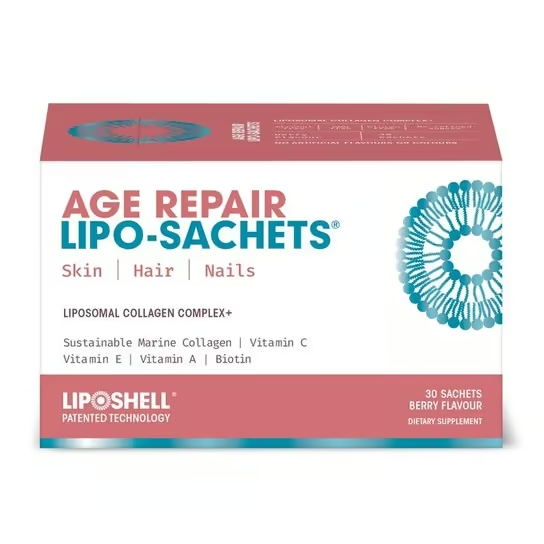
Best for shoppers who want a skin-focused collagen they can take without a tub or scoop. Each of the 30 single-serve sachets lists 2,500 mg of hydrolysed marine collagen alongside 80 mg of vitamin C, 4.45 mg of vitamin E, 200 mcg of vitamin A, 5 mg of sodium hyaluronate and 30 mcg of biotin. The vitamin C is the useful extra, because it is the cofactor your body needs to make its own collagen and many plain collagen powders leave it out.
Lipo-Sachets wraps the formula in its patented Liposhell liposomal technology, which the brand says protects the ingredients through digestion for better absorption; treat that as a manufacturer claim rather than an independently proven benefit for this product. The 2,500 mg collagen dose sits at the low end of the range used in skin studies, well below a 10 g powder scoop, and the vitamin A, vitamin E, biotin and hyaluronate amounts are modest top-ups. It contains fish, and 30 sachets lasts a month if you take one a day.
- Pros: Includes vitamin C to support your own collagen production; single-serve sachets with no tub or scoop; adds vitamins A and E, biotin and hyaluronate; marine source suits pescatarians.
- Cons: 2,500 mg of collagen is a modest dose next to 10 g powders; the liposomal absorption benefit is a brand claim; contains fish.
- Key specs: 30 sachets · hydrolysed marine collagen 2,500 mg · vitamin C 80 mg · vitamin E 4.45 mg · vitamin A 200 mcg · sodium hyaluronate 5 mg · biotin 30 mcg · Liposhell liposomal.
2. Simply Nootropics Vital Beauty Collagen – Best flavoured everyday collagen
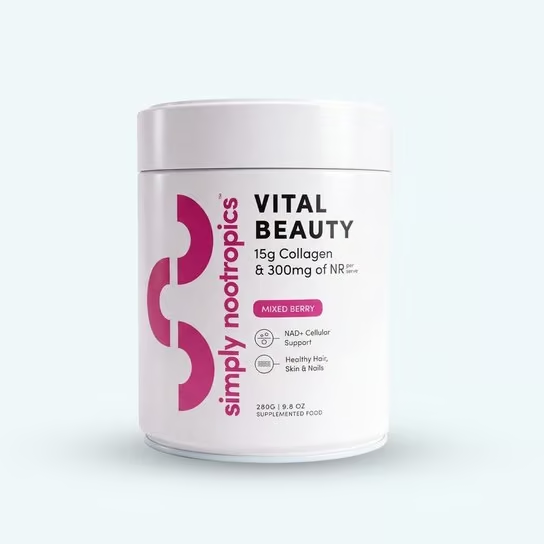
Best for people who want a flavoured daily collagen drink with more going on than collagen alone. This 280 g mixed berry powder combines Type I, II and III hydrolysed bovine collagen with nine other ingredients: nicotinamide riboside (NR), biotin, keratin, hyaluronic acid, L-glutathione, vitamin C, vitamin E, betaine and choline. It is aimed at skin, hair and nails as well as bones and joints, and a Mango Passion flavour is also available.
The pack states 15 g of collagen and 300 mg of NR per serve, which is a generous collagen dose. The catch is transparency on the rest: the listing does not give amounts for the other actives or say how many serves are in the tub, so you cannot tell whether the glutathione, keratin and hyaluronic acid are present in meaningful amounts. Including vitamin C is a plus for collagen synthesis, and being bovine it suits anyone avoiding fish, but not vegetarians.
- Pros: Flavoured powder for an easy daily drink; Type I, II and III bovine collagen; includes vitamin C plus hyaluronic acid, biotin and keratin; fish-free.
- Cons: Doses of most actives are not stated; serves per tub not stated; not vegetarian.
- Key specs: 280 g powder · bovine collagen Types I, II & III, 15 g/serve · NR 300 mg/serve, biotin, keratin, hyaluronic acid, L-glutathione, vitamins C & E, betaine, choline · mixed berry (Mango Passion also available).
3. Vital Proteins Marine Collagen (Unflavoured) – Best for mixing into anything
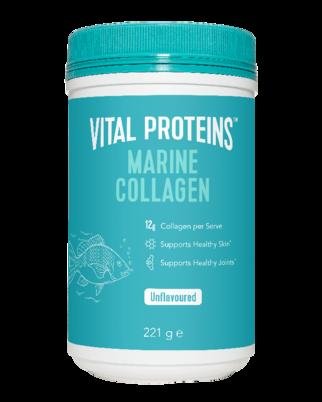
Best for the purist who wants a single-ingredient collagen with no flavour, sweetener or filler to argue with. This is 100% wild-caught whitefish collagen peptides (the NZ listing on iHerb specifies cod and Non-GMO Project verification), with nothing else in the tub. Two scoops give 12 g of marine collagen, and because marine collagen is prized for its bioavailability and high Type I content, it is a popular choice for skin specifically, as well as joint, muscle and bone support.
Being unflavoured makes it the most versatile pick here: it disappears into water, coffee, smoothies or yoghurt, and the tub stretches to 18 servings. It is gluten-free, dairy-free, Non-GMO and has 0 g of sugar, and it suits pescatarians who avoid bovine collagen. The verified iHerb rating for this exact 221 g size sits at 4.7 out of 5 across more than 13,000 ratings. The honest trade-off: “unflavoured” is not the same as odourless — pure fish collagen carries a mild marine aroma that some people notice in plain water, so mixing it into coffee or a smoothie helps.
- Pros: Single clean ingredient; marine collagen with high bioavailability; mixes into anything; 0 g sugar; very strong owner rating (4.7/5, 13,000+).
- Cons: Faint fishy aroma in plain water; contains fish (shellfish-style allergy caution); no added vitamin C or hyaluronic acid.
- Key specs: 221 g powder · marine (whitefish) collagen 12 g/serve · unflavoured · 18 serves · gluten- and dairy-free.
4. Vital Proteins Collagen – Best for coffee and hot drinks
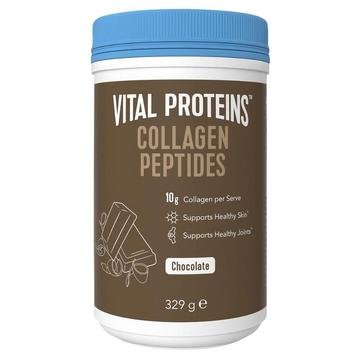
Best for anyone who wants their collagen to double as a chocolate upgrade to coffee, milk or a smoothie. Each 17 g scoop carries 10 g of hydrolysed bovine collagen peptides (Types I and III) alongside alkalised cocoa and monk-fruit sweetener, with 0 g of sugar. It is the treat-flavoured option in the range, and the chocolate is rich enough to make a mug of warm milk feel like a hot chocolate while still delivering a meaningful collagen serve.
The tub provides 19 servings and stirs in smoothly without the chalkiness many flavoured powders have — the verified iHerb rating for the chocolate line sits at 4.7 out of 5, with owners repeatedly calling out that it “tastes just like hot chocolate.” The realistic limitation is dose density: at 10 g of collagen per 17 g scoop, a good portion of each serve is cocoa and flavour, so it provides less collagen per scoop than an unflavoured powder, and 19 serves goes quickly at one a day.
- Pros: Genuinely chocolatey and mixes smoothly; 0 g sugar; trusted brand; strong 4.7/5 owner rating.
- Cons: Only 10 g collagen per 17 g scoop (much of the scoop is cocoa); no added vitamin C or hyaluronic acid; “may contain milk, fish, tree nuts.”
- Key specs: 329 g powder · bovine collagen 10 g/serve · Types I & III · chocolate · 19 serves · 0 g sugar.
5. The Good Vitamin Co. Collagen Tablets – Best no-powder, grab-&-go option
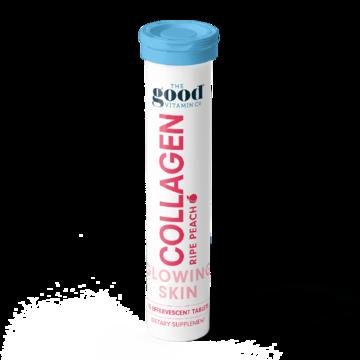
Best for people who dislike scooping and stirring powders or swallowing capsules. These ripe-peach effervescent tablets drop into a glass of water and fizz into a light drink, which makes them genuinely easy to travel with and simple to remember. Each tablet pairs 500 mg of marine collagen peptides with 100 mg of vitamin C — a sensible combination, since vitamin C is the cofactor the body uses in its own collagen synthesis, and it is the only pick here that bundles the two in a drinkable tablet.
The format is the appeal: no blender, no clumps, no fishy powder lingering in a shaker, and the peach flavour is pitched as a pleasant daily ritual. The clear-eyed trade-off is dose. At 500 mg of collagen per tablet, this is a fraction of the 2.5–10 g used in most skin and joint research, so it works as a low-commitment top-up rather than a therapeutic serving. The pack holds 15 tablets, so at one a day it lasts about two weeks before a repurchase.
- Pros: No powders or capsules — just fizz and drink; includes vitamin C for collagen synthesis; travel-friendly; pleasant peach flavour.
- Cons: Only 500 mg collagen per tablet (well below studied doses); 15-day supply per pack; marine-derived, so not for fish allergies.
- Key specs: 15 effervescent tablets · marine collagen 500 mg/tablet · vitamin C 100 mg · ripe peach · one tablet daily.
6. Good Health Imaglow Capsules — Best capsule option
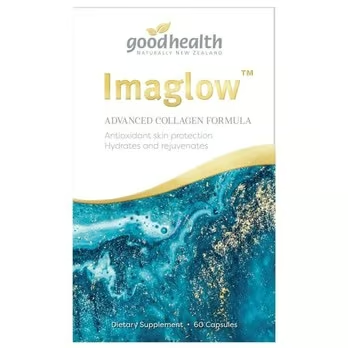
Best for shoppers who would rather swallow a capsule than mix a drink. Good Health is a New Zealand supplement brand, and Imaglow is its skin-nutrition capsule built on New Zealand marine collagen with hyaluronic acid, vitamin C, zinc, biotin and antioxidant nutrients. The formula aims at skin firmness, elasticity and hydration, with nails and hair as secondary targets.
Vitamin C and zinc are useful inclusions, since both play a part in the body’s own collagen formation, and the capsules are free from gluten, dairy, wheat and artificial colours or flavours. The trade-off is dose: the listing does not state how much collagen is in each capsule, and capsules hold far less than a powder serve, so read it as a skin-support capsule with some collagen rather than a primary collagen dose. It contains marine collagen, so it is not suitable for anyone with a fish allergy.
- Pros: No taste or mixing; NZ marine collagen; adds hyaluronic acid, vitamin C, zinc and biotin; free from gluten, dairy, wheat and artificial colours.
- Cons: Collagen amount per capsule is not stated; a capsule delivers far less collagen than a powder serve; not for fish allergies.
- Key specs: 60 capsules · NZ marine collagen · hyaluronic acid · vitamin C · zinc · biotin · antioxidant nutrients · gluten, dairy and wheat free.
7. Jeuneora Renew+ Marine Collagen – Best starter kit for beginners
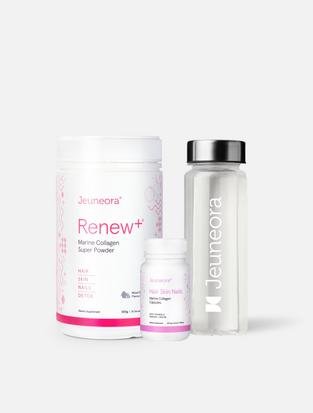
Best for first-timers who want a complete, foolproof routine rather than a single tub. This New Zealand-made kit bundles three things: the Renew+ flavoured marine collagen powder (6,000 mg of Naticol French marine collagen per dose, plus 1,000 mg vitamin C, 60 mg hyaluronic acid, 50 mg bromelain and zeolite), the Hair Skin Nails capsules (marine collagen with NZ keratin, vitamin C and 500 mcg biotin) and a 500 ml branded bottle to drink it from. The powder comes in pineapple, mixed berry or watermelon, each only about 26 calories with 0.1 g of sugar per dose.
The reason it tops the list for beginners is that it removes guesswork: the drink covers skin, digestion and bloating while the capsules add targeted hair and nail support, and the bottle nudges the daily habit. Jeuneora is a certified B Corp and the kit carries a verified 4.9 out of 5 rating across more than 6,900 reviews, with owners frequently citing stronger nails and shinier hair within 4–6 weeks; one notes it is great for people who “hate collagen drinks” because there is no fishy aftertaste. The honest trade-off is that a starter kit is a larger upfront commitment than a single powder, it is sweetened with stevia, and being marine it carries a seafood-allergy caution.
- Pros: Complete powder-plus-capsule routine; 6,000 mg marine collagen with vitamin C and hyaluronic acid; NZ-made B Corp; outstanding 4.9/5 across 6,900+ reviews; low calorie, no fishy aftertaste.
- Cons: Bigger upfront commitment than one tub; sweetened with stevia; marine-derived, so not for fish/seafood allergies.
- Key specs: Renew+ powder 6,000 mg marine collagen/dose (30 doses) + Hair Skin Nails capsules (30 doses) + 500 ml bottle · pineapple / mixed berry / watermelon.
8. The Collagen Co Splice Shake – Best collagen meal-replacement shake
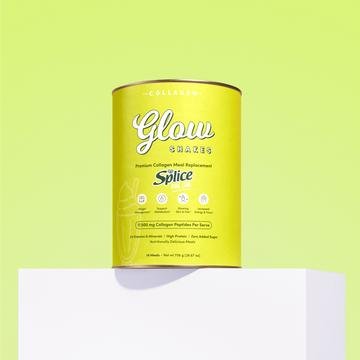
Best for someone who wants collagen and a balanced meal swap in one drink, especially alongside weight-management goals. Unlike the other picks, this is a full meal-replacement “Glow Shake”: each serve packs 29 g of protein, of which 17.5 g is grass-fed hydrolysed bovine collagen peptides, plus 5 g of prebiotic fibre, MCT oil and 24 vitamins and minerals — all for under 1 g of sugar. The limited-edition Splice Pine Lime flavour recreates the pineapple-and-lime ice block, and owners repeatedly say it “tastes just like the ice cream” without the chalky texture many shakes have.
Two scoops in 350 ml of chilled water make a creamy shake meant to replace up to two meals a day, and the pack contains 14 meals. It carries a verified 4.8 out of 5 from 178 reviews, with buyers crediting it for keeping them full and gradually trimming weight without feeling deprived. The trade-offs are real, though: it contains whey and milk protein isolate, so it is not dairy-free, and as a single-flavour pack a few reviewers note the same taste every day can get repetitive. If the goal is a pure beauty collagen rather than a meal, one of the powders above is a better fit — but as a satisfying meal swap with a serious collagen dose, this is the standout. It also pairs naturally with the wider category in our guide to the best meal replacement shakes.
- Pros: Huge 17.5 g collagen plus 29 g protein and 24 vitamins/minerals; under 1 g sugar; nostalgic pine-lime flavour; 4.8/5 owner rating; doubles as a meal.
- Cons: Contains whey and milk protein (not dairy-free); single flavour can feel repetitive daily; it is a meal replacement, not a pure beauty collagen.
- Key specs: 756 g · bovine collagen 17,500 mg/serve · 29 g protein · 5 g prebiotic fibre · MCT oil · 24 vitamins & minerals · 14 meals.
How to choose a collagen supplement in NZ
Start with type and source. Marine collagen (from fish) is high in Type I and prized for skin and bioavailability; bovine collagen (from cattle) supplies Types I and III and tends to be more versatile for skin, joints and gut. Pescatarians and those avoiding beef should choose marine; anyone with a fish or shellfish allergy should choose bovine.
Then look at dose per serve. Most research uses roughly 2.5–15 g of collagen a day, so a 10–15 g powder does more heavy lifting than a 300–500 mg capsule or tablet — the lower-dose formats are better seen as convenient top-ups. Check added actives too: vitamin C supports your body’s own collagen synthesis, while hyaluronic acid and ceramides target skin hydration specifically.
Finally, pick a format you will actually use daily: unflavoured powders mix into anything, flavoured powders and shakes make the habit enjoyable, and capsules or effervescent tablets win on convenience. Consistency over 8–12 weeks matters more than any single ingredient. Collagen is a protein supplement and is not Medsafe-registered as a medicine, so treat the marketing claims with healthy scepticism. If you are also building out a wider routine, it is worth comparing our guides to the whey protein, the multivitamins and the magnesium supplement, since collagen works best as one part of a balanced diet. For skin support specifically, an omega-3 supplement is a natural companion.
If you are building a full routine rather than buying one product, the guides to anti-ageing creams, eye creams and face moisturisers cover what layers with this.
The verdict
For most NZ shoppers, the Jeuneora Renew+ Marine Collagen Starter Kit is the best place to start — it combines a solid 6,000 mg marine collagen drink, targeted capsules and a near-perfect owner rating in one beginner-friendly bundle. If you want a skin-focused formula with vitamin C built in, the Lipo-Sachets Age Repair sachets add vitamins A and E, biotin and hyaluronate to 2,500 mg of marine collagen; for maximum flexibility, the Vital Proteins Unflavoured Marine Collagen mixes into anything; and the Collagen Co Splice Glow Shake is the pick if you want a collagen-rich meal swap. Capsules and effervescent tablets win on convenience but deliver far less collagen, so match the format to the dose you actually need.
FAQs
Which collagen is best for skin?
Marine collagen is most often recommended for skin because it is rich in Type I collagen and is absorbed efficiently. Bovine collagen (Types I and III) also supports skin while adding joint and gut benefits. Pairing either with vitamin C helps your body use it, and consistency over 8–12 weeks matters most.
Marine vs bovine collagen — which is better?
Neither is universally better. Marine collagen is higher in Type I and slightly more bioavailable, making it a favourite for skin, and it suits pescatarians. Bovine collagen provides Types I and III, is more versatile for skin, joints and gut, and avoids fish allergens. Choose based on diet, allergies and your main goal.
How much collagen should you take per day?
Most studies use about 2.5 to 15 grams of collagen peptides daily, depending on the goal — lower doses for skin and higher for joints or muscle. There is no official NZ health-authority dose. Powders typically hit this range easily, while capsules and effervescent tablets deliver far less and act as top-ups.
How long does collagen take to work?
Most people see results after roughly 8 to 12 weeks of daily use. Skin hydration can improve from around 4 to 8 weeks, with elasticity and fine-line benefits closer to 12 weeks. Daily consistency matters far more than the time of day you take it, and skipping doses slows progress.
Do collagen supplements actually work?
The evidence is strongest for skin elasticity and hydration and for joint comfort, supported by several randomised trials and a 2021 meta-analysis. Benefits for hair growth are weaker and less proven. Collagen supplements are not regulated as medicines in NZ, so results vary and they work best alongside a balanced diet.
When is the best time to take collagen, morning or night?
There is no proven “best” time — absorption is similar whether you take collagen in the morning or evening. The most important factor is taking it every day. Many people simply add it to a morning coffee, smoothie or water bottle because that makes the habit easier to keep up long term.
Is collagen safe to take during pregnancy?
Many collagen products are positioned as safe, but some — including certain capsule formulas — advise against use during pregnancy or breastfeeding. Because formulations and added ingredients differ, anyone who is pregnant or nursing should check the specific product label and speak to their doctor or midwife before starting.
Can vegetarians or vegans take collagen?
True collagen is animal-derived (marine or bovine), so it is not suitable for vegans and most vegetarians. “Vegan collagen” products do not contain collagen itself; instead they supply nutrients such as vitamin C, amino acids and zinc that support your body’s own collagen production. Pescatarians can use marine collagen.
Is collagen powder or capsules better?
Powders deliver much higher doses (often 10–15 g per serve) and mix into drinks, making them better for meaningful skin or joint support. Capsules and effervescent tablets are far more convenient and travel-friendly but supply only a few hundred milligrams, so they suit maintenance or top-ups rather than a primary collagen dose.
