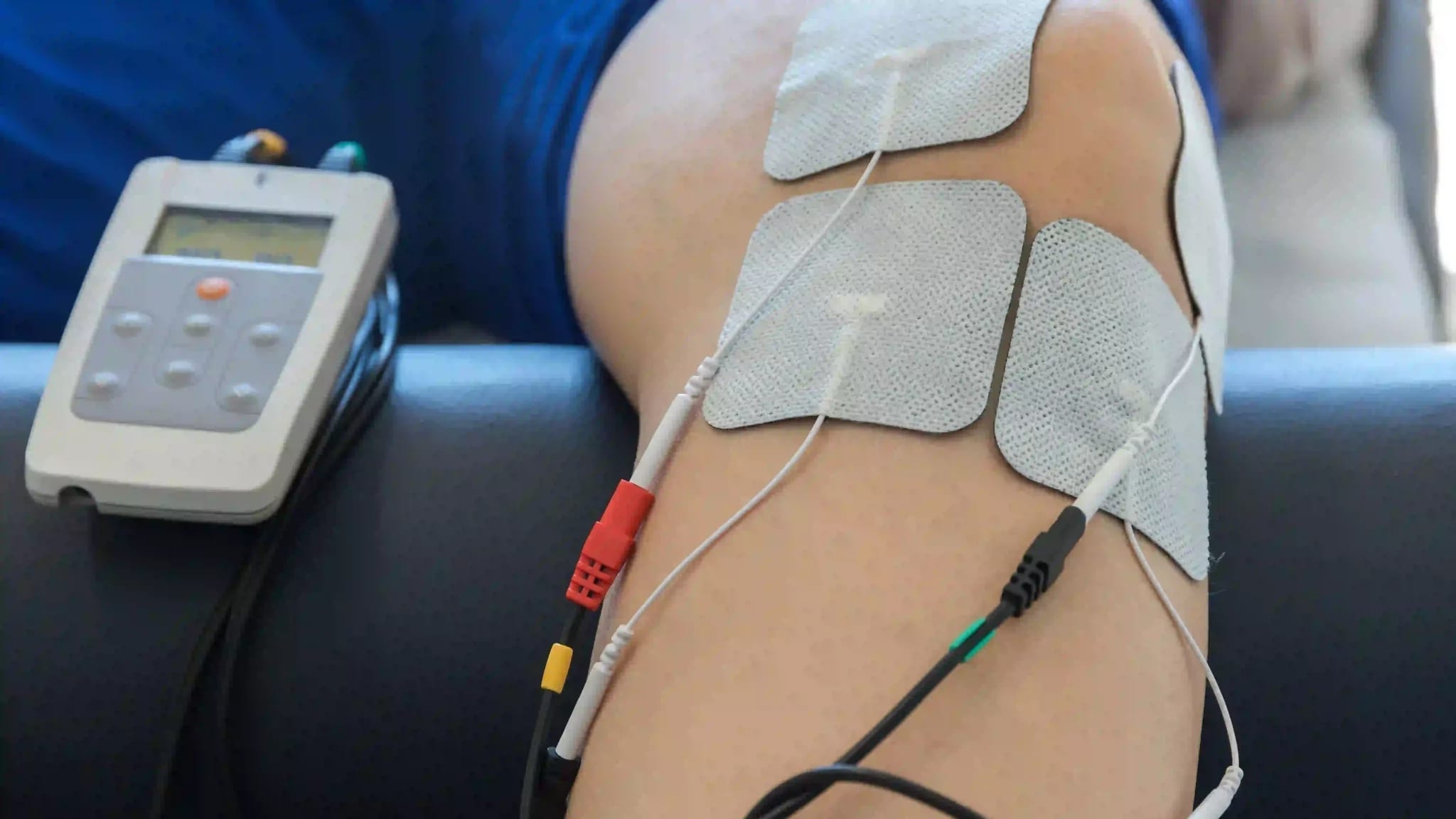
The best TENS machine in NZ overall is the Omron HV-F128, thanks to its clinic-grade programme range and the trust that comes with a well-known medical brand. TENS (Transcutaneous Electrical Nerve Stimulation) machines send small electrical pulses through pads stuck to the skin, easing pain by blocking pain signals and encouraging the body’s own endorphins.
This guide covers three machines worth shortlisting for New Zealand shoppers, from a premium single-user unit to budget dual-channel options that suit two people or two problem areas at once. If the ache is more general muscle tightness than nerve pain, a massage gun or back massager may suit better than a TENS unit.
Each pick below is written up from real owner feedback and retailer product detail, not spec-sheet guesswork, with honest trade-offs alongside the positives.
| Rank | Product | Best For | Modes / Intensity | Channels |
|---|---|---|---|---|
| 1 | Omron HV-F128 | Best overall / serious pain relief | 12 auto + 5 special modes, 10 intensity levels | 2 (4-pad) |
| 2 | Kongzee 4-in-1 TENS/EMS | Best budget 4-in-1 combo | TENS, EMS, massage, DIY modes, 40 intensity levels | Dual channel |
| 3 | OSITO Dual Channel TENS | Best value for two people | 25 modes, 50 intensity levels | Dual channel |
1. Omron HV-F128 – Best Overall
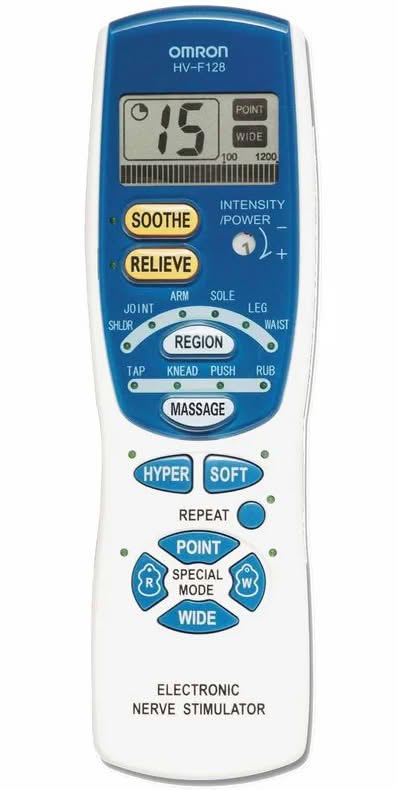
The best TENS machine in NZ overall is the Omron HV-F128, thanks to its clinic-grade programme range and the trust that comes with the Omron name. It is a pocket-sized handheld unit weighing about 155g including batteries, with curved edges that sit comfortably in one hand and a belt clip for wearing it during a session.
The shell is white and silver plastic with blue accent buttons and a small LCD screen showing the timer and mode number – it reads as a clinical device rather than a lifestyle gadget, which suits shoppers who want something that feels medically credible. Build quality is solid, with a firm click to the buttons rather than a mushy press. The lead wires clip into the top of the unit and are designed to pull free rather than yank the unit off a table, though a couple of owners feel that connection could sit a little tighter.
Setup is straightforward: clip the pads onto the wire pins and choose from 12 automatic programmes covering the shoulder, waist, joint, arm, leg or sole, or one of 4 massage-style modes (tapping, kneading, pushing, rubbing). Testers found the automatic body-area programmes take the guesswork out of choosing settings, and the unit shuts itself off after 15 minutes so it cannot be left running by accident.
Intensity runs across 10 levels, with a frequency range up to 1200Hz for the soothe-and-relieve programmes. Testers reported noticeable easing of shoulder and lower back tightness within a session, with relief lasting three to four hours for some. On the downside, the pads are rated for around 150 uses before needing replacement, and owners note the official replacements are not cheap. It is also a single-person unit – there is no simultaneous two-person mode like the cheaper combo units below.
Pros
- Trusted, widely stocked medical brand
- 12 automatic body-specific programmes remove the guesswork
- Auto shut-off after 15 minutes for safety
Cons
- Replacement pads cost more than generic alternatives
- No true two-person, simultaneous dual-channel use
- Higher asking price than the generic combo units below
Key specs: model HV-F128, 10 intensity levels, 12 automatic + 5 special modes, auto shut-off at 15 minutes.
2. Kongzee 4-in-1 TENS/EMS Muscle Stimulator – Best Budget Combo
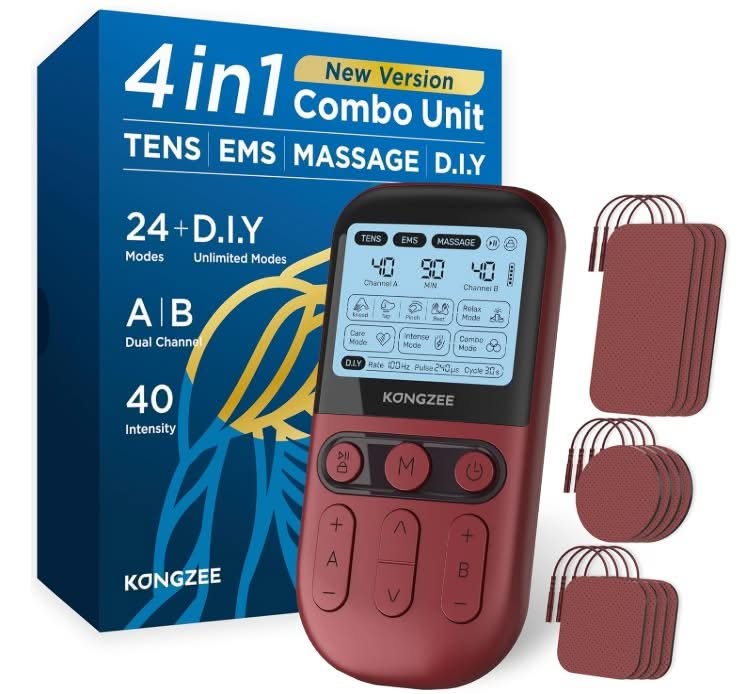
Best for shoppers who want TENS, EMS and massage settings without buying three separate machines. The Kongzee measures about 13.5 x 5.2 x 16.5cm and weighs 449g including its full accessory kit – noticeably heavier than the Omron, since it ships with 12 electrode pads, 2 connector wires, small plastic storage plates and a zip pouch rather than just the handset.
The shell is matte black plastic with a backlit LCD screen and soft-touch blue mode buttons, styled more like a consumer gadget than a clinical device. Build feels sturdy for the price, and the plastic storage plates that keep the pads sticky between sessions are a genuinely useful touch that cheaper kits often skip.
Where the Omron automates the choice, the Kongzee hands it to the user: a DIY channel lets shoppers dial in their own combination of TENS, EMS, massage and custom settings, which suits tinkerers but means a slower learning curve for first-timers. A repeated owner complaint is that the intensity dial has no numeric readout, so fine-tuning by feel takes a session or two to learn. Some also found the printed instructions unclear on first setup.
Performance-wise, the dual-channel output lets one side treat a stiff shoulder while the other soothes a lower back, or two people can share the unit at once. Runtime is adjustable from 10 to 90 minutes, and 40 intensity levels give plenty of headroom from a gentle tingle through to a strong, sports-therapy-style pulse. Testers who stuck with it past the learning curve found it held up well through months of regular use.
Pros
- Four functions – TENS, EMS, massage and DIY – in one unit
- Dual channel treats two areas, or two people, at once
- Generous accessory kit: 12 pads, 2 wires, storage plates, pouch
Cons
- Manual intensity dial has no numeric readout
- Steeper learning curve than single-purpose TENS units
- Instruction manual could be clearer for first-time setup
Key specs: model AS9026, 4-in-1 TENS/EMS/massage/DIY modes, 40 intensity levels, dual channel, 12 electrode pads included.
3. OSITO Dual Channel TENS Unit – Best Value for Two People
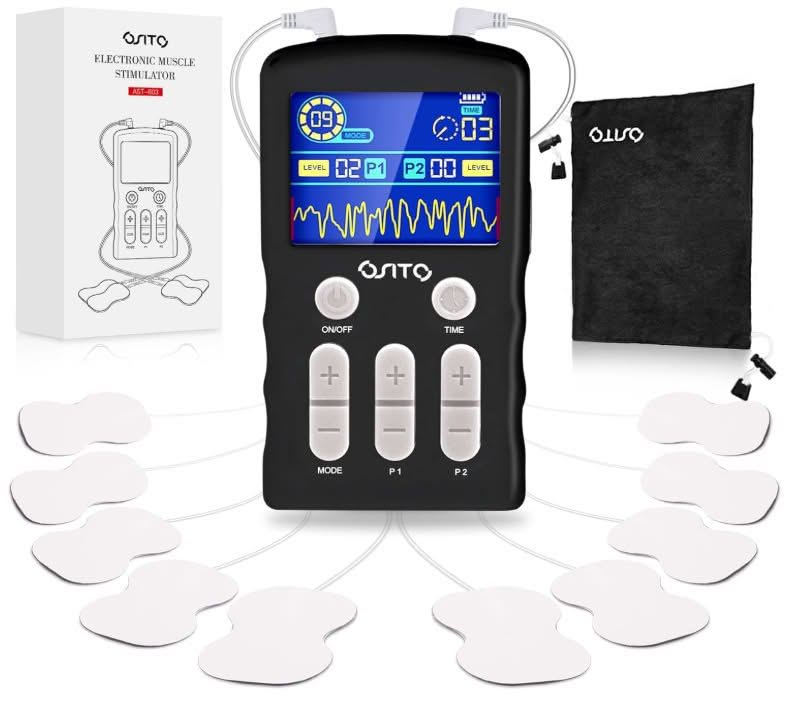
Best for shoppers after the widest range of pre-set modes at a lower price point. The OSITO is a compact, pocket-sized handset with a similar footprint to a small TV remote, designed to clip to a waistband during use.
Its glossy black shell houses a colour HD screen – a step up from the monochrome LCDs on the other two picks – which makes it easier to see the active mode and channel at a glance. The rechargeable lithium battery is rated for up to 20 hours of continuous use per charge, and the hydrogel pads are reusable for roughly 70 to 110 sessions before needing replacement.
Testers found the 25 pre-set modes – covering shiatsu, deep tissue, kneading, cupping, acupuncture and tapping styles – genuinely different from one another rather than relabelled versions of the same pulse. Separate channel controls mean two people can use it at the same time at different intensities, or one person can treat two areas. A recurring owner complaint is that the unit resets its mode and intensity back to default every time it is switched off, so it cannot remember a favourite setting between sessions.
With 50 intensity levels, control is fine-grained, and testers found it effective for post-workout muscle soreness and lower back tightness, with some noticing reduced ankle swelling after a single session at a higher setting. A handful of owners reported the display becoming unreliable after several months of use, and the supplied charging cable is on the short side.
Pros
- 25 distinct modes – the widest range on this list
- 50 intensity levels for fine control
- Dual channel supports two simultaneous users
Cons
- Does not remember settings after power-off
- Supplied charging cable is short
- A few reports of display reliability issues over time
Key specs: 25 modes, 50 intensity levels, dual channel, colour display, USB rechargeable.
How to Choose a TENS Machine
Start with channels. A single-channel unit treats one area with one pair of pads, while a dual-channel machine like the Kongzee or OSITO above can run two separate pad pairs at different intensities – useful for treating two sore spots, or letting two people use the same unit.
Mode count matters less than it looks. Automatic body-area programmes, like Omron’s shoulder, waist and joint settings, remove guesswork, while a high mode count like OSITO’s 25 settings suits shoppers who like to experiment and fine-tune. Intensity range is worth checking too – more levels mean finer control between a gentle tingle and a strong therapeutic pulse.
Pad life and replacement cost add up over time. Reusable pads typically last anywhere from 70 to 150 sessions before losing their stickiness, and official replacements for name-brand units cost more than generic ones. Battery type matters for portability – rechargeable lithium units avoid the ongoing cost of disposable batteries.
Finally, think about what the pain actually is. TENS targets nerves and pain signals, while EMS targets muscles for conditioning and recovery – shoppers who mainly want a hands-free relaxation session rather than targeted nerve stimulation may prefer a neck massager instead.
For recovery between sessions, the guides to home saunas and hot and cold therapy devices are worth a look.
Verdict
The Omron HV-F128 is the best all-round pick for New Zealand shoppers who want a trusted, clinic-style TENS machine and don’t mind paying more for it. The Kongzee 4-in-1 suits shoppers who want TENS, EMS and massage in one budget-friendly unit, and the OSITO dual-channel unit is the pick for anyone who wants the widest mode selection or plans to share the machine with a partner.
Frequently Asked Questions
How does a TENS machine work?
A TENS machine sends small electrical pulses through electrode pads stuck on the skin, targeting nerves rather than muscles. These pulses interrupt pain signals travelling to the brain and encourage the body to release natural endorphins, which is why many users feel relief during and shortly after a session.
What’s the difference between TENS and EMS?
TENS targets nerves to reduce the feeling of pain, while EMS targets muscles to trigger contractions for strength and recovery. Most combination units offer both modes, so shoppers get pain relief from TENS and muscle conditioning from EMS in a single device.
Where should TENS pads be placed for back pain?
For lower back pain, place one pad on each side of the sore area, roughly an inch apart, avoiding the spine itself. Larger four-pad units let two pads sit above the pain and two below, framing it on both sides of the spine for even coverage.
How often can you use a TENS machine?
Most people can use a TENS machine one to three times a day for 20 to 60 minutes per session. Acute pain often responds well to shorter, more frequent sessions, while chronic pain is usually managed with 20 to 30 minute sessions up to five times a week.
Who should not use a TENS machine?
TENS is not recommended for anyone with a pacemaker or other implanted electronic device, and pads should never be placed over the chest, throat, broken skin or varicose veins. People who are pregnant, epileptic or have a history of blood clots should check with a doctor first.
How long does TENS pain relief last?
Relief from a TENS session varies from person to person. Some shoppers notice pain relief lasting several hours after switching the unit off, while others find the effect fades as soon as the machine is turned off. Using it consistently alongside other treatment tends to give the best results.
