
The best soundbar for most NZ households is the Bose Smart Soundbar, thanks to Bose’s TrueSpace upmixing technology, crisp AI dialogue clarity, and built-in Alexa, all in a genuinely compact frame. Buyers wanting a wired surround system with real rear speakers should look at the ULTIMEA Poseidon D80, while the Polk Audio Signa S2D delivers comparable premium performance at a similar price point. A compact LG option, a dialogue-focused Bose TV Speaker, and a genuine budget ULTIMEA pick round out the list.
This guide compares six soundbars currently available in New Zealand, covering real specs, connectivity and genuine trade-offs, not marketing copy.
Quick comparison
| # | Product | Best for | Channels/Format |
|---|---|---|---|
| 1 | Bose Smart Soundbar | Best overall | Dolby Atmos (virtual), TrueSpace upmixing |
| 2 | Polk Audio Signa S2D | Best value premium | Dolby Digital & DTS Virtual Surround, wireless sub |
| 3 | ULTIMEA Poseidon D80 | Best wired surround system | 7.1ch Dolby Atmos, 4 wired surround speakers + sub |
| 4 | LG Soundbar US20A | Best compact for LG TVs | Dolby Audio, 80W |
| 5 | Bose TV Speaker | Best for dialogue clarity | 2-channel, Bluetooth |
| 6 | ULTIMEA Apollo S50 | Best budget | 4.1ch, detachable, wired subwoofer |
The 6 best soundbars in NZ
1. Bose Smart Soundbar – Best Overall
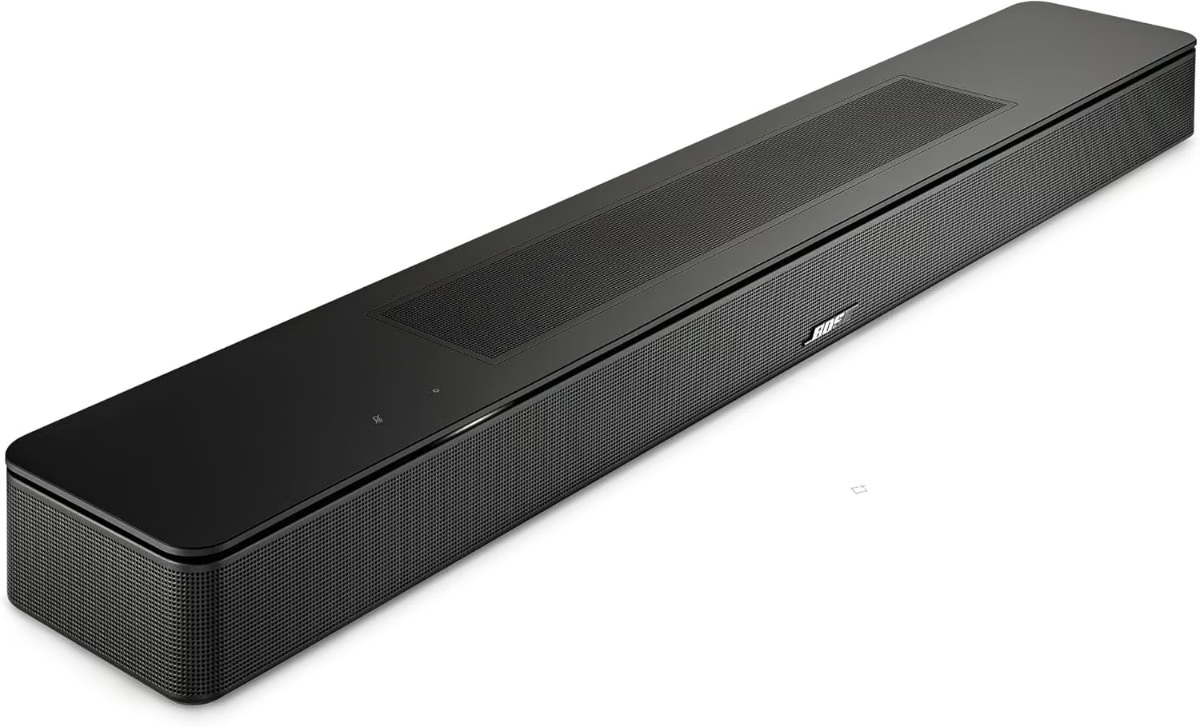
Bose’s Smart Soundbar packs five transducers, including two firing upward, into a genuinely compact frame, and it’s built around the brand’s proprietary TrueSpace technology rather than relying on true multi-speaker Dolby Atmos hardware. TrueSpace intelligently analyses stereo or 5.1 signals and upmixes them into an immersive multi-channel experience, so even older, non-Atmos content gets a spacious, room-filling treatment.
Dialogue clarity is a genuine strength here: A.I. Dialogue Mode actively balances voices against surround effects so speech doesn’t get buried under music or explosions, a common complaint with cheaper soundbars. Streaming is flexible too, Bluetooth, Apple AirPlay 2, Spotify Connect and Chromecast built-in are all supported, so almost any phone or app can cast to it directly.
Built-in Amazon Alexa plus Bose’s Voice4Video feature let it control the TV and set-top box by voice alone, and pairing with Bose Ultra Open Earbuds (sold separately) adds a genuine rear-surround effect. The trade-off is that TrueSpace is a virtual surround technology, not physical rear speakers, so buyers wanting true discrete surround channels should look at the ULTIMEA Poseidon D80 below instead.
Pros
- TrueSpace technology upmixes any source into immersive multi-channel sound
- A.I. Dialogue Mode keeps speech clear against surround effects and music
- Built-in Alexa plus AirPlay 2, Spotify Connect and Chromecast streaming
Cons
- Virtual surround via TrueSpace, not physical discrete rear channels
- True rear-surround effect needs separately-sold Bose earbuds
Key specs: 5 transducers (2 upward-firing), Dolby Atmos compatible via TrueSpace upmixing, built-in Alexa, Bluetooth/AirPlay 2/Spotify Connect/Chromecast.
2. Polk Audio Signa S2D – Best Value Premium
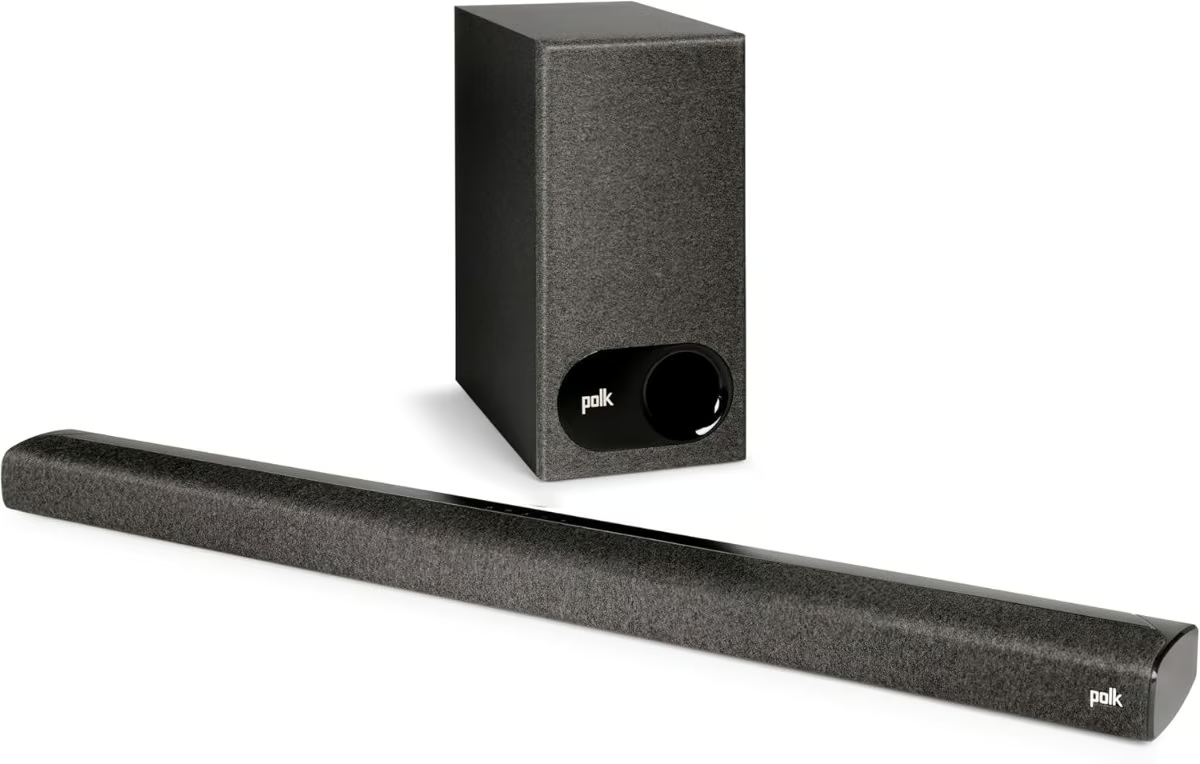
Polk’s Signa S2D pairs the soundbar with an included wireless subwoofer, so there’s no cable to run across the room for the bass unit, just power for the sub itself. At just over 2 inches tall, the bar sits low enough in front of a TV that it won’t block the screen’s bottom edge or interfere with the IR remote sensor, a genuinely practical detail that trips up bulkier soundbars.
Five full-range drivers deliver rich sound with genuine depth from the wireless sub, and Polk’s exclusive VoiceAdjust technology works alongside Dolby Digital decoding to reduce voice delay and maximise dialogue clarity. Connectivity covers HDMI ARC, optical input and AUX, and Bluetooth streaming pulls in Spotify, Pandora, TuneIn and other apps directly from a phone or tablet.
Setup is quick, the included subwoofer, HDMI and optical cables mean most buyers are up and running within minutes of unboxing. The trade-off against the Bose and ULTIMEA picks here is surround format: it uses DTS Virtual Surround rather than true Dolby Atmos height channels, so overhead effects are simulated rather than genuinely reproduced.
Pros
- Included wireless subwoofer, no cable run needed across the room
- Ultra-slim profile won’t block the TV screen or IR remote sensor
- VoiceAdjust technology reduces voice delay for clearer dialogue
Cons
- DTS Virtual Surround simulates height effects rather than true Dolby Atmos channels
- Only 4 left in stock at time of research, worth checking current availability
Key specs: 5 full-range drivers, included wireless subwoofer, Dolby Digital & DTS Virtual Surround, HDMI ARC/optical/AUX/Bluetooth.
3. ULTIMEA Poseidon D80 – Best Wired Surround System
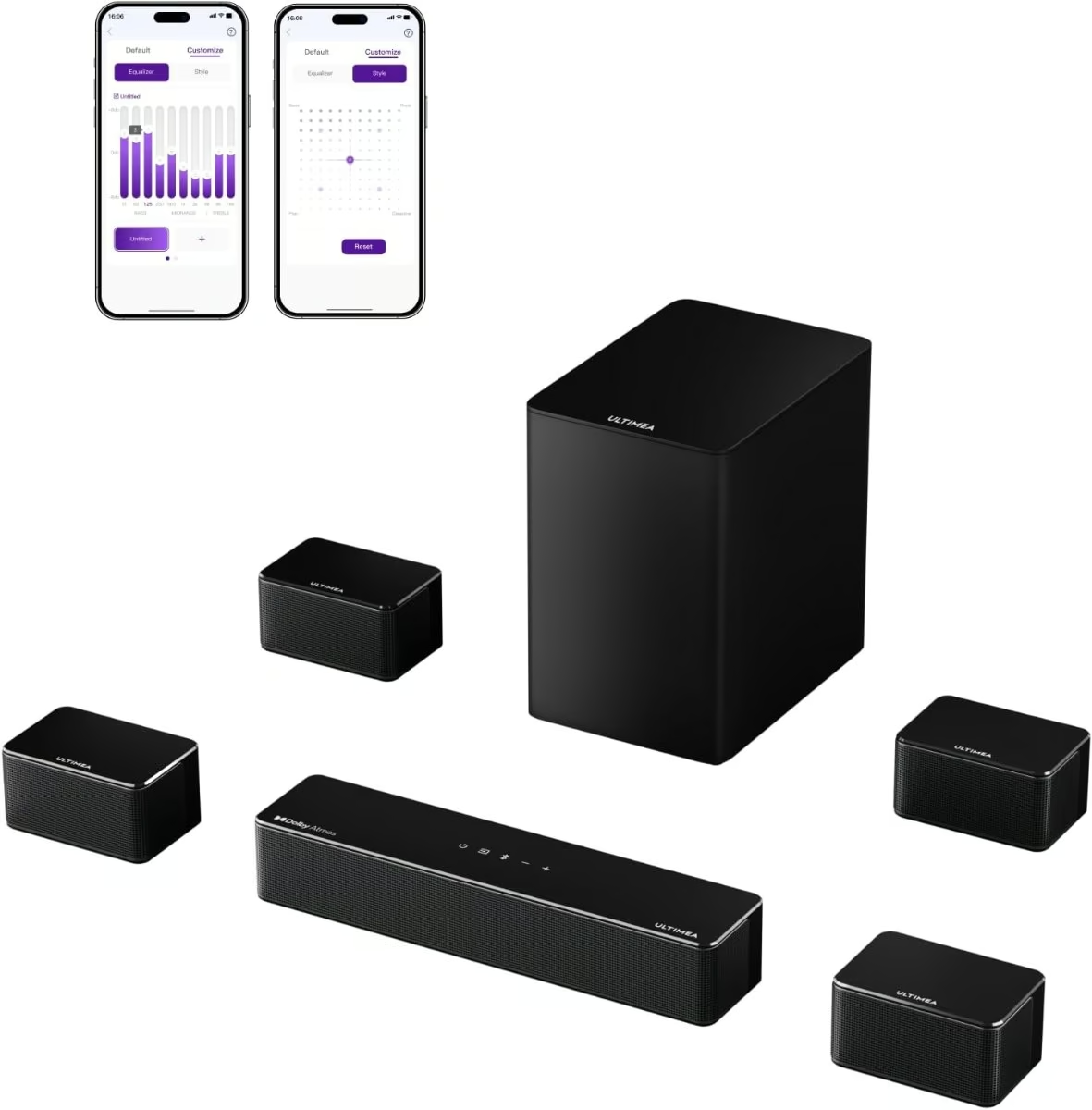
Where the Bose and Polk picks above simulate surround sound virtually, ULTIMEA’s Poseidon D80 takes the more direct route: 2 wired rear speakers and 2 wired front speakers alongside the main bar and a 6.5-inch wireless subwoofer, 8 drivers in total, for genuinely discrete channel separation rather than an upmixed approximation.
The system supports true Dolby Atmos with 3D positioning algorithms that place sound elements around the room rather than just left-right-centre, and ULTIMEA’s SurroundX System combined with 360° Aural Spatial Localization Technology is built specifically to keep the immersive effect consistent regardless of where in the room someone is sitting. Connectivity includes 4K HDMI with eARC for a single-cable TV connection, plus optical and AUX for older devices.
The genuine trade-off of a wired surround system is exactly what it sounds like: rear speaker cables need running across or around the room to the back of the seating area, more installation effort than any of the wireless or virtual-surround picks on this list. It’s also worth noting the D80 doesn’t support DTS decoding, only Dolby formats.
Pros
- Genuine discrete 7.1 channels with wired rear speakers, not virtual upmixing
- True Dolby Atmos support with 3D sound-positioning algorithms
- 4K HDMI with eARC for simple single-cable TV connection
Cons
- Rear speaker cables need running across the room, more installation effort
- Does not support DTS decoding, Dolby formats only
Key specs: 7.1ch, 460W, 8 drivers total, 6.5″ wireless subwoofer, 4 wired surround speakers, Dolby Atmos, 4K HDMI (in & eARC)/Optical/AUX/USB.
4. LG Soundbar US20A – Best Compact for LG TVs

LG’s US20A is built around a straightforward promise, small in size, big on low-end, and it’s aimed squarely at buyers who want an easy audio upgrade without a large footprint in front of the TV. At 80W maximum output, it’s a genuine step up from a TV’s built-in speakers without the bulk of the larger systems on this list.
Dolby Audio decoding covers most streaming content, and LG’s AI Sound Pro processing adjusts audio characteristics based on what’s playing, aiming to suit dialogue-heavy shows and action content differently without manual EQ fiddling. LG’s WOW interface is a genuine convenience for anyone pairing it with an LG television, offering simplified connection and control without deep-diving into a settings menu.
The trade-off is scope: this is a compact, HDMI-connected stereo/surround unit rather than a full home-theater system, so buyers wanting a wireless subwoofer or true Atmos height channels are better served by the Polk, Bose or ULTIMEA picks above. Stock was also limited to 5 units at the time of research.
Pros
- Compact footprint, easy to fit in front of most TVs
- WOW interface simplifies setup specifically with LG televisions
- AI Sound Pro adjusts audio automatically for different content types
Cons
- No wireless subwoofer or true Atmos height channels included
- Stock was limited to 5 units at time of research
Key specs: 80W max output, Dolby Audio, AI Sound Pro, HDMI connectivity, WOW interface for LG TVs.
5. Bose TV Speaker – Best for Dialogue Clarity

The Bose TV Speaker strips a soundbar back to its most essential job: making dialogue clearer. At just over 5cm tall, it’s designed purely to fix muddy TV audio rather than build out a full surround system, and two angled full-range drivers give it a wider, more natural spatial spread than the TV’s built-in speakers ever could.
Setup is genuinely simple: a single optical cable (included) or HDMI cable (sold separately) connects it to the TV, and Bluetooth pairing lets it double as a speaker for music and podcasts when the TV’s off. The included remote adds a dedicated dialogue mode for further vocal enhancement, plus a bass boost toggle for more depth without needing a separate subwoofer.
It’s genuinely expandable too, the TV Speaker is compatible with Bose’s Bass Module 500 or 700 for buyers who want to add proper low-end later, though the module and connection cable are sold separately. It isn’t compatible with Bose Surround Speakers though, so buyers wanting a full-room system down the line should look at the Smart Soundbar above instead.
Pros
- Purpose-built for dialogue clarity, a simple, effective fix for muddy TV audio
- Genuinely compact at just over 5cm tall
- Expandable with Bose’s Bass Module 500/700 if more bass is wanted later
Cons
- No surround features or Atmos support, dialogue-focused stereo only
- Not compatible with Bose Surround Speakers for a future full-room upgrade
Key specs: 2 angled full-range drivers, Bluetooth, optical/HDMI connectivity, dialogue mode + bass boost remote, expandable with Bass Module 500/700.
6. ULTIMEA Apollo S50 – Best Budget
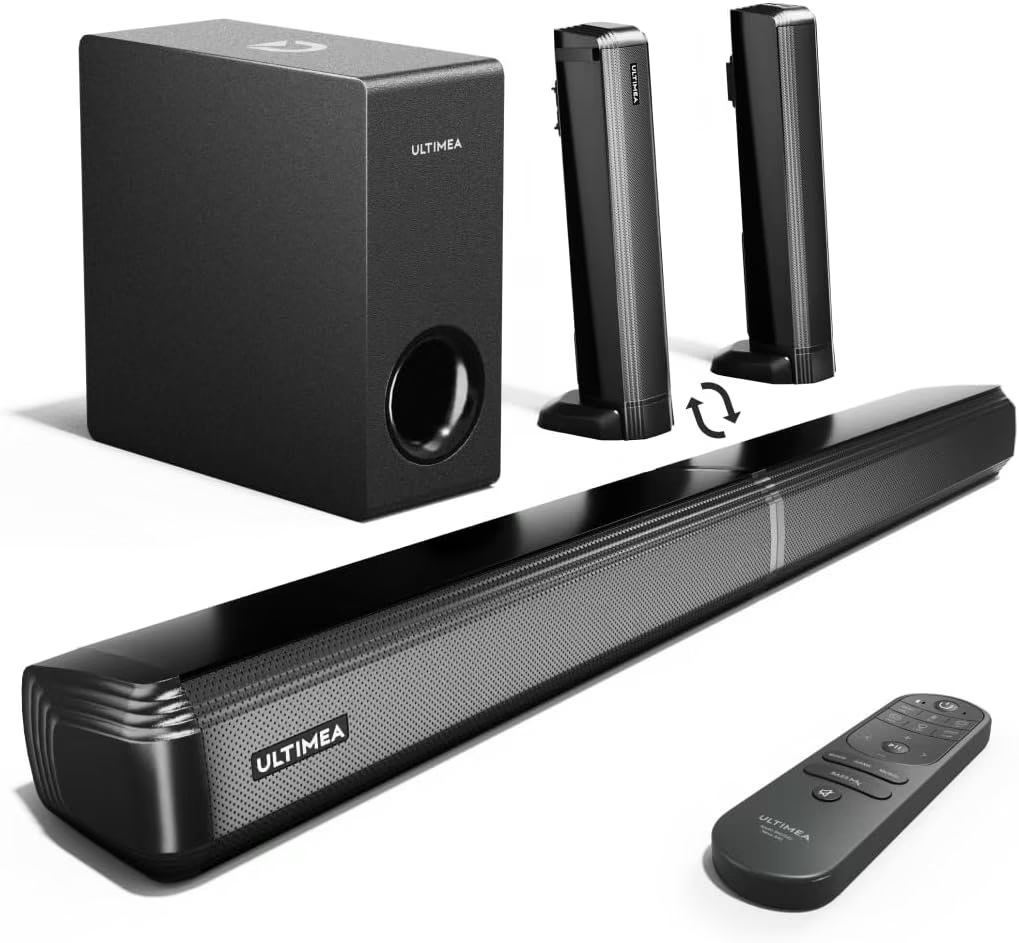
ULTIMEA’s Apollo S50 is the cheapest genuine-brand soundbar in this guide, and it packs in a wired 7.2-litre subwoofer with a 15mm driver diaphragm for real bass rather than leaving low-end entirely to the main bar’s small drivers. Built-in tweeters and woofers aim for a balanced sound across the frequency range rather than favouring bass or treble alone.
Its detachable, split design is genuinely flexible: the bar can be assembled in different configurations to suit different room layouts, and a 7-degree tilt on the drivers is built in to widen the soundstage. The ULTIMEA app allows fine control over bass and treble plus three dedicated EQ modes for music, movies and games, more granular tuning than most budget soundbars offer through a remote alone.
Connectivity covers ARC, optical, AUX and USB with all cables included, plus Bluetooth 5.3 for wireless streaming up to around 49 feet. The honest trade-off at this price is format: there’s no Dolby Atmos or DTS support here, this is a straightforward 4.1-channel stereo/surround unit rather than a home-theater system, well suited to buyers wanting a genuine step up from TV speakers without paying for features they won’t use.
Pros
- Cheapest genuine-brand soundbar on this list
- Wired 7.2L subwoofer delivers real bass, not just simulated low-end
- App control with 3 EQ modes for more tuning than most budget soundbars offer
Cons
- No Dolby Atmos or DTS support at this price point
- 4.1-channel format, not a full home-theater surround system
Key specs: 200W, 4.1ch, 5.25″ wired subwoofer (7.2L), Bluetooth 5.3, ARC/Optical/AUX/USB, app control with 3 EQ modes.
How to choose a soundbar in NZ
Virtual surround and true discrete surround are genuinely different things. Soundbars like the Bose Smart Soundbar and Polk Signa S2D use upmixing technology (TrueSpace, DTS Virtual Surround) to simulate a wider soundstage from a single bar or bar-plus-subwoofer. The ULTIMEA Poseidon D80’s wired rear speakers deliver genuinely discrete channels instead, more installation effort for more accurate spatial separation.
Check Dolby Atmos support carefully, not just the marketing name. True Atmos height channels need either upward-firing drivers or physical height speakers. Several budget soundbars use Atmos branding loosely or rely entirely on virtual upmixing, so it’s worth checking whether a specific model reproduces height information or approximates it.
Match the connection type to the TV. HDMI ARC or eARC lets a single cable carry both audio and basic remote control functions between TV and soundbar, the simplest setup for most modern smart TVs. Optical and AUX inputs remain useful fallbacks for older TVs or additional source devices.
Dialogue clarity matters more than raw volume for most households. Features like Bose’s A.I. Dialogue Mode or Polk’s VoiceAdjust specifically target clearer speech rather than just louder overall output, often the actual complaint that sends people shopping for a soundbar in the first place.
Late-night viewing is where a soundbar becomes a liability in a shared house, and earbuds solve that better than turning the volume down. Soundbars are engineered for a room with walls to reflect off, which is exactly why they disappoint on a deck and the best outdoor speakers do not.
Verdict
For most NZ households, the Bose Smart Soundbar is the strongest all-rounder, genuinely immersive TrueSpace sound, sharp dialogue clarity, and built-in Alexa in a compact frame. Buyers wanting true discrete surround channels rather than virtual upmixing should look to the ULTIMEA Poseidon D80’s wired rear-speaker system, while the Polk Audio Signa S2D offers comparable premium performance with an included wireless subwoofer. The LG US20A suits a compact, LG-friendly upgrade, the Bose TV Speaker is the purest dialogue-clarity fix, and the ULTIMEA Apollo S50 is the honest budget pick for anyone wanting a genuine step up from TV speakers without paying for Atmos features they won’t use.
Related guides:
- Setting up a full home theater? See our best smart TVs guide.
- Want great sound on the go too? Check our best true wireless earbuds picks.
- Blocking out noise elsewhere in the house? Browse our best noise cancelling headphones guide.
Frequently Asked Questions
What’s the difference between a soundbar and a full home theater system?
A soundbar is a single unit (or bar plus a subwoofer) designed to replace a TV’s built-in speakers simply. A full home theater system uses separate front, centre, rear and subwoofer speakers wired or wirelessly around the room. Soundbars like the ULTIMEA Poseidon D80 with wired rear speakers sit in between, offering more discrete channels than a standalone bar without a full multi-box AV receiver setup.
Do I need a soundbar with Dolby Atmos?
Only if the content and TV support it and height-based sound genuinely matters to you. Many streaming shows and movies now include Atmos mixes, and a soundbar with real upward-firing or wired height speakers reproduces that more accurately than one relying purely on virtual upmixing. For casual TV and dialogue-focused viewing, a simpler stereo soundbar like the Bose TV Speaker is often enough.
What’s the best way to connect a soundbar to a TV?
HDMI ARC or eARC is the best option on modern TVs, it carries audio in both directions over a single cable and often lets the TV remote control the soundbar’s volume too. Optical cable is a reliable fallback on older TVs without ARC support, and Bluetooth is useful for streaming music separately from TV audio.
Is a soundbar with a wireless subwoofer worth the extra cost?
Usually yes, for anyone who doesn’t want a cable running across the floor to a bass unit. Products like the Polk Audio Signa S2D and ULTIMEA Poseidon D80 include a wireless subwoofer as standard, so the only cable needed for the sub is its own power lead, not a connection back to the soundbar.
Can a soundbar replace surround sound speakers?
A soundbar with virtual surround technology, like Bose’s TrueSpace, gets close for most casual viewing but doesn’t fully replace genuine discrete rear speakers. A soundbar system with real wired rear speakers, like the ULTIMEA Poseidon D80, comes much closer to a true surround setup without a separate AV receiver and speaker wiring throughout the room.
How much should I spend on a soundbar in NZ?
Genuine-brand soundbars in this guide range from solid 4.1-channel budget models up to premium systems with true Atmos or wired surround speakers. Buyers mainly wanting clearer dialogue can spend at the lower end; those wanting a genuinely immersive home theater experience get more value stepping up to a surround-capable system.
