
The best sewing machine in NZ overall is the Devanti 39 Stitches Mini Sewing Machine, thanks to its 39 built-in stitch patterns, adjustable stitch density and included extension table that let one compact unit handle mending, alterations and light home projects. This guide focuses on compact, portable machines that suit small NZ homes, beginners and anyone who wants an affordable second machine for quick repairs.
Every pick was assessed on build, features, ease of use and honest trade-offs, so shoppers can match a machine to real needs rather than marketing claims. If your projects lean more toward paper, card and vinyl, a dedicated Cricut cutting machine may be a better fit, but for fabric repairs and light sewing the machines below cover most everyday jobs.
Disclosure: bestreview.co.nz may earn a commission from purchases made through partner links on this page, at no extra cost to you.
Quick comparison
| Model | Best for | Stitches | Size | Power |
|---|---|---|---|---|
| Devanti 39 Stitches | Best overall | 39 | 30.2 x 11.8 x 24.6 cm | 6V adaptor |
| Devanti 12 Stitches | Best for beginners | 12 | 28.6 x 12.3 x 26 cm | Adaptor or 4x AA |
| DS BS Desktop | Travel and repairs | 1 line | ~20 x 15 x 8 cm | 4x AA |
| 12 Stitch Reverse Kit | Budget mending kit | 12 | Compact | Mains |
| 38-Stitch Mini | Stitch variety | 38 | Compact | Mains |
1. Devanti 39 Stitches Mini Sewing Machine – Best Overall
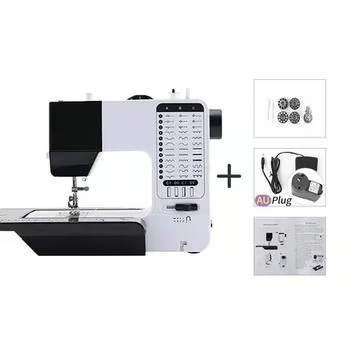
The Devanti 39 Stitches is the best all-round compact sewing machine in NZ for shoppers who want the most versatility without a full-size footprint. It measures 30.2cm long, 11.8cm wide and 24.6cm tall, so it sits comfortably on a kitchen bench or craft desk and tucks into a cupboard between projects. The white body with black trim looks tidier than most budget minis.
It is built from ABS plastic over a POM and steel-board frame, with an LED work light above the needle and a small pull-out drawer for bobbins and feet. Controls are simple dials rather than a touchscreen, which keeps the learning curve gentle, and the steel baseplate adds a little stability that all-plastic minis lack. Setup is quick thanks to the included needle threader and twin-needle option, and it runs in two speeds via a foot pedal or push button. A reverse lever lets sewers lock stitches at the start and end of a seam, while three density levels give some control over stitch spacing.
On performance, it handles general and medium-thick fabrics up to about 5mm thick at a 2mm stitch length, and the extension table gives extra room for larger pieces like tote bags or curtains. The main trade-off is that it forms a single-thread chain stitch rather than a full lock stitch, so seams need securing to avoid unravelling, and it is not made for heavy denim or leather.
Pros
- 39 stitch patterns and 3 density levels
- Extension table and LED light
- Generous accessory kit with twin needle, buttonhole foot and threader
- 1 year warranty
Cons
- Chain-stitch formation can unravel if seams are not backstitched
- Plastic housing feels light
- Not suited to thick or heavy fabrics
Key specs: Model SEW-A-41-BK; 39 stitch patterns; chain stitch; walking foot; max thickness 5mm; stitch length 2mm; 6V 1500mA adaptor, 9W; 30.2 x 11.8 x 24.6 cm; 1 year warranty.
2. Devanti 12 Stitches Mini Sewing Machine – Best for Beginners
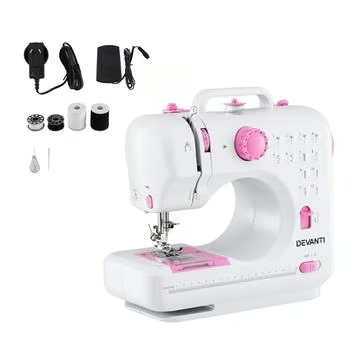
The Devanti 12 Stitches is the easiest entry point for first-time sewers, with a simpler 12-stitch layout and controls that are hard to get wrong. It measures 28.6cm long, 12.3cm wide and 26cm tall in a white and pink finish, giving it a slightly narrower, taller footprint than the 39-stitch model. The same ABS, POM and steel-board construction keeps it light but reasonably steady on a desk.
Where it earns its beginner label is the workflow. Automatic bobbin winding and automatic thread cutting remove two of the fiddly steps that usually trip up new sewers, and an LED light plus a small storage drawer make practice sessions tidier. It offers two speeds, a reverse lever for locking seams, and runs on either the included 6V 1200mA adaptor or 4 AA batteries, so it works away from a power point.
Performance is deliberately modest. It takes fabric up to about 2.5mm thick at a 2mm stitch length, which suits cottons, felt and light mending more than layered or heavy material. As with the 39-stitch unit it uses a chain stitch, so seams should be secured. Sewers who want more pattern choice from day one may prefer a higher-stitch model, but for learning the basics this is a forgiving machine.
Pros
- Automatic bobbin winding and thread cutting
- Battery or mains power
- Beginner-friendly two-speed controls
- LED light and storage drawer
- 1 year warranty
Cons
- Only 12 stitches
- 2.5mm maximum fabric thickness limits thicker projects
- Chain stitch needs securing
Key specs: Model SEW-A-12-PK; 12 stitch patterns; chain stitch; walking foot; max thickness 2.5mm; stitch length 2mm; 6V 1200mA adaptor or 4x AA batteries, 7.2W; 28.6 x 12.3 x 26 cm; 1 year warranty.
3. DS BS Portable Sewing Machine – Best for Travel and Quick Repairs
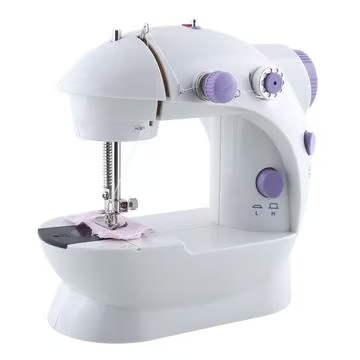
The DS BS desktop machine is the most compact and pared-back option here, built for on-the-go mending rather than project sewing. At roughly 20cm long, 15cm wide and 8cm tall it is small enough to live in a drawer, a caravan cupboard or a student flat, and its streamlined plastic body weighs very little. There is no stitch selector or extension table, which keeps it genuinely pocketable for a repair kit.
In use it sews a single stitch line with a selectable fast or slow speed, driven by the included foot pedal, and it runs on 4 AA batteries so it needs no cord at all. The box includes a needle, a needle threader and four metal bobbins, which is enough to fix a fallen hem, close a seam or tack a button backing in seconds. It is aimed at households, offices, students and craftspeople who want a quick fix without hauling out a full machine.
The trade-offs are clear and worth stating plainly. There is only one stitch type and no pattern choice, power is battery-only so it drains with heavy use, and the retailer lists no formal warranty. It is also delivery-only and ships from a distributor, so it is not a click-and-collect buy. For emergency repairs and travel it is hard to beat on size, but it is not a machine for making garments.
Pros
- Smallest and lightest option
- Battery power for true cordless portability
- Includes threader and four metal bobbins
- Ideal grab-and-go repair tool
Cons
- Single stitch line with no selection
- Battery-only power
- No stated warranty
- Delivery-only from a distributor
Key specs: Code PR666566583; single-line stitch; plastic body; approx 20 x 15 x 8 cm; powered by 4x AA batteries; includes needle, foot pedal, needle threader and 4 metal bobbins.
4. Mini Sewing Machine 12 Stitch Reverse Kit – Best Budget Mending Kit
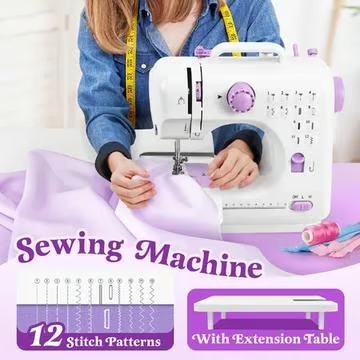
This BestDeals mini is the pick for shoppers who want a complete beginner mending kit at the lower end of the range. It pairs a compact electric machine with a clip-on extension table, so despite its small size it gives a little extra support when feeding larger pieces of fabric. It is listed under BestDeals sewing machines rather than the toy aisle, which sets it apart from novelty units.
The headline feature is reverse stitching, which lets sewers lock the start and end of a seam. That is a meaningful step up from single-direction minis and makes finished repairs more secure. Twelve stitch patterns cover straight, zigzag and a few decorative options, and the machine is positioned as a portable kit for beginners tackling everyday mending, hems and simple projects.
Two honest caveats apply. BestDeals currently flags the listing as almost sold out, so stock may be limited by the time of reading, and the retailer publishes only sparse technical detail, so buyers should treat it as a light-duty machine for thin and medium fabrics rather than heavy work. Within those limits it is a practical, low-cost way to start mending.
Pros
- Reverse stitching to lock seams
- Extension table for larger fabric
- 12 stitch patterns
- Sold as a complete portable kit
Cons
- Stock flagged as almost sold out
- Limited published specs from the retailer
- Light-duty build only
Key specs: BestDeals PID 74355; 12 stitch patterns; reverse stitching; extension table; portable beginner mending kit.
5. 38-Stitch Mini Electric Sewing Machine – Best for Stitch Variety
The 38-Stitch mini offers the widest pattern choice in this roundup, which makes it the pick for hobbyists who want decorative options on a compact machine. With 38 built-in stitches it covers straight and zigzag seams plus a broad set of decorative patterns, giving more room to experiment than the 12-stitch minis without stepping up to a full-size machine.
It is marketed for beginners and home textile projects, so the target user is someone practising on cottons and light furnishing fabric, trying patchwork, or making simple home items. Being a mini electric unit it stays small and desk-friendly, and it is currently in stock, which is a plus next to the limited-stock kit above.
The trade-offs are practical rather than about capability. The listing ships from a distributor, globaloutlet.com, so delivery can take longer than a locally warehoused item, and the retailer provides limited published specs, so buyers should assume light-duty use on thin and medium fabrics. For sewers whose main goal is stitch variety on a budget, though, it delivers the most patterns here.
Pros
- 38 stitch patterns, the widest variety in this guide
- Currently in stock
- Aimed at beginners and home textiles
Cons
- Ships from a distributor so delivery can be slower
- Limited published specifications
- Light-duty machine only
Key specs: BestDeals PID 82780; 38 stitch patterns; mini electric machine; for beginners and home textile projects.
How to choose a compact sewing machine in NZ
Stitch count and type: More patterns add versatility, but stitch type matters more. Many minis use a single-thread chain stitch, which is fine for mending but can unravel if the thread end is not secured, so favour a model with reverse stitching to lock seams.
Fabric thickness: Check the maximum sewing thickness. Around 2.5mm suits cottons and light mending; about 5mm handles medium fabrics and a few layers. None of these minis are built for heavy denim or leather.
Power source: A mains adaptor is steadier for longer sessions, while 4 AA battery power adds portability for travel and quick repairs. Some models, like the Devanti 12 Stitches, offer both.
Useful extras: An extension table helps with larger pieces, an LED light improves accuracy, and a storage drawer keeps bobbins and feet together.
Warranty and support: A stated warranty is worth having on a budget machine; the TSB Living Devanti models carry one year. For laundry and garment care alongside sewing, it is also worth browsing guides to clothes dryers, front loader washing machines and top loader washing machines.
For a different corner of the house, the guides to alarm clocks and NZ online shopping sites are worth a look.
Verdict
For most NZ shoppers the Devanti 39 Stitches Mini Sewing Machine is the best overall choice, balancing 39 stitch patterns, an extension table and a steadier steel-based build in a compact size. Absolute beginners are better served by the Devanti 12 Stitches with its automatic winding and cutting, travellers should look at the pocketable DS BS desktop, and hobbyists chasing decorative variety will get the most patterns from the 38-stitch mini. All are light-duty machines best matched to mending and light projects rather than heavy garment work.
FAQs
Are mini sewing machines good for beginners?
Yes, for the right tasks. Compact machines like the Devanti 12 Stitches suit beginners learning straight seams, hems and simple mending, with automatic bobbin winding and simple dials that lower the learning curve. They are less suited to thick fabrics or heavy garment construction, so set expectations to light projects.
Can a mini sewing machine sew thick fabric like denim or jeans?
Not reliably. Most mini sewing machines handle light to medium fabrics only. The Devanti 39 Stitches manages material up to about 5mm thick, while many minis top out near 2.5mm. Multiple denim layers or leather can jam the motor or cause skipped stitches, so a full-size machine is better for heavy fabric.
Are mini sewing machines worth it?
They are worth it if you want a compact, affordable machine for mending, alterations, travel or a small home. For heavy or frequent garment sewing they fall short of full-size machines. Judge value by the job: quick repairs and light projects, yes; tailoring thick fabrics daily, no.
Can a mini sewing machine run on batteries?
Some can. The Devanti 12 Stitches and the DS BS desktop model run on 4 AA batteries as well as, or instead of, a mains adaptor, which makes them easy to use away from a power point. Battery power drains with heavy use, so an adaptor is steadier for longer sessions.
What is the best mini sewing machine for beginners in NZ?
For most beginners the Devanti 12 Stitches is the easiest starting point, with automatic bobbin winding, automatic thread cutting, an LED light and battery or mains power. If you want more stitch variety from the start, the 38-stitch mini offers the widest pattern choice in this roundup.
Why does a mini sewing machine skip stitches or break thread?
Common causes are incorrect threading, a blunt or wrong-size needle, uneven tension or fabric that is too thick. Rethread the machine, fit a fresh needle and slow down on tricky sections. Because minis have few adjustable parts, careful threading and matching fabric to the machine prevent most issues.
