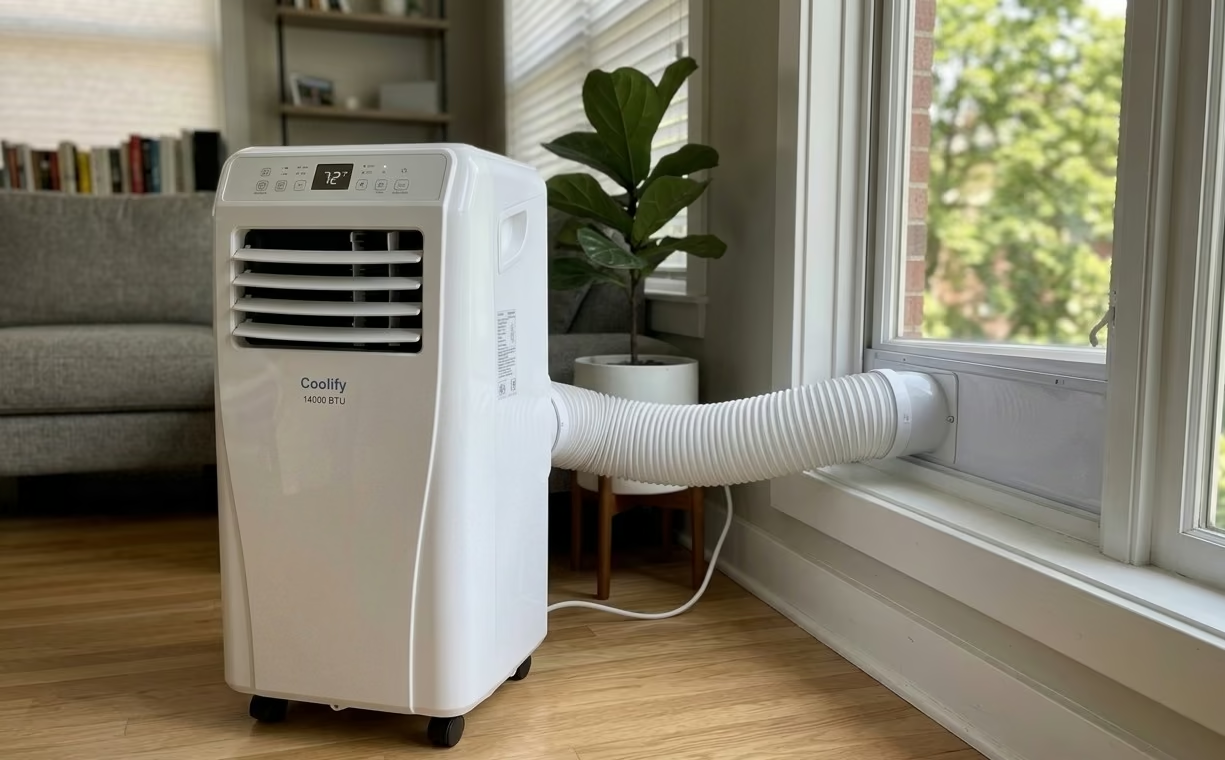
The best portable air conditioner in NZ overall is the Midea 3.25kW reverse-cycle model, which cools and heats a 16 to 23 square metre room from a 1450W input and adds WiFi app control alongside a standard remote. Reverse cycle is the detail that counts in a New Zealand home, where the same unit has to take the edge off a humid February and then do something useful in a cold, damp August.
A portable air conditioner is one of the simplest ways to cool – or with a reverse-cycle model, heat – a room without the expense of installing a full split-system unit. Because there’s no external unit to mount, they’re a genuine option for renters or anyone who just needs to cool a bedroom or living area rather than a whole house.
This list covers seven portable air conditioners available in New Zealand across budget, mid-size and premium options, so there’s a fit whether you’re cooling a single room or want reverse-cycle heating too.
Portable Air Conditioner Comparison Table
| Unit | Best For | Capacity | Room Coverage |
|---|---|---|---|
| Midea 3.25kW WiFi (TSB) | Best WiFi + Reverse Cycle | 3.25kW / 2.81kW heat | 16-23m² |
| Midea 2.5kW (TSB) | Best Value / Compact | 2.5kW cooling | 12-18m² |
| Hyundai 7,000 BTU | Best Budget | 2.0kW / 7,000 BTU | ~14-20m² |
| Hyundai 10,000 BTU | Best Mid-Size Room | 2.9kW / 10,000 BTU | ~15-20m² |
| Shinco 12,000 BTU | Best for Larger Rooms | 3.5kW / 12,000 BTU | ~105m³ (30-35m²) |
| De’Longhi Pinguino PACEM82K | Best Premium | 2.4kW / 9,400 BTU | Up to 80m³ |
| Bonaire 3.5kW Reverse Cycle | Reverse Cycle Heat + Cool | 3.5kW / 2.7kW heat | Up to 24m² |
The Best Portable Air Conditioners in NZ
1. Midea Portable Air Conditioner — Best WiFi + Reverse Cycle
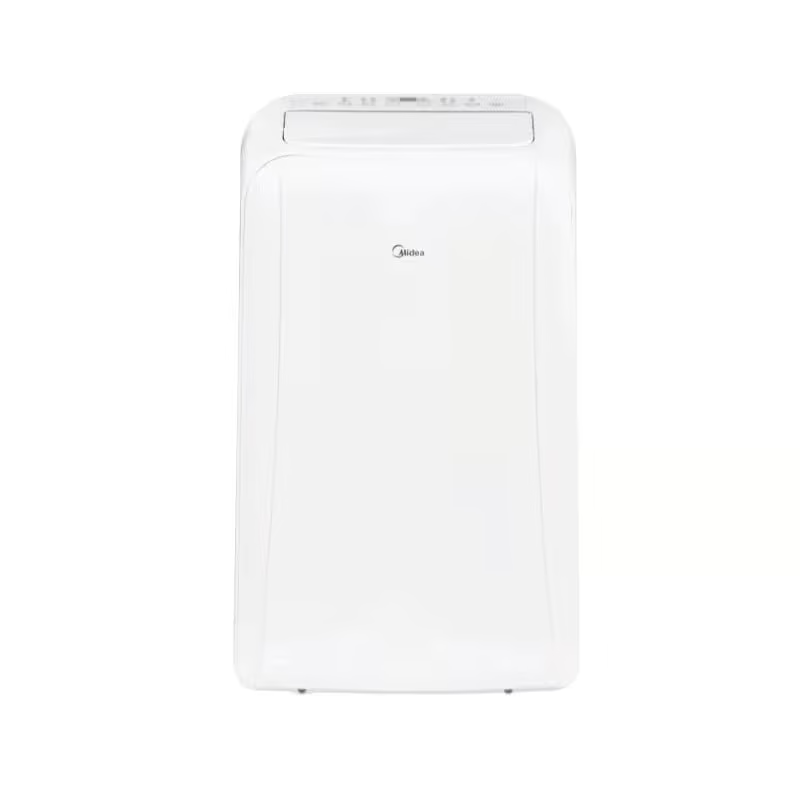
TSB Living’s Midea 3.25kW model is the most fully-featured portable air conditioner on this list from a single retailer, pairing genuine reverse-cycle cooling and heating with built-in WiFi control.
Rated to cool or heat a 16-23m² room, it delivers 3.25kW cooling and 2.81kW heating from a 1450W rated input, with both a full remote and app control alongside the usual timer and fan-speed options.
At 31.8kg it’s on the heavier side for a portable unit, worth factoring in if you’ll be moving it between rooms often, and TSB doesn’t currently show any customer reviews for this specific listing, so weigh that against the more heavily-reviewed picks further down this list.
Pros
- Genuine reverse-cycle (cooling AND heating) in one unit
- WiFi app control plus remote
- Backed by Midea’s 24+12 month extended warranty
Cons
- Heaviest unit on this list at 31.8kg
- No customer reviews on TSB yet
Key specs:Model MPPD33H | 3.25kW cooling / 2.81kW heating | Covers 16-23m² | 1450W rated input | 467x397x765mm
2. Midea Portable Air Conditioner — Best Value / Compact
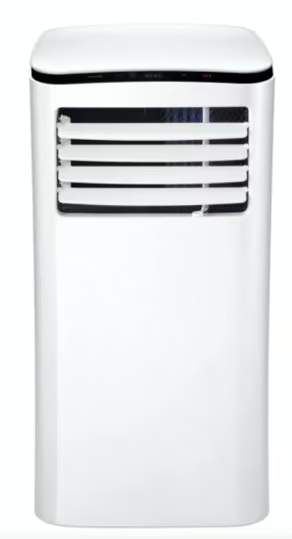
For a smaller room or a tighter budget, TSB’s cooling-only Midea 2.5kW is the cheapest genuine portable air conditioner on this list.
It’s rated for 12-18m² rooms, runs from a 1200W input, and comes with a remote control plus the same 24+12 month extended Midea warranty as the larger WiFi model above.
Being cooling-only, it won’t help in winter the way the reverse-cycle Midea or Bonaire models further down this list can, and like its stablemate, TSB doesn’t currently show customer reviews for this specific listing.
Pros
- Cheapest genuine portable AC on this list
- Compact dimensions suit a bedroom or small living area
- Same extended Midea warranty as the WiFi model
Cons
- Cooling only, no heating function
- No customer reviews on TSB yet
Key specs:Model MPPH26CB | 2.5kW cooling | Covers 12-18m² | 1200W rated input | 355x345x703mm
3. Hyundai 2.0kW Smart Portable Air Conditioner (7,000 BTU) — Best Budget
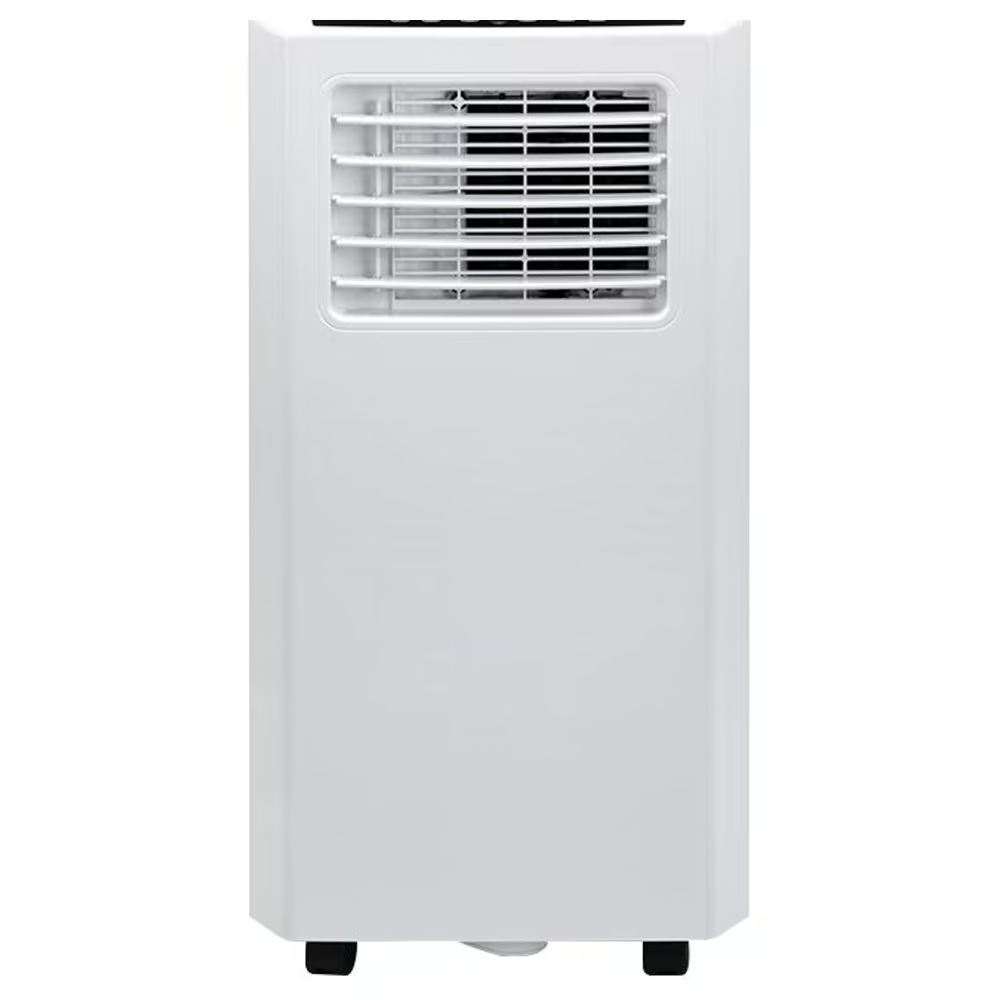
Hyundai’s 7,000 BTU model is the most affordable pick on this list from any retailer, and still includes smart features like WiFi control via Amazon Alexa or Google Assistant.
It’s a 3-in-1 cool/dehumidify/fan unit good for a room in roughly the 14-20m² range, with a digital display, sleep mode, timer and castors for moving it between rooms. Independent buyer reviews average 4.2 stars across 118 ratings.
Hyundai-branded home appliances sold in Australia/NZ are licensed and distributed by Kogan Australia rather than made by Hyundai Motor itself – worth knowing going in, even though it doesn’t affect the unit’s genuine specs or warranty.
Pros
- Cheapest unit on this list
- WiFi + voice assistant control
- Well-reviewed with a decent sample size (118 ratings, 4.2★)
Cons
- Cooling only, no heating
- Sold as a licensed Hyundai-branded appliance rather than a Hyundai Motor product
Key specs:Model HY07KSPACPA | 2.0kW cooling / 7,000 BTU | Covers approx. 14-20m² | WiFi + Alexa/Google Assistant | 240m³/hr airflow
4. Hyundai 2.9kW Smart Portable Air Conditioner — Best Mid-Size Room
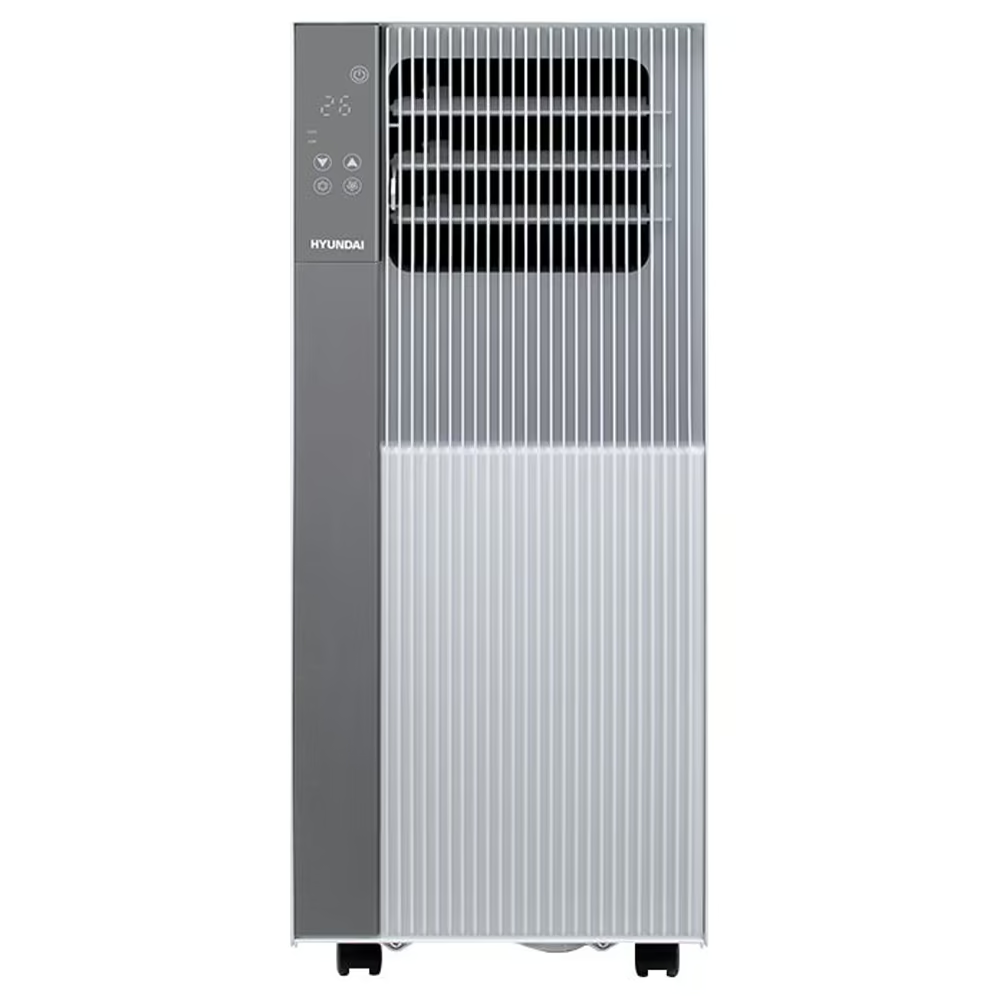
Step up to Hyundai’s 10,000 BTU model for a noticeably bigger 15-20m² coverage area, while keeping the same WiFi and voice-assistant control as the smaller unit above.
It uses the more environmentally-friendly R290 refrigerant, and independent buyers rate it 4.28 stars across 93 ratings – reviewers describe it as a solidly-built unit, while also confirming (accurately) that it’s a licensed Hyundai-branded appliance rather than a Hyundai Motor product.
The manufacturer’s own published noise figure is 65dB, on the higher side for this size of unit – worth bearing in mind if you’re noise-sensitive or plan to run it overnight in a bedroom.
Pros
- Larger coverage than the 7,000 BTU model above
- Uses R290 refrigerant
- Well-reviewed (93 ratings, 4.28★)
Cons
- Manufacturer-published 65dB noise rating is on the higher side
- Cooling only, no heating
Key specs:Model HY10KSPACPA | 2.9kW cooling / 10,000 BTU | Covers approx. 15-20m² | R290 refrigerant | ~1150W rated input
5. Shinco 12,000 BTU Portable Air Conditioner — Best for Larger Rooms
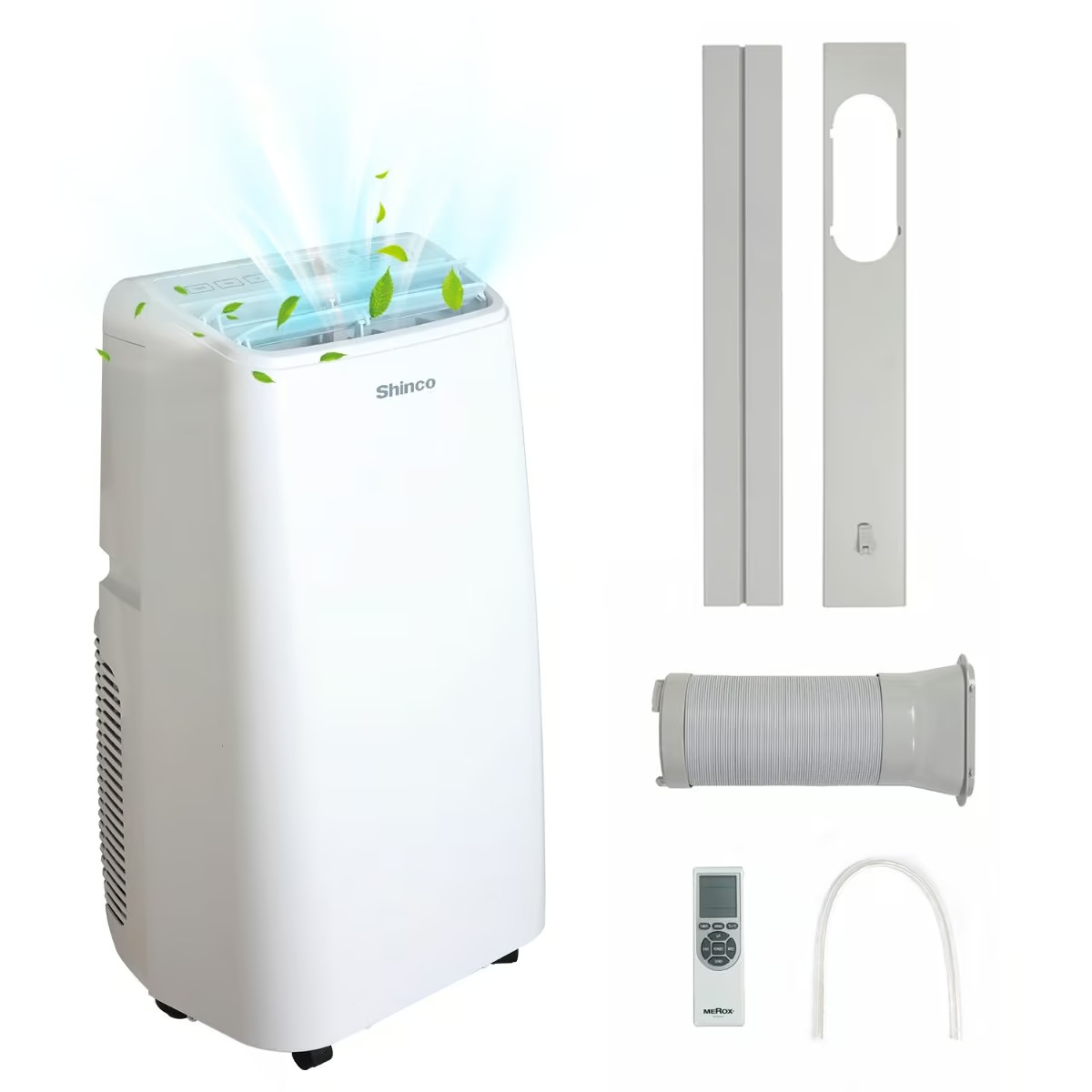
Shinco’s 12,000 BTU unit is the largest-capacity model on this list, built as a 3-in-1 cool/dehumidify/fan unit for bigger living spaces.
Shinco’s own listing rates it for spaces up to 105m³ of air volume (roughly a 30-35m² room at a standard ceiling height), with 3 fan speeds, a 24-hour timer with sleep mode, an LCD display, full remote, washable filter and an included window venting kit.
It doesn’t have WiFi or app control like the Hyundai or Bonaire models on this list, and independent review data is currently limited to a single 5-star rating – genuinely positive so far, but too small a sample to treat as conclusive.
Pros
- Largest capacity on this list
- 3-in-1 cool/dehumidify/fan with washable filter
- Window venting kit included
Cons
- No WiFi/app control
- Independent review sample is currently just 1 rating
Key specs:Model SPS-12C | 3.5kW cooling / 12,000 BTU | Covers up to 105m³ | R290 refrigerant | 31kg
6. De’Longhi Pinguino PACEM82K — Best Premium / Most Trusted Reviews
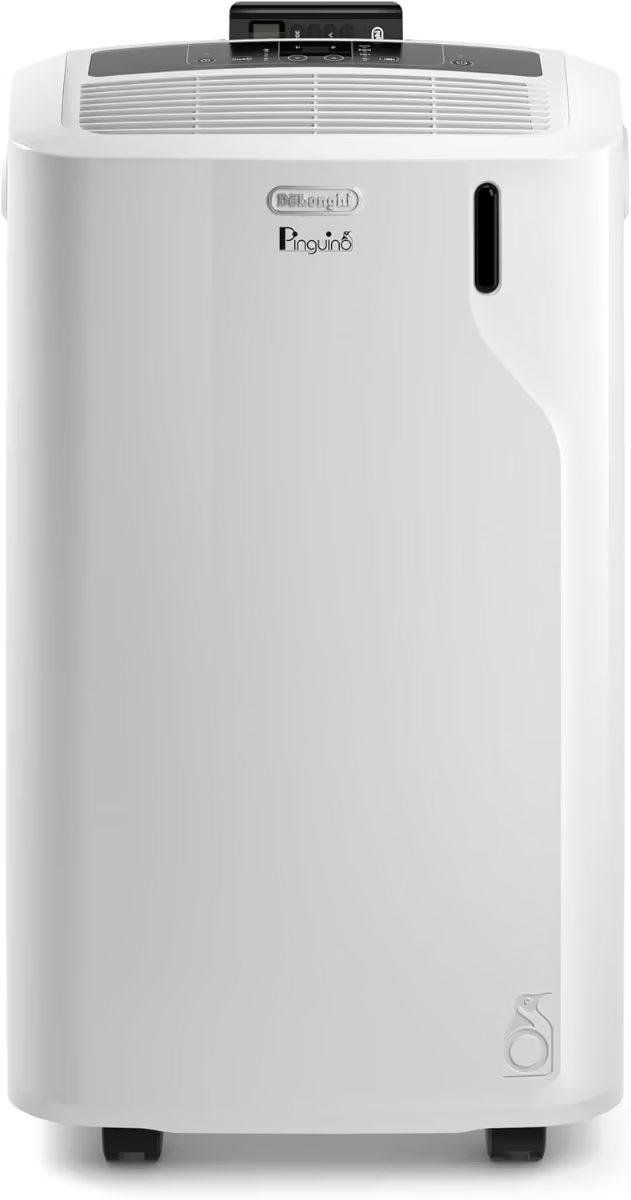
De’Longhi is one of the most established names in home cooling, and the Pinguino PACEM82K is its mid-range silent portable air conditioner, rated for rooms up to 80m³.
It carries a Class A energy efficiency rating, dehumidifies up to 43 litres per day, and De’Longhi’s own listed noise level of 47-50dB is genuinely quiet for this style of unit – useful for bedrooms or home offices. It also uses the more efficient R290 refrigerant and includes a 24-hour electronic timer.
It’s the most heavily and consistently reviewed unit on this list from an independent source: 4.2 stars from 31 verified reviews directly on De’Longhi’s own site, with a recurring theme that it runs louder in practice than its “silent” branding suggests, and one buyer noting the included exhaust hose was shorter than expected.
Pros
- Class A energy rating and a genuinely low 47-50dB published noise level
- Well-reviewed with the largest, most consistent independent sample on this list (31 reviews, 4.2★)
- R290 refrigerant, 43L/day dehumidifying
Cons
- Priciest single unit on this list
- Some reviewers say it’s louder in practice than the “Silent” name suggests
Key specs:Model PACEM82K | 2.4kW cooling / 9,400 BTU | Covers up to 80m³ | Class A energy rating | 25.6kg
7. Bonaire Portable Air Conditioner — Reverse Cycle (Heating + Cooling)
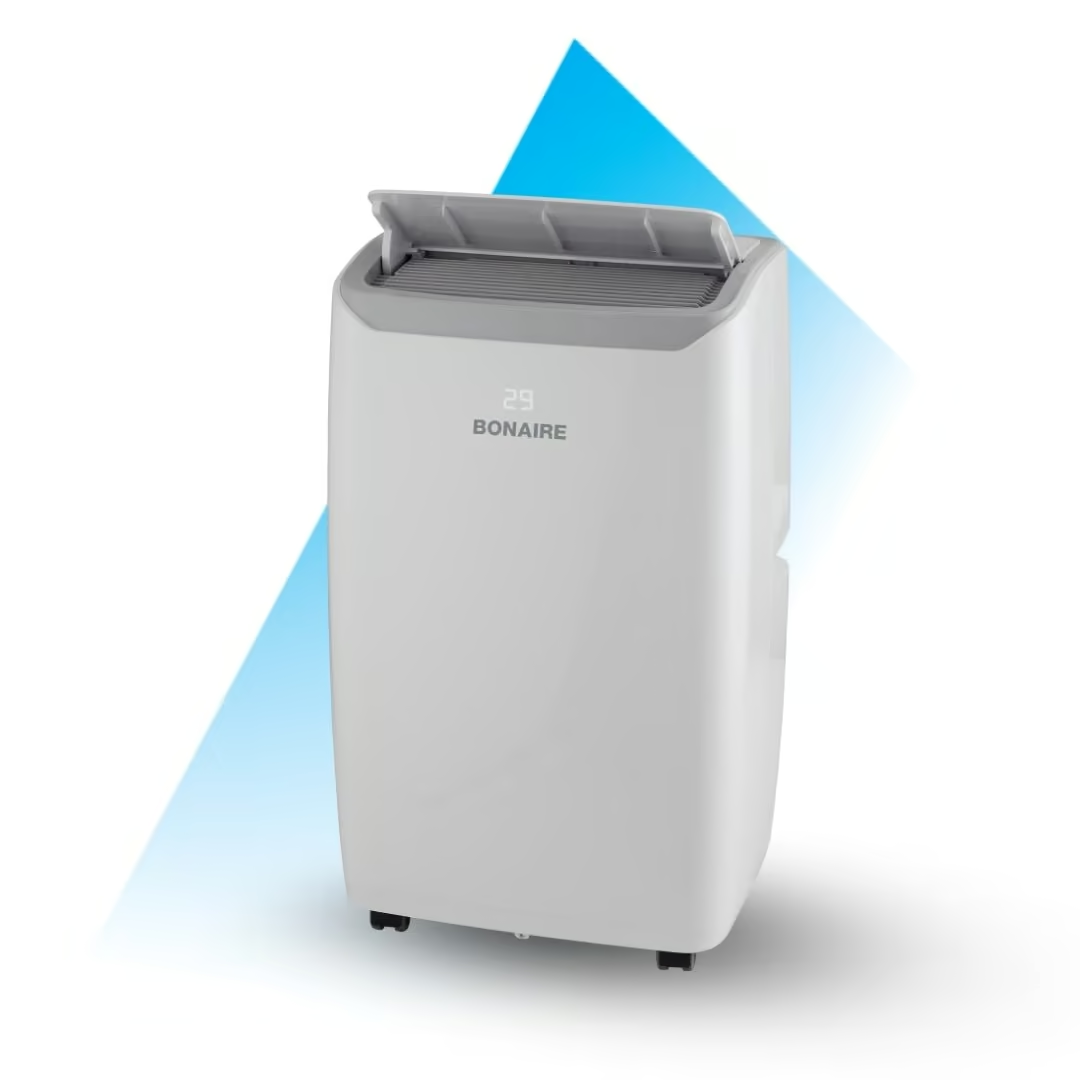
Bonaire is a genuine, long-running Australian air conditioning brand, and this 3.5kW unit is the only other reverse-cycle (heating and cooling) portable model on this list besides the WiFi Midea from TSB.
It’s rated for rooms up to 24m², runs on the more efficient R290 refrigerant, and includes WiFi app control alongside a touch panel and remote, plus a spill-sensor condensation tank so you’re less likely to be caught out by a full water tray.
We found genuinely conflicting independent review data for this exact model: one AU retailer shows a perfect rating from a single review, while a separate independent review site shows a poor rating from two reviews citing weak cooling, noise and drainage-design complaints. With such a small, contradictory sample either way, we can’t call this one’s real-world reliability with confidence – worth reading current reviews yourself before buying.
Pros
- One of only two reverse-cycle units on this list
- WiFi app control plus touch panel
- R290 refrigerant and a spill-sensor tank
Cons
- Independent review data is thin and contradicts itself – some reports of weak cooling, noise and drainage issues
- Noise level and weight not published
Key specs:Model PRC6000135 | 3.5kW cooling / 2.7kW heating | Covers up to 24m² | WiFi app control | 2-year warranty
How to Choose the Best Portable Air Conditioner
What does the BTU or kW rating mean?
BTU (British Thermal Units) and kW ratings describe how much cooling power a unit has, and directly relate to how big a space it can handle. A unit rated around 7,000 BTU (roughly 2kW) suits a single bedroom, while 12,000 BTU (roughly 3.5kW) and above can manage a larger living area. As a rough guide, multiply your room’s floor area in square metres by around 500-600 BTU to estimate what you need.
Where can you place a portable air conditioner?
Most portable units need to vent hot air outside through a hose, usually fitted through a window kit, so you’ll want to place yours near a window or sliding door. As the unit cools the air, moisture condenses out of it – some models evaporate this internally, some drain it via a hose, and others need an internal tank emptied by hand, so check which system a unit uses before buying.
What about noise and running costs?
Every portable air conditioner has a compressor and fan, so some noise is unavoidable – published noise levels on this list range from a fairly quiet 47-50dB (De’Longhi) up to a manufacturer-rated 65dB (the larger Hyundai), so check this if you’re noise-sensitive or plan to run it overnight in a bedroom.
Running costs come down to the unit’s power draw and how efficiently it cools – a higher-BTU unit uses more power, but often cools a room faster than a smaller one working harder for longer, so bigger isn’t automatically more expensive to run in practice.
Read more: Best Heat Pump Dryers in NZ | Best Air Coolers in NZ
For year-round comfort, the guides to electric fireplaces and outdoor heaters cover the other side of home climate control.
Portable units recirculate most of the air in the room rather than exchanging it, so in pollen season air purifiers do the part they cannot. Reverse-cycle models heat as well as cool, but only within a small room, and a dedicated heater is cheaper to run once winter properly arrives.
Verdict
For most NZ households, TSB Living’s Midea 3.25kW WiFi model is the strongest all-rounder here – genuine reverse-cycle heating and cooling, app control, and Midea’s extended warranty, all from a local NZ retailer.
If budget is the priority, the Hyundai 7,000 BTU undercuts everything else on this list while still offering WiFi control and a solid review record. For the best-reviewed, most independently verifiable pick, the De’Longhi Pinguino PACEM82K stands out with 31 genuine reviews averaging 4.2 stars and a genuinely quiet published noise rating.
Frequently Asked Questions
What size portable air conditioner do I need?
As a rough guide, multiply your room’s floor area in square metres by around 500-600 BTU. A single bedroom typically needs around 7,000 BTU, while a larger living area may need 10,000-12,000 BTU or more.
Do portable air conditioners need to be vented outside?
Most do, via an exhaust hose that fits through a window kit or a hole in the wall. A few dual-hose or evaporative designs need less venting, but the large majority of portable units on the market need some form of external venting to work efficiently.
How much does a portable air conditioner cost to run in NZ?
It depends on the unit’s power draw and how often you run it, but generally a 2kW unit uses less power per hour than a 3.5kW unit – though the larger unit may cool a room faster, offsetting some of that difference over a full cycle.
Can a portable air conditioner also heat a room?
Only reverse-cycle models can heat as well as cool – check the specs before buying if you want a unit for both summer and winter use. Several models on this list, including the TSB Midea WiFi unit and the Bonaire, offer genuine reverse-cycle heating.
Are portable air conditioners noisy?
All portable units have some compressor and fan noise, but published noise levels vary a lot between models – anywhere from around 47dB (very quiet) up to 65dB or more (noticeably louder), so check the manufacturer’s published rating if you’re noise-sensitive.
Is a portable air conditioner as effective as a split-system unit?
Generally no – a portable unit is more convenient and cheaper to buy and install, but a permanently installed split-system is usually more energy-efficient and better at cooling a whole room evenly. Portable units are best suited to single rooms or as a supplementary cooling option.
Could you please note that the Sheffield Portable Air Conditioner is only suitable for venting through sliding windows and not hinged windows.
Hi Brian,
Thanks for letting us know that we have added that point.