A hair straightener, or flat iron, is a styling tool that clamps hair between two heated plates and uses direct contact heat to temporarily break the hydrogen bonds that give hair its curl or wave, resetting it straight until moisture returns. That is a different mechanism from a hot brush, which combines airflow with gentle tension, and from a chemical straightening treatment, which alters the hair’s structure permanently.
Straighteners differ along three axes that matter far more than brand. Plate material is usually ceramic, which heats evenly and suits fine to normal hair; tourmaline, a ceramic variant that emits negative ions to cut frizz; or titanium, which heats faster and transfers heat harder, suiting thick or coarse hair. Plate width runs from slim irons around 110mm for fringes and short cuts, through standard, to extra-wide plates that capture far more hair per pass. Temperature control is either a variable range, typically 130 to 230 degrees, or a single fixed temperature that removes the decision entirely.
One practical point decides more than any spec: Australia and New Zealand share the same Type I plug and the same 230V 50Hz supply, so an Australian-market straightener runs here with no adapter and no transformer. That is not true of United States stock, where a 120V tool needs a converter rather than just a plug adapter. On technique, use a heat protectant every time and always on dry hair, because straightening damp hair boils the moisture inside the shaft and does more damage than the heat alone.
This guide compares six hair straighteners that are confirmed available to New Zealand, across short hair, thick hair, travel and budget.
A note on why this list is six rather than ten. Many well-known straighteners cannot be shipped to New Zealand at all, whatever their price or stock status, and that restriction is set per individual listing rather than per brand. Of seventeen models checked for this guide, eleven were blocked from New Zealand delivery outright, including several popular salon models and, oddly, some variants of brands whose other models ship fine. Every product below was individually confirmed as in stock and deliverable to a New Zealand address rather than assumed from the listing page alone.
Hair straightener comparison
| Product | Best for | Plate type | Temperature | Plate width | Voltage / guarantee |
|---|---|---|---|---|---|
| Remington Shine Therapy Advanced S8500 | Best Overall | Ceramic, argan oil infused | 150-230°C, 9 settings | Standard | 5 years |
| Remington Super Glide Ceramic S5501AU | Best Budget | Tourmaline ceramic | 150-230°C, digital | 110mm | Not stated |
| Remington Pro-Ceramic Extra Wide Plate | Best Value for Thick Hair | Advanced ceramic ultra | 150-230°C, 9 settings | 77% extra wide | Not stated |
| Faszin Professional Wide 42mm Titanium | Best for Travel | Titanium, negative ion | 130-230°C, 11 settings | 42 x 110mm | 100-240V worldwide |
| ghd mini Slim Plate | Best for Short Hair and Fringes | Ceramic floating, dual-zone | Fixed 185°C | 40% slimmer | Universal voltage |
| MUK Style Stick 230IR | Best for Thick and Coarse Hair | Tourmaline ceramic, far infrared | Adjustable to 230°C | Standard | Not stated |
1. Remington Shine Therapy Advanced S8500 – Best Overall
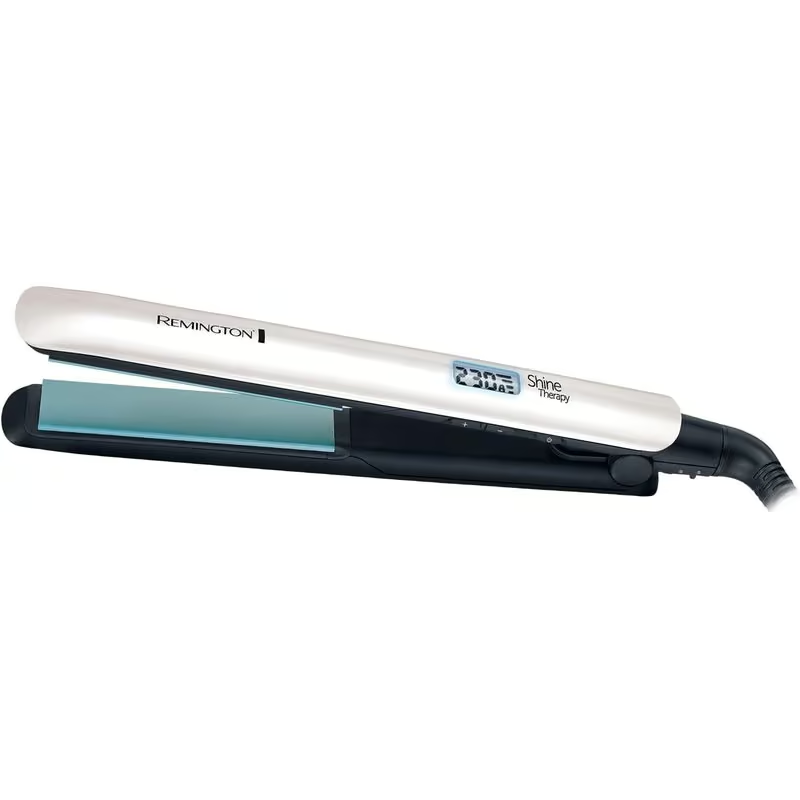
With just under 31,000 ratings behind it, this is the most road-tested straightener in the guide by a very wide margin, and that volume of feedback is worth more than any single spec. The ceramic plates are infused with Moroccan argan oil and vitamin E, there are nine digital temperature settings from 150 to 230 degrees, it heats in 15 seconds, and the plates float so pressure stays even across the hair. The detail that seals it is the five-year guarantee, which is the longest here and unusual on a mid-priced styler.
Pros
- Close to 31,000 ratings, far more real-world feedback than anything else here
- Five-year guarantee, the longest in this lineup
- Nine digital settings from 150 to 230 degrees for fine through to coarse hair
- Floating plates keep pressure even instead of snagging
- Ready to use in 15 seconds
Cons
- Standard plate width, so thick or long hair takes more passes than a wide-plate model
- Argan oil infusion is a coating and will wear with heavy use over years
- No worldwide voltage switch, unlike the Faszin here
Key specs: Advanced ceramic plates with Moroccan argan oil and vitamin E. 9 digital settings, 150-230°C. 15-second heat-up. Floating plates. 5-year guarantee.
2. Remington Super Glide Ceramic S5501AU – Best Budget
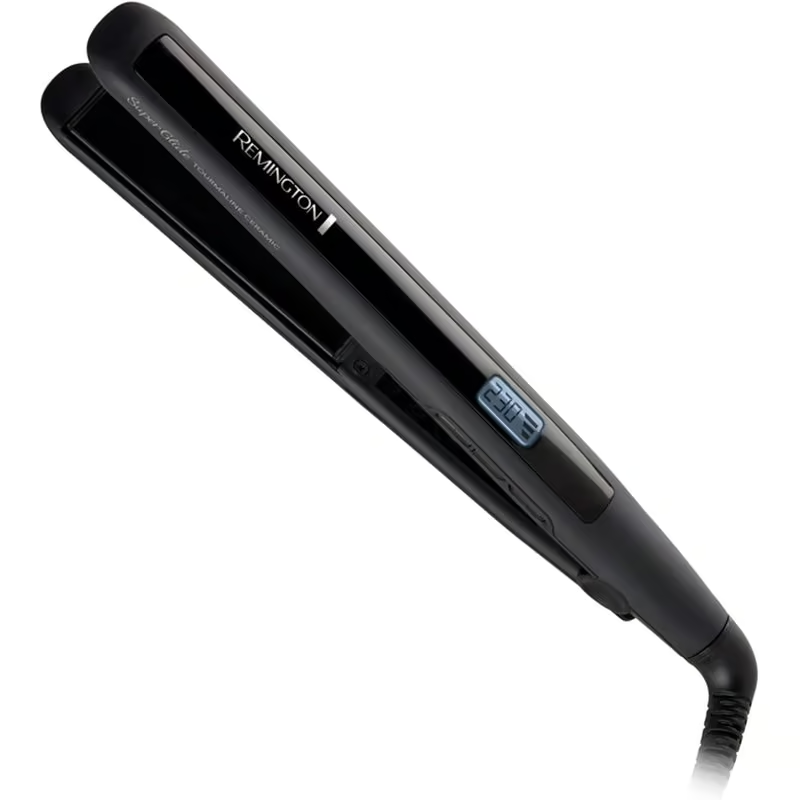
The cheapest pick here and the one to buy if a straightener is an occasional tool rather than a daily one. The tourmaline ceramic plates are anti-static, which Remington rates at four times more protection and twice the smoothness of its base plates, and the full 150 to 230 degree digital range is intact rather than cut down to a couple of fixed settings, which is the usual compromise at this price. It heats in 15 seconds, has a Turbo Boost to jump to maximum, shuts off automatically after 60 minutes, and has a temperature lock so you cannot knock the setting mid-style.
Pros
- Full 150-230°C digital range rather than the two or three fixed settings common at this price
- Anti-static tourmaline ceramic plates
- Temperature lock stops the setting being changed by accident mid-style
- 60-minute automatic shut-off
- Ready in 15 seconds, with a Turbo Boost to reach maximum quickly
Cons
- 110mm plates are narrow, so long or thick hair is slow going
- The lowest-priced pick here and built to that price
- Free delivery to New Zealand applies only above an order threshold, so on its own it may attract a delivery charge
Key specs: Tourmaline ceramic anti-static plates, 110mm. Digital 150-230°C. 15-second heat-up with Turbo Boost. Temperature lock. 60-minute auto shut-off.
3. Remington Pro-Ceramic Extra Wide Plate – Best Value for Thick Hair
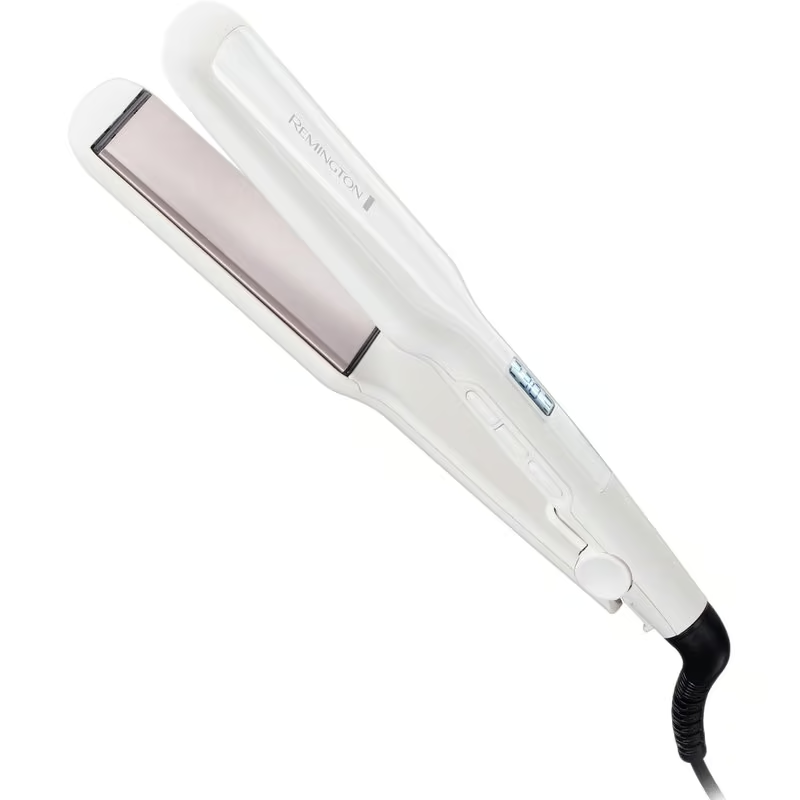
Plate width is the single biggest factor in how long straightening takes, and this one is 77 per cent wider than the standard Remington plate, so it captures far more hair per pass from root to tip. That makes it the sensible budget answer for thick or long hair, where a narrow styler turns a ten-minute job into half an hour. The Advanced Ceramic Ultra coating is rated 75 per cent smoother for snag-free passes, the plates float to adapt to hair thickness, and there are nine digital settings across the 150 to 230 degree range.
Pros
- Plates 77% wider than standard, which meaningfully cuts styling time on thick or long hair
- Advanced Ceramic Ultra coating rated 75% smoother for snag-free passes
- Floating plates adapt to hair thickness for consistent pressure
- Nine digital settings from 150 to 230 degrees
- Rapid heat-up
Cons
- Wide plates are clumsy near the roots, around a fringe or on a short cut
- Attracts a small delivery charge to New Zealand rather than shipping free
- No travel voltage switch
Key specs: Advanced Ceramic Ultra coated plates, 77% extra wide. 9 digital settings, 150-230°C. Floating plates. Quick heat-up.
4. Faszin Professional Wide 42mm Titanium – Best for Travel
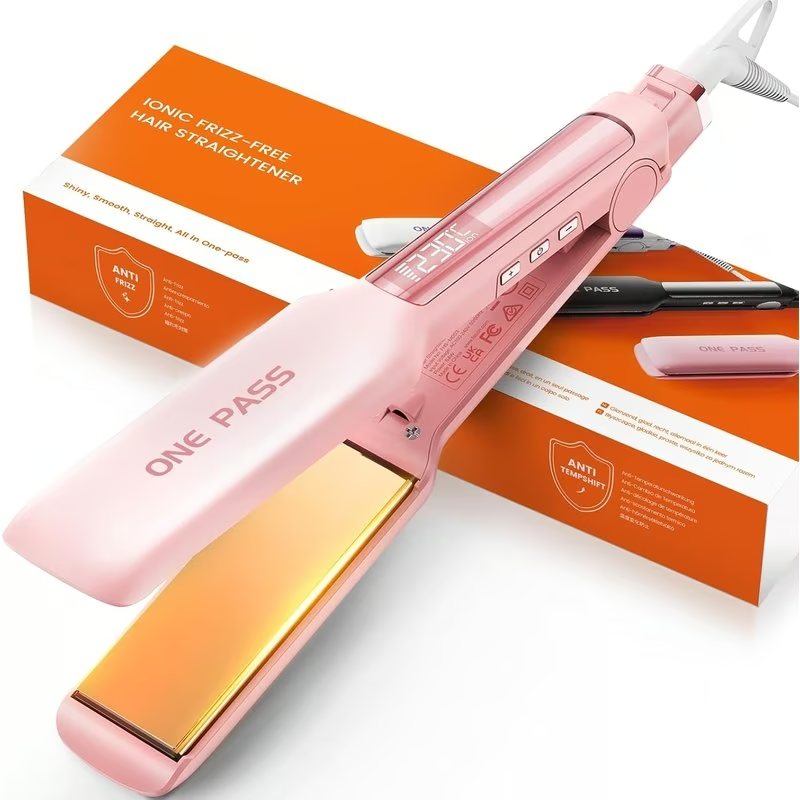
The only pick here with a genuine 100 to 240 volt range, which makes it the one to take overseas rather than the one to leave plugged in at home. The plates are titanium rather than ceramic, which the brand rates as 150 per cent smoother, and at 42 by 110mm they cover an 85 per cent larger heating area than a standard iron. It reaches 180 degrees in 30 seconds, offers 11 settings between 130 and 230 degrees on a real-time LED readout, and the negative ion function can be switched off, which matters because not everyone wants it running.
Pros
- 100-240V wide voltage, so it works overseas as well as on New Zealand’s 230V
- 42 x 110mm plates, an 85% larger heating area than a standard iron
- Titanium plates, rated 150% smoother than ceramic
- 11 settings from 130 to 230 degrees with a real-time LED temperature display
- Negative ion function can be toggled off, and the temperature unit switches between C and F
Cons
- A lesser-known brand than Remington or ghd, with no published guarantee length
- Manufacturer percentage claims (23% more shine, 28% smoother) are unverified marketing figures
- Wide plates are awkward on short hair and fringes
Key specs: Titanium plates, 42 x 110mm. 11 settings, 130-230°C. 30 seconds to 180°C. 100-240V wide voltage. 2.2m 360-degree swivel cord. 30-minute auto shut-off.
5. ghd mini Slim Plate – Best for Short Hair and Fringes
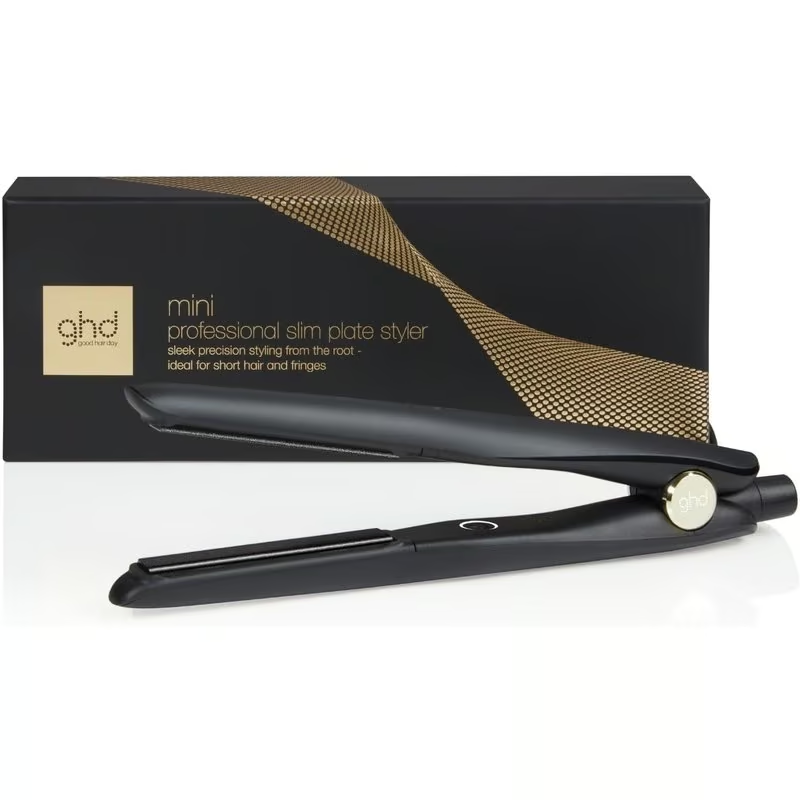
Every other straightener here is built for length. This one is built for the opposite problem: pixie cuts, bobs, fringes and men’s hair, where a wide plate simply cannot get close enough to the root to do anything useful. The plates are 40 per cent slimmer than a standard ghd, and the dual-zone system holds a fixed 185 degrees across both plates rather than letting you dial it up, which is ghd’s long-standing position that a single controlled temperature does less damage than a hot one. The rounded barrel also lets it curl and wave, not just straighten.
Pros
- 40% slimmer plates, genuinely usable on fringes, bobs, pixie cuts and men’s hair
- Dual-zone heating holds a consistent 185°C rather than spiking
- Rounded barrel and curved edges allow waves and curls as well as straightening
- Universal voltage, supplied with an AU plug that fits New Zealand sockets
- High-gloss ceramic floating plates, which ghd rates at 50% more shine
Cons
- Fixed 185°C with no adjustment, so very coarse hair cannot be turned up and fine hair cannot be turned down
- Slim plates make it slow on long or thick hair, which is the opposite of its purpose
- Premium pricing for a deliberately small tool
Key specs: Ceramic floating plates, 1/2 inch, 40% slimmer. Dual-zone technology at a fixed 185°C. Universal voltage with AU plug. Rounded barrel for waves and curls.
6. MUK Style Stick 230IR – Best for Thick and Coarse Hair
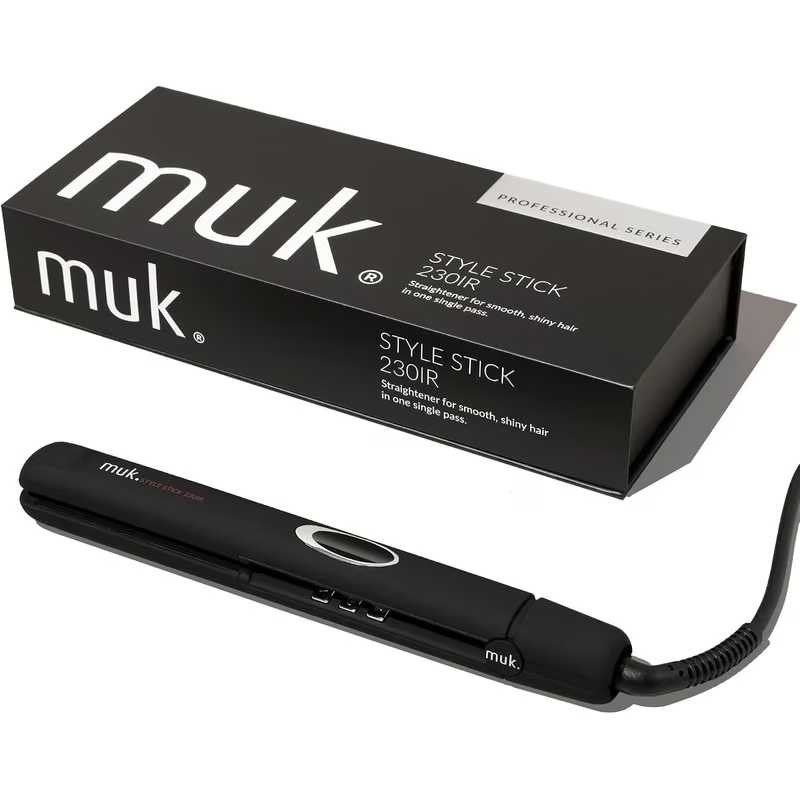
The salon pick, and the only one here using far infrared. Infrared lights sit in the tourmaline ceramic plates and push gentle heat deeper into the hair shaft rather than blasting the surface, which is the mechanism behind the claim of better moisture balance and longer-lasting styles. MUK aims it squarely at thick, coarse or long hair, the type that defeats a standard iron, and the floating tourmaline plates keep contact even without dragging. It is designed for dry hair used with a thermal protector.
Pros
- Far infrared heating, the only pick here using it, aimed at heating the hair shaft rather than scorching the surface
- Tourmaline ceramic floating plates for even contact without drag
- Built specifically for thick, coarse or long hair
- Adjustable temperature rather than a single fixed setting
- Highest customer rating in this lineup
Cons
- Only 22 ratings, so that high score rests on a very small sample
- Among the most expensive picks here
- Standard plate width despite being aimed at thick hair, so it is slower than the 42mm Faszin
Key specs: Tourmaline ceramic plates with far infrared. Floating plate design. Adjustable temperature up to 230°C. For thick, coarse and long hair. Use on dry hair with a thermal protector.
How to choose a hair straightener in NZ
Start with plate width, because it determines how long you spend styling more than anything else on the box. Short hair, fringes and precision work near the root need a slim plate, and a wide iron physically cannot get close enough to be useful. Long or thick hair needs the opposite: an extra-wide plate captures far more hair per pass and can halve the time. If you have both a fringe and long thick hair, that genuinely is an argument for owning two.
Then match plate material to hair condition. Fine, fragile or colour-treated hair does better on ceramic at a lower temperature. Thick or coarse hair benefits from titanium’s faster, harder heat transfer. Tourmaline sits in between and targets frizz through negative ions. None of these are marketing inventions, but the differences are smaller than the difference between using 180 degrees and using 230.
Be sceptical of the top of the temperature range. Most people reach for maximum because it feels faster, and it is the main cause of the split ends and dullness they then blame on the tool. Fine hair generally belongs around 150 to 170 degrees, normal hair 180 to 200, and only genuinely coarse hair needs 230. A styler with a lock on the temperature, or one with a fixed sensible temperature, protects you from yourself.
Finally, check the guarantee and the cord. Guarantee length is the manufacturer’s own estimate of lifespan, and a swivel cord matters because the join between cord and handle is where these tools usually fail. Heat styling sits alongside the rest of your bathroom routine, so it is worth reading with our guides to the best electric shavers and the best electric toothbrushes. Heat is also hard on the skin around the hairline and eyes, which is worth pairing with our roundups of the best face moisturisers in NZ and the best eye creams.
Verdict
The Remington Shine Therapy Advanced S8500 is the best all-round buy. Nothing else here comes close to its volume of customer feedback, the nine-setting range covers fine through to coarse hair, and the five-year guarantee is the longest in the guide. For a first straightener or an occasional one, the Remington Super Glide keeps the full digital temperature range at the lowest price here, and if your hair is thick or long, the Pro-Ceramic Extra Wide Plate is the cheapest way to cut your styling time substantially.
The specialists earn their place on specific jobs. The ghd mini is the only pick that works properly on fringes, bobs and men’s hair, and its fixed 185 degrees is a deliberate safety feature rather than a missing one. The Faszin is the one to travel with, as the only model here with a true 100-240V range, and its 42mm titanium plates are the widest in the guide. The MUK Style Stick is the salon option for thick, coarse hair, though its very high rating rests on only 22 reviews, so weigh it accordingly. Whichever you choose, check current stock and pricing before buying, since both change regularly.
FAQs
What temperature should you straighten your hair at?
Lower than most people use. Fine, fragile or coloured hair generally sits around 150 to 170 degrees, normal hair around 180 to 200, and thick or coarse hair up to 230. Starting at the top of the range because it seems faster is the most common cause of heat damage. The ghd mini in this guide takes that logic to its conclusion by fixing the temperature at 185 degrees and removing the choice entirely.
Do hair straighteners bought in Australia work in New Zealand?
Yes. Australia and New Zealand share the same Type I plug and the same 230V 50Hz mains supply, so an Australian-market straightener works here without an adapter or a converter. This is the key difference from buying from the United States, where 120V appliances need a transformer, not just a plug adapter. Only the Faszin in this guide has a 100-240V wide-voltage range, which matters for travel beyond Australasia rather than for use at home.
Are ceramic, tourmaline or titanium plates better?
They suit different hair. Ceramic heats evenly and gently and suits fine to normal hair. Tourmaline is a ceramic variant that emits negative ions to reduce frizz. Titanium heats faster and transfers heat more aggressively, so it suits thick or coarse hair but can be too much for fine hair. Plate material matters less than plate width and temperature control for most people.
How wide should the plates be?
Match the width to your hair length and thickness, not to price. Narrow plates around 110mm suit short hair, fringes and precision work near the root. Standard plates suit most hair. Extra-wide plates, such as the 77 per cent wider Remington or the 42mm Faszin here, capture far more hair per pass and dramatically cut styling time on long or thick hair, but they are clumsy on a short cut.
Should you use heat protectant?
Yes, every time, on dry hair. A straightener applies direct contact heat of up to 230 degrees, and heat protectant is the only thing between the plates and the hair’s cuticle. Several manufacturers here, including MUK, specify their tool is used on dry hair with a thermal protector. Straightening wet or damp hair with a standard iron causes the moisture inside the shaft to boil, which is far more damaging than the heat alone.
How long do hair straighteners last?
A well-made styler used a few times a week should last several years, and the guarantee length is a reasonable proxy for how long the manufacturer expects it to. The Remington Shine Therapy in this guide carries five years, which is the longest here. The usual failure points are the cord where it meets the handle, which is why a swivel cord matters, and the plate coating wearing through, which starts to snag hair.
