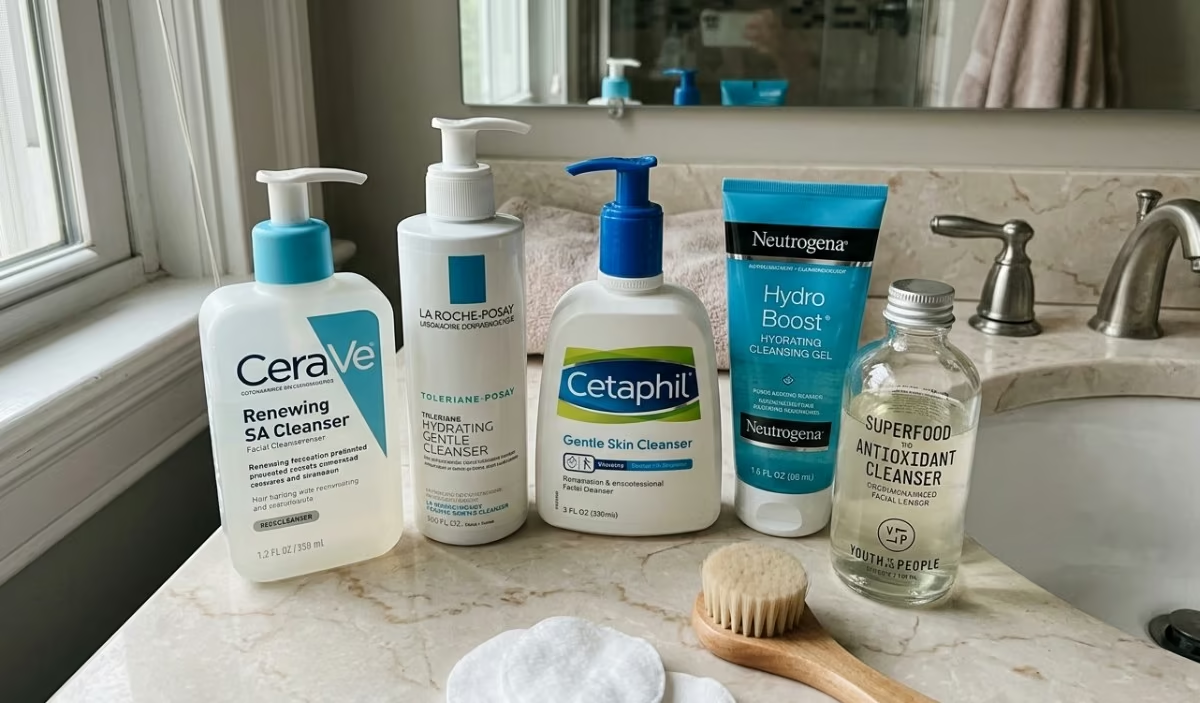
A face cleanser is a product formulated to lift sebum, sweat, sunscreen, makeup and airborne pollution off the skin without stripping the lipids that make up its barrier. That last part is what separates it from ordinary soap, which is far more alkaline than skin and removes the barrier along with the grime, and from a makeup wipe, which smears residue around rather than removing it.
Cleansers divide by texture, and the texture tells you who the product is for. Gel cleansers are light and rinse clean, which suits oily and combination skin. Cream and milk cleansers are richer and non-stripping, formulated for dry, sensitive or reactive skin. Foaming cleansers lather, which feels thorough but is the most common cause of post-wash tightness unless the formula is soap-free. Micellar waters suspend cleansing molecules in water and need no rinsing at all. Cleansing balms and oils dissolve oil-soluble things such as sunscreen and long-wear makeup. Exfoliating cleansers add salicylic or another acid to smooth texture and clear congestion.
The most useful number in this category is how briefly the product is on your face: under a minute, before it is rinsed away. That is why a cleanser is the step where expensive rarely means better, and why active ingredients do far more in a serum or moisturiser than in a wash. Two practical rules follow. Cleanse twice a day, with the evening cleanse the one that matters, because it removes the day’s sunscreen and pollution. And judge a cleanser by how your skin feels five minutes after rinsing: tight means it stripped you, whatever the label promised.
This guide compares ten face cleansers available in New Zealand across the formats and skin types they are actually built for, from sensitive and eczema-prone to oily and congested.
Face cleanser comparison
| Product | Best for | Format | Size | Skin type | Key ingredients |
|---|---|---|---|---|---|
| Cetaphil Gentle Skin Cleanser | Best Overall for Sensitive Skin | Non-foaming lotion | 473ml | All, especially sensitive | Glycerin, vitamin B3, pro-vitamin B5 |
| CeraVe Hydrating Foaming Oil Cleanser | Best for Dry Skin | Foaming oil | 236ml | Dry and dehydrated | Ceramides 1, 3, 6-II, squalane, triglyceride |
| Bioderma Sensibio H2O Micellar Water | Best Micellar Water | Micellar water, no rinse | 500ml | Sensitive | Micelles |
| La Roche-Posay Effaclar Micro-Peeling Gel | Best for Oily and Acne-Prone Skin | Exfoliating gel | 400ml | Oily, acne-prone | Salicylic acid, LHA |
| Beauty of Joseon Radiance Cleansing Balm | Best Cleansing Balm | Cleansing balm | 100ml | All | Oil-based emulsifiers |
| Avene Gentle Milk Cleanser | Best Milk Cleanser for Reactive Skin | Milk cleanser | 200ml | Sensitive, reactive | 98% natural-origin ingredients |
| CeraVe SA Smoothing Cleanser | Best Exfoliating Cleanser | Exfoliating cleanser | 473ml | Rough, bumpy, congested | Salicylic acid, ceramides, niacinamide, hyaluronic acid |
| Dermalogica Special Cleansing Gel | Best Professional Gel Cleanser | Foaming gel | 250ml | All skin conditions | Quillaja saponaria, balm mint, lavender |
| Trilogy Very Gentle Cleansing Cream | Best NZ-Made | Cream cleanser | 200ml | Sensitised, reactive | Camellia, maqui berry, Syricalm |
| Avene XeraCalm A.D. Cleansing Oil | Best for Eczema and Atopy-Prone Skin | Cleansing oil | 400ml | Very dry, atopy-prone | Lipid-replenishing actives |
1. Cetaphil Gentle Skin Cleanser – Best Overall for Sensitive Skin
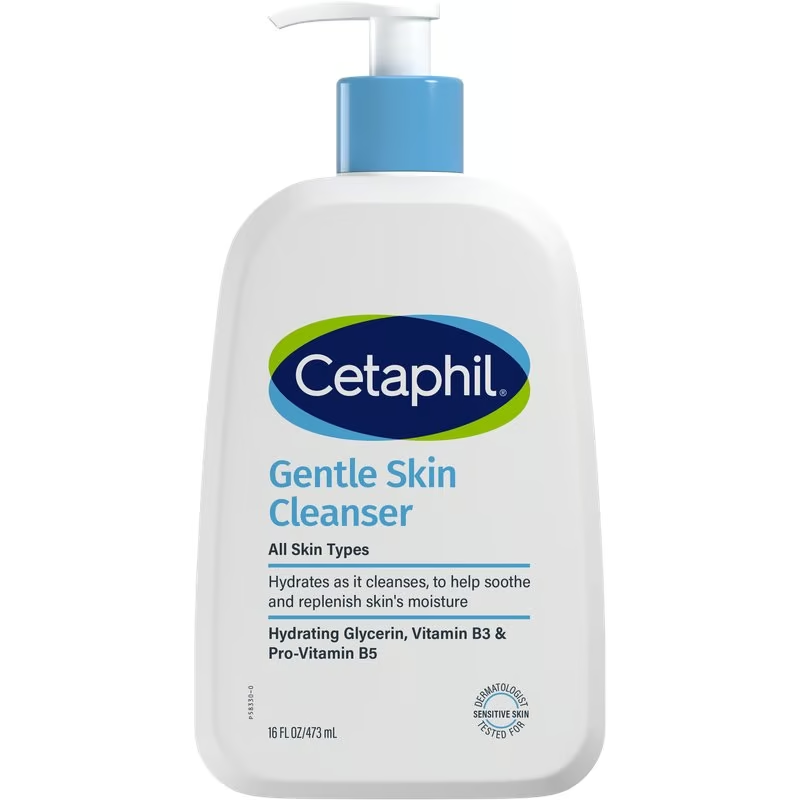
The default recommendation for sensitive skin, and it earns that position by doing very little. It is a soap-free, essentially non-foaming lotion cleanser that can be used with or without water, which matters because the foaming agents in most face washes are what strip the barrier and leave skin tight. Glycerin, vitamin B3 and pro-vitamin B5 handle hydration while it removes dirt and makeup, and it is hypoallergenic and usable on face and body. The 473ml bottle is the sensible size given how often you will reach for it.
Pros
- Soap-free and essentially non-foaming, so it does not strip the skin barrier
- Hypoallergenic and suitable for all skin types, including reactive skin
- Glycerin, vitamin B3 and pro-vitamin B5 hydrate while cleansing
- Can be used with or without water, which suits very dry or irritated skin
- Large bottle and usable on face and body, so it lasts
Cons
- The lack of lather leaves some people feeling the skin is not properly clean
- Not a strong makeup remover on its own, so heavy makeup needs a balm or oil first
- No active ingredients, so it does nothing for texture or pigmentation
Key specs: Soap-free non-foaming lotion cleanser. 473ml. Hypoallergenic. With glycerin, vitamin B3 and pro-vitamin B5. Face and body.
2. CeraVe Hydrating Foaming Oil Cleanser – Best for Dry Skin
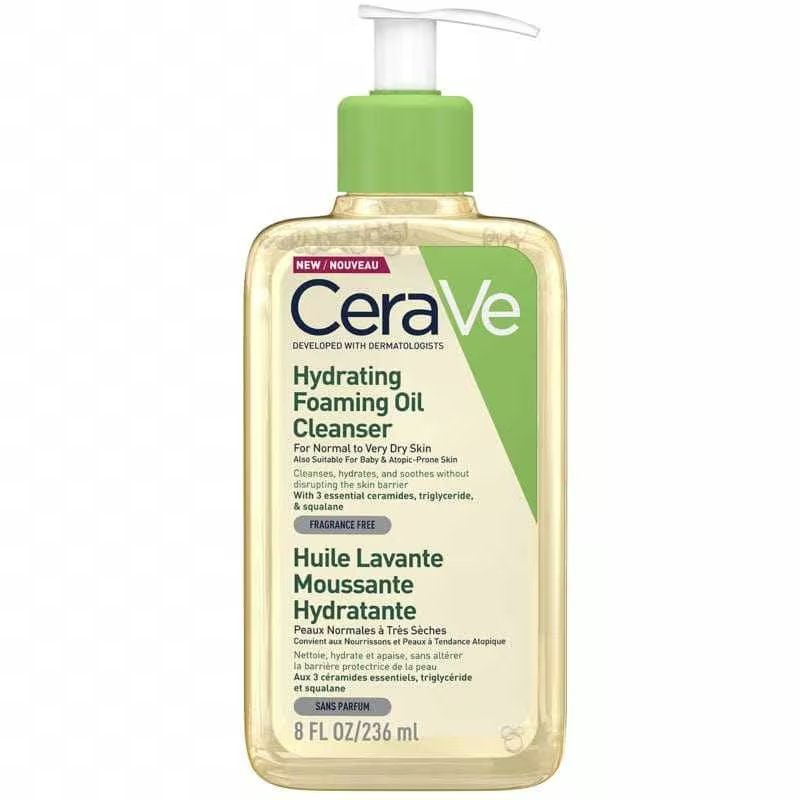
This is the answer for people who want the sensation of a foaming wash without the tightness that usually follows. It dispenses as an oil and transforms into a soft foam as you lather, using gentle amino acid surfactants at an optimal pH rather than harsher detergents. Squalane and triglyceride replenish skin lipids as it works, and it carries CeraVe’s three essential ceramides (1, 3 and 6-II), which matters because ceramides make up around half of the lipids in the skin barrier. It cleanses without the stripped, tight feeling.
Pros
- Oil-to-foam texture gives a proper lather without stripping the skin
- Gentle amino acid surfactants at an optimal pH rather than harsh detergents
- Squalane and triglyceride replenish skin lipids during cleansing
- Three essential ceramides support the skin barrier
- Removes makeup as well as dirt and oil
Cons
- Oil-based texture can feel heavy on genuinely oily skin
- 236ml is a mid-size bottle at a pharmacy-premium price
- Requires water, so it is not the pick for the most reactive skin
Key specs: Foaming oil cleanser. 236ml. Gentle amino acid surfactants at optimal pH. With ceramides 1, 3 and 6-II, squalane and triglyceride.
3. Bioderma Sensibio H2O Micellar Water – Best Micellar Water
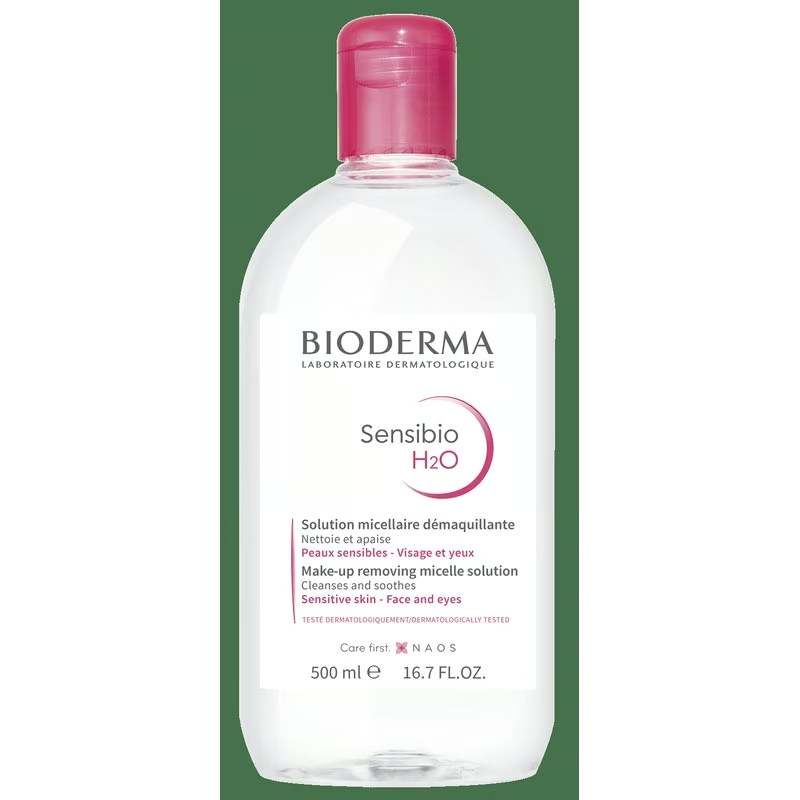
The benchmark micellar water, and the one most other brands are measured against. Micellar water works by suspending micelles, tiny cleansing molecules, in water: swept over the skin on a cotton pad they lift dirt, pollution and makeup without surfactants, rinsing or rubbing. Bioderma describes it as cleansing while respecting sensitive skin, which is the whole proposition. It is the sensible choice for reactive skin, for removing makeup before a proper cleanse, and for anyone who cannot tolerate washing.
Pros
- No rinsing required, so there is no water or towel friction on reactive skin
- Removes dirt, pollution and makeup without surfactants
- The long-standing benchmark in this format
- 500ml bottle is excellent value for daily use
- Doubles as a first-step makeup remover before a main cleanse
Cons
- Requires cotton pads, which adds ongoing cost and waste
- Leaves a residue some people prefer to rinse off anyway
- Not strong enough alone on heavy or waterproof makeup
Key specs: No-rinse micellar water. 500ml. Formulated for sensitive skin. Removes dirt, debris, pollution and makeup.
4. La Roche-Posay Effaclar Micro-Peeling Gel – Best for Oily and Acne-Prone Skin
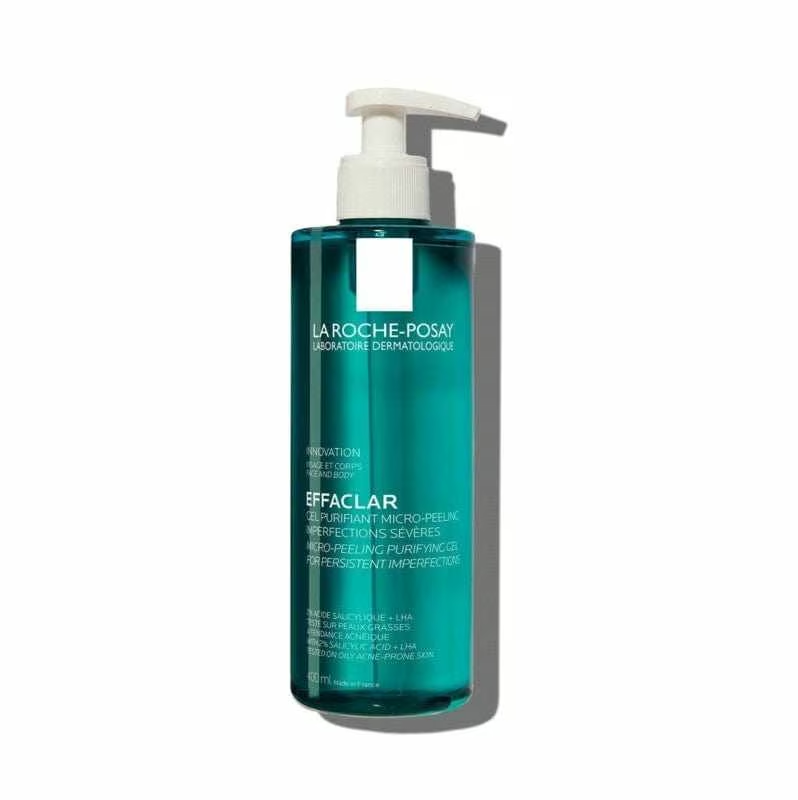
Built for skin that is genuinely oily rather than merely shiny by lunchtime. It combines salicylic acid with LHA to exfoliate chemically rather than by friction, which is the right approach for breakout-prone skin because scrubbing inflamed skin makes things worse. It purifies, removes excess sebum and unclogs pores, and La Roche-Posay claims proven anti-recurrence efficacy against persistent imperfections and the marks they leave. It has a physiological pH, contains no alcohol, and is suitable for body as well as face, which is useful for back and chest breakouts.
Pros
- Salicylic acid and LHA exfoliate chemically, with no friction on inflamed skin
- Targets excess sebum and clogged pores directly
- Brand claims proven anti-recurrence efficacy on persistent marks
- Physiological pH and alcohol-free despite being an oily-skin product
- Usable on body, which suits back and chest breakouts
Cons
- Too stripping for dry or sensitive skin
- Daily use alongside other exfoliating actives will over-exfoliate
- 400ml is a big commitment if it turns out not to suit you
Key specs: Exfoliating cleansing gel with salicylic acid and LHA. 400ml. Physiological pH, no alcohol. Face and body.
5. Beauty of Joseon Radiance Cleansing Balm – Best Cleansing Balm
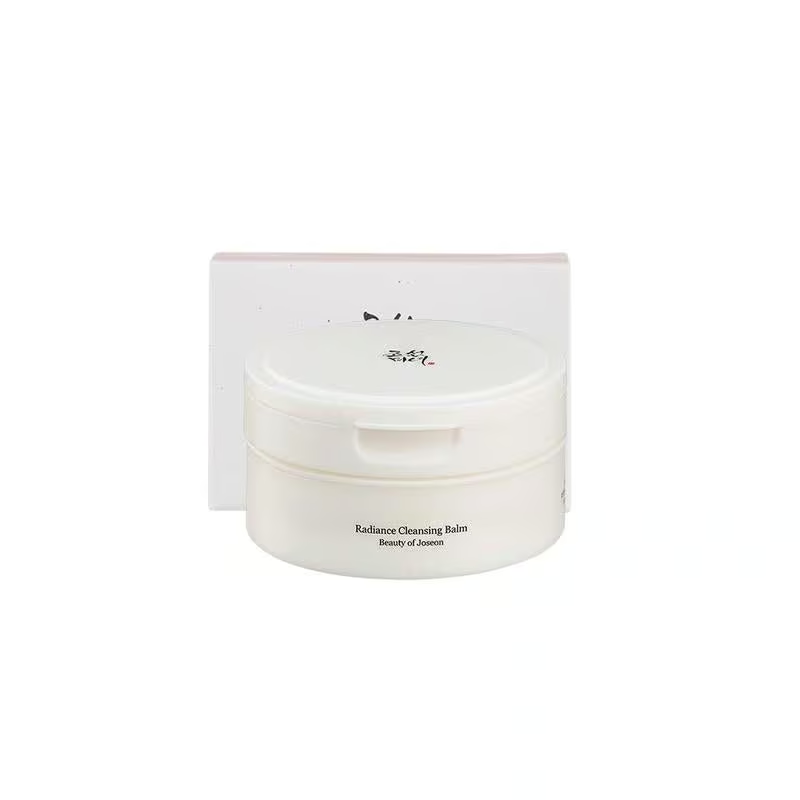
If you wear sunscreen daily, which in New Zealand you should, a balm is the step most routines are missing. Sunscreen filters and long-wear makeup are oil-soluble, and a water-based cleanser does not fully remove them, which is how people end up with congestion they blame on the sunscreen itself. This is a balm-type cleansing oil that melts eye, lip and base makeup along with sebum, then emulsifies with water and rinses. Use it as the first step and follow with a water-based cleanser.
Pros
- Dissolves sunscreen and long-wear makeup that water-based cleansers leave behind
- Melts eye and lip makeup without rubbing at the eye area
- Balm format travels better than a bottled oil
- Solid value for a 100ml jar
- The correct first step if you wear SPF daily
Cons
- Designed as a first cleanse, so you still need a second water-based cleanser
- Jar packaging means fingers go into the product
- Balms can leave a film on skin if not emulsified properly with water
Key specs: Balm-type cleansing oil. 100ml. Melts eye, lip and base makeup plus sebum. First step of a double cleanse.
6. Avene Gentle Milk Cleanser – Best Milk Cleanser for Reactive Skin
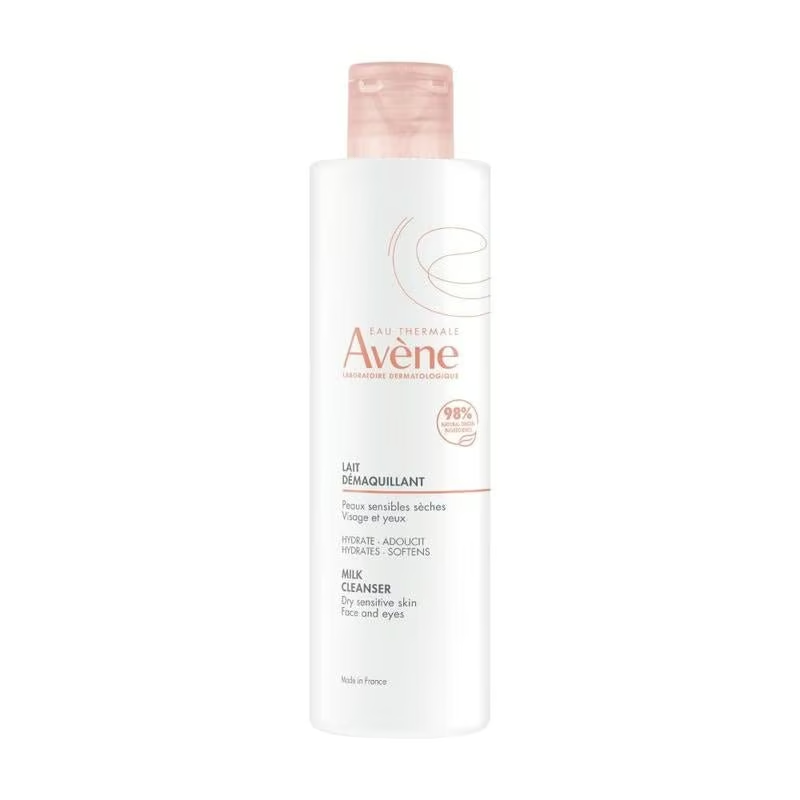
Milk cleansers sit between a lotion and a cream, and this is the pick for skin that feels tight and uncomfortable after washing. Avene positions it around reducing discomfort and tightness while removing makeup, hydrating and preserving the skin’s natural balance. It contains 98% ingredients of natural origin and none of animal origin, and the bottle is 100% recycled plastic. It is also marked as suitable for contact lens wearers, which is a small detail that matters if every eye-area cleanser has stung so far.
Pros
- Specifically formulated to reduce tightness and discomfort after cleansing
- Removes makeup while hydrating rather than stripping
- Suitable for contact lens wearers
- 98% natural-origin ingredients, none of animal origin
- Bottle made from 100% recycled plastic
Cons
- Milk textures can feel like they leave a residue on oilier skin
- No exfoliating or active ingredients
- 200ml is modest for a twice-daily cleanser
Key specs: Milk cleanser for sensitive skin. 200ml. Removes makeup, hydrates and reduces tightness. 98% natural-origin ingredients. Recycled bottle.
7. CeraVe SA Smoothing Cleanser – Best Exfoliating Cleanser
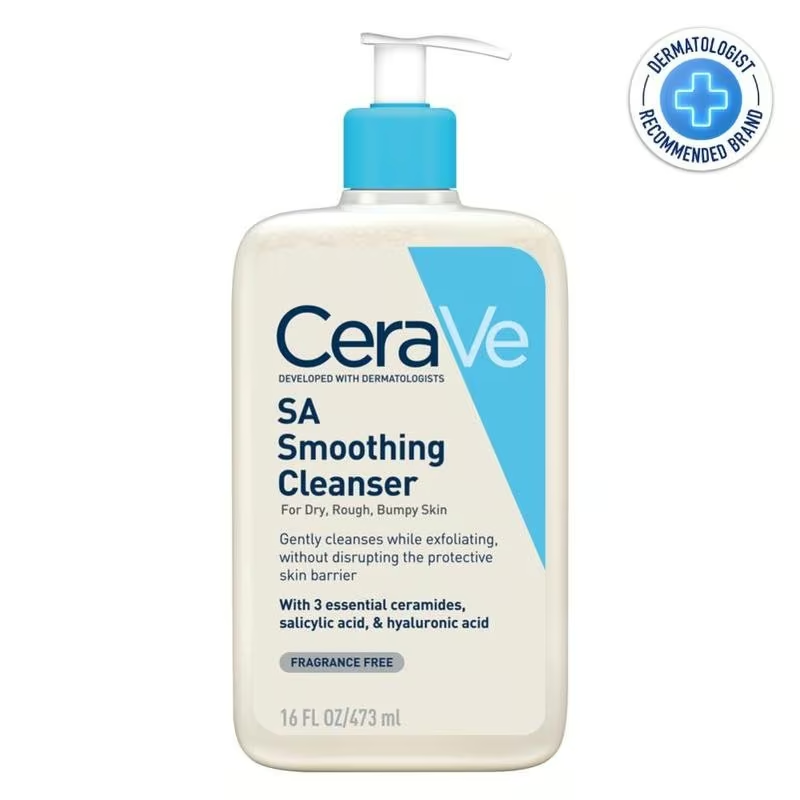
The most complete formula in this lineup. Salicylic acid exfoliates for smoother texture, but unlike most exfoliating washes it arrives alongside ceramides to restore the barrier, hyaluronic acid to hold moisture and niacinamide to calm the skin, which is precisely the support an exfoliating cleanser normally lacks. Antioxidant vitamin D is included too. It is non-comedogenic, allergy tested, fragrance-free and developed with dermatologists, and it is the pick for rough or bumpy skin texture on face or body.
Pros
- Salicylic acid exfoliation buffered by ceramides, hyaluronic acid and niacinamide
- Fragrance-free, non-comedogenic and allergy tested
- Developed with dermatologists
- Works on body texture, not just the face
- Large 473ml bottle for the price
Cons
- Still an exfoliating acid, so daily use can be too much for some skin
- Not the right choice if you already use a separate BHA or AHA treatment
- Too active for genuinely sensitive or compromised skin
Key specs: Salicylic acid exfoliating cleanser. 473ml. With ceramides, hyaluronic acid, niacinamide and vitamin D. Fragrance-free, non-comedogenic.
8. Dermalogica Special Cleansing Gel – Best Professional Gel Cleanser
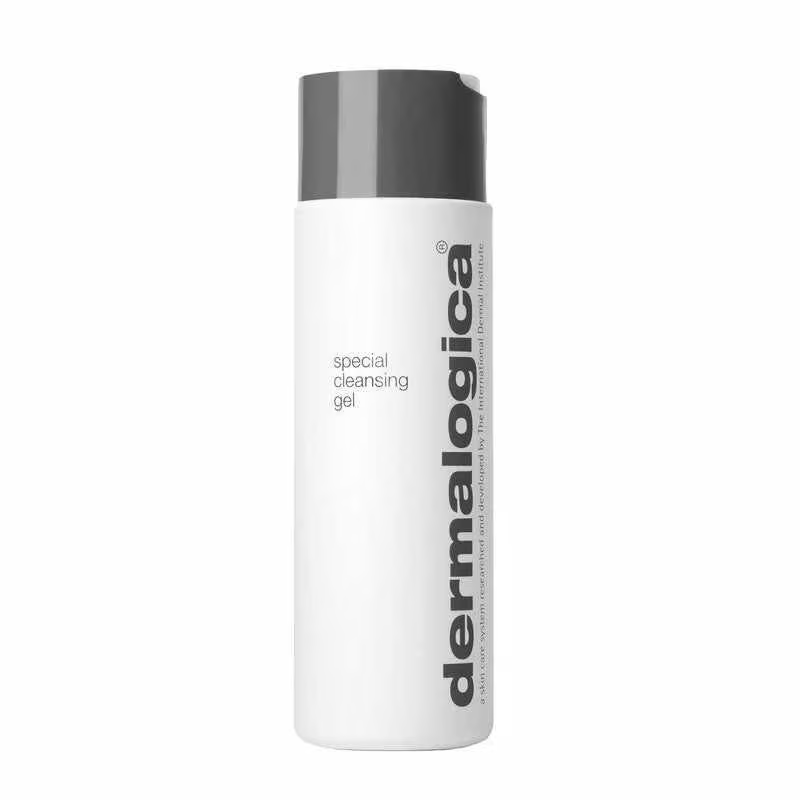
Dermalogica’s long-running signature cleanser, and the professional-tier pick. It is soap-free but genuinely foaming, using naturally-foaming quillaja saponaria rather than harsh detergents to produce the lather, so it removes impurities without disturbing the skin’s moisture balance. Balm mint and lavender extracts are included to soothe. It is positioned for all skin conditions and mild enough for daily use, which makes it the safest choice if you are buying for someone whose skin type you do not know.
Pros
- Soap-free but still properly foaming, via naturally-foaming quillaja saponaria
- Suits all skin conditions, so it is hard to get wrong
- Calming balm mint and lavender extracts
- Mild enough for twice-daily use
- Available in a 500ml refill, which cuts packaging and cost per use
Cons
- Lavender and mint are botanical fragrance sources that can irritate very reactive skin
- Salon-brand pricing
- No exfoliating or targeted actives
Key specs: Soap-free foaming gel cleanser. 250ml. Naturally-foaming quillaja saponaria with balm mint and lavender extracts. All skin conditions.
9. Trilogy Very Gentle Cleansing Cream – Best NZ-Made
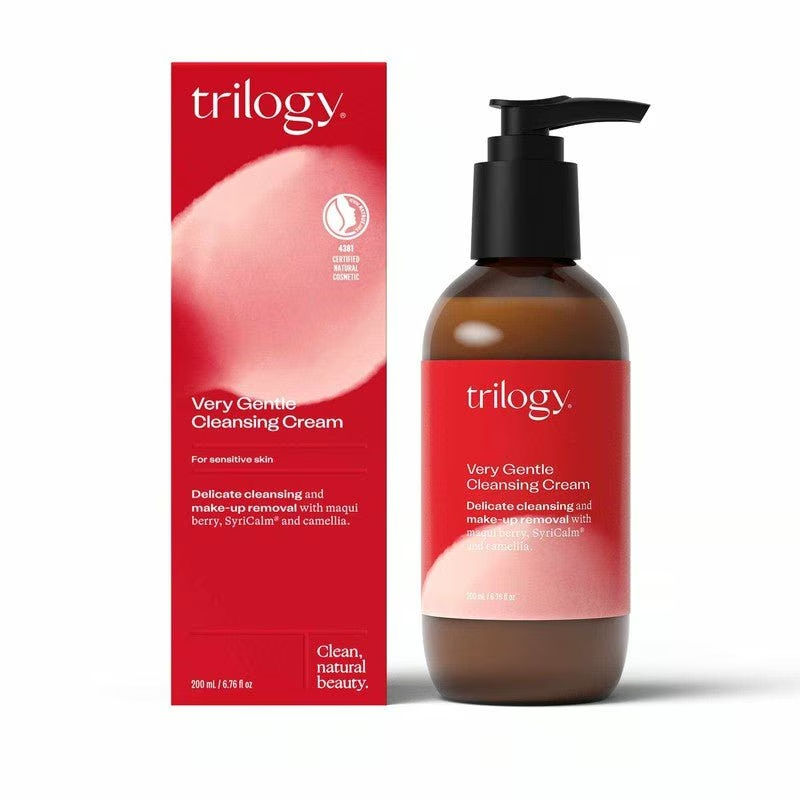
Trilogy is a New Zealand brand, and this is its certified natural answer for sensitised and reactive skin. It is a fragrance-free cream cleanser, which matters because fragrance is among the most common triggers in natural skincare, and it is dermatologically tested. The supporting ingredients are essential fatty acid rich camellia, antioxidant maqui berry and a soothing botanical complex called Syricalm. It removes make-up and impurities without the drying or irritation that catches people out when they move to natural products.
Pros
- Certified natural and fragrance-free, an uncommon combination
- Dermatologically tested for sensitised and reactive skin
- Camellia, maqui berry and Syricalm botanical complex
- Removes make-up without drying
- New Zealand brand
Cons
- Cream cleansers can feel insufficient to anyone used to a foaming wash
- 200ml is small relative to the pharmacy-brand bottles here
- Botanical formulas still carry more allergen potential than a minimal synthetic one
Key specs: Certified natural cream cleanser. 200ml. Fragrance-free, dermatologically tested. With camellia, maqui berry and Syricalm.
10. Avene XeraCalm A.D. Cleansing Oil – Best for Eczema and Atopy-Prone Skin
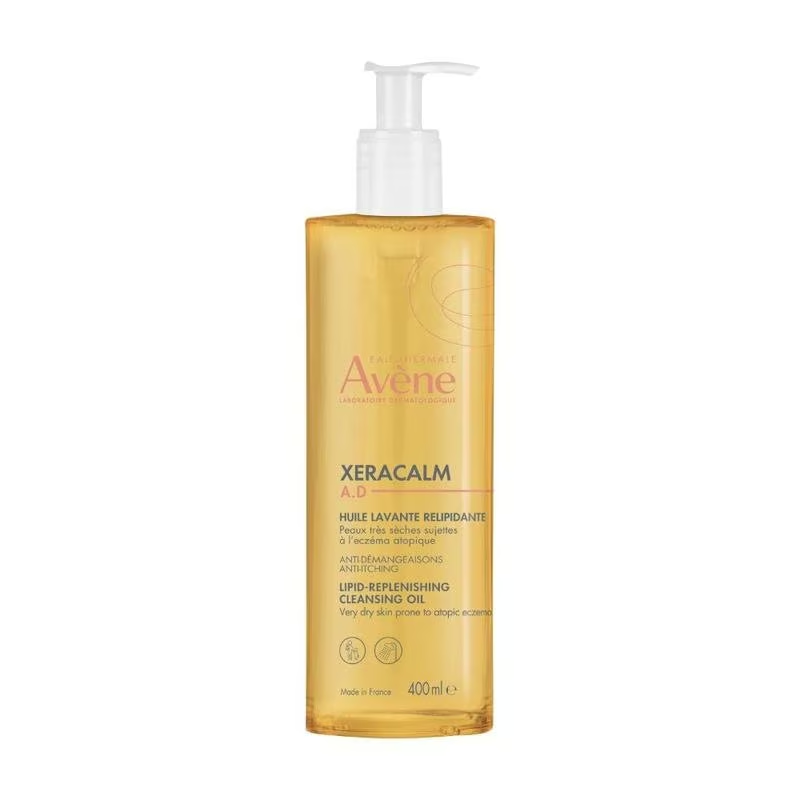
The most specialised pick here, and the one to know about if the problem is not cosmetic. It is formulated for very dry skin, atopy-prone skin and skin prone to itchiness, and it is lipid-replenishing rather than merely non-stripping, meaning it puts lipids back rather than just avoiding taking them away. That distinction is the whole point for eczema-prone skin, where the barrier is already deficient. The 400ml size and face-and-body use reflect that this is bought for a condition rather than a routine. For diagnosed skin conditions, treat it as a complement to medical advice rather than a substitute.
Pros
- Lipid-replenishing rather than simply gentle, which matters for a deficient barrier
- Formulated for atopy-prone and itch-prone skin specifically
- Oil format cleanses without surfactant stripping
- 400ml and suitable for face and body, appropriate for whole-body eczema care
- From a brand built around thermal spring water and sensitive skin
Cons
- Oils leave a film that people with normal skin will find heavy
- Makes the bath or shower slippery, which is worth noting for children and older users
- Product listing is sparse on ingredient detail
Key specs: Lipid-replenishing cleansing oil. 400ml. For very dry, atopy-prone and itch-prone skin. Face and body.
How to choose a face cleanser in NZ
Start with how your skin feels after washing, not with your skin type as you have always described it. Tightness, stinging or a squeaky-clean feeling five minutes after rinsing all mean the cleanser has removed more than it should have, and that is true whether your skin is oily or dry. Oily skin that feels tight after cleansing is being stripped, and it usually responds by producing more oil, which is how people end up cycling through progressively harsher washes.
Then match the format to the job. Gel and foaming formulas suit oily and combination skin, cream and milk formulas suit dry and reactive skin, and a soap-free foaming cleanser is the middle ground if you want lather without the stripping. If your skin is genuinely reactive, a no-rinse micellar water removes the water temperature and towel friction from the equation entirely, which are two irritants people rarely think about.
Add a balm or oil only if you need one. If you wear sunscreen every day, and in New Zealand you should, you do need one: sunscreen filters are oil-soluble and a water-based cleanser will not fully remove them, which leaves a residue that causes the congestion people then blame on the sunscreen itself. If you wear neither sunscreen nor makeup, a single cleanse is plenty and a double cleanse is just an extra way to irritate your skin.
Be conservative with exfoliating cleansers. Salicylic acid works, but daily use stacked on top of a separate acid or a retinol is the standard route to an over-exfoliated barrier that takes weeks to settle. Two or three times a week is a sensible starting point. Cleansing is the first step rather than the whole routine, so it is worth reading alongside our guides to the best face moisturisers in NZ, the best eye creams for the area most easily irritated by cleansing, and anti-ageing creams for the treatment step that follows. If brightening is the goal, a vitamin C serum is the morning treatment that goes on straight after cleansing.
Verdict
Cetaphil Gentle Skin Cleanser is the best default for most people and the safest choice for sensitive skin, because it is soap-free, essentially non-foaming and does nothing it does not need to do. If you want the feel of a lather without the tightness, CeraVe Hydrating Foaming Oil Cleanser gets there with gentle amino acid surfactants and ceramides, and Dermalogica Special Cleansing Gel is the soap-free foaming option that suits any skin condition.
Past that, choose by problem. La Roche-Posay Effaclar Micro-Peeling Gel is the pick for genuinely oily, breakout-prone skin, and CeraVe SA Smoothing Cleanser is the better exfoliating choice if your skin needs the acid buffered by ceramides and niacinamide. For reactive skin, Avene Gentle Milk Cleanser and Bioderma Sensibio H2O both avoid the usual irritants, and Avene XeraCalm A.D. Cleansing Oil is the specialised option for eczema and atopy-prone skin. If you wear sunscreen daily, add Beauty of Joseon Radiance Cleansing Balm as a first step regardless of which main cleanser you pick. Whichever you choose, check current stock and pricing directly with the retailer before buying, since both change regularly.
FAQs
What is the best face cleanser for sensitive skin?
A soap-free, fragrance-free, non-foaming or low-foaming cleanser is the safest starting point, which is why Cetaphil Gentle Skin Cleanser is the default recommendation in this guide. The foaming agents in most face washes are what strip the skin barrier and leave that tight feeling afterwards. For reactive skin that finds even gentle washing uncomfortable, a no-rinse micellar water or a milk cleanser avoids the water and towel friction entirely.
How often should you wash your face?
Twice a day for most people, morning and evening, with the evening cleanse being the one that matters most because it removes the day’s sunscreen, makeup and pollution. If your skin is very dry, sensitive or eczema-prone, a plain water rinse in the morning and one proper cleanse at night is often better tolerated. Washing more than twice daily tends to cause more problems than it solves.
What is double cleansing and do you need it?
Double cleansing means using an oil or balm cleanser first to dissolve oil-soluble things such as sunscreen and long-wear makeup, then a water-based cleanser to remove everything else. You need it if you wear daily sunscreen or makeup, because water-based cleansers do not fully remove oil-soluble filters, and the residue is a common cause of congestion people wrongly blame on the sunscreen. If you wear neither, one cleanse is enough.
Should a cleanser foam?
Foam is a texture preference, not a measure of cleaning power. Foaming agents create the lather people associate with being clean, but they are also the most common cause of post-wash tightness. Soap-free foaming cleansers, such as the Dermalogica gel using naturally-foaming quillaja saponaria or the CeraVe oil-to-foam formula, are the middle ground: the sensation of a lather without the stripping.
What is the difference between micellar water and a cleanser?
Micellar water suspends tiny cleansing molecules called micelles in water, and you sweep it on with a cotton pad without rinsing. A conventional cleanser uses surfactants and is washed off. Micellar water is gentler and more convenient, and excellent as a first step or for reactive skin, but it is less effective on heavy or waterproof makeup and it leaves a light residue that some people prefer to rinse away.
Can you use an exfoliating cleanser every day?
Some people can, many should not. An exfoliating cleanser with salicylic acid works quickly, and daily use on top of a separate acid treatment or retinol is the usual route to an over-exfoliated, irritated barrier. Start two or three times a week and build up only if your skin stays comfortable. The CeraVe SA cleanser is easier to tolerate than most because ceramides and niacinamide buffer the acid.
Does an expensive cleanser work better?
Less than in any other skincare category. A cleanser is on the skin for under a minute before being rinsed away, so it has far less opportunity to deliver active ingredients than a serum or moisturiser. The pharmacy options in this guide, particularly Cetaphil and CeraVe, are among the most recommended by dermatologists at a fraction of the price of the salon brands. Spend the budget on treatment steps instead.
