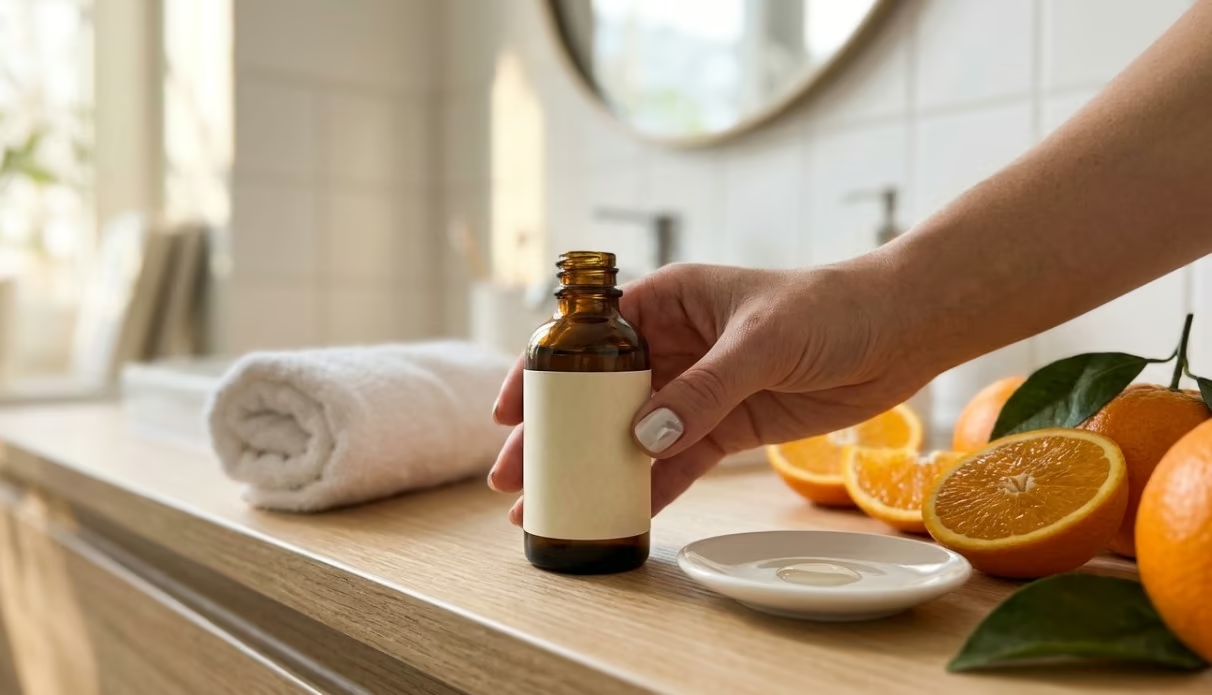
A vitamin C serum is a lightweight leave-on treatment that delivers ascorbic acid, or a stabilised derivative of it, at a far higher concentration than a moisturiser or cleanser can. Vitamin C is an antioxidant: it helps neutralise the free radicals that UV exposure and pollution generate in the skin, and it supports collagen production, which is why it is used for dullness, uneven tone and early fine lines. A vitamin C cleanser rinses off before it can do much, and a vitamin C moisturiser carries a lower dose, so the serum is the format that does the work.
The products split along one line above all others, the form of vitamin C they use. Pure L-ascorbic acid is the most researched and most potent by weight, but it is unstable and the most likely to irritate. Vitamin C derivatives trade some potency for much better stability and tolerance. Water-free (anhydrous) formulas remove the water that causes ascorbic acid to degrade, allowing very high concentrations to stay stable. C + E + ferulic combinations add vitamin E and ferulic acid, the pairing professional serums are usually built on. Vitamin C with niacinamide brightens through two pathways at once and is generally better tolerated. Ampoules are sealed single-course bottles that limit how long the formula sits exposed to air.
Concentration is the number to compare, and the serums in this guide run from 5% to 23%. Roughly, 5% is a starting point for sensitive skin or a first serum, 10% to 15% is the everyday range where most people get a visible result without irritation, and above 20% is for skin that already tolerates vitamin C well. Apply it in the morning to clean dry skin, before moisturiser and sunscreen, and note that it complements sun protection rather than replacing it, because it carries no SPF of its own.
This guide compares ten vitamin C serums available in New Zealand on the things that actually separate them: the form and strength of vitamin C, the supporting actives, how each one handles the oxidation problem, and which skin types they suit.
Vitamin C serum comparison
| Product | Best for | Vitamin C form and strength | Size | Also contains |
|---|---|---|---|---|
| La Roche-Posay Pure Vitamin C12 Serum | Best Overall | 12% pure vitamin C | 30ml | Salicylic acid, neurosensine |
| L’Oreal Paris Revitalift Clinical Vitamin C Serum | Best Value | 12% pure vitamin C | 30ml | Salicylic acid, vitamin E |
| The Ordinary Vitamin C 23% Suspension | Best High Strength | 23% pure L-ascorbic acid | 30ml | Hyaluronic acid spheres |
| Derma Factory Vitamin C E Ferulic Pure Ampoule | Best C + E + Ferulic Combination | 15% pure vitamin C | 22ml | Vitamin E (tocopherol), ferulic acid |
| Avene Vitamin Activ CG Serum | Best for Reactive Skin | Vitamin C complex | 30ml | Antioxidant and detoxifying actives |
| Dermaveen Vitamin C + Niacinamide Brightening Serum | Best Gentle Starter | 5% vitamin C | 30ml | Niacinamide, colloidal oatmeal |
| Medicube Deep Vitamin C Ampoule 3pk | Best for Dark Spots | 14.5% pure vitamin C | 3-pack ampoules | Oxidation-resistant packaging |
| Bondi Sands Gold’n Hour Vitamin C Serum | Best Everyday Affordable | 10% vitamin C | 30ml | Kakadu plum, licorice root extract |
| Dermalogica BioLumin-C Vitamin C Serum | Best Professional Formula | Ultra-stable vitamin C complex | 10ml travel | Peptide, AHA |
| Clarins Bright Plus Advanced Serum | Best Premium for Dark Spots | Vitamin C derivative | 30ml | Niacinamide, purple tea, acerola seed |
1. La Roche-Posay Pure Vitamin C12 Serum – Best Overall
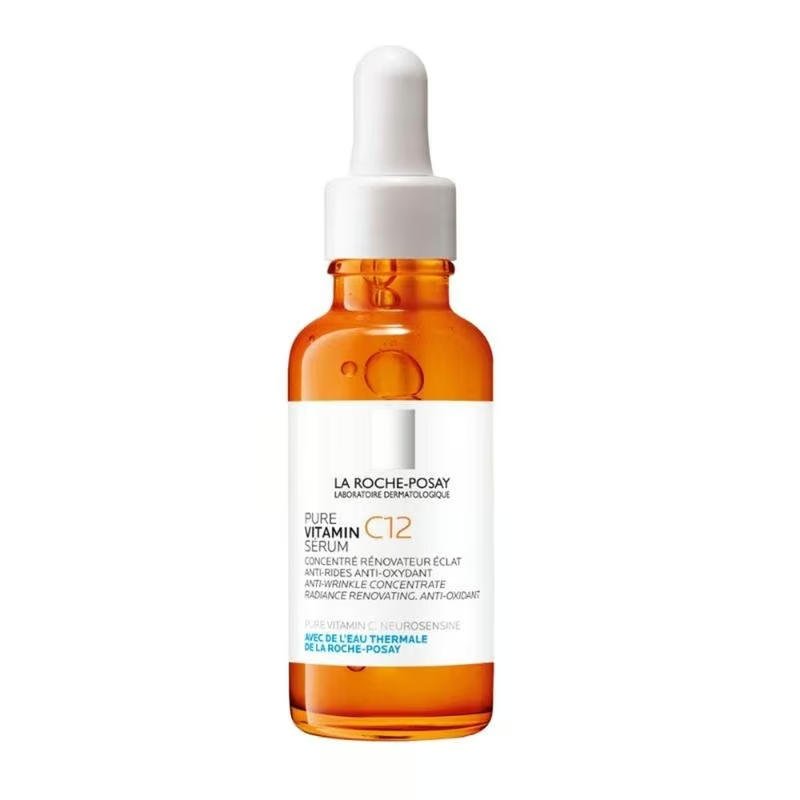
This is the pick that balances strength against tolerability better than anything else here. It runs 12% pure vitamin C, which sits at the upper end of what most people can wear daily, but La Roche-Posay formulates and tests its range specifically around sensitive skin, so the concentration arrives without the sting that usually accompanies it. The brand publishes its own consumer trial figures: 93% of women saw an improvement in radiance and 76% saw improvement in skin tone evenness, from a self-assessment of 63 women after two weeks. Treat those as brand-run self-assessment rather than independent clinical data, but the formulation reasoning holds.
Pros
- 12% pure vitamin C, a high concentration that still suits daily use
- Formulated and tested around sensitive skin, which is unusual at this strength
- Brand trial reports 93% of women seeing improved radiance after two weeks
- Dermatologist-facing brand with a long track record in this category
- Widely stocked, so it is easy to repurchase
Cons
- Brand-run self-assessment on 63 women is not independent clinical evidence
- Pure vitamin C formulas oxidise faster than derivative-based ones once opened
- Premium price point for a 30ml bottle
Key specs: 12% pure vitamin C. 30ml. Formulated for sensitive skin. Apply in the morning before moisturiser and sunscreen.
2. L’Oreal Paris Revitalift Clinical Vitamin C Serum – Best Value
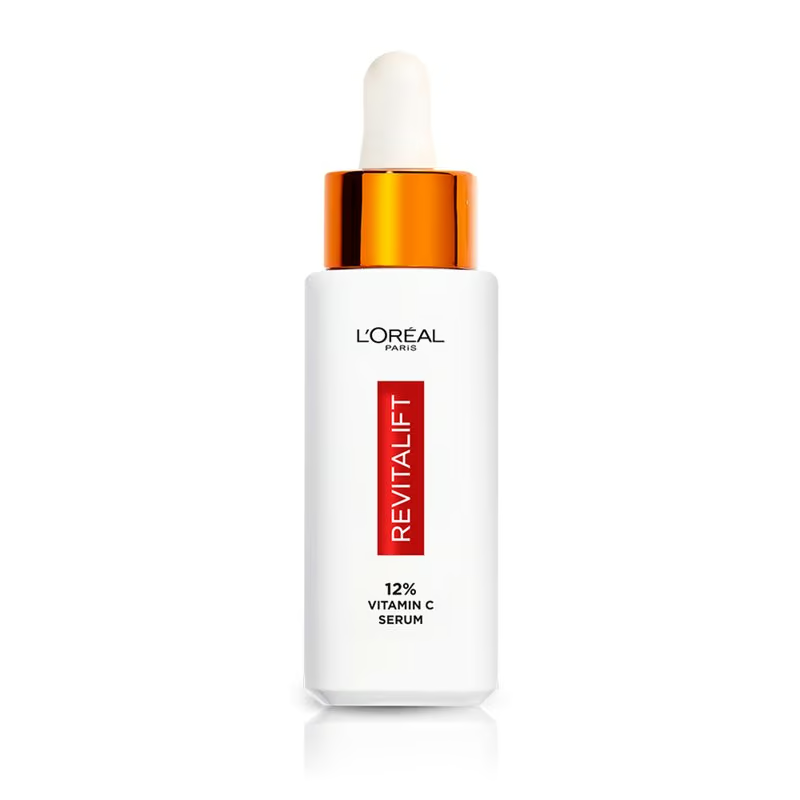
Matching the 12% concentration of the pick above at a fraction of the outlay makes this the value choice in the category. The formula is not just vitamin C either: salicylic acid is included to exfoliate and reduce the appearance of pores, and vitamin E works alongside the vitamin C as a second antioxidant, which is a genuine formulation decision rather than a marketing one. L’Oreal describes 12% as the highest concentration used by dermatologists and reports 2x brighter skin and 2x less visible pores from cosmeto-clinical scoring against baseline on 63 subjects over four weeks.
Pros
- 12% pure vitamin C, matching the concentration of far more expensive serums
- Salicylic acid included to smooth texture and reduce the look of pores
- Vitamin E pairs with the vitamin C as a second antioxidant
- Brand reports 2x brighter skin over four weeks against baseline
- Easily the strongest value-per-millilitre in this lineup
Cons
- Salicylic acid on top of a high-strength vitamin C can be too much for reactive skin
- Manufacturer scoring against baseline, with no comparison against a control group
- Fragranced, which does not suit everyone
Key specs: 12% pure vitamin C with salicylic acid and vitamin E. 30ml. Dermatologist-validated per the brand. Morning use.
3. The Ordinary Vitamin C 23% Suspension – Best High Strength
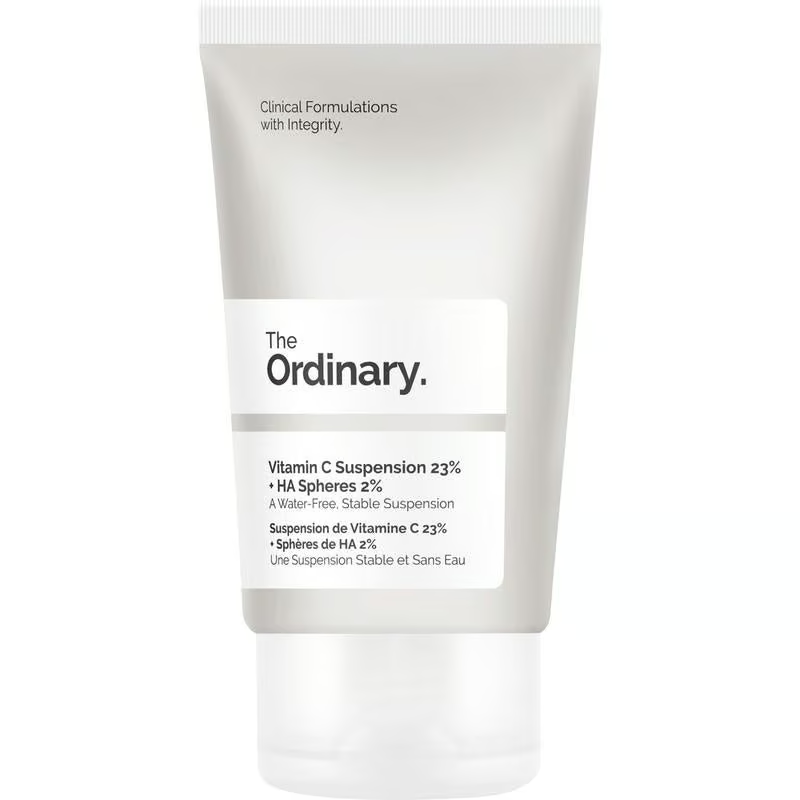
The highest concentration in this guide by a clear margin, and the one that solves the stability problem most directly. Vitamin C degrades in the presence of water, so The Ordinary simply removes the water: this is an anhydrous suspension, and the brand states the 23% pure L-ascorbic acid remains completely stable because of the absence of water. Hyaluronic acid spheres are suspended through it for hydration. The brand is upfront that the texture is slightly granular, which is the honest trade-off for the concentration, and it is the reason this one divides people.
Pros
- 23% pure L-ascorbic acid, the highest strength here
- Water-free formula, so the vitamin C stays stable rather than oxidising in the bottle
- Hyaluronic acid spheres add hydration to an otherwise very active formula
- Extremely low cost for the concentration delivered
- The brand is transparent about the texture rather than hiding it
Cons
- Slightly granular texture that many people dislike, acknowledged by the brand itself
- 23% is far too strong to start with if you have never used vitamin C before
- High concentrations of L-ascorbic acid are the most likely to sting or irritate
Key specs: 23% pure L-ascorbic acid in a water-free suspension. 30ml. With hyaluronic acid spheres. Granular texture by design.
4. Derma Factory Vitamin C E Ferulic Pure Ampoule – Best C + E + Ferulic Combination
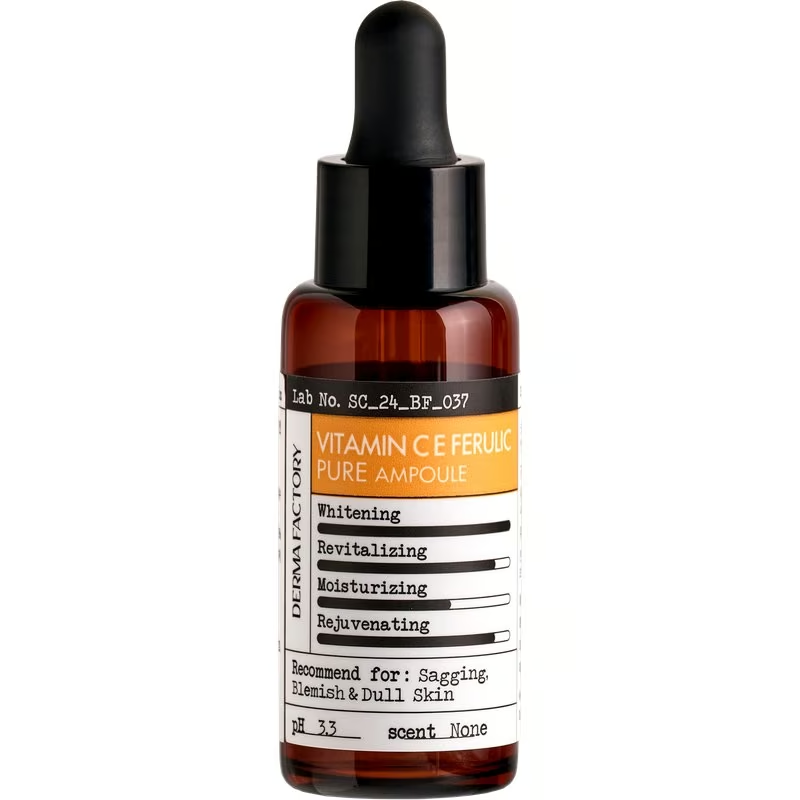
The vitamin C, vitamin E and ferulic acid combination is the most studied pairing in this category, and this is the only product here built explicitly around all three. It runs 15% pure vitamin C alongside tocopherol and ferulic acid, which is the classic trio that expensive professional serums are usually formulated on. Getting it at drugstore level rather than clinic level is the reason it earns a place. The brand positions it as a multi-care ampoule aimed at brightening.
Pros
- The full vitamin C, vitamin E and ferulic acid trio, not just vitamin C alone
- 15% pure vitamin C, a high but workable concentration
- The combination professional serums are usually built on, at a far lower price
- Ampoule format with a concentrated, no-filler positioning
Cons
- 22ml is smaller than the 30ml standard, so it runs out sooner
- Less brand recognition and less published testing than the bigger names here
- Combining three actives raises the chance of irritation on sensitive skin
Key specs: 15% pure vitamin C with tocopherol (vitamin E) and ferulic acid. 22ml ampoule. Brightening focus.
5. Avene Vitamin Activ CG Serum – Best for Reactive Skin
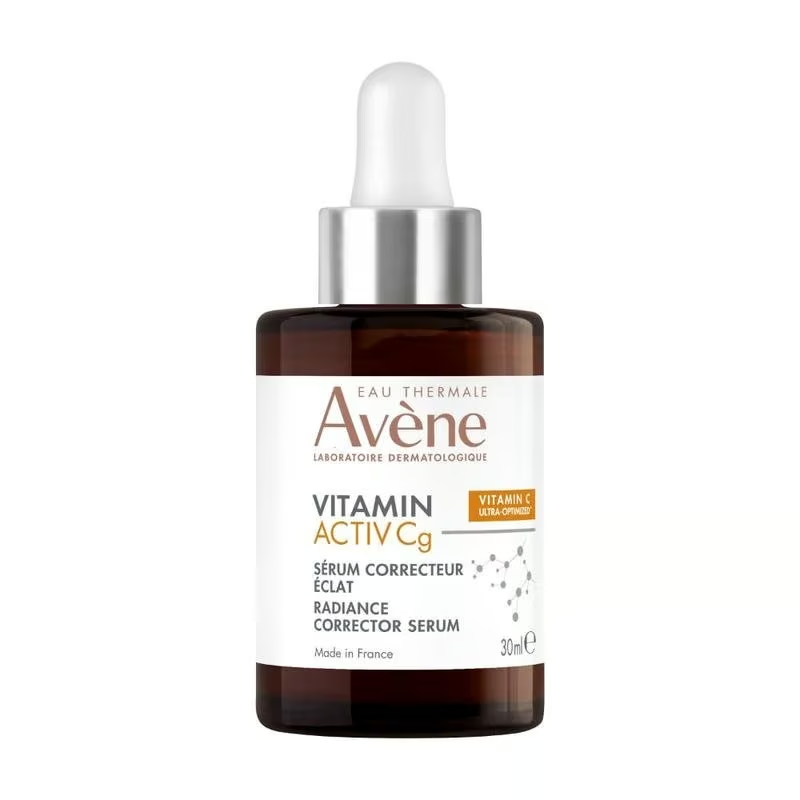
Avene builds its entire range around sensitive and reactive skin, and this is the serum to try if higher-strength pure vitamin C has burned you before, literally or figuratively. It is positioned as a daily brightening serum for sensitive skin, targeting dark spots, fine lines and wrinkles, with antioxidant and detoxifying properties aimed at free radicals generated by UV and pollution. The brand describes an immediately radiant, brightened and even complexion with a dewy finish after first use, and continued improvement over roughly four weeks.
Pros
- Built specifically for sensitive and reactive skin, not adapted for it afterwards
- Targets dark spots as well as general dullness
- Antioxidant action aimed at UV and pollution-generated free radicals
- Dewy finish rather than the tacky feel of some high-strength serums
- Sits well under moisturiser and sunscreen
Cons
- The listing does not state a vitamin C concentration, so it cannot be compared directly on strength
- Gentler formulas generally work more slowly than high-percentage pure vitamin C
- Pharmacy-premium pricing
Key specs: Vitamin C radiance serum for sensitive skin. 30ml. Targets dark spots, fine lines and dullness. Antioxidant and detoxifying action.
6. Dermaveen Vitamin C + Niacinamide Brightening Serum – Best Gentle Starter
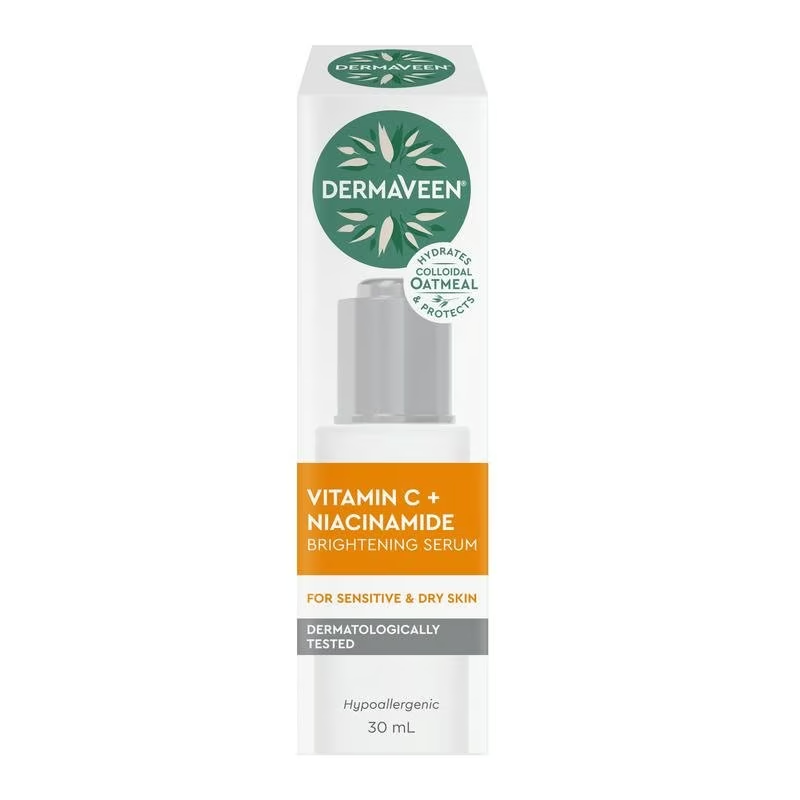
At 5% vitamin C this is the lowest concentration in the guide, and that is the entire point. If you have never used a vitamin C serum, starting at 12% or higher is how people end up with stinging, redness and an abandoned bottle. Dermaveen pairs the lower dose with niacinamide to brighten and colloidal oatmeal to hydrate and soothe, plus buddleja officinalis flower extract for barrier protection. It is the sensible on-ramp, and for skin that reacts easily it may be the destination rather than a stepping stone.
Pros
- 5% vitamin C is genuinely gentle and a realistic starting point
- Niacinamide adds brightening through a different and better-tolerated pathway
- Colloidal oatmeal soothes and hydrates, which offsets the usual dryness
- Barrier-protective extract included
- Suits skin that has reacted badly to stronger serums
Cons
- 5% will work more slowly and less dramatically than the 12% and above options
- Not the right choice if you already tolerate high-strength vitamin C
- Less of a visible result on established pigmentation
Key specs: 5% vitamin C with niacinamide, colloidal oatmeal and buddleja officinalis flower extract. 30ml.
7. Medicube Deep Vitamin C Ampoule 3pk – Best for Dark Spots
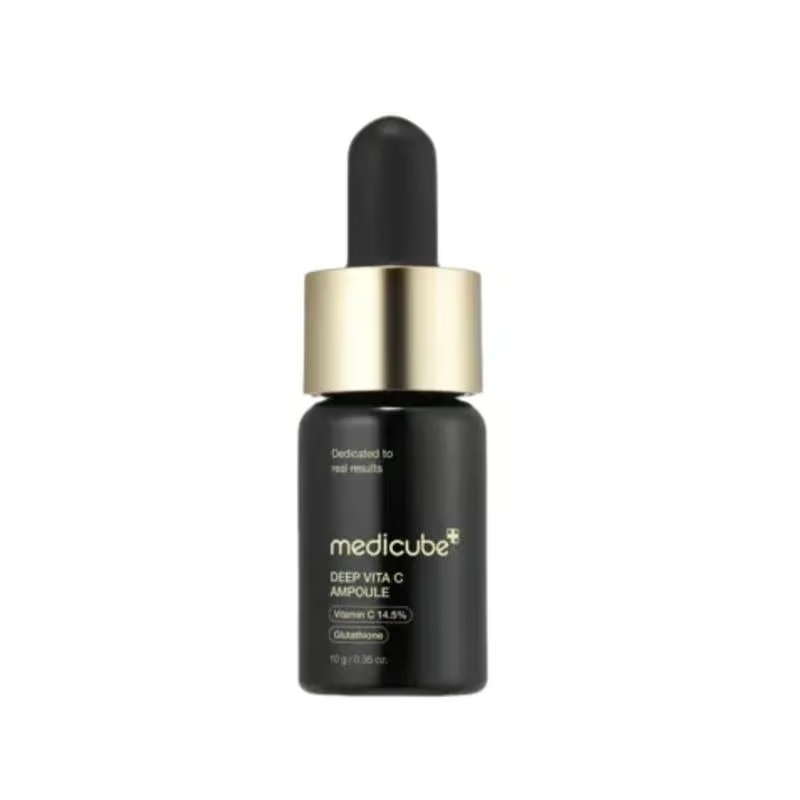
This is the pick aimed squarely at pigmentation rather than general radiance. It carries 14.5% pure vitamin C and is targeted at dark spots, hyperpigmentation and uneven tone, with the brand also citing improved cell turnover, elasticity and firmness. The detail that matters most is the packaging: it ships as three compact bottles rather than one large one, specifically to limit oxidation. Because pure vitamin C degrades once air reaches it, splitting the volume across three sealed bottles means the third is as potent as the first, which is a real advantage over a single 30ml bottle opened daily for three months.
Pros
- 14.5% pure vitamin C, high strength targeted at pigmentation
- Three sealed compact bottles limit oxidation, so the last dose matches the first
- Explicitly aimed at dark spots and uneven tone rather than vague radiance
- Addresses the category’s core weakness, which is degradation after opening
Cons
- High strength means it is not a beginner serum
- Three separate bottles produce more packaging waste than one
- K-beauty ampoule textures are lighter than some people expect from a serum
Key specs: 14.5% pure vitamin C. Three compact ampoule bottles. Packaged to prevent oxidation. Targets dark spots and hyperpigmentation.
8. Bondi Sands Gold’n Hour Vitamin C Serum – Best Everyday Affordable
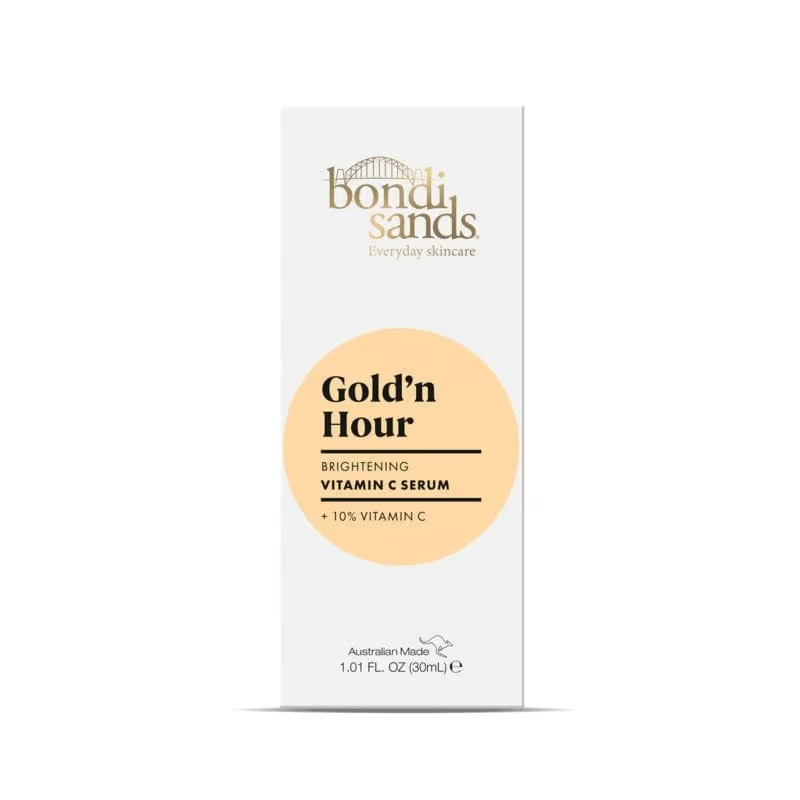
Ten per cent vitamin C is the concentration most people should actually be using day to day, and this delivers it without the price of the dermatological brands. Two supporting ingredients are worth noting: Kakadu plum, which is among the richest natural sources of vitamin C, and licorice root extract, which is a well-established brightening ingredient for uneven tone. The brand positions it for brightening uneven, dull skin towards a more luminous complexion. It is the uncomplicated everyday bottle rather than the specialist one.
Pros
- 10% vitamin C hits the everyday sweet spot between effective and tolerable
- Kakadu plum, one of the richest natural vitamin C sources, as a supporting ingredient
- Licorice root extract adds a second, gentler brightening pathway
- Accessible price for daily use rather than occasional use
- Simple, uncomplicated routine fit
Cons
- Less published testing behind it than the dermatological brands here
- 10% will not match 23% on stubborn pigmentation
- A beach-and-tan brand rather than a skincare specialist, which puts some buyers off
Key specs: 10% vitamin C with Kakadu plum and licorice root extract. 30ml. Brightening focus for dull, uneven skin.
9. Dermalogica BioLumin-C Vitamin C Serum – Best Professional Formula
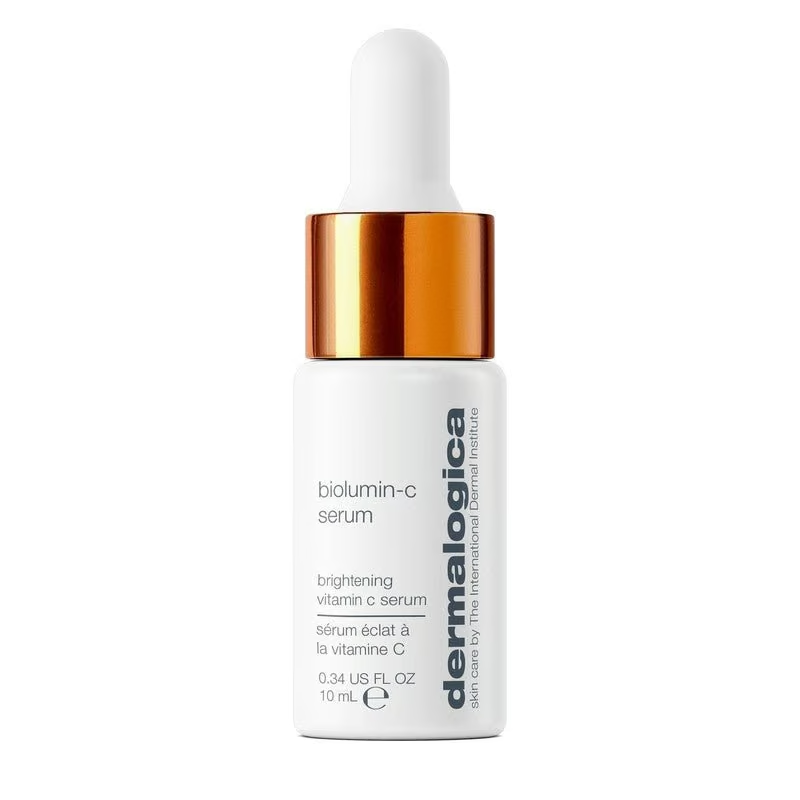
Dermalogica sits on the professional side of skincare, and this is the most technically ambitious formula in the guide. Rather than loading in raw L-ascorbic acid, it uses an ultra-stable vitamin C complex with an optimised delivery system, the aim being bioavailability, how much vitamin C actually reaches the skin, rather than the headline percentage on the box. A peptide and an AHA are included alongside it to renew and firm. The catch is the size: this is the 10ml travel bottle, which makes it a low-commitment way to test an expensive formula rather than a long-term supply.
Pros
- Ultra-stable vitamin C complex engineered for bioavailability rather than headline strength
- Optimised delivery system, the differentiator of professional-tier formulas
- Peptide and AHA included for renewal and firmness
- 10ml is a low-risk way to trial an expensive serum before committing
Cons
- 10ml travel size will not last long in daily use
- No stated percentage, so it cannot be compared on concentration
- The highest cost per millilitre in this lineup
Key specs: Ultra-stable vitamin C complex with peptide and AHA. 10ml travel size. Optimised delivery system for bioavailability.
10. Clarins Bright Plus Advanced Serum – Best Premium for Dark Spots
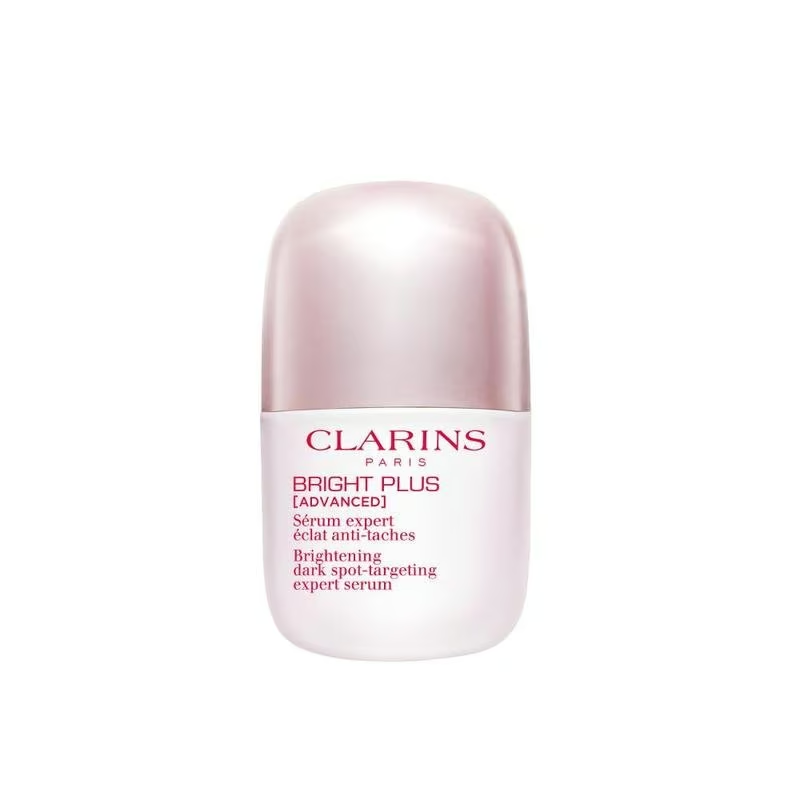
The premium option, and the one that takes a different formulation route to everything above it. Instead of pure vitamin C, Clarins uses a vitamin C derivative alongside niacinamide, which trades some potency for markedly better stability and tolerance. The rest of the formula is built around tone: purple tea extract as the brand’s evenness technology, and acerola seed extract specifically to reduce yellow undertones, which is a more precise claim than most brightening serums make. Clarins positions it as suitable for all skin types, including the most delicate.
Pros
- Vitamin C derivative is more stable and better tolerated than pure L-ascorbic acid
- Niacinamide works alongside it on dullness and dark spots
- Acerola seed extract targets yellow undertones specifically, an unusually precise claim
- Suitable for delicate skin despite being a targeted treatment serum
- Elegant texture befitting the price
Cons
- Derivatives are generally less potent by weight than pure vitamin C
- No stated concentration, so it cannot be compared on strength
- The most expensive 30ml bottle in this guide by some distance
Key specs: Vitamin C derivative with niacinamide, purple tea extract and acerola seed extract. 30ml. Suitable for all skin types.
How to choose a vitamin C serum in NZ
Pick the concentration before you pick the brand. If you have never used vitamin C, start around 5% and move up once your skin is comfortable, because the fastest way to end up with an abandoned bottle is to open with 20% and spend a week red and stinging. If you already use actives without trouble, 10% to 15% is where most of the visible benefit sits, and the high-percentage options are worth it only if you tolerate them.
Decide whether you want pure vitamin C or a derivative. Pure L-ascorbic acid does more per unit, but it degrades once air and water reach it, and that degradation is not theoretical: a serum that has turned yellow or brown has lost potency. Derivatives and stabilised complexes give up some strength for a formula that still works in week ten. Neither is universally correct, and the one you will use consistently wins.
Look at how the product fights oxidation, because it separates thoughtful formulation from marketing. The approaches in this guide are genuinely different: remove the water entirely, split the volume across sealed ampoules, or use a stabilised complex rather than raw ascorbic acid. Opaque or airless packaging matters for the same reason, and any vitamin C serum should be kept away from light and heat and replaced once it darkens.
Finally, treat the serum as one layer rather than the whole answer. Vitamin C works in the morning alongside sun protection, so it belongs under a broad-spectrum sunscreen, and for pigmentation in particular the sunscreen does more of the work than the serum does. It also works best on properly cleansed skin, so it is worth pairing with a suitable face cleanser. Layering order and the rest of the routine matter too, which is worth reading alongside our guides to the best face moisturisers in NZ and the best eye creams. If your main concern is fine lines rather than tone, our roundup of anti-ageing creams covers the night-time side, and collagen supplements are the internal counterpart people often ask about next.
Verdict
The La Roche-Posay Pure Vitamin C12 Serum is the best all-round choice, because 12% pure vitamin C in a formula built and tested around sensitive skin is a harder combination to achieve than either half on its own. If the price is the obstacle, the L’Oreal Paris Revitalift Clinical serum matches that 12% concentration and adds salicylic acid and vitamin E, making it the strongest value in the category by a wide margin.
Beyond those two, choose by what your skin needs. The Ordinary Vitamin C 23% Suspension is the high-strength option for people already comfortable with vitamin C, and its water-free formula solves the stability problem outright, provided you can live with the granular texture. Dermaveen at 5% is the right starting point for a first serum or for skin that reacts easily, and Avene is the pick for genuinely reactive skin. For pigmentation specifically, the 14.5% Medicube ampoules and the tone-targeting Clarins serum are the two aimed at that job. Whichever you choose, check current stock and pricing directly with the retailer before buying, since both change regularly.
FAQs
What percentage of vitamin C should a serum have?
For most people a serum in the 10 to 15 per cent range is the practical sweet spot: strong enough to make a visible difference to tone and radiance, mild enough to wear daily. Below that, around 5 per cent, is a sensible starting point for sensitive skin or a first serum. Above 20 per cent, such as the 23 per cent option in this guide, is for people who already tolerate vitamin C well, because the irritation risk rises with the concentration.
When should you apply a vitamin C serum?
In the morning, on clean dry skin, before moisturiser and sunscreen. Vitamin C is an antioxidant, so it works alongside sun protection by helping neutralise free radicals that UV generates, which makes a morning application the logical placement. It does not replace sunscreen and provides no SPF of its own.
Why does vitamin C serum turn yellow or brown?
That colour change is oxidation, and it means the vitamin C has degraded. It is the central engineering problem of the category, which is why three different solutions appear in this lineup: The Ordinary removes water entirely so the L-ascorbic acid stays stable, Medicube splits the volume across three sealed bottles so the last dose matches the first, and Dermalogica and Clarins use stabilised complexes and derivatives instead of raw vitamin C. Store any vitamin C serum away from light and heat, and replace it once it darkens.
Can you use vitamin C with niacinamide or retinol?
Vitamin C and niacinamide work well together, and two products in this guide combine them deliberately. Retinol is the one to separate: the usual approach is vitamin C in the morning and retinol at night, which avoids stacking two strong actives at once and suits the fact that vitamin C pairs naturally with daytime sun exposure while retinol suits overnight renewal.
Pure vitamin C or a derivative, which is better?
Pure L-ascorbic acid is the most researched and the most potent by weight, but it is also the least stable and the most likely to irritate. Derivatives such as those used in the Clarins serum are gentler and hold up far better in the bottle, at the cost of some potency. If your skin tolerates it, pure vitamin C generally does more; if it does not, a derivative you use consistently beats a pure formula you abandon.
How long before a vitamin C serum shows results?
Brand testing in this category typically runs over two to four weeks, and the manufacturer figures quoted in this guide follow that pattern. Radiance and general brightness tend to improve first, while established pigmentation and dark spots take considerably longer and may need a targeted formula. Treat all of those numbers as brand-run self-assessment rather than independent clinical trials.
Does vitamin C serum help with dark spots?
It can help with the appearance of uneven tone and superficial pigmentation, which is why several serums here name dark spots specifically. The stronger, more targeted formulas, such as the 14.5 per cent Medicube ampoule or the tone-focused Clarins serum, are the ones aimed at that job. Results are gradual, and consistent daily sunscreen matters more for pigmentation than any serum, because fresh UV exposure undoes the progress.
