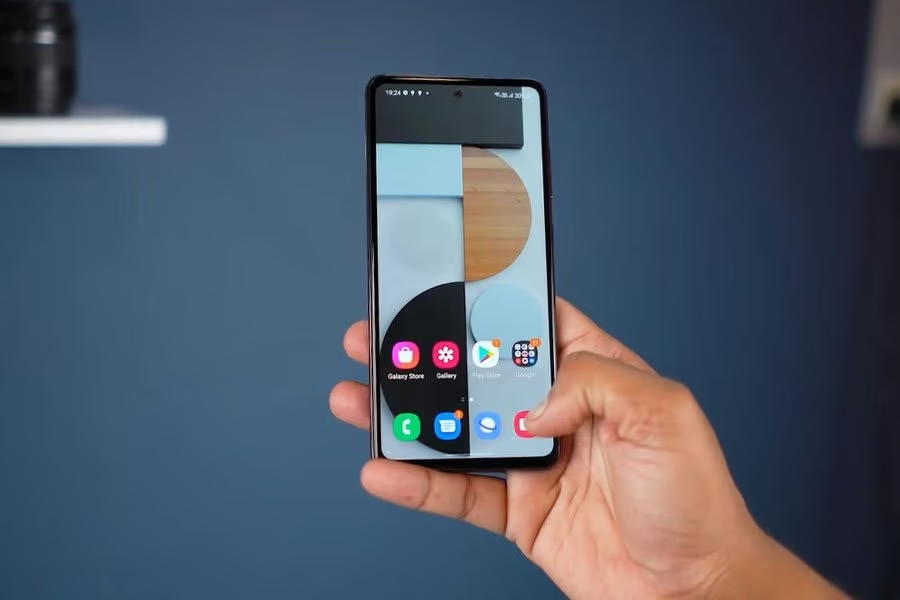
The best unlocked phone for Spark NZ shoppers overall is the Xiaomi Redmi Note 15 5G, thanks to its 6.77-inch 120Hz AMOLED display, 5,520mAh battery and 256GB of storage at a mid-range price. Spark shut down its 3G network on 31 March 2026, so any phone bought new needs 4G Band 28 (700MHz) and Band 3 (1800MHz) support, plus VoLTE, to make calls and send texts on Spark’s network, and a 5G-ready handset should also support n78 and n40 for full speed. Every phone below is sold unlocked, meaning it isn’t tied to any one carrier, so it can be set up with a Spark SIM or eSIM straight out of the box. This guide covers seven unlocked phones across every budget, from ultra-cheap 4G basics to near-flagship 5G, with the trade-offs tested to help NZ shoppers pick the right one for Spark.
This guide sits alongside our wider smartphones buying guide for anyone weighing up options beyond Spark compatibility.
Quick Comparison
| Phone | Best for | Display | Battery | Storage |
|---|---|---|---|---|
| Xiaomi 17T Pro 5G | Best premium pick | 6.83″ AMOLED, 144Hz | 7,000mAh | 256GB |
| Xiaomi Redmi Note 15 5G | Best mid-range all-rounder | 6.77″ AMOLED, 120Hz | 5,520mAh | 256GB |
| Xiaomi 17T 5G | Best camera | 6.59″, 120Hz | 6,500mAh | 512GB |
| Motorola moto g06 | Best budget pick | 6.88″ | 5,200mAh | 64GB |
| OPPO Reno13 5G | Best design | IP66/68/69 rated | 5,600mAh | 256GB |
| Xiaomi Redmi 15C | Best ultra-budget pick | 6.9″, 120Hz | 6,000mAh | 128GB |
| Xiaomi Redmi 15 5G | Best battery capacity | 6.9″ FHD+, 144Hz | 7,000mAh | 128GB (expandable) |
1. Xiaomi 17T Pro 5G – Best Premium Pick
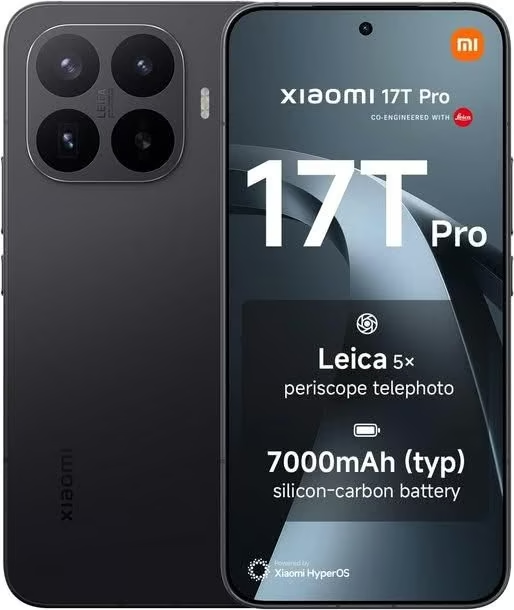
The Xiaomi 17T Pro 5G is the premium pick for Spark shoppers who want a long-range Leica zoom camera, a very large battery and a big, bright 144Hz display.
The 6.83-inch AMOLED screen runs at up to 144Hz with a quoted 3,500-nit peak brightness and carries TÜV Rheinland eye-care certification. It is the AU version of the phone, built for Australian networks, which rely on the same 700MHz Band 28 and 1800MHz Band 3 that Spark uses for 4G.
The Leica camera system includes a 5x optical telephoto lens, with Xiaomi quoting 10x lossless-quality zoom and up to 120x AI zoom, and 12GB of RAM with 256GB of storage gives it room for photos, video and demanding apps.
The 7,000mAh silicon-carbon battery charges at 100W wired and 50W wireless, and Xiaomi says the wired charger fills it to 100% in 48 minutes.
The catch is that it has only 34 Amazon ratings so far, at 4.6 stars, so it is a newer and less proven choice. The listing also contradicts itself in places: the spec table gives a different processor and a 6,500mAh battery figure, and lists the phone as not water resistant, so check the details before buying.
Pros
- Leica 5x optical telephoto camera
- 7,000mAh battery with 100W wired and 50W wireless charging
- Large 6.83-inch 144Hz AMOLED at up to 3,500 nits
Cons
- Only 34 owner ratings so far
- Listing is inconsistent on processor and battery figures and lists no water resistance
- Large phone for one-handed use
Key specs: Leica triple camera with 5x telephoto, 12GB RAM, 256GB storage, 7,000mAh battery, 100W wired and 50W wireless charging, 6.83-inch 144Hz AMOLED, Android 16, AU version.
2. Xiaomi Redmi Note 15 5G – Best Mid-Range All-Rounder
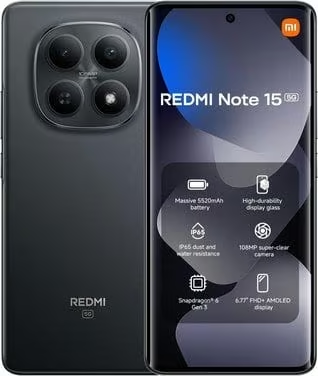
The Xiaomi Redmi Note 15 5G is the best mid-range all-rounder here for shoppers who want a big AMOLED screen and a long-lasting battery without paying for a premium phone.
It keeps a slim, lightweight body with a curved front and back, and the 6.77-inch FHD+ AMOLED screen runs at 120Hz with a quoted 3,200-nit peak brightness for good visibility in sunlight.
A Snapdragon 6 Gen 3 chip, 8GB of RAM and 256GB of storage cover everyday browsing, social apps and streaming without fuss, and IP65 protection guards against dust and splashes. The 108MP main camera has optical image stabilisation, which helps keep low-light and handheld shots steady.
The 5,520mAh battery is a solid size for a phone this slim, and as the AU version it is built for Australian networks that share Spark’s key 4G bands.
IP65 is a step below the IP66/68/69 rating of the OPPO Reno13, so it is better kept away from pools and the beach, and there is no charger in the box.
Pros
- Slim, light design
- 120Hz AMOLED display
- 108MP camera with OIS
- 256GB storage
Cons
- IP65 rating is splash protection only
- Charger not included
Key specs: 108MP OIS main camera, Snapdragon 6 Gen 3, 8GB RAM, 256GB storage, 5,520mAh battery, 6.77-inch 120Hz AMOLED, IP65 rating, AU version.
3. Xiaomi 17T 5G – Best Camera
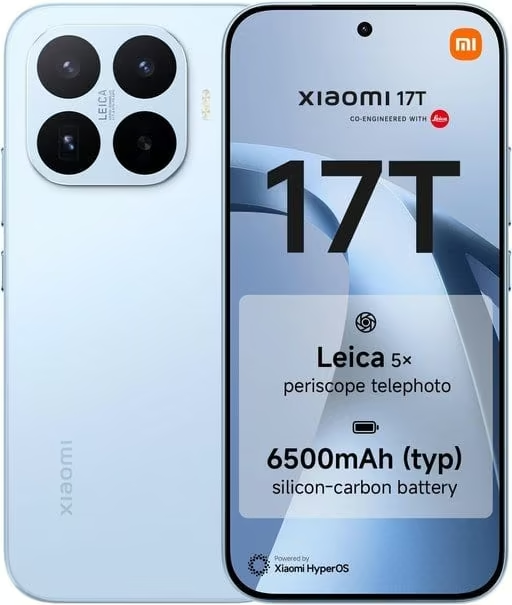
The Xiaomi 17T 5G is the best camera pick on this list for shoppers who want a proper zoom lens and strong all-round hardware.
Its Leica-branded camera system includes a 5x optical telephoto lens, with Xiaomi quoting 10x lossless-quality zoom and up to 120x AI zoom, so it can reach subjects that the main cameras on other phones here simply cannot.
The 6.59-inch display is the most compact in this guide, with a micro-curved frame and a 200g weight that make it easier to use one-handed. It runs at up to 120Hz with a quoted 3,500-nit peak brightness, and 12GB of RAM with 512GB of storage means it will not run short of space for photos and video.
A 6,500mAh silicon-carbon battery is large for a phone this size, and 67W HyperCharge fills it in about an hour by Xiaomi’s figures. It ships on Android 16.
It is among the priciest phones here and had only a handful of owner ratings when we checked, so it is a newer and less proven choice than the rest of the list.
Pros
- Leica 5x optical telephoto
- 512GB storage and 12GB RAM
- Compact 6.59-inch body
- 6,500mAh battery with 67W charging
Cons
- Among the most expensive phones in this guide
- Few owner reviews so far
Key specs: Leica camera system with 5x telephoto, 12GB RAM, 512GB storage, 6,500mAh battery, 67W wired charging, 6.59-inch 120Hz display, Android 16.
4. Motorola moto g06 – Best Budget Pick
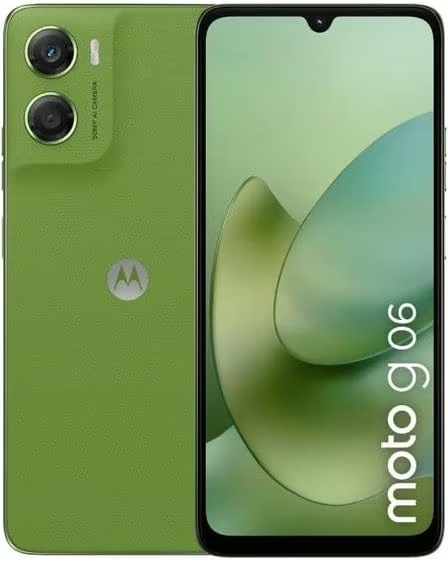
The Motorola moto g06 is the best budget pick on this list for shoppers who want a big screen and decent battery for the least outlay.
Its 6.88-inch display is the largest of moto g’s line-up, and stereo speakers make it better than most cheap phones for videos and calls on speaker. The green finish and IP64 rating give it a little more character and protection than you might expect at this price.
A MediaTek Helio processor with 4GB of RAM handles calls, messaging and light apps, and Motorola’s RAM Boost borrows storage to stretch that further. The 50MP main camera is fine for everyday snaps in good light, and the 5,200mAh battery should last a full day of typical use.
There is also a 3.5mm headphone jack, which is now rare on phones, and a fingerprint reader for quick unlocking.
This is a 4G phone with 64GB of storage, so it suits light users rather than anyone who wants 5G speeds or keeps lots of photos and apps.
Pros
- Large 6.88-inch display with stereo speakers
- 5,200mAh battery
- Headphone jack
- IP64 splash protection
Cons
- 4G only, no 5G
- Only 64GB of storage and 4GB of RAM
Key specs: 64GB storage, 4GB RAM, MediaTek Helio processor, 50MP main camera, 5,200mAh battery, 6.88-inch display, IP64 rating. 4G and VoLTE for calls on Spark.
5. OPPO Reno13 5G – Best Design
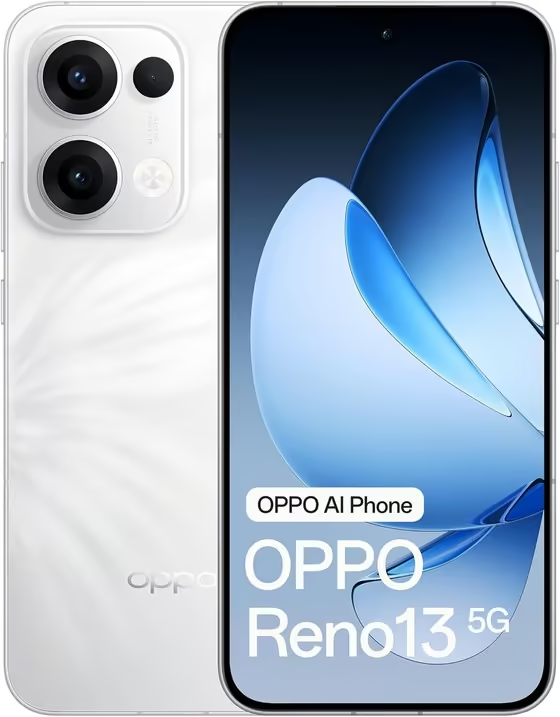
The OPPO Reno13 5G is the best design pick here for shoppers who want a phone that looks and feels premium.
The Plume White finish gives it a clean, upmarket look, and OPPO has paid as much attention to toughness as style. It passes IP66, IP68 and IP69 tests for water and dust, and OPPO uses cushioning in the frame plus strengthened glass and metal to protect the internals from drops.
It comes with 12GB of RAM and 256GB of storage, so it keeps plenty of apps open and has room for a big photo library. The triple rear camera is led by a 50MP main sensor, and OPPO’s AI editing tools can pull a sharp still from a video clip or clean up photos after the fact.
A 5,600mAh battery with fast charging means quick top-ups, and OPPO says the battery is designed to hold up over five years of use.
It is one of the pricier phones here, and its strengths lean towards design and durability rather than raw camera zoom.
Pros
- IP66, IP68 and IP69 water and dust resistance
- Premium Plume White design
- 12GB RAM and 256GB storage
- 5,600mAh battery with fast charging
Cons
- Higher price than most picks here
- No telephoto zoom
Key specs: 50MP triple rear camera, 12GB RAM, 256GB storage, 5,600mAh battery, fast charging, IP66/IP68/IP69 ratings.
6. Xiaomi Redmi 15C – Best Ultra-Budget Pick
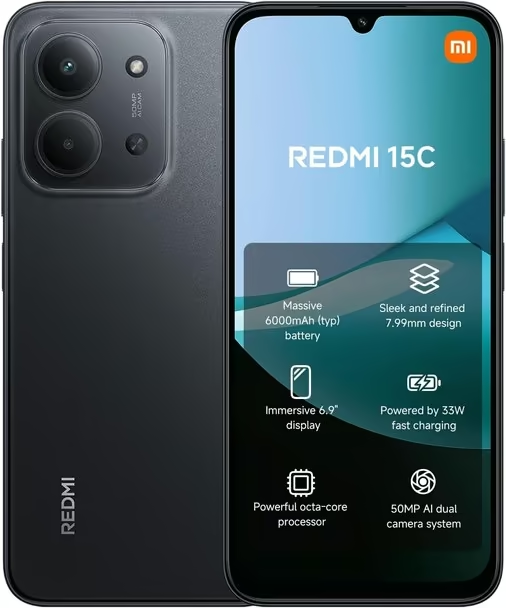
The Xiaomi Redmi 15C is the best ultra-budget pick on this list for shoppers who only need calls, texts and basic apps.
It packs a 6.9-inch display with an adaptive refresh rate of up to 120Hz into a 7.99mm-thick body, so it feels smoother and slimmer than most phones at this price.
A MediaTek Helio G81-Ultra octa-core chip and 4GB of RAM handle messaging, browsing and video, and 128GB of storage leaves room for photos. The 50MP dual camera is fine for everyday shots in good light, and IP64 protection covers dust and splashes.
The 6,000mAh (typical) battery is generous for an entry phone and should see most light users through more than a day.
It is a 4G phone, so there is no 5G, the processor is built for basics rather than gaming, and there is no charger in the box.
Pros
- Large 6.9-inch, 120Hz display
- 6,000mAh battery
- 128GB storage
- IP64 splash protection
Cons
- 4G only, no 5G
- Charger not included
Key specs: 128GB storage, 4GB RAM, MediaTek Helio G81-Ultra, 50MP dual camera, 6,000mAh battery, 6.9-inch 120Hz display, IP64 rating. 4G and VoLTE for calls on Spark.
7. Xiaomi Redmi 15 5G – Best Battery Capacity
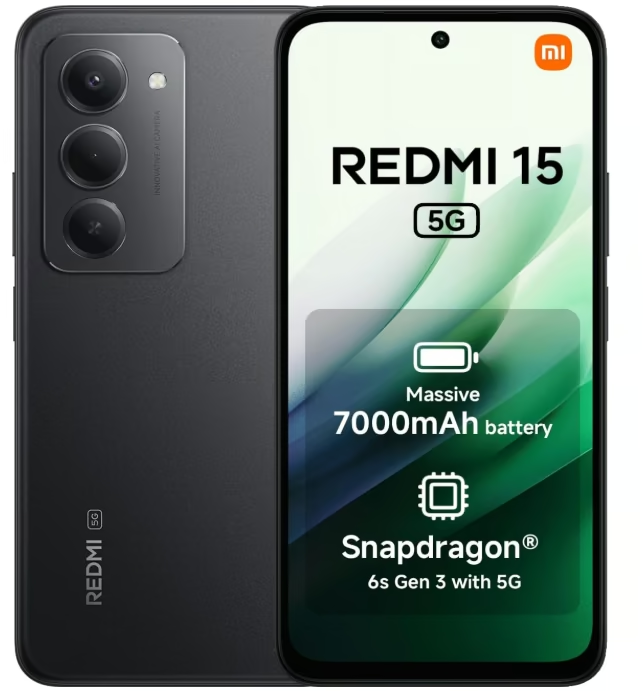
The Xiaomi Redmi 15 5G is the best battery capacity pick here for shoppers who want the biggest battery on this list.
At 217g and 8.4mm thick, it’s noticeably chunkier than the slimmer phones on this list, a direct trade-off for the size of battery packed inside. The Midnight Black finish is understated, and the 6.9-inch display is the largest screen in this guide, suited to shoppers who stream or read on their phone often.
An IP64 rating protects against dust and light splashes, and expandable storage via microSD up to 2TB is a rare inclusion among the phones tested here. The FHD+ DotDisplay runs at up to 144Hz, and testers found scrolling felt notably smooth for a phone at this price point, even if the Snapdragon 6s Gen 3 chipset is built for efficiency over raw speed.
The headline feature is the 7,000mAh battery with silicon-carbon anode technology, comfortably the largest capacity in this guide and good for well over a day of typical use between charges.
4GB of RAM is at the low end for this list, so heavy multitaskers may notice more app reloading than on the OPPO pick.
Shoppers who want an even bigger screen for media might also consider stepping up to a tablet instead of a phone.
Pros
- Biggest battery in this guide at 7,000mAh
- Expandable storage via microSD
- Large 6.9-inch, 144Hz display
- Silicon-carbon battery technology
Cons
- Only 4GB of RAM
- Heavier and thicker than most phones here
Key specs: 128GB storage (expandable), Snapdragon 6s Gen 3, 50MP AI dual camera, 7,000mAh battery, IP64 rating.
How to Choose
Start with network compatibility: any phone on this list must be unlocked and support Band 28 (700MHz) and Band 3 (1800MHz) for Spark’s 4G, plus VoLTE for calls and texts. Since Spark’s 3G network closed on 31 March 2026, a phone that only supports older 3G calling standards won’t work at all. If speed matters, look for 5G support on bands n78 and n40; if it doesn’t, a 4G-only phone like the Redmi 15C still handles calls, texts and everyday browsing fine. From there, match the phone to how it’ll actually get used. Shoppers who stream or read on their phone often will appreciate the larger 6.7-6.9-inch screens here over the more compact Xiaomi 17T.
Battery capacity varies widely, from 5,200mAh up to 7,000mAh on the Redmi 15 and Xiaomi 17T Pro, so heavy users should lean toward the bigger-battery picks. Storage of 128GB comfortably covers apps and photos for most people, while 256GB or more (on the Redmi Note 15, Reno13 and Xiaomi 17T models) suits anyone who shoots a lot of video. Durability ratings matter too: an IP68 or IP69 rating tolerates real water exposure, while IP54 and IP64 ratings only cover dust and light splashes. Anyone carrying a phone daily might also want a spare power bank on hand for longer days away from a charger.
Shoppers still undecided between models can also compare against our mid-range smartphones picks for more context.
Verdict
For most Spark shoppers, the Xiaomi Redmi Note 15 5G is the easiest overall recommendation: it pairs a 120Hz AMOLED screen, a big battery and 256GB of storage with a mid-range price and support for Spark’s main 4G bands. Shoppers who want near-flagship hardware should look at the Xiaomi 17T Pro. Budget-conscious shoppers are better served by the Motorola moto g06, which brings a big screen and long battery life to a genuinely low price point, while anyone who only needs calls, texts and basic apps can also look at the 4G-only Redmi 15C. Whichever pick fits the budget, checking VoLTE and band support before buying is the one step that actually determines whether a phone works on Spark’s network at all.
FAQs
Can I use any unlocked phone with Spark?
Most unlocked phones work with Spark as long as they support Spark’s frequency bands, mainly Band 28 (700MHz) and Band 3 (1800MHz) for 4G, plus VoLTE for calling. All eight phones in this guide meet those requirements and are sold unlocked, so they can be set up with a Spark SIM or eSIM straight away.
Do I need to unlock my phone before using it with Spark?
Only if the phone is locked to a different carrier. Phones bought outright and unlocked, like the picks in this guide, don’t need unlocking. A phone locked to another network needs unlocking by its original provider before it will accept a Spark SIM.
What happened to Spark’s 3G network?
Spark shut down its 3G network on 31 March 2026. Phones that only support 3G for calls and data no longer work on Spark at all, so any replacement phone needs 4G with VoLTE as a minimum, and ideally 5G support for faster speeds.
What network bands does Spark use for 4G and 5G?
Spark’s 4G coverage relies mainly on Band 28 (700MHz) and Band 3 (1800MHz), with Band 28 doing most of the heavy lifting for rural and in-building coverage. Spark’s 5G network runs on bands n78 and n40, so a 5G phone needs to support those to get full 5G speeds.
Is it cheaper to buy a phone outright instead of through Spark?
Buying a phone outright and unlocked, rather than bundled into a Spark plan, avoids paying it off through higher monthly plan costs over 24-36 months. It also means the phone isn’t tied to Spark if a shopper later switches providers.
