
The best ladder in NZ for most buyers is the Atom Ladder Multi 22, a four-position aluminium ladder spanning from a 1.5m A-frame to a 5.8m extension with a 6.7m maximum reach – enough for two-storey roof access. Backed by 621 NZ reviews at 4.8 stars, it is the most versatile and most-trusted option in this guide. For shoppers needing something lighter, more compact, or built specifically for trade electrical work, this 2026 comparison covers five more picks across different budgets and use cases. All six products comply with AS/NZS 1892, the NZ/AU ladder safety standard.
Installing outdoor security cameras at height? Our dedicated guide covers the best options to fit and forget.
Quick Comparison: Best Ladders NZ
| Product | Best for | Max Height | Load | Material |
|---|---|---|---|---|
| 2M Telescopic Aluminium Ladder | Compact storage | 2m | 150kg | Aluminium |
| Giantz 2.6M Telescopic Ladder | Everyday home DIY | 2.6m | 150kg | Aluminium |
| 3.8M Telescopic Step Ladder | High-reach jobs | 3.8m | 150kg | Aluminium |
| Indalex 6-Step Industrial Step Ladder | Electrical safety | 1.8m platform | 135kg | Fibreglass |
| Atom Ladder Multi 22 | Multi-purpose versatility | 5.8m (6.7m reach) | 150kg | Aluminium |
| Synergy Step Ladders Aluminium | Trade-grade durability | Multiple sizes | 160kg | Aluminium |
6 Best Ladders in NZ Reviewed
1. Telescopic Multipurpose Ladder – Best for Compact Storage

Best for shoppers with limited storage space, this compact telescopic ladder from BestDeals.co.nz retracts to just 66cm – short enough for a car boot, wardrobe, or under a bed. At 5kg it is the lightest pick in this guide and comes with a carry bag and velcro strap for transport.
The frame is silver aluminium alloy with six anti-skid footboards and rubber tip feet that hold firm on smooth indoor surfaces. Each of the six steps locks independently as the ladder extends from 66cm up to the full 2m, so it can be set at any intermediate height. Step spacing of 29cm is comfortable for most adults, and the 45cm-wide frame passes through most interior doorways.
EN 131 certified, 150kg rated. Buyer feedback on the BestDeals listing is consistently positive about the locking mechanism reliability relative to the compact size. The carry bag is a genuine convenience for moving between jobs.
Trade-offs: at 2m extended height this suits furniture-height and shelf work rather than ceiling access in a typical NZ home (standard ceiling is 2.4m). It is a lean-to design only – always needs a wall or leaning surface, no self-supporting A-frame mode. The velcro bag closure is basic. Not a sole ladder for roofline or gutter work.
Pros
- Retracts to 66cm; fits car boot or wardrobe
- 5kg weight; easy one-handed carry
- Each step locks independently – adjustable height
- EN 131 certified, 150kg rated
- Carry bag included
Cons
- 2m limit suits low-to-mid work only
- Lean-to only; not self-supporting
- Basic velcro bag closure
Key specs: 6 steps, extended 200cm, retracted 66cm, step spacing 29cm, width 45cm, weight 5kg, load 150kg, EN 131 certified, item code 69_hw0076-2m
2. Giantz Telescopic Ladder – Best for Everyday Home DIY

Best for all-round home DIY, the Giantz 2.6M from TSBLiving is the most practical everyday option in this guide. Eight steps extend to 2.6m, comfortably clearing a standard NZ 2.4m ceiling for painting, light fitting, shelf work, and single-storey gutter clearance.
Aluminium alloy with nylon fittings keeps weight to 6.5kg and resists corrosion in damp garage and shed conditions common in NZ. Anti-slip rubber feet grip on concrete and timber. Step spacing of 27.5cm feels natural underfoot. Retracted to 74cm, it stores against a garage wall without eating a full bay. Width of 45cm passes through standard doorways.
The standout safety feature is the slow-descent collapse mechanism – the ladder closes in a controlled manner rather than snapping shut, preventing fingers being caught between steps. Each step locks individually. NZ forum reviews and aggregator ratings consistently praise the Giantz range for domestic longevity through a year or more of weekend project use.
Trade-offs: nylon fittings introduce flex noticeable under heavy or repetitive loading – this is a domestic ladder, not a trade one. No A-frame mode; always requires a leaning surface. One-year warranty is shorter than the 10-year cover on the Atom or Indalex. Not the right choice for daily trade use.
Pros
- 2.6m reach covers ceiling work in most NZ homes
- Slow-descent collapse mechanism protects fingers
- Rust-resistant aluminium alloy and nylon build
- 6.5kg; easy to move between rooms
- Each step locks individually
Cons
- Nylon fittings flex under heavy or repeated loading
- Lean-to only; not self-supporting
- 1-year warranty
Key specs: 8 steps, extended 260cm, retracted 74cm, step spacing 27.5cm, width 45cm, weight 6.5kg, 1-year warranty, SKU PR13567
3. Telescopic Step Ladder – Best for High-Reach Jobs
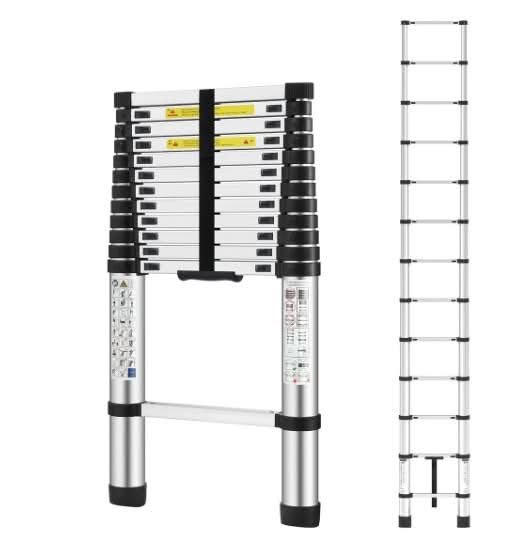
Best for high-reach jobs around the home and property, this 3.8M telescopic step ladder from BestDeals is the longest lean-to model in this guide. Thirteen steps extend to a full 380cm – reaching a standard NZ single-storey roofline from the ground with safe working clearance. Folded, it measures 90 x 48 x 8.4cm.
The aluminium alloy frame carries AS/NZS 1892.1:1996 certification, the same standard referenced by WorkSafe NZ for occupational ladder use. Rated to 150kg. Rubber non-slip feet are generously sized for stability on concrete and paved surfaces. Each rung locks at every height setting, and the 13-step increment system gives useful flexibility for work surfaces at varying heights.
At approximately 11kg this is noticeably heavier than the 2m or 2.6m models – expected for a near-4m ladder. The listing was showing “almost sold out” status at time of research, so stock should be confirmed before purchasing. At this height, two-person setup is recommended.
Trade-offs: indoor use is limited by lean angle and ceiling clearance – a 3.8m ladder needs significant reach space inside most rooms. Lean-to only; no self-supporting A-frame mode. Heavier and longer to transport than shorter models. If regular tree pruning at height is also on the agenda, a quality pruning saw rounds out the kit.
Pros
- 3.8m reach; accesses single-storey rooflines
- AS/NZS 1892.1:1996 certified
- 13 individual locking steps; flexible working heights
- 150kg rated
- Folds to 90x48x8.4cm for storage
Cons
- Approx. 11kg; heavier to carry
- Lean-to only; not self-supporting
- Indoor use impractical in standard-ceiling rooms
- Limited stock at time of research
Key specs: 13 steps, extended 380cm, folded 90x48x8.4cm, weight approx. 11kg, load 150kg, AS/NZS 1892.1:1996 certified, PID 75883
4. Indalex 6 Industrial Step Ladder – Best for Electrical Safety

Best for electricians, switchboard technicians, and anyone working near live cabling, the Indalex TRDSF6D is the only non-conductive ladder in this guide. Fibreglass side rails do not conduct electricity the way aluminium does, making this a WorkSafe-appropriate choice anywhere accidental contact with live wiring is a risk. Available from equip2go.com.au with NZ delivery.
The 1.8m platform height suits ceiling and switchboard access at standard commercial building heights. The footprint of 54 x 115cm is wide for a 6-step ladder, translating to meaningful stability for work requiring lateral reach. Anodised aluminium steps (the steps, not the fibreglass side rails, are aluminium) resist corrosion and remain grippable in typical workshop conditions. Diagonal spreader bars between the legs prevent lateral splay on uneven concrete.
The warranty structure stands out: 10-year structural warranty with 3-year general cover. For a trade asset in daily use, that lifespan differential versus a typical domestic 1-year cover is significant. AS/NZS 1892 certified to 135kg industrial rating.
Trade-offs: at 9.4kg it is the second-heaviest pick – fibreglass adds weight relative to aluminium for equivalent strength. The 135kg load limit is lower than the 150kg aluminium models, though still above the practical combined weight of most NZ adult users plus tools. Fixed 6-step height; no adjustment. Higher price point than domestic aluminium options makes this specialist trade kit rather than a general household purchase.
Pros
- Fibreglass rails; non-conductive for electrical work
- 10-year structural / 3-year general warranty
- Wide 54x115cm footprint for stable trade use
- Diagonal spreader bars; suits uneven surfaces
- AS/NZS 1892 certified
Cons
- 9.4kg; heavier than comparable aluminium models
- 135kg load rating vs 150kg for aluminium models
- Fixed 6-step height; no adjustment
- Higher price than domestic aluminium options
Key specs: 6 steps, platform height 1.8m, footprint 54x115cm, weight 9.4kg, load 135kg, fibreglass rails / anodised aluminium steps, 10-year structural / 3-year general warranty, AS/NZS 1892 certified, model TRDSF6D
5. Atom Ladder Multi 22 – Best for Multi-Purpose Versatility
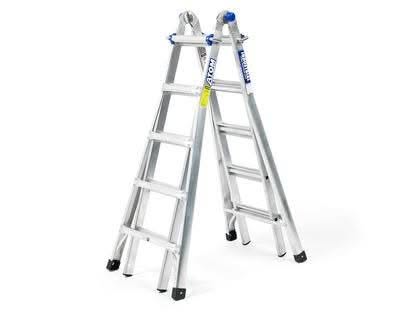
Best for buyers who want one ladder that handles every household and property job, the Atom Ladder Multi 22 from Trade Tested is this guide’s standout pick for versatility. With 621 NZ reviews at 4.8 stars it is the most reviewed and highest-rated ladder in this comparison – real numbers from real NZ users.
The Multi 22 operates in four positions: A-frame (1.5m to 2.7m), extension ladder (3.4m to 5.8m), uneven A-frame for staircase use, and scaffold trestle mode for plank laying. Maximum reach of 6.7m (22ft – the source of the model name) enables second-storey roof access without a separate extension ladder. Folded to 170 x 70 x 21cm, garage storage is practical though it will not fit in a standard car boot.
Build quality is genuinely above average. The 1.2mm aluminium wall thickness and double-riveted rungs are heavier-duty than budget alternatives. The Click and Lock hinge locks each configuration audibly with clear visual confirmation. Ten-year warranty covers structural and general use, matching the Indalex in longevity. Rated 150kg, AS/NZS 1892 certified.
Trade-offs: at 18.8kg it is the heaviest option in this guide. Transitioning between modes takes effort solo. The 170cm folded length will not fit in a car boot; a ute tray or trailer is needed for transport. Being aluminium it is not suitable for live electrical work. If tree work at height is on the list, a reliable chainsaw for tall trees is a natural companion purchase.
Pros
- Four working positions; replaces two or three single-use ladders
- 6.7m maximum reach; handles two-storey access
- 621 NZ reviews at 4.8 stars
- Click and Lock hinge; audible configuration confirmation
- 10-year warranty, AS/NZS 1892 certified
Cons
- 18.8kg; the heaviest pick in this guide
- Folded at 170cm; will not fit in a car boot
- Aluminium; not suitable for live electrical work
Key specs: 150kg, 18.8kg, A-frame 1.5-2.7m, extension 3.4-5.8m, max reach 6.7m, folded 170x70x21cm, 1.2mm aluminium, double-riveted rungs, 10-year warranty, AS/NZS 1892 certified
6. Synergy Step Ladders Aluminium – Best for Trade-Grade Step Work
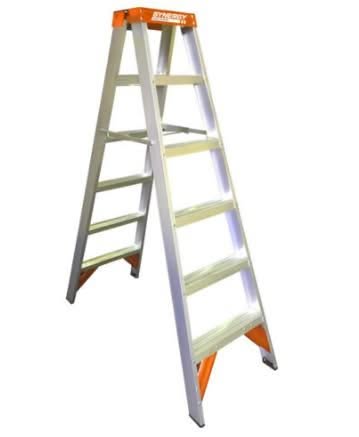
Best for contractors and tradespeople who need a heavy-duty aluminium step ladder built for daily site use, Synergy Access and Scaffolding’s aluminium step ladder range is certified to exceed AS/NZS 1892.1:1996. Synergy is an Australian access specialist supplying ladders and scaffolding to the construction trade, and the build reflects that commercial orientation.
The frame is fully riveted heavy-duty aluminium – a construction detail that differentiates it from the press-fitted assemblies common in domestic models. Anti-slip rubber feet and crimped rungs reduce foot placement errors, and anti-skid treads provide grip in work boot conditions where smooth aluminium becomes slippery. The industrial load rating of 160kg exceeds the 150kg ceiling on every telescopic model in this guide. WorkCover certification confirms third-party compliance with the relevant workplace safety standard.
This is a product category covering multiple step ladder heights rather than a single fixed model. Shoppers should view the Synergy page or contact them directly for available sizes, stock, and specifications. NZ buyers should confirm international shipping availability, as Synergy operates primarily from Australia.
Trade-offs: being an Australian trade supplier means freight costs and lead times to NZ apply. The category-page format makes direct specification comparison harder than for a named single product. Detailed specs such as weight and platform heights vary by model. Best suited to trade buyers who already know their required platform height and want a no-compromise commercial build.
Pros
- 160kg industrial load rating; exceeds domestic standards
- WorkCover certified; exceeds AS/NZS 1892.1:1996
- Fully riveted heavy-duty frame
- Crimped rungs and anti-slip treads for site conditions
Cons
- Australian supplier; NZ shipping and lead times apply
- Category page; model specs require direct enquiry
- Heavier than domestic aluminium options
Key specs: 160kg industrial load rating, WorkCover certified, exceeds AS/NZS 1892.1:1996, heavy-duty riveted aluminium frame, crimped rungs, anti-slip rubber feet and treads. Multiple sizes available.
How to Choose a Ladder in NZ
Height: Work out the highest point to reach, then subtract roughly 1m for a safe working position (never stand on the top two rungs of a straight ladder). For a standard NZ 2.4m ceiling, a 3m+ ladder is the minimum. For a single-storey NZ roof at 4-5m, a 4m+ extension or multi-position model is needed.
Load rating: Add body weight, clothing, and tools together, then allow a buffer. Most NZ adult men with a tool bag sit at 100-110kg combined. A 150kg-rated ladder provides adequate headroom. Tradespeople regularly carrying heavy equipment should consider 160kg-rated industrial options like the Synergy range.
Aluminium vs fibreglass: Aluminium is lighter and more affordable – suitable for most domestic and general trade use. Fibreglass is non-conductive and required by WorkSafe near live electrical wiring or commercial electrical installations. Most NZ homeowners do fine with aluminium. Electricians must choose fibreglass.
Fixed step vs telescopic vs multi-position: Fixed step ladders are most stable for repetitive up-down work at one height. Telescopic ladders save significant storage space and suit occasional use. Multi-position ladders (like the Atom Multi 22) eliminate multiple purchases but add weight and bulk. A quality head torch is a practical add-on for work in dark roof spaces.
AS/NZS 1892: This is the NZ/AU safety standard covering ladder design, materials, construction, and performance testing. All six products in this guide carry AS/NZS 1892 certification. Workplace ladders must comply under NZ health and safety law. For domestic use there is no legal requirement, but certified ladders are standard practice for any height work.
For the rest of the workshop, the guides to table saws, circular saws and moisture meters are worth a look.
Verdict
The Atom Ladder Multi 22 is the best ladder in NZ for most buyers – 621 reviews at 4.8 stars and four working positions make it a genuine single-ladder solution for most NZ properties. Budget buyers needing only ceiling-height access should consider the Giantz 2.6M (storage-conscious) or the BestDeals 3.8M (single-storey roof access). Anyone working near live electrical hazards should choose the Indalex fibreglass model without compromise. Tradespeople wanting a fixed-step workhorse for daily site loading should enquire with Synergy.
FAQs
What type of ladder is best for home use?
A telescopic or multi-position ladder suits most NZ homes. Telescopic models like the Giantz 2.6M collapse to under 75cm for easy storage. Multi-position models like the Atom Multi 22 cover everything from changing a light bulb to reaching a roofline. A-frame step ladders are the most stable choice for repetitive fixed-height work.
What load rating do I need in a ladder?
Add your body weight, clothing, and tools together, then allow a safety buffer. Most adult NZ men with a tool bag sit at 100-110kg combined – a 150kg-rated ladder gives adequate headroom. Tradespeople regularly carrying heavy equipment should look at 160kg industrial-rated options. Never exceed the manufacturer’s stated load limit.
Are telescopic ladders safe to use?
Yes, when they carry AS/NZS 1892 or EN 131 certification and are used correctly. Always check that every step latch has clicked locked before stepping up, keep both feet on rungs (never the top step), and lean the ladder at a 75-degree angle. A certified telescopic ladder is as safe as a fixed model in normal domestic use.
What is the difference between aluminium and fibreglass ladders?
Aluminium ladders are lighter, cheaper, and suitable for general domestic and trade use. Fibreglass ladders are heavier and more expensive but non-conductive – essential when working near live electrical wiring or in substations. For home DIY and most construction tasks, aluminium is the practical choice. For electrical work, fibreglass is a WorkSafe NZ requirement.
How do I use a telescopic ladder safely?
Extend one step at a time, confirming each latch has locked before adding the next. Place the feet on a firm, level surface and lean the ladder at roughly 75 degrees – one metre out for every four metres up. Never stand on the top two steps, always face the ladder while climbing, and avoid side-reaching beyond your hip width.
What height ladder do I need to reach the roof?
Most NZ single-storey roof gutters sit at 3-4m. A 4m ladder or a multi-position model extended to 4m+ is the minimum safe choice. Add 1m to your target height for a safe working position – never stand on the top rungs. For a 5m+ roofline, the Atom Multi 22 extends to 5.8m with a 6.7m maximum reach.
Do ladders need to comply with NZ safety standards?
Yes, for workplaces. WorkSafe New Zealand recognises AS/NZS 1892 as the applicable ladder standard. Workplace ladders must comply with this standard, which covers load ratings, construction, and testing. Domestic buyers have no legal requirement, but all six ladders in this guide meet AS/NZS 1892 for reliable safety assurance.
