The best probiotic in NZ overall is GO Healthy’s GO Probiotic 75 Billion 1-A-Day, thanks to its 12-strain blend, single daily capsule and wide availability at pharmacies nationwide. But the right probiotic depends on the job it needs to do: women managing vaginal flora, parents dosing a young child, or anyone wanting a chewable instead of a capsule will each be better served by a different pick further down this list. This guide compares ten probiotics currently sold in NZ pharmacies on real CFU counts, strain names, dosing and genuine trade-offs, not marketing copy.
Quick comparison
| # | Product | Best for | CFU / Strains | Format |
|---|---|---|---|---|
| 1 | GO Healthy GO Probiotic 75 Billion 1-A-Day | Daily broad-spectrum maintenance | 75B / 12 strains | Capsule (delayed-release) |
| 2 | Eve Wellness V Good Probiotics | Women’s vaginal and gut support | 25B / 3 strains | Capsule |
| 3 | Nutra-Life ProBiotica Ultra Strength | Maximum single-capsule CFU | 100B / 3 strains | Capsule |
| 4 | Inner Health Women’s 5-in-1 Probiotic | All-in-one women’s formula | 4B / 4 strains + B12/folate | Capsule |
| 5 | BePure Two Probiotic | Broad-spectrum recovery | 30B+ / 19 strains | Capsule |
| 6 | The Good Vitamin Co Good Probiotics Chewable | Capsule-free chewable | 2B / 2 strains | Soft-chew |
| 7 | BePure Kids Daily Probiotic Powder | Kids | 14B / multi-strain blend | Powder |
| 8 | BLIS Probiotics Daily Defence Lozenges | Oral and immune health | 1.25B+ / 1 strain (BLIS K12) | Lozenge |
| 9 | Nutra-Life ProBiotica 50+ Years | Over-50s | 32B / 2 strains | Capsule |
| 10 | Good Health Probiotic Advanced Triple Action | Triple-action formula | 50B / 9 strains + postbiotic | Capsule |
1. GO Healthy Probiotic 75 Billion – Best for Daily Broad-Spectrum Maintenance
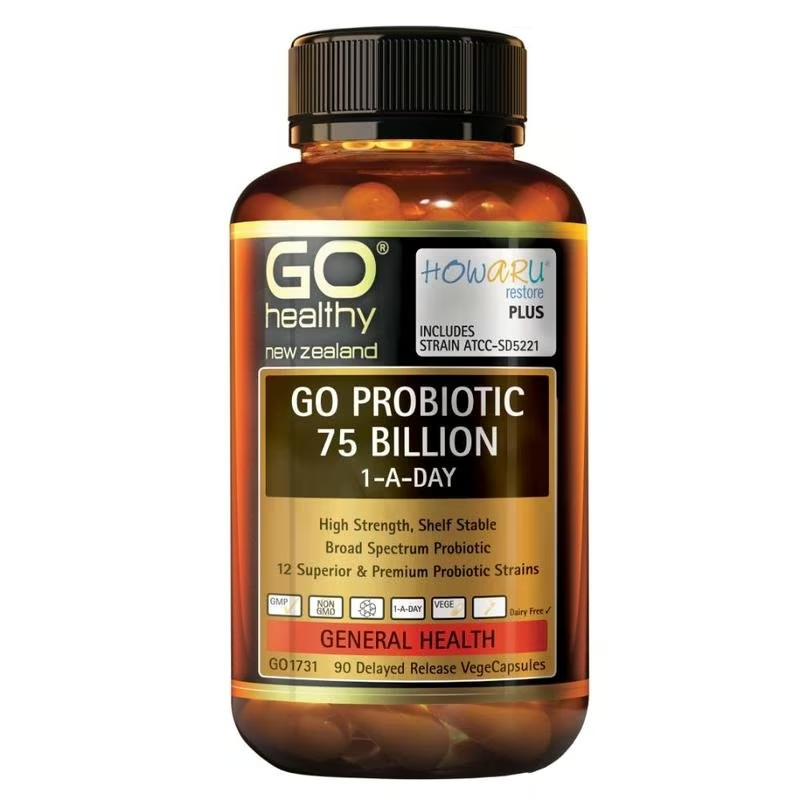
The best all-round daily probiotic in NZ is GO Healthy’s GO Probiotic 75 Billion 1-A-Day, thanks to its wide 12-strain blend and a single once-daily capsule.
GO Healthy’s flagship probiotic packs 75 billion CFU across 12 strains into one delayed-release VegeCapsule, built around Danisco’s HOWARU Restore blend (Lactobacillus acidophilus, L. paracasei Lpc-37, Bifidobacterium lactis Bi-07 and Bl-04, 40 billion CFU combined) plus eight further strains including L. plantarum, L. rhamnosus and B. longum for another 35 billion CFU. The bottle holds 90 capsules, a three-month supply at the labelled adult dose.
Dosing is straightforward: adults and children 12 and over take one capsule daily with food. For children aged three and up, the capsule can be opened into food; for babies 12 months and older, it can be emptied into formula or milk, which suits families wanting one product across different ages.
It’s shelf-stable and does not need refrigeration before opening, though GO Healthy recommends refrigerating it after opening to preserve potency over time. The capsule shell is delayed-release, which protects the bacteria through stomach acid, but that same coating means adults are meant to swallow it whole rather than treat it like a sprinkle powder.
The trade-off worth knowing: GO Healthy doesn’t publish an explicit gluten-free or dairy-free claim for this specific formula the way several rivals on this list do, so anyone with an allergy rather than a general sensitivity should confirm directly with the brand before buying.
Pros
- Wide 12-strain blend backed by the clinically studied HOWARU Restore combination
- One capsule a day, with flexible dosing options down to 12 months old
- Widely stocked at pharmacies nationwide, so it’s easy to find and reorder
Cons
- Delayed-release shell means adults should swallow it whole, not sprinkle it
- No explicit gluten-free or dairy-free claim published for this exact formula
Key specs: TAPS PP2051. Made in NZ from imported ingredients. 90 capsules per bottle.
2. Eve Wellness V Good Probiotics – Best for Women’s Vaginal and Gut Support
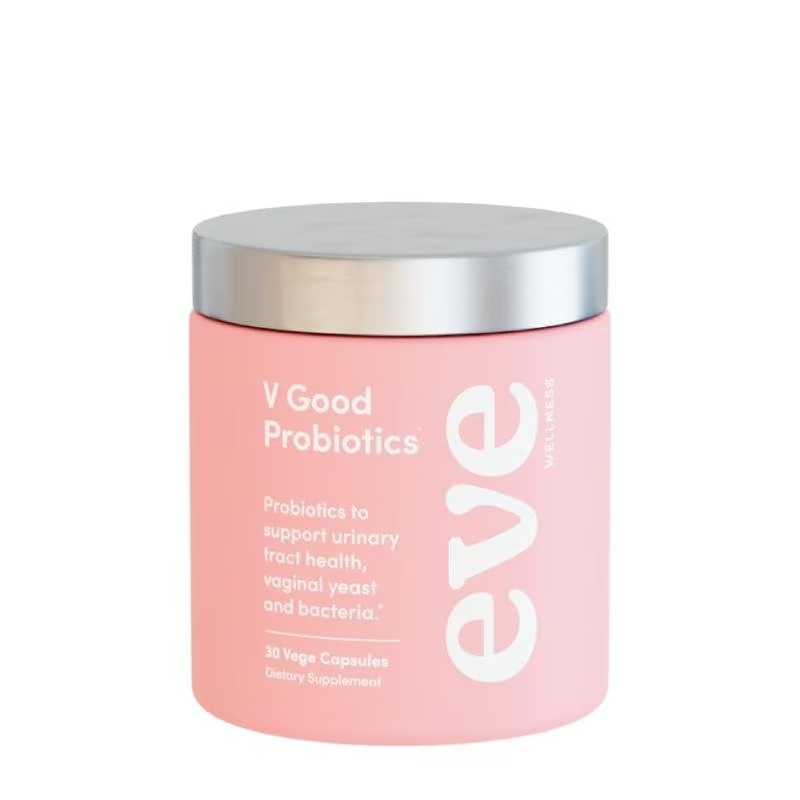
For women wanting a probiotic that supports vaginal flora as well as digestion, Eve Wellness’s V Good Probiotics is the most targeted pick on this list.
Each capsule delivers 25 billion CFU from three named strains: Lactobacillus rhamnosus HN001 (6 billion), Lactobacillus acidophilus La-14 (9 billion) and Bifidobacterium lactis HN019 (10 billion). These specific strains are the ones most commonly cited in research on vaginal microbiome support, which is the angle Eve Wellness builds the whole product around rather than treating it as a generic gut formula.
The capsule shell is acid-resistant hypromellose, and the pack holds 30 capsules, a one-month supply at the labelled dose of one capsule daily. Directions call for it to be taken on an empty stomach, either 30 minutes before the first meal of the day or two hours after the last one.
It’s free from gluten, soy, corn, refined sugar, GMOs and artificial colours, flavours and additives, which matches the clean-label positioning Eve Wellness uses across its range. No refrigeration is required.
The genuine trade-off is timing: taking it on an empty stomach around meals needs more planning than a with-food capsule, which won’t suit everyone’s morning routine. Stock levels for the 30-capsule size also fluctuate across NZ retailers from time to time, so it’s worth checking availability before relying on it.
Pros
- Uses three well-studied strains specifically linked to vaginal microbiome support
- Free from gluten, soy, corn, refined sugar, GMOs and artificial additives
- Acid-resistant capsule shell designed to survive the trip to the gut
Cons
- Must be timed around meals on an empty stomach, which takes more planning
- Online stock for the 30-capsule size can fluctuate between NZ retailers
Key specs: TAPS PP7852. 30 capsules per pack, one-month supply.
3. Nutra-Life ProBiotica Ultra Strength 100 Billion – Best for Maximum Single-Capsule CFU
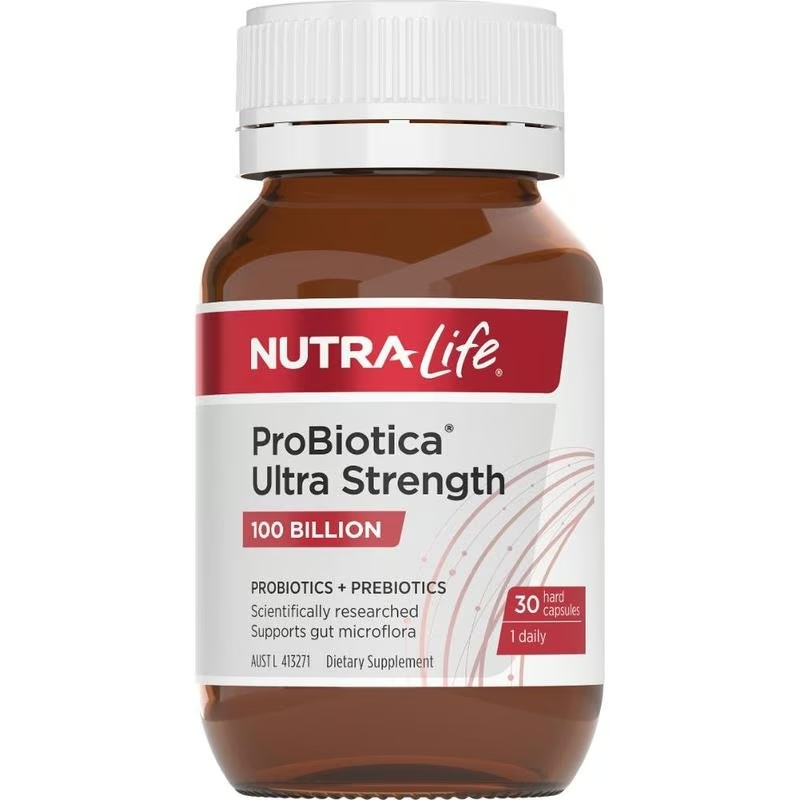
Shoppers chasing the highest raw CFU number on NZ pharmacy shelves land on Nutra-Life’s ProBiotica Ultra Strength 100 Billion.
One vegetarian capsule delivers 100 billion CFU: Lactobacillus acidophilus La-14 (38 billion), HOWARU Bifidobacterium animalis ssp lactis Bl-04 (2 billion) and Lactobacillus plantarum Lp-115 (60 billion), plus 50mg of inulin as a prebiotic to help feed the bacteria once they arrive. The 30-capsule pack is a one-month supply at the labelled adult dose of one capsule daily with food.
It’s shelf-stable and explicitly marketed as not requiring refrigeration, and it carries a broad allergen-free line-up: gluten-free, dairy-free, soy-free, egg-free, wheat-free, and suitable for vegetarians, vegans and Halal diets. It does contain sulphites as a processing aid.
The honest trade-off is where that headline 100 billion figure actually comes from: 60 of the 100 billion CFU sits in a single strain, Lactobacillus plantarum, rather than being spread evenly across a wide strain profile. That’s not a flaw, but shoppers who assume a big number means broad diversity should know this formula leans heavily on one dominant strain rather than the 12 to 19-strain blends found elsewhere on this list.
Pros
- Highest single-capsule CFU count in this guide at 100 billion
- Broad allergen-free line-up covering gluten, dairy, soy, egg and wheat
- Shelf-stable with no fridge required, easy to store and travel with
Cons
- 60 billion of the 100 billion CFU comes from just one strain, not a spread
- Only three named strains total, less diversity than multi-strain rivals here
Key specs: Vegetarian/vegan capsule. 30 capsules per pack.
4. Inner Health Women’s 5-in-1 Probiotic – Best for an All-in-One Women’s Formula
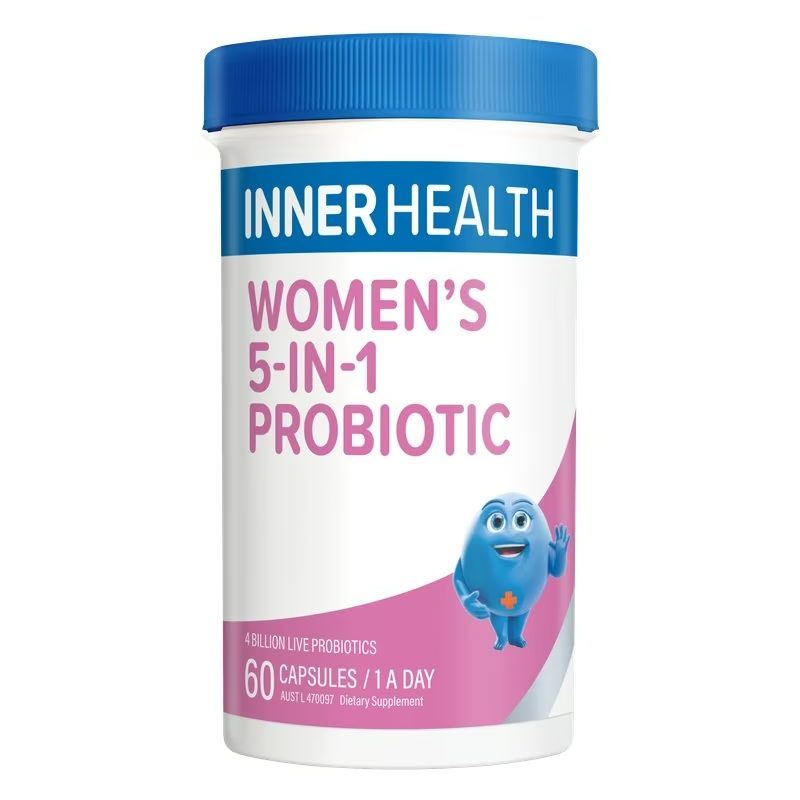
Inner Health’s Women’s 5-in-1 earns its spot by pairing four probiotic strains with active B12 and folate in a single daily capsule.
Each capsule contains 4 billion CFU spread evenly across four strains at 1 billion CFU each: Lactobacillus plantarum Lpla 33, Lactobacillus reuteri RC-14, Lactobacillus rhamnosus GR-1 and Bifidobacterium animalis ssp lactis BB-12. Alongside these, it adds levomefolate calcium (5-MTHF, an active form of folate) at 217mcg and methylcobalamin (active vitamin B12) at 50mcg, which is why the brand markets it as a 5-in-1 rather than a straight probiotic.
The capsule can be pulled apart and the powder added to food or liquid for anyone who prefers not to swallow it whole, and it’s shelf-stable when stored below 25 degrees. It’s free from gluten, wheat, dairy, lactose, egg, nuts and soy, and comes in a 60-capsule pack, a two-month supply at one capsule daily.
The trade-off is CFU count: at 4 billion total, it’s the lowest bacterial count of any product in this guide, so it suits women wanting a lighter daily maintenance dose plus active B vitamins, rather than shoppers looking for a high-CFU gut reset. Shoppers wanting to compare B12 options more broadly can also check this vitamin B12 supplement guide.
Pros
- Combines four probiotic strains with active B12 and folate in one capsule
- Capsule can be opened into food for anyone who dislikes swallowing pills
- Free from gluten, wheat, dairy, lactose, egg, nuts and soy
Cons
- Lowest total CFU count on this list at 4 billion
- Not the right pick for anyone specifically wanting a high-CFU formula
Key specs: 60 capsules per pack, two-month supply.
5. BePure Two Probiotic – Best for Broad-Spectrum Recovery
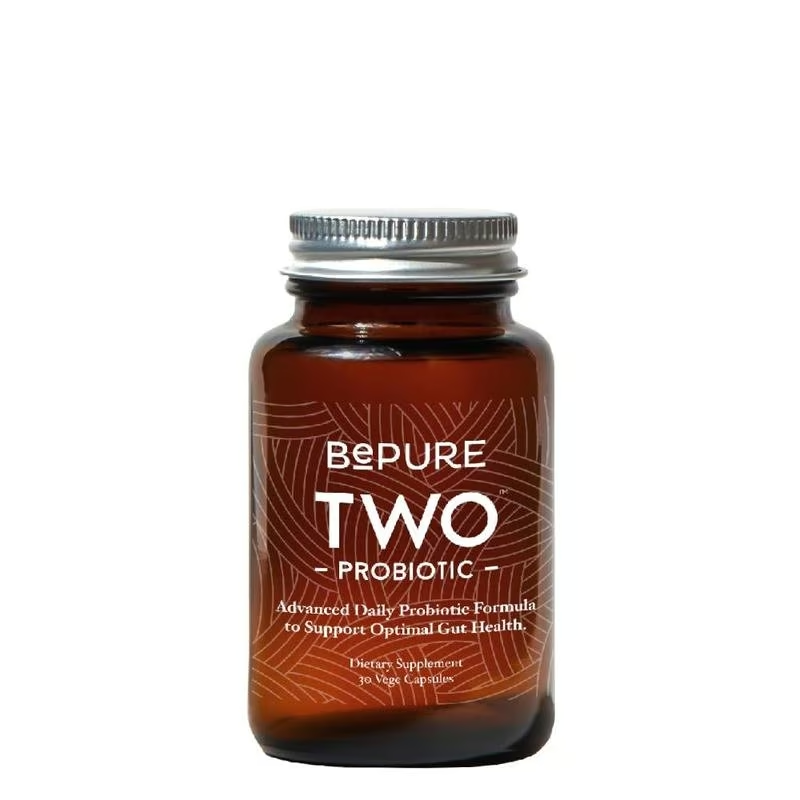
BePure Two is the broadest-spectrum option in this guide, packing 19 probiotic strains plus prebiotics and L-glutamine into a small twice-daily capsule.
A two-capsule daily serving delivers a minimum of 30 billion viable bacteria across 19 strains, including Lactobacillus acidophilus, L. casei, L. salivarius, L. plantarum, L. rhamnosus, L. paracasei, L. helveticus, L. gasseri, Bacillus coagulans, five separate Bifidobacterium strains, L. reuteri, Streptococcus thermophilus, L. fermentum and Saccharomyces boulardii, alongside prebiotic inulin, apple pectin and L-glutamine. It’s one of the widest strain counts sold in NZ pharmacies.
Each capsule is small, roughly 2cm by 0.5cm, and can be opened and mixed into food or a drink for anyone who prefers not to swallow it whole. Directions call for two capsules daily, one 30 minutes before the first meal and one two hours after the last, and it’s safe to store at room temperature rather than in the fridge.
BePure’s own customer feedback on HealthPost reports noticeable digestion and bloating improvements within one to two weeks of daily use. The honest trade-off, acknowledged by BePure itself, is that loose stools or mild bloating in the first one to two weeks is a normal adjustment period as gut flora rebalances, and the twice-daily, around-meals timing takes more planning than a single once-daily capsule.
Pros
- 19 probiotic strains, the widest strain count of any product in this guide
- Small capsule can be opened into food for anyone who dislikes swallowing pills
- Includes prebiotic fibre and L-glutamine alongside the probiotic strains
Cons
- Brand-acknowledged adjustment period of mild bloating or loose stools in week one to two
- Twice-daily dosing around meals is more involved than a single daily capsule
Key specs: Vegetarian capsule. 30 capsules per pack.
6. The Good Vitamin Co Good Probiotics Chewable – Best Capsule-Free Chewable
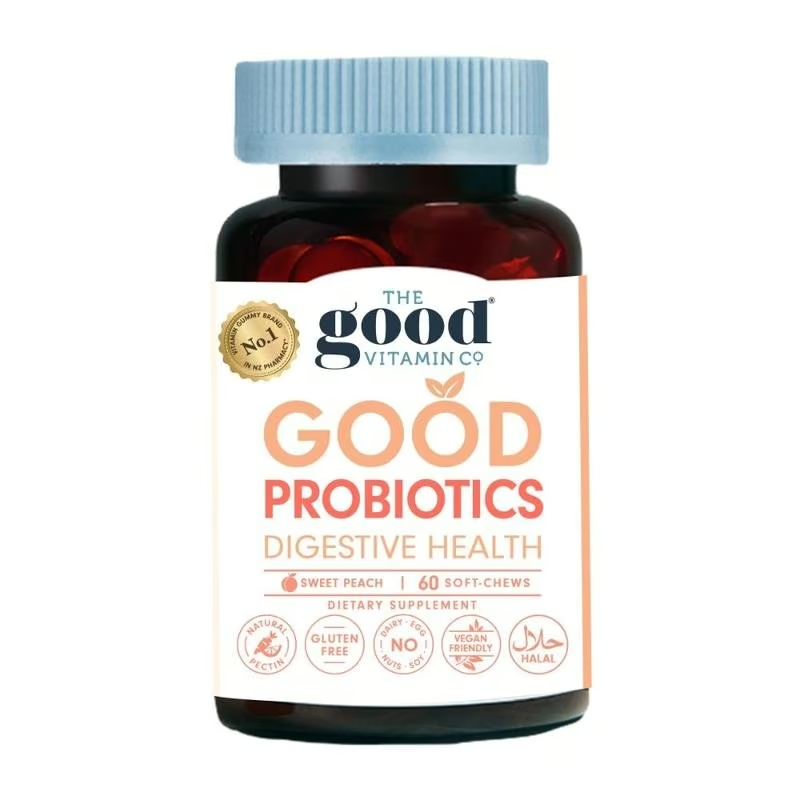
Shoppers who dislike swallowing capsules are best served by The Good Vitamin Co’s Good Probiotics Soft-Chews, a peach-flavoured vegan chew rather than a pill.
Each soft-chew delivers LactoSpore (Bacillus coagulans) at 500 million CFU plus Lactobacillus DDS-1 at 500 million CFU, alongside 10mg of prebiotic inulin. The labelled adult dose is two chews daily, bringing the total to 2 billion CFU, and the 60-count pack lasts roughly a month at that dose. It’s not intended for children under two.
Unlike gelatin-based gummies, these are a pectin-based soft-chew, which keeps them vegan, and they’re gluten-free, Halal certified, and free from eggs, soy, dairy and nuts, with no artificial flavours or colours. The Sweet Peach flavour is naturally coloured with peach, apple and black carrot, and the pack is stored below 25 degrees rather than refrigerated.
The genuine trade-off is potency: at 2 billion CFU across just two strains, this delivers far less bacterial count and diversity than the capsule options on this list. Being a chew rather than a capsule, it also contains sugar, something the gluten-free, dairy-free capsule formats elsewhere in this guide avoid entirely.
Pros
- Vegan, pectin-based chew rather than a gelatin gummy or capsule
- Naturally flavoured and coloured, gluten-free, Halal certified and allergen-conscious
- Easy option for anyone who genuinely can’t or won’t swallow capsules
Cons
- Lowest CFU count of any capsule-alternative on this list at 2 billion
- Contains sugar, unlike the capsule formats in this guide
Key specs: 60 soft-chews per pack.
7. BePure Kids Daily Probiotic Powder – Best for Kids
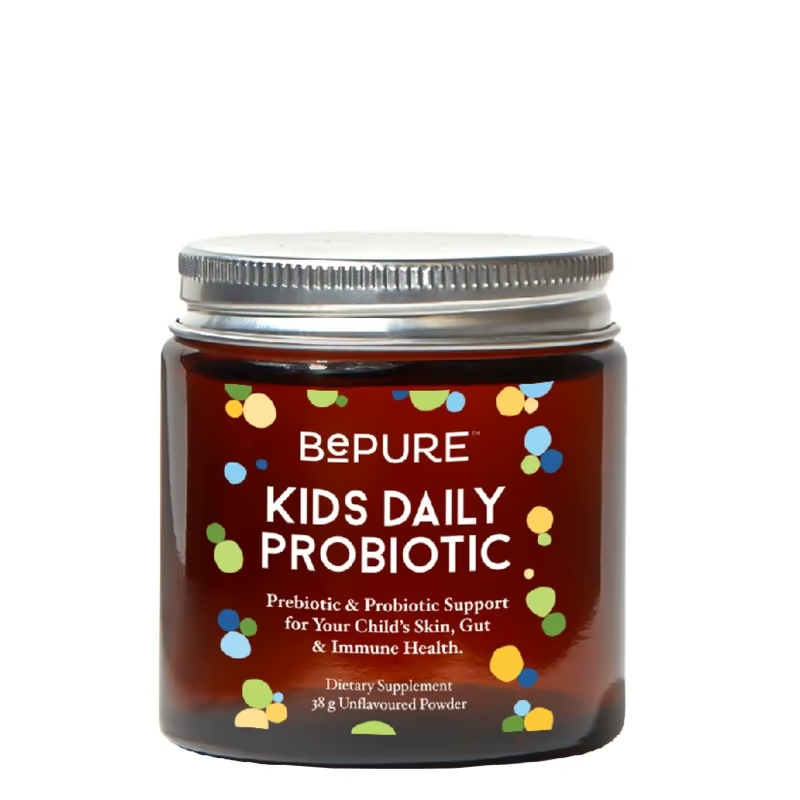
For children, BePure Kids Daily Probiotic Powder is the most age-appropriate pick, dosed by the third of a teaspoon for ages six months to twelve years.
A 1.3g serve (roughly a third of a teaspoon) delivers 14 billion CFU: Lactobacillus rhamnosus HN001 (6 billion), a Lactobacillus acidophilus, fermentum and plantarum blend (4 billion), and a Bifidobacterium blend including bifidum, breve, infantis and longum (4 billion), plus an 880mg prebiotic blend of inulin, scGOS and lcFOS. The 40g tub is designed to mix into water, milk, formula, yoghurt or a smoothie once daily.
It’s shelf-stable, storing fine at room temperature in a cool, dark spot rather than needing refrigeration, and it’s labelled gluten-free, vegan and dairy-free, with no eggs, soy, gums, added sugar or GMOs. Parent reviewers on HealthPost report noticeable improvements in their child’s sleep and digestion without stomach upset.
The trade-off parents need to check carefully: despite the dairy-free label, BePure’s own FAQ notes that some strains are grown on a dairy substrate during manufacturing, so trace dairy is possible. That makes it fine for lactose intolerance but not suitable for a child with a genuine dairy allergy, a distinction worth confirming with a pharmacist before buying for an allergic child.
Pros
- Specifically dosed for ages six months to twelve years, not a scaled-down adult formula
- Mixes into water, milk, formula, yoghurt or a smoothie for easy daily use
- Shelf-stable prebiotic and probiotic blend, no refrigeration needed
Cons
- Labelled dairy-free but some strains are grown on a dairy substrate, so trace dairy is possible
- Not suitable for children with a genuine dairy allergy despite the dairy-free claim
Key specs: 40g tub, roughly a one-month supply at one serve daily.
8. BLIS Probiotics Daily Defence Strawberry Lozenges – Best for Oral and Immune Health
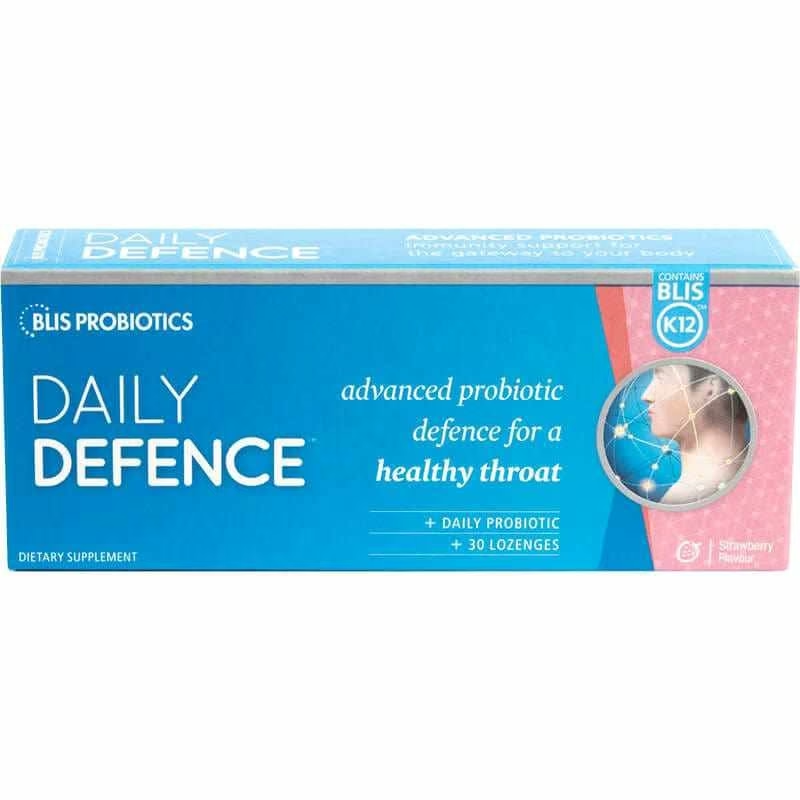
BLIS Probiotics’ Daily Defence Strawberry Lozenges take a different route to gut capsules, targeting the mouth and throat with a single clinically studied strain.
Each strawberry-flavoured lozenge delivers at least 1.25 billion CFU of Streptococcus salivarius K12 (BLIS K12) at time of manufacture, a strain studied specifically for its effect on the bacteria living in the mouth and throat rather than the gut. Directions call for dissolving one lozenge slowly on the tongue, one to two times daily (up to four times during high-need periods), ideally straight after brushing teeth.
For it to work as intended, food and drink need to be avoided for 30 minutes afterwards so the strain can establish on the tissue surface. It’s suitable from age three, safe during pregnancy and breastfeeding, but not recommended alongside a course of antibiotics. The 30-lozenge pack stores below 25 degrees rather than in the fridge.
One long-term user on BLIS’s own site reported using it for three years after a serious throat infection and said it has kept recurring bugs at bay. The genuine trade-offs: the 30-minute food-and-drink gap is a bigger routine change than swallowing a capsule, and the lozenges are made on equipment that also processes milk and soy, so they aren’t certified allergen-free despite not listing those as ingredients.
Pros
- Single clinically studied strain (BLIS K12) targeted specifically at oral and throat health
- Strawberry flavour makes it an easy daily habit for both kids and adults
- Safe during pregnancy and breastfeeding, suitable from age three
Cons
- Requires avoiding food and drink for 30 minutes after use to work properly
- Made on equipment that also processes milk and soy, so not certified allergen-free
Key specs: 30 lozenges per pack.
9. Nutra-Life ProBiotica 50+ Years – Best for Over-50s
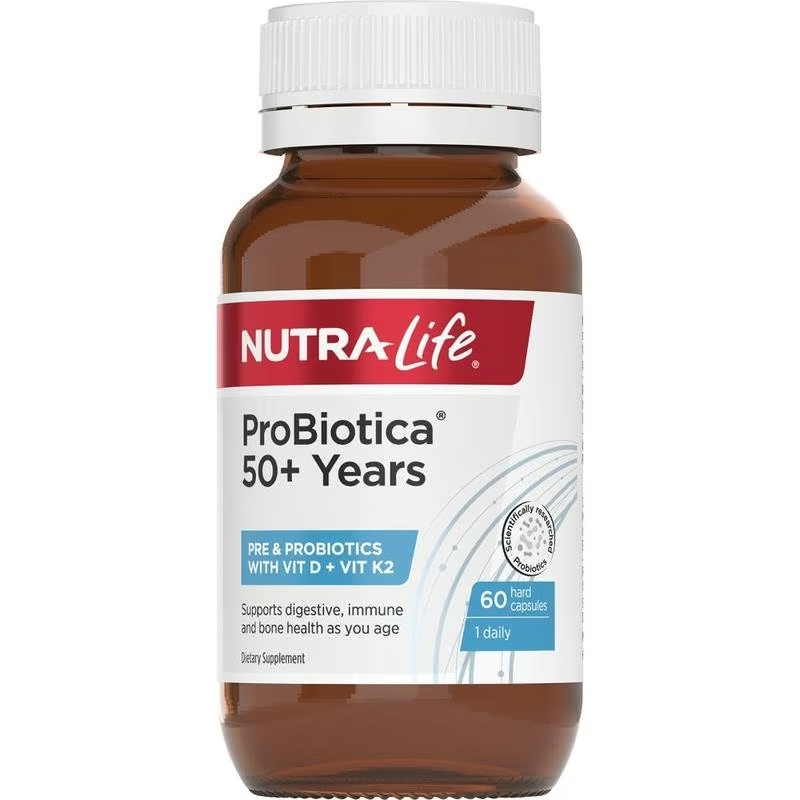
Nutra-Life’s ProBiotica 50+ Years is purpose-built for older adults, pairing two probiotic strains with vitamin D3 and K2 for bone and immune support.
One capsule delivers 32 billion CFU from HOWARU Bifidobacterium animalis ssp lactis HN019 (5 billion) and Lactobacillus plantarum Lp-115 (27 billion), plus 150mg of prebiotic inulin, 800IU (20mcg) of vitamin D3 and 24mcg of vitamin K2, a combination aimed at the bone and immune concerns more common after 50. The 60-capsule pack is a two-month supply at the labelled adult dose of one daily.
It’s shelf-stable with no refrigeration required, and it’s gluten-free, dairy-free, wheat-free, egg-free and soy-free, with no artificial colours, flavours, sweeteners or preservatives, and is suitable for vegetarians. The brand’s own listing specifies vegetarian rather than vegan.
As with the Ultra Strength pick earlier in this guide, the trade-off is strain concentration: 27 of the 32 billion CFU comes from a single strain, Lactobacillus plantarum, rather than a wide spread. It’s also formulated specifically for the over-50s demographic with added D3 and K2, so younger shoppers or anyone wanting a broader general-purpose formula are better matched to one of the other picks on this list.
Pros
- Adds vitamin D3 and K2 alongside the probiotic strains for over-50s bone support
- Shelf-stable, allergen-conscious formula free from gluten, dairy, wheat, egg and soy
- Two-month supply per pack at the labelled daily dose
Cons
- 27 of the 32 billion CFU comes from a single strain, not a wide spread
- Formulated specifically for over-50s, not a general-purpose everyday pick
Key specs: Hard capsule. 60 capsules per pack.
10. Good Health Probiotic Advanced Triple Action – Best Triple-Action Formula
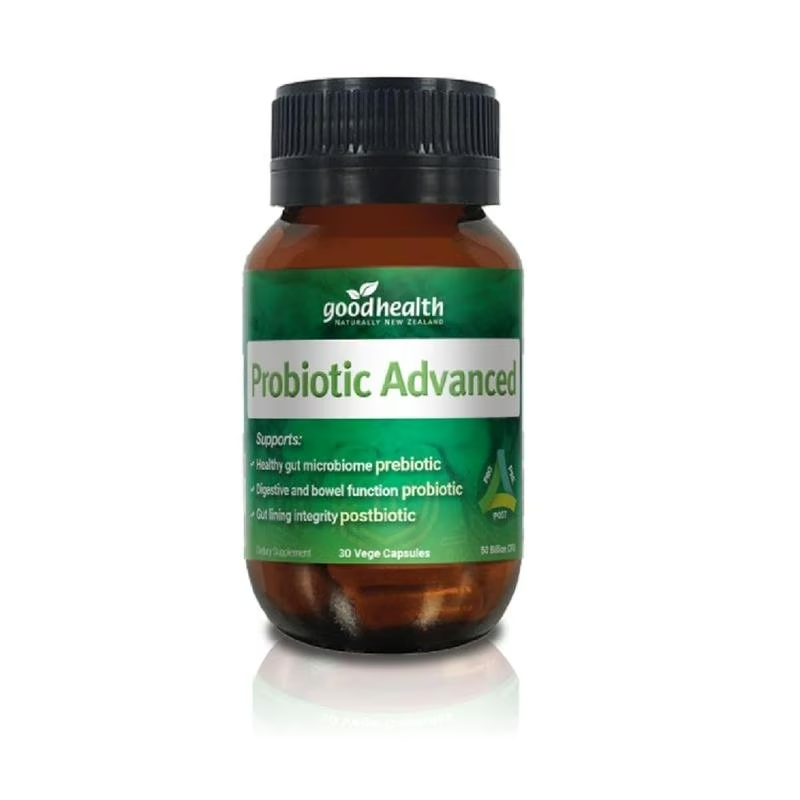
Good Health’s Probiotic Advanced Triple Action stands out for combining a prebiotic, nine live probiotic strains and a postbiotic in one vege capsule.
The formula delivers 50 billion CFU across nine strains: Lactobacillus plantarum Lp-G18, L. rhamnosus Lr-G14, Bifidobacterium animalis subsp lactis BL-G101 (37 billion of the total), B. bifidum BB-G90, L. acidophilus LA-G80, L. reuteri LR-G100, L. gasseri LG-G12, B. longum BL-G301 and L. casei LC-G11. Alongside these, it adds an FOS prebiotic and a heat-treated Lactobacillus paracasei LPc-G110 postbiotic, which is the third action in the ‘triple action’ name.
The vege capsule can be opened and its contents added to food, and it’s suitable for adults and children six and over at one capsule daily, including during pregnancy and breastfeeding. It’s shelf-stable, with no added gluten, egg, soy, dairy or wheat, no artificial flavours, sweeteners or preservatives, and is suitable for both vegetarians and vegans.
The trade-off worth understanding: the postbiotic component is heat-treated, meaning the bacteria are no longer alive, so it works differently to the nine live probiotic strains rather than acting as a fourth living ingredient. The 30-capsule pack is also only a one-month supply at the labelled dose, so it needs more frequent reordering than some 60-count rivals on this list.
Pros
- Combines a prebiotic, nine live strains and a postbiotic in one capsule
- Suitable for adults and children six and over, including in pregnancy and breastfeeding
- Capsule can be opened into food for easier dosing
Cons
- The postbiotic ingredient is heat-treated, not a fourth live bacterial strain
- 30-capsule pack is only a one-month supply, needing more frequent reordering
Key specs: TAPS PP2988. 30 vege capsules per pack.
How to choose a probiotic in NZ
CFU count and strain diversity both matter, but neither wins on its own. A useful daily dose typically sits between 10 billion and 50 billion CFU, and a higher number is not automatically better if it’s concentrated in a single strain. Shoppers who want broad support are better served by a multi-strain formula such as BePure Two or Good Health Probiotic Advanced Triple Action, while a big single-strain number like Nutra-Life’s 100 billion suits someone who wants one dominant, well-studied strain rather than variety.
Format should match daily routine. Capsules suit anyone happy to swallow a pill with breakfast; powders and chewables suit kids or adults who struggle with capsules; lozenges such as BLIS Daily Defence work through the mouth and throat rather than the gut, so they solve a different problem entirely.
None of the ten products in this guide need refrigeration, which is typical of NZ pharmacy-shelf probiotics, since most are freeze-dried into a shelf-stable form. Timing still matters: some strains, like those in Eve Wellness V Good and BePure Two, are formulated to be taken on an empty stomach, while others are designed to go down with food. Always follow the label instructions for the specific product.
It’s also worth pairing a probiotic with the rest of a gut-friendly routine. Shoppers already comparing options may want to check this daily multivitamin guide or this magnesium supplement guide to round out a daily supplement stack, and anyone dealing with inflammation alongside gut symptoms might find this fish oil supplement guide useful too. Kiwi shoppers building a natural immune-support routine often look beyond capsules altogether, and this manuka honey guide covers the other well-known NZ staple.
Probiotics aren’t classified as medicines in NZ, so Medsafe doesn’t need to approve their safety or effectiveness claims before sale. That makes it worth sticking to brands that publish full strain names and CFU counts on the label, like the ones featured here, rather than vague ‘proprietary blends.’ Anyone on antibiotics, pregnant, breastfeeding, or managing a health condition should check with a pharmacist or GP before starting a new probiotic, especially for children under two.
Verdict
Across all ten products, GO Healthy’s GO Probiotic 75 Billion remains the strongest everyday all-rounder for most NZ shoppers, backed by wide availability and a genuinely diverse 12-strain blend. Anyone with a specific need, whether that’s women’s health, a child, a capsule-free format, or oral health, is better served by the targeted picks further up this list than by chasing the single highest CFU number on the shelf. Whichever product is chosen, checking the label for real strain names, an honest CFU count, and clear storage and dosage instructions is a better guide to quality than price or packaging alone.
Frequently Asked Questions
What is the best probiotic in NZ?
There’s no single best probiotic for everyone. GO Healthy’s GO Probiotic 75 Billion suits general daily gut maintenance thanks to its 12-strain blend, while Eve Wellness V Good targets women’s vaginal health and BePure Kids Daily Probiotic Powder is dosed specifically for children. The right choice depends on the health goal, not just the CFU number.
How many CFU should a probiotic have?
Most healthy adults do well on 10 billion to 50 billion CFU daily. A higher CFU count is not automatically better, especially if it comes from just one or two strains. Strain diversity and clinical backing for the specific strains matter more than chasing the highest number on the label.
Do probiotics need to be refrigerated?
It depends on how they’re processed. Freeze-dried, shelf-stable probiotics, including all ten products in this guide, stay effective at room temperature. Probiotics using live cultures in drinks or dairy-based formats usually need refrigeration. Always check the storage instructions printed on the specific product’s label before buying.
Is it better to take probiotics in the morning or at night?
Most probiotics can be taken at any time of day, though some formulas, like Eve Wellness V Good and BePure Two, are designed to be taken on an empty stomach, either before breakfast or between meals. Consistency matters more than exact timing, so pick a routine and stick to it daily.
Can I take probiotics with antibiotics?
Yes, but space them at least two hours apart so the antibiotic doesn’t kill the probiotic strains before they can work. Taking a probiotic during and after a course of antibiotics can help reduce digestive side effects. Check with a pharmacist if unsure which strains suit a specific antibiotic course.
Are probiotics safe for kids?
Yes, when the product is formulated and dosed for children, such as BePure Kids Daily Probiotic Powder for ages six months to twelve years. Avoid giving children an adult-strength probiotic. Parents should check the label for age guidance and speak to a pharmacist or GP before starting a supplement for infants.
